Some of the best moments we hear about from guests don't happen on a trail or at a summit. They happen at night, in the dark, with a neck craned back and a cup of decaf going cold on the deck rail. You step outside to grab something from the car, you happen to look up, and there it is: more stars than you've seen in years, maybe more than you thought were up there at all. That reaction is common enough that we started keeping a couple of folding chairs by the back door, just in case someone wants to sit with it a while.
We're not an observatory and we won't pretend to be one. What we have is a small colonial on a quiet road in Lincoln, a back deck that faces away from the brightest part of town, and a whole national forest to the north and east where the lights thin out fast. This is our version of a stargazing guide: where we send people, what you can realistically see and when, and the plain safety stuff that matters once you leave the porch light behind. For a broader primer on the sky itself, our stargazing guide for the White Mountains goes deeper on constellations and gear; this piece is about doing it from here, on a real weekend, without overcomplicating it.
Why the skies here go dark
The reason the stars come out so strong up here is simple. Away from town there's almost no artificial light to wash them out. The White Mountains sit inside a large block of protected national forest with very few towns and almost no sprawl. Once you're a few miles from a village center, there just aren't many streetlights, parking lots, or big-box signs throwing light into the sky. That leftover glow, the orange dome you see over a city at night, is what washes out fainter stars. Out here there's very little of it.
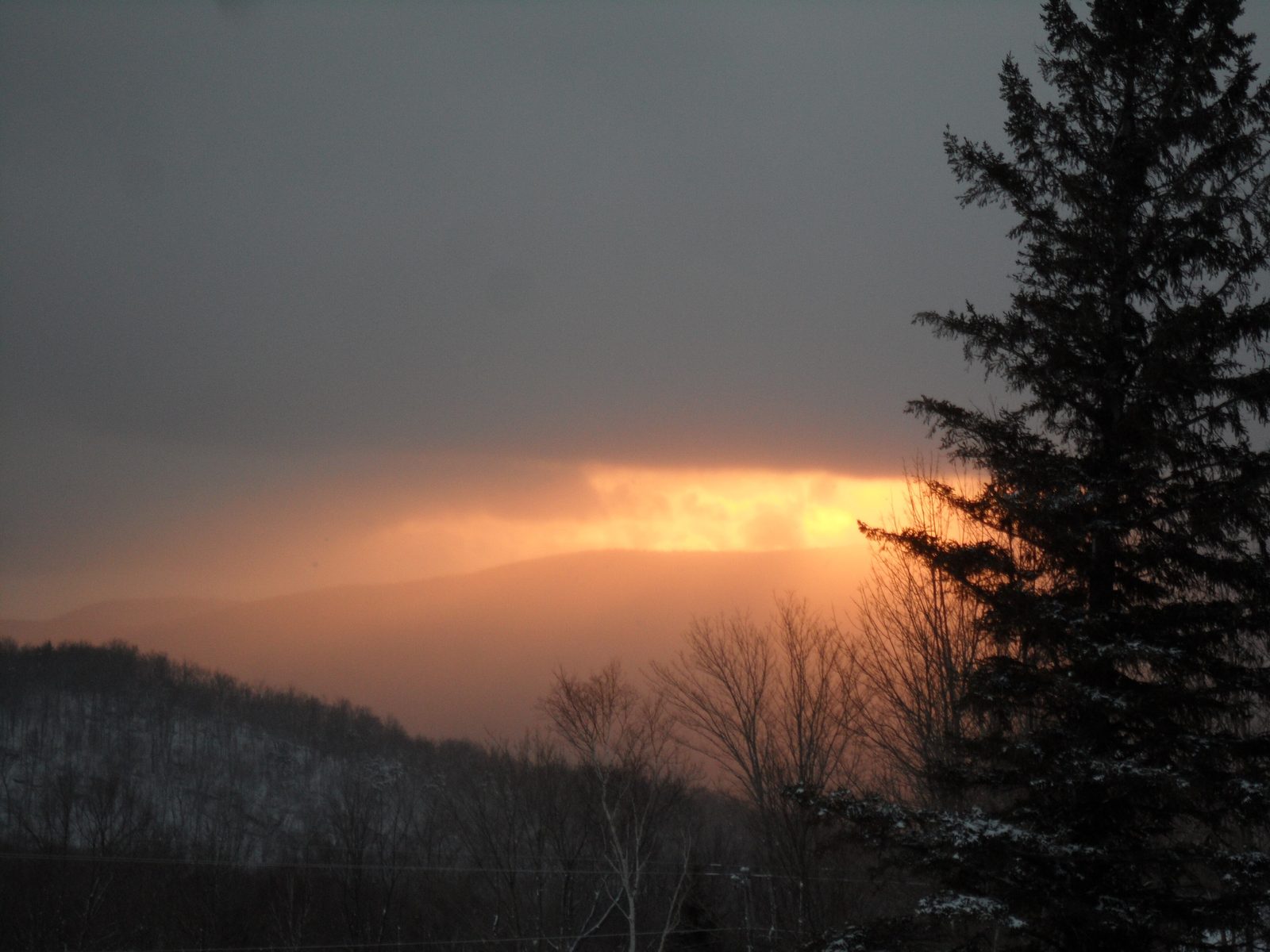
Lincoln and North Woodstock are real towns, so right in the town core you'll still notice some light, restaurant signs, the ski resort, the gas stations by the highway. That's normal, and it's why a five- or 10 min drive changes everything. You don't have to go far. You have to go past the last cluster of lights, let the road get quiet, and give your eyes time. The mountains help too: ridgelines block a lot of stray light from the horizon, so the patch of sky directly overhead tends to be the cleanest.
People sometimes ask if this is a certified dark-sky place with a plaque and a gate. It isn't, and it doesn't need to be. What it has is geography, thousands of acres of forest with no development in the middle of it. On a clear, moonless night, well away from town, the sky here holds up against places that market themselves harder. The trick is knowing the difference between "dark enough" and "dark," and picking your night around the moon, which matters more than most people expect.
As with everything up here, the weather runs the show. The Whites make their own clouds, and a forecast that says clear at 6pm can go milky by 10. Check the sky the night of, not the day before. A clear cold front rolling through is your friend; humid, hazy summer air is not.
Start on the back deck
Before you drive anywhere, try the deck. For a lot of our guests that's the whole trip, and it's the easiest possible start: no headlamp, no directions, no cold-car fumbling. Step out the back, let the door close behind you so the indoor light stops spilling out, and just stand there for a few minutes. The first thing you'll notice is that more stars keep appearing the longer you look. That's your eyes adjusting, and it's the single biggest lever you have.
We keep the exterior lighting deliberately low and warm, and there are no bright signs on the property, so the deck is a friendlier starting point than a lot of hotels can offer. It won't be as dark as a Kancamagus pullout, you're still in town, but it's dark enough to find the big shapes: the Big Dipper, the bright summer or winter anchors depending on the season, the Milky Way on a good August night if the air is dry. If you're staying in one of the suites that faces the quieter side of the house, you can sometimes do your first look right from a window before you even go out.
The deck is also where we tell people to calibrate expectations. If you've just come out of a lit room, give your eyes a solid 10 to 15 min to adjust before you judge the sky. And keep your phone in your pocket, one glance at a bright screen resets your night vision and you start over. We'll come back to that, because it's the mistake that quietly ruins more stargazing than clouds do.
If the deck delivers and you want more, that's the cue to go looking for real dark. But there's no shame in staying put with a blanket. A warm drink, a low chair, and a sky you didn't have to drive to is a good night by any measure. The coffee lounge exists partly for exactly this, a warm cup in hand while you wait for your eyes to open up.
Read the moon before you plan a night
Here's the thing almost nobody thinks about until they're standing outside wondering where the stars went: the moon is a giant light in the sky, and a bright one washes out everything faint. A full moon is beautiful and worth its own kind of walk, but it's the enemy of deep stargazing. If you want the Milky Way or a good meteor count, you want the days around a new moon, or a night when the moon rises late or sets early.
You don't need an app to sort this out, though plenty of good free ones exist. The pattern is easy. New moon means dark skies all night. First quarter (a half-lit moon in the evening) means the early night is washed out but it gets dark after the moon sets, often before midnight. Full moon means bright all night, save it for a moonlit snowshoe instead of a star hunt. Last quarter means the front half of the night is dark and the moon comes up late. If you can plan your trip within a few days of new moon, do it.
Timing within the night matters too. The sky keeps darkening well after sunset, through what's called astronomical twilight, which in summer up here can run late because the days are long. In the depth of winter it's fully dark by early evening, which is one of the underrated perks of a cold-season visit: you don't have to stay up past midnight to get a black sky. You can look up right after dinner in town and be back inside warming up by nine.
If you're trying to line a visit up with a specific sky event, the moon phase is the first thing to check, before you book, not after. A little planning lets you square the moon calendar with foliage, ski season, and everything else competing for the same weekend.
A darker spot on the Kancamagus
When the deck isn't enough and you want the full black-sky experience, the closest reliable dark we point people to is a pullout along the Kancamagus Highway. The Kanc starts right at the edge of Lincoln and climbs east into the forest, and within a few miles you're past all the town light. There are several paved overlooks and trailhead lots along the way where you can pull off, turn the car off, and stand under a dark sky. The height-of-land area, up near the C.L. Graham Wangan overlook around 2,855 feet, opens up the sky nicely because you're up out of the deepest valleys.
Now the part that matters, because this road has teeth after dark. The Kancamagus is 34 miles of scenic byway with no gas, no food, no services, and no towns the entire way. That's true in daylight and it's more serious at night. There is no cell signal on most of it. If you drive out there, fill your tank first, tell someone where you're going, and download your directions before you leave so you're not relying on a map that won't load. Bring a real flashlight or headlamp, not just your phone. Dress warmer than you think, it's cooler up on the road than in town, especially once you're standing still.
You don't need to drive the whole 34 miles. The first several overlooks past Lincoln get you plenty dark, and you can be back at the lodge in 20 min. Pull all the way into a paved pullout, not the road shoulder, get well off the pavement, and switch off your headlights and interior lights once you're parked. Watch for the occasional car coming around a bend, and keep an eye out for moose and other wildlife, which are out and about at night. Our piece on taking the Kancamagus slowly covers the daytime version of the same road if you want to scout it in the light first, which isn't a bad idea before you go out in the dark.
If any of that gives you pause, it's a completely reasonable reason to stay on the deck instead. The Kanc rewards people who prepare for it and punishes people who wing it. Go when you're set up for it, and enjoy the deck when you're not.
Overlooks and open sky in Franconia Notch
The other direction from the lodge takes you north into Franconia Notch State Park, about 10 min up I-93, and there are open spots there that work well for looking up. The advantage of the Notch is that it's a broad glacial pass, so you get a wider strip of sky than you do down in the trees, with the Franconia and Kinsman ranges framing it on either side. The parkway runs right through it, and there are pull-offs and small lots along the way.
A word of orientation, because two famous landmarks up there aren't what first-time visitors expect. The Old Man of the Mountain, the stone profile that used to be the state symbol, fell off the cliff back in May 2003. It's gone. There's a memorial plaza now with steel viewfinders that line the old profile back up against the cliff, and it's worth a daytime stop, but don't drive up at night expecting to see a face on the mountain. And the Cannon Mountain aerial tramway is closed: it was retired after its last day, October 26, 2025, and no reopening date has been announced. You can't ride it up for a night view right now, so don't plan around it. The Cannon ski area itself still operates in winter; it's just the tram that's out.
What does work is finding an open, level spot with a clear view up and letting the ridgelines do their job of blocking horizon glare. Echo Lake, near the north end of the Notch, gives you an open shoreline and water that can hold a reflection of the sky on a still night. As always, if you go after dark, know that cell service in the Notch is spotty, so treat it like the Kanc: download what you need first, bring light, and dress for cold.
The Notch is a state park, so pay attention to any posted hours or gate closures at specific lots and don't block anything. Plenty of the parkway pull-offs stay accessible, but check before you count on a particular one after dark.
A pond shore and other quiet water
Water and stars go together. A calm pond doubles the sky, and being out on an open shore gets you away from the trees that otherwise wall off half of what's up there. The gentlest option near us is Lonesome Lake, a mountain pond reached by a manageable climb from the Notch, with an AMC hut on the far side and the Franconia Range standing over it. To be clear, that's a daytime hike, we're not sending anyone up a mountain trail in the dark. But it's the kind of open water that shows you why a shoreline is such a good stargazing perch, and if you're staying at the hut it's a special place to be after sunset.
Closer to the road, Echo Lake up in the Notch gives you that same open-water effect without a hike, and a still night there can be lovely. The principle to take away is simple: look for a spot where the trees fall back and you can see low toward the horizon, because a lot of the good stuff, planets rising, the arc of the Milky Way, meteors streaking up from the northeast in August, happens in that lower band of sky that a tight forest clearing hides from you.
Granite works the same way as water in one respect: it opens up the view. Which brings us to one of the easiest dark-ish stops of all, a 5 min walk off the parkway that most people only ever see in daylight.
Wherever you settle, the rule holds: flat ground, a clear view up, and enough distance from town lights that your eyes can do their work. You don't need elevation or a famous name. A quiet pull-off with an open sky beats a scenic overlook with a lit parking lot every time.
The Basin and the easy stops
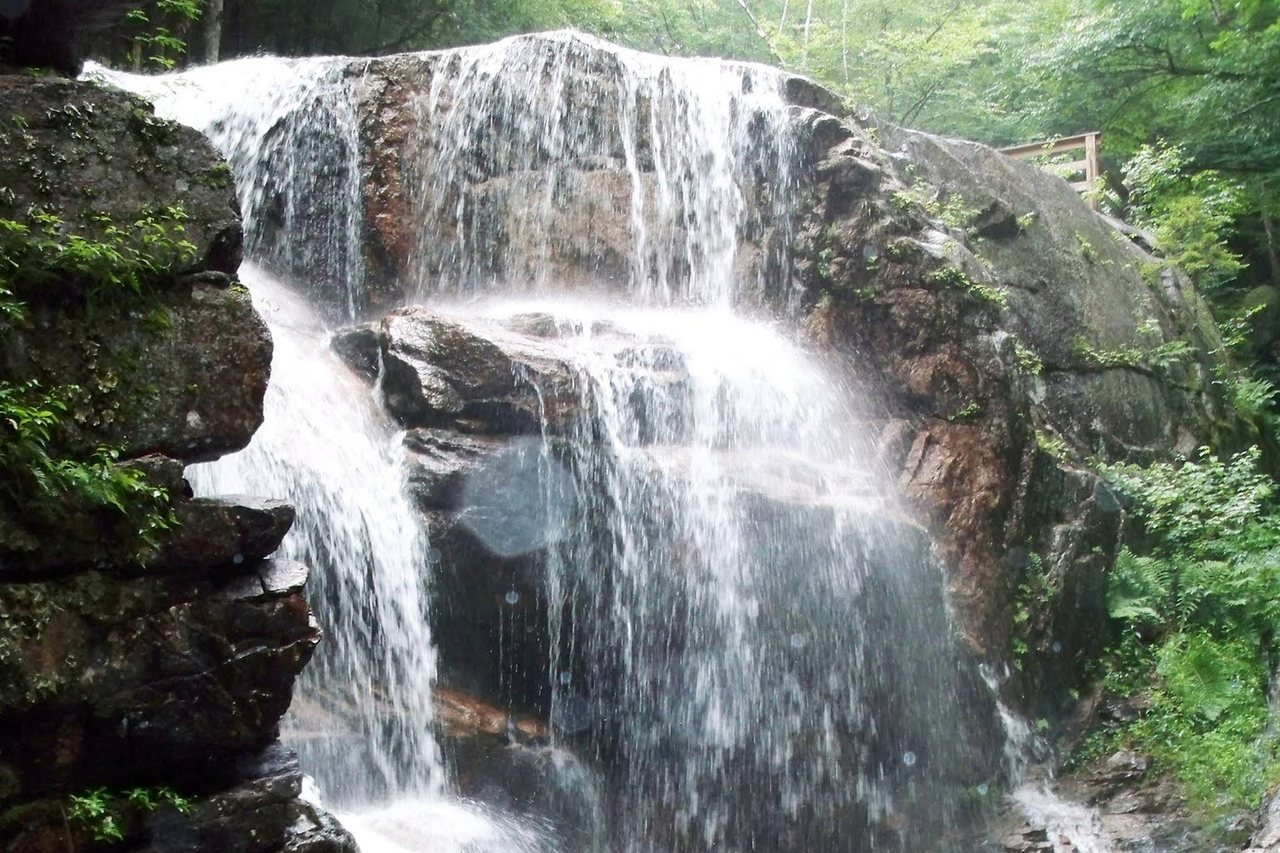
The Basin is a granite pool carved by meltwater, roughly 25,000 years old, and it sits just a 5 min walk off the Franconia Notch parkway. In the day it's one of the most popular quick stops in the park. It isn't a designated night spot and there's no lighting, so we mention it less as a destination and more as an example of how close real dark is: places like the Basin are minutes off the road, well away from town glow, in the middle of a forest that goes black at night. If you do stop anywhere like this after dark, use the paved areas, watch your footing near water and rock, and bring a proper light.
The broader point for a first-timer is that you don't need a plan worthy of an expedition. From the lodge you have a whole menu of easy pull-offs: overlooks on the Kanc, pull-offs along the Notch parkway, the open shore at Echo Lake. Any one of them, on a clear moonless night, will show you far more sky than home does. Pick the closest one you're comfortable reaching in the dark and go with that.
If you'd rather see the lay of the land before you pick, our area map lays out where these spots sit relative to the lodge, so you can judge drive times and choose something close for a first outing. Knowing that a good dark pullout is only 10 or 15 min away takes the pressure off, you can head out on a whim if the sky clears, and come home the moment you get cold.
And, the closest good spot is often the best one, because you'll use it. A pullout you can reach in 10 min gets visited; a legendary overlook 40 min into the dark usually doesn't. Start small and close.
What the summer sky holds
Summer is Milky Way season, and on a dark, dry night away from town you can trace it as a soft band running across the sky. It's easy to miss if you don't know to look for it, because it's not sharp, it's a hazy river of countless faint stars, and any moonlight or humidity blurs it out. Give your eyes their full adjustment time, find your darkest pullout, and look toward the south and overhead once it's fully dark. In the long days of a New Hampshire summer, "fully dark" comes late, often not until well after 9 or 10pm, so a summer star night is a stay-up-late affair.
The bright anchor of the summer sky is the trio sometimes called the Summer Triangle, three bright stars in three different constellations that form a big triangle overhead through the warm months. It's an easy first target and a good way to orient yourself. From there the Milky Way runs right through it, so finding the triangle helps you find the band.
Summer is also the friendliest season for a beginner because you're not fighting the cold. You can lie back on a blanket in a T-shirt on a warm August night and just watch, which is a very different experience from winter stargazing. Summer air holds more moisture, so watch for haze and aim for a night right after a cold front has scrubbed the sky clean. Those crisp, low-humidity nights are the ones to grab.
If you're building a summer visit around the sky, plan the star nights around gondola rides, swimming holes, and the long evenings that make this season what it is.
The winter sky, cold and clear
Winter is, in some ways, the best stargazing of the year here, with one catch: you have to be willing to be cold. Cold air is dry air, and dry air is clear air, so a hard winter night can deliver the sharpest, steadiest stars you'll see all year. On top of that, full dark arrives early, by dinnertime in December, so you don't have to stay up late to get a black sky. Step out after a meal in town, look up for 20 min, and be back by the fire.
The showpiece of the winter sky is Orion, the hunter, with his three-star belt, easy to spot in the southern sky through the cold months and a reliable anchor even for people who've never looked before. Near Orion you'll find some of the brightest stars in the whole sky, including Sirius, the brightest of them all, low in the south. Winter simply has more bright stars on display than summer does, so even a quick look pays off.
The thing to plan for in winter is the cold, which feels sharper when you're standing still. Dress like you're going to be motionless outdoors for a while, which is colder than dressing for a walk: real layers, a warm hat, insulated boots, and gloves you can still work a phone or binoculars with. Feet and hands go first. Keep the car nearby as a warming station, and don't be a hero, 20 good min beats an hour of misery. Our packing notes for a White Mountains weekend cover the layers that make a winter night outside pleasant instead of something you endure.
Come back inside to a warm suite and a coffee, and the whole thing feels like a treat rather than a test. That contrast, black cold sky, then a warm quiet room, is a big part of why winter here sticks with people.
The meteor showers worth staying up for
Two meteor showers are worth planning around, and both are annual, they come back every year on roughly the same dates, so you can look ahead and pick your night. We won't promise you a specific number of shooting stars, because that depends on the moon, the weather, and luck, but the events themselves are dependable.
The Perseids peak in mid-August, around the nights of August 12 into the early hours of the 13th. This is the summer one everybody knows, and it's a warm-weather shower, so it's the most comfortable to watch, you can lie out on a blanket without freezing. The meteors seem to radiate from the northeast, but they can appear anywhere in the sky, so the move is to lie back, take in as much sky as you can, and be patient. The best rates are usually in the darkest hours after midnight, and the years when the moon is out of the way are the good ones.
The Geminids peak in mid-December, around the 13th and 14th, and they're often the strongest, most reliable shower of the whole year. It's December in the White Mountains, of course, so this is a bundle-up, keep-the-car-close affair. But full dark comes early, the winter air is clear, and if you're set up for the cold it can be spectacular. Think of the Geminids as the reward for people willing to stand out in the cold for a while.
For either one, the recipe is the same: get away from town light, check that the moon isn't washing out the sky, give your eyes at least 15 or 20 min to adjust, and then just watch a wide patch of sky rather than staring at one spot. Don't use binoculars for meteors, they narrow your view; meteors are a naked-eye, whole-sky event. And keep that phone dark.
Red light, warmth, and letting your eyes adjust
Three small things separate a good night under the stars from a frustrating one, and none of them cost anything. The first is dark adaptation. Your eyes take a solid 20 to 30 min to reach their most sensitive state in the dark, and a single glance at a bright white phone screen or a car dome light knocks you back to the start. So the rule is: once you're out, keep bright white light out of your eyes. Turn the phone brightness all the way down, or better, put it away.
The second is red light. Your night vision survives dim red light far better than white, which is why headlamps have a red mode and why astronomers use red flashlights. If you need to see to walk, find a chair, or read something, use red. A cheap headlamp with a red setting is the single most useful piece of stargazing gear you can bring, more useful than any telescope for a casual night. If you don't have one, a piece of red cellophane over a flashlight works, or just keep any white light brief and pointed at the ground.
The third is warmth, and it's the one people underestimate. Standing still under an open sky, even a summer one, gets cold faster than you expect, and cold is what ends most stargazing sessions early. Dress a layer warmer than you think you need, bring a blanket to sit on and one to pull over you, and keep something warm to drink handy. A thermos of decaf or cocoa turns 20 min into an hour. Comfort is what lets you stay out long enough to see the good stuff, the faint meteors, the Milky Way sharpening as your eyes open up.
None of this requires equipment. Binoculars are a nice bonus if you have a pair, they'll show you the moons of Jupiter and turn a fuzzy patch into a cluster of stars, but the naked eye under a truly dark sky is the whole show. Bring warm clothes and patience and you have everything you need.
How a TV-free suite helps you look up
We made a deliberate choice to keep televisions out of five of the six suites, and stargazing is one of the reasons the choice earns its keep. It's a small thing, but a screen in the room quietly rewrites the evening. You come back from dinner, the TV goes on out of habit, and three hours later you've forgotten there's a sky out there at all. Without one, the evening stays open. People read, talk, sit by a window, and a lot of them end up stepping outside to look up simply because nothing indoors is pulling them the other way.
There's also the eyes-adjusting angle. A bright screen is exactly the thing that wrecks night vision, so an evening spent staring at one is an evening spent undoing the very adaptation stargazing depends on. A dim, screen-free room keeps your eyes half-ready, so when you do step onto the deck you're not starting from zero. It's a quieter kind of evening by design, and the dark sky is one of the payoffs. We wrote more about the reasoning behind that in our note on why most of our suites are TV-free if you want the fuller version.
This is also why the adults-only, quiet-house setup fits stargazing so naturally. The property stays calm after dark, the lights stay low, and nobody's flooding the deck with a phone flashlight. It adds up to a place where looking up feels like the obvious thing to do rather than an effort you have to organize.
If you're the type who'd otherwise default to a screen at night, treat the missing TV as a nudge. The sky is a better show most clear nights anyway, and it's already paid for.
Practical notes before you head out
A few plain logistics will save you a frustrating night. Cell service is the big one. Coverage drops off fast once you leave the town core, and it's essentially gone on the Kancamagus and patchy through Franconia Notch. That means you cannot rely on your phone to load a map, a star chart, or directions once you're out there. Download everything you need before you leave the lodge, where the fiber Wi-Fi is fast and reliable. Our note on cell service and what to download walks through exactly which offline maps and apps to grab so you're not stranded staring at a spinning wheel.
Second, tell someone your plan and keep your car fueled, especially for the Kanc, which has no services for 34 miles. Bring a real light with a red mode, water, and more warm layers than the thermometer suggests. Watch for wildlife on dark roads, moose especially, which are large, dark, and hard to see until you're close.
Third, pick your night off the weather and the moon, not off your itinerary. The clearest, darkest, coldest nights are the best ones, and they don't always land when it's convenient. If you get a crisp, moonless, cloudless night during your stay, that's the one, even if it means going out later than you planned. Flexibility is what separates the guests who see the Milky Way from the ones who meant to.
Finally, keep expectations grounded. Some nights the clouds win, or the moon's too bright, or the haze rolls in, and you get an ordinary sky. That's part of it. The nights that deliver are worth the ones that don't, and the deck means a good sky is never more than a door away. If you want a second opinion on where to point yourself on a given night, ask us, we watch the same sky and we're happy to say where it's been clearest lately. For the neighborhood-level version of this, our note on where the light is best around Lincoln covers the practical business of finding dark close to town.
Planning a stargazing night from the lodge
The easiest way to build a good star night into a trip is to not over-plan it. Pick a stretch of days near a new moon if the sky is your priority, keep an eye on the forecast once you arrive, and hold one clear night loosely open. Spend the day on a hike or a drive or a slow afternoon in town, have dinner, and then check the sky. If it's clear, you go, either just onto the deck or out to a close dark pullout. If it's not, you read by a window and try again tomorrow. That's the whole system.
It helps to build the rest of the day around not exhausting yourself, so you've got it in you to stay up. A morning at Loon Mountain or a mellow afternoon in town leaves enough in the tank for a late look; a punishing all-day hike usually doesn't. If you want the sky to be the centerpiece, plan a lighter day around it. Our romantic weekend itinerary is an easy template for a slow-paced couple of days that leaves room for exactly this kind of evening.
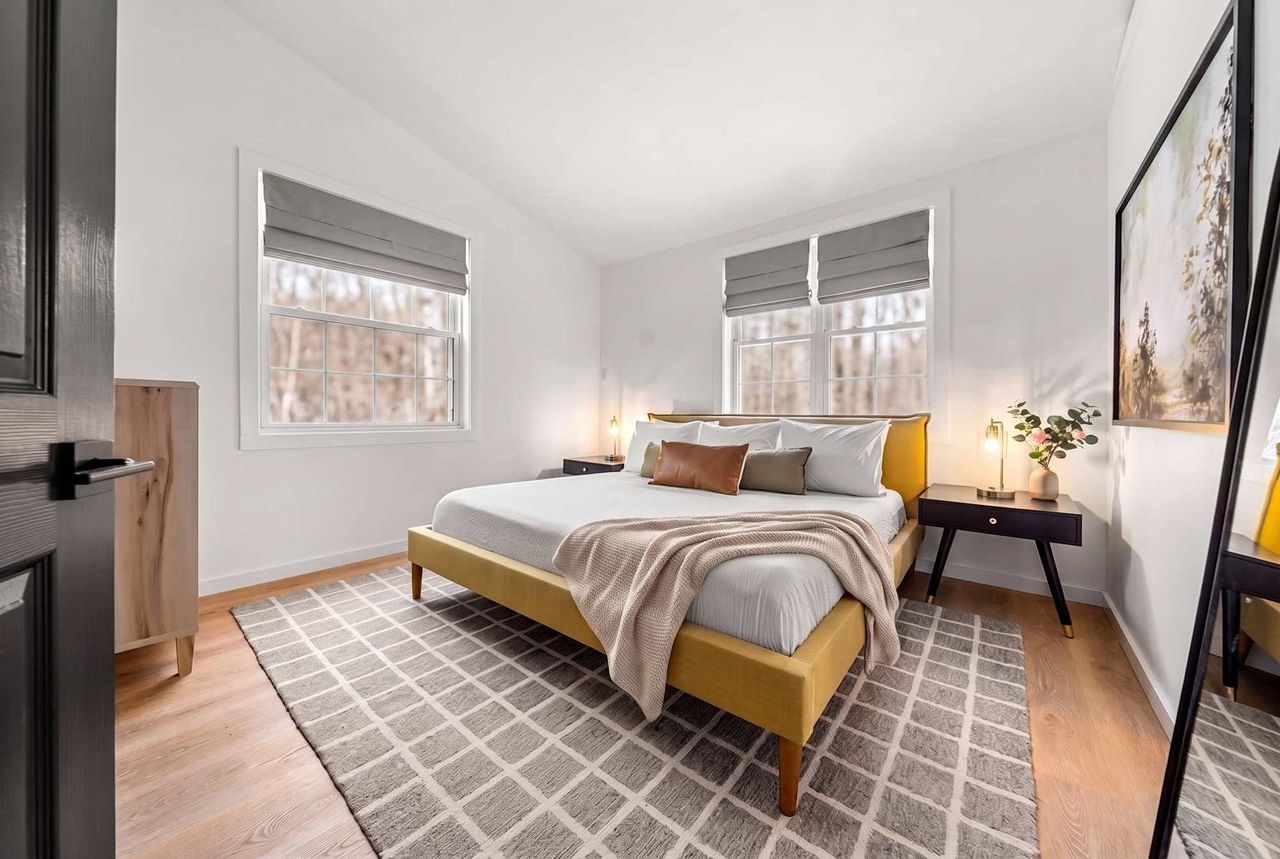
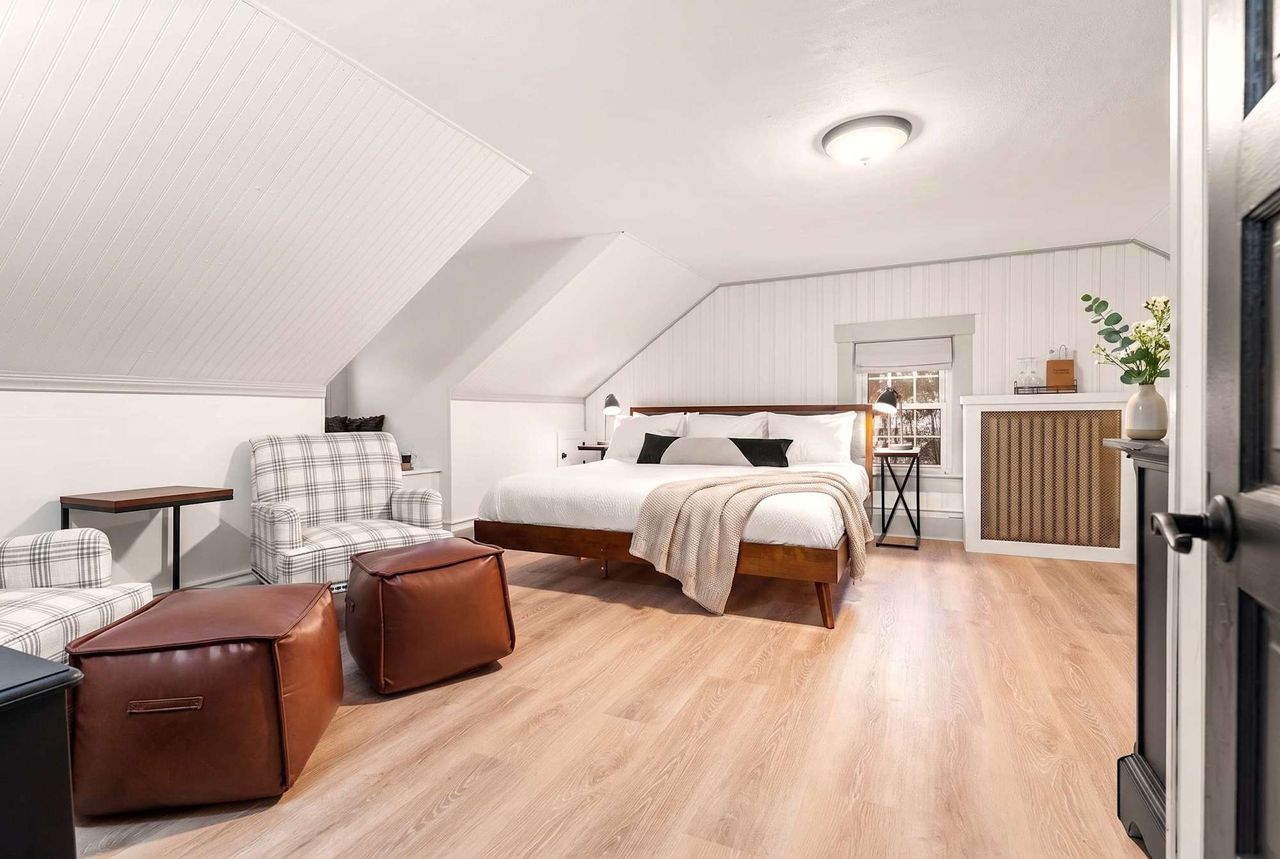
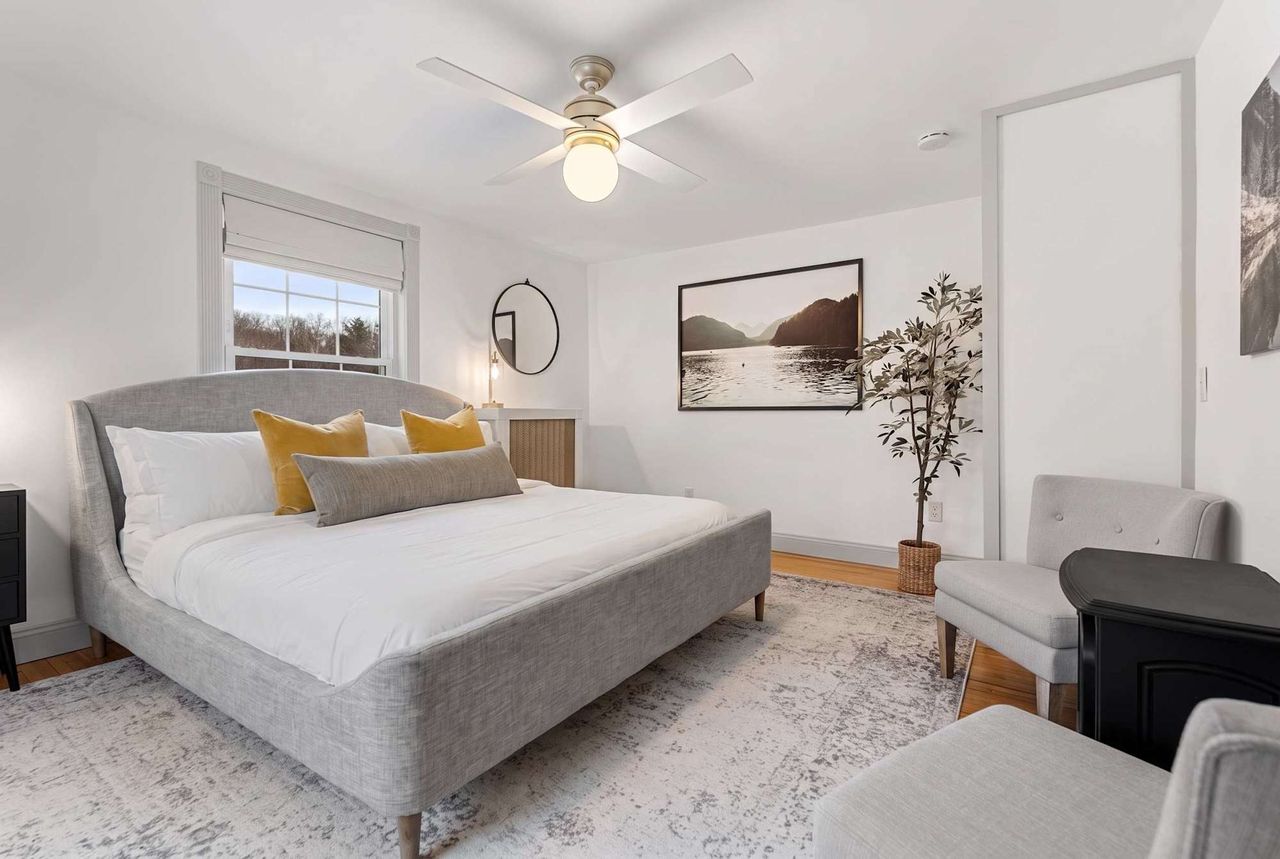
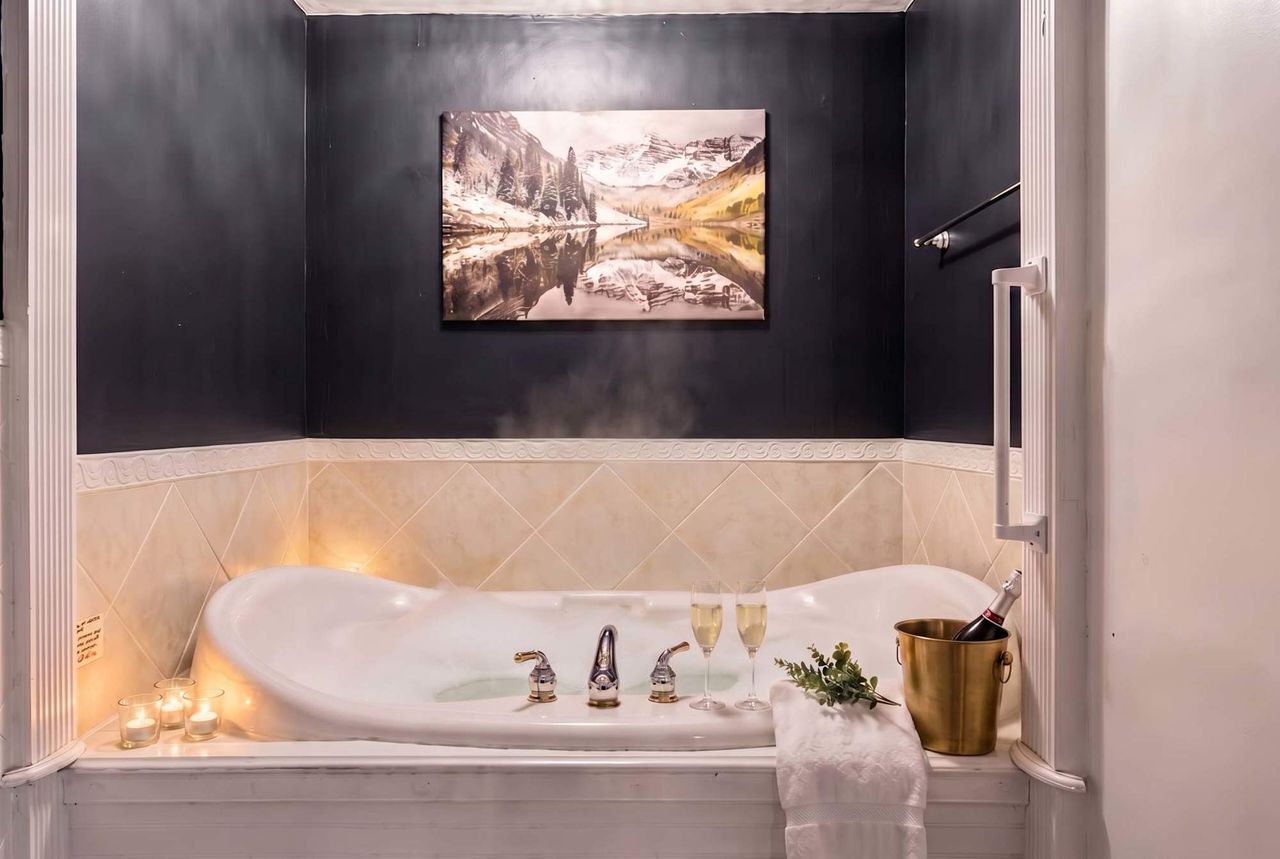
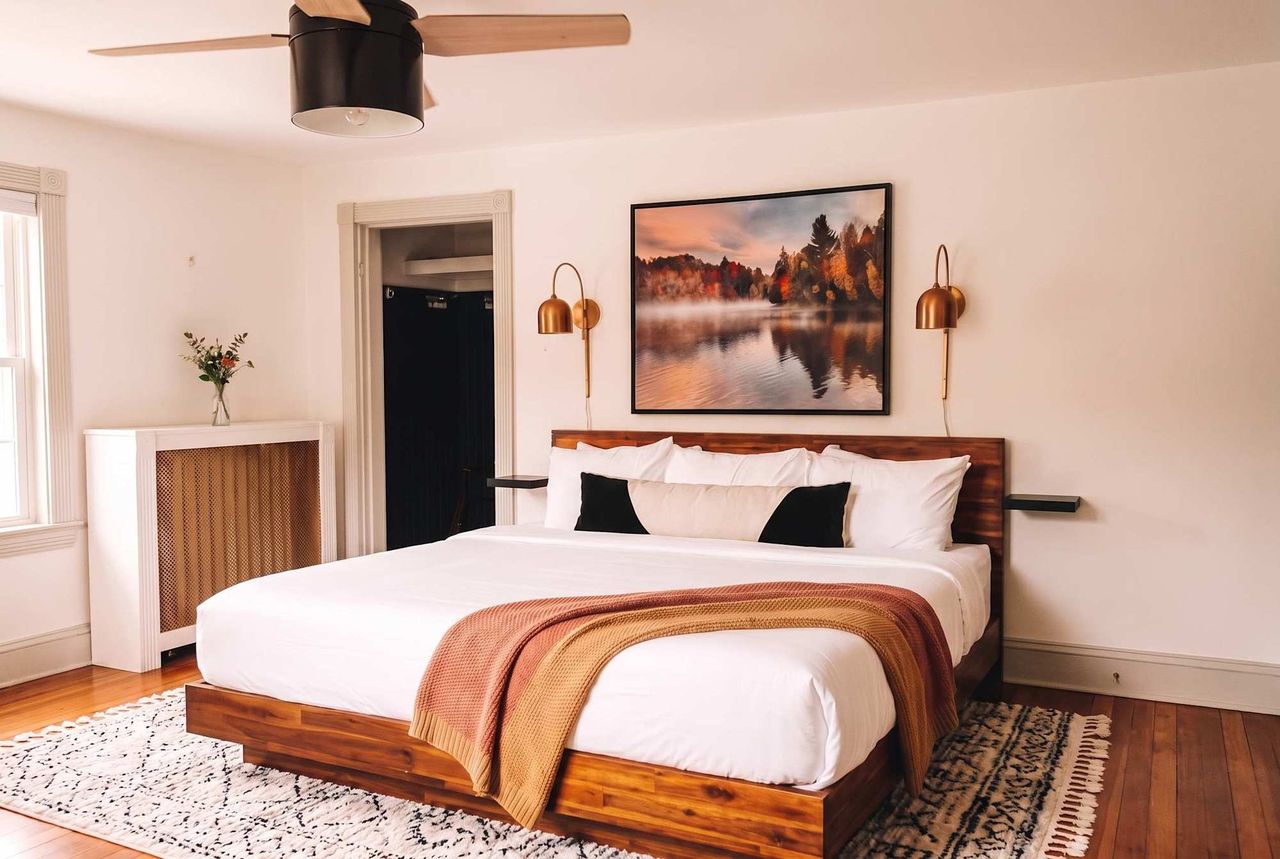
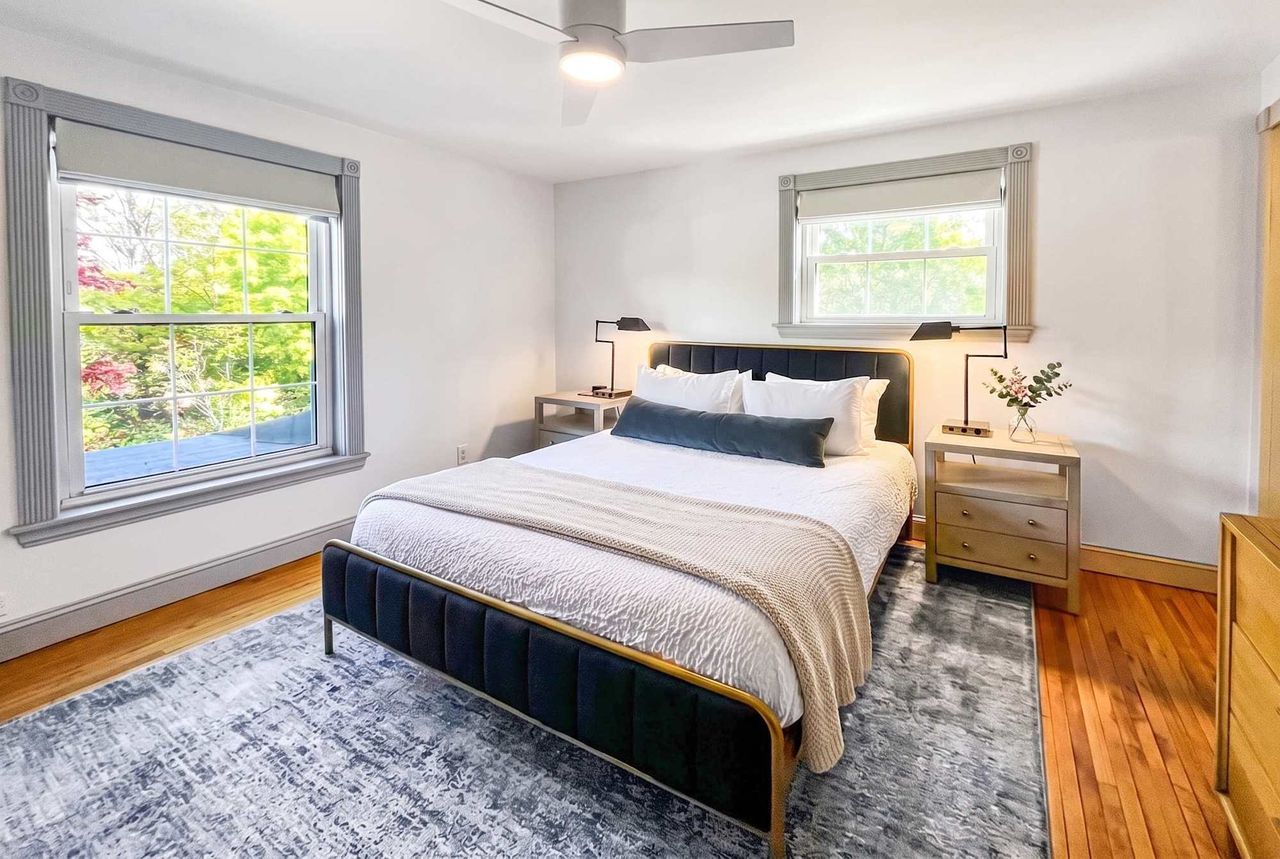
When you're ready to pick dates, the quiet, low-light setup of the house is part of what makes it work, so it's worth looking at the suites with the sky in mind. A room on the calmer side of the property, a warm robe, and a coffee for the walk back in turn a cold night outside into a small treat. When you've settled on a weekend, you can check dates and book directly, and if a particular sky event like the August Perseids is the draw, aim for the darkest nights around it and reach out with any questions.
Come for the mountains, the trails, the drives, all of it. But leave one clear night open for nothing but looking up. It's free, it's right outside the door, and it's the part of the trip people tend to describe first when they get home.
— Launchpoint Lodge, From the lodge