The truest answer to "when should I come to the White Mountains?" is a question back: what do you want out of the trip? There is no single best month here. There is a best month for you — for whether you want a chairlift and fresh snow or a warm river pool, empty trails or full festivals, deep quiet or the roar of peak color. This guide walks through the whole calendar the way we'd talk it through with you ourselves, season by season. We run an adults-only, six-suite inn at the western mouth of the Kancamagus Highway in Lincoln, so we watch every season arrive and leave, and we hear afterward which weeks people wished they'd known about.
We've written separate deep-dives on the big seasons — our fall foliage guide, our winter guide, our spring itinerary, our swimming-holes guide — and we'll point you to them where they go deeper. This page is the overview that helps you pick the window in the first place. It's built on facts we re-check every year: state-park opening dates, Loon's lift schedule, the black fly window, foliage timing, and what closed for good (the Cannon Mountain aerial tramway took its final run in October 2025 — more on that below).
One promise: we won't oversell any month. Every season here has a real cost as well as a payoff. April is muddy. Late spring bites. July is crowded. November goes bare and quiet. Knowing that in advance is the whole point — it's how you match the trip to the month instead of arriving with the wrong expectations.
The short, real answer
If you want the balanced pick and you're only going to read one paragraph: late September through the first days of October is the sweet spot. The bugs are long gone, the weather is crisp and stable, the summer families have gone back to school, the trails and attractions are still fully open, and the color is just beginning to turn at elevation. It is, in our opinion, the single most comfortable week-to-week stretch of the White Mountains year. Word has gotten out, though, and it runs straight into foliage, which is the busiest time of all.
For everyone else, it comes down to three levers that pull against each other: weather, crowds, and what's open. You rarely get all three in your favor at once. Deep winter gives you snow and open ski terrain but cold and short days. High summer gives you swimming and long light but heat, bugs early on, and full parking lots. Foliage gives you the most beautiful two weeks in the Northeast and the heaviest traffic of the year. The shoulder weeks — April, early December, and November after the leaves drop — give you solitude and easy booking, but a lot of the seasonal attractions are shut.
So this guide does two things. It walks the calendar month by month so you know exactly what you're signing up for, and it flags the quiet shoulder weeks that an adults-only inn like ours is built for — the stretches when you can hear the Pemigewasset River instead of a tour bus. Read to the end and you'll be able to name your own best time in about a minute.
December: first snow, holiday buzz, short days
December is the on-ramp to ski season. Loon Mountain — 6 min from our front door — opened for the 2025–26 season on November 21, and by mid-December the snowmaking has usually built a solid base even when nature is slow to cooperate. Early December, before the holidays, is one of the quietest and easiest weeks to be here all winter: the town is decorated, the mountain is spinning lifts, and you often have both mostly to yourself. Then the week between Christmas and New Year's flips a switch and becomes one of the busiest, most in-demand stretches of the entire year. Plan accordingly — that holiday week books up early and stays booked.
Weather-wise, expect cold that's real but manageable, daytime highs commonly in the 20s and 30s Fahrenheit, colder up high and on the summits, with the first reliable natural snow settling in. Days are short: it's dark by about 4:30 p.m., which is part of why a fireplace suite and a quiet inn earn their keep this month. Nights are for a slow dinner in town and a drink by the fire, not for chasing waterfalls in the dark.
What's open: Loon for skiing and riding, the town's restaurants and breweries, and (in a cold enough year, when they can build it) the Ice Castles attraction over in North Woodstock. What's closed: the Flume Gorge shut for the season back on October 25, most Forest Service trailhead access roads and overlook pullouts on the Kancamagus are not plowed even though the highway itself stays open as a through-road, and the Cannon Mountain tramway is gone for good. December suits skiers, holiday romantics, and anyone who wants the postcard version of a New England winter without committing to the coldest depths of it.
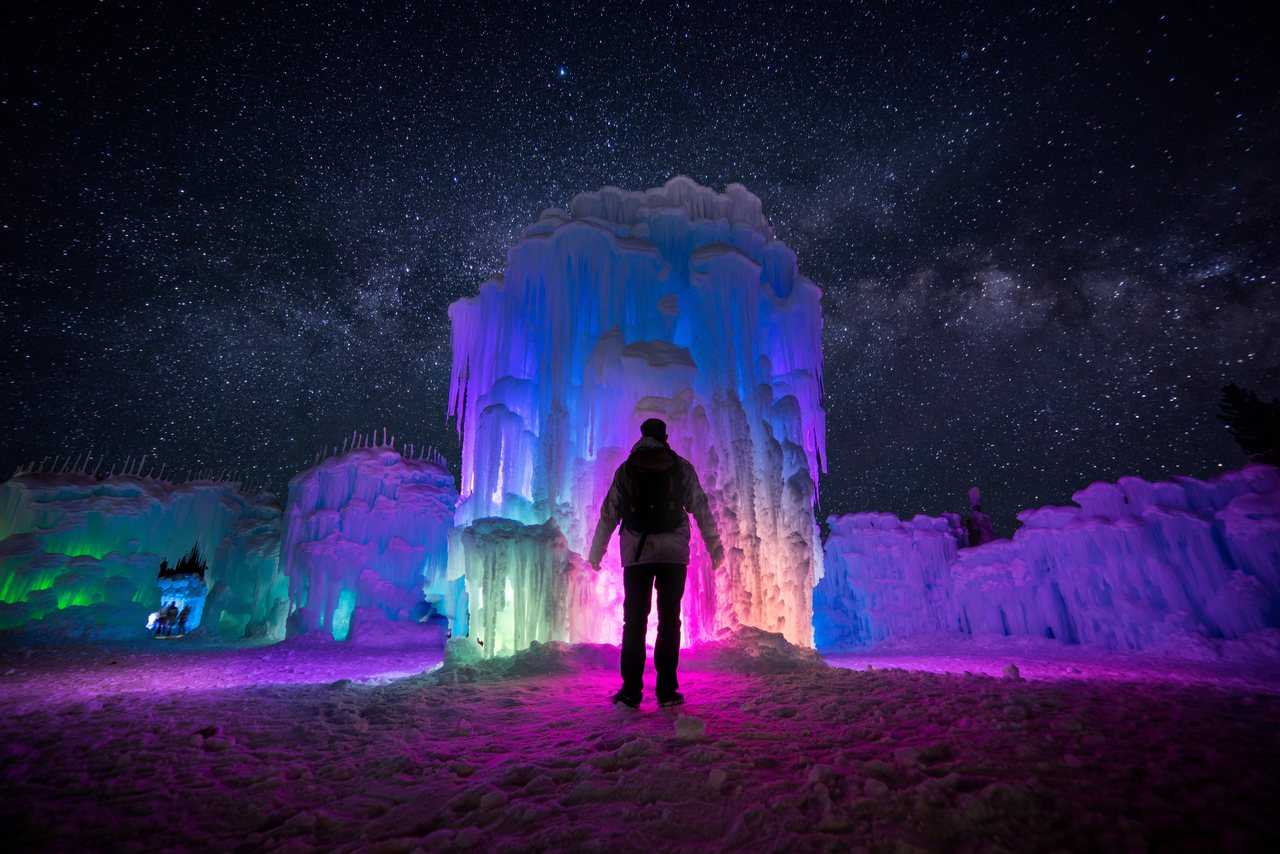
If snow is your whole reason for coming, our winter guide and our winter-in-Lincoln itinerary go deeper on lift tickets, gear, and cold-weather logistics.
January and February: the deep, reliable middle of winter
This is winter at full commitment. January and February deliver the most dependable snow of the year and the best conditions at Loon, which is exactly why they also bring the season's cold snaps. Daytime highs often sit in the teens and 20s, single digits or below on a hard morning, and colder and windier the higher you go. If you're skiing, this is prime time. If you're not, you'll want indoor plans, warm layers, and a reason to be here that survives the temperature.
Crowds split cleanly by the calendar. Weekends and the two big holiday stretches — the Martin Luther King Jr. weekend in January and the Presidents' Day / February school-vacation week — are busy and in high demand, with the mountain and the town full. Midweek in January, by contrast, is one of the most peaceful windows of the entire year. A Tuesday-through-Thursday in late January is the classic quiet getaway: short lift lines, a calm inn, uncrowded restaurants, and the kind of hush that only deep snow and an adults-only house can give you. We'll say more about that below, because it's one of our favorite recommendations to make.
What's open: Loon skiing and riding, snowshoeing and cross-country options in the national forest, the breweries and restaurants in Lincoln and North Woodstock, and the Ice Castles when the cold holds. What's closed or limited: the Flume Gorge (winter), Franconia Notch's summer attractions, and, again, the Cannon tramway — retired, do not plan around it. Franconia Notch does keep its winter draws, with skiing at Cannon and skating and winter access at Echo Lake, but the summit tram is not one of them anymore.
This window suits skiers and riders who want conditions over comfort, winter-quiet seekers who come specifically for the empty midweek, and couples who treat a snowstorm and a fireplace as the entire itinerary. It does not suit anyone hoping to hike much or see the gorges and waterfalls up close — those wait for spring.
March: late-season snow meets the first thaw
March is two months wearing one name. The first half often skis beautifully — a deep base, longer daylight, and softer afternoon snow that many people prefer to January's cold. Loon typically runs well into April (the 2025–26 season is scheduled to close April 18), so early-to-mid March is a good, and quieter, time to ski once the February vacation crowds have gone home. Sunny spring ski days with the lifts uncrowded are one of the season's underrated pleasures.
The second half of March is where the thaw starts to show. Days climb above freezing, nights drop back below it, and that freeze-thaw cycle is what kicks off mud season and starts the sap running (this is maple sugaring time across New Hampshire). Lower trails turn to a mess of mud and rotten snow — bad for hiking, still fine for skiing up top — and the rivers begin to wake up. It's a transitional, in-between feeling: not quite winter, not yet spring.
Crowds are moderate and easing through the month, with real quiet on weekdays. What's open: Loon skiing through mid-April, town amenities year-round. What's still closed: the Flume Gorge (it doesn't open until May), most trailheads (mud and lingering snow), and Franconia Notch's summer attractions. March suits value-minded skiers chasing softer, quieter spring conditions, and anyone who likes a season on the turn — but if your plan is hiking or waterfalls, hold off a couple of months.
April: mud season — the deep quiet, and what it costs you
We'll be straight with you: April is the hardest month to sell and the easiest to book. Loon closes mid-April, and once it does, the region enters what locals flatly call mud season. The snow is mostly gone at valley level but the ground is saturated, the lower trails are a soup of mud that you shouldn't be tearing up anyway (the Forest Service asks hikers to stay off soft, thawing trails to prevent erosion), the higher trails still hold snow and ice, and most of the seasonal attractions haven't opened yet. The Flume Gorge is still closed. The gondola scenic rides at Loon haven't started. It is, on paper, the low point of the year.
And yet. If solitude is the entire point of your trip, late April can be quietly wonderful. The town is calm, the inn is peaceful, the rivers are running high and loud with snowmelt, the first green is starting to show, and you'll have the roads and overlooks largely to yourself. This is the deepest quiet-shoulder window of the year — an adults-only inn with a fireplace and mostly TV-free suites is arguably at its best when there's nothing to do but read, walk, and eat well. You just have to want that, and not arrive expecting open gorges and dry summits.
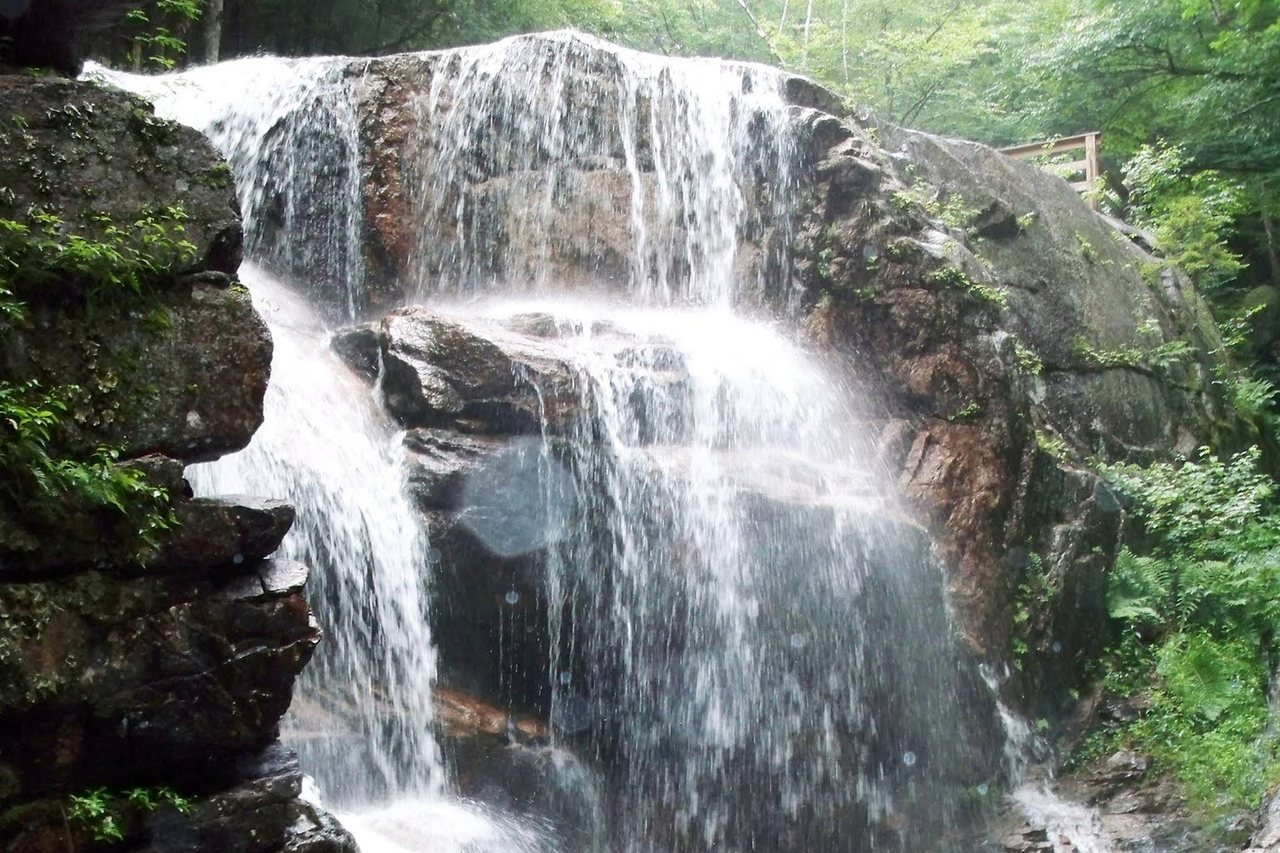
One important upside: the waterfalls are spectacular in April and early May. Snowmelt turns every cascade into full flood. Georgiana Falls, the roadside Basin, and the bigger drops off the Kancamagus are at their most powerful right now — worth the trip if moving water is what moves you. Just enjoy them from well back, since the water is high, cold, and fast, and the rocks are slick.
April suits writers, readers, off-grid couples, and anyone whose ideal getaway is emptiness and a warm room. It does not suit first-timers who want the full menu of attractions open, and it is not a hiking month unless you're experienced with lingering snow up high. If you're weighing it, our spring itinerary lays out exactly what is and isn't doable this time of year.
May: the greening — waterfalls, the Flume reopens, and the black flies arrive
May is when the mountains come back to life, and it's a month of sharp contrasts. Early May, the valleys green up fast, the waterfalls are still thundering with the last of the snowmelt, and the marquee attraction reopens: the Flume Gorge's 2026 season begins May 8. Timed-entry reservations are the way to go — book online in advance, because walk-in slots aren't guaranteed and the boardwalk through the gorge is at its dramatic, high-water best in spring. This is one of the most rewarding times to walk it.
Now the real part, and we mean this as a public service: late May is the start of black fly season, and in the White Mountains that is not a minor footnote. From roughly the last week of May through much of June, these small biting flies are out in force, worst near the fast-running streams and waterfalls that make this area beautiful in the first place. They're at their peak in late May and early June. If you're spending time outdoors in this window, come prepared — a head net, long sleeves, and repellent (DEET, or permethrin treated onto your clothing) are the standard local defense, not an overreaction. Plenty of visitors have their trip half-ruined simply because nobody warned them. Consider yourself warned.
Weather in May is pleasant and variable: warming days, cool nights, occasional rain, and the real chance of snow lingering or even falling on the high summits well into the month. The higher peaks run their own colder, harsher climate all year, so check the higher-summits forecast before any big hike, not just the town forecast. Crowds are light-to-moderate — this is still shoulder season, quieter and more in-reach than summer — with the exception of Memorial Day weekend at the end of the month, which is the unofficial kickoff to the busy season.
May suits waterfall chasers, gorge-walkers, and shoulder-season travelers who want the attractions open without the summer crush — as long as they respect the bugs. If black flies are a dealbreaker for you, this is the month to either skip or plan around by staying out of the deep woods at dusk and near rushing water.
June: the bugs break, and early summer settles in
June is the payoff for surviving the black flies. The flies typically peak in late May and early June and then start to fade through the middle of the month as the streams drop and warm — by late June they're usually a minor annoyance rather than a menace, though in a cool, wet year, or up at higher elevations, they can hang on into July. So the back half of June is often the first comfortable stretch of full summer: long days (light past 8:30 p.m. around the solstice), green everything, still-strong waterfalls, and moderate crowds before the July peak arrives.
The rivers, though, are still cold and often high in early June — this matters if swimming is on your list. The Swift River along the Kancamagus doesn't really warm up and calm down enough for comfortable swimming until later in the month at the earliest, and usually into July. Early June is for looking at the water, not getting in it. We'll cover the swimming rules in the summer section, because they're important and enforced in places.
What's open by June: essentially everything except the ski lifts. The Flume Gorge is running, Loon's summer operations including the scenic Gondola Skyride are underway (the skyride runs through summer and fall — check loonmtn.com/hours for the current day's schedule, as hours shift), the trails have dried out and firmed up, and the town is in full summer swing. What's still gone: the Cannon tramway, permanently.
June suits hikers who want long days and full trail access without August's crowds, and anyone who wants summer's benefits with a lighter footprint of visitors — provided they've timed it after the bugs break. The last two weeks of June are, quietly, one of the better-kept windows of the year.
July and August: high summer — swimming, long days, and the crowds
This is peak season number one. July and August bring the warmest weather, the longest days, the fullest calendar of events and festivals, and, inevitably, the most people. Daytime highs typically land in the 70s and low 80s in the valleys, cooler and more comfortable than the cities to the south, which is exactly why so many people come — the White Mountains are New England's summer air conditioning. Weekends and the stretch around July 4th are the busiest and most in-demand of the summer; parking lots at the popular trailheads and swimming holes fill early, sometimes by mid-morning.
Summer is river season, and here's where we have to be careful and clear. The sanctioned place to swim on the Kancamagus is Lower Falls, and only when the Swift River is low and calm — the pool there has a sandy bottom and is a local favorite in hot weather once the current settles and the water warms. But when the river is high or fast, stay out; heavy rain can raise it within hours, and the granite is slick. Just as important: swimming is prohibited and enforced at Rocky Gorge, farther east toward Conway, for safety reasons. Rocky Gorge is a look-don't-swim stop — a beautiful footbridge and a pond loop, not a swimming hole. Our swimming-holes guide spells out the safe spots and the off-limits ones in detail; please read it before you plan a river day with anyone.
What's open: everything. Flume Gorge, Loon's Gondola Skyride and summer activities, every trail, every attraction, every restaurant and brewery. Arrive early to beat the parking, carry the ~$5/day Forest Service parking pass for the trailheads that require it (or the roughly $80 America the Beautiful annual pass if you're touring several federal sites), and remember the state-park day-use fees at places like the Flume.
High summer suits families, first-timers who want the full experience with everything running, and anyone whose plan revolves around swimming and long daylight. A candid note, since we're an adults-only inn: July and August are the region's most family-heavy months. We love that families come to the Whites — but if what you're after is quiet, this is the loudest window, and you may prefer to aim for September or the June shoulder instead. If you're traveling with children under 12, we'll happily point you toward lodging built for that; we just aren't it.
September: the quietest excellent month
If we could bottle one month and sell it, it might be September. After Labor Day, the summer crowds evaporate almost overnight — the families are back in school — but summer's benefits linger for weeks. The days are still warm and often sunny, the nights turn crisp and perfect for sleeping, the bugs are done, the rivers are at their warmest and calmest for swimming, and every attraction is still fully open. Early-to-mid September is arguably the most comfortable, least crowded, best-value stretch of the entire warm season.
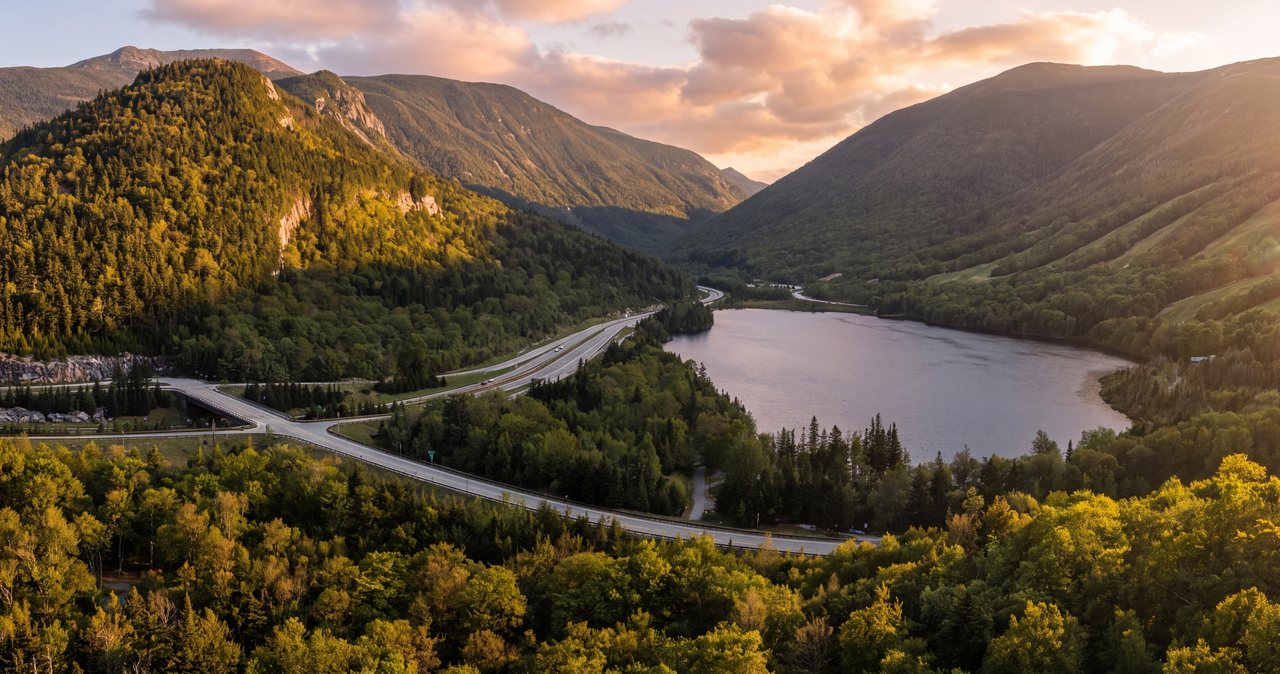
Late September is where the magic starts. The color begins turning at the highest elevations first — the summits and the northern reaches show the earliest reds and golds — while the valleys around Lincoln stay green a while longer. This staggered, top-down turn means late September gives you the first act of foliage without the peak-foliage crowds that arrive in October. Driving the Kancamagus Highway in the last week of September, you'll catch the ridges lighting up while the roadsides are still summer-green. It's a beautiful in-between that a lot of people miss by assuming they have to wait for peak.
What's open: everything, still. Flume Gorge (open through October 25), Loon's Gondola Skyride into the fall, all trails, all of town. Weather is the classic New England early autumn — warm days, cool nights, low humidity, the occasional cold front. Crowds build gradually through the month toward the October peak, so the earlier in September you come, the quieter it is.
September suits just about everyone: hikers wanting cool, bug-free days; couples wanting warm-but-quiet; late swimmers; and leaf-peepers who'd rather get ahead of the crush. For an adults-only inn, the post-Labor-Day-to-late-September stretch is close to ideal — all the payoff, almost none of the noise. It's the month we'd steer most guests toward if they asked us cold.
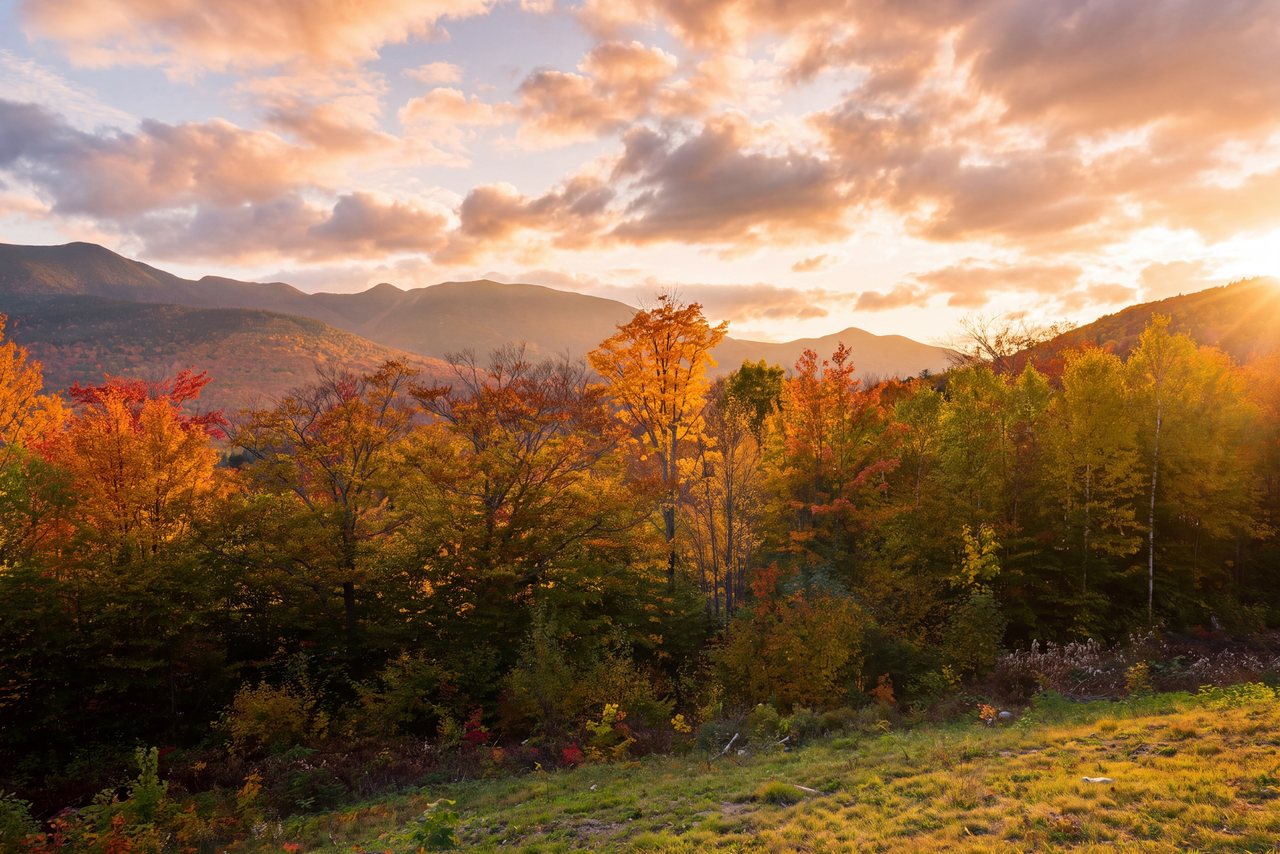
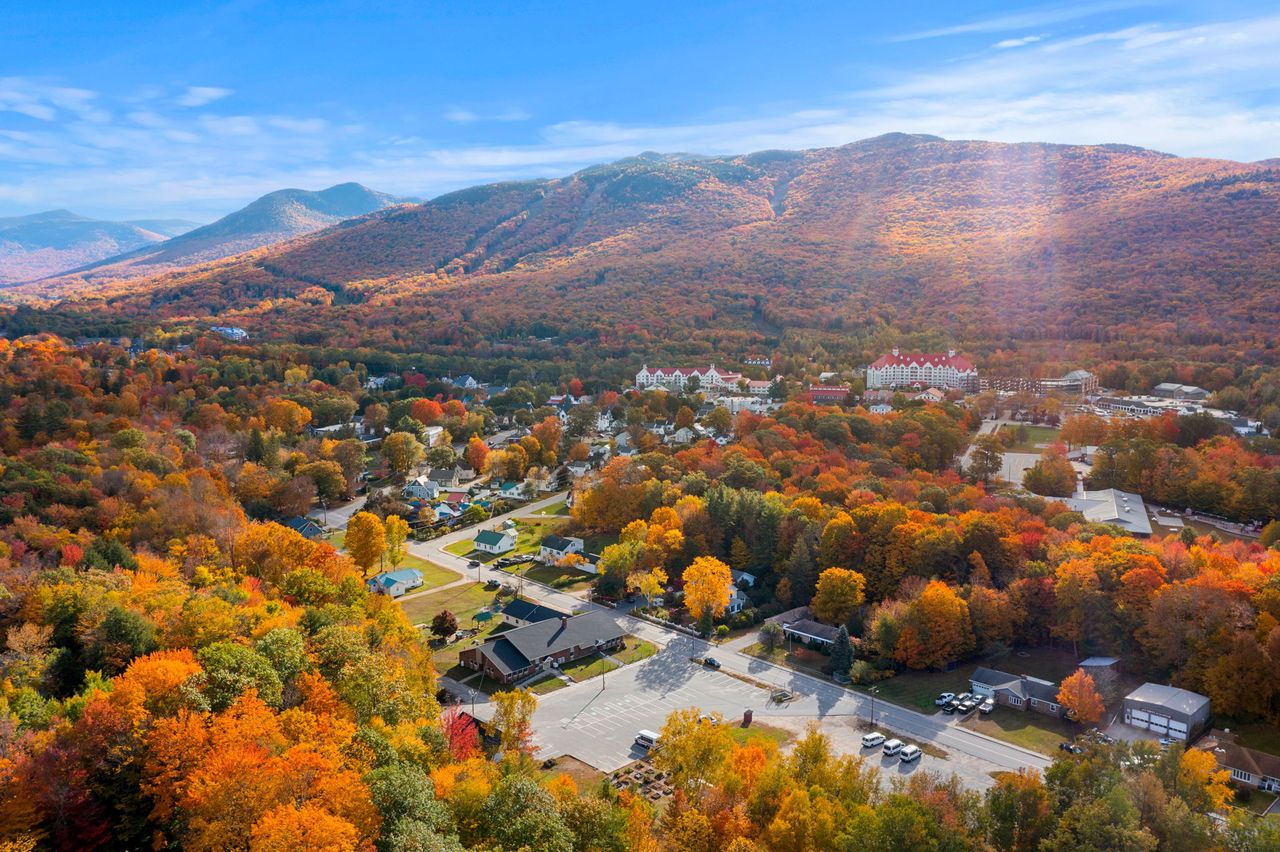
October: foliage — the most beautiful, most crowded two weeks
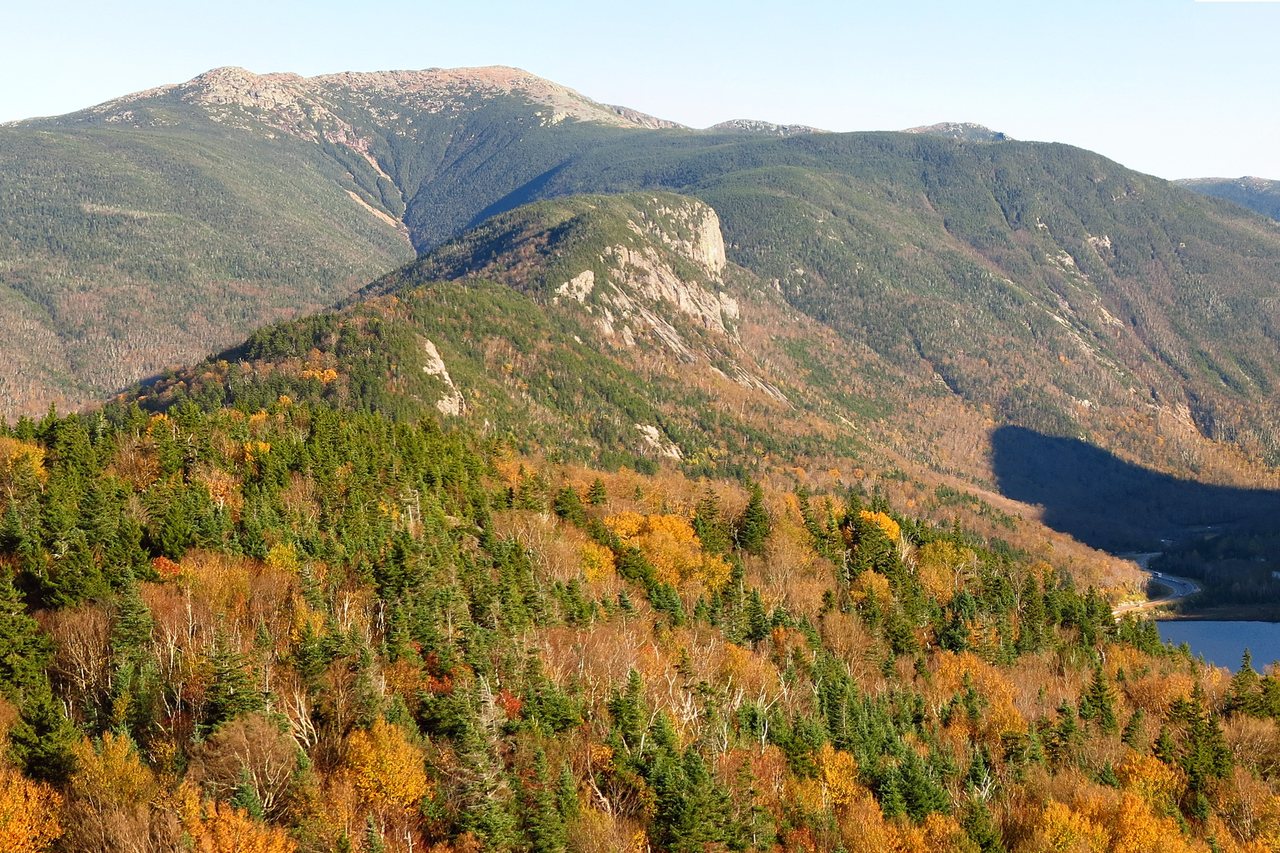
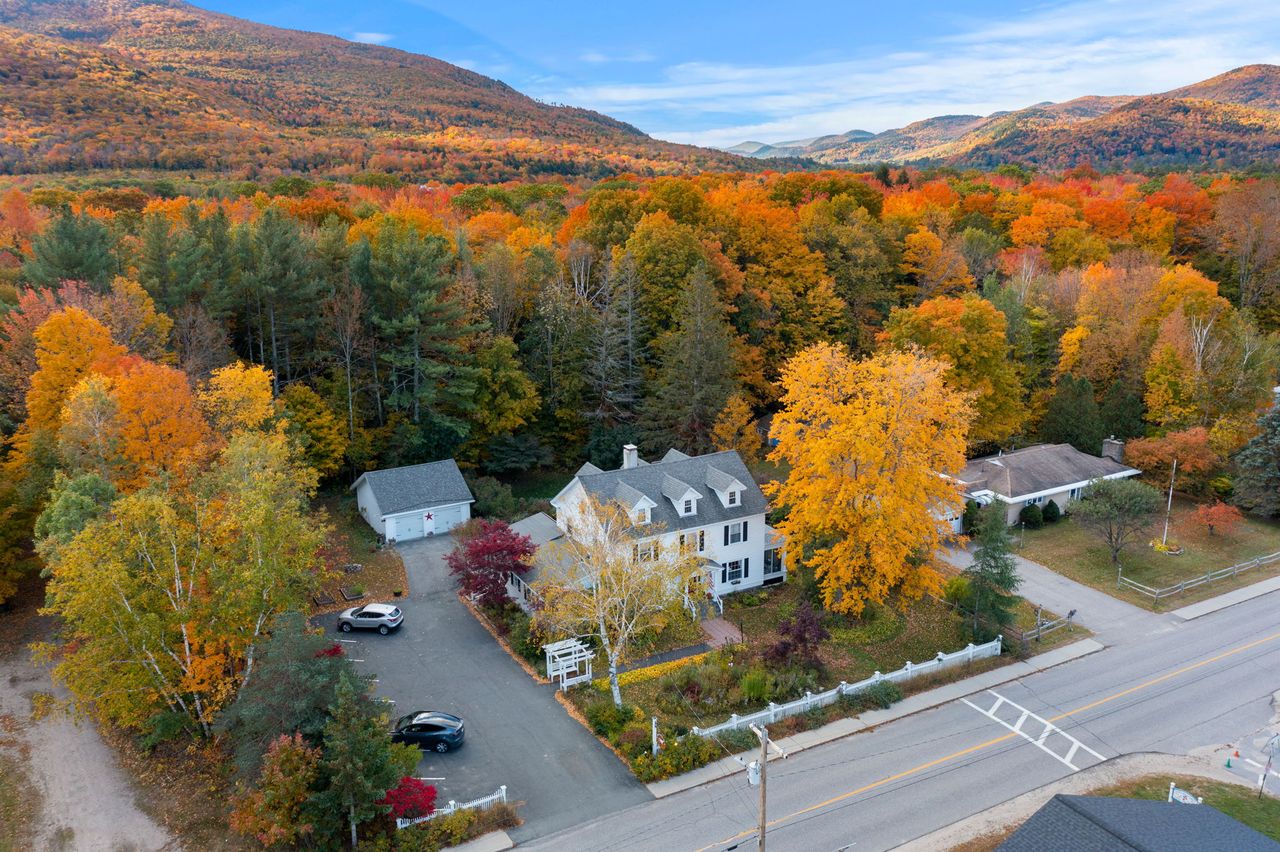
October is the headline. Fall foliage in the White Mountains is one of the great natural spectacles in the country, and near Lincoln, peak color typically lands around the second week of October — think roughly the 7th through the 12th in an average year. But write that in pencil. Foliage timing shifts every year with the weather (a warm, wet late summer pushes it later; an early cold snap pulls it forward), and it shifts by elevation on any given day — the summits and high notches peak first, sometimes in late September, while the valley floors and the color right around town lag a week or more behind. On the same afternoon you can be too late up high and too early down low.
The practical upshot: don't fixate on a single date. If you want to guarantee good color, give yourself a window of several days somewhere between roughly October 5th and 15th, and be willing to chase elevation — drive up the Kancamagus or ride Loon's Gondola Skyride to find whichever band is peaking that day. Because the color moves with the terrain, a car and a flexible morning beat a fixed itinerary every time. Our fall foliage guide goes deep on the where and when, and our fall-foliage itinerary lays out a day-by-day plan.
Now the crowds, because they're real: peak foliage is the single busiest time in the White Mountains. Columbus Day / Indigenous Peoples' Day weekend in particular is the high-water mark of the entire year for visitation. The Kancamagus can back up, the popular pullouts and trailheads fill by early morning, restaurants get busy, and rooms across the region are in their highest demand — book well ahead, and expect company everywhere you go. It is worth it. It is also not quiet.
A lift-served note, since people ask: for a summit foliage view without the hike, ride Loon's Gondola Skyride to the observation tower and Summit Café. Do not plan on the Cannon Mountain aerial tramway — it took its final run on October 26, 2025, and is closed for a multi-year replacement. Loon's gondola is the lift-served summit view in this area now. October suits leaf-peepers, photographers, and anyone who wants the definitive New England autumn — and who's made peace with sharing it.
Late October into November: stick season and the great quiet
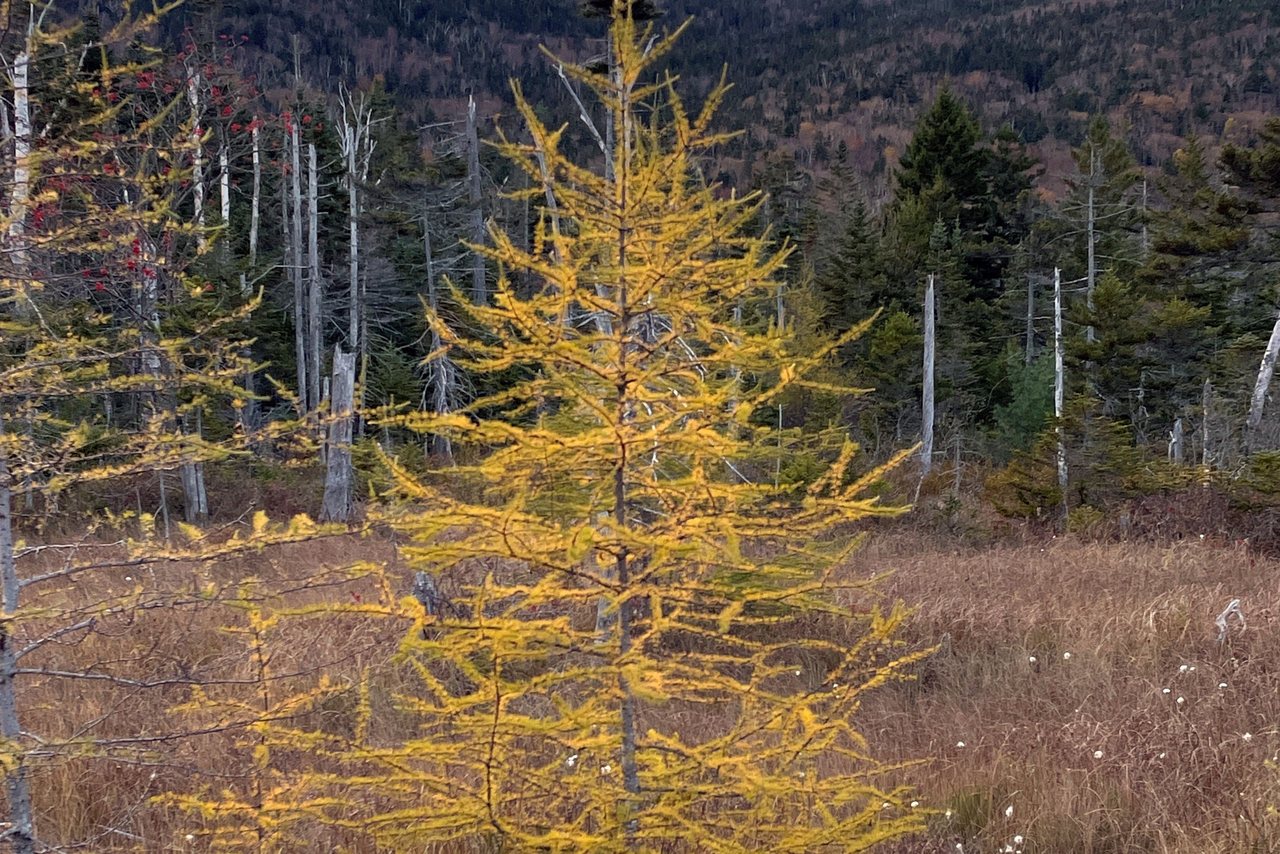
Once the leaves drop — usually in the second half of October down at valley level — the region exhales into what locals call stick season: bare trees, a spare brown-and-gray landscape, and a deep, sudden quiet after the foliage frenzy. The Flume Gorge closes for the year on October 25. Loon's summer and fall operations wind down. Many trailhead roads and overlooks stop being maintained. And for a few weeks, before the ski season fires back up, the White Mountains go about as quiet as they ever get.
It's an acquired taste, and we don't pretend otherwise. The landscape isn't at its prettiest — the color's gone, the snow hasn't come — and a lot of the attractions are shut. But November has a stark, contemplative beauty, the demand and crowds are among the lowest of the year, and the town settles into its off-season rhythm. If you value being nearly alone in a beautiful place over having a full slate of things to do, early-to-mid November is a real option, and one very few visitors consider. Then Thanksgiving week and the return of skiing at Loon (opening day was November 21 last season) pull the region back toward winter.
Weather turns cold and raw, with the first snows arriving up high and eventually down low; days get short fast. What's open: the town's restaurants and breweries stay running year-round, and there's easy road access to the notches and the still-flowing rivers. What's closed: the Flume, the gondola scenic rides, and most seasonal outdoor attractions.
Late October into November suits off-season purists, writers, and couples who want the mountains stripped down to their bones and the inn to themselves. If you want lots of open attractions or reliable snow, another window will suit you better — you're in the gap between seasons, and for the right traveler that is exactly its charm.
What's open when — the quick seasonal reality check
Because "what's open" trips up more trips than weather does, here's the plain version. The Flume Gorge runs roughly early May through late October (2026: May 8 to October 25) and is fully closed in winter — do not build a winter trip around it. Loon's scenic Gondola Skyride runs summer through fall, not in winter as a scenic ride; check the resort's hours page for the day you're coming, since the schedule tightens in spring and fall. Loon's ski and ride season runs roughly late November through mid-April (2025–26: November 21 to April 18), weather and snowmaking permitting.
The one that catches longtime visitors: the Cannon Mountain aerial tramway is retired. Its final run was October 26, 2025, and it's closed for at least a couple of years while a next-generation replacement is built. If a guidebook, blog, or old itinerary tells you to ride the Cannon tram, it's out of date. For a lift-served summit and its views, use Loon's gondola instead.
Swimming has seasons and rules too. The rivers are only warm and calm enough for swimming from roughly late June into September, and even then only when the water is low and gentle. Lower Falls on the Kancamagus is the sanctioned spot when conditions allow; Rocky Gorge is not — swimming there is prohibited and enforced, so treat it as a scenic stop. In spring, the same rivers are gorgeous to look at and best enjoyed from the bank, since they run cold and high.
Year-round, the town of Lincoln and neighboring North Woodstock keep their restaurants and breweries open, I-93 and the through-portion of the Kancamagus stay plowed and drivable in winter (even when the pullouts and trailhead roads don't), and our inn is open every season. When in doubt about a specific attraction on a specific date, call ahead or check the official page — dates and hours shift year to year, which is exactly why we re-verify them.
The quiet shoulder weeks an adults-only inn is built for
Here's the recommendation we make more than any other, and it's the one most visitors don't think to ask for. The best weeks to be here as a couple looking for genuine quiet aren't the famous ones — they're the shoulder weeks between the peaks. Specifically: early December before the holidays, the midweek days of January and early March, late April into early May, the back half of June, early-to-mid September, and early November. In each of those windows the demand is lower, booking is easier, the town is calm, and the landscape is doing something worth seeing.
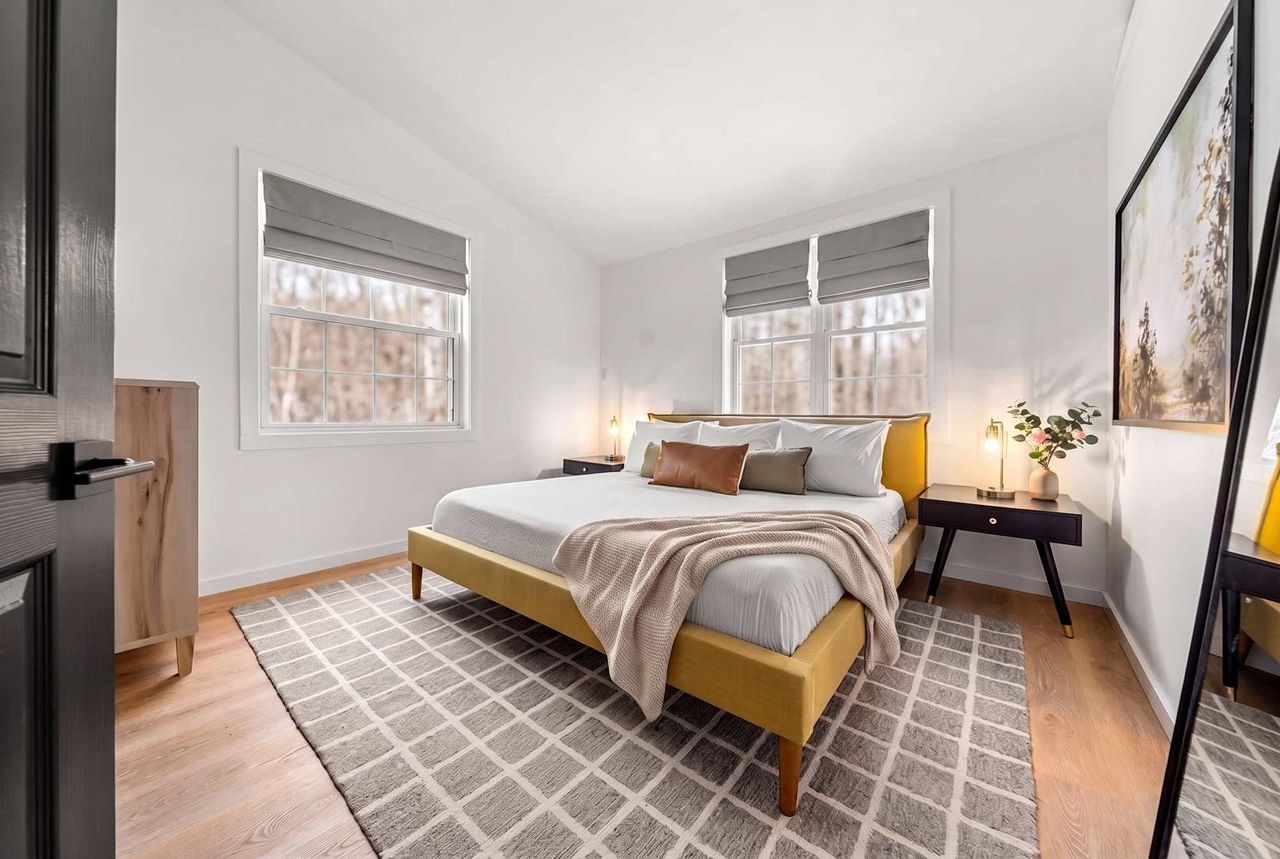
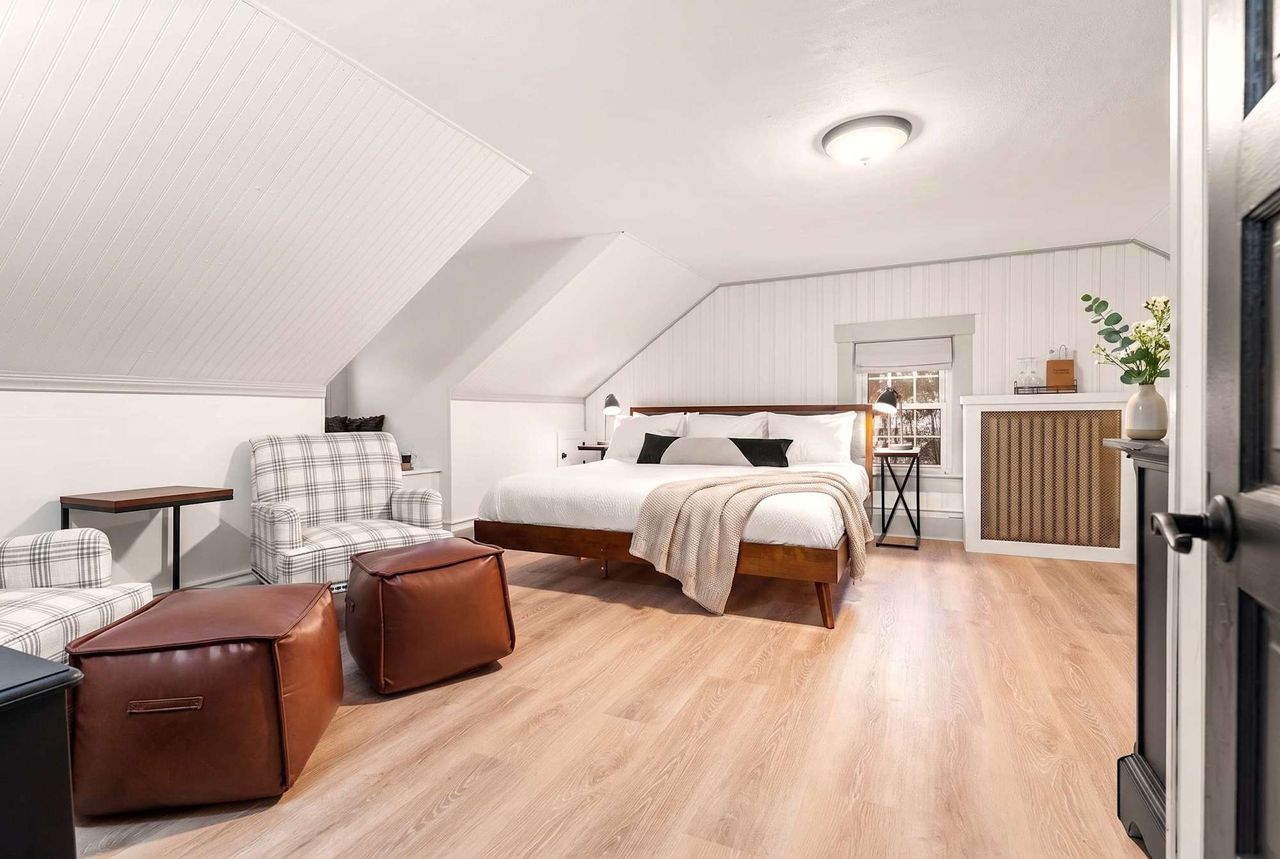
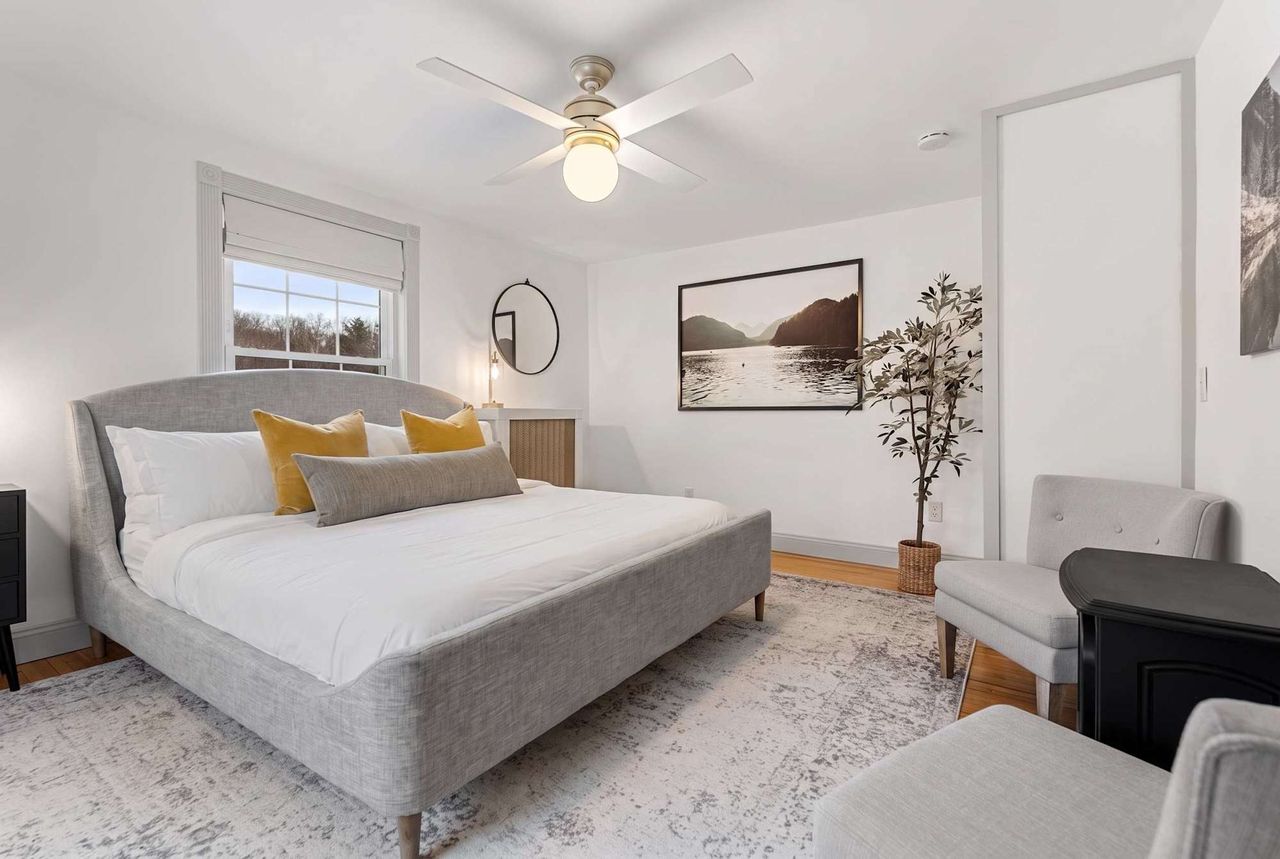
For an inn like ours — six suites, adults only, mostly TV-free, a virtual innkeeper a message away, self check-in — those quiet weeks are where the whole experience clicks. A snowy Tuesday in late January with the fireplace on and the mountain nearly empty. A green, loud-with-snowmelt morning in late April. A crisp, bug-free, warm-nights week in early September before the leaves and the crowds. These are the times when "a quiet inn in the mountains" stops being a phrase and becomes the actual thing. You're not fighting for a parking spot or a dinner table, and the silence at night is total.
The two windows to book earliest, if your dates are fixed, are the opposite of quiet: fall foliage (early-to-mid October, especially the holiday weekend) and the Christmas-to-New-Year ski week. Those are the highest-demand stretches of the year and they fill first. Everything else has more give. If you're flexible, tell us what you're after — quiet, snow, color, waterfalls, swimming — and we'll tell you squarely which week fits, including the ones that never make the top-ten lists.
Midweek beats weekend in almost every season for quiet and availability. If you can swing a Sunday-through-Thursday over a Friday-and-Saturday, do it — you get the same mountains with a fraction of the people.
How to decide: match the month to your trip
Put it all together and the decision gets simple. Come for skiing and snow: December through mid-April, with January and February the most reliable and mid-March the sweet spot for softer, quieter spring conditions. Come for the definitive New England autumn: early-to-mid October, knowing you're trading crowds for the most beautiful two weeks of the year. Come for warm-weather everything — swimming, long hikes, full attractions, festivals: July and August, arriving early each day to beat the parking.
Come for the best all-around balance of weather, open attractions, and manageable crowds: early-to-mid September, hands down. Come for waterfalls at full power: April and early May, when snowmelt has every cascade roaring (just respect the cold, high water). Come for deep quiet and near-solitude at an easy pace: late April's mud season or early November's stick season — spare landscapes, most attractions closed, and the mountains nearly to yourself. Come for summer's payoff without the black flies or the peak crush: the back half of June.
The two things to plan around, whatever you pick: the black fly window (roughly late May into mid-June — bring the head net) and the two highest-demand stretches (foliage and the winter holidays — book early). Everything else is a matter of taste, and there's no wrong answer, only the wrong expectations for the week you chose. That's the whole reason we wrote this the plain way.
Still torn? Reach out. We've talked hundreds of guests through this exact decision, and we'd rather help you pick the right week — even a quiet one that's easy to book — than have you arrive in the wrong season for the trip you had in mind.
Safety & conditions
- Rocky Gorge: swimming is prohibited and enforced, for everyone's safety. Treat it as a look-only stop (footbridge and pond loop), never a swimming hole.
- Lower Falls on the Kancamagus is the sanctioned swim spot, and only when the Swift River is low and calm. Stay out when the water is high or fast; the granite is slick, and heavy rain can raise the river within hours.
- Spring waterfalls are gorgeous but the water is cold, high, and powerful with snowmelt — stay back from edges and don't wade or swim in April–May.
- Black fly season (roughly late May into mid/late June): carry a head net, wear long sleeves, and use DEET or permethrin-treated clothing, especially near running water and at dusk.
- The high summits are colder, windier, and can see snow in any month. Check the higher-summits forecast — not just the valley forecast — before any exposed hike.
- Winter driving: I-93 and the through-portion of the Kancamagus stay plowed, but pullouts and trailhead roads often don't. Carry basics, allow extra time, and don't assume every overlook is accessible.
- The Cannon Mountain aerial tramway is retired — don't plan any trip around riding it. Use Loon's Gondola Skyride for a lift-served summit instead.
Where to stay
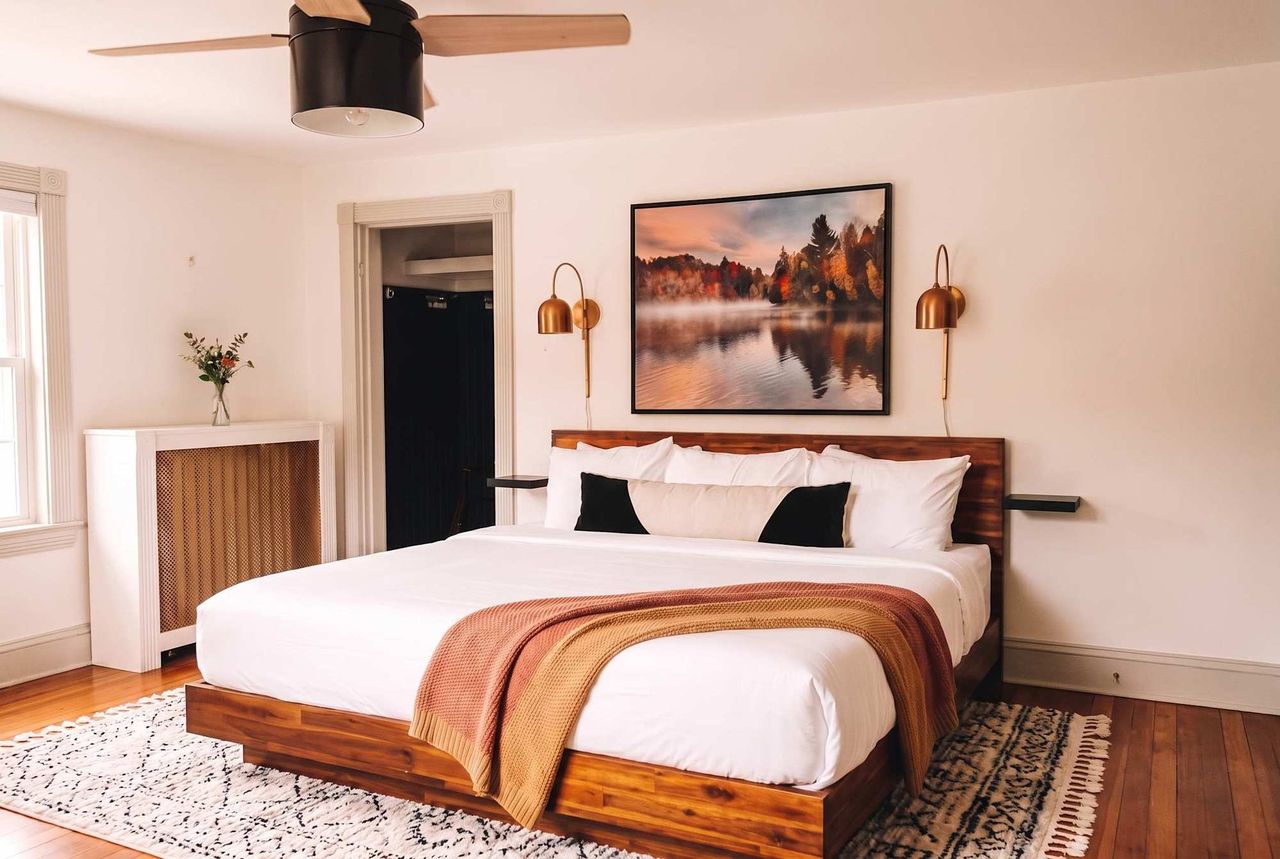
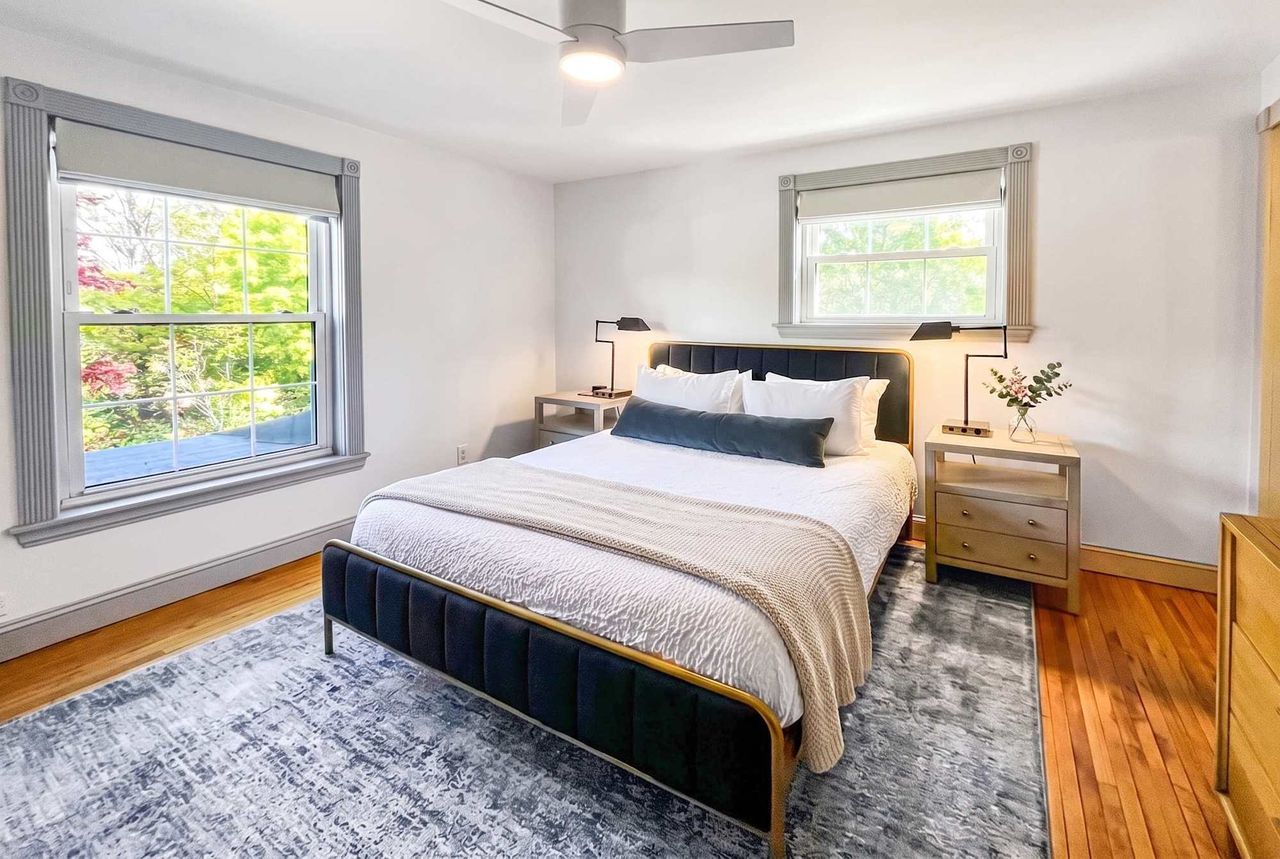
Launchpoint Lodge is an adults-only, six-suite inn in a restored 1902 colonial at 191 Pollard Road in Lincoln — Exit 32 off I-93, at the western mouth of the Kancamagus Highway and 6 min from Loon Mountain. Because we're an easy drive from everything this guide covers, we're a working base in any season: fireplace suites for deep winter, first-floor no-stairs comfort for shoulder-season ease, and rooms made for unplugging, most of them TV-free, in the off-peak weeks when quiet is the entire point. Check-in is keyless and self-serve, so late arrivals after a long foliage drive or a full ski day are no problem.
We keep this page current because we'd rather help you pick the right week than fill a room in the wrong one. Whichever season you're weighing — snow, color, waterfalls, swimming, or just silence — tell us what you're after and we'll point you to the window that fits, including the quiet shoulder weeks that never make the lists. Live availability is always on our booking calendar; for the softer, easier-to-book stretches, just ask us.
Sources & official info: nhstateparks.org · loonmtn.com · cannonmt.com · fs.usda.gov · visitwhitemountains.com · extension.unh.edu
— Launchpoint Lodge, From the lodge