Every spring, a few weeks before the first warm weekend, someone asks us about the black flies. They have read something online, or heard a story from a friend who came up one June and spent the trip swatting. The short answer we give is this: the flies are real, they run on a fairly predictable calendar, they are worst in exactly the pretty places you came here to see, and the people who live at these trailheads walk straight through the season with a net folded in a pocket. What follows is the calendar, the kit that actually works, and how we plan a June hike around them so the bugs stay a footnote instead of the whole story.
The black fly calendar in the White Mountains
Black flies breed in clean, fast-moving water, which is most of the water up here. The larvae spend the winter clinging to rocks in the streams, and they pupate in early spring as the water warms. The adults hatch out over the following weeks, and the timing tracks elevation and how far north you are more than the calendar date. Down in the valleys around Lincoln the first ones show up in mid-May. The peak runs from late May through the end of June. The last of them hang on into early July at the higher, cooler ponds and along the shaded upper trails, where spring arrives weeks later than it does in town.
The species that does most of the biting is a black fly with pale legs that people here call the white-stockinged fly, and New Hampshire's cooperative extension is a good plain-English source on it if you want to read more. In the southern part of the state it emerges in early to mid-May and fades by the end of the month. Up here in the north it comes later, late May into early June, and stays abundant for about a month, longer in the high country. That lag is worth understanding, because the bugs work uphill through the season as a wave. When the valley trailhead has gone quiet in early July, a pond two thousand feet higher can still be busy. Our spring guide to the White Mountains lays out how the whole season stacks up, mud and bloom and bugs together.
A cold, late spring pushes the whole calendar back by a week or two, and a warm one pulls it forward, so treat the dates here as a pattern rather than a promise. Some years are heavier than others, and a rainy stretch that keeps the streams full and warm can extend the peak.
By the Fourth of July the valley floor is mostly clear. By the middle of July the ponds have settled too, and the mountains hand you the long, warm, largely bug-free stretch that runs to Labor Day. If your calendar is flexible and bugs are your main worry, the second half of July and August are the easy answer. If you can only come in June, that is fine, and most of this piece is written for you.
One thing worth adding about timing: the black flies do not have the summer to themselves. As they fade in July, deer flies take over the warm middle of the day along sunny trail edges, circling your head and drawn to movement. The no-see-ums, the tiny biting midges, come out near the water on still summer evenings, and mosquitoes hang around all season near standing water without ever really being the main event up here. The same net, brimmed hat, and long sleeves that handle the black flies handle these too.
Black fly bites and disease risk
The first thing to know is that black flies in New Hampshire carry no disease that affects people. They are a nuisance and not a health threat, which sets them apart from the mosquito and, more importantly, from the tick. A black fly bite itches and can swell, and that is the whole cost of it.
They bite differently than a mosquito. Rather than a clean needle, a black fly cuts a small nick in the skin and feeds from the pool that wells up, which is why the bite often leaves a tiny red spot and why it tends to swell and itch more than you would expect from such a small insect. Some people barely react. Others get firm welts that stay warm and itchy for a couple of days. They go for the places where skin meets air at the edges of your clothing: the hairline, behind the ears, the back of the neck, the wrists, and the ankles. And unlike mosquitoes, which come out at dusk, black flies bite in broad daylight, which is exactly when you want to be on the trail. If a bite swells, a cold compress and an over-the-counter antihistamine settle it down, and the main rule is not to scratch it open, because the broken skin is what gets infected.
The bug we tell guests to take seriously is the tick, not the black fly. Ticks carry Lyme disease and a few other things, they are active from spring through fall, and they do not announce themselves the way a cloud of flies does. A black fly bite is loud and harmless; a tick bite is quiet and worth a check once you are back at the house. Our guide to White Mountains wildlife covers ticks and the sensible habits around them in more detail. Treat the flies as an annoyance to manage and the ticks as the reason you do a body check before the shower.
Where the flies are worst near Lincoln
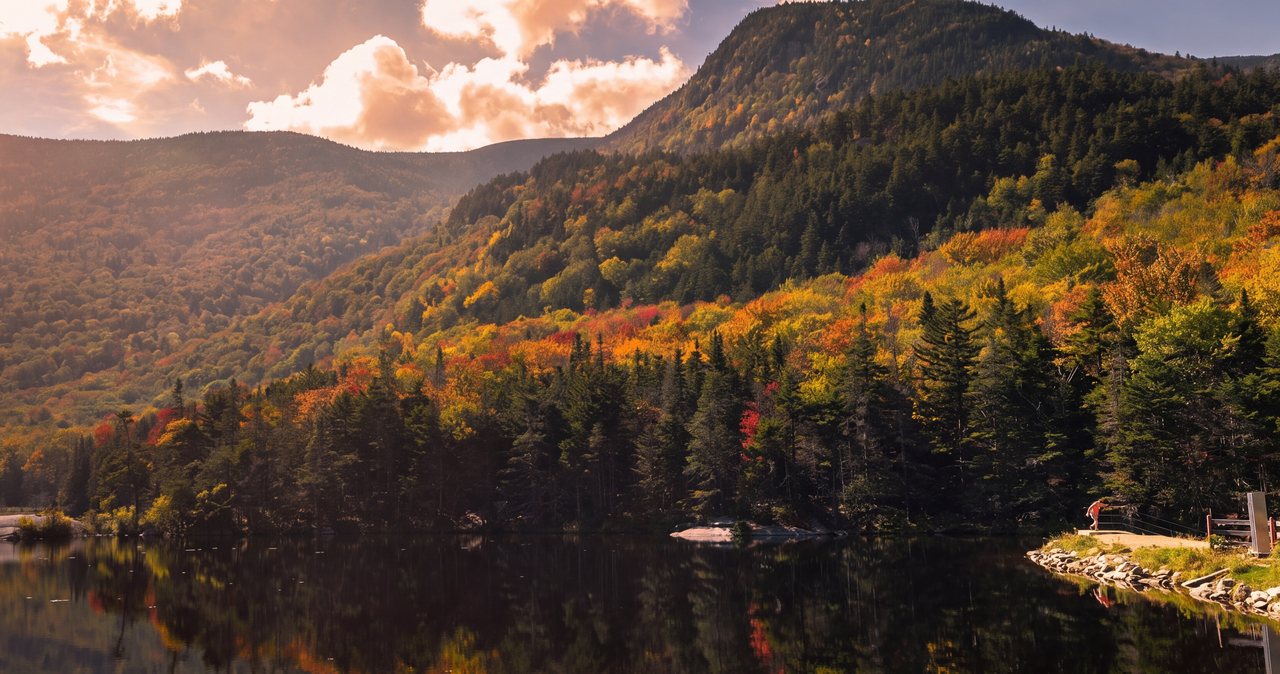
Black flies want warm, still, humid air near running water, so they collect in predictable places. The shorelines of the mountain ponds are the classic one. The walk in to Greeley Ponds or East Pond is lovely and, on a warm still afternoon in June, thick with flies at the water's edge where you most want to stop and look. The bog bridges along the Zealand Trail, the brook valleys on the waterfall hikes, and the shaded lower stretches of almost any trail near a stream all hold them. Campground clearings and picnic areas hold them in the still, warm air of the afternoon. The biting species breed most heavily at the outlets of ponds and lakes, which is one reason the pond hikes concentrate them. If you are standing in sheltered, sun-warmed, windless air within earshot of moving water, you have found them. Our page on the hike to Greeley Ponds gives the distances and what the trail is like.
The flip side is just as reliable, and it is the key to the whole season: wind, dry air, and elevation thin them out fast. A steady breeze scatters them. Cool, dry air after a cold front knocks them back. And the higher and more open the ground, the fewer there are. On a breezy June day the exposed ledges and the summits above treeline can be close to fly-free while the trailhead in the valley below is a cloud. You can climb out of the bugs in an hour, eat lunch in peace on an open summit, and walk back down into them at the car.
Time of day matters less than wind, but it matters. The flies are most active in the warm middle of the day and quiet down when it is cold. An early start on a cool morning buys you some calm before they wake up, and the light is better anyway. What matters more than the hour, though, is the weather and the elevation you choose to spend the day at.
The head net and the rest of the kit
The single best piece of gear against black flies weighs almost nothing, costs a few dollars, and fits in a pocket: a head net. It is a sleeve of fine mesh that goes over your hat and cinches at the collar, and it turns a miserable pond lunch into a pleasant one. You can pick one up at any of the outfitters and general stores in town. Wear a brimmed hat underneath it so the mesh sits off your face instead of against it, or the flies will bite you right through the netting where it touches skin. A lightweight buff or a bandana pulled up over the neck closes the gap between collar and hairline that the flies find first. Pack your own before you leave home.
After the net, cover skin. Long sleeves and long pants, with the cuffs tucked into your socks, close off the gaps black flies love to crawl into. They work their way under cuffs and collars to bite where you cannot easily swat, so a loose, buttoned-up layer beats bare arms even when it is warm. Light-colored clothing helps a little; the flies are drawn more to dark colors than to pale ones, so a tan shirt is a better choice than a navy one. Skip heavy fragrance, which seems to interest them.
Repellent has its place, and its limits. A product with DEET or picaridin on your exposed skin will cut the biting down, but it never does the whole job against black flies the way it can against mosquitoes, and it wears off with sweat. Use it as backup to the net and the clothing, not as your main defense.
Two more tools are worth mentioning for anyone who reacts badly or plans to spend real time near the water. Permethrin is an insecticide you spray on your clothing rather than your skin; it bonds to the fabric and lasts through several washes, and a shirt and pants treated the night before you drive up will turn away black flies and, just as usefully, ticks. Follow the label, treat the clothes outdoors, and let them dry fully before you wear them. The other is a portable repellent device, the kind that warms a treated pad to hold a small zone of protection around you when you sit still. It does nothing while you walk, but set on a picnic table or a pond-side rock at lunch it can buy you a calm half hour. Neither replaces the net.
The plan that works is simple: net over a brimmed hat, sleeves and pant legs closed up, repellent on the hands and any skin still showing, and a willingness to keep moving rather than stand in one shaded spot feeding them. A moving hiker is a harder target than a stationary one.
Planning a hike around the flies
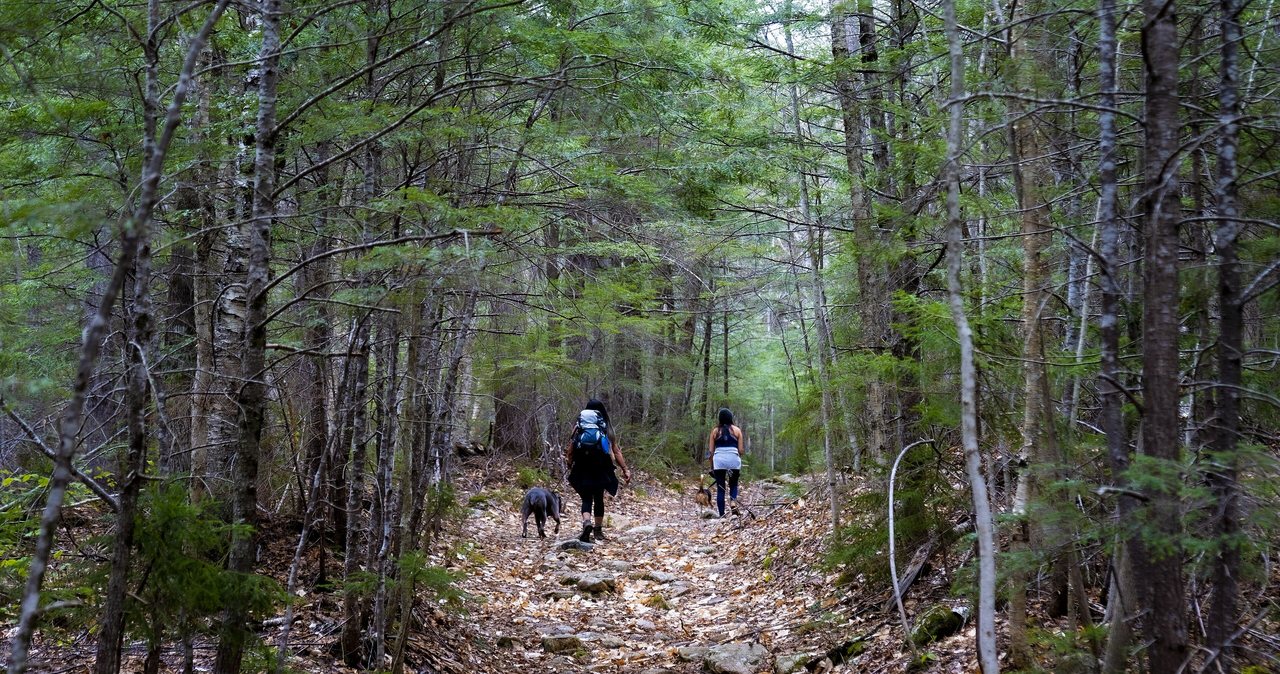
Once you understand that the flies live in the still, low, wet places and the wind lives up high, planning a June hike becomes a matter of matching the day to the terrain. Save the pond walks, the bog bridges, and the brook-valley waterfall hikes for a breezy day, when the wind will keep the shoreline tolerable. Save the exposed ridges and open summits for a calm day, when the woods would be unbearable but the tops are glorious and the flies cannot hold their ground in the open air. It is a neat trade: the still, warm day that is worst in the valley is often the finest day to be standing on a summit, and the raw, windy day that keeps you off the ridge is the day the ponds are pleasant.
The clearest example near us is the Franconia Ridge Loop, the big above-treeline traverse that most people come here to do at least once. It is 8.9 miles with about 3,900 feet of climbing, a serious all-day effort that you should only attempt in good, settled weather, because most of it is exposed with no shelter. The bugs are a non-issue up on the ridge on almost any day with a breath of wind. The climb up through the forest to reach the ridge is the buggy part, so keep the net on for the wooded ascent and stow it once you break out of the trees. Eat your lunch on an open rock or a breezy col, never down in the shaded woods by a stream, and keep the stops short where the air is still.
Pick your forecast for wind as much as for rain. A morning with a steady breeze and dry air behind a cold front is the best bug weather you can ask for, on any trail. A muggy, dead-calm afternoon is the worst, and on a day like that you are better off high and exposed than low and sheltered. None of this requires an app or a spreadsheet. It is just a habit of reading the day and choosing the terrain to suit it.
Hikes that climb above the flies
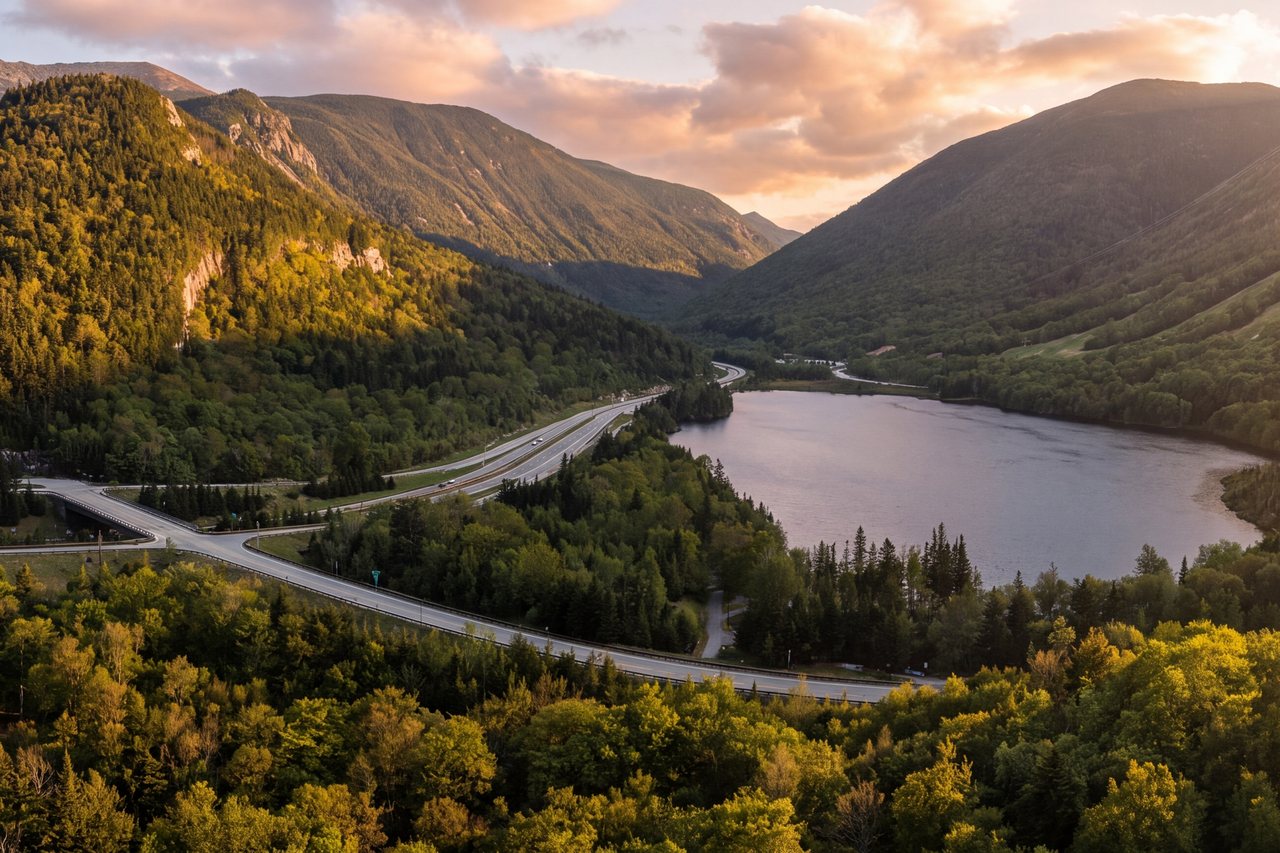
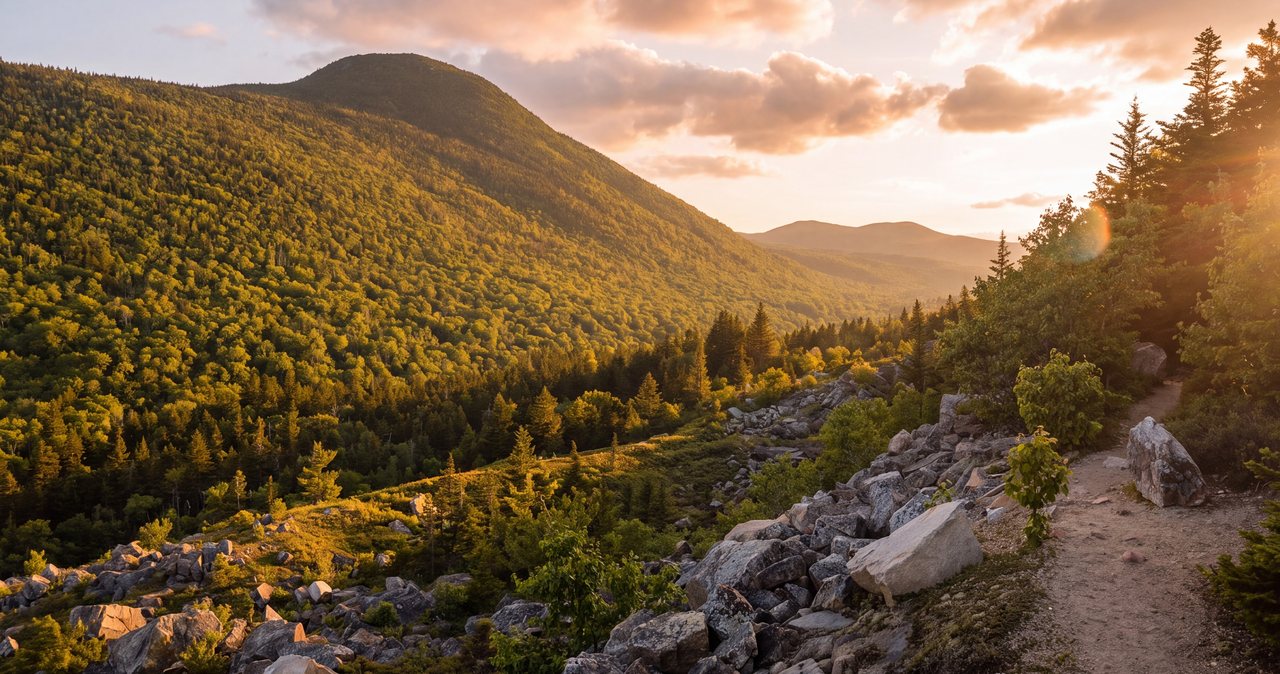
When the forecast is warm and still and the ponds are out, go up. The reward for a short steep climb is often a complete escape from the bugs, because even a modest open ledge with a little wind is friendlier than the valley floor. The closest example to the lodge is Artist Bluff, a short, steep loop above Echo Lake that runs about 40 min round trip and finishes on an open rock outcrop with a long view down the notch. It is exposed enough to catch a breeze and short enough to do before dinner, which makes it a good first evening or a quick escape on a buggy afternoon.
Any open summit works on the same principle. The higher you get and the more the trees fall away, the fewer flies there are, until above treeline on a breezy day they are simply gone. The paved overlooks along the Kancamagus Highway are worth knowing for the same reason. The height-of-land, up near 2,855 feet, tends to catch enough wind to stay comfortable, and you can reach it without a hike. Keep in mind that the Kancamagus is thirty-four miles of scenic road with no gas, no services, and no cell signal for its length, so fill the tank and download your directions before you drive out.
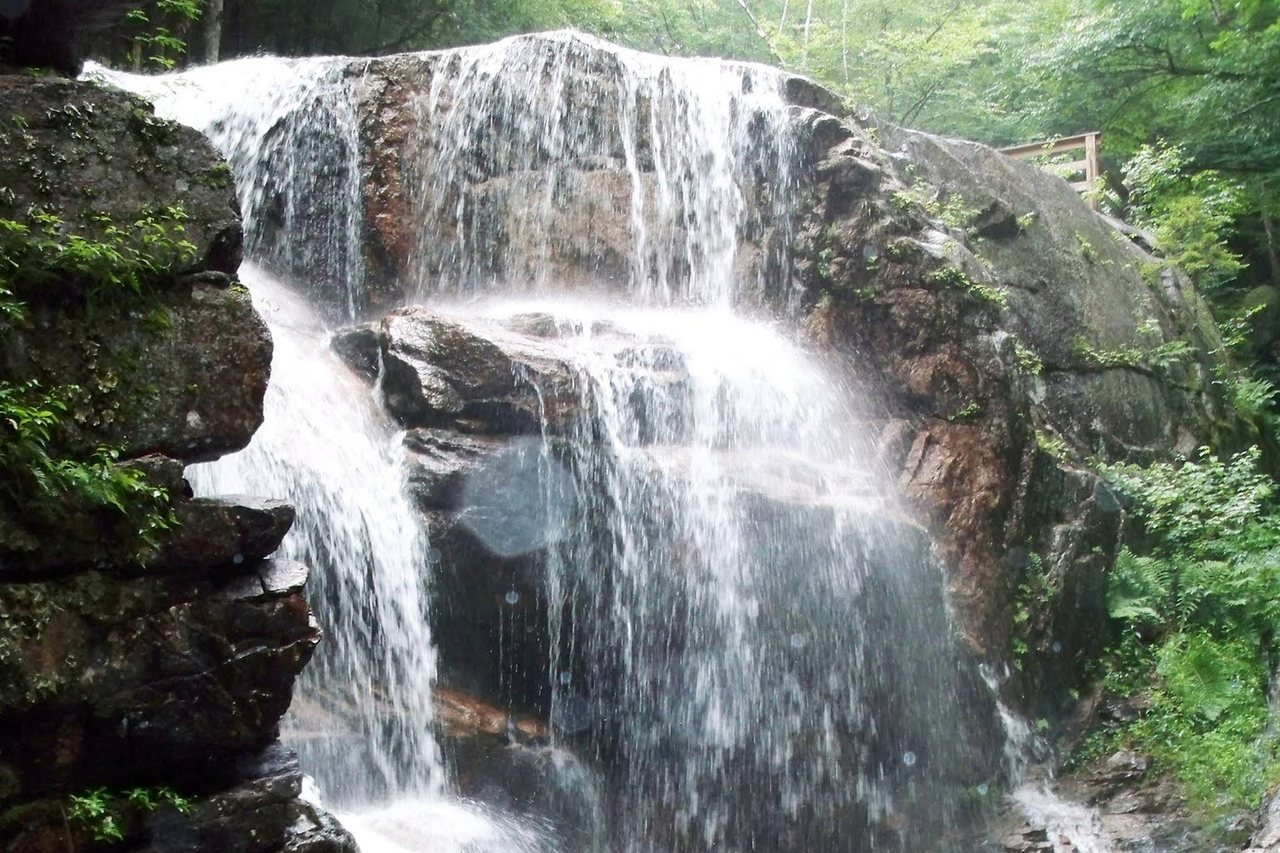
The one place that breaks the rule in a good way is a waterfall. The moving water and the breeze it throws off can keep the air right at the base of a falls clearer than the still woods on the approach, so the destination is sometimes more pleasant than the walk to it. The Basin, the glacial pothole a 5 min stroll from its parking area in the notch, is a low, wet spot that can hold flies on a dead-calm day, but the rush of water and the open ground around it usually help. As a rule, though, the reliable way to get above the bugs is to gain elevation and find the wind.
Trail closures and rules for the 2026 season
A few things have changed this year that catch guests out, and they are worth knowing before you plan around the bugs. The Lincoln Woods Trail is closed from June through November 2026 for riverbank repairs, and it happens to be the flat, easy, valley-bottom walk along the Pemigewasset that a lot of first-timers reach for. The parking lot and the suspension bridge at the trailhead stay open, but the trail itself, and the usual route to Franconia Falls, is off the table this season. If that walk was on your list, pick another.
Up in Franconia Notch, the Cannon Mountain aerial tramway has been closed since its last day in late October 2025; a new tram is in planning, and no reopening date has been announced. The mountain itself is not closed, the ski area still runs in winter, and everything else in the notch is open as usual. There is simply no tram ride to the summit right now, so if seeing the view from the top was the plan, that particular way up is out until the new lift is built.
A couple of practical notes round it out. Flume Gorge, the two-mile boardwalk loop through the granite chasm about 12 min from the lodge, runs on timed-entry reservations for its season, which stretches from early May into late October. Book your arrival window online ahead of time, because walk-up spots are not guaranteed on a busy day. And a White Mountain National Forest parking pass, which you need at most of the trailhead lots, costs $5 for the day or $30 for an annual pass; ignore the older three-dollar figures still floating around online. The AMC high huts run full service from June into mid-October, if a hut night is part of your trip.
Why June is still worth it
For all the fuss about the flies, June is one of the best months to be here, and the locals know it. The waterfalls run their biggest of the year on the last of the snowmelt. The lupines come into peak bloom in the fields around Sugar Hill in the middle of June, and Sugar Hill's Fields of Lupine Festival runs through much of the month. The days are the longest of the year, better than fifteen hours of daylight around the solstice, so you can start late and still get a full hike. The high huts have opened for the season. And the trailhead lots that overflow by nine in October still have room at nine in June. You get the mountains close to their fullest, with a fraction of the crowd, and the price of admission is a head net and a long-sleeved shirt.
Our guests who come in June and pack for the bugs almost never mention them again after the first day. They put the net on for the walk through the woods, take it off on the summit, wear long sleeves to the pond, and get on with the trip. Back at the house there is hot water for the trail dust and the bites, the coffee lounge for a slow morning, and the back deck for a long light evening. The Basin suite has a two-person jetted tub if you want to soak a day of climbing out of your legs. A cold beer in town at Basecamp Brewing, or over the line in North Woodstock at the Woodstock Inn Station and Brewery, closes the day nicely.
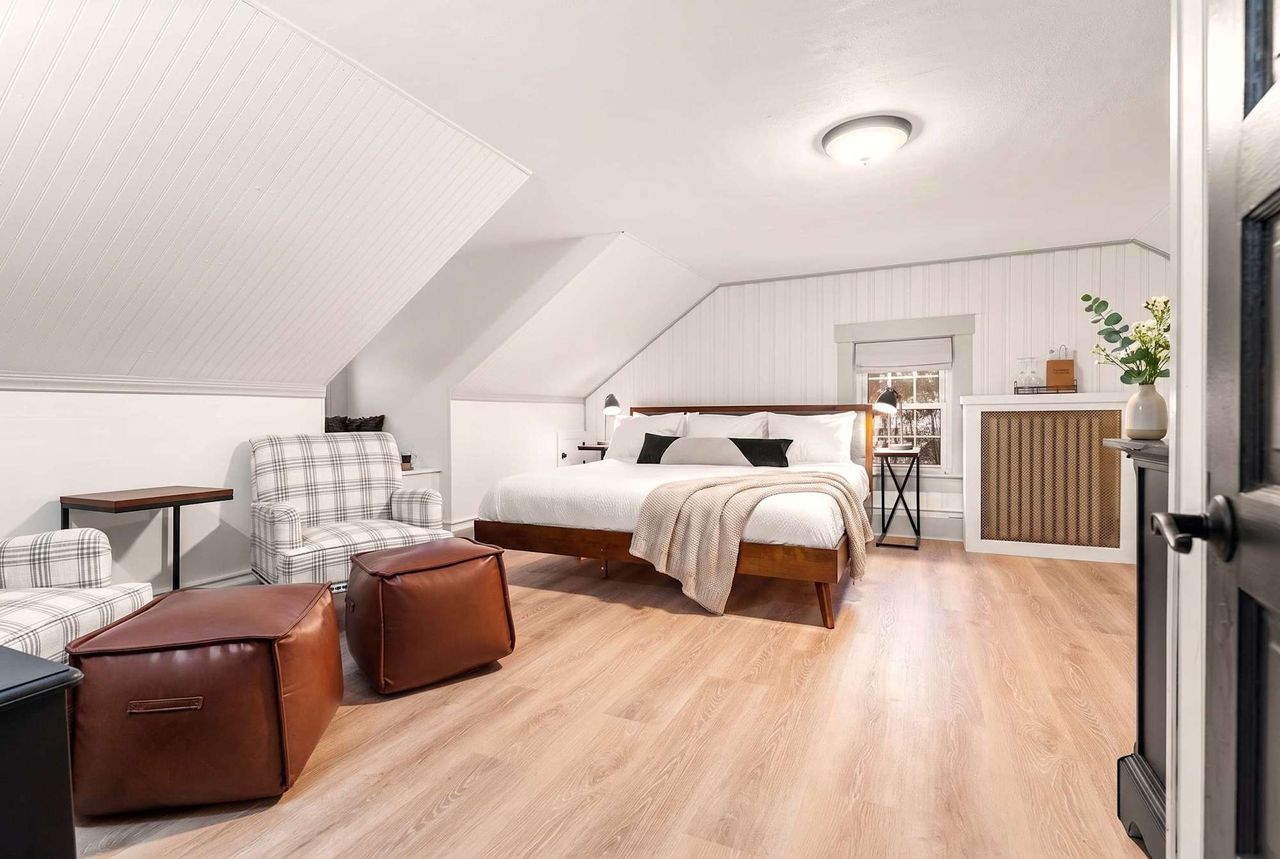
We are an adults-only inn of six suites in a restored 1902 colonial in the middle of Lincoln, with keyless self check-in and the best rate always direct, so a June weekend here stays quiet by design. Come with the net in your pocket and let the flies be what they are, the loud, harmless tax on the greenest, most wide-open month in the mountains. Save your worry for the ticks, and enjoy the rest.
— Launchpoint Lodge, From the lodge