There's a stretch of the calendar we look forward to more than the busy weeks, and most people drive right past it. It comes twice a year in the White Mountains. The first window is late spring, once the mud has dried up and the trails have firmed but before the summer families arrive and the parking lots fill. The second is late fall, after the foliage buses have gone home and before the ski crowd shows up for the first real snow. We call these the shoulder seasons, and around here they're the weeks the locals quietly keep for themselves.
If you're a couple who wants the mountains to feel like they belong to you for a few days, this is the guide we'd hand you. Some things are closed in the shoulder weeks, and we'll tell you which ones. But the trade you're making is a good one: cooler prices, calmer roads, easier tables at dinner, and overlooks where you can stand for 10 min and hear nothing but the wind and the river. Here's how each window works, what's running and what isn't, and who should book it versus who should wait for high season.
What we mean by shoulder season
The White Mountains have two headline seasons that everyone knows: summer, roughly late June through Labor Day, and fall foliage, which peaks up here in the first two weeks of October. Winter is its own animal, built around the ski areas from about December into March. The shoulder seasons are the seams between those blocks, and there are two of them.
The spring shoulder runs, loosely, from early May into mid-June. Mud season comes first, in April, when the frost is coming out of the ground and the trails turn to soup; we've written a whole piece on why mud season is underrated if you want the case for coming even earlier. But once the ground firms and the leaves start to come in, you get a few beautiful weeks before the summer rush. The fall shoulder is shorter and sneakier: it opens right after peak color drops, around mid-to-late October, and runs until the mountains get their first serious snow and the ski season kicks in.
Both windows share the same character. Midweek especially, you can have a trailhead nearly to yourself. Restaurants aren't slammed. The light is doing interesting things. And you're not competing with anyone for a room. If you're weighing your options, our full rundown on the best time to visit the White Mountains lays every season side by side, but this post is the argument for the two that get overlooked.
Late spring, after mud season
The spring shoulder is the more dramatic of the two, because the whole landscape is waking up while you watch it. Down in Lincoln, at the valley floor, the trees leaf out first. Then over a couple of weeks you can watch the green climb the mountainsides, higher every day, until it reaches the ridges. Some people call it the green-up, and if you come in mid-to-late May you're often standing right at the line where bare branches turn to new leaf. It's one of the quiet pleasures of being here in spring, and it changes noticeably from one day to the next.
Temperatures in the valley in May and early June are usually mild during the day, cool at night, and variable. You can get a warm afternoon in shirtsleeves and a morning that wants a fleece and a hat. Higher up, it's a different world entirely: the summits can still hold snow and ice into May, and the alpine zone stays weeks behind the valley. That gap matters when you're picking what to do, and we'll come back to it. The feel of spring here shifts week to week through May and June, so it's worth planning around a specific stretch if you can.
What makes late spring worth a couple's weekend is the combination of things waking up and nobody being here yet. Kids are still in school. The summer season hasn't started. Midweek, the trails, the swimming holes, the overlooks all feel like they're on loan to you. For these weeks it's worth building a plan around the attractions that are open, so you're not driving to somewhere that's still closed for the season.
One thing we tell everyone: spring in the mountains does not run on a fixed schedule. A late, cold spring can push the greening and the trail conditions back by a week or two. A warm one pulls everything forward. If you're coming for a specific thing, it's worth a quick check on current conditions before you commit to a day.
Spring is when the waterfalls are loudest
If there's one reason to pick the spring shoulder over any other time of year, it's the water. All that snow that piled up on the high peaks over winter has to go somewhere, and in May it's coming down the mountains all at once. The falls and cascades that run thin and polite in August are thundering in spring. It's the single best window for chasing moving water in the Whites.
The Basin is the easy one to start with. It's a granite pool worn smooth over roughly 25,000 years, a 5 min walk off the parkway in Franconia Notch, and about 14 min from our front door. In spring the Pemigewasset River is charging through it, and the sound alone is worth the short walk. Because the walk is so short and mostly flat, it's a good choice on a cool or damp day when you don't want to commit to a real hike.
For a bit more effort, the classic spring cascades reward you. Cloudland Falls, on the way up Falling Waters Trail, and the various drops along that side of Franconia Ridge are at full volume in May. Sabbaday Falls, off the Kancamagus, is a short, gentle walk to a pretty tiered fall and runs hard with snowmelt. Some trails suit a spring visit; others are still buried in snow up high, so it's worth checking current conditions before you pick one.
A word of caution that we mean sincerely: high water is beautiful and it is also strong. Rocks near a spring waterfall are wet, mossy, and slick, and the current in May is not the current in July. Stay on the boardwalks and viewing areas, keep back from the edges, and don't wade into anything fast. The falls put on the best show of the year in spring precisely because there's so much water moving, and that's the same reason to give it room.
Late fall, after the leaves come down
The fall shoulder is the one locals guard most jealously. For about two weeks in early October, the foliage draws crowds from all over the Northeast, and the roads through the notch and along the Kancamagus can back up. Then, almost overnight, the peak color drops, the tour buses stop coming, and the valley empties out. That's the window we love.
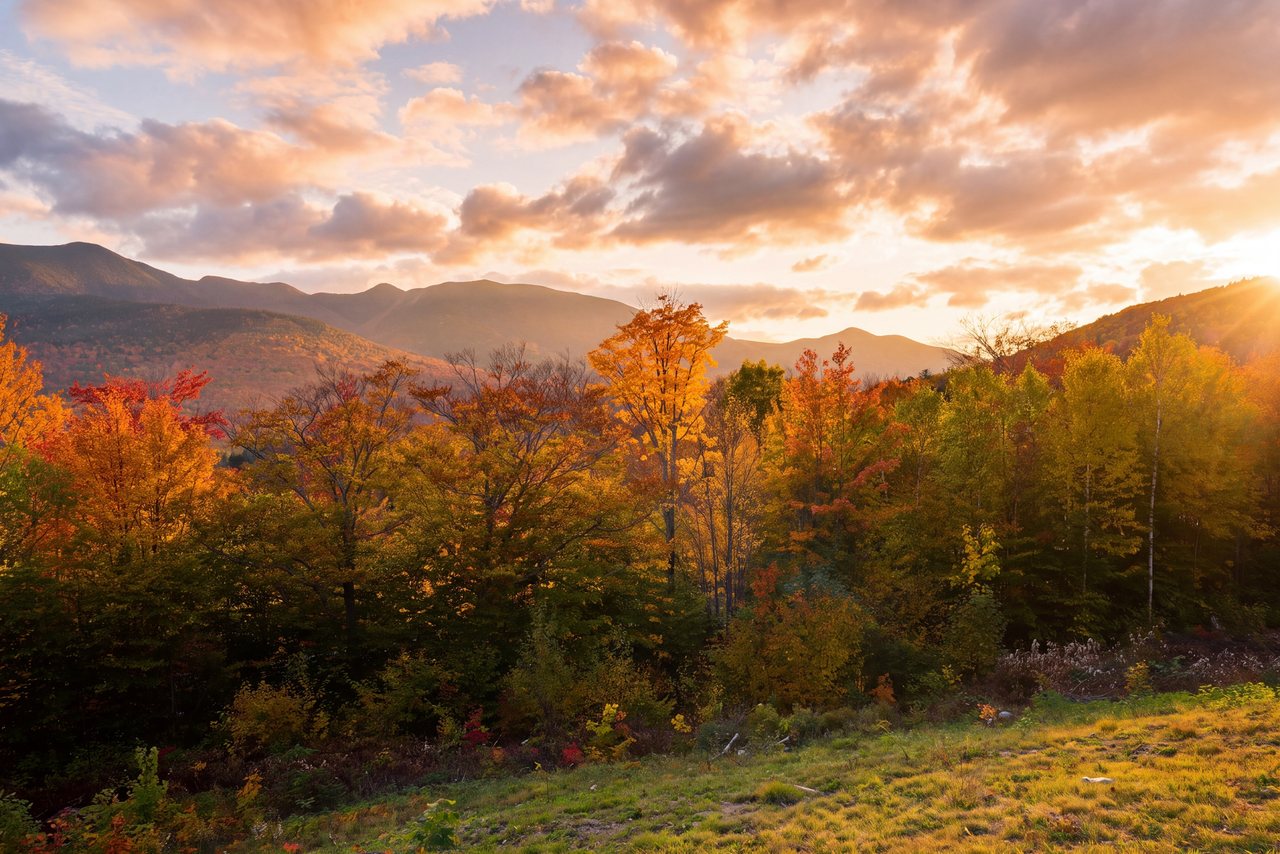
Late October into early November has a stillness the busy weeks never do. The hardwoods have dropped most of their leaves, so the forest opens up and you can see through it in a way you can't in summer. The remaining color tends to be the tamaracks, larches that turn a soft gold before dropping their needles, and the last stubborn oaks and beeches holding rust-brown leaves. Mornings are crisp, often frosty. The crowds are gone. If you want the mood of it in more detail, we wrote about November in Lincoln and what the town feels like once the season winds down.
This window is short and it moves. Depending on the year, the sweet spot might be the third week of October or it might stretch toward the middle of November before real snow arrives. Some years an early storm closes the door fast. If a bare-branch, low-crowd fall visit is what you're after, come with a little flexibility built into your dates, and know that the higher elevations get winter conditions well before the valley does.
What you give up in the fall shoulder is the color. If your heart is set on the blaze of peak foliage, this is the wrong window, and you should aim for early October instead. But if what you want is the mountains without the traffic, and long golden afternoons instead of a wall of red maples, the shoulder is the better deal.
Bare-branch clarity and the long light
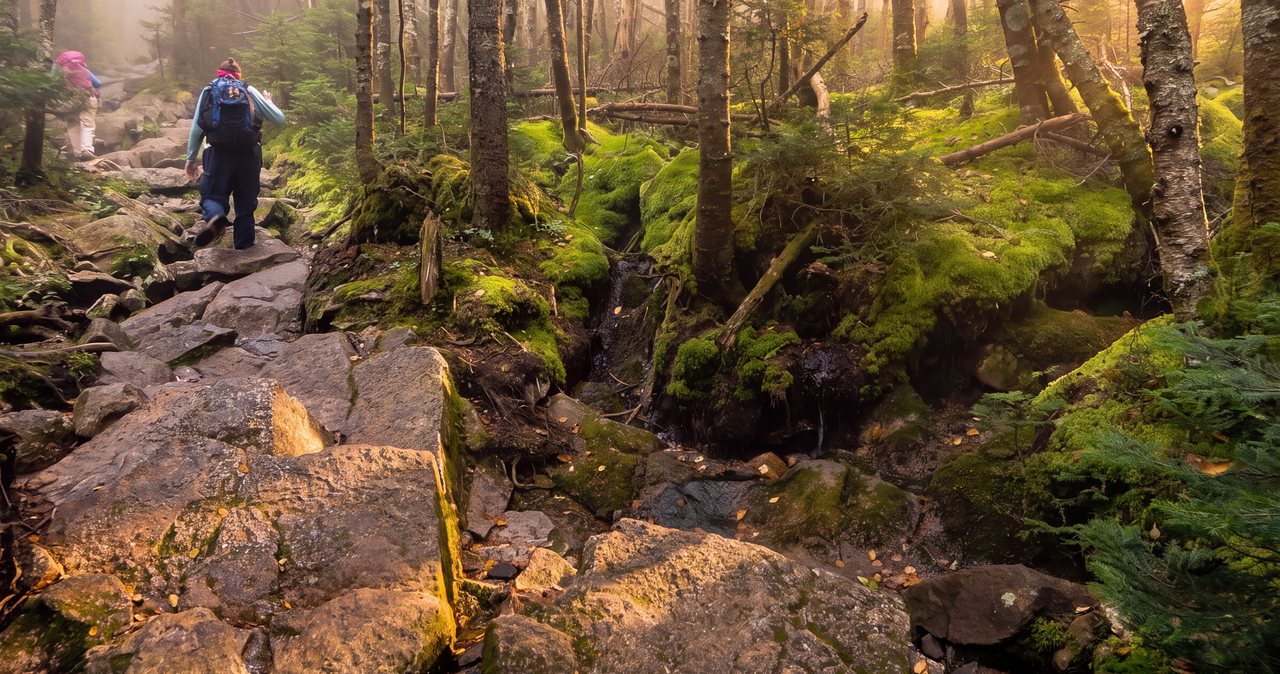
There's a specific quality to late fall that doesn't get talked about enough because it isn't as photogenic as peak foliage. When the leaves come off, the mountains show their bones. Ridgelines you couldn't see through the summer canopy come into view. From the overlooks you can trace the shape of the whole valley. Hikers know this feeling well: a summer trail that felt like a green tunnel opens into long sightlines once the trees are bare.
The light in late fall is the other gift. The sun sits lower in the sky all day, so you get that raking, warm-angled light from mid-morning straight through to a long slow sunset, instead of the harsh overhead light of a July noon. Photographers call it good light, and it makes even a gray granite ledge look like something. If chasing the best light is your thing, it pays to match the good hours to the good spots, early and late in the day when the sun is low.
The days are getting short, though, and that's the one thing to plan around. By late October the sun is setting in the late afternoon, and by early November it's earlier still. That's plenty of time for a good hike and a slow dinner, but it does mean you want to start earlier and keep an eye on the clock, especially up high where the light goes fast once the sun drops behind a ridge. Bring a headlamp if you're planning anything longer than a stroll; being caught out after dark on a mountain in November is no fun.
It's also cold, and getting colder. Frosty mornings are the norm in the fall shoulder, and a raw, wind-driven day at elevation can feel like winter even if the valley is mild. That's not a reason to stay home. It's a reason to pack right, which is its own section below.
What's open and what's closed
This is the part that makes a shoulder-season trip go smoothly, so we'll be specific. The mountains don't close, but a lot of the attractions run seasonal hours, and the two shoulder windows sit right at the edges of those seasons.
The Flume Gorge, the 800-foot granite gorge with the boardwalk running through it, is a seasonal, timed-entry operation. It typically opens in early-to-mid May and runs into late October, with the exact dates and hours shifting year to year and weather-dependent. In the spring shoulder it's usually just opening; in the fall shoulder it's usually about to close. If it's on your list, book a timed ticket in advance and confirm the current dates before you drive over, because the season edges are exactly when it's most likely to be closed or on reduced hours. Same story for Lost River Gorge and Boulder Caves over in Kinsman Notch, a self-guided boardwalk and cave scramble that also runs roughly May through mid-October and shuts down for the winter.
Up at Loon Mountain, 6 min from us, the scenic gondola to the ridgeline runs its summer and fall-foliage season from late spring into October, so it catches the front edge of the spring shoulder and, in a good year, some of the leaf-peeping weeks too; the exact closing date shifts year to year, so check current dates before you count on a ride. The ski season, on the other hand, doesn't start until there's real snow, usually not until late in the fall shoulder or after it. That leaves a genuine gap in late October and early November when the gondola has finished for the season and the ski lifts aren't spinning yet. That gap is part of what keeps the town so quiet, and it's worth knowing before you come expecting to ride up.
Here's a quick rundown of what tends to be open and closed in the shoulder weeks:
- Open year-round: the Kancamagus Highway itself and its overlooks, the roadside stops in Franconia Notch, the Basin, and most trailheads (subject to weather and mud). The town core of Lincoln stays open.
- Spring shoulder, opening up: Flume Gorge and Lost River usually come online in May; the Loon gondola typically starts in late spring. Summer-only spots like the Whale's Tale waterpark open toward the end of this window.
- Fall shoulder, shutting down: Flume and Lost River usually close by late October, and Loon's gondola wraps up its fall-foliage weekends around then; the ski lifts aren't spinning yet.
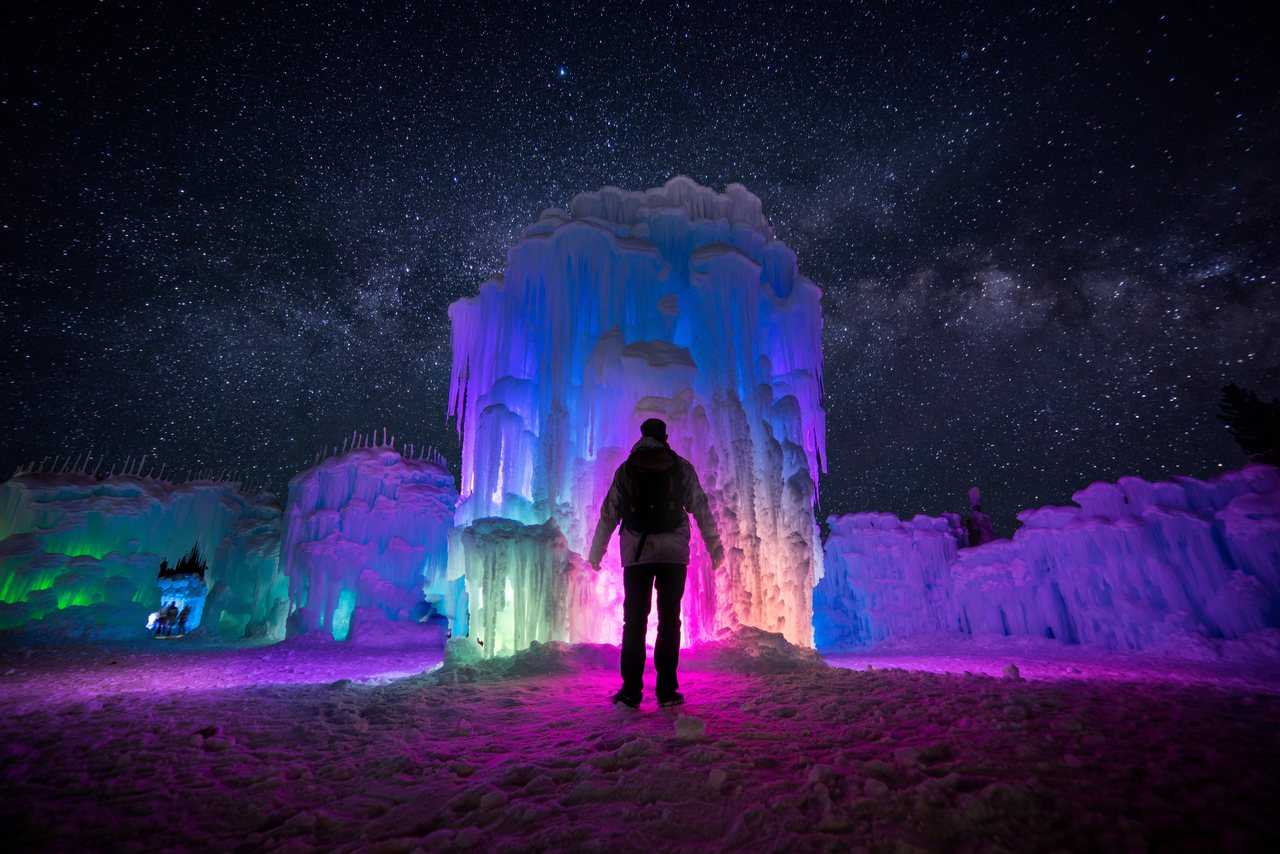
- Winter-only, not in either shoulder: Ice Castles in North Woodstock is a deep-winter attraction, weather-dependent, and doesn't run in spring or fall.
The steady constant through all of it is the road network and the trailheads. Which is why, in the shoulder weeks, the best plans lean on the free, open, year-round stuff: the drives, the overlooks, the short waterfall walks, and the trails that are in condition.
The Kancamagus in the quiet weeks
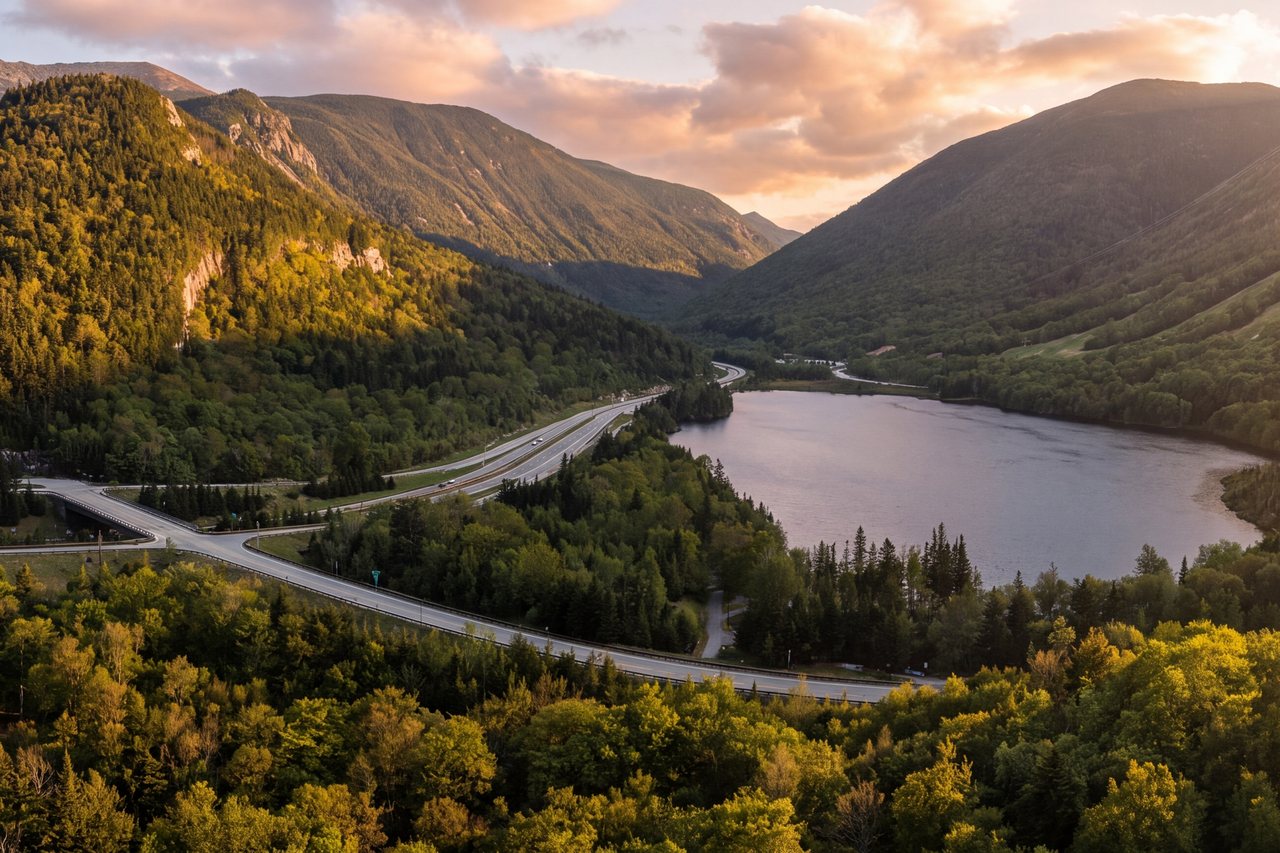
If one experience makes the shoulder seasons worth the trip on its own, it's driving the Kancamagus Highway when almost nobody else is on it. The Kanc starts right at the edge of Lincoln and runs 34 miles east to Conway as a National Scenic Byway. In the shoulder weeks you can pull into the big overlooks and have them to yourself, which never happens during peak foliage when those same pullouts are jammed.
A few things to know before you go, because we tell every guest the same thing. There is no gas, no food, and no services along the entire 34 miles, and no towns either. Fill your tank in Lincoln before you start. Cell service is essentially gone once you're on the highway, so download your map and directions ahead of time; our note on cell service and what to download covers exactly what to save offline. And take it slowly, which is the whole point; the stops are best hit in order, working from the Lincoln end toward Conway.
The overlooks stay open year-round, so both shoulder windows work for this drive. Near the height of land you'll find the C.L. Graham Wangan overlook, up around 2,855 feet, with a long view back across the ridges. On the way you can pull off for Sabbaday Falls, a short walk to a tiered cascade that's loud in spring; and Rocky Gorge and Lower Falls, both quick riverside stops where the Swift River works through the granite. In the fall shoulder the color along the river holds a little longer than up high, so you sometimes catch the last of it down at the water when the peaks are already bare.
In late fall, keep the shortening days in mind on the Kanc. It's a slow, winding road, and you don't want to be doing the whole thing in the dark on the way back. Start in the morning, take your time, and you'll be back in Lincoln for dinner with the light to spare. In spring, watch for wet leaves and the occasional bit of ice in shaded corners early in the season.
Packing for two seasons in one day
We'd be doing you a disservice if we sold you a shoulder-season weekend without being upfront about the weather. Both windows are, above all, variable. Spring can hand you a warm, blue-sky afternoon and then a cold, wet morning back to back. Late fall can be mild and golden one day and raw, gray, and spitting snow the next. The mountains make their own weather, and the forecast in the valley is not the forecast on the ridge.
The single most important habit is layers. A base layer, an insulating mid-layer like a fleece, and a wind-and-waterproof shell will carry you through almost anything either shoulder throws at you. Add a warm hat and gloves in the fall shoulder; frosty mornings are routine, and it's cold at the overlooks first thing. Good footwear matters too, because spring trails can be muddy and late-fall trails can have ice in the shade. A proper packing list is worth making before you throw a bag together, layers first and the extras after.
The elevation gap deserves repeating because people get caught by it every year. The valley floor where we are, and where you'll spend your evenings, is comfortable in both shoulder seasons. The summits are weeks ahead into winter in the fall and weeks behind out of it in the spring. In May the high peaks can still be holding snow and ice; in late October they can already be getting it. If you're thinking about anything above treeline, treat it as a serious undertaking and check the higher-summits forecast from the Mount Washington Observatory before you go. Which brings us to the one hike we'll say a hard word about.
The Franconia Ridge Loop is the marquee hike in this area and one of the best ridge walks in the East, but it is roughly 8.9 miles with about 3,900 feet of gain, strenuous, and long stretches of it are above treeline and fully exposed. In the shoulder seasons the ridge can have winter conditions when the valley looks like fall or spring, and the weather up there can turn violent fast. This is not a shoulder-season casual pick unless you have the experience, the gear, and a good forecast. If you want the views without the exposure, we can point you to gentler options.
Easier reservations, calmer town, cooler prices
The practical case for the shoulder seasons is simple: everything is easier. In high summer and at foliage peak, the popular restaurants in Lincoln and North Woodstock can have a wait, the timed-entry attractions sell out their good slots, and rooms across the valley get tight. In the shoulder weeks, that pressure comes off. You can usually get a table without planning your whole evening around it, and the roads and trailheads have room to breathe.
Reservations are the biggest difference. During peak weeks people book their rooms months out. In the shoulder seasons there's more give, which means more choice of dates and rooms and a much better shot at a midweek stay. If a quiet couple's escape is the goal, midweek in a shoulder season is about the calmest the Whites ever get. You get the trails, the drives, and the town with almost nobody around.
On price, we'll stay in our lane and not quote you numbers here, because rates move and we don't want to promise something that shifts. What we'll say is that the shoulder weeks are generally the gentler end of the calendar across the region, and it's worth checking our current offers when you're planning shoulder-season dates, since that's often where the better midweek value shows up. Take a look, compare a few dates, and book what fits.
The town itself is at its most relaxed in these weeks. Lincoln's core is walkable from the lodge, with restaurants, a brewery, and a bookshop, and in the shoulder seasons you're sharing it with locals more than with tour groups. It's the version of the town we like best: unhurried, easy to get a seat, no crowds to work around.
What to do in the shoulder windows
Enough about the mood; here's what fills a couple of days. In the spring shoulder, we'd point you first at the moving water. Chase the cascades while they're loud: the Basin for a short walk, Sabbaday Falls off the Kanc, and the falls along the Franconia Notch side if you want more of a hike. Drive the Kancamagus with the overlooks empty. If the Flume Gorge is open for the season, book a timed ticket and walk the boardwalk while the gorge is running high with snowmelt. Watch the greening climb the hillsides. Add an easy pond hike like Lonesome Lake, about 12 min away, which is a gentle climb to a mountain pond with big Franconia Range views, once the trail is clear of snow and mud.
In the fall shoulder, lean into the clarity and the light. Drive the Kanc for the long sightlines once the leaves are down. Take the short overlooks and riverside walks. Do a moderate hike with a view now that the forest has opened up, and use the low golden light for the last hour of the afternoon. Evenings get cold and dark early, which makes for a good excuse to be back in town for a slow dinner and a beer at the brewery. Both windows suit the same overall rhythm: one real outing a day, a short walk or a drive to fill in around it, and long unhurried evenings.
A few notes on specific spots. The Cannon Mountain aerial tramway is closed. It made its last run on October 26, 2025, and no reopening date has been announced, so you cannot ride the tram in either shoulder season; the Cannon ski area still runs in winter, but the tram itself is out of service. And the Old Man of the Mountain, the famous rock profile, fell from the cliff in May 2003. It's gone. What's there now is a memorial plaza in Franconia Notch with steel viewfinders that line the profile back up against the mountain from where you stand. Both are still worth knowing about; neither is what an old guidebook might tell you.
For a couple who wants a proper plan rather than a loose list, a spring-shoulder itinerary built around the open attractions works better than a loose wander, and a drives-focused day suits the shoulder weeks when the weather is doing its variable thing. Knowing where everything sits relative to the lodge makes it easy to string a day together without backtracking across the valley.
Who shoulder season suits, and who should wait
The shoulder seasons are a particular kind of trip, and we'd rather help you pick the time that fits you best. They suit couples who want quiet above all else: people who'd rather have an empty overlook and a mild day than a warm one with a crowd. They suit anyone who loves moving water, because the spring window is the best cascade season there is. They suit hikers who like open sightlines and cool air, and travelers with a little flexibility in their dates, since both windows move with the weather.
They also suit anyone chasing value and calm on a midweek stay. If you can come Sunday through Thursday in a shoulder week, you're getting the mountains at close to their emptiest, with the easiest reservations and the gentlest rates of the year. That's the version of a White Mountains trip we'd book for ourselves.
Here's who should wait. If your heart is set on peak fall color, skip the fall shoulder and come in early October, and read up on foliage timing before you pick dates. If you specifically want to ride a summer gondola or visit the Flume and Lost River with confidence they'll be open, aim for full summer rather than the very edges of the season. If you want reliable warm-weather swimming, that's a summer thing, not a shoulder thing. And if a guaranteed ski day is the goal, that's deep winter, after the fall shoulder closes. There's no bad season in the Whites; it's about matching what you want to when you come.
One more group we'd gently steer elsewhere: anyone who wants everything open and buzzing. The shoulder weeks are quiet because a lot is closed. That quiet is the whole appeal to us, but if you'd find shuttered attractions and short daylight a letdown, high summer or foliage peak will make you happier, and that's a perfectly good call.
Planning a shoulder-season stay with us
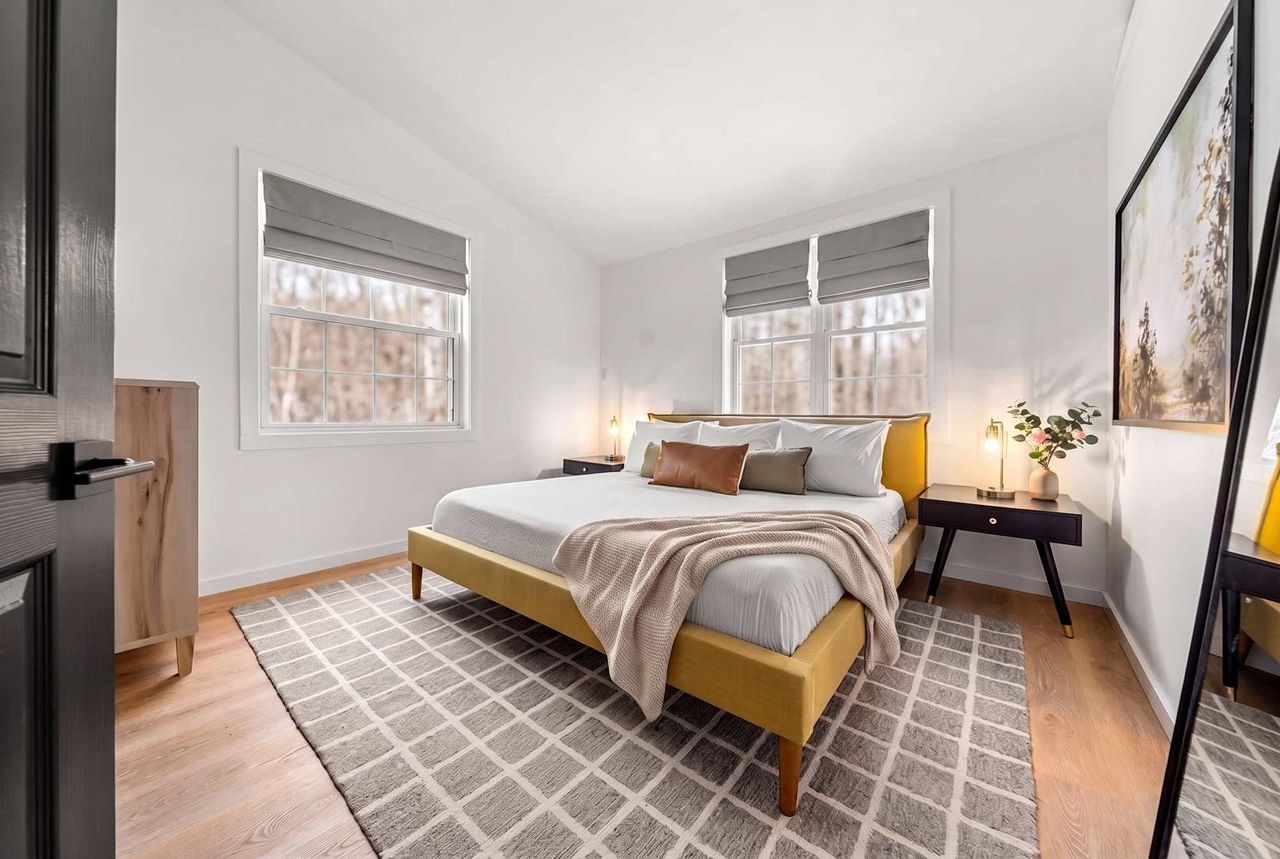
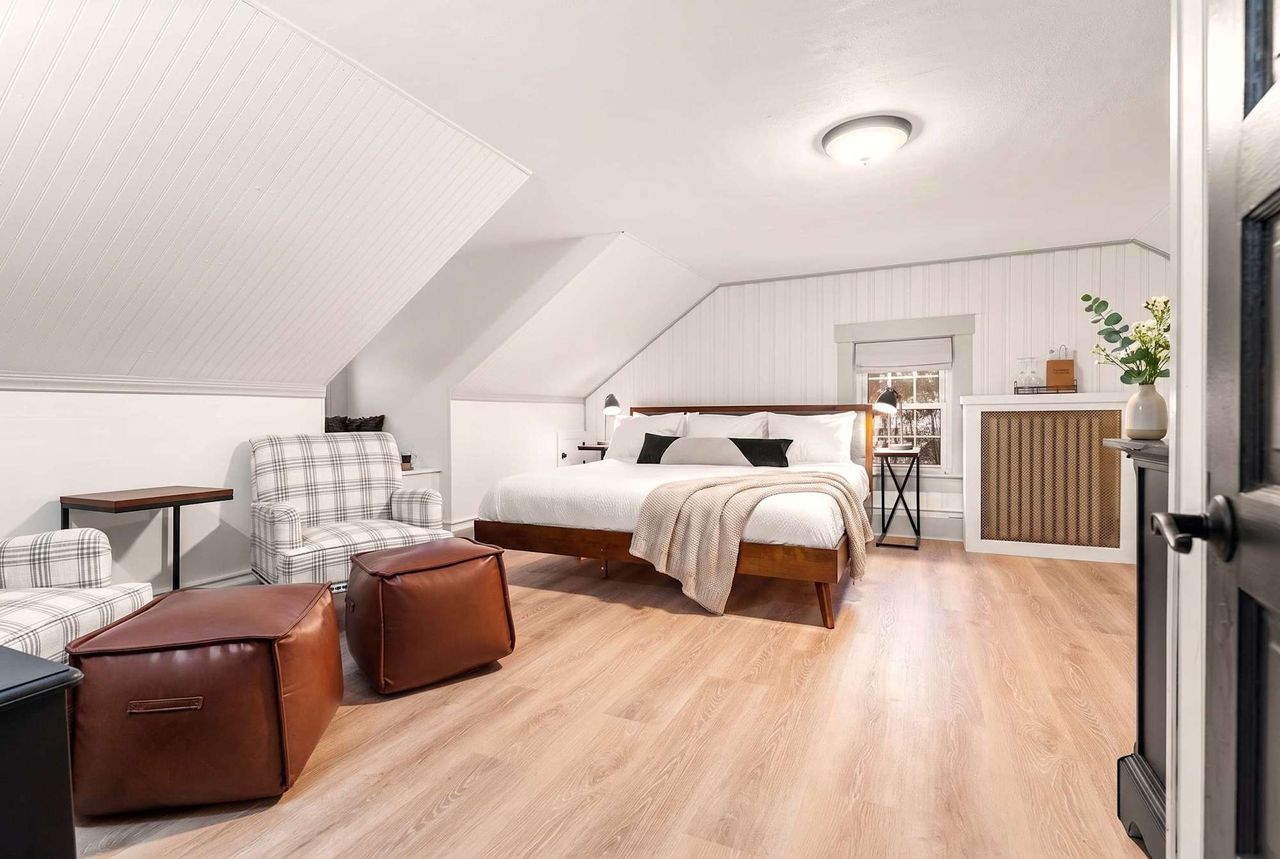
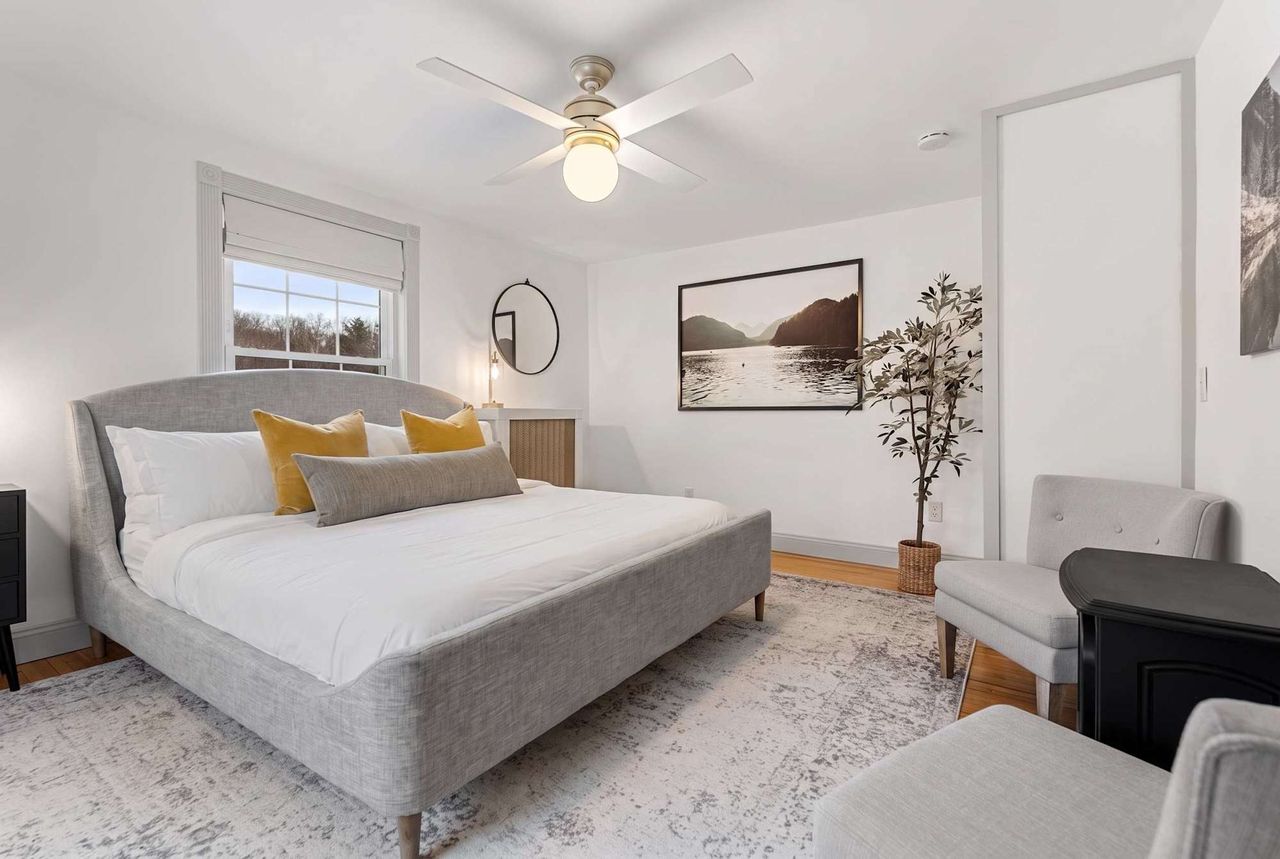
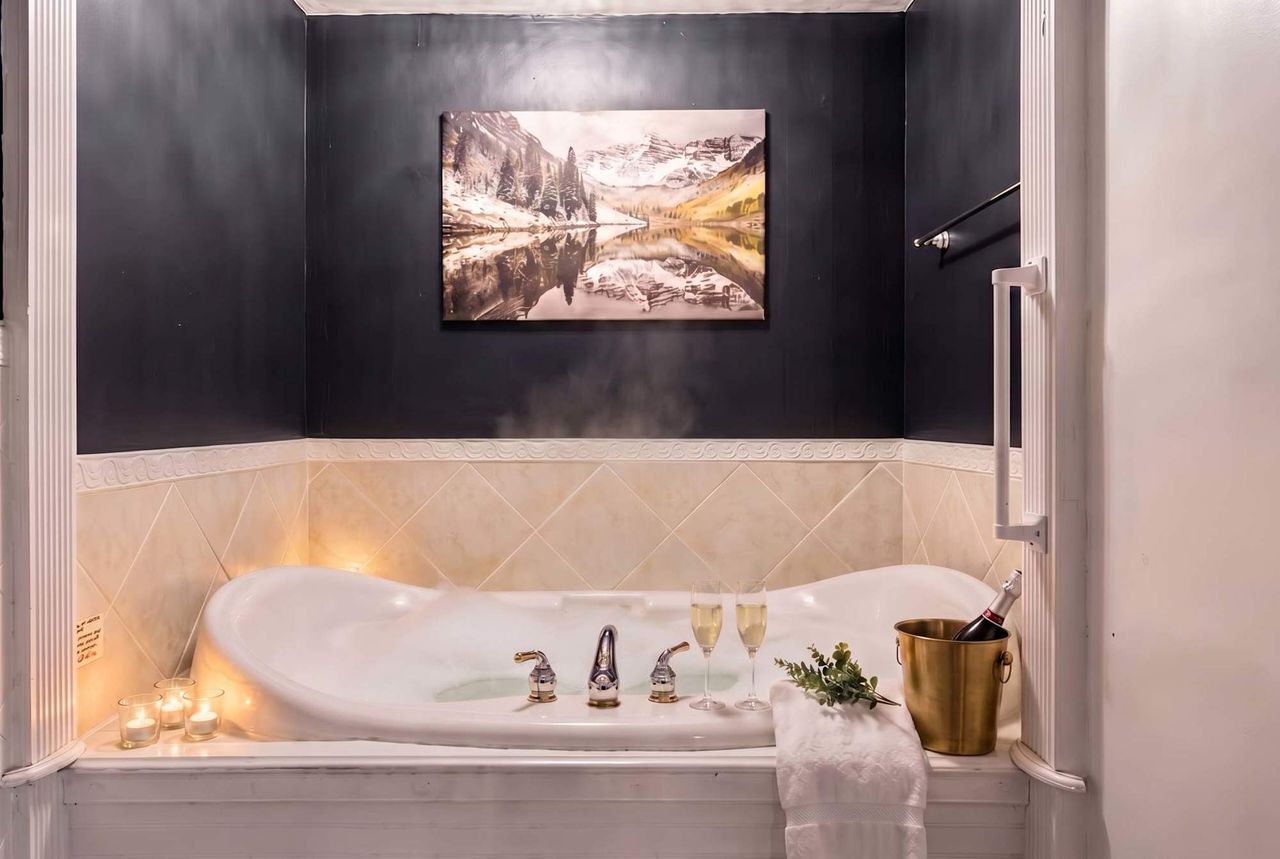
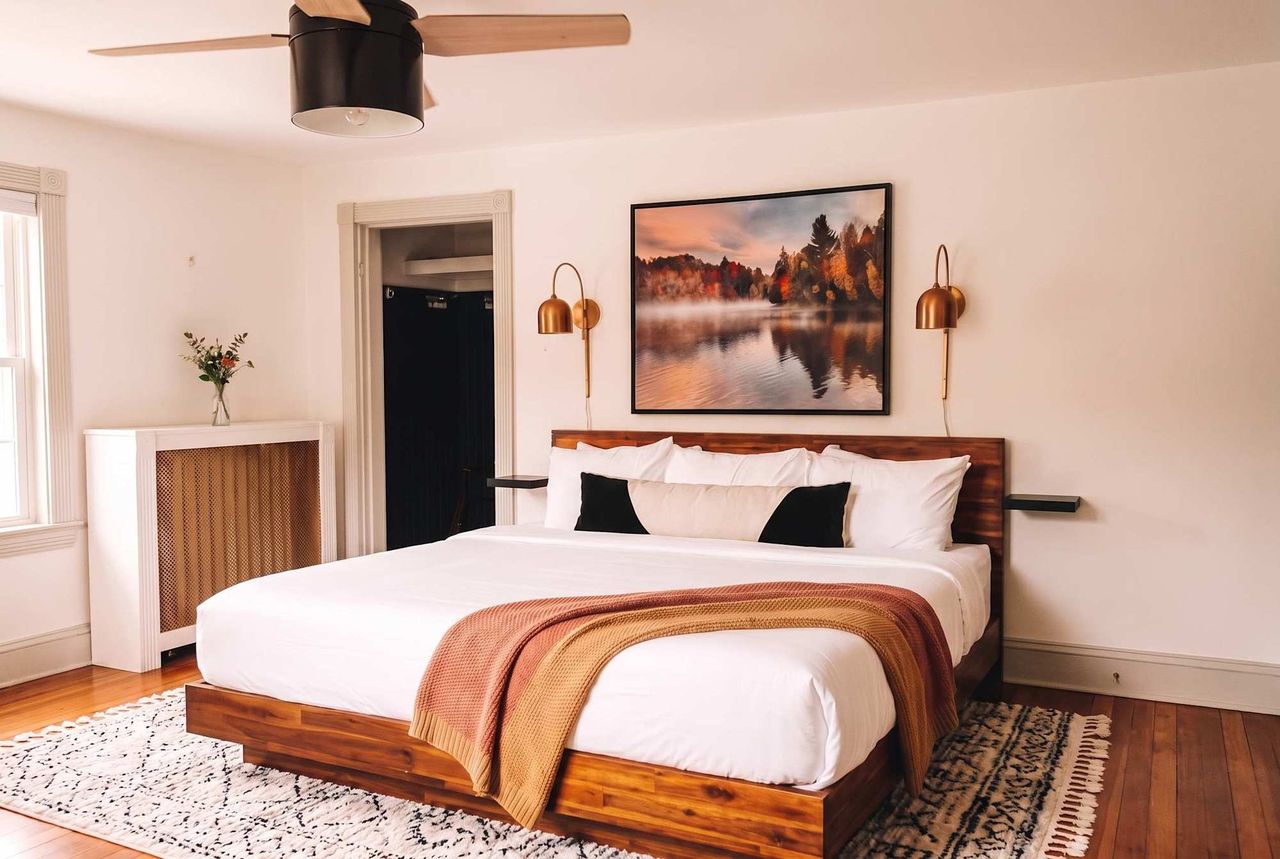
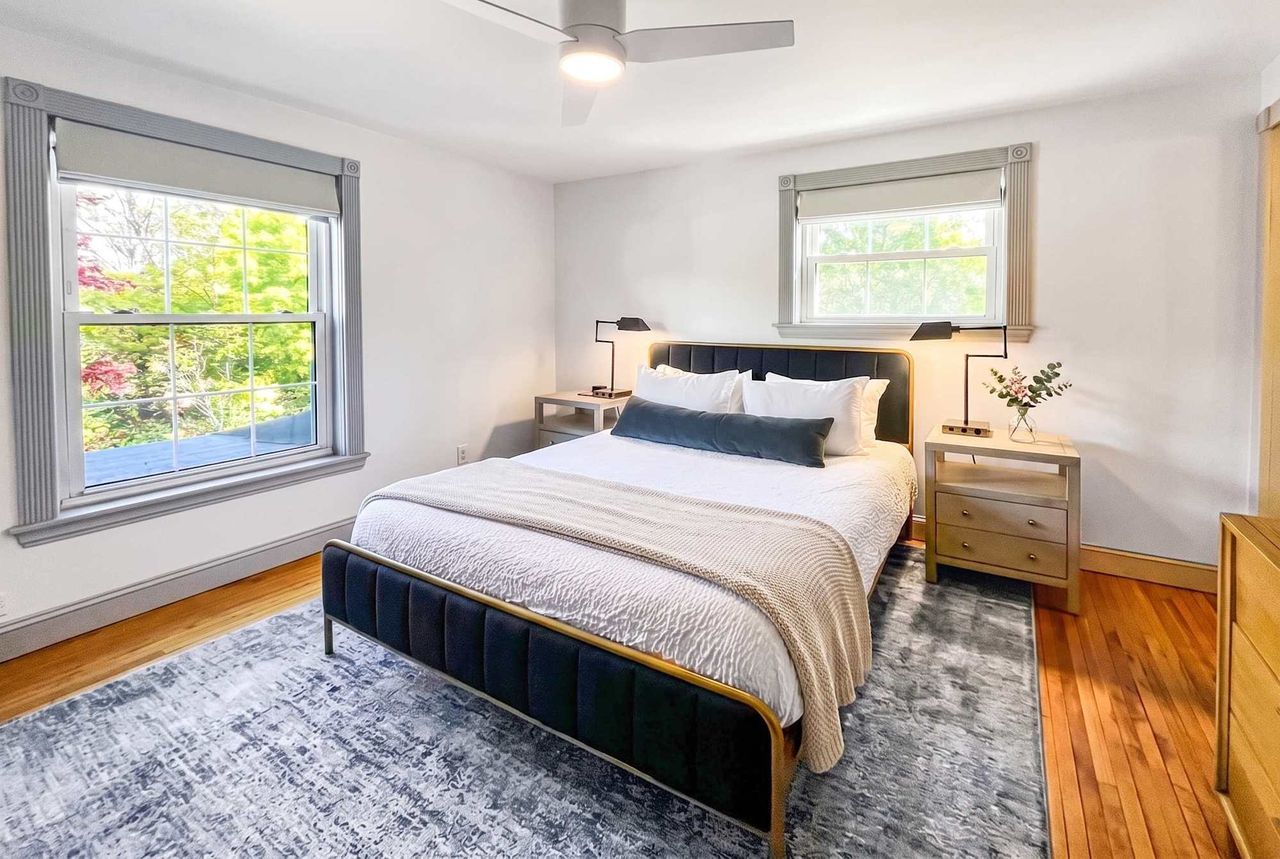
We're set up well for a quiet couple's weekend, which is most of what the shoulder seasons are for. The lodge is a restored 1902 colonial with six private suites, adults-only, and five of the six are TV-free on purpose. In the shoulder weeks, with the valley emptied out, that quiet goes all the way to the front door. Check-in is keyless and self-serve from 3pm, checkout by 10am, parking's free, and the Wi-Fi is fast fiber if you need to stay a little connected while you unplug from everything else.
You can walk into Lincoln's town core from here for dinner and a beer, which is exactly what you want on a cold shoulder-season evening when the light's gone and you don't feel like driving. The coffee lounge on the main floor has coffee and tea for those frosty fall mornings, and the six rooms each have their own character, so it's worth comparing them side by side to find the one that fits. The Pemi suite is a favorite for a slow shoulder-season stay, but they're all built for the same thing: rest, quiet, and easy mornings before you head out into empty mountains.
When you've settled on your window, the mechanics are simple. Pick your dates midweek if you can, use the map to sketch out which overlooks and walks you want within an easy drive, check whether the seasonal spots you care about are open for those exact dates, and pack for two seasons in one day. Then book your dates and let the valley be quiet around you.
The shoulder seasons are the weeks we'd keep for ourselves if we weren't lucky enough to live here year-round. Cooler, calmer, cheaper, and emptier, with the waterfalls loud in spring and the light long in fall. Come when the crowds don't, and the White Mountains will feel like they're yours.
— Launchpoint Lodge, From the lodge