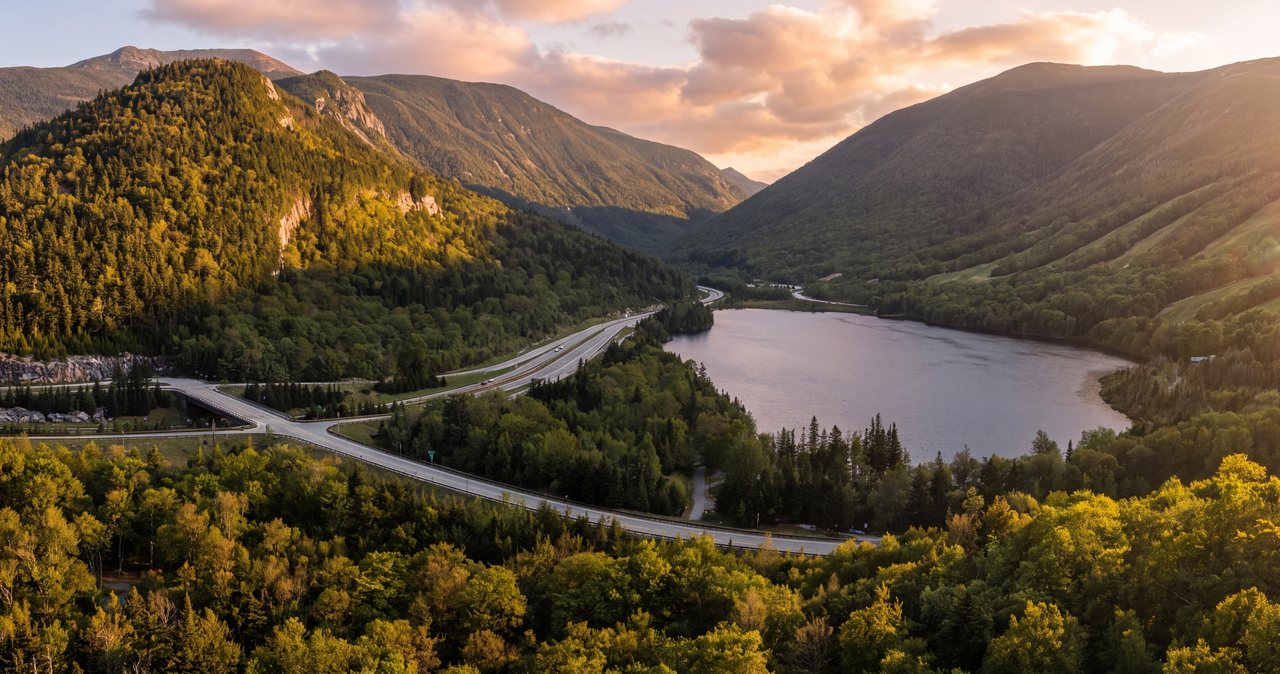
If you have one short evening in the White Mountains and you want a view that justifies the drive, this is the hike I send people on. The Artist Bluff and Bald Mountain loop sits at the north end of Franconia Notch, right where the highway threads between Cannon Mountain and the Franconia Ridge. It is a little over a mile and a half, it climbs only about four hundred feet, and it hands you two separate open ledges: one looking down onto Echo Lake and the ski slopes, the other a bare rock dome with a nearly complete circle of mountains. Few hikes in the notch give back this much for this little.
That reputation is exactly why it needs a guide. "Short and easy" gets people up here in the wrong shoes, at the wrong hour, fighting for a parking spot they did not know they needed, and standing on a genuine cliff edge in fading light. The trail is short. It is not flat, it is not free of consequence, and on a foliage Saturday the parking situation alone can wreck your afternoon. This guide walks the loop the way I hike it, tells you which direction to go and why, and covers the parking, the weather, and the small decisions that separate a good sunset from a scramble down in the dark.
It is about 13 min from our front door in Lincoln, which is the whole reason I know it as well as I do. I have watched the light on Lafayette from Artist Bluff many times, and I have also driven up on a peak Sunday, seen the lot jammed, and turned around. Both of those are in here.
The short version, and what the numbers mean
The full loop runs about 1.5 miles, though you will see everything from 1.2 to 1.6 depending on the map and on whether the two summit spurs get counted. Elevation gain is modest, roughly 400 to 450 feet total (published figures cluster around 425 to 435 feet), spread across two short climbs rather than one long grind. Book time is about an hour to an hour and a half. In practice, plan on 1.5 to 2 hours if you are stopping for photos, hitting both summits, and lingering at the top the way you should. A fast hiker who only wants Artist Bluff can be up and back in about 45 min.
Those numbers hide the character of the trail. This is a rocky, rooty, stone-step kind of hike, not a graded path. The distance is small and the elevation is low, but there are steep pitches where you will use your hands, loose rock underfoot, and a couple of true ledge scrambles. Think of it as a big view packaged in a short, steep, slightly rugged walk, not a stroll. That framing keeps expectations plain and keeps people in the right footwear.
The loop links two objectives. Artist Bluff is the cliff-top overlook the paintings and postcards are named for. Bald Mountain is the bare granite dome most day-trippers skip. Both stand right around 2,320 to 2,340 feet; the two are essentially even in height, so ignore any claim that one meaningfully out-tops the other. Doing both is the whole point of coming as a loop instead of an out-and-back, and Bald is where you lose the crowds.
The trailhead and the parking reality
The hike starts from the gravel hiker lot on Route 18 (Profile Road), directly across from the Cannon Mountain Peabody base area at the north end of the notch. This is the lot you want. It is free, it sits on New Hampshire state park land, and it does not require a White Mountain National Forest parking pass or any day-use fee. From the lot you walk a short stretch along Profile Road to reach the marked trailhead, where the trail cuts into the woods.
Do not confuse this with the Echo Lake Beach lot just up the road. That lot is for beach day-use, it carries a fee (in 2026, $4 per adult ages 12 and up, $2 for children 6 to 11, and free for kids 5 and under), with timed day-use reservations offered in summer, and hiker parking there is not permitted. Cannon Mountain is explicit about this: hikers use the dirt lot across from the base area, not the beach lot. Park in the wrong one and you may come back to a problem.
Here is the part the official pages soft-pedal. The hiker lot is not large, and this is one of the most popular short hikes in the state. On summer weekends, and especially on foliage weekends from late September into mid-October, it fills early in the morning and stays full, and it fills again in the couple of hours before sunset when the golden-hour crowd rolls in. Roadside shoulder parking along Route 18 is limited and gets ticketed or towed when people block sightlines. If the hiker lot is full, the designated overflow is the large Cannon Mountain tramway parking lot (the tram itself is not running, but the lot is still open and used for overflow); from there you cross to the trailhead at the marked crossing rather than walking the highway shoulder. On weekends and holiday Mondays the state also runs a paid hiker shuttle in the notch ($5 per person, round trip) from the tramway lot, though it is aimed mainly at the busier Lafayette Place and Falling Waters trailheads to the south. The cleaner answer for Artist Bluff is simply to arrive early, which is a lot easier when you are staying 9 min down the road instead of driving up from the coast.
The loop, segment by segment
From the trailhead, the trail forks almost immediately. Bear right and you are on the direct, steep climb toward Artist Bluff; the return arm of the loop comes back in from the left. This first quarter mile is the steepest, roughest part of the whole loop: a stone staircase and rocky pitches that gain elevation fast through hardwoods. It is short, but it is real work, and it is where people in the wrong shoes start to regret it. At about 0.25 miles you reach a large boulder marked with red directional arrows. This is the key junction and you will pass it twice.
From that boulder, a short spur leads out to the Artist Bluff overlook itself. Take it. Come back to the boulder, then follow the red blazes on toward Bald Mountain. This middle stretch is the easy part of the loop: rolling trail through a wooded saddle between the two high points, with some ups and downs but nothing severe. Roughly two thirds of a mile into the loop you reach the base of Bald Mountain, where a spur climbs the dome.
The Bald Mountain spur is a little over a tenth of a mile of steep boulder scrambling that circles around the shoulder of the peak, passes through a band of pines, and pops out on open granite. This is the one clear scramble on the hike, hands-on rock in a couple of spots, and it is worth every move. One caution worth flagging: the way off the Bald Mountain summit is not obviously marked and is easy to lose on the open rock. Take a moment to note where you came up before you wander the dome for photos, and look for the blazes before committing to a descent line.
From Bald Mountain you rejoin the main trail and descend the gentler grade, dropping through the woods and then paralleling Route 18 for the final stretch back to the lot. The last stretch is the flattest walking of the day, which is exactly what you want on tired legs. Total moving time for the whole thing, both summits included, is comfortably under two hours for most people.
Artist Bluff: the view everyone comes for
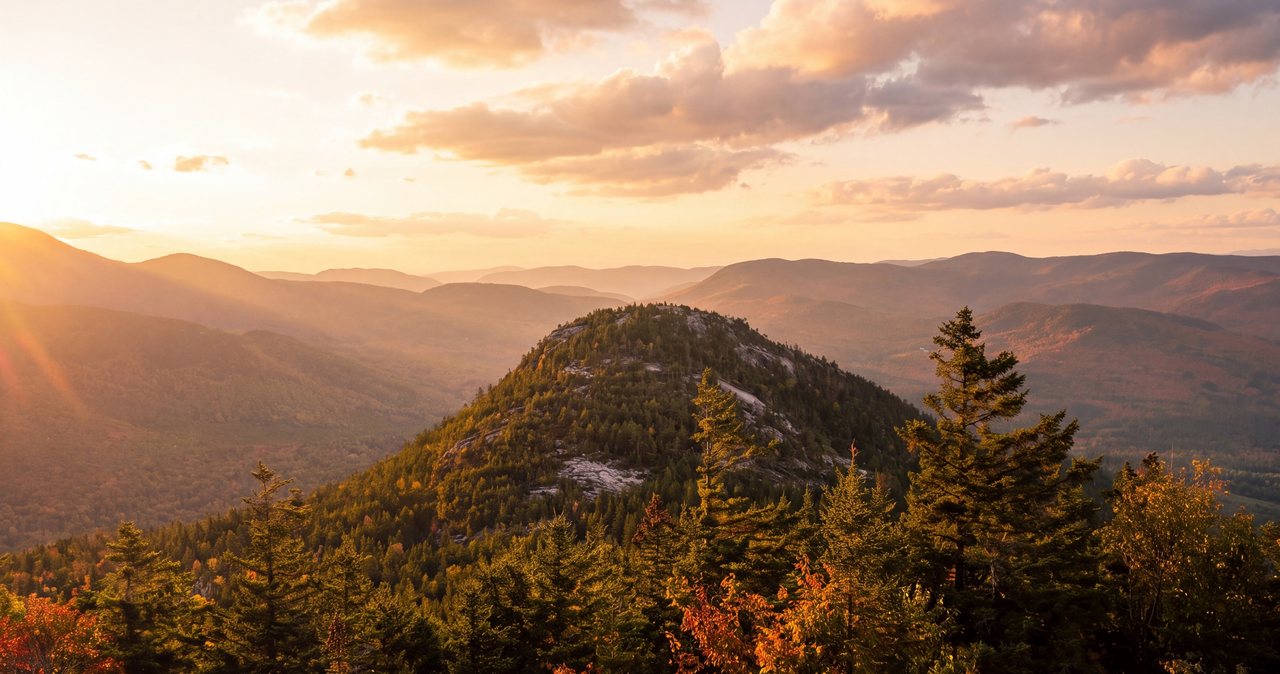
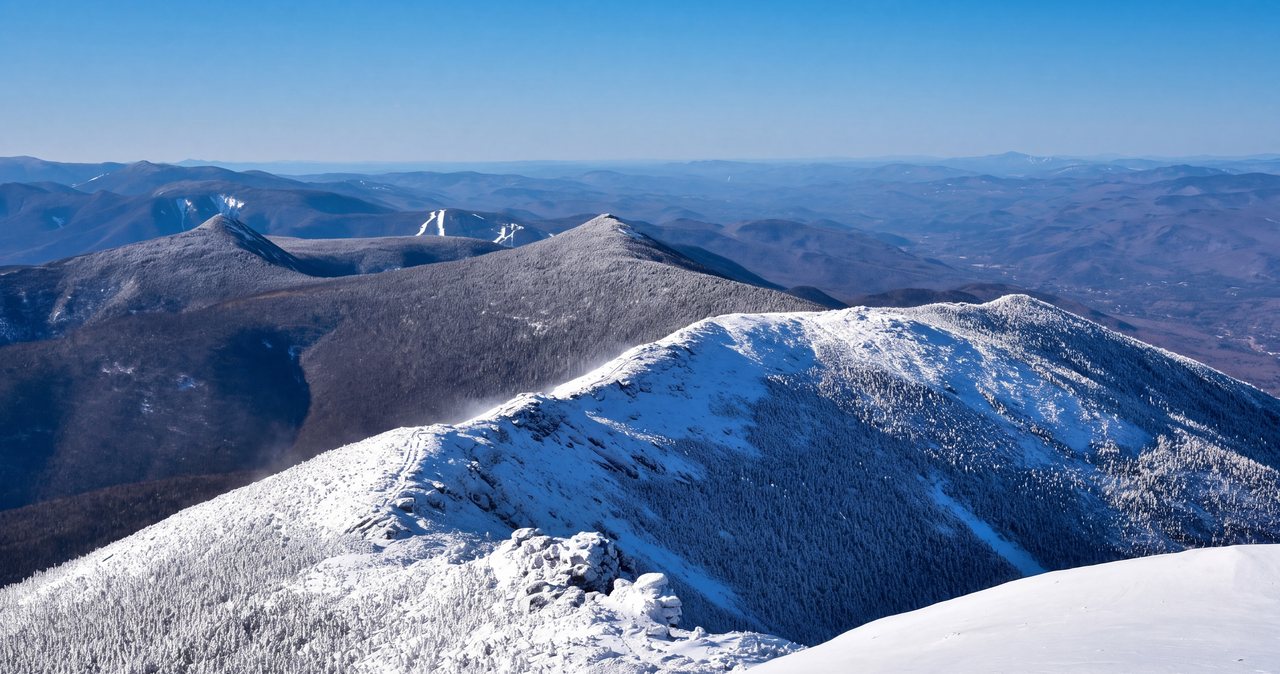
Artist Bluff is a true cliff edge, and the view is the reason the spot has a name. You stand on open rock looking down toward Echo Lake, with the Cannon Mountain ski trails climbing the slope on the far side. To the south the notch opens up and you get the full sweep of the Franconia Ridge, Mount Lafayette and Eagle Cliff, with Interstate 93 threading the gap far below. On a clear evening the low sun lights the ridge and the lake goes to glass. It is the classic White Mountains view, and it earns it.
Because it is a cliff, treat the edge with respect. The rock can be slick when wet or frosted, the drop is serious, and this is not the place for horsing around or for an off-leash dog. Kids need a hand and a clear rule here. The ledges in this notch see falls that did not need to happen, and this overlook, easy as it is to reach, is exactly the kind of place where a casual visitor forgets they are standing on top of a cliff.
Bald Mountain: the summit most people skip
Most visitors do Artist Bluff and turn around, which is a mistake if you have another 20 min in you. Bald Mountain's bare granite dome gives you a wider, more open feeling than the bluff, closer to a real summit than an overlook. From the top you get the Cannon ski slopes up close, the ranges marching north, the Green Mountains of Vermont off to the west on a clear day, and the Kinsman Ridge running south. Where Artist Bluff is a single dramatic view in one direction, Bald opens up almost all the way around.
It is also where the crowds thin out. Artist Bluff can feel like a receiving line on a busy afternoon; Bald Mountain, a short scramble further on, is often quiet by comparison. If you want a few minutes of the notch to yourself, this is where you get them. Between the two, I think Bald is the better place to sit down, and Artist Bluff is the better place to catch the sunset itself.
Which direction to hike it, and why it matters
You will see the loop described as both clockwise and counterclockwise, and the labels get used inconsistently, so ignore them and think about the terrain instead. The rule that matters is simple: climb the steep, stone-step Artist Bluff side, and descend the gentler grade that parallels the road. That means bearing right at the trailhead and going up to Artist Bluff first, then traversing to Bald, then coming down the mellow side back to the lot.
The reason is your knees and your safety. Those stone stairs on the Artist Bluff side are far easier and safer to go up than to come down, especially when the rock is wet or icy or the light is going. Descending steep, ledgy rock at the end of a hike, in fading evening light, is how people turn an ankle or worse. Climbing the steep part while you are fresh and descending the gentle part when you are tired is the smarter sequence, and in winter it is close to non-negotiable.
The one exception is the pure sunset mission. If all you want is the Artist Bluff overlook for golden hour and you are tight on time, skip the full loop and do Artist Bluff as a quick out-and-back, up and down the same steep path. Just bring a headlamp, because that steep descent in the dark is no joke, and it is the single most common way this easy hike goes sideways.
Difficulty: who this is and isn't for
Rated on paper this is an easy-to-moderate hike, and for a reasonably fit adult it is easy. But easy in the White Mountains does not mean flat or forgiving, and the rating undersells the character of the trail. There are short steep pitches, uneven stone steps, loose rock, roots, and one genuine hands-on scramble up Bald Mountain. It is a good hike for families with older kids, for casual hikers wanting a real view, and for anyone short on time. It is a fine first White Mountains hike as long as you go in with the right footwear and expectations.
It is not the right pick for someone expecting a paved or graded path, for very small children who cannot handle steep rock and cliff edges without constant hands-on supervision, or for anyone with balance or mobility issues who is uneasy on uneven, rocky ground. The cliff exposure at Artist Bluff is real. If steep drop-offs make you nervous, you can still enjoy Bald Mountain and skip the very edge of the bluff.
On timing, do not trust the book number blindly. The trail itself is quick, but the two things that eat time are the views, which you will not want to rush, and the crowds, which can bottleneck the narrow scramble spots on a busy day. Give yourself two hours of daylight for the full loop with photos, and more margin than that if you are chasing sunset.
Weather, exposure, and the ridge across the notch
Let me be straight about the exposure here, because accuracy matters more than drama. This is a short, low hike on open ledges, not an above-treeline alpine route. It does not carry the same weather exposure as the Franconia Ridge you are staring at across the notch. That said, it has its own real hazards: the Artist Bluff cliff edge, open granite slabs that turn slick and treacherous when wet or icy, and evening hikers caught out after dark. Here the care goes into your footing, on wet rock and near the edge, rather than into the weather.
The bigger point is what you can see from the top. That spine of peaks across the notch, Lafayette, Lincoln, and Little Haystack, is the Franconia Ridge, and it is big country: miles above treeline, fully exposed, and demanding when the weather turns. It rewards hikers who go up prepared, because a day that looks fine from the parking lot can feel very different on top. If Artist Bluff gives you the bug and you start eyeing the ridge, treat it as a completely different undertaking. That is where the safety discipline really counts.
Build one habit now, on the easy hike, and carry it to the hard ones. Check the mountain forecast before you go, not the valley forecast, because summit weather is a different animal that changes fast. The Mount Washington Observatory's Higher Summits Forecast is the standard source. Read and follow the hikeSafe Hiker Responsibility Code: be self-reliant, tell someone your plan, bring the essentials, know your limits, and turn back when you should. And consider the voluntary NH Hike Safe Card, run by NH Fish and Game ($25 individual, $35 family for 2026): it supports search and rescue and can shield responsible hikers from being billed for a rescue. None of that is overkill for Franconia Ridge, and getting in the habit here is the point.
Seasons: foliage, summer sunsets, winter, and mud
Fall is the marquee season and everyone knows it. Peak foliage in the notch typically lands from late September into the middle of October, and Artist Bluff during peak color is one of the most photographed views in New England. It is a strong view and it is crowded. If you are here for foliage, be at the lot early or come for the last light, accept that you will share the ledges, and have your overflow plan ready. This is the hardest time of year to find parking.
Summer is the sunset season. Long evenings mean you can hike after dinner, and the low golden light on Lafayette and Echo Lake from Artist Bluff is why this is the classic sunset walk in the notch. Mornings are cooler and quieter if you would rather beat the heat and the crowds. Either way, bring water; the short distance fools people into leaving it in the car.
Winter turns this from an easy hike into one that demands traction. Those stone steps and open ledges ice up, and the steep Artist Bluff pitch in particular becomes hazardous without microspikes. With microspikes and a little care it is a quiet winter walk with the notch under snow. Without them it is a fall waiting to happen. Spring is mud season, roughly April into early June: expect wet, muddy, slick trail, walk through the mud rather than around it to protect the trail edges, and hold off on the higher exposed rock until it dries out.
Gear, water, and footwear
Footwear is the one thing people get wrong most. This is rocky, uneven, steep-in-places terrain, so wear real hiking shoes or trail shoes with a grippy sole. Sneakers with worn tread slip on the granite, and sandals are a bad idea on the scrambles and at the cliff edge. In winter, add microspikes; they are inexpensive, they live in a jacket pocket, and they are the difference between a nice walk and a trip to the clinic.
Even on a short hike, carry water, a snack, and a layer, because mountain weather shifts and the wind on the open ledges is cooler than the parking lot. The single most important small item for this specific hike is a headlamp. Sunset is the best time to be up here, which means a lot of people are descending in the dark, and a phone flashlight is not enough for steep rock. Pack a real light and put it where you can reach it without digging.
Round it out with the basics: sunscreen and a hat for the exposed rock, bug protection in early summer, and a small first-aid kit. Trekking poles are optional and can be more nuisance than help on the hands-on scramble up Bald, but some people like them for the steep descent. Nothing here is exotic. The point is to not treat a real mountain trail like a sidewalk just because it is short.
Leave No Trace and trail etiquette
This trail takes a beating because it is so popular, so the small courtesies matter more than usual. Pack out everything you bring, including fruit peels and the little corner you tore off a granola bar wrapper. Stay on the marked trail and on the durable rock at the overlooks rather than trampling the vegetation clinging to the ledges; the plants growing in those thin pockets of soil are fragile and slow to recover. If you brought a dog, keep it leashed, both for the wildlife and because a cliff edge is no place for an off-leash animal, and pack out what it leaves.
On a busy day, be generous at the pinch points. The scramble spots and the narrow overlook can only hold so many people, so yield to uphill hikers, take turns at the best photo perches, and do not park yourself on the single best rock for half an hour while a line forms. Voices carry on open ledges; part of what people come here for is the quiet, so keep the music off the speaker. It is a small place with a big view, and it stays good only if everyone treats it that way.
Common mistakes and the smarter play
The number one mistake is timing the parking wrong. People show up mid-afternoon on a foliage Saturday or an hour before a summer sunset, find the lot full, and either give up or park somewhere they get towed. The fix is boring and effective: go early, or go on the mellow shoulder days, and have the Cannon tramway overflow lot in your back pocket. Staying central in the notch, minutes away, is what makes an early start realistic instead of theoretical.
The second mistake is skipping Bald Mountain. Folks do Artist Bluff, get the shot, and turn around, missing the quieter and arguably better summit 20 min on. If you drove up here, do the whole loop. The third is direction: coming down the steep Artist Bluff stone steps at the end, tired, in low light, instead of using them as a climb. Bear right at the start, climb Artist Bluff, and descend the gentle side.
The fourth is going up for sunset without a headlamp, which turns the best hour of the day into a nervy descent in the dark. And the fifth is underestimating the trail because the mileage is small, showing up in the wrong shoes or without water. None of these are hard to avoid. They are just easy to blunder into precisely because the hike sells itself as effortless.
Nearby add-ons and how it connects
The strength of this hike's location is how much sits within a few minutes of the same stretch of highway. Echo Lake, right below the bluff, has a small state beach if you want to swim on a hot day after the walk (that is the lot with the fee and the reservations). One thing to know before you plan around it: Cannon Mountain's aerial tramway is closed. The 45-year-old tram was retired after its last day, October 26, 2025, and while a new tram is in planning, no reopening date has been announced, so do not plan on riding to the summit. If you want Cannon's summit while the tram is down, you have to hike it (the Kinsman Ridge Trail climbs from near the tramway base). The New England Ski Museum still sits at the tramway base and is worth a stop.
For hikers who want more, the notch is a trailhead corridor. Lonesome Lake, a rewarding half-day climb to an AMC hut and a pond that mirrors the Franconia Ridge, leaves from Lafayette Place a few miles south. The Franconia Ridge Loop over Lafayette and Lincoln, the classic and serious above-treeline day, starts from the same corridor and is the natural next step up in commitment. Further south down the notch you have the Basin and Flume Gorge, both easy, family-friendly stops. String Artist Bluff together with any of these and you have a full, well-paced day without ever leaving the Franconia Notch corridor.
If you want to make a proper evening of it, hike the loop for sunset, then drop down to the Basin or grab dinner back in Lincoln, about 10 min south. That is the itinerary I hand guests who have one clear evening and want to spend it well.
Safety & conditions
- Artist Bluff is a true cliff. Keep well back from the edge, watch children closely and keep dogs leashed, and never crowd the rim for a photo, especially when the rock is wet or frosted.
- Carry a headlamp for any late-day or sunset hike. The steep, rocky descent in the dark is the most common way people get hurt here, and a phone flashlight is not enough.
- In winter and shoulder season the ledges and stone steps ice over. Wear microspikes; the steep Artist Bluff pitch in particular is much easier with traction.
- The Franconia Ridge you see across the notch is a different, far more serious hike above treeline. Before attempting it, check the Mount Washington Observatory Higher Summits Forecast, follow the hikeSafe Hiker Responsibility Code, and consider a NH Hike Safe Card.
- Note your descent line off Bald Mountain before you explore the summit; the exit from the open rock is not clearly marked and is easy to lose.
- Cannon Mountain's aerial tramway was retired in October 2025 with no reopening date announced, so do not plan to ride down or up; plan your time and daylight for hiking only.
Where to stay for it
The whole reason we recommend this hike so confidently is that it is about 13 min from our door. From 191 Pollard Road you run up I-93 through the notch and you are at the trailhead before you have finished your coffee. That short distance is not just convenient, it is a real advantage, because the one thing that reliably ruins an Artist Bluff visit is the parking. Guests who stay central can be in the small hiker lot at first light or roll up for last light without a two-hour drive bracketing the hike, which is exactly what it takes to beat the crowd.
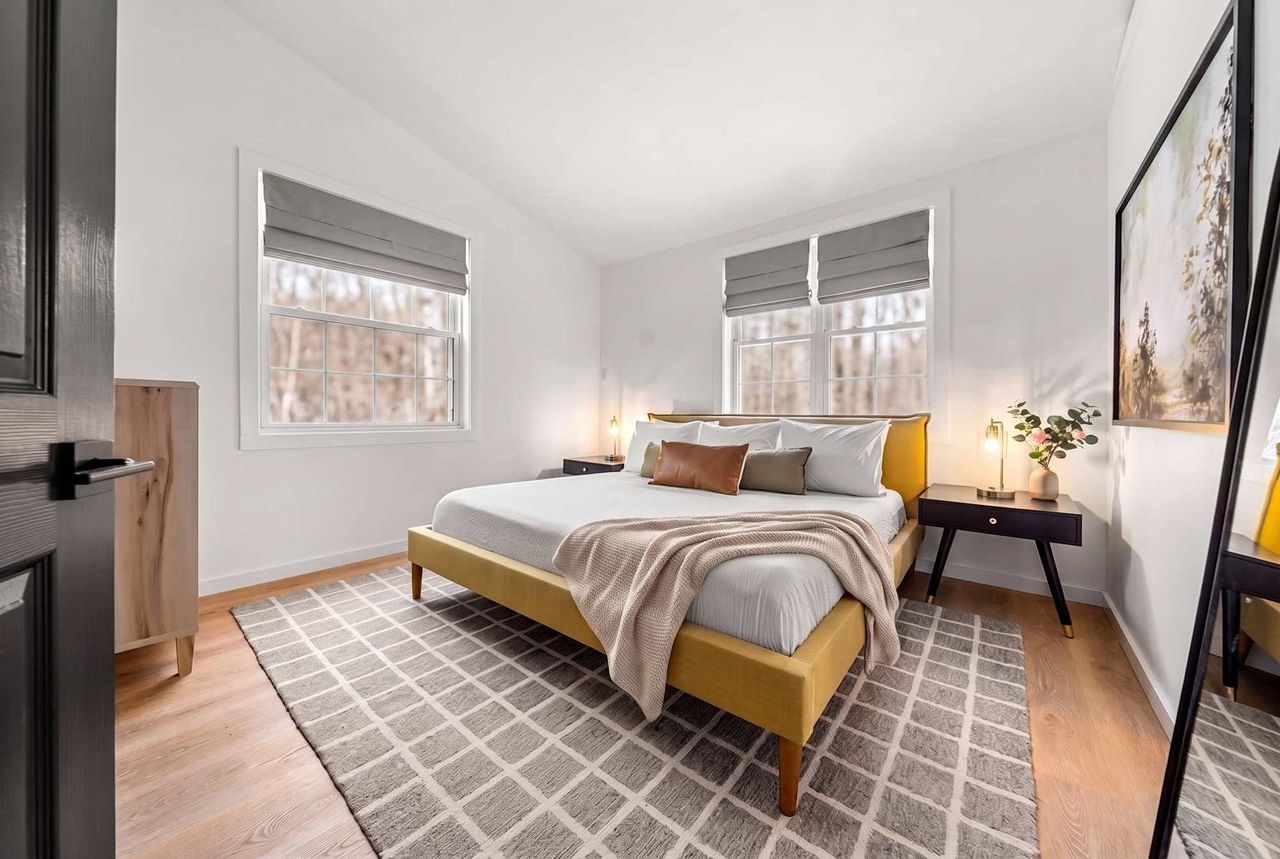
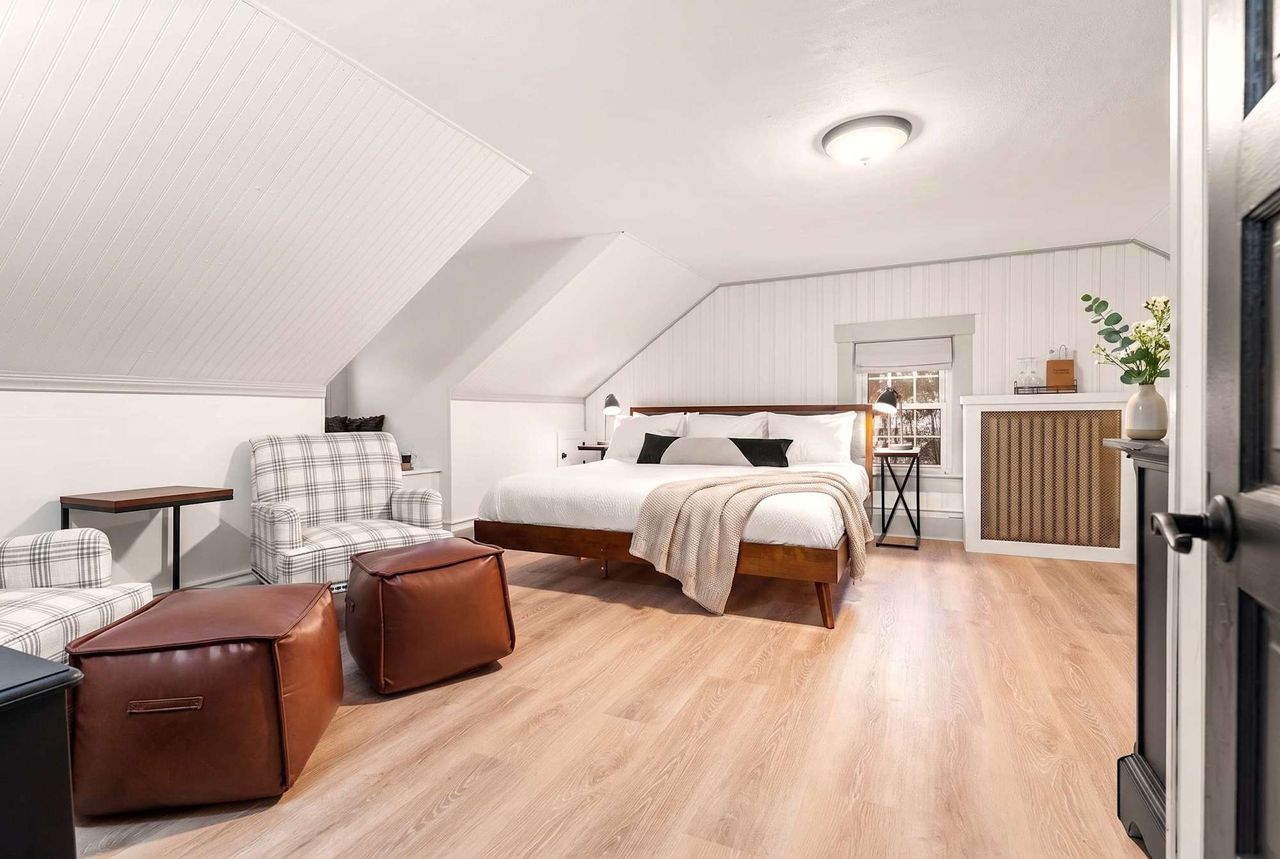
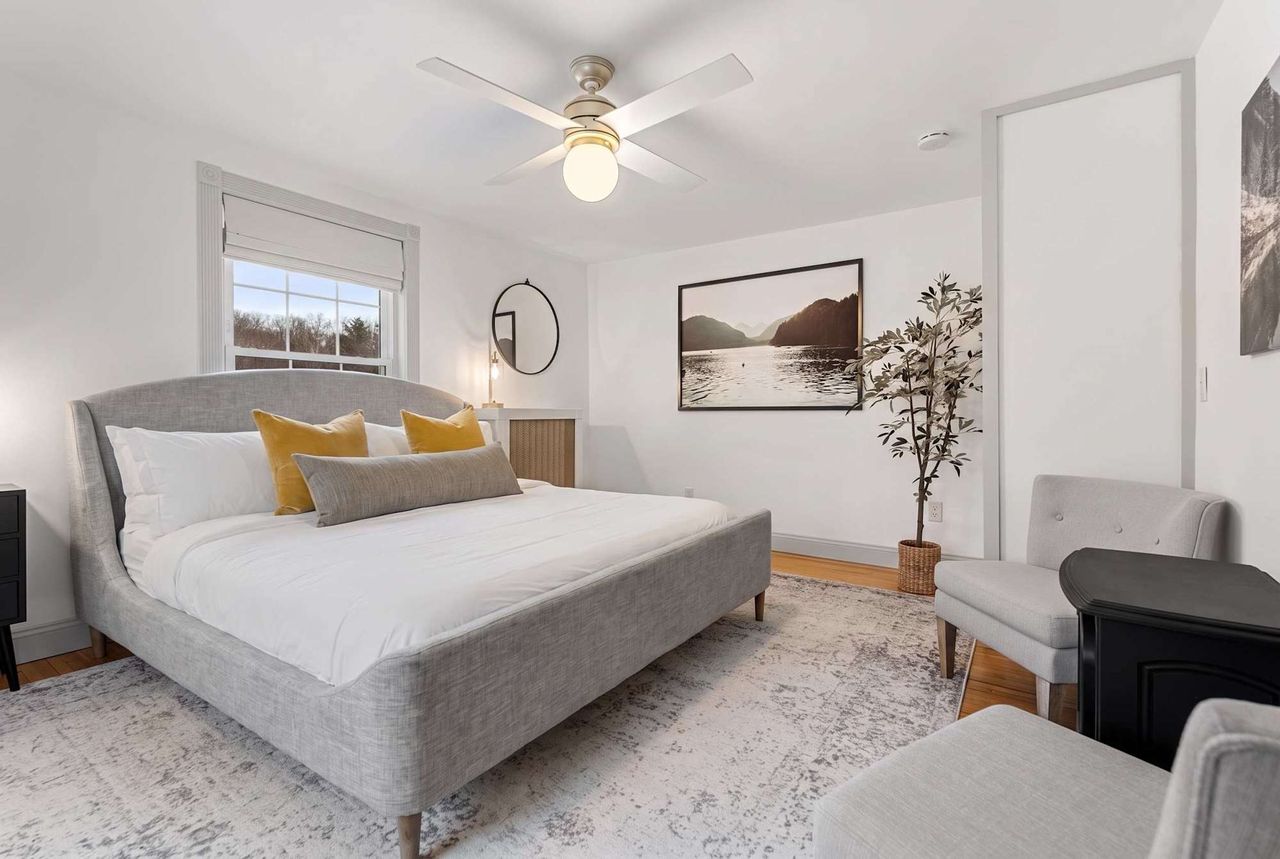
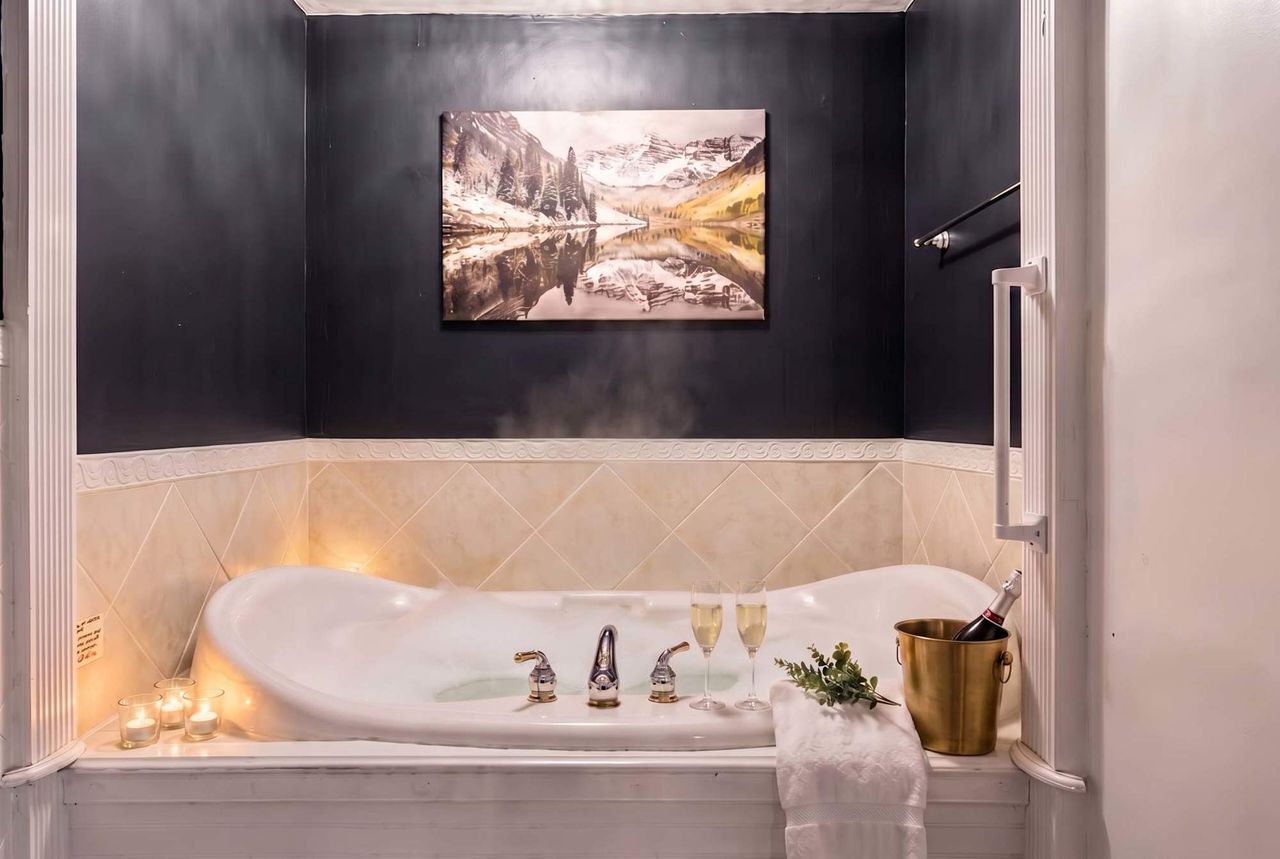
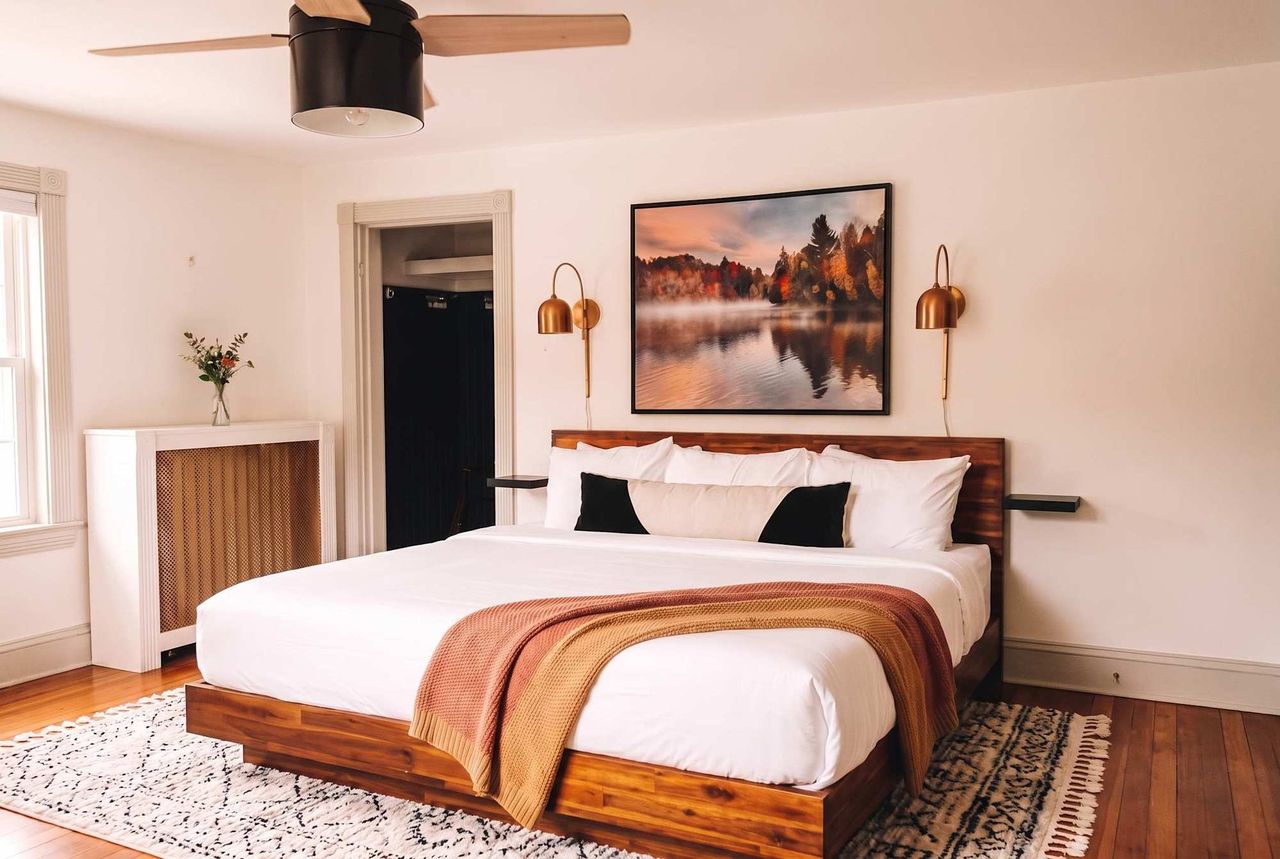
This is also the hike our signature suite is named for. The Artist Bluff suite is the natural pick for anyone who wants to stand on the overlook their room is named after. After a sunset loop, the Basin suite, with its deep spa tub, is the one guests are grateful for when their legs are tired from the stone steps. All six of our suites are named for the landmarks right outside, and Artist Bluff is the one you can hike before dinner and still be back in Lincoln in time to eat.
My standing advice to guests: do this one on your first clear evening. It is the fastest way to understand where you are, the notch, Cannon, and the whole Franconia Ridge laid out in front of you, and it sets up everything else you might hike while you are here.
Sources & official info: cannonmt.com · nhstateparks.org · nhstateparks.org · visitwhitemountains.com · hikesafe.com · mountwashington.org
— Launchpoint Lodge, From the lodge