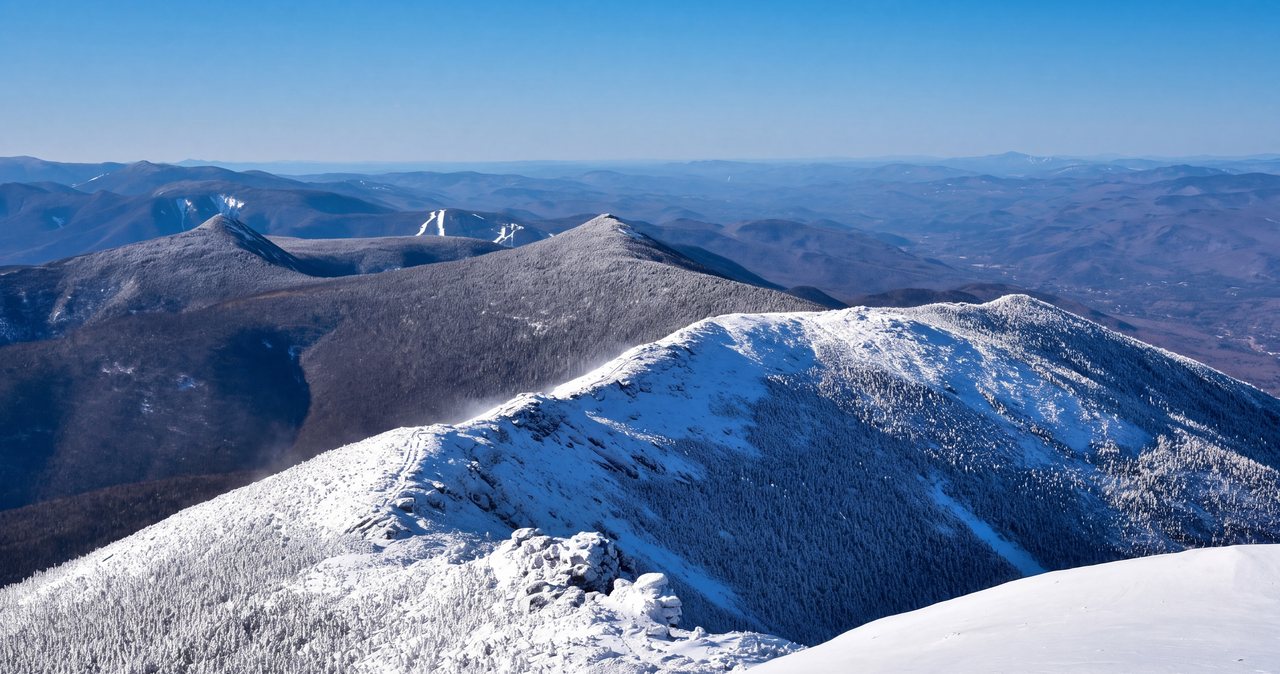
Lonesome Lake is the hike we send more guests on than any other, and there is a reason for that. It gives you much of what the White Mountains are known for — a real climb, a high mountain lake, a working backcountry hut, and a straight-across view of the Franconia Ridge reflected in the water — without asking you to go above treeline or commit to a full day. From the trailhead at Lafayette Place to the lakeshore is 1.6 miles and about 1,000 feet of climbing. Families with children do it, and so do fit older hikers and serious hikers using it as a warm-up before Cannon or the Kinsmans.
There is already an overview of Lonesome Lake in our Discover section that covers the lay of the land and why it matters. This is the other half: the actual hiking guide. We walk the route junction by junction, tell you how hard it is and how long it really takes, sort out the parking situation that trips up many people who drive up here, and cover the hut and winter use in detail. We have hiked it in every season, and we will tell you what the official trail descriptions leave out.
The route, segment by segment
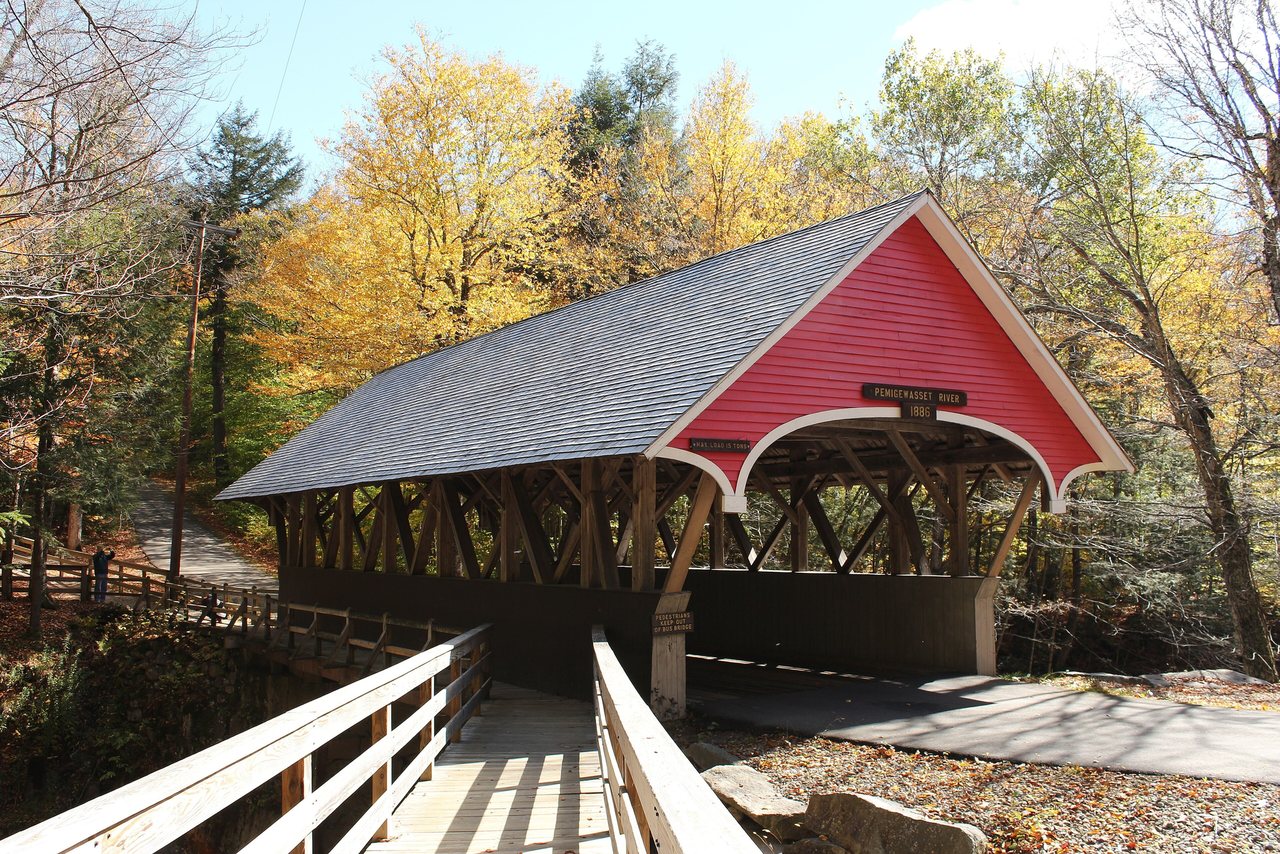
The trail starts on the west side of Lafayette Place, in Franconia Notch State Park. From the hiker lots you walk a short way to where the Lonesome Lake Trail leaves the road and crosses the Pemigewasset River on a footbridge. The trail is well-blazed and signed the whole way, so route-finding is not a concern. This first quarter-mile is flat, wide, and gentle, which makes it a good place to let a group settle into pace before the real climbing starts.
Once past the river the trail turns uphill. This middle section is a series of well-graded switchbacks working up the eastern flank of the Kinsman Range. It is rocky and rooty in the usual White Mountain way, with a few short rock staircases, but it is never truly steep and never exposed — you are in the trees the entire climb. You gain the bulk of the day's roughly 1,000 feet in this stretch, about a mile of steady work. Most people are breathing hard but not suffering. There is no reliable treated water source on the climb, so fill up before you start.
Around the one-mile mark the grade eases and the forest opens as you approach the lake basin. The trail reaches the northeast corner of Lonesome Lake at a signed junction where the Lonesome Lake Trail meets the shore trails that circle the water. This is where the hike pays off: the lake spreads out in front of you at roughly 2,730 feet, and across it stands the Franconia Ridge — Lafayette, Lincoln, and Little Haystack — filling the eastern sky. On a still morning the ridge lays down flat on the water.
To reach the AMC hut and the best views you circle the lake. We usually bear left and go counterclockwise, following the shore trail south and then west. This side takes you across a long boardwalk over the boggy south end — watch your footing, the planks get slick — and past open spots where the ridge view is at its cleanest. The hut sits on the far southwest shore, about half a mile of easy walking from where you first reach the lake. The reflection photograph most people come for is taken from this side, looking back east across the water.
From the hut you can close the loop by continuing around the north shore back to the junction where you arrived, which makes the lake circuit a little under a mile on top of the climb. The north-shore side connects to the Dodge Cutoff and the Hi-Cannon Trail if you want to keep going up, but for the standard hike you complete the ring and descend the way you came. Total for the up-and-back with a full loop around the lake is about 3.1 to 3.3 miles.
How hard it really is, and how long it takes
Be real about difficulty, because "easy family hike" and "1,000 feet of climbing" are both true and they confuse people. Lonesome Lake is easy by White Mountain standards, which is not the same as easy by flatland standards. There is no scrambling, no exposure, no route-finding, and no section where a careful hiker feels unsafe. But you are climbing a real mountain slope for about a mile, over rock and root, and if the last hill you walked up was a parking garage ramp, your legs will notice. It is a moderate hike with an easy hike's reputation.
This is a good first real hike for children — roughly age five and up for kids who are used to walking, with the understanding that the middle mile is work and that a lake with a hut at the top is a strong motivator. It is also fine for fit older hikers and for anyone rebuilding after an injury who wants elevation without exposure. Who it is not for: someone looking for a flat stroll, or anyone who cannot manage sustained uphill on uneven ground. For that, the flat Pemi Trail along the valley floor or the paved recreation path is the better call.
On timing, do not anchor to the book number. Guidebooks list roughly two to two and a half hours, and strong hikers moving steadily will beat that. But most people — especially families, photographers, and anyone stopping at the hut — should plan on three and a half to four and a half hours car to car, including a proper break at the lake. The climb up runs about 60 to 90 min; the loop around the lake and a rest is another 45 to 60; the descent is faster than the climb but not by as much as you would hope, because loose rock underfoot makes you slow down. Build in more time in fall, when the trail is crowded and you will stop for photos often.
Getting there and parking — the part people get wrong
The trailhead is at Lafayette Place on the Franconia Notch Parkway (I-93) between Lincoln and Franconia. Here is the quirk that catches people, and it matters: the Lafayette Place hiker lots are on the southbound side of the parkway. If you are driving north out of Lincoln — which you would be, coming from us — you cannot turn directly into them. You have two options: continue north, get off and turn around to come back southbound, or park in the Falling Waters / Old Bridle Path trailhead lot on the northbound side and walk the pedestrian tunnel under the highway to reach the Lonesome Lake side. The tunnel walk adds only a few minutes.
The Lafayette Place hiker parking is two small lots along the highway, and it fills early — often by mid-morning in summer, and around dawn on a nice fall weekend. Parking is free, which is worth knowing: Lafayette Place sits inside Franconia Notch State Park, so you do not need a White Mountain National Forest recreation pass for this trailhead, unlike the Forest Service lots over on the Kancamagus. Hikers are not permitted to park in the campground itself or at campground sites. Do not park along the parkway shoulder — it is a divided limited-access highway and roadside parking is illegal and enforced.
When the lots are full, a paid hiker shuttle runs Saturdays, Sundays, and holidays, for the 2026 season from May 23 through October 18, roughly 8 a.m. to 7 p.m., for about $5 per person round trip, with overflow parking at the Cannon Mountain lot at Exit 34B. Dogs ride free. It is a fine backup, but it runs on a schedule and only on those days, so do not count on it midweek. The real answer to the parking problem is to arrive early, and that is the single biggest advantage of staying central. From the lodge in Lincoln you are about 12 min from the trailhead, so an early departure puts you in the lot with spaces to spare while people staying an hour away are still at breakfast.
The AMC Lonesome Lake Hut
The hut on the southwest shore is one of eight backcountry huts the Appalachian Mountain Club runs across the White Mountains, and it is the most accessible of them — the shortest, easiest hike to any of the eight. It sits at roughly 2,760 feet, with two bunkhouses that sleep 48 total in rooms of about four to seven, plus a main building with the kitchen and a common room. Even if you are only day-hiking, it is worth walking over. In season the croo (the crew who staff it) sell baked goods and hot and cold drinks, and the porch has the best view of the ridge.
In full-service season — roughly early June through mid-October, and June 4 to October 17 in 2026 — the hut serves a family-style dinner at 6 p.m. and a hot breakfast around 7 a.m., both cooked by the croo and included in an overnight stay. If you want to sleep up there, reserve well ahead through the AMC; summer weekends and fall book out early, and this being the easiest hut, it is the one families target. Bunks come with blankets and a pillow, but you will want your own sleeping bag or liner. No dogs are allowed to stay overnight at the hut, though leashed dogs are welcome on the trail and at the lake for the day.
Staying overnight turns Lonesome Lake from a half-day hike into an easy introduction to hut culture — you carry a light pack, someone else cooks, and you get the lake to yourself at dawn after the day-trippers have gone home. That first light on Franconia Ridge, before anyone else is on the boardwalk, is the reason to do it.
Winter and shoulder-season use
Lonesome Lake is one of three AMC huts, with Carter Notch and Zealand Falls, that stay open on a self-service basis through the winter, and it is a legitimate cold-weather objective for prepared hikers. Self-service season runs roughly from late October to the end of May. In that mode there is no croo-cooked meal — you bring your own food and use the hut kitchen — and a caretaker is on hand for information and to manage the building. The caretaker may light a fire in the main building in the evening, typically after 4 p.m., but at Lonesome Lake the guest bunkhouses are separate, unheated buildings. Bring a bag rated to around zero degrees; body heat is what you get overnight.
The trail itself in winter is very doable and beautiful, but it demands the right traction. When the path is packed out, microspikes handle the climb to the hut fine. Step off the packed center line, though, and you can posthole to your thigh — so bring snowshoes if there has been fresh snow, or if you plan to break trail or continue above the lake. Above the hut, toward Cannon or the Kinsmans, snowshoes stop being optional. The frozen lake with the ridge behind it is one of the best winter scenes in the Notch, and because the climb is sheltered in trees the whole way, it is a safer cold-weather choice than anything that tops out in the open. Winter conditions here are still serious cold: dress for it and turn around if the weather deteriorates.
Spring is the season to plan around, and mostly for one reason: mud and trail damage. From snowmelt through roughly late May the trail is a mess of mud and running water, and hiking it does real harm — the standard White Mountain guidance is to stay off soft, high trails during mud season and let them dry out. If you are here in April or early May, save Lonesome Lake for a dry spell and choose lower, hardened trails or the paved path in the meantime.
Exposure, weather, and staying safe
The reason we recommend this hike so freely is that the Lonesome Lake Trail keeps you in the trees and below treeline the entire way. You are not on an exposed ridge, there are no open slabs to get stranded on, and a sudden storm at the lake is uncomfortable rather than life-threatening. That is a real distinction in these mountains. The nearby Franconia Ridge — the skyline you are looking at across the water — is a different animal entirely: it runs for miles above treeline, fully exposed to weather, and conditions up there can turn quickly even on a day that feels mild at the parking lot. Do not let a good day at Lonesome Lake talk you into wandering onto that ridge unprepared.
Even at about 2,700 feet, weather in the Whites turns fast and cold, and the standard habits apply. Before any hike here, check the forecast — the Mount Washington Observatory's Higher Summits forecast is the one locals trust for what the mountains will do, not just the valley. Carry layers, a rain shell, and a headlamp even on a short day; hikes run long, and being caught out after dark on rocky trail is how easy days go wrong. Tell someone your plan and when you will be back.
Take a minute with hikeSafe.com and its Hiker Responsibility Code before you go — it is the shared standard here for being prepared and self-sufficient. New Hampshire also sells a voluntary hikeSafe card, and it is worth buying: it supports Fish and Game's search-and-rescue work and, in most cases, protects a card-holder from being billed for the cost of a rescue if you are ever the one who needs help. It costs little and it is the responsible thing for anyone hiking these mountains regularly.
Seasons: what to expect month to month
Summer, roughly late June through August, is the peak of the family season. The trail is dry and fast, the lake is cool enough to dip your feet, the hut is in full service, and the parking lots fill earliest of all. This is when the early start matters most. Bring bug protection in June and early July — the bog at the south end of the lake breeds mosquitoes and blackflies, and the boardwalk runs right through it.
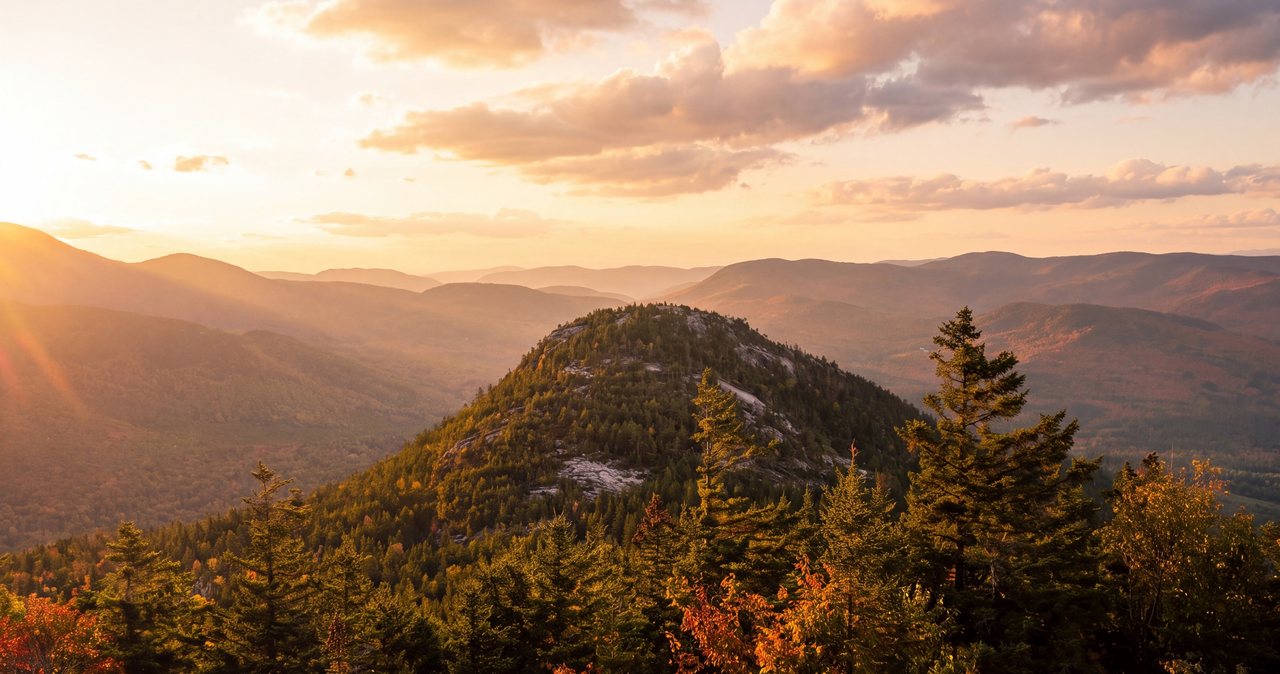
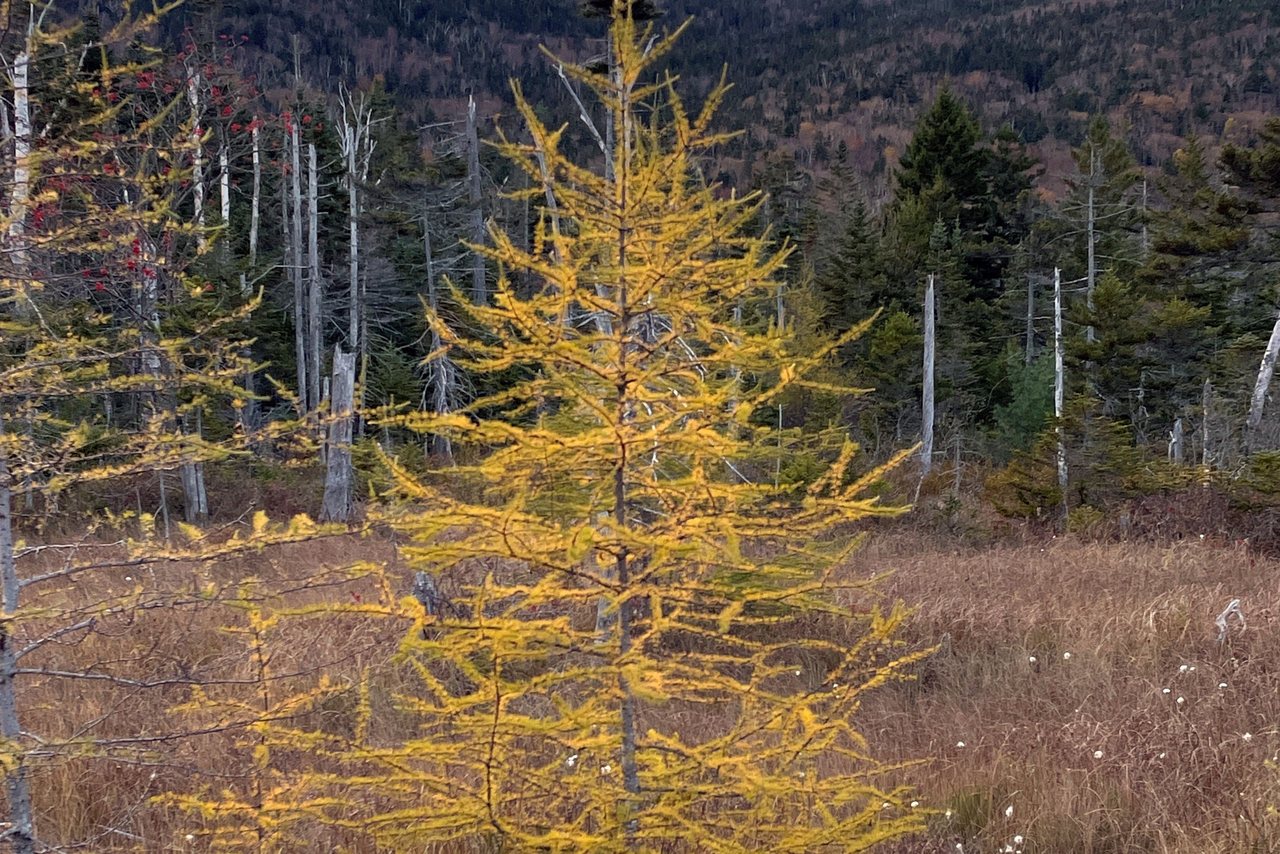
Fall is both the showstopper and the crowd. Peak foliage in Franconia Notch typically lands in the first two weeks of October, give or take a week depending on the year, and Lonesome Lake during peak color — hardwoods low, the ridge sometimes dusted with early snow, all of it doubled in the water — is about as good as fall hiking gets here. It is also the busiest the trail ever is. On a peak-color Saturday the lots fill before dawn and the trail is a steady line of people. Go on a weekday if you possibly can, and start early regardless.
Winter and spring we have covered above — winter is excellent with traction and the right gear, and spring mud season is the stretch to plan around rather than push through. If you only get one window, aim for a clear, cool morning in late September: the crowds have thinned from summer, the bugs are mostly gone, the first color is coming in, and the light on the ridge is long and low.
Gear, water, and footwear
This is a hike where the footwear question matters. The trail is rock and root the whole climb, and it is often wet in the low sections and on the lakeside boardwalk. Trail runners or light hiking shoes with real tread are the minimum; smooth-soled sneakers are how people turn an ankle here. You do not need heavy boots unless you want the support, but you do need grip. In winter, microspikes are essential, and snowshoes go in the pack if there is any fresh snow.
Carry water — there is no treated source on the trail, and while the croo sell drinks at the hut, you should not count on that as your water plan. A liter per person for the round trip is a sensible minimum, more on a hot day or with kids. Lake and brook water needs treating if you rely on it; do not drink it untreated. Pack a light lunch or snacks; the rocks near the hut make a good spot to eat with the ridge in front of you.
Beyond that, the usual short-hike kit covers it: a rain shell, an insulating layer even in summer, a headlamp, sunscreen, a small first-aid kit, and a paper map or an offline map on your phone. It is a modest hike, but it is still the mountains, and the ten-essentials habit is what separates a good day from a bad one when the weather flips.
Common mistakes and the smarter play
The number one mistake is arriving mid-morning and finding no parking. People drive up at 10 a.m. on a fall Saturday, circle the full lot twice, and give up. The fix is within your control: start early. From Lincoln you can be at the trailhead by 7 a.m. without much effort, and an early lot is an empty lot. The second most common mistake is the northbound driver who does not know they cannot turn into Lafayette Place directly and ends up frustrated — now you know to either loop around southbound or use the tunnel from the Falling Waters / Old Bridle Path lot.
On the trail, the classic error is treating the boardwalk casually. Those planks over the bog are slick when wet or frosty, and a bad slip there is the most likely way to get hurt on this otherwise gentle hike. Slow down and watch your feet across it. People also underestimate the descent — coming down loose rock after your legs are tired is where twisted ankles happen, so keep poles handy if you brought them and do not rush the last mile.
The smarter play for the view: do the loop counterclockwise so you reach the hut and the southwest shore in late-morning light, when the sun is behind you and the ridge is lit across the water. And if you want the lake nearly to yourself, this is a hike that rewards being either first up in the morning or willing to go on a weekday. The crowd is largely a weekend-and-midday phenomenon; the trail at 7 a.m. is a quieter place.
Making it bigger: add-ons and connections
Lonesome Lake is a natural launch pad, and that is part of why the trailhead is so busy. From the north shore of the lake, the Dodge Cutoff links to the Hi-Cannon Trail, which climbs — with one notable ledge and a wooden ladder — toward the summit of Cannon Mountain. Combining Lonesome Lake and Cannon into a loop makes a full, demanding day for stronger hikers, and you will hike back down under your own power: the Cannon Mountain Aerial Tramway was retired after its last day on October 26, 2025, and no reopening date has been announced, so do not plan on riding it down. On the west side of the lake, the Fishin' Jimmy Trail (part of the Appalachian Trail here) climbs steeply toward Kinsman Pond and the North and South Kinsman peaks — a serious full-day objective, not a casual extension.
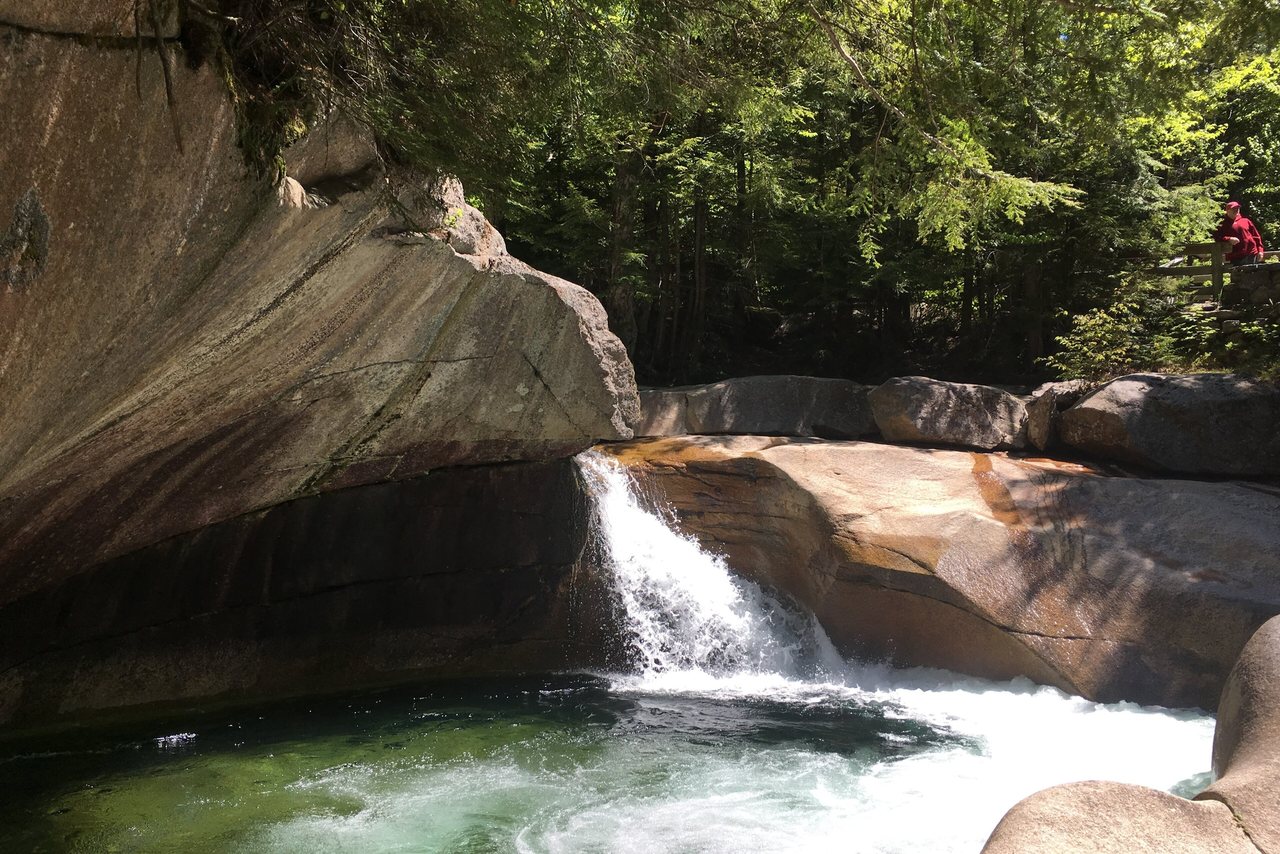
If you would rather add scenery than mileage, Franconia Notch stacks up well in a single day. The Basin, a smooth granite pothole carved by the Pemigewasset, is a few minutes' drive and a short walk — a good leg-stretch on the way home. Flume Gorge, at the south end of the Notch, is a boardwalk trail through a granite chasm (it is a paid, timed-ticket attraction run by the state park, so book ahead) and pairs well with a morning at the lake. And the flat Pemi Trail runs the valley floor for anyone in your group who would rather skip the climb. See our Franconia Notch State Park guide for how to string these together.
For the ambitious, Lonesome Lake is the first hut on a classic hut-to-hut traverse, and the AMC's shuttle system makes point-to-point trips possible. But most guests are best served treating it as exactly what it is: the best short mountain hike in the Notch, with the option to go bigger whenever the legs and the weather agree.
Leave No Trace at the lake
Lonesome Lake gets a lot of use, and that is precisely why it needs care. Stay on the trail and the boardwalk, especially through the bog at the south end — the wet meadow and its plants are fragile and slow to recover, and the planks exist to keep feet off them. Do not cut switchbacks on the climb; the shortcuts you see are erosion scars, and using them makes the damage worse. Pack out everything you bring in, including food scraps and peels, which are not as harmless as they feel.
The lake is a water body people swim in and the hut draws from the watershed, so keep soap, sunscreen slicks, and anything else out of it, and give the shoreline vegetation room. If you are with a dog, keep it leashed and under control around other hikers and out of the bog. These are small courtesies, but on a trail this popular they are what keeps the lake worth hiking to for everyone who comes after you.
Safety & conditions
- Check the Mount Washington Observatory Higher Summits forecast before you go and carry rain gear, layers, and a headlamp even for a short day — weather in the Notch turns fast and hikes run long.
- The lakeside boardwalk over the bog is slick when wet or frosty and is the most likely place to get hurt on this hike; slow down and watch your footing across it.
- This trail stays sheltered below treeline, while the Franconia Ridge across the water is fully exposed to weather — if a good day at the lake tempts you up there, go prepared.
- In winter, microspikes are essential and snowshoes go in the pack for fresh snow; the hut bunkhouses are unheated, so a sleeping bag rated to around zero degrees is needed for an overnight.
- The Cannon Mountain Aerial Tramway was retired after its last day on October 26, 2025, and no reopening date has been announced — do not plan a Cannon hike around riding it down; you will descend on foot.
- Review the Hiker Responsibility Code at hikeSafe.com and consider buying a NH hikeSafe card, which supports search-and-rescue and can protect you from rescue-cost billing.
Where to stay for it
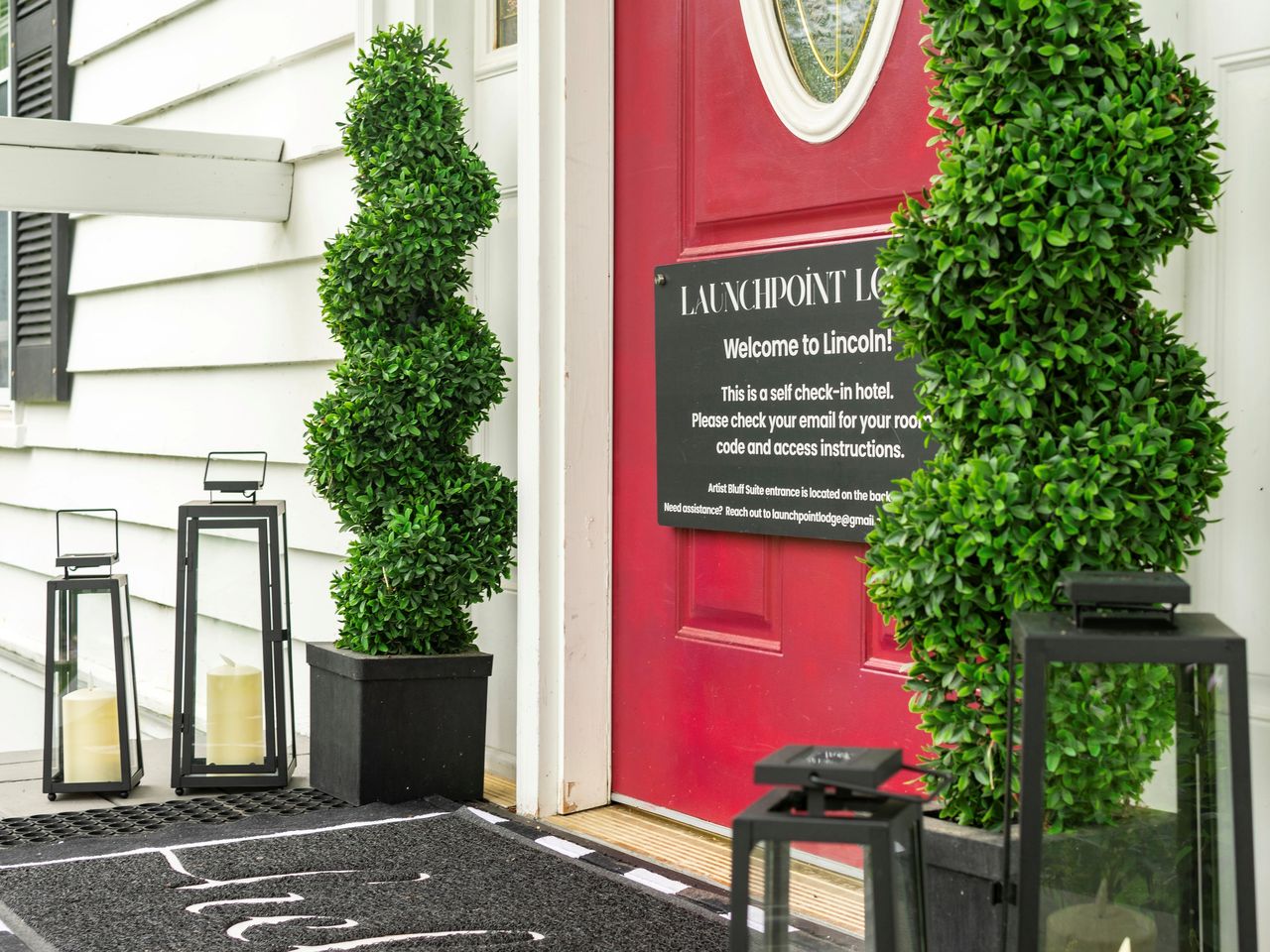
The single most useful thing about hiking Lonesome Lake from the lodge is the 12 min drive. The trailhead parking is two small lots and it fills early — often by mid-morning in summer and around dawn on a peak fall Saturday — and staying central in Lincoln means you can leave after coffee, be parked early, and have the lake nearly to yourself while people staying an hour away are still in the foliage traffic. Message us and we will point you at the right lot, sort out the southbound-only access quirk before you go, and share the forecast that matters.
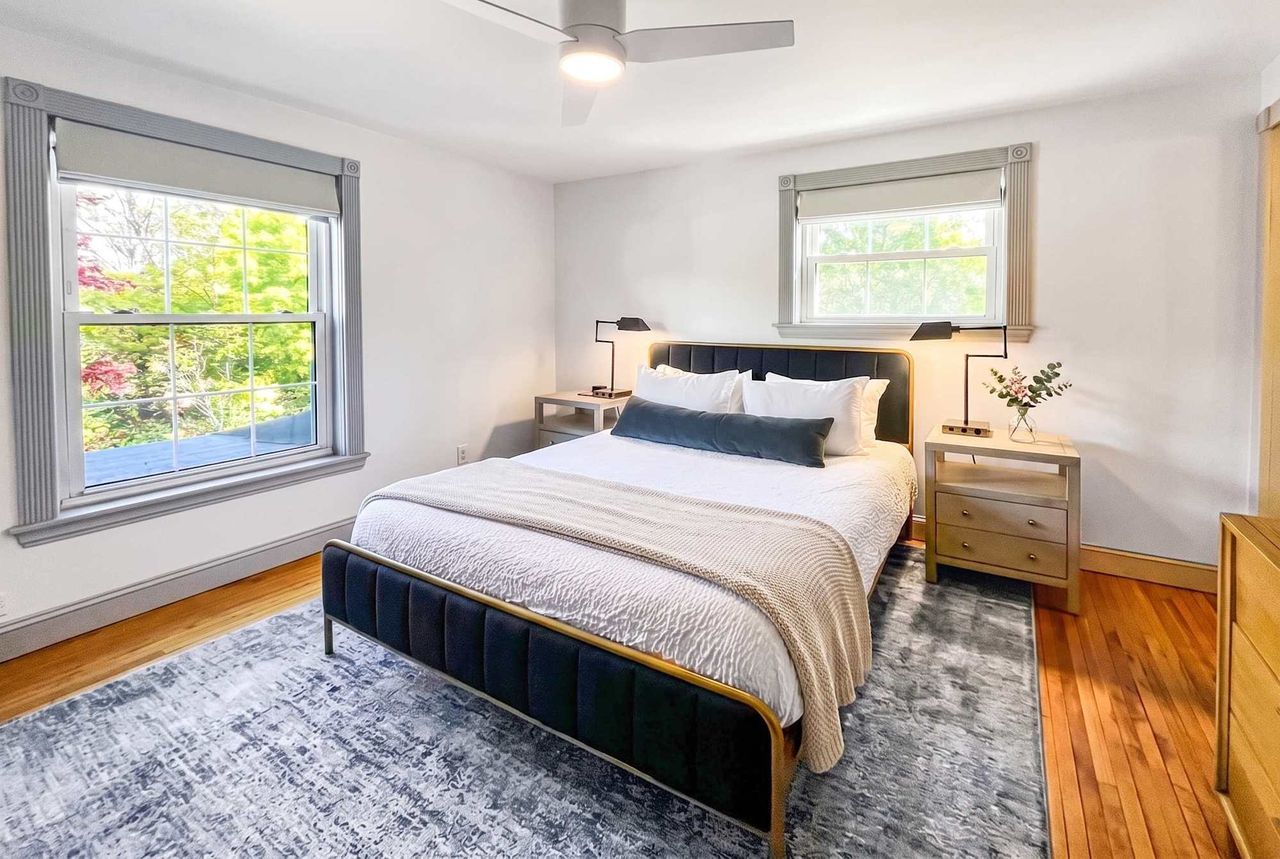
For the hike itself, the Kinsman suite is the natural fit — Lonesome Lake sits right in the Kinsman Range you will be climbing into, so you are sleeping under the name of the ridge you spent the morning on. When you come back down on tired legs, the Basin suite's spa tub is exactly what a thousand feet of descent asks for. If stairs are a concern for anyone in your group, tell us when you book and we will put you where the walking is easiest.
The coffee lounge is stocked for early starts, and we are happy to talk through by message whether Lonesome Lake, Flume Gorge, or the flat Pemi Trail suits your group best before you head out. Half the value of a local virtual innkeeper is knowing which trailhead to send you to on which morning — and this is the one we recommend most.
Sources & official info: outdoors.org · cannonmt.com · nhstateparks.org · hikesafe.com · outdoors.org · nhstateparks.org
— Launchpoint Lodge, From the lodge