Fall in the White Mountains is not a secret, and we would be lying if we pretended otherwise. For about three weeks every October, the same two-lane roads that carry a handful of hikers in July carry a slow river of out-of-state plates, and the Kancamagus at midday on Columbus Day weekend can feel less like a scenic drive and more like a parking lot with a view. That is the starting point. The good news is that almost all of the crowding is a timing problem, not a color problem, and timing is the one thing a guest staying in the middle of it all can control.
This guide is written from 191 Pollard Road in Lincoln, which sits about as central as you can be to the color. From the porch you are minutes from the Kancamagus Highway, Franconia Notch, the Flume, and Loon. That location is the whole trick to a good foliage trip: when you are already inside the mountains, you can be at an overlook at first light and back in town for breakfast before the day-trippers from Boston have finished their coffee. What follows is when the color really turns near here, how to track it so you do not drive four hours to a green hillside, the two great drives and how to do them early, where to walk for color without a summit push, how to photograph it, and a weekend plan that works around the traffic instead of fighting it.
We have tried to make this more useful than the tourism-board pages and the top-ten lists, which tend to tell you the leaves are pretty and the Kancamagus is famous. You already know that. What you need is elevation, timing, and a dawn strategy, and that is what we have put here.
When the color turns near Lincoln
The short answer most people want: near Lincoln, peak color usually lands in the first-to-second week of October. If you had to pick one week to book blind, the week that contains Columbus Day and Indigenous Peoples' Day (Monday, October 12 in 2026) is the safest bet for full color in the valleys around town. But 'peak' is not a single date, and the trip goes best when you treat it as a window. The White Mountains turn from the top down and from the north down, and the difference between a summit and a riverbank can be two full weeks.
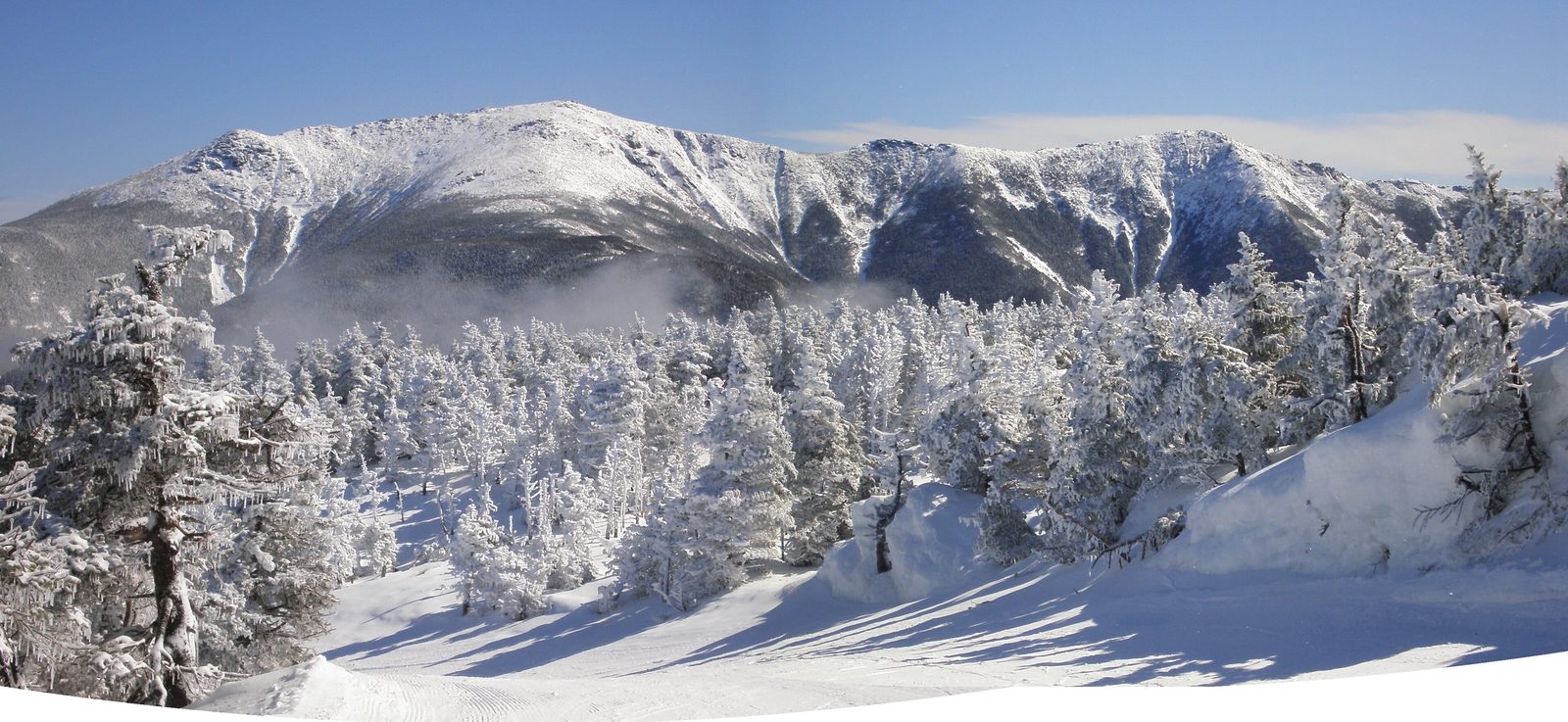
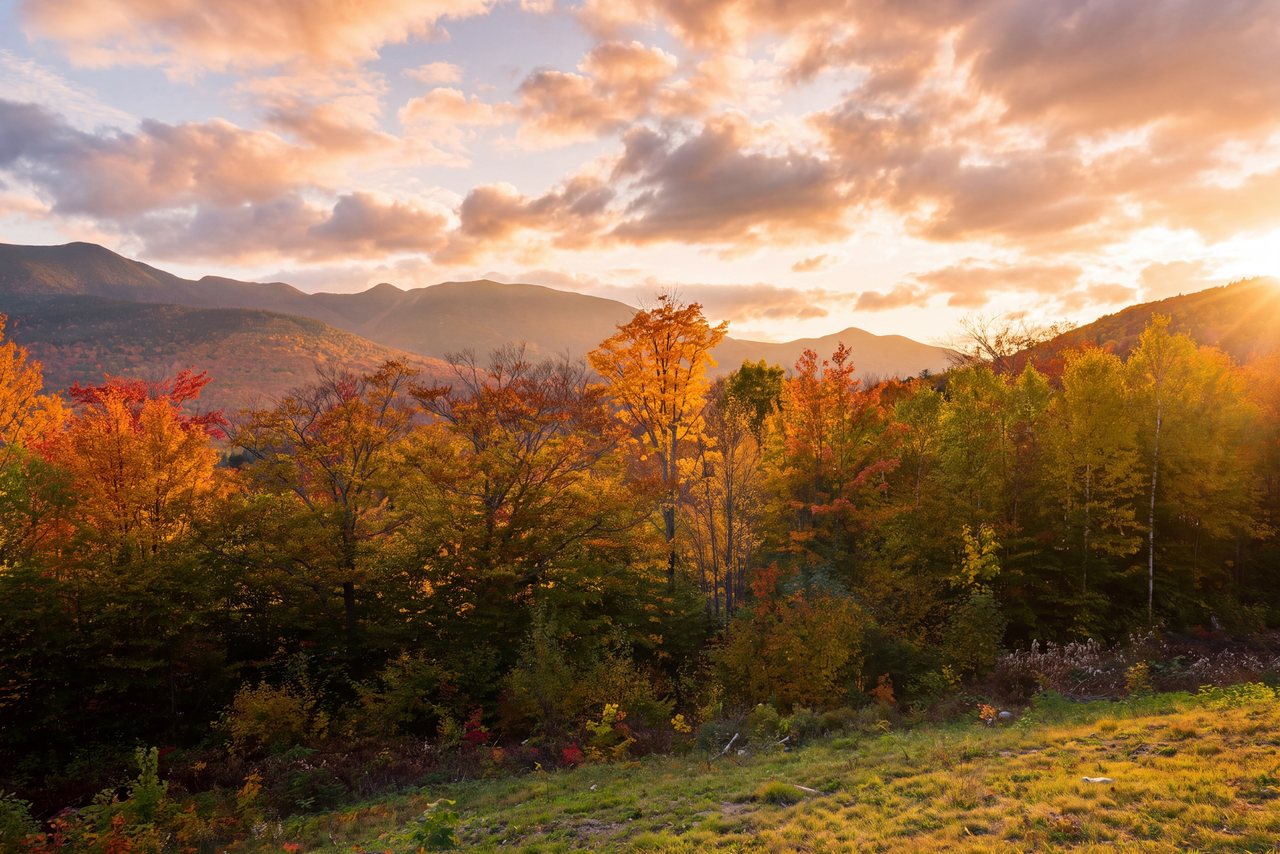
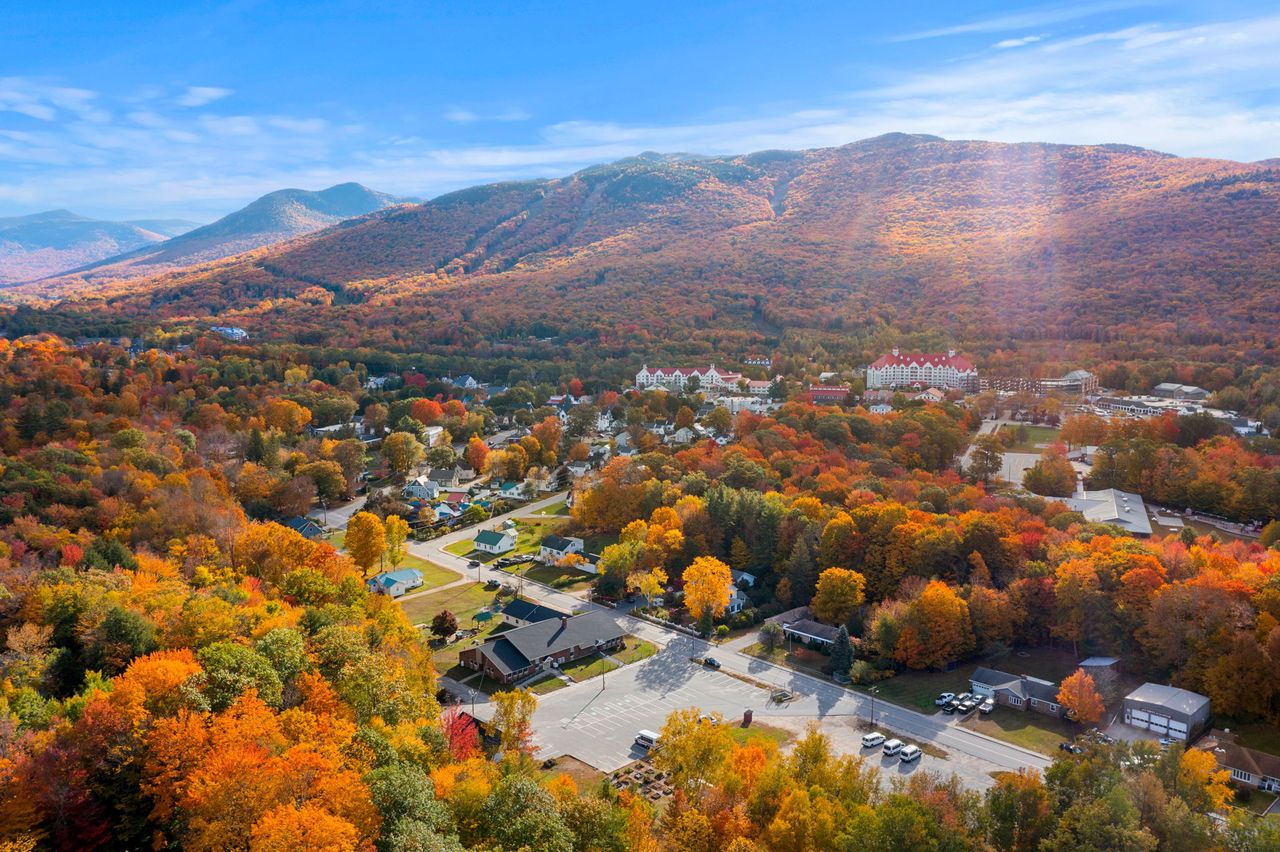
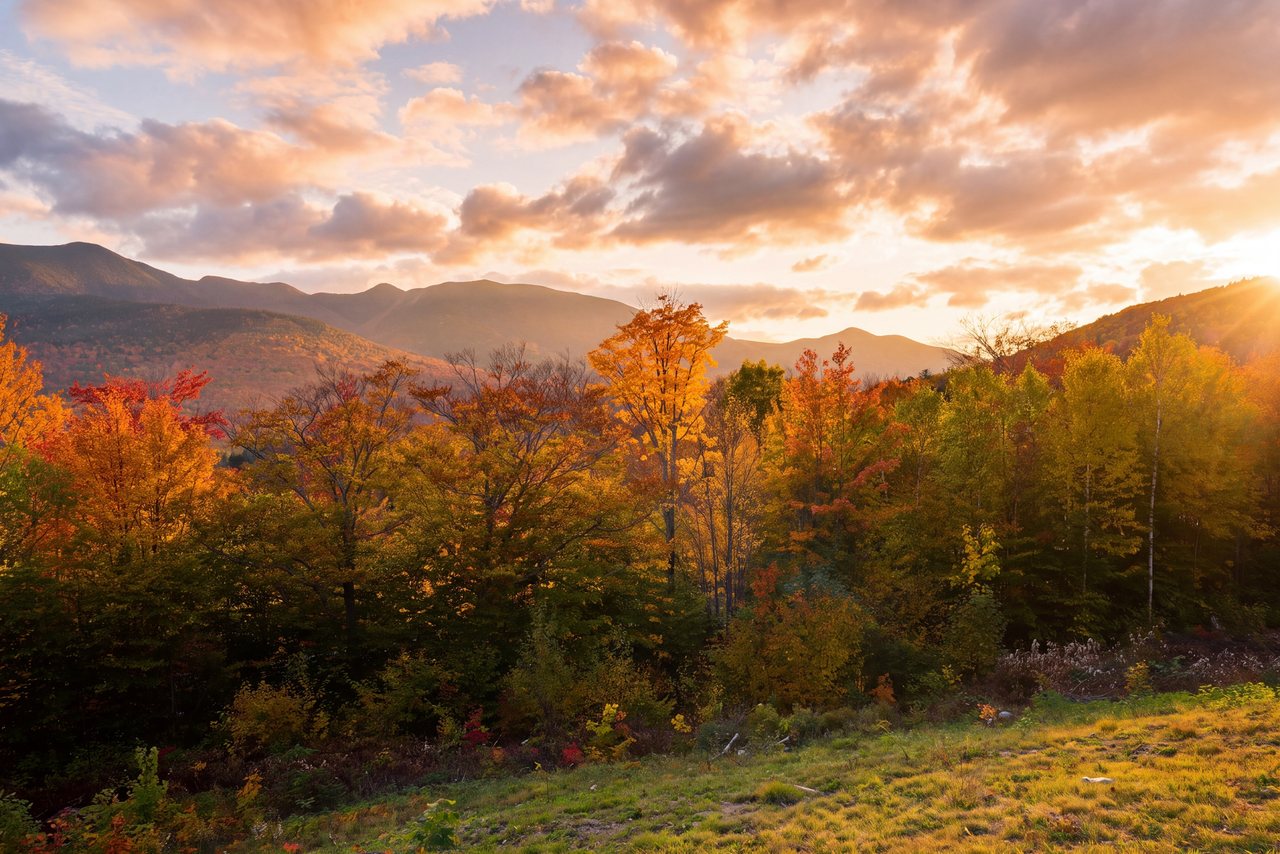
Here is the pattern we watch every year. The first real color shows up in late September on the high shoulders of the ridges and on the exposed birches and mountain maples above roughly 2,500 feet. By the last days of September and the first days of October, the mid-elevations along the Kancamagus and up in Franconia Notch are coming into their own. The valley floors, the maples right around Lincoln and North Woodstock, and the low ground along the Pemigewasset River are usually the last to go, often not hitting their best until the second week of October and sometimes holding decent color into the third.
What this means in practice is that there is almost always good color somewhere near here across a three-week window, roughly the last week of September through mid-October. If you arrive and the town maples still look summer-green, drive up. Go up the Kancamagus or up into the notch and you will climb into the color. If you arrive a hair late and the high country has already dropped, come down. Stick to the river valleys and the lower drives, where the reds hang on longest. Elevation is the dial you turn to find the peak on any given day.
A few clear caveats. Every season is different by a week or so in either direction, driven by summer rain, the first cold nights, and wind. A warm, wet September pushes things later; a dry summer with sharp early-October frosts pulls them earlier and can make the color more intense but shorter-lived. A single hard windstorm at peak can strip a hillside bare in an afternoon. We do not put a lot of stock in the long-range 'foliage forecasts' published in August; they are educated guesses. The real-time trackers, covered next, are far more useful once you are inside two weeks of your trip.
How to track the color (and how to read the mountains yourself)
The most trustworthy source is the state's own tracker. New Hampshire's official tourism office runs a foliage tracker and a weekly foliage report at visitnh.gov through the season, updated with on-the-ground reports region by region. Because it breaks the state into regions, you can look specifically at the White Mountains rather than a statewide average that lumps in the warmer southern valleys, which peak later. In a normal year the White Mountains region will flip to 'near peak' and then 'peak' on that map in early October, a week or two before the Lakes Region and the Monadnock country to the south.
For a second opinion, the Old Farmer's Almanac publishes a national fall foliage map with a date slider, and several New England outlets run week-by-week prediction maps. Use these to sanity-check the trend, not as gospel. When two or three independent sources agree the White Mountains are within a week of peak, believe them. When they disagree, trust the state's real-time report over any pre-season prediction, and trust your own eyes over all of it once you are here.
That last point matters more than people expect. Once you are standing in Lincoln, you can read the color faster than any website. Look up. If the tops of the ridges to the east and the flanks of Loon are turning while the town is still green, the peak is coming down toward you over the next several days and the high drives are at their best right now. If the town maples are flaming and the summits already look brown and bare, the color has passed the high country and you should spend your time low, along the Pemigewasset and the lower Kancamagus. Ten seconds of looking up tells you which way to point the car.
One more field trick. The morning after the first hard frost of the season is often the day the color takes a visible jump. Cold nights in the high 20s and low 30s are what trigger the reds. If you catch a clear, cold night early in your stay, plan an ambitious color day for the morning after. And do not fixate only on the calendar peak. The three or four days on either side of true peak are gorgeous, less mobbed, and forgive a little bad luck with timing. Aiming for 'a few days before Columbus Day weekend' is often smarter than aiming for the holiday itself.
The Kancamagus Highway, done right
The Kancamagus, Route 112, is the most famous foliage drive in the East for good reason, and it starts at our end of town. It runs about 34 miles from Lincoln east over the height-of-land and down to Conway, climbing to nearly 3,000 feet at the Kancamagus Pass before dropping again. There are no gas stations, no restaurants, no stores, and effectively no cell service for the entire 34-mile stretch. This is the single most important thing to know before you turn onto it in October: fill the tank in Lincoln, use the restroom, download your map, and bring water and a snack. People run out of gas on the 'Kanc' every fall, and there is no one to call.
The color along the Kancamagus is a mix of maple, birch, and beech, and because you climb and descend so much, you drive through several stages of the season in a single hour. The overlooks are the reason to go, and they are worth stopping at rather than shooting through the windshield. Heading east from Lincoln, the ones worth the pull-off are the Pemigewasset Overlook and the C.L. Graham Wangan Grounds Overlook near the top, and the Hancock Overlook on the way up, all of which open onto broad valley-and-ridge panoramas that are exactly the postcard you came for. Sabbaday Falls, a little past the pass on the Conway side, is a short, mostly flat walk to a stepped flume and one of the best easy stops on the whole road.
Now the hard part about crowds and how to beat them. At peak, the Kancamagus overlooks are full by mid-morning and stay full until late afternoon, and the parking pull-offs back up onto the road. The fix is simple and it is the reason to stay central: leave at or before dawn. If you roll out of Lincoln at 6:30 in the morning, you will have the Pemigewasset Overlook nearly to yourself in the best light of the day, and you can drive the whole road to Conway and back before the crush builds. The late afternoon, from about an hour before sunset, is the second-best window and clears out again. Midday, roughly 11 to 3 on an October weekend, is the worst of it. Plan to be somewhere else then.
A practical note on parking and fees. The overlooks and pull-offs along the Kancamagus are free to stop at. But the developed Forest Service trailheads and recreation sites along the road, places like the Lincoln Woods trailhead just outside town and the Sabbaday Falls lot, sit on White Mountain National Forest land and require a recreation pass, currently about five dollars a day, or a valid America the Beautiful federal pass displayed on your dashboard. You can buy a day pass at the self-service kiosks. It is a small thing, but a ticket on your windshield is a poor souvenir. The free overlooks do not require it; the developed trailheads do.
Franconia Notch, the other great drive
If the Kancamagus is the horizontal drive, Franconia Notch is the vertical one. Here Interstate 93 does something it does nowhere else in the country: it narrows down to a two-lane parkway to thread through the notch between Cannon Mountain on the west and the Franconia Ridge on the east. Driving it in October, with the walls of the notch rising in color on both sides, is a different experience from a normal highway, and it is about 15 min from the lodge. Because it is a limited-access parkway, you cannot simply pull over anywhere; you exit at the marked attractions, which is a blessing, because it forces you to stop and look.
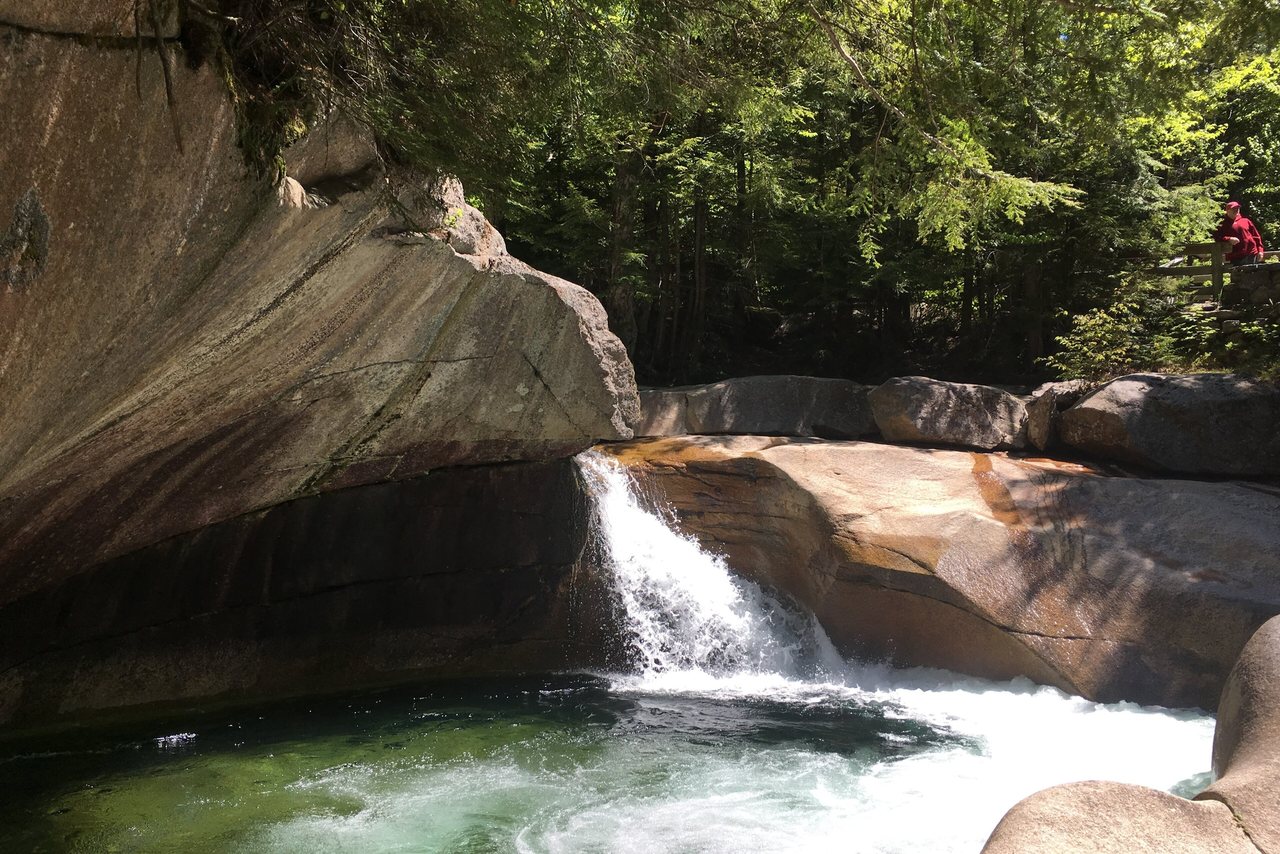
The stops, roughly north to south, are the ones to build a morning around. The Old Man of the Mountain Profile Plaza on Profile Lake is a short, level walk out to the lake, where steel 'profiler' rods let you line up the ghost of the Old Man against the cliff where the famous rock face stood until it collapsed in 2003. Echo Lake at the north end is a calm, reflective spot for photos. The Flume Gorge at the south end is the park's headline attraction and is covered in its own section below. The Basin, roughly midway, is a free, easy, granite pothole carved by the Pemigewasset, and one of the best low-effort stops in the entire White Mountains, wheelchair-accessible from its own parking area off the parkway.
One correction we make for guests constantly, because the old guidebooks and half the internet still get it wrong: do not plan your trip around riding the Cannon Mountain Aerial Tramway. The tram made its final run on October 26, 2025 and is now retired; a new tram is in planning, and no reopening date has been announced. There is no tramway to ride in the fall of 2026. Cannon's other lifts still run in the winter ski season, but for a lift-served summit view during foliage season, you want Loon Mountain's gondola in Lincoln instead, not Cannon. If a page tells you to 'take the tram up Cannon for the foliage,' that page is out of date.
The same dawn logic applies here as on the Kancamagus, maybe more so, because the parking lots inside the notch are smaller. The Flume, the Basin, and the Old Man plaza lots fill fast on peak weekends. Get into the notch early. As a bonus, the light in the notch is often best in the morning anyway, when the sun clears the ridge and lights the west wall and Cannon's cliffs. By early afternoon on a busy Saturday you can spend more time hunting for a parking space than looking at leaves.
Overlooks and easy walks versus the big ridge views
Not everyone wants to climb a mountain for the view, and you do not need to in order to see extraordinary color here. It helps to think of foliage viewing in three tiers, and to be clear-eyed about which one you want before you set out.
Tier one is roadside overlooks and level walks, which is where most guests are happiest. This is the Pemigewasset and Hancock overlooks on the Kancamagus, the Basin and the Old Man plaza in Franconia Notch, Echo Lake, and short flat trails like Sabbaday Falls or the loop around the Basin. You get big color, you get valley-and-ridge panoramas, and you are back in the car in 20 min. For a foliage-focused weekend, you can have a completely full, gorgeous day entirely in tier one and never gain more than fifty feet of elevation. There is no shame in it; the roadside views here are among the best anywhere.
Tier two is the moderate walk to an earned view, and it is where the reward-to-effort ratio is highest. Two we point people to constantly: the walk up to Artist Bluff and Bald Mountain at the north end of Franconia Notch, a short, steep-in-places loop that delivers a ridge-top look straight down the notch and over Echo Lake for a fraction of the effort of a real summit; and the trail to Lonesome Lake, a steady but manageable climb from the notch to a mountain pond with the Franconia Ridge reflected in it. Both are covered in more detail in our hiking guides. In peak season, both trailhead lots fill by mid-morning, so the dawn rule still holds.
Tier three is the big ridge, chiefly the Franconia Ridge Loop over Mount Lafayette and Little Haystack. This is one of the finest ridge walks in the Northeast and, in peak color with the whole valley glowing below you, unforgettable. It is also long, strenuous, fully exposed above treeline, and no place to be caught by the fast-moving weather that October throws at the high peaks. It is a serious hike, not a foliage stroll, and we would never send a casual leaf-peeper up there on a whim. If you are a prepared hiker, see our Franconia Ridge Loop guide and check the higher-summits forecast that morning. If you are not, tiers one and two will give you all the color you came for and get you home safe.
Photographing the color
You do not need a fancy camera to bring home good foliage photos from here, but a few habits separate the flat snapshots from the images that look like the day felt. The first and biggest is light, and it comes down to time of day. The color photographs best in the soft, low, warm light of the first two hours after sunrise and the last two before sunset, the golden hours. Midday sun is harsh, flattens the reds into a muddy orange, and blows out the sky. This lines up perfectly with the anti-crowd strategy: the same dawn drive that gets you an empty overlook also gets you the best light of the day. It is a happy overlap. Early is better for both.
The single most useful piece of gear is a circular polarizing filter, and it is cheap. A polarizer cuts the glare off the waxy surface of the leaves, which is what saturates the color and makes the reds and oranges pop the way your eye sees them but your phone usually does not. It also darkens a pale sky and, crucially, controls reflections on water, which lets you decide whether you want a glassy mirror or a see-through pool. Many phones now let you add a clip-on polarizer, and it is worth the ten dollars in October. Beyond that, keep it simple.
Water is your friend, because reflections double the color. The calmest water of the day is at dawn, before the wind picks up, which is another reason to be out early. Echo Lake and Profile Lake in Franconia Notch, the small ponds and beaver flowages along the Kancamagus, and any quiet stretch of the Pemigewasset can all give you a mirror on a still morning. Get the camera low, close to the water's surface, to maximize the reflection. A pond at 7 a.m. with no wind and a colored ridge behind it is the picture most people are chasing, whether they know it or not.
Two composition notes and one on people. Look for a foreground: a single red maple, a mossy boulder, a bend in the river gives the eye somewhere to land and makes the scene feel three-dimensional instead of a wall of color. Overcast days are not a loss; flat gray light is excellent for close-ups of individual leaves and for waterfalls like Sabbaday, where it removes the harsh highlights. And be practical that at the famous overlooks on a peak weekend, other people are part of the scene; if you want a clean shot, that is one more argument for arriving before everyone else does.
Beating the peak-weekend traffic
Let us be blunt about the traffic, because the glossy guides will not. On the peak October weekends, especially the Columbus Day and Indigenous Peoples' Day long weekend, the White Mountains get crowded. Interstate 93 backs up northbound on Friday afternoon and southbound on Sunday afternoon as the day-trip and weekend crowd flows in and out. The Kancamagus overlooks fill by mid-morning. The Flume and Franconia Notch lots fill early. Restaurants in Lincoln and North Woodstock have real waits at dinner. This is the reality of visiting the single most popular foliage destination in the region on its single busiest weekend, and no guide can make it disappear.
What a central base does is let you sidestep almost all of it, because nearly all the pain is caused by people commuting into the mountains and back out each day. When you are already staying in Lincoln, you are not in that flow. The most powerful move in this entire guide is the dawn start. Be on the Kancamagus or in Franconia Notch by 7 a.m. and you will experience the color the way it deserves to be seen, empty roads, open overlooks, quiet trailheads, best light, and be back in town by the time the day-trippers arrive. Then you rest, have a leisurely lunch, and go back out in the late afternoon when the midday crowd has gone home for dinner. You cede the middle of the day to the crowds and take the two best parts for yourself.
Timing the week matters as much as timing the day. If your schedule allows any flexibility at all, come midweek. A Tuesday or Wednesday at peak color is a fraction as busy as the Saturday, and midweek in early October can be close to ideal, real color, thin crowds. If you can only come on a weekend, the days immediately before and after peak are noticeably calmer than peak itself, and the difference in color quality is usually small. Chasing the exact calendar peak on the exact holiday weekend is how people end up in traffic; aiming a few days off-peak is how locals do it.
A couple of tactical notes. If you must drive the length of the Kancamagus on a peak Saturday, do it early and outbound toward Conway, then come back over the pass rather than committing to the long way around. Keep your gas topped up so you are never forced onto a busy road at a bad time. And build in a rain-or-crowd backup, an indoor brewery lunch, a covered-bridge stop, the Granite State Railway, so that if the roads are jammed you have somewhere pleasant to let the crowd thin. Flexibility, not a rigid itinerary, is what makes a peak-weekend trip enjoyable.
What is open in October
October is a transitional month here, and some of the summer attractions are winding down even as the foliage crowds arrive, so it pays to know what is running. The Flume Gorge in Franconia Notch is seasonal and typically operates from spring into late October; in recent years its final days of the season fall around October 25, with shortened hours in the last couple of weeks. Timed-entry tickets are required and should be bought online in advance, especially on fall weekends, when it sells out. If the Flume is on your list, book it before you arrive; do not count on walking up. After late October it closes entirely for the winter, so a foliage trip is one of the last chances to see it before spring.
Loon Mountain's scenic gondola in Lincoln generally runs into the fall foliage season, and with Cannon's tramway now retired, it is the go-to lift-served summit view for the season, 6 min from the lodge, no hiking required for the ridge-top boardwalk and the views at the top. Clark's Bears on Route 112 runs from mid-May to about mid-October, so an early-October visit usually catches its final days of the season, worth knowing if you are traveling with the sort of family group that would enjoy it, though note the lodge itself is adults-only. The Granite State Railway in downtown Lincoln runs fall foliage excursion trains along the Pemigewasset in October, a relaxed, all-ages way to see color from the valley floor without driving, and a good rainy-day or crowded-day fallback.
On the food and drink side, the two local breweries are open year-round and are exactly the right speed for an October evening: One Love Brewery in Lincoln and the Woodstock Inn Station & Brewery just down the road in North Woodstock, both with full food menus. We keep the current list of what is open for dinner, and their seasonal hours, in the lodge's digital guidebook rather than printing it here, because October hours shift and a stale list helps no one. Check the guidebook when you arrive for the up-to-date picture and our current recommendations.
A few things that are past their season by October, so you can set expectations. Whale's Tale Waterpark is a summer operation and is closed by the fall. The Ice Castles, when they are built at all, are a deep-winter attraction and not an October thing. Some of the zip-line and adventure operations along Route 112, such as Alpine Adventures, run into the fall but on reduced schedules, so call ahead. And the high trailheads and summits are firmly in shoulder season: the first snow can dust the top of the ridges in October, and the summit weather is winter well before the valley is. If a business matters to your plans, a quick call or a look at the guidebook the day before will save you a wasted drive.
A foliage weekend, hour by hour
Here is how we would spend a two-night foliage weekend based in Lincoln, built entirely around the dawn-and-dusk rhythm so you see the color at its best and skip the worst of the crowds. Arrive Friday afternoon if you can, before the evening rush thickens on I-93. Get settled, walk into town for an early dinner at One Love or the Woodstock Inn Station & Brewery before the peak dinner wait builds, and turn in early. You are getting up before dawn tomorrow, and it will be worth it.
Saturday is your big color day, and it starts in the dark. Be in the car by 6:15 with a thermos and be on the Kancamagus for first light. Drive east, stopping at the Pemigewasset and Hancock overlooks with the road nearly to yourself, take the short walk to Sabbaday Falls, and continue over the pass toward Conway if you like before turning back. You will be back in Lincoln by mid-morning, ahead of the crush, with your best photos already made. Rest, have a real lunch, and spend the low-energy middle of the day off the roads, on the Granite State Railway, poking around the shops, or reading on the porch or by the fireplace. In the late afternoon, drive 15 min up into Franconia Notch for the Basin and the Old Man plaza in the softening light, and catch the sunset color on Echo Lake before heading down to dinner.
Sunday, go one tier up if you have the legs for it and the weather cooperates. A morning walk to Lonesome Lake or up to Artist Bluff gives you an earned, elevated view over the color for modest effort, and again you want to be at the trailhead early before the lot fills. If you would rather keep it flat, pre-book a morning timed-entry ticket for the Flume Gorge, which is a spectacular way to spend 90 min and, in late October, one of your last chances of the year. Then, and this is the one piece of traffic advice we will repeat, get on the road home before the Sunday-afternoon southbound rush on I-93 builds, ideally by early afternoon. Leaving at two beats leaving at four by a wide margin.
If you have a third day, or you want a quieter alternative to the headline drives, use it for the lower-elevation color that peaks last: the river valleys, a covered bridge or two, the quieter waterfalls, and the back roads around town, where the maples hold on after the high country has gone. The point of the whole plan is rhythm, not cramming. Two good early-morning outings and two relaxed evenings will show you more real color, in better light and better company, than four frantic midday drives through the traffic ever could.
Crowds, and where to go instead
We promised honesty, so here it is. The White Mountains at peak foliage are one of the most popular seasonal destinations in the country, and on the peak weekend it feels like it. If your idea of a fall trip is a solitary road winding through empty color, the Kancamagus at noon on Columbus Day weekend will not deliver that, and no amount of clever routing will change it. Manage the expectation and you will have a wonderful time; fight the reality and you will spend your weekend annoyed in traffic. The color is worth it. The middle of a peak Saturday is not the time to see it.
A few things that matter less than their reputation suggests. Driving the entire 34-mile length of the Kancamagus and back is a lovely thing to do once, but you do not need to do the whole thing to see great color; the first several miles out of Lincoln and the overlooks near the pass give you most of the payoff, and you can turn around without missing much. The famous overlooks are famous for a reason, but the color between them, along any quiet stretch of river or back road, is often just as good and far less crowded. And the pressure to catch the exact calendar peak is largely manufactured; the days on either side are gorgeous and calmer.
What is underrated, in our view, is going low and going slow. The valley color around Lincoln and North Woodstock, the reflections on the Pemigewasset, the quiet waterfalls, and simply sitting somewhere with a fire and a view while the light changes, these tend to be the moments guests remember, more than the crowded marquee stops. The mountains do not require you to conquer them to reward you. Some of the best foliage viewing of the whole weekend can happen from a porch chair with a coffee, watching the ridge behind town turn.
And a word on booking, since it is the one thing you cannot fix once you arrive. Rooms across the Lincoln and North Conway area fill for peak foliage weekends months ahead, and the closer you are to the color, the harder they are to get last-minute. If a central, quiet base for foliage weekend matters to you, book early. That is not a sales pitch so much as the plain arithmetic of six suites and one very popular October.
Quieter color, if you have an extra day
If you have flexibility or an extra day, the reward for stepping off the two headline drives is real. The crowds concentrate on the Kancamagus and in Franconia Notch because those are the names everyone knows, which means the color a few miles in any other direction is often just as good with a small fraction of the people. You do not have to go far. The back roads around Lincoln, the lower reaches of the Pemigewasset, and the smaller state and national forest roads all carry color and carry almost no traffic at dawn.
For water and color together, the smaller waterfalls make excellent quiet mornings. Georgiana Falls, a short walk from a small trailhead just minutes from the lodge, and the other Swift River and Pemigewasset cascades give you moving water framed in color without the overlook crowds. See our waterfall guides for the specifics on parking and footing, and note that October water is cold and the rocks are slick; this is looking, not swimming, weather. On the far Conway end of the Kancamagus, Rocky Gorge is a beautiful stop for walking the footbridge and photographing the gorge; swimming there is prohibited and enforced, so enjoy the water from above.
The moderate walks in tier two are also far quieter if you go early or midweek. Lonesome Lake and Artist Bluff both reward the effort with elevated color, and both are covered in our hiking guides with clear notes on difficulty and parking. If you are a strong, prepared hiker chasing the ultimate foliage view, the Franconia Ridge is the prize, but treat it with the respect a high, exposed ridge deserves and read our full guide and the summits forecast first.
The broader point is that 'the White Mountains in fall' is much bigger than two roads. Once you have driven the Kancamagus and Franconia Notch at dawn and gotten the marquee views, the most pleasant hours of a foliage trip are often the unhurried ones spent finding your own quiet corner of color. Being based in the center of it all is what makes that possible; you can wander a back road for an hour and still be minutes from home.
October weather and what to bring
October in the White Mountains is beautiful and variable, and the biggest mistake visitors make is packing for the postcard instead of the mountain. Valley days around Lincoln can range from crisp and sunny in the fifties and sixties to cold, gray, and raw, and the temperature drops noticeably as you climb. A morning that is a pleasant 45 degrees in town can be near freezing with a hard wind at the top of the Kancamagus Pass or on an exposed overlook. Dress in layers you can add and shed, and always have more warmth in the car than you think you need. Mornings, when you should be out for the light and the quiet, are the coldest part of the day.
For the higher country the gap is dramatic. The summits and the Franconia Ridge run far colder than the valley, get high wind, and can see the season's first snow and ice in October while the town is still in leaf. If you are attempting a real hike, that is a serious-weather environment: check the higher-summits forecast that morning, carry insulation, wind protection, food, water, and a headlamp, and be willing to turn around. Each October some hikers start up in shorts on a warm valley morning and get caught out by the cold higher up. The tier-one and tier-two viewing in this guide does not require any of that, which is another reason most foliage visitors are happiest there.
Practical items for a foliage weekend: a warm layer and a rain shell always in the car, sturdy shoes with grip for the leaf-covered and often wet trail and waterfall footing, a full tank of gas before the Kancamagus, water and snacks for the no-services stretches, and that cheap polarizer for the camera. In October a dawn start comes at a civilized hour, and a thermos of coffee makes it a pleasure rather than a chore.
Finally, plan around the light and the weather rather than forcing a fixed schedule. If a clear, cold, calm morning lands during your stay, that is the morning to be out early at a pond or an overlook, everything else can wait. If a gray, drizzly day comes, lean into it with the covered walks, the waterfalls that photograph beautifully in flat light, a brewery lunch, or the foliage train, and save the big views for when the sky cooperates. The weather here is not an obstacle to work around so much as the thing that decides, each morning, where the best of the day will be.
Safety & conditions
- The Kancamagus Highway has no gas, food, or cell service for 34 miles. Fill your tank in Lincoln, download maps offline, and carry water; do not rely on your phone over the pass.
- October weather on the summits and the Franconia Ridge is winter well before the valley is: high wind, cold, and possible snow and ice. Big ridge hikes like Franconia Ridge are serious, exposed undertakings; check the higher-summits forecast, carry insulation and a headlamp, and be willing to turn around.
- Swimming at Rocky Gorge on the Kancamagus is prohibited and enforced, for good reason. Walk the footbridge and photograph the gorge, but do not enter the water there.
- Fall trails and waterfall rocks are wet, leaf-covered, and slick, and October water is dangerously cold. Wear shoes with grip, keep well back from the edge of gorges and cascades, and treat the falls as places to look, not to climb on or swim in.
- Start early and get off the mountain roads before dark. Wildlife, especially moose and deer, is most active at dawn and dusk on Route 112 and I-93; drive slowly in low light and watch the shoulders.
Where to stay
Foliage season is the one time of year when where you stay decides how good your trip is, and it comes down to a single number: how many minutes you are from the color at dawn. From the lodge you are minutes from the Kancamagus, Franconia Notch, and the Flume, which means you can be at an empty overlook in the best light of the day and back in town for a slow breakfast before the day-trippers from Boston have arrived. Guests who commute in from an hour away simply cannot do that, and it is the whole difference between a peaceful foliage weekend and a frustrating one.
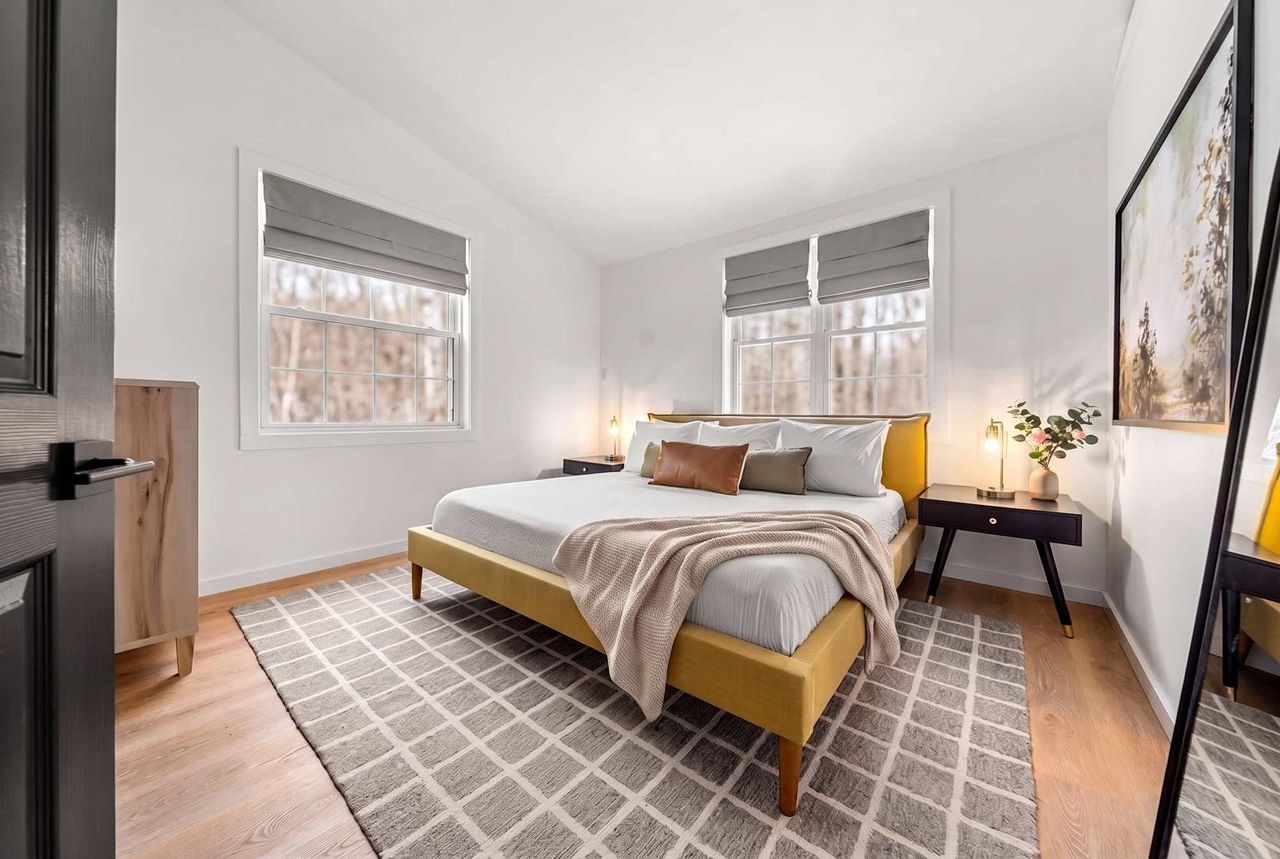
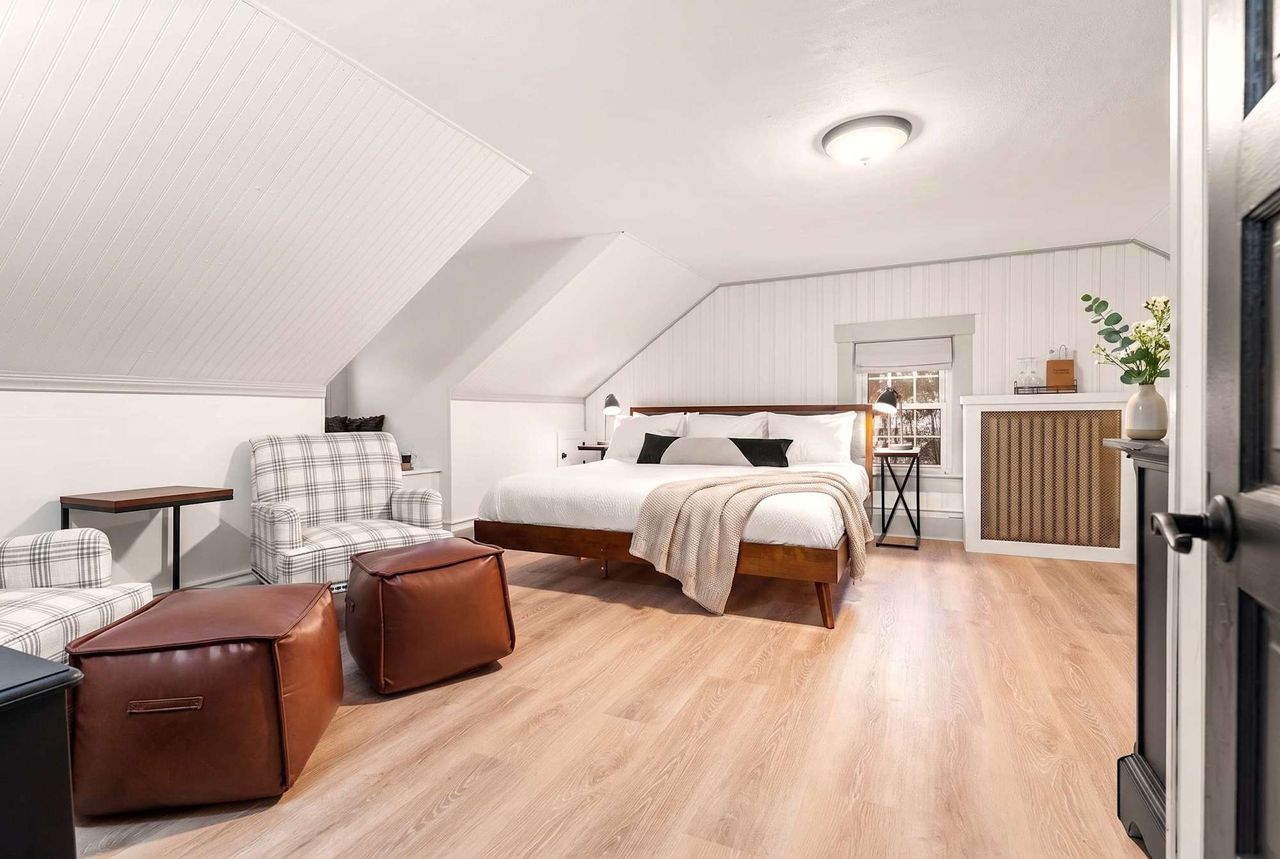
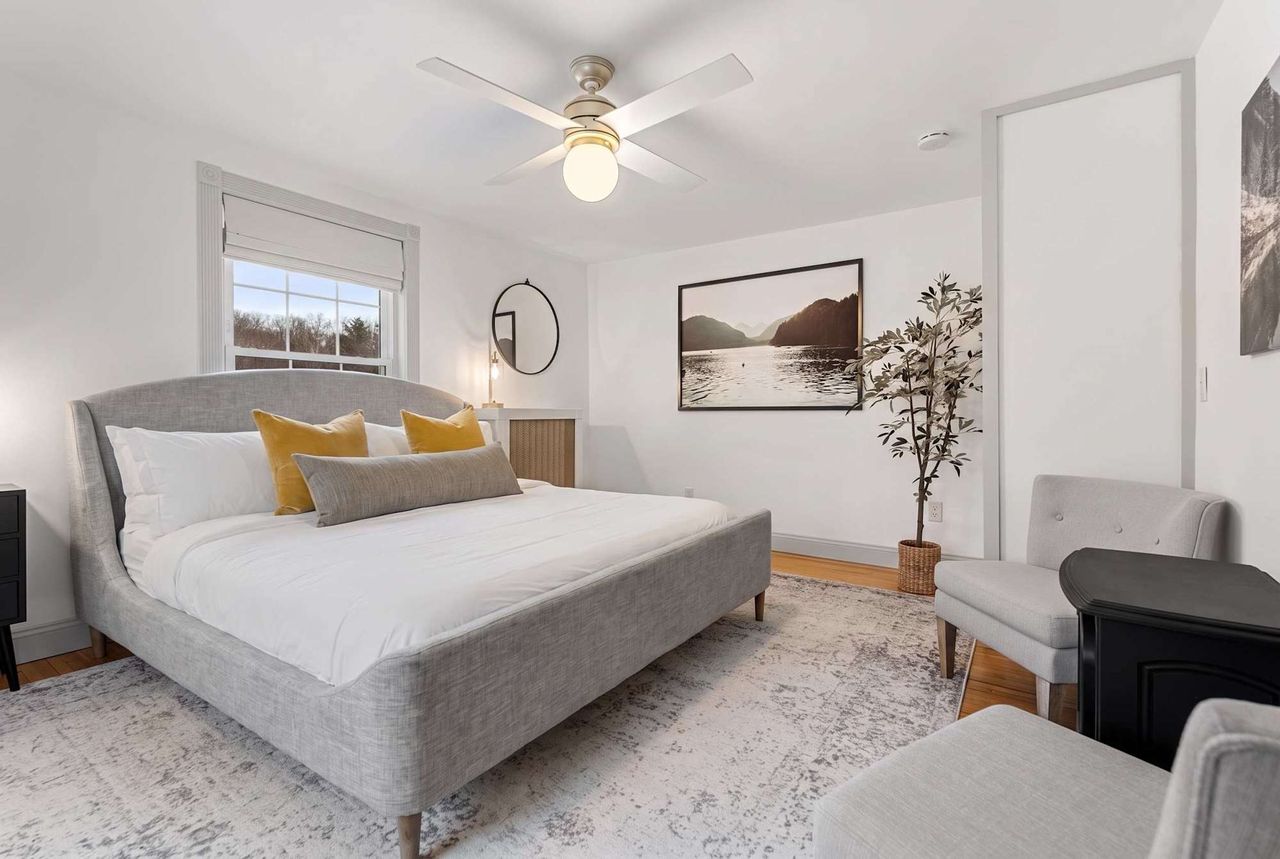
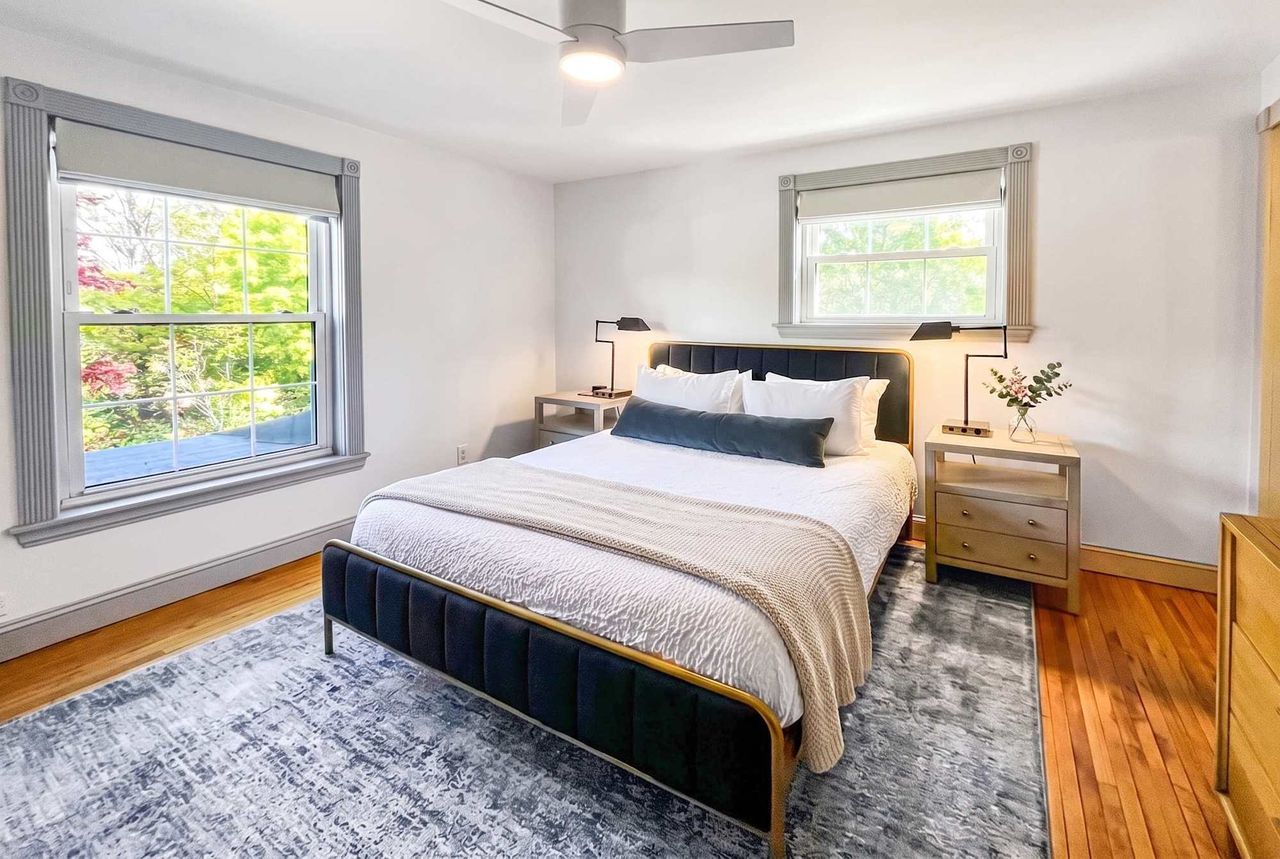
For a fall stay we tend to steer people toward the suites with a fireplace and a place to settle in after a cold, early morning out: Artist Bluff, with its own living room, fireplace, and private entrance off the back deck, and Hancock, with an electric fireplace in the king bedroom and a separate sitting room for the evening. October mornings are cold and dark when you head out for the light; coming home to a warm suite is part of the plan.
Because the lodge is an adults-only, pet-free house with mostly TV-free suites, foliage season here stays quiet in a way the big family properties on Route 112 do not. You get keyless self check-in, so a pre-dawn start does not mean waking anyone, and you get a calm base to rest in during the crowded middle of the day. When you arrive, the digital guidebook has our current picks for dinner and what is open, kept up to date so you are never working from a stale list.
Sources & official info: visitnh.gov · visitnh.gov · nhstateparks.org · cannonmt.com · nhpr.org · almanac.com
— Launchpoint Lodge, From the lodge