Winter is the season Lincoln was built for, and it's the season we get asked about the most — usually by people who aren't sure whether the mountains in January are a wonderland or a survival exercise. The plain answer is: both, depending entirely on how you plan the day. This is a real northern-New-England winter. Snow arrives in earnest by December, the good base usually holds into April, and a cold clear morning up here is one of the finest things you'll see all year. It's also a place where the temperature can sit in the single digits, the wind above the trees can chill you surprisingly fast, and a two-lane road can go to glare ice in the time it takes to drink a coffee.
We're a six-suite inn on Pollard Road in Lincoln, 6 min from the Loon Mountain lifts, right at the western mouth of the Kancamagus Highway off Exit 32 of I-93. That location is the whole point of this guide: almost everything worth doing in a White Mountain winter is a short, plowed drive from our front door, and we watch guests do it well and do it badly every season. What follows is what we'd tell you if you messaged us asking where to go, what to skip, and what to keep in your car.
We've written this to go a step beyond the resort pages and the 'top ten' lists, which rarely tell you what's closed for the season, where to take extra care, or what to do when the forecast changes. We will. Dates, fees, and 'is it open this year' details change every season, so we've marked the ones worth a quick check and listed where to confirm them at the bottom.
What winter is like here
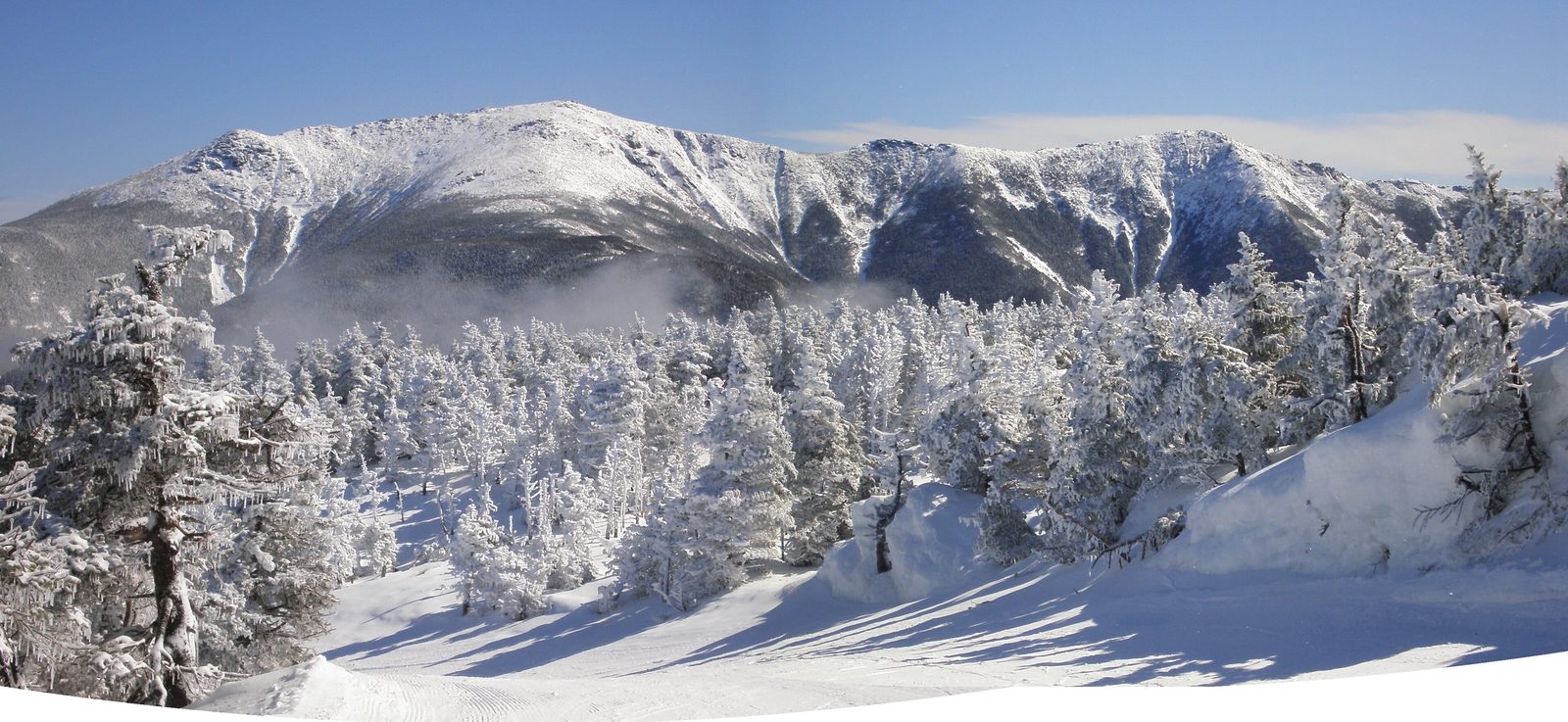
Lincoln sits at about 810 feet in the valley, but the terrain around it climbs fast — Loon's summit is over 3,000 feet and the Franconia peaks a few miles north top 5,000. That vertical range is why the weather here refuses to behave like one thing. It can be a calm 25 degrees in the village and a screaming, sub-zero whiteout on the ridgeline at the same hour. Down in town you get real snow: a typical winter drops several feet over the season, storms roll through every few days, and the ski areas run snowmaking hard to guarantee a base regardless of what the sky does.
The daylight is short. In December and January the sun is up around 7 and gone by 4:30, and it drops behind the western ridges even earlier than that, so the valley goes into shadow and the temperature falls off a cliff in late afternoon. Plan your outdoor hours for the middle of the day. A hike or a walk you'd start casually at 2 p.m. in July is a headlamp situation in January.
Cold here is the dry, sharp kind, not the damp chill of the coast. On the clear mornings after a front passes, you'll get brilliant blue sky, hard sun, and air in the teens or single digits — beautiful, and deceptively serious if you're underdressed. On the warm, gray days you can get a thaw, freezing rain, or a wintry mix that turns everything to a skating rink and then re-freezes overnight. Both patterns are normal. The skill is reading which one you've got and dressing for it.
The upside of all this is that a proper winter here is spectacular and, midweek, remarkably quiet. Weekends and holiday weeks around Loon get busy; a Tuesday in late January can feel like you have the mountains to yourself. If you have any flexibility, come midweek.
Getting here, and driving in winter
Getting to Lincoln is easy: I-93 north to Exit 32, and you're in town. I-93 and the main routes through the valley (Route 112, Route 3) are state-maintained, plowed and salted around the clock through storms, and treated seriously because they're the region's lifeline. In normal winter driving you'll be fine on them with a sensible car. The trouble is never the interstate — it's the last mile, the unplowed pull-off, and the shaded curve that never sees sun.
Come with the right car and the right tires. All-season tires on a front-wheel-drive car handle most days here; dedicated snow tires or all-wheel drive make the bad days a lot less stressful and are worth it if you're driving up from a city that never sees snow. Rental-car all-seasons in December are the single most common reason we see guests white-knuckling our driveway. Whatever you're in, slow down, leave triple the following distance, and brake gently and early — black ice is the local specialty, and it looks exactly like wet pavement.
Keep a winter kit in the car and don't treat it as optional: a real snow brush and ice scraper, gloves and a warm hat within reach (not buried in a suitcase), a small folding shovel, a blanket, water, a phone charger, and enough of a fuel or charge buffer that a slow crawl through a storm doesn't strand you. Cell coverage is patchy in the notches and on the Kancamagus; download your maps for offline use before you leave town. If you drive an EV, plan charging around the cold — range drops sharply in single-digit temperatures, and the fast chargers cluster in Lincoln and along I-93, not out in the forest.
One practical note on our place specifically: we're owner-operated with keyless self check-in and no front desk, so if a storm slows you down, you're not going to miss a check-in window. Drive at the pace the road allows and let us know your rough timing. Getting here in one piece beats getting here on schedule.
Downhill skiing and riding (the short version)
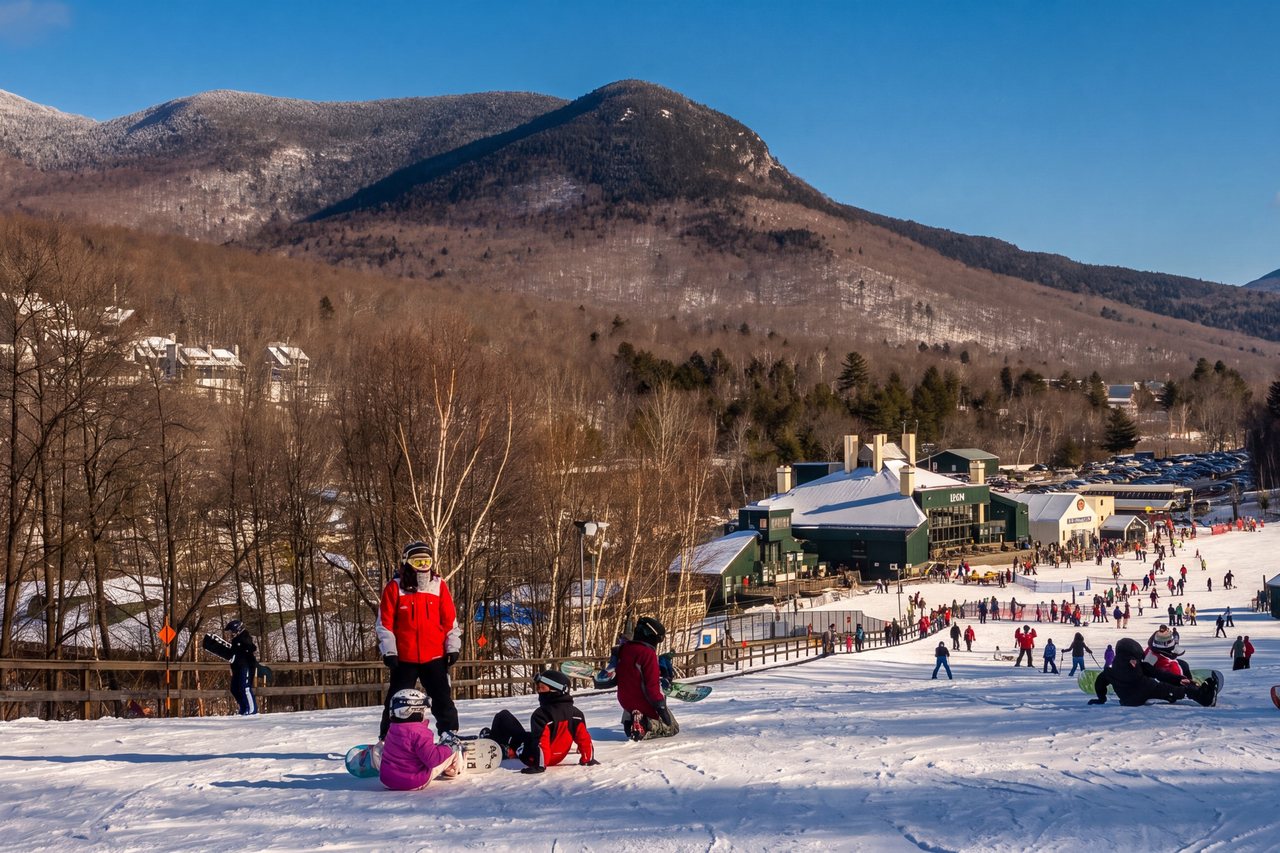
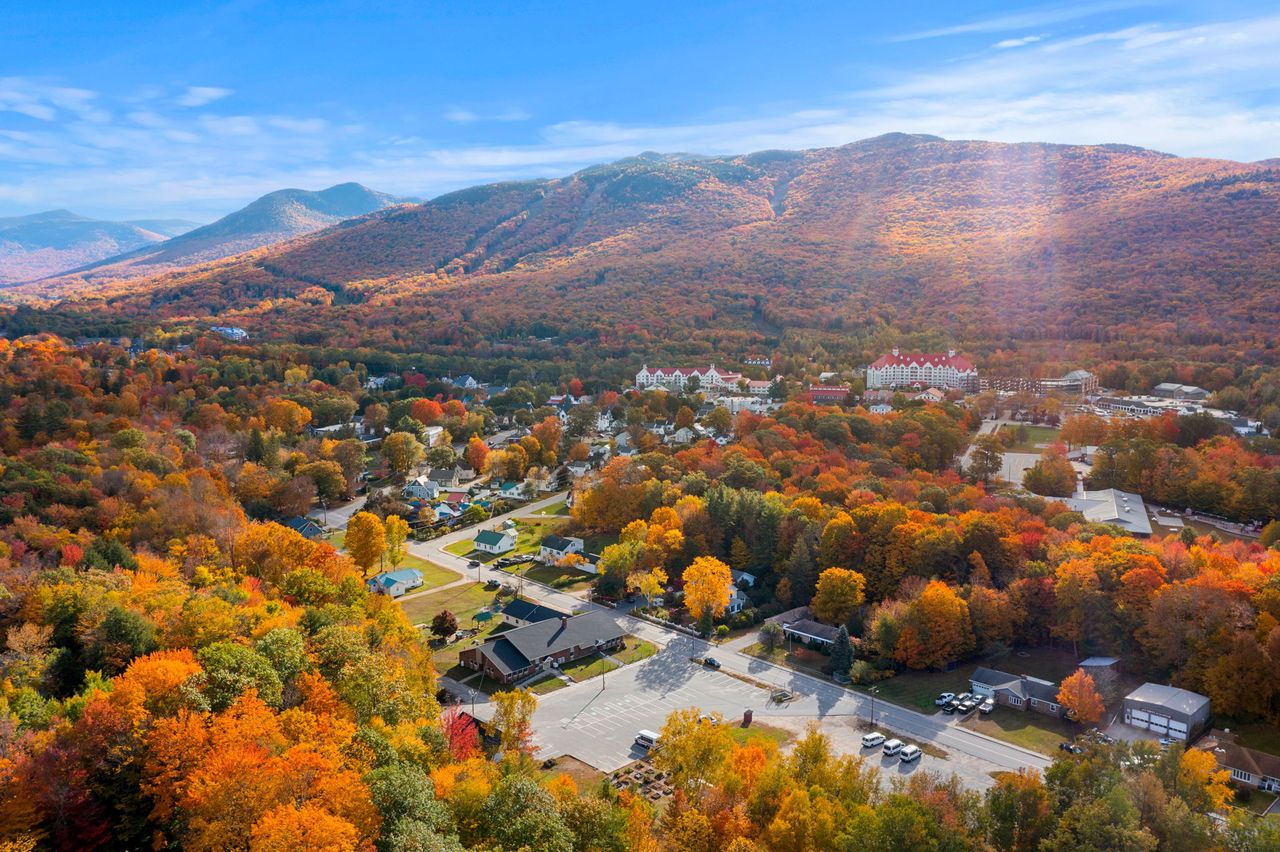
Skiing is the reason most people come to Lincoln in winter, and Loon Mountain is the reason it's easy — the base area is 6 min from our door. Loon is a big, well-run modern resort with high-speed lifts including a summit gondola, reliable snowmaking top to bottom, terrain that spans beginner to expert, and one of the better ski schools in the state if you or someone in your party is learning. For the 2025-26 season Loon opened November 21 and is targeting a mid-April finish (around April 18-19), with extended weekend gondola hours late in the season; always confirm the current calendar and conditions on Loon's own hours page before you go, because open terrain and lift schedules shift with the weather.
You are not limited to Loon. Cannon Mountain in Franconia Notch — state-owned, no-frills, steeper and more old-school — is about 16 min north, and Waterville Valley is roughly 40 min south down I-93 and Route 49. Between the three you can ski a different mountain every day of a long weekend without ever driving more than 40 min. Loon and Waterville tend to suit families and mixed-ability groups; Cannon rewards people who want a bigger, tougher, quieter mountain and don't mind fewer amenities.
We've kept this deliberately brief because skiing deserves its own deep dive — lift-ticket strategy, when to buy in advance, the Loon layout, lessons, rentals, and where to park. Read our full Loon Mountain guide for that. Two quick tips regardless: buy lift tickets online ahead of time (walk-up window prices are the worst deal in the valley), and on powder days or holiday weeks, get to the mountain early — the good parking and the untracked snow both disappear before 9.
Loon's other winter activities (not just the lifts)
If you're not a skier, or you want a rest day, Loon runs a full slate of winter activities at its Adventure Center that don't require you to strap boards to your feet. Snow tubing is the big one — a dedicated tubing hill with its own lift, sessions sold in time blocks, and no skill required beyond the ability to sit down and laugh. It's the single easiest way for a non-skier to spend an hour outside in the snow and have a good time. Book tubing ahead; sessions fill on weekends and holiday weeks.
There's also a winter zip line that flies you across the frozen Pemigewasset River, guided snowshoe tours (both a gentle base-area walk and a more demanding summit tour with a guide who handles the route and the gear), and ice skating. And you can ride Loon's gondola for the view alone — you don't have to be a skier to buy a scenic ride up. This matters for one specific reason: the famous Cannon Mountain aerial tram, which used to be the region's go-to lift-served summit view, made its final run in October 2025 and is now retired, with no reopening date announced. If you want to stand at a mountaintop in winter without climbing it, Loon's gondola is now the answer, and it's the closest one to us.
A fair word on framing: Loon's Adventure Center is family-oriented, and much of what happens there is built around kids. Our inn is adults-only — no guests under 12 — so we're not the base for a family ski-and-tube week. But the activities themselves are open to everyone, and plenty of our guests are couples who ski all morning and go tubing in the afternoon purely because it's fun. Don't let the family framing talk you out of it.
Specific activity offerings, hours, and pricing change year to year and even week to week, so check Loon's winter-activities page for what's running during your stay rather than assuming last season's lineup.
The Ice Castles in North Woodstock
In winters cold enough to build them, the Ice Castles are the most purely magical thing you can do here after dark — and they're barely 5 min from us in neighboring North Woodstock. This is the genuine article: acre-scale structures of ice built entirely by hand by ice artisans, with tunnels, archways, carved caverns, slides, and thousands of color-changing LED lights frozen into the walls. Recent seasons have added a lit forest walk (the 'Mystic Light Walk'), a tubing hill, and horse-drawn sleigh rides at the same site. Seen on a clear, cold night, it's unforgettable.
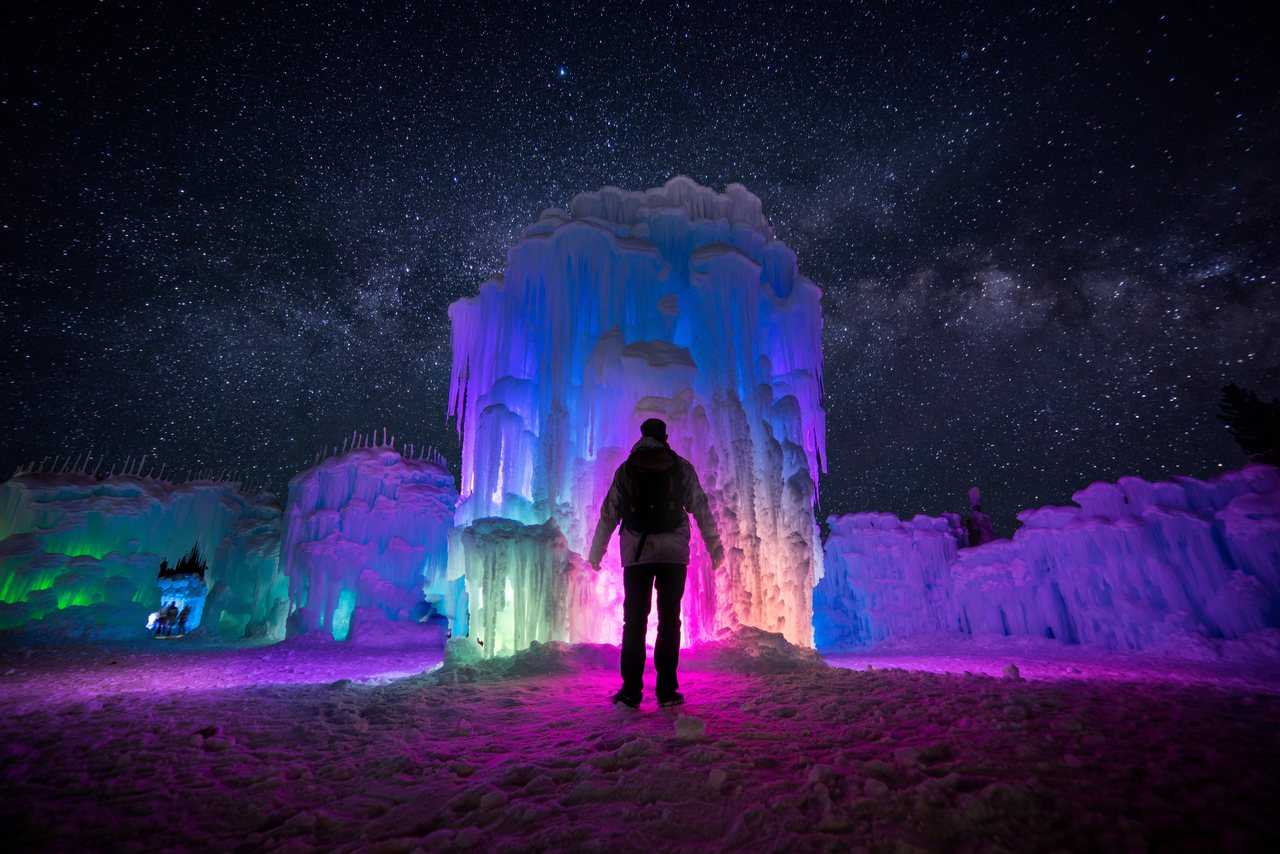
The Ice Castles are fleeting by nature: they only exist in a winter cold enough to build and hold them. They are entirely weather-dependent, the season is short, and the opening date moves every year. For 2025-26 the North Woodstock location announced its earliest opening ever — December 27, 2025 — and planned to run through about February 22, 2026, marking the attraction's 15th season. Do not assume those dates repeat. Before you build a trip around it, check the official Ice Castles site to confirm the New Hampshire location is running this year and see the current calendar.
Two practical rules from watching guests do this: buy timed tickets online in advance (they sell out on good-weather weekends, and walk-up availability is unreliable), and go early in the evening on a weeknight if you can — it's less crowded and, frankly, colder-and-clearer nights make the lights look better. Dress as if you'll be standing still outside in the cold for an hour, because you will be: real winter boots, a warm hat, and gloves, not fashion sneakers. The ground is, by definition, ice.
If the Ice Castles aren't running in a given winter — it happens in a mild year — don't despair. The same stretch of North Woodstock has a walkable little downtown, and the whole valley leans into holiday lights and winter events through the season.
Snowshoeing and gentle winter walks
Snowshoeing is the great equalizer of a White Mountain winter. If you can walk, you can snowshoe — the learning curve is about 10 min — and it opens up quiet forest and frozen riverbank that's hard to reach any other way. It's also the safest way for most visitors to get into the winter woods, provided you pick trails that match the conditions and turn around before you're cold or out of daylight.
For easy, satisfying outings close to us, the low-elevation, sheltered trails are the move. The Lincoln Woods trail off the Kancamagus follows an old railroad grade along the Pemigewasset — flat, wide, and forgiving, and beautiful under snow. The Franconia Notch bike path (the recreation trail) becomes a snowshoe and cross-country route in winter and runs past several of the notch's landmarks. Sabbaday Falls and the shorter walks off the Kancamagus are lovely in winter but note the road access caveats in the driving-the-Kanc section below. Rent snowshoes in town or at Loon's Adventure Center if you don't own a pair; you do not need to buy gear to try this once.
The rules that keep snowshoeing safe are simple and non-negotiable. Stay on low, sheltered, well-traveled trails unless you truly know what you're doing. Start early enough to be back well before that 4:30 dark. Carry more layers than you think you need, plus water, a headlamp, and traction — a lot of 'snowshoe' trails are packed to boilerplate ice on the popular sections, and microspikes on your boots often matter more than the snowshoes themselves. Tell someone your plan. And do not treat a summer trail description as a winter one: distances take far longer, water crossings can be dicey, and the friendly two-mile loop from July can be a serious afternoon in February.
If you want the gentlest possible version with zero navigation stress, book a guided snowshoe tour through Loon. A guide handles the route, the pace, and the gear check, and you just walk and enjoy it.
Winter hiking, and its very real dangers
Here is where we get blunt, because it's the part the pretty lists leave out. There is a world of difference between snowshoeing a flat forest trail and hiking a White Mountain summit in winter. The famous high routes — above all the Franconia Ridge loop over Little Haystack, Lincoln, and Lafayette — are not 'winter hikes' in any casual sense. They are mountaineering. The ridge runs more than a mile and a half above treeline, fully exposed, and winter conditions up there routinely include sub-zero cold, hurricane-force wind, whiteout visibility, and hard ice that demands crampons and an ice axe you know how to use. People with real experience get into serious trouble on that ridge every winter. Some don't come back.
The White Mountains are famous for their weather, and the reputation is deserved. Mount Washington, a range over from us, has recorded some of the worst surface weather on the planet, and while our local peaks are lower, the same physics apply: what's calm in the valley can be lethal 3,000 feet up. The mistake we watch people make is reading a summer trip report, seeing 'moderate,' and heading up in January with microspikes and a cotton hoodie. That's not a smaller version of the summer hike. It's a different sport.
So, the real guidance. If you are not an experienced winter hiker with the gear, the training, and the judgment to turn around, stay below treeline. There is a lifetime of gorgeous, safe winter walking in the sheltered valleys and lower trails — you lose nothing by skipping the exposed summits. If you are experienced and equipped, the standard rules still bind: check the higher-summits forecast from the Mount Washington Observatory (not the valley forecast) the morning of, carry full winter kit and the traction the conditions demand, start at first light, set a hard turnaround time, and never let a summit talk you out of your own safety margin. Being 'so close' gets more hikers into trouble up here than storms do.
One more: winter days are short and cold errors compound fast. A twisted ankle that's a nuisance in July becomes serious in January, when you can't keep moving to stay warm and help is hours away. Build in enormous margin, or stay low. There is no shame in the valley.
Snowmobiling the corridor trails
Lincoln is one of the best snowmobile bases in New Hampshire, and if you've never done it, a guided ride is a thrilling way to see country you'd otherwise never reach. The reason is Corridor 11 — the state's main north-south snowmobile trail — which runs right through the Lincoln-Woodstock area on its way up through the White Mountains toward Bretton Woods and beyond. From here you can connect into a huge, groomed network of trails along old railroad beds, river valleys, and forest, maintained through the winter by the local club.
You do not need to own a sled or know how to ride. Local outfitters in Lincoln — SledVentures is the established one right in town — rent machines, provide the gear, and run guided tours from a couple of hours to a full day, including the safety briefing you'll want if it's your first time. Guided is the sensible choice for visitors: the guide knows which trails are groomed and open, handles the trail-pass logistics, and keeps you out of trouble. Grooming and trail conditions depend on snowpack and change constantly, so booking through an outfitter also means someone else is tracking whether the trails are rideable that week.
If you're an experienced rider bringing your own machine, note the legal basics: sleds in New Hampshire must be registered, most of the trail system is maintained by volunteer clubs and funded through registrations and memberships, and the statewide corridor map and rules live on the NH State Parks snowmobiling pages. Ride the corridors, respect the private-land crossings that make the network possible, and don't poach closed or ungroomed trails.
A quiet reality check on the experience: snowmobiling is loud, fast, and cold, and it's the opposite of a peaceful forest walk. That's the appeal. But if what you want from winter is silence, this isn't it — snowshoeing or cross-country skiing is. Know which mood you're in before you book.
Cross-country and Nordic skiing
Cross-country skiing is the underrated joy of a White Mountain winter — quiet, aerobic, meditative, and far cheaper than downhill. It's also a skill you can pick up in an afternoon on flat groomed trails, unlike its lift-served cousin. The western White Mountains have some of the best Nordic terrain in the East, and three of the notable centers are within an easy drive of Lincoln.
Closest to us, Loon itself grooms a network of cross-country trails at the base area — a good, low-commitment option if you want to try classic skiing without driving anywhere. About 20 min north, the Franconia Village XC Ski Center at the Franconia Inn is a local favorite, with a large groomed network winding through forest and river bottom with big views toward the Kinsman range. And for the destination day, the Bretton Woods Nordic Center up at the Mount Washington Resort (roughly 45 min to an hour) is one of the largest cross-country areas on the East Coast — over 100 kilometers of groomed classic and skate trails, with a third of it beginner-friendly and full rentals and lessons on site.
All three rent skis and boots, so you don't need to arrive with gear. If you've never done it, take the one lesson — the difference between flailing and gliding is about 30 min of instruction, and it'll change whether you love the sport or quit it. Dress lighter than you would for downhill: cross-country is real cardio, and you'll overheat fast if you bundle up like you're riding a chairlift. Layers you can shed, a hat you can pocket, and gloves rather than heavy mittens.
The free option, for the self-sufficient: the Franconia Notch recreation path and various forest roads and flat trails are ungroomed but skiable after a snowfall, and cost nothing. Just remember 'ungroomed' means you're breaking trail and navigating yourself, so it's the choice for people who already know what they're doing, not first-timers.
Driving the Kancamagus in winter
The Kancamagus Highway — Route 112, the 'Kanc' — starts right here at the edge of Lincoln, and in summer it's the most famous scenic drive in New Hampshire. In winter it's still open and still stunning, but it demands respect and a little inside knowledge that the signs don't give you. The key fact: the Kancamagus is plowed and maintained as a through-road all winter. You can drive its full 34-plus miles over to Conway, and it's treated as a genuine route, not a seasonal closure like some mountain passes.
But — and this is the part that catches people — being plowed as a road is not the same as being fully cleared for sightseeing. Many of the scenic overlook pull-offs and trailhead parking lots along the Kanc are not plowed in winter, or are only partially cleared, and the ones that are can be snowbanked in, icy, and unmonitored. Do not assume you can pull off wherever you like the way you would in October. Pulling half onto an unplowed shoulder in a rear-drive rental is how people end up stuck, or worse, sticking out into a travel lane on a blind curve. If a pull-off isn't clearly and fully plowed, keep driving to one that is.
There are no gas stations, no services, and long stretches of no cell coverage across the Kanc — it's national forest the whole way. Fill the tank in Lincoln or Conway before you start, not somewhere in the middle, because there is no middle. Give yourself far more time than the summer drive suggests; you'll be going slower, and you may want to backtrack if an overlook you wanted is snowed in. And check conditions before you commit to the full crossing in bad weather — it's a high, exposed road that can get nasty in a storm even while it stays technically open.
Done right, on a clear cold day with a plowed pull-off and a thermos, the Kanc in winter is one of the great drives of the season — the river running black between snow-covered banks, the peaks white against a hard blue sky, and almost nobody else out there. Just drive it as the serious mountain road it is, not the lazy Sunday cruise it becomes in July. Our full Kancamagus Highway guide has the overlook-by-overlook detail.
What's closed in winter (so you don't drive to a locked gate)
The single most useful thing a guide can do is tell you what not to bother with, and winter closes a real chunk of the region's summer attractions. Plan around these rather than discovering them at a chained parking lot.
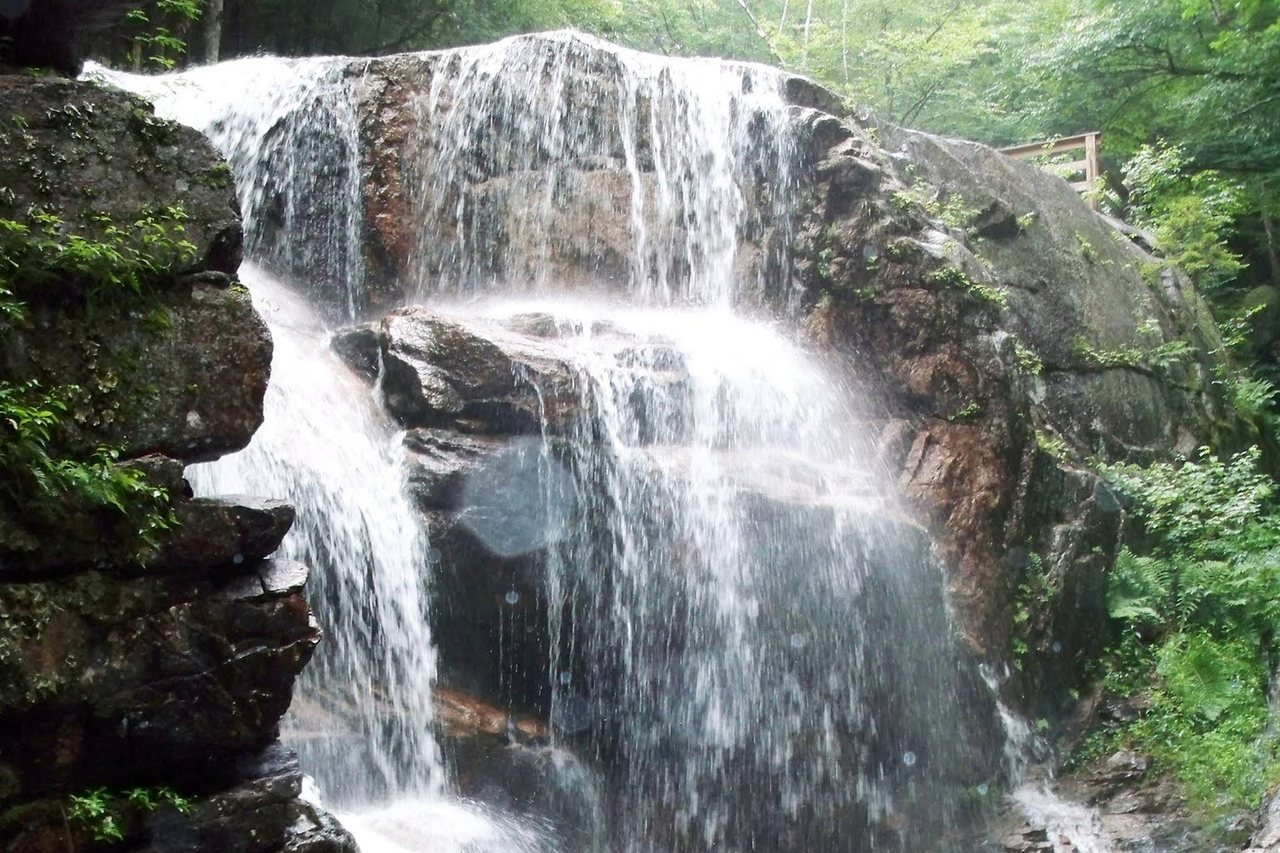
The Flume Gorge — the famous boardwalk through the natural granite chasm in Franconia Notch — is closed for the winter. The gorge itself is a year-round natural feature and the surrounding park stays open for recreation, but the boardwalks, stairs, and visitor facilities that make the Flume walk possible are shut down for the season and impassable in snow and ice. It typically reopens in mid-May. If the Flume was on your list, save it for a return trip in late spring or summer; don't drive over expecting to walk it. Our Flume Gorge guide covers the season and how to do it right when it reopens.
The Cannon Mountain aerial tramway is retired, not just closed for the season, and no reopening date has been announced. The iconic tram made its final passenger run on October 26, 2025, after 45 years, and the state has funded a multi-year project to design and build a next-generation replacement — a process expected to take at least two years, likely more. Please cross the tram off your list entirely for the foreseeable future; we still meet guests who arrive planning to 'ride the Cannon tram,' and it isn't there anymore. Cannon's ski lifts still run all winter for skiers and riders — the mountain is very much open for skiing — but the sightseeing tram is done. For a lift-served summit view, ride Loon's gondola instead.
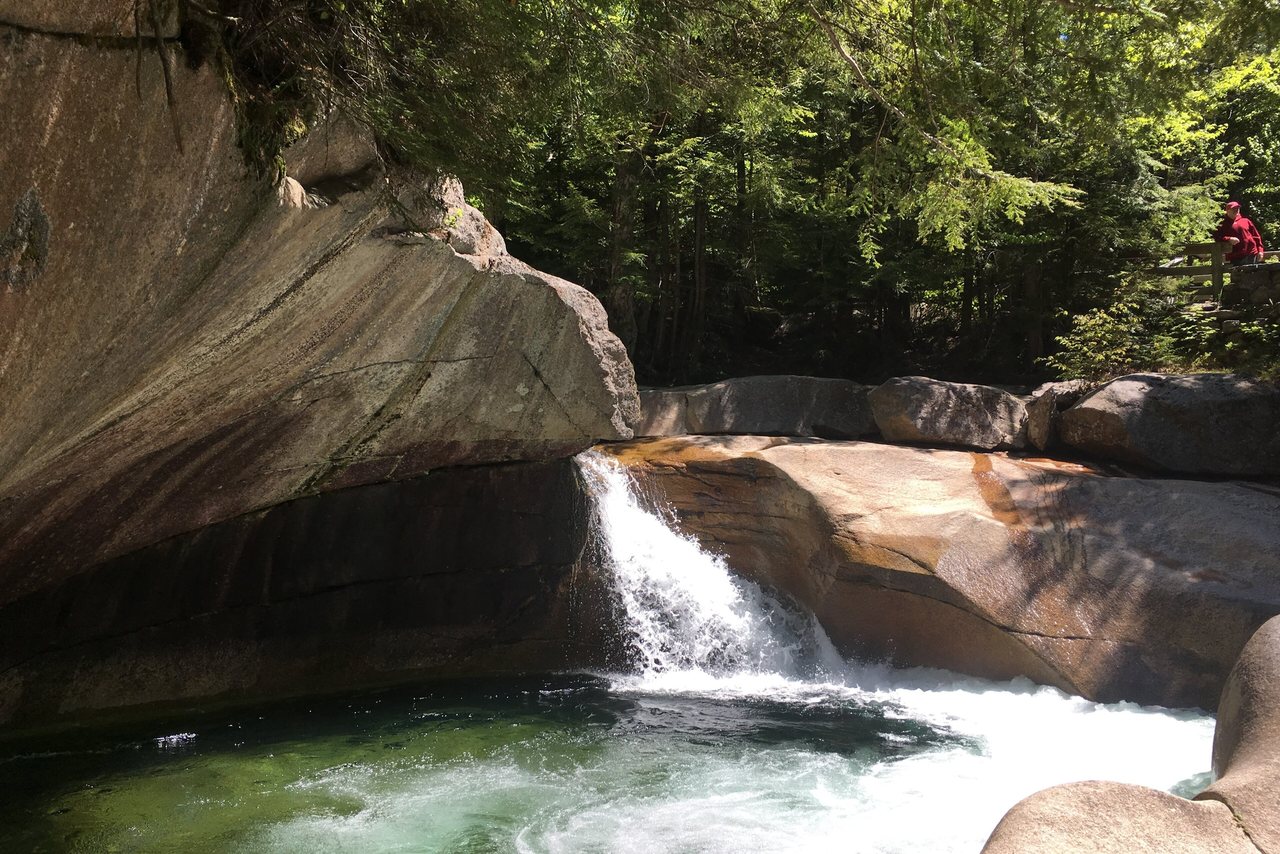
The waterfalls are a mixed bag. Many of the roadside falls — the Basin in Franconia Notch, and the various cascades off the Kanc — are beautiful frozen but the access can be icy, the parking often unplowed, and the trails unmaintained. The Basin is a short, worthwhile stop if the pull-off is clear. Swimming holes are obviously irrelevant in winter, but a safety note that carries over: the Swift River and the Pemi are not safe to walk out onto — river ice over moving water is treacherous and never trustworthy, no matter how solid it looks. Admire the water from the bank.
Cozy indoor and bad-weather options
A White Mountain winter will, sooner or later, throw you a day you don't want to be outside — freezing rain, a whiteout, or just bone-deep cold that makes a fireside afternoon the only sane plan. Have a rainy-day-equivalent list ready so a bad-weather day feels like a treat instead of a wasted one.
Lincoln and North Woodstock have a small but real cluster of good indoor spots. One Love Brewery in Lincoln and the Woodstock Inn Station & Brewery in North Woodstock both do proper sit-down food and their own beer, and both are exactly the kind of warm, unhurried room you want when it's bitterly cold out. The two little downtowns are walkable for browsing shops and cafés between snow squalls. For a lazy day, that's the loop: a long lunch, a brewery, a bookshop, back to a fire.
For active indoor options with a family lean, the valley has an indoor water park and other rainy-day attractions aimed at kids — worth knowing they exist, though they're squarely outside what an adults-only inn 6 min from the lifts is built around. If you're a couple wanting a quiet weather day, you'll be happier with the brewery-and-fireside version than the water-park version, and we'd steer you accordingly.
Frankly, the best bad-weather option is often the one right where you're staying. A serious winter storm is a wonderful excuse to not go anywhere at all — to read by a fireplace, watch it come down, and let the plows do their work before you venture out again. Which brings us to why the base you pick matters as much as the activities.
Gear and layering (the part that makes or breaks the trip)
More winter trips are ruined by bad clothing than by bad weather. The people who have a miserable time here in January are almost always the ones who packed for the idea of cold rather than the reality of it. Get this right and a 10-degree day is a joy; get it wrong and a 25-degree day is misery.
The system is layers, and the first rule is no cotton. Cotton holds sweat and snowmelt against your skin and then chills you — a cotton hoodie or jeans is the classic White Mountain mistake. Instead: a wicking base layer (wool or synthetic) next to skin, an insulating mid-layer (fleece or a light puffy), and a windproof, water-resistant shell on top. Add or shed the middle layer as you heat up and cool down. The magic of this system is that you can regulate: unzip and drop a layer climbing, add it back when you stop.
The extremities are where cold wins. A warm hat that covers your ears, real insulated gloves or mittens (mittens are warmer; gloves are more dexterous — bring both if you can), thick wool socks, and — this is the one people skip — actual winter boots with insulation and grippy soles, not sneakers or fashion boots. Add microspikes or similar slip-on traction for icy walkways and trails; they're cheap, they weigh nothing, and they prevent the most common winter injury we see, which is a hard fall on ice in a parking lot. Toss in hand-warmer packets, lip balm, sunglasses (snow glare is real and hard on the eyes), and sunscreen, which sounds absurd until you burn on a bright February afternoon.
You can rent or buy most of this in Lincoln if you arrive short — there are outfitters in town — but base layers and warm socks are worth bringing from home. And if you're doing anything beyond a groomed trail or a plowed sidewalk, everything in the winter-hiking safety section applies: the gear that keeps you comfortable on an easy day is the gear that keeps you alive on a hard one.
Why an adults-only inn 6 min from Loon is a good winter base
Where you sleep shapes a winter trip more than in any other season, because in winter you come back to your base cold, tired, and often earlier than planned — the light's gone by mid-afternoon and the good stuff happens in a short window. What you want at the end of a ski day is not a lobby and a check-in line. It's to walk straight into a warm, quiet room and stop. That's what a small owner-run inn does well and a big resort hotel doesn't.
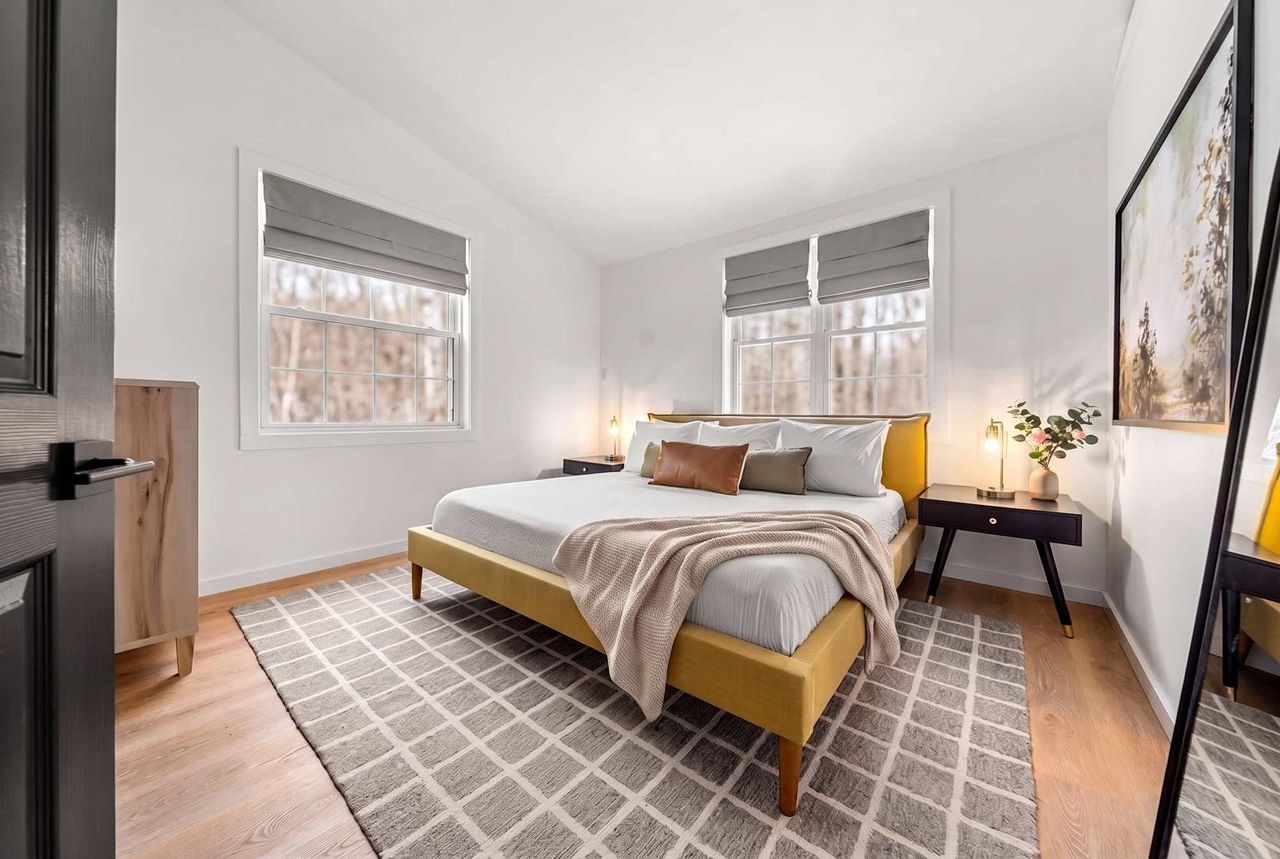
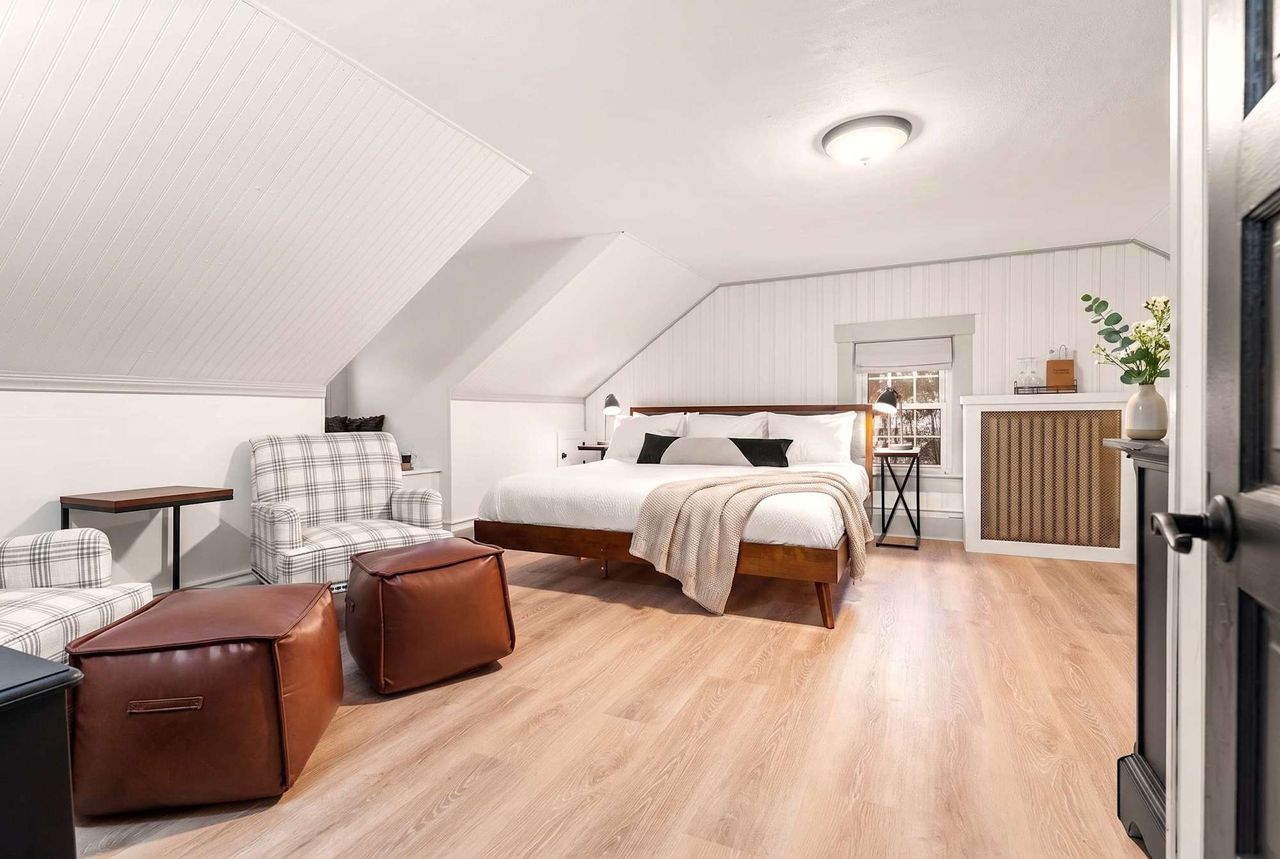
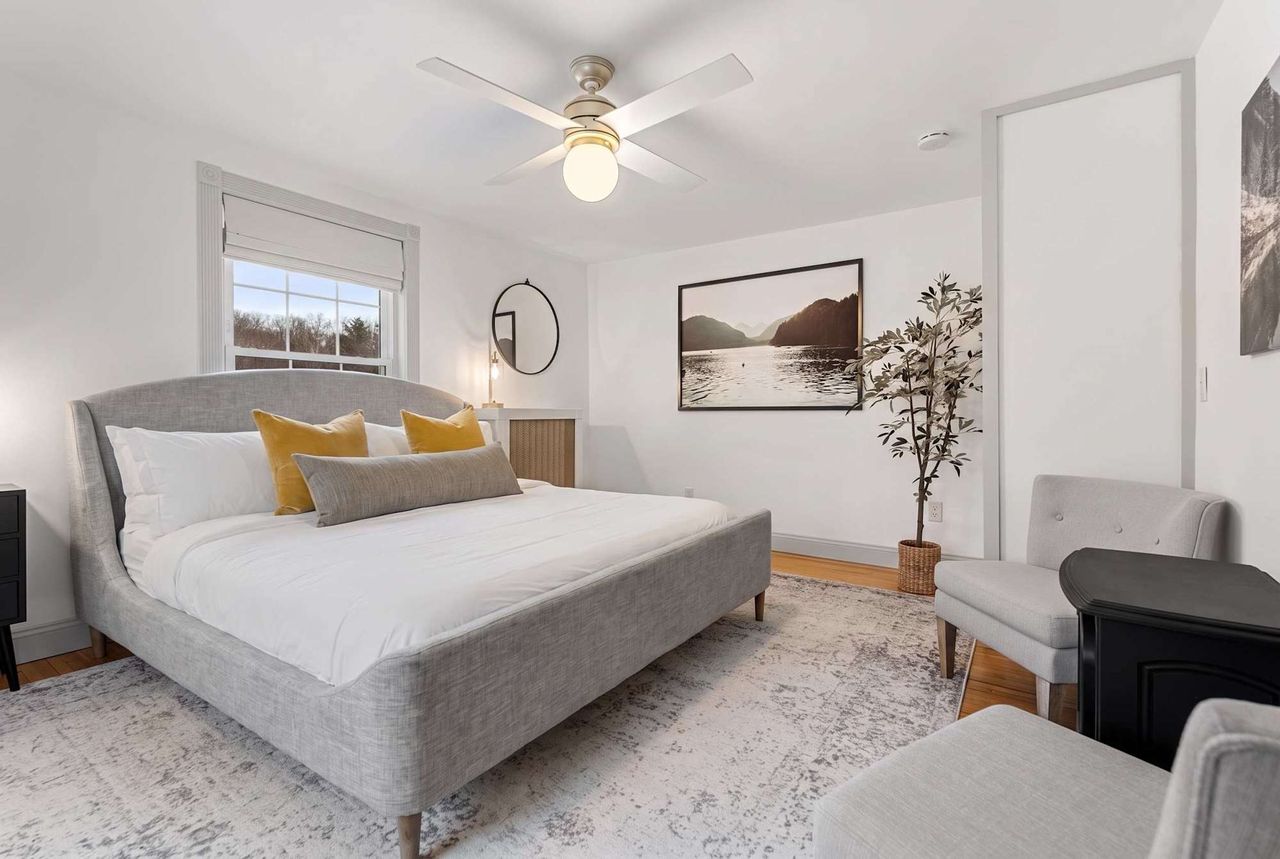
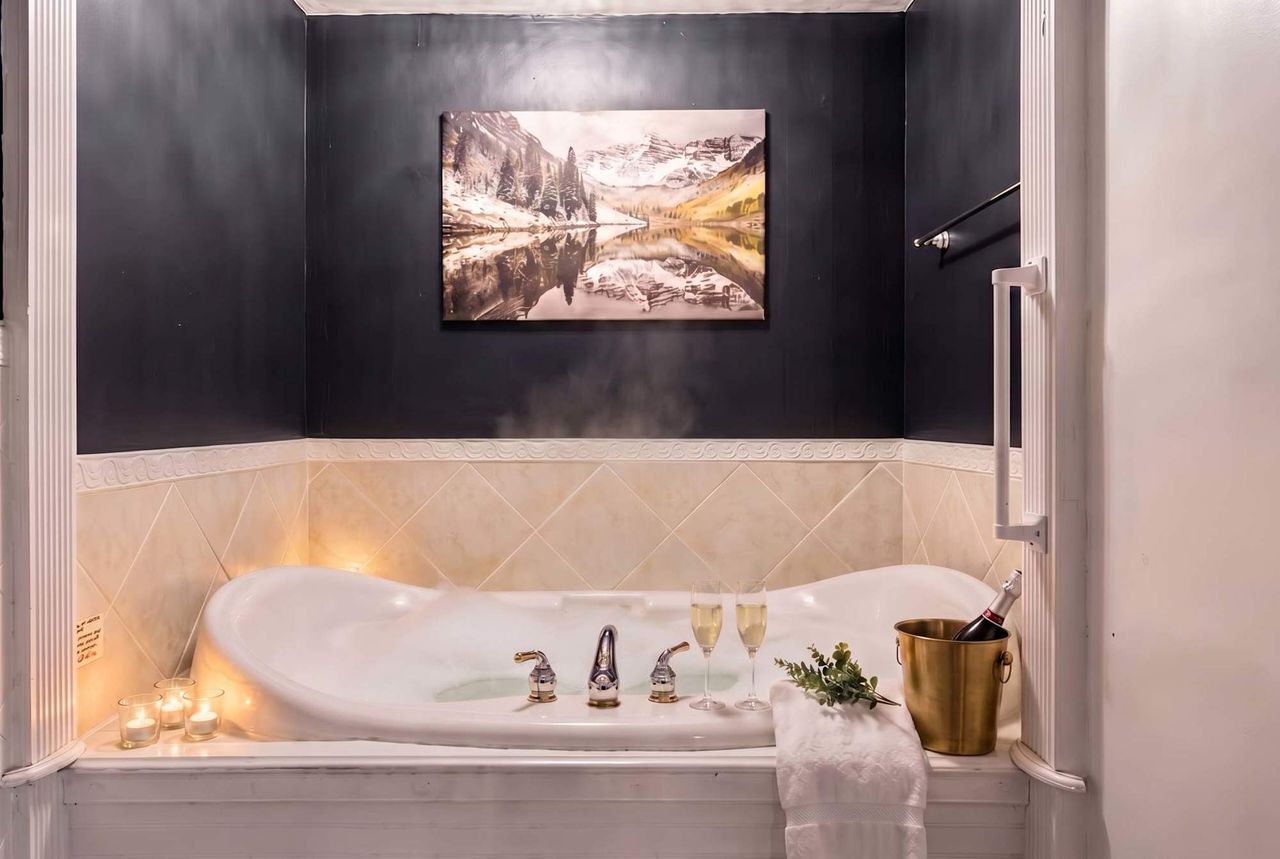
Our particular case for a winter base comes down to three things. First, location: 6 min to the Loon lifts, 5 min to the Ice Castles and North Woodstock's restaurants, and right at the mouth of the Kancamagus — you're not spending your short daylight driving. Second, the way we run it: keyless self check-in whenever you arrive, with a virtual innkeeper a message away, which matters when a storm slows your drive or a powder morning has you out the door at first light. You come and go on the mountain's schedule, not a hotel's. Third, and this is the heart of it: six suites curated for adults, most of them TV-free, in a house that stays small and calm. After a loud day on a busy mountain, a quiet evening by the fireplace is the recovery most couples want.
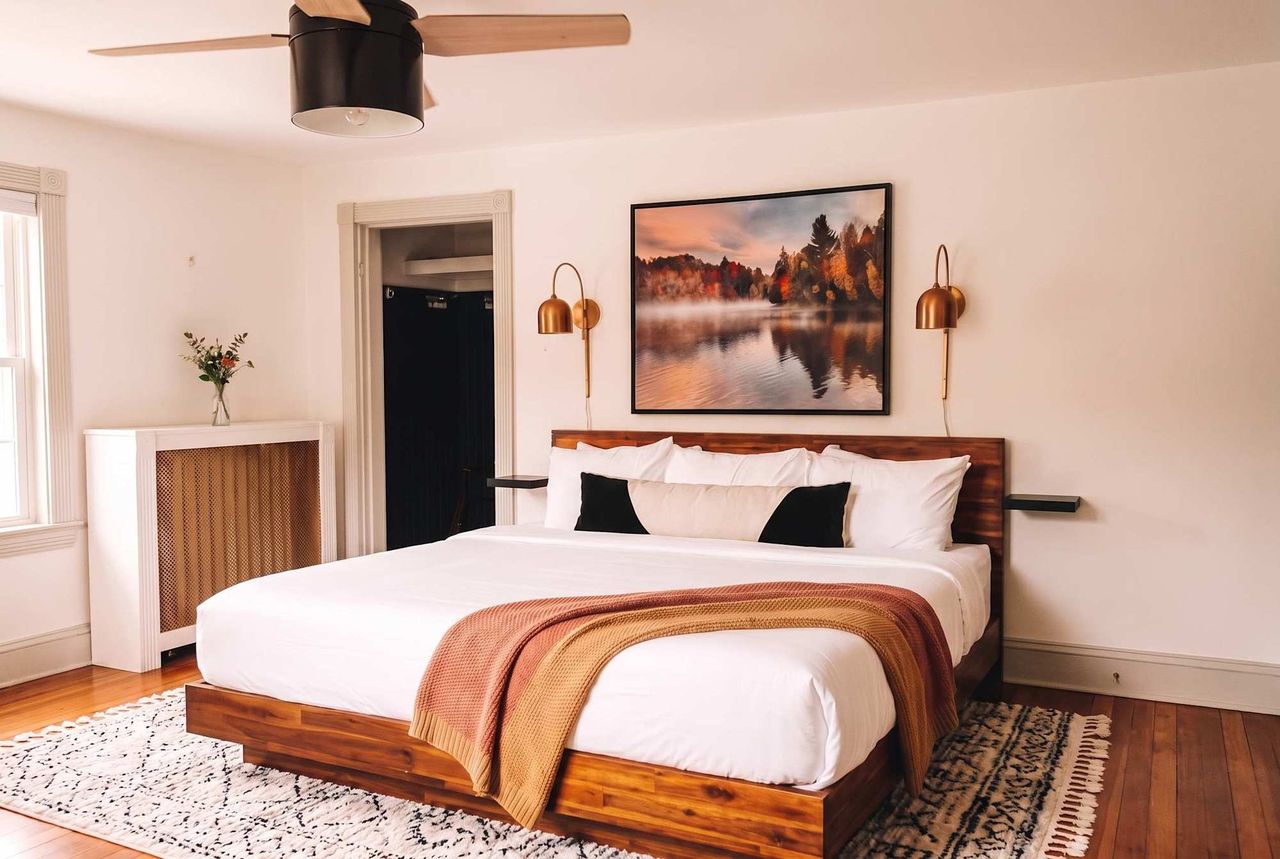
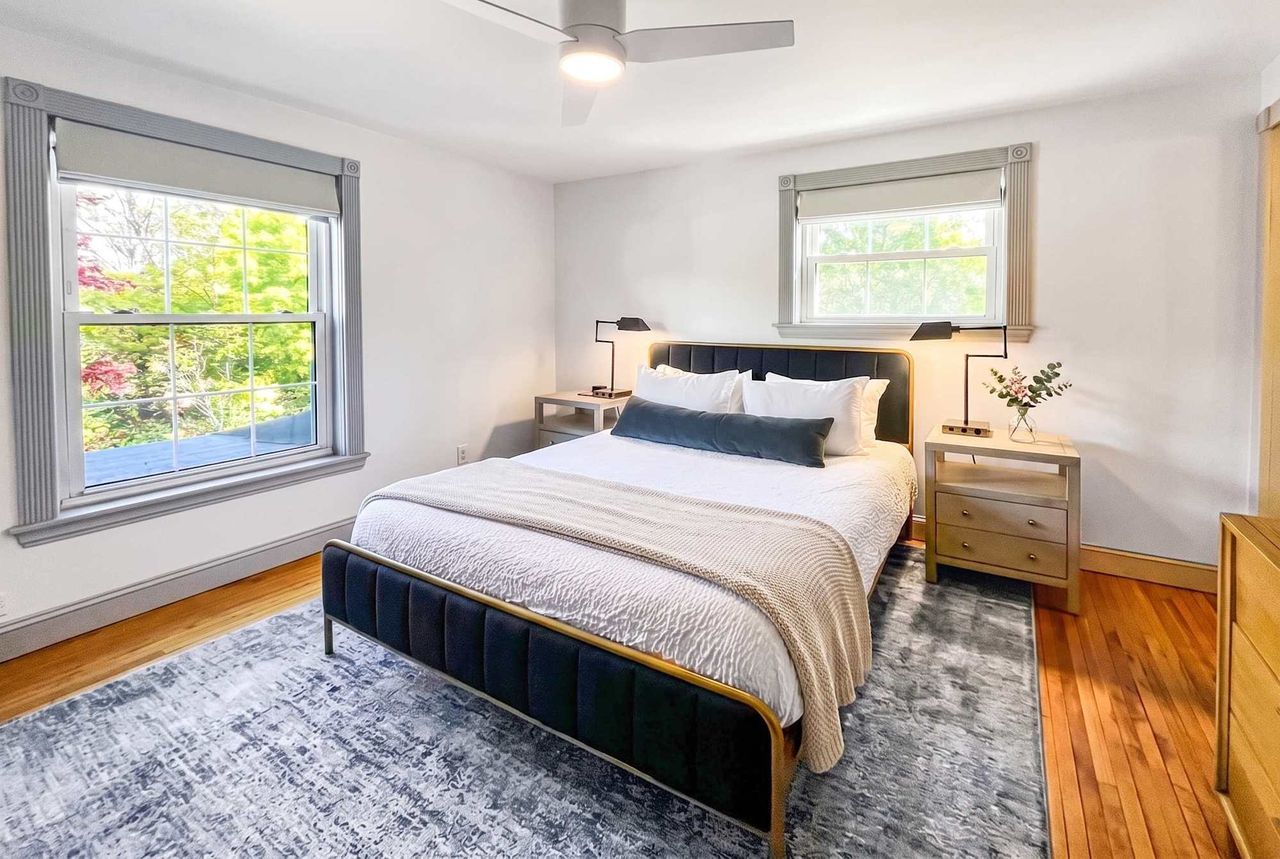
Several of our suites are built for exactly this kind of winter evening — a fireplace, a comfortable chair, and no reason to go back out. If a fireside end to a cold day is the point, look at Artist Bluff, Hancock, or Notch. We can't and won't quote you a nightly rate here — winter pricing moves with the season and the calendar — so check the live booking calendar or just ask us, and we'll tell you straight what's available for your dates.
Safety & conditions
- Black ice looks like wet pavement. Slow down, brake early and gently, and treat every shaded curve and bridge as if it's iced.
- Dress in layers and never in cotton. A wicking base, an insulating mid-layer, and a windproof shell — plus a hat, gloves, and real insulated winter boots.
- Carry slip-on traction (microspikes) for icy trails and parking lots. The most common winter injury we see is a hard fall on ice.
- Above treeline in winter is mountaineering, not hiking. Franconia Ridge and the high peaks demand crampons, an ice axe, training, and the higher-summits forecast — or stay below treeline.
- Check the Mount Washington Observatory higher-summits forecast, not the valley forecast, before any exposed hike. Valley-calm can be lethal 3,000 feet up.
- Winter days are short. Start early, set a hard turnaround time, carry a headlamp, and plan to be back well before the ~4:30 p.m. dark.
- Never walk out onto river ice. The Swift and Pemi run beneath it; ice over moving water is never trustworthy no matter how solid it looks.
- Keep a winter kit in the car: snow brush, scraper, shovel, blanket, water, charger, gloves and hat within reach, and a full tank before the Kancamagus.
- Cell coverage is patchy in the notches and along the Kancamagus. Download offline maps and tell someone your plan before you head out.
Where to stay
We built this guide around our own front door on purpose, because from here almost none of a White Mountain winter requires a long drive. Loon's lifts are 6 min away, the Ice Castles and North Woodstock's breweries about 5 min, the Kancamagus starts at the edge of town, and the Franconia Notch trails are 10 min north and Cannon's ski lifts 16 min. On a typical winter day our guests ski or snowshoe through the short daylight, come back to warm up, and head back out to the Ice Castles or a brewery after dark — all without ever spending real time behind the wheel. That's the advantage of basing in Lincoln rather than farther out: your short winter daylight goes to the mountains, not the road.
Practically, being a small, owner-run, adults-only inn suits winter well. Keyless self check-in with no set arrival window means a storm-slowed drive or a pre-dawn powder start is never a problem — you're on the mountain's schedule, not a front desk's. Six suites and no crowd means the quiet you want after a loud day is here, and several suites have fireplaces for the fireside end to a cold afternoon. We don't publish nightly rates in this guide because winter pricing moves with the season; for your dates, check the live booking calendar or just ask us and we'll tell you what's open.
Sources & official info: loonmtn.com · loonmtn.com · icecastles.com · cannonmt.com · nhstateparks.org · fs.usda.gov
— Launchpoint Lodge, From the lodge