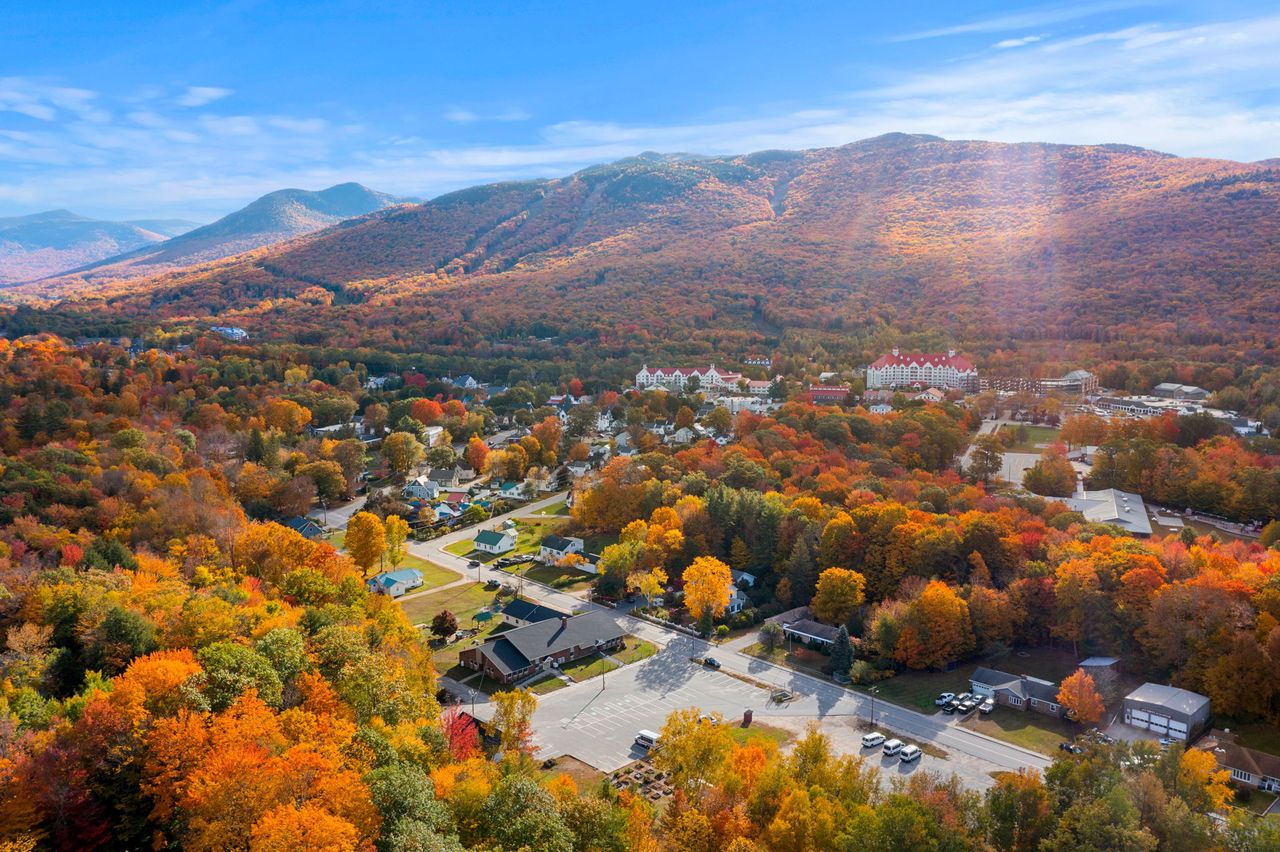
Spring is the season most White Mountains guides quietly skip, and there is a reason for it. From roughly late March into May the high country is a mess: snow rots on the ridges, trails turn to shin-deep mud, the big attractions have not opened yet, and the postcard summit views are either buried or, in Cannon's case, no longer reachable by lift at all. Spring looks nothing like the crisp, dry, wide-open mountains of an October afternoon. We are not going to pretend otherwise.
But there is a real trade here, and for the right traveler it is a good one. The same snowmelt that ruins the ridges sends every waterfall in the region into full flood, so this is the best time of the whole year to stand at the base of a cascade and feel it in your chest. The valley walks and lower-elevation trails come back to life first. The birds arrive in waves. And the crowds simply are not here yet, which means you can have a footbridge over a churning river more or less to yourself, book a room without planning three months out, and drive the Kancamagus without a line of brake lights ahead of you.
This guide is written from Lincoln, at the western end of the Kancamagus and one exit off I-93, and it is meant to be more useful and more realistic than the official pages or any top-ten list. We will tell you what mud season means, what the Forest Service is asking of hikers right now, exactly what is open and closed and when it changes, when the black flies show up, whether maple season is still worth chasing, how to dress for weather that can swing forty degrees in an afternoon, and who should come in spring versus who should wait for summer or fall.
Why spring is the overlooked season
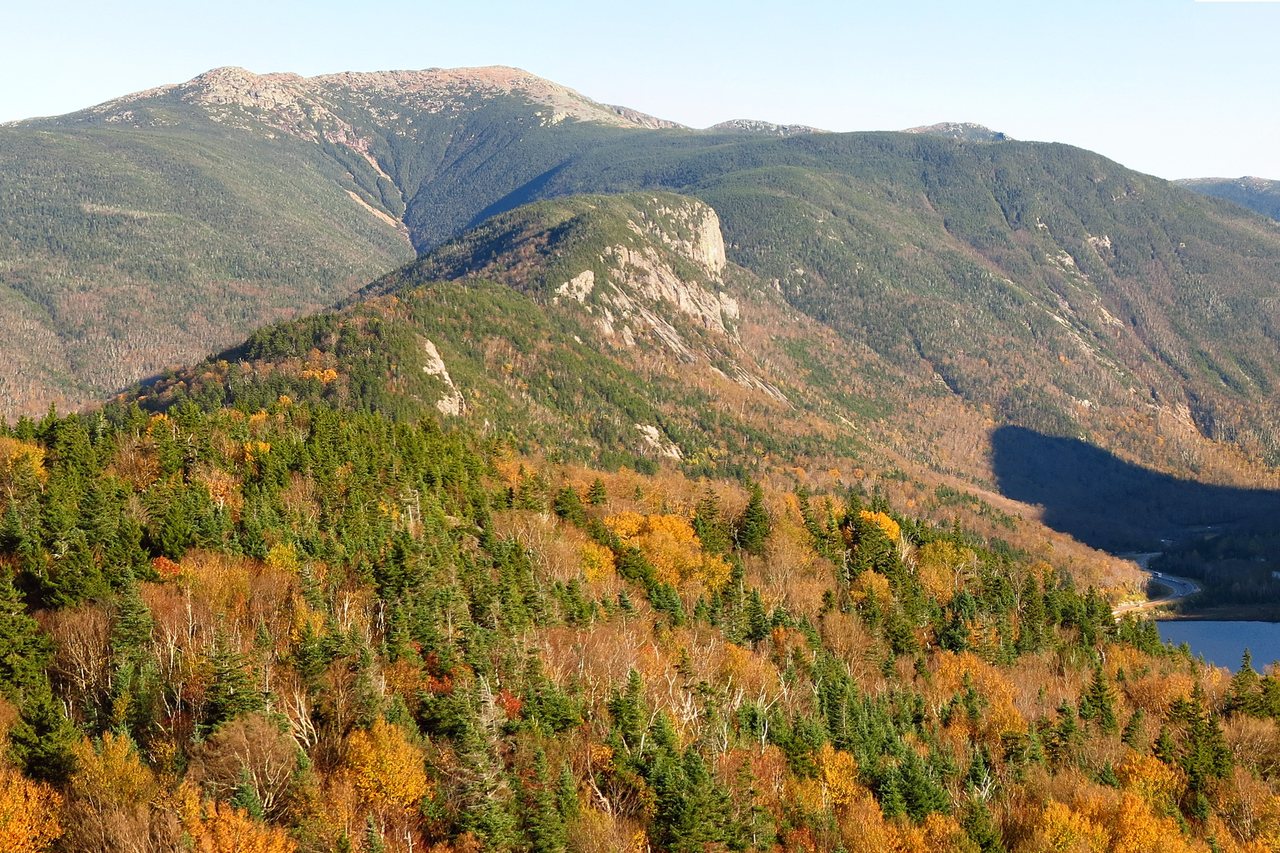
Walk into most White Mountains marketing and you will see two seasons: summer green and fall gold. Winter gets a nod for the ski areas. Spring gets a sentence, if that, and the sentence is usually vague. The reason is simple. For a good stretch of spring, the things that photograph best are not available. The high ridges are still white or brown and holding on to winter. The gondola is not spinning. The gorge attraction is closed. The trees have not leafed out at elevation. There is no easy postcard shot, so the advertising skips ahead to summer.
What gets skipped is a transitional season that behaves more like two seasons stacked on top of each other. Down in the valley around Lincoln, spring can feel like spring by late April: mud, running water, the first green haze on the hardwoods, songbirds back in the yard. Two thousand feet up, on the same day, it is still winter, with old snow, ice on the north-facing pitches, and a wind that will find every gap in your jacket. The mountains do not warm from the bottom up all at once; they warm in a slow diagonal, and where you stand on that diagonal decides whether your day is delightful or miserable.
The upside for a visitor is that spring is the only season where you can reliably have the place to yourself and still find plenty to do, as long as you match your plans to what the mountains are offering that week. That is the whole trick to spring here: not fighting the season, but going where it is already good.
What 'mud season' means (and what the Forest Service is asking)
Mud season is the local name for the weeks when melting snow, spring rain, and thawing ground turn trails into soup. It is not a fixed date on a calendar; it moves with the weather every year. As a rough rule, low-elevation trails around Lincoln start drying out through April, mid-elevation trails stay wet and patchy well into May, and the high ridges and alpine zones can hold snow, ice, and mud into June. A trail that is a pleasant dry walk in July can be an ankle-deep trench of mud in early May.
The White Mountain National Forest and the state's trail organizations are clear about what they want from hikers during this window, and it is worth honoring. When you hit mud, walk straight through the middle of it, stepping on rocks where you can, rather than skirting around the edge. Going around the puddle is what widens trails into braided scars and tramples the fragile vegetation beside them. If a trail is so saturated that you cannot stay on it without wrecking it, that is your signal to turn around and pick a lower, drier, more southern-facing route another day. South-facing slopes and low elevations dry first, so those are the real spring choices.
The other half of the message is a safety one. Up high, 'mud season' quietly means 'still winter.' Snow lingers on the north sides and in the ravines long after the parking lot is bare, and it turns to hard, slick, refrozen ice overnight. People get into trouble every spring because the trailhead looked like April and the summit was February. If you are set on going up high, that is a trip that still calls for traction like microspikes, real navigation, and a willingness to turn back. If that is not the trip you want, the good news is that spring's best stuff is not up high at all.
One more practical note: many Forest Service gates and higher access roads stay closed until conditions firm up, and some trailhead parking is not fully cleared early in the season. Check current conditions before you drive somewhere specific, and have a backup. Message us and we will happily tell you what is realistic on a given morning.

The real headliner: waterfalls at peak snowmelt
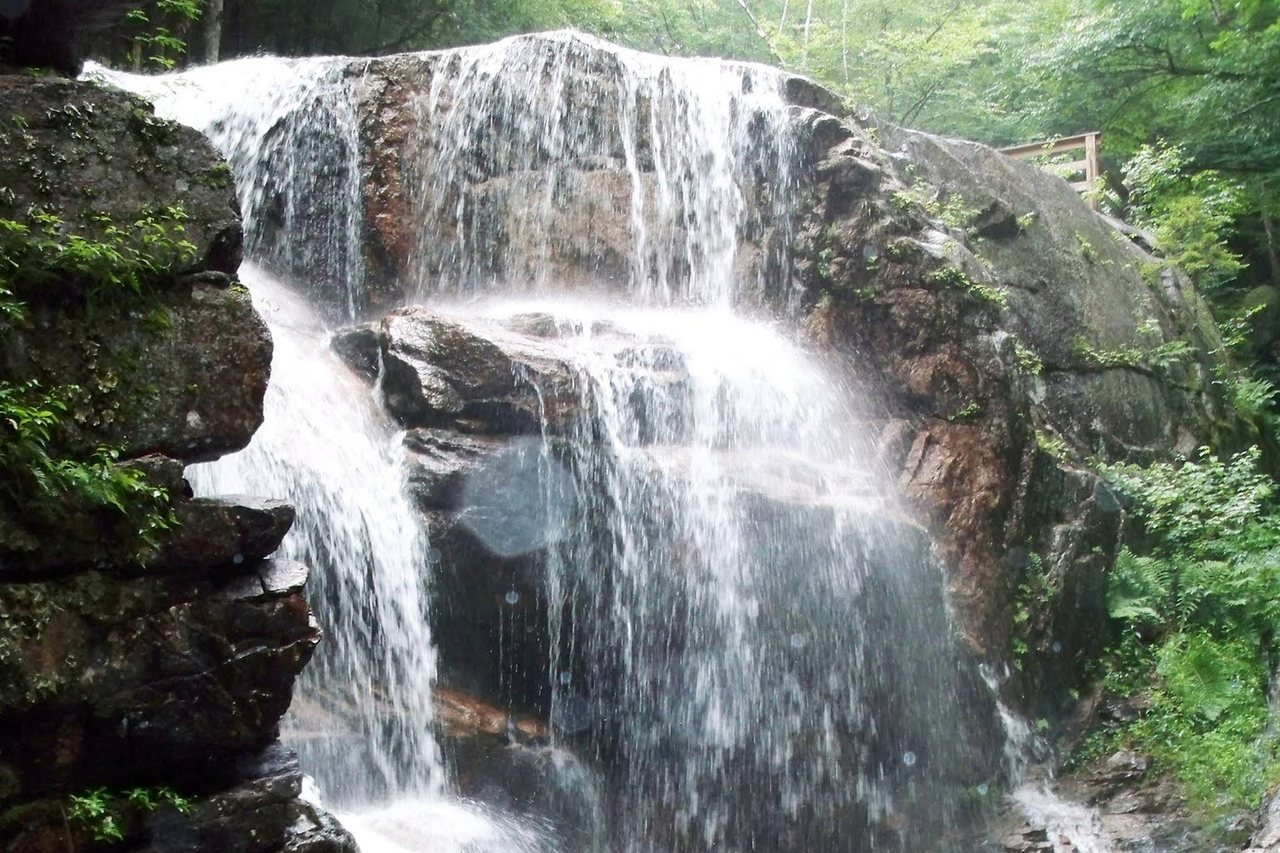
Here is the reason to come in spring, and it is a good one. Every waterfall in the region is fed by melting snow, and there is more meltwater moving through these mountains in April and May than at any other time of year. Falls that are a polite trickle by August are thunderous in spring. If you have only ever seen White Mountains waterfalls in summer photos, you have not really seen them. This is the season they show off.
You do not need to go high or far to catch this. Start with The Basin in Franconia Notch, a glacial pothole and cascade a short, mostly flat walk from a free roadside parking area. It runs hard and clear with snowmelt and asks almost nothing of you physically. Sabbaday Falls, about half an hour east on the Kancamagus, is an easy roughly one-third-mile walk on a good path to a three-step flume that is dramatic at high water; note that the last stretch to the viewing platform can stay icy or gated early in the season, so check before you count on it. Georgiana Falls, right here on the Lincoln side, is a rougher and less-marked local hike that pays off with a tall cascade at full flow, though it involves rock scrambling that is slick when wet, so wear real shoes and take your time.
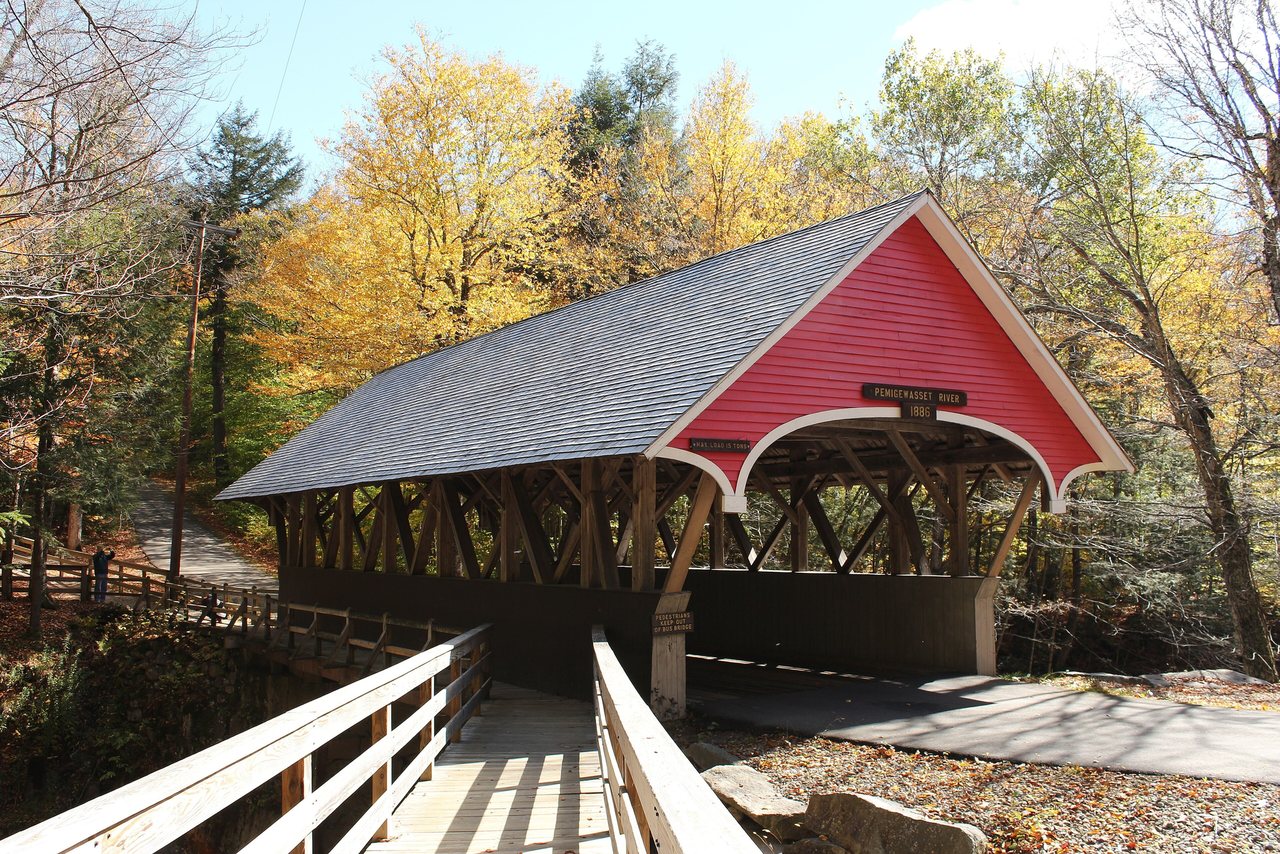
Farther out toward Conway on the Kancamagus, Rocky Gorge is a short paved walk to a footbridge over the Swift River, and in spring the river underneath it is fast, high, and loud. It is a spectacular place to stand and watch water do violent things. It is also the one place on this list where the rules matter most: swimming at Rocky Gorge is prohibited and actively enforced, for good reason. The current in spring is far stronger than it looks. Look, photograph, and keep your feet on the bridge and the bank.
We keep detailed, separate guides for The Basin, Sabbaday Falls, Georgiana Falls, Rocky Gorge, and the Flume once it opens, with parking, distances, and real difficulty notes. In spring, waterfalls are not a consolation prize for a season with nothing else going on; they are the main event, and they are better now than they will be all year.
What is still closed in early spring
The single biggest source of ruined spring trips is showing up expecting a summer attraction to be open. Several of the region's marquee draws simply do not run this early, so plan around the gaps.
The Flume Gorge, the famous boardwalk through an 800-foot granite chasm in Franconia Notch, is closed all winter and does not open for 2026 until May 8. The boardwalks are physically removed for the off-season and reinstalled each spring, so there is no sneaking in before opening day; the gorge trail is closed. Once it opens, adult admission for 2026 is $18 booked online or $21 at the ticket window, with lower rates for kids six to twelve and free entry for five and under. If the Flume is on your must-do list and you are visiting in March or April, you are simply too early, and you should build the trip around waterfalls that are open instead.
Lift-served summit views are the other early-spring gap. Cannon Mountain's iconic aerial tramway made its final run on October 26, 2025 and has been retired for good; a new tram is in planning, and no reopening date has been announced. Do not plan on riding it, and be skeptical of any older guide that tells you to. The living alternative is Loon Mountain's Gondola Skyride here in Lincoln, but that does not start scenic rides for 2026 until May 23. That leaves a real window, roughly through the first three weeks of May, when there is no way to ride a lift to a summit anywhere in this immediate area. If you want a view from up high in early spring, you have to earn it on foot, and earning it means dealing with lingering snow and ice.
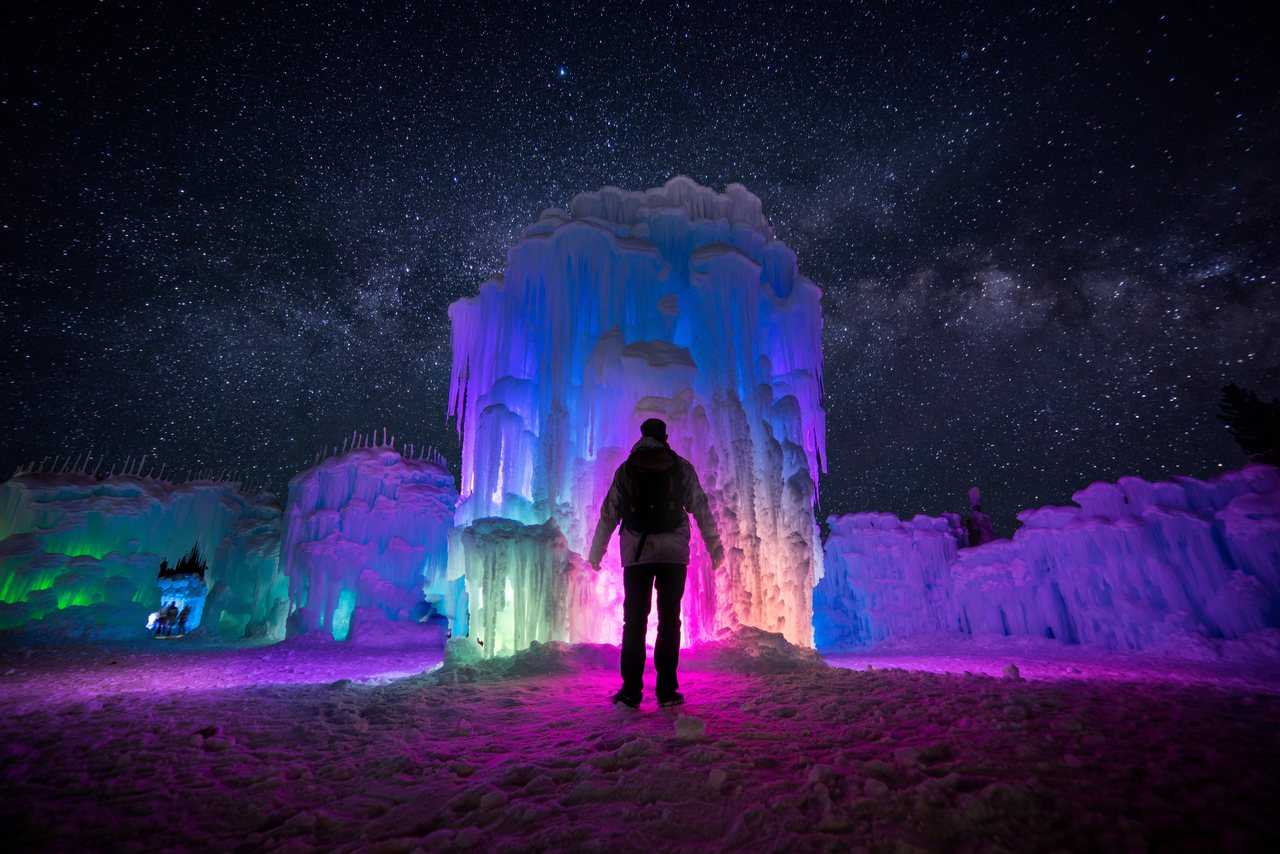
A few other winter attractions vanish with the cold. The Ice Castles that set up in North Woodstock in a cold enough winter are long melted by spring. Some scenic overlook pull-offs and side roads stay gated until crews clear and inspect them. None of this is a problem if you know it going in; it is only a problem if you drive an hour expecting a locked gate to be open.
A spring reopening calendar, week by week
Because spring here is really a slow handoff from winter to summer, it helps to think about it in rough phases rather than as one block. These dates shift with the weather, but the order is reliable.
Mid-to-late March is maple season and the tail end of skiing. The valley is still brown and frozen at night, mud is just beginning, and the mountains are firmly in winter mode up high. This is a shoulder within a shoulder: come for sugarhouses and quiet, not for hiking. Loon's ski season generally runs until around mid-April in a normal year, so late-season skiers and riders still have terrain while everyone else waits for the thaw.
April is peak mud and peak meltwater. Low trails and the paved valley paths become walkable, the waterfalls crank up, and the birds start returning, but the high country is still off-limits for casual hikers and many gates are still shut. This is the quietest, cheapest, and in some ways most peaceful time to visit, if you are content with valley walks, waterfalls, and drives rather than summits.
Early-to-mid May is when the region wakes up in earnest. The Flume Gorge opens May 8 for 2026. Trees leaf out in the valley, more trailheads clear, and lower-elevation hiking gets pleasant. It is also when the black flies arrive, while the high ridges are still holding snow. Late May brings the Loon Gondola Skyride back on May 23, restoring an easy summit view for people who do not want to hike for it. By early June the black flies begin to fade, the mid-elevation trails firm up, and you are sliding into the front edge of summer with far fewer people than July will bring.
Low-elevation and valley walks that are good now
Spring rewards people who are willing to keep their boots below about two thousand feet for a while. The good news is that some of the most pleasant walking in the region lives down there, and it comes into shape weeks before the ridges do.
The Lincoln Woods area at the eastern edge of town is a natural spring choice (in 2026 the trail is closed from June 15 into November between the Kancamagus and the Osseo Trail junction, so check before you go). The main trail runs flat along an old railroad grade beside the East Branch of the Pemigewasset River, which is a swollen, impressive thing at snowmelt. You can walk out and back for as long as you like on mostly level, well-drained ground, and you get big water without any climbing. Parking there is a Forest Service fee site, so bring a few dollars or your annual pass. The paved recreation path that threads through Franconia Notch is another good bet once it is clear of snow and debris, giving you long stretches of easy walking with the cliffs and the river alongside.
The Basin, mentioned above, doubles as a short, satisfying leg-stretcher, and you can extend it on the connecting trails when the ground is firm. In town, Lincoln and neighboring North Woodstock are perfectly walkable for an afternoon of coffee, shops, and a brewery, which is exactly the right speed on a raw, drizzly day. None of these are bucket-list summits. They are clear, low-commitment ways to be outside in the mountains during the weeks when the summits are not an option, and in spring that is the whole game.
If you are itching for a bit more, some of the lower named hikes around Lincoln come into shape by mid-to-late spring, but check current conditions first, because a south-facing lower trail can be bone dry while the north-facing one next to it is still iced over in the shade. We keep separate hike guides with current-condition notes and can tell you which lower trails are realistic on the day you visit.
Maple season: is March still worth it?
If your spring visit lands in March, maple season is the thing that is uniquely available, and it is a pleasant reason to be up here when little else is open. New Hampshire treats the whole of March as Maple Month, and the statewide Maple Weekend for 2026 is March 21 and 22, when roughly ninety sugarhouses across the state open their doors to visitors.
A good sugarhouse visit in season is a small, real thing: you watch sap boil down into syrup in a steamy shed, you taste the grades side by side, and depending on the place you might get sugar-on-snow, a pancake breakfast, or a wagon ride. It is a warm indoor-outdoor activity that works even when the weather is doing something ugly, which March often is. Several producers around the wider White Mountains and Lakes regions participate, and the NH Maple Producers directory lets you filter by region and date to find one near Lincoln for the weekend you are here.
Level with yourself about timing, though. Maple season is early spring, which means winter driving conditions are still possible, the landscape is still brown and frozen, and the hiking and waterfall payoff of April and May is not here yet. If maple is the point of your trip, come in March and treat it as a cozy, low-key long weekend. If you want waterfalls and greening valleys, come later and treat any late-March syrup as a bonus rather than the plan. One thing to note: the sap only runs when the days thaw and the nights freeze, so an unusually warm or cold March can shift the season, and the busy public weekend does not always line up perfectly with peak boiling.
Spring birding
Spring is the best birding of the year in the White Mountains, and almost no general visitor comes for it, which is part of its charm. Lincoln sits right at the edge of the White Mountain National Forest, so you have easy access to a range of habitats without a long drive, and the returning migrants pour through in waves as the season warms.
May is the headline month. That is when the songbird migration peaks and the warblers arrive in numbers: yellow warblers, magnolia warblers, black-and-white warblers, northern parulas, plus catbirds, vireos, indigo buntings, and more filtering back to their breeding grounds. The mix of river corridors, beaver ponds, mixed forest, and higher spruce-fir habitat around here means you can find a lot of species in a small area. The higher elevation boreal specialties the region is known to birders for, the sort of northern species that are hard to find elsewhere in the state, live up in the spruce-fir zone, so serious birders time trips accordingly.
You do not need to be an expert to enjoy this. A quiet early morning on a low trail or beside a pond in May, with binoculars and a little patience, delivers a soundtrack and a level of activity you simply will not get in the heat of July. It pairs perfectly with the rest of the spring template: get out early while the birds are active and the trails are firm from the overnight freeze, then let the afternoon go to waterfalls, a drive, or town. If birding is your main reason for coming, plan for May and ask us about the nearest ponds and quiet stretches.
Black flies in late spring
No good spring guide skips the black flies, and plenty of lazy ones do. Black flies are small biting insects that hatch from running water, and in the White Mountains they are a real factor from roughly late May through June. May is generally the worst of it; numbers begin to thin in mid-June and are mostly a memory by early July. Because they breed in flowing streams, they are thickest exactly where you might most want to be in spring: near the rivers and waterfalls.
They are harmless to most people, but at their peak they can spoil a lovely hike if you come unprepared. The defenses are simple and they work. Wear light-colored long sleeves and long pants, because black flies are drawn to dark colors and to bare skin at the wrists, ankles, neck, and hairline. A brimmed hat, and on the worst days a head net, makes the difference between annoyance and misery. Repellents help to varying degrees; many locals swear by ones containing natural oils, and standard repellents help too, but coverage matters more than the brand. Wind and open sun keep them down, so an exposed ledge or a breezy overlook is more comfortable than a still, damp streamside in the trees.
Here is the useful nuance for planning: if you want the peak-snowmelt waterfalls without the peak black flies, aim for a window in mid-to-late April or wait until early June. Deep May gives you the fullest water and the most birds, but also the most bugs. No single week has it all; spring is about choosing the balance you like best, and the bugs are one part of that choice. Plan with your eyes open and a head net in the bag and you will be fine.
Weather, and how to dress for it
Spring weather in these mountains is the most variable of the whole year, and dressing for it is the difference between a good day and a bad one. A single day can start below freezing, climb into the sixties in the valley sun, and then have a cold rain move through by mid-afternoon. Elevation stacks another swing on top of the daily one: it is routinely fifteen or twenty degrees colder on a summit than in the Lincoln parking lot, plus wind, plus the chance of snow up high in April and even May.
Dress in layers you can add and shed, and assume you will use all of them. A moisture-wicking base layer, an insulating mid-layer like a fleece or light puffy, and a waterproof shell are the core kit even for a modest outing. Leave the cotton at home in spring; once it gets wet from rain, snowmelt, or sweat, it stays wet and pulls heat out of you, chilling you faster than the thermometer suggests. Wear synthetic or wool next to your skin. Bring a warm hat and gloves even in May, because you may want them at any elevation or when the sun drops behind a ridge.
Footwear deserves its own thought in mud season. Waterproof boots with real tread are worth it; you will be walking through mud and running water on purpose, per the stay-on-the-trail guidance, and trying to keep dry feet by tiptoeing around puddles just wrecks the trail. Gaiters help. If you are going anywhere with elevation, throw traction like microspikes in the pack well into May, because that shaded, refrozen ice up high does not care what the calendar says. Finally, always pack more than you think you need for a spring day out: extra layers, more water and food than the hike seems to call for, a headlamp, and a way to navigate that does not depend on cell signal, which is spotty in the mountains.
Loon and lift-served views in spring
A lot of visitors want a big view without a big hike, and that is a reasonable thing to want. In spring the plain answer is that this option is limited early and then opens up. Loon Mountain, 6 min from the lodge, runs its Gondola Skyride to the summit of Loon Peak, and for 2026 those scenic rides operate May 23 through September 13. Ride up and you are at 2,733 feet with a summit cafe, an observation tower, a glacial cave to explore, and long views across the White Mountain peaks, all without a climb. It is the easy, family-friendly way to a summit view, and it is the right answer to 'how do we see the mountains from up high without hiking.'
It comes down to the calendar. Before May 23 there is no lift-served summit in this immediate area at all. Cannon's tramway, which used to be the go-to for a lift to a high summit in Franconia Notch, made its last run in October 2025, and no reopening date has been announced, so it is simply off the table. That means for a spring trip in March, April, or the first three weeks of May, a summit view has to be hiked for, and hiking to a summit that early means dealing with the snow and ice we keep coming back to.
Loon in spring, before the gondola and after the ski season, is quiet. The ski season generally winds down around mid-April, and then there is a lull before summer operations spin up. If lift-served views are important to your trip and you cannot come after May 23, be realistic: build the trip around waterfalls, valley walks, drives, and birding, and treat the big summit panorama as a summer or fall goal. If you can time your visit for late May or later, the gondola gives you the easy view and you get it before the summer crowds arrive.
Driving the Kancamagus in spring
The Kancamagus Highway, the scenic route that runs east from Lincoln over to Conway, is one of the best things you can do in spring precisely because so little of it depends on the season being 'ready.' It is a plowed, maintained through-road that stays open year-round, and in spring it gives you a low-effort way to reach a string of the region's best high-water waterfalls and overlooks by car.
A few clear caveats. Early in the season, not every overlook pull-off and side lot is cleared and open; some are gated until crews get to them, so you may pass a viewpoint or two that you cannot stop at yet. The Forest Service fee sites along the road, like Sabbaday Falls and Lincoln Woods, charge the usual roughly five dollars a day for parking, while the roadside overlooks are free. There are no gas stations, no food, and essentially no cell service along the highway itself, so fuel up and download your maps in Lincoln or Conway before you set off. And the road climbs to a real pass, so conditions at the height of the drive can be wintrier than they were in town, especially in a late-season snow.
The spring payoff is the water. Sabbaday Falls off the highway is at its most dramatic with snowmelt, and Rocky Gorge near the Conway end is a short walk to a footbridge over a river running high and hard. One reminder bears repeating here: swimming at Rocky Gorge is prohibited and enforced, and the current is at its strongest and most deceptive in spring flood. The sanctioned place to get in the Swift River is Lower Falls, and even there only later on, when summer has dropped the river to something low and calm. In spring, treat the whole river as a thing to admire from dry ground.
Rainy-day and town options when the weather wins
Spring will hand you at least one raw, wet, socked-in day, and the smart move is to have a plan for it rather than staring out the window. Lincoln and North Woodstock are small but they punch above their weight for a rainy afternoon, and everything is close enough that a downpour does not derail the day.
For food and a dry place to sit, the town has genuine breweries worth an afternoon. One Love Brewery in Lincoln and the Woodstock Inn Station and Brewery in North Woodstock are both reliable, walkable options for a long lunch when the trails are a wash. There are shops, coffee, and the usual small-town amenities in easy reach, and if maple season overlaps your visit, a sugarhouse tour is the ideal rainy-day activity because most of the action happens under a roof.
On a marginal day, the beauty of spring's waterfall focus is that rain does not cancel it; it improves it. A cascade in a light drizzle, with more water than usual pouring through, is often better than the same falls in dry August sun, as long as you are dressed for it and stay off slick rock and away from the water's edge. Save the exposed, view-dependent plans for the clear days and spend the gray ones on waterfalls, town, and the electric fireplace back at the lodge. We keep a separate rainy-day plan among our trip itineraries if you want it laid out hour by hour.
Who spring suits, and who should wait
Spring is not for everyone, and the thing is to tell you which camp you are in before you book, not after. It suits people who value quiet over a full menu of open attractions. If the idea of having a thundering waterfall largely to yourself, a bird-filled morning on an empty low trail, an easy drive with no traffic, and a room you did not have to fight for sounds better than lift lines and a packed Flume boardwalk, spring is your season. It particularly suits couples and solo travelers, which fits us: we are adults-only and quiet by design, and spring is the quietest we get.
It also suits photographers and waterfall people specifically, because the water will never be higher, and birders specifically, because May migration is the best of the year. And it suits anyone watching their budget or their calendar, because spring is the low-demand shoulder before the summer rush and the fall foliage frenzy.
It does not suit peak-baggers hoping to knock off high summits on foot; the ridges are snowbound, icy, and off-limits to casual hikers well into late spring, and the Forest Service would rather you stayed off them until they firm up. It does not suit anyone whose trip hinges on a single early-season attraction, the Flume before May 8 or a lift-served summit before May 23, because those simply are not open. And because we are an adults-only lodge with no one under twelve, families traveling with young kids in tow are better served elsewhere; a family looking for a spring base with a pool and kid programming will be happier at one of the larger resorts in the valley, and we are glad to point you toward them. Come in spring for the water, the quiet, and the birds, match your plans to what the mountains are offering that week, and it is one of the most underrated times to be up here.
Safety & conditions
- High trails hold snow and ice well into late spring, especially on north-facing slopes and in ravines. Carry traction like microspikes and be ready to turn back, even when the trailhead is bare.
- Follow the Forest Service ask: walk through the middle of the mud, not around it, and turn back if a trail is too saturated to stay on without damaging it.
- Stream crossings run high, cold, and fast at snowmelt. Save a swollen brook for another day; a crossing that is an easy hop in August can be serious in spring.
- Swimming at Rocky Gorge is prohibited and enforced, and the current runs strongest in spring flood. Stay on the bridge and the bank.
- Dress for a forty-degree daily swing and choose wool or synthetics over cotton, which stays cold and wet and can chill you even on mild days.
- Black flies peak in May near running water. Long light-colored sleeves, a brimmed hat, and a head net prevent a miserable day.
- Cell service is unreliable in the mountains and nonexistent along much of the Kancamagus. Download maps, fuel up, and carry a headlamp and extra food and layers.
- Check what is open before you drive somewhere specific: several attractions and some trailhead gates stay closed early in the season.
Where to stay
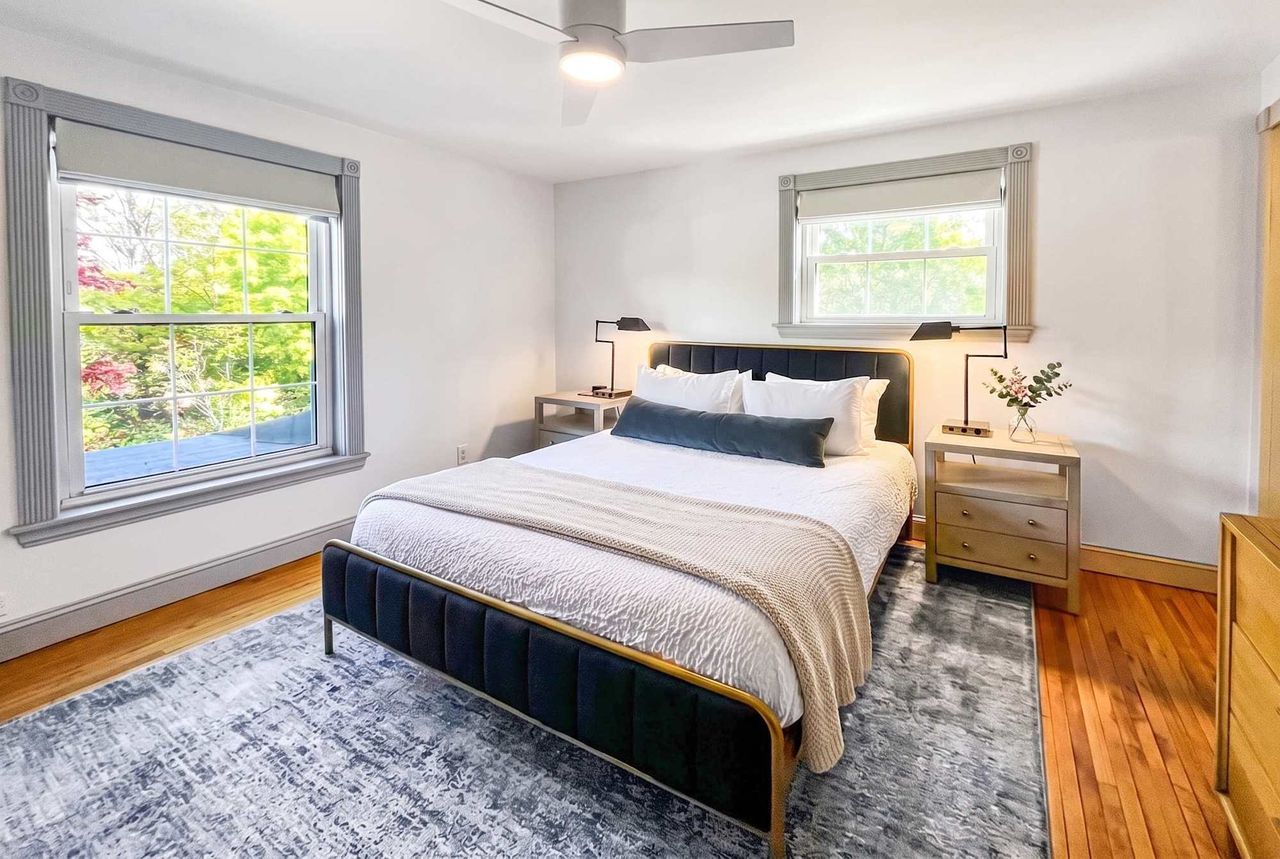
Launchpoint Lodge sits at 191 Pollard Rd in Lincoln, right at the western mouth of the Kancamagus Highway and one exit off I-93. That location does more work in spring than in any other season. The waterfalls that peak with the snowmelt are all within a short drive, the low-elevation valley walks start almost at the door, and when a cold rain sets in you are 5 min from town rather than an hour up a mountain road. We are a six-suite, adults-only place in a restored 1902 colonial, so spring here is quiet: no school crowds, no lift lines, and rooms that are easier to get than they are in October. Check-in is keyless and on your own schedule, which matters when a clear morning tells you to be at a trailhead by seven and a wet afternoon tells you to sleep in.
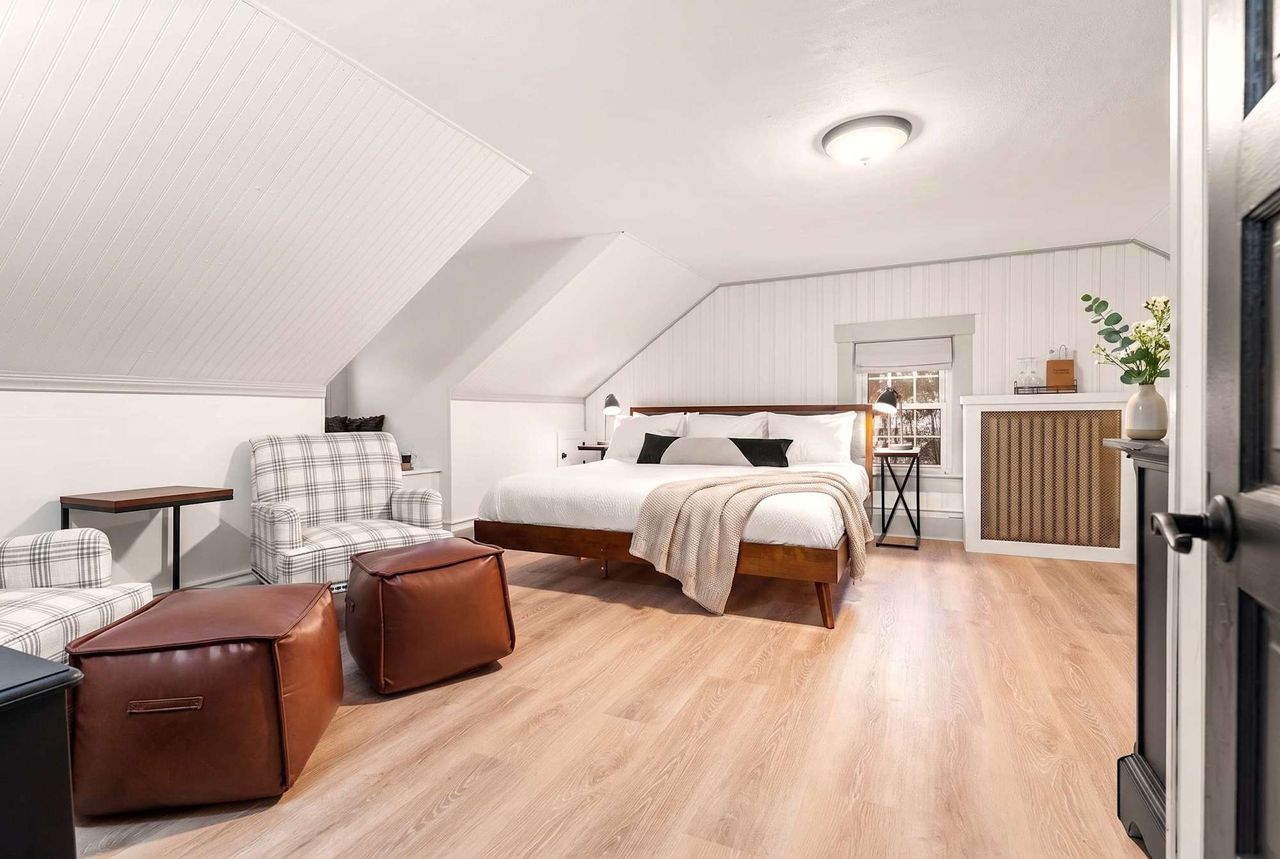
Spring nights up here still drop into the thirties and forties well into May, so the suites with fireplaces earn their keep after a damp day out. Most of the suites are TV-free by design and the house is curated for adults, which is part of why couples and solo travelers come in the shoulder season for the quiet. We keep a stack of local trail and road maps, current conditions we check, and practical advice about what is worth your morning and what is still buried in snow. Ask us before you commit to a big hike; we would rather point you to a roaring waterfall that is open than watch you drive to a trailhead that is still under three feet of rotten snow. For live availability and stay details, use the booking calendar on the site or just ask us.
Sources & official info: nhstateparks.org · loonmtn.com · nhstateparks.org · fs.usda.gov · nhmapleproducers.com · extension.unh.edu
— Launchpoint Lodge, From the lodge