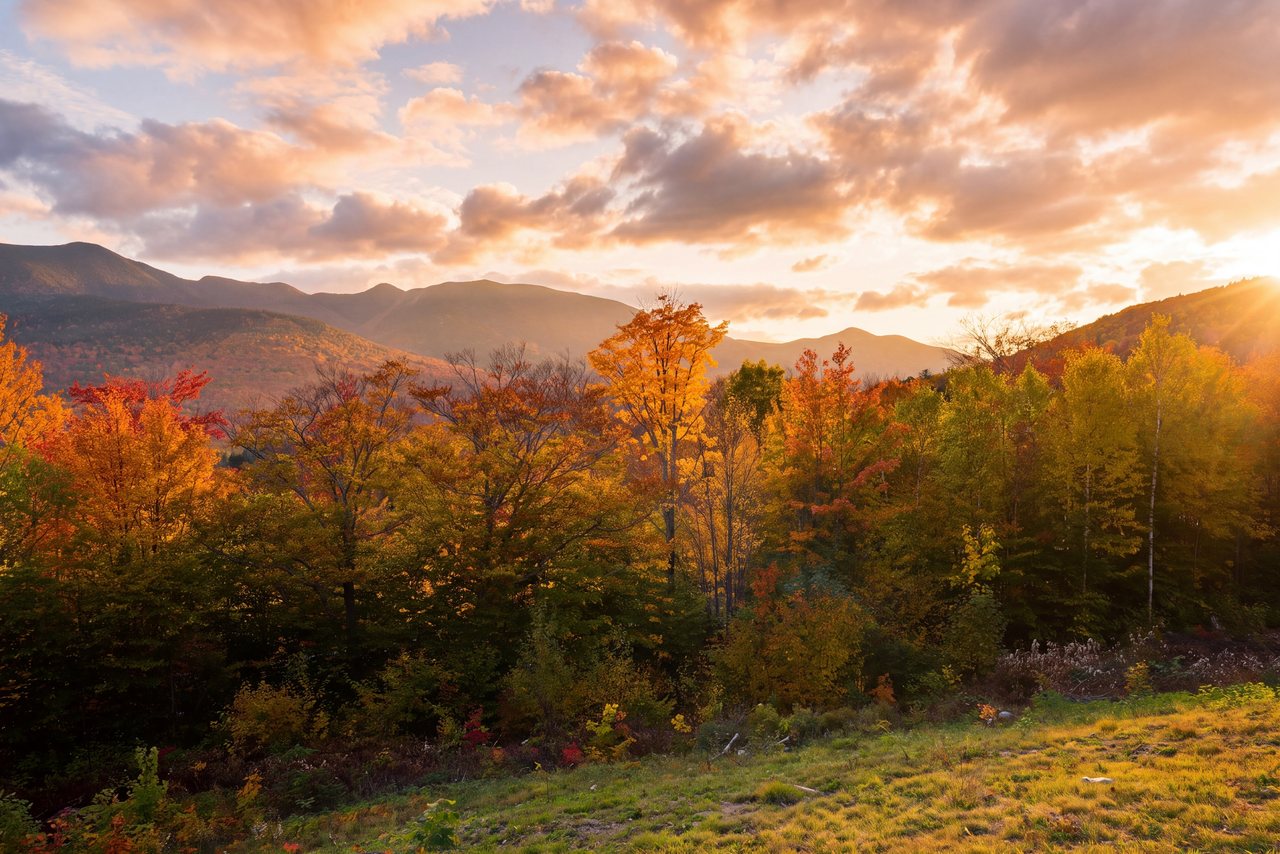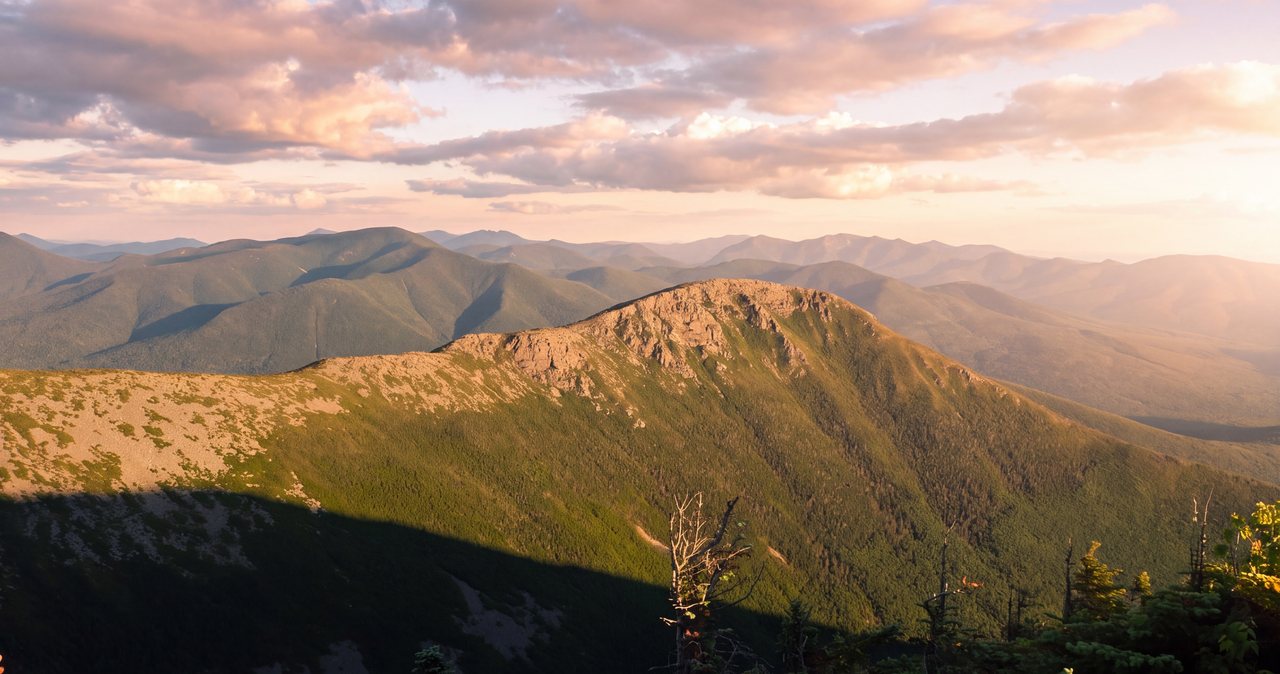
The mountains change what sunrise and sunset even mean. In a city the sun clears a flat horizon and the day begins; here it has to climb over a ridge first, and in the evening it drops behind another ridge well before the time your weather app calls sunset. That may sound like less of a sunset, until you have stood on a rock ledge and watched the last hour of light move down a notch and set the high ground glowing while the valley below has already gone to shadow. This is our working guide to catching that — the close spots we point guests to, when to go, and the plain logistics that keep a good idea from turning into a cold scramble in the dark. Most of what follows is within 10 or 15 min of the front door.
How mountain terrain shapes the light
Lincoln sits down in a valley with high ground on nearly every side, and that geography rearranges the day. The sun does not rise or set against open sky here; it comes up over the eastern ridges an appreciable while after the clock says it should, and it disappears behind the western ones earlier than the printed sunset time. A phone app calculates sunrise and sunset for a flat sea horizon. Add a two- or three-thousand-foot wall of rock and forest in the way and the usable light shifts. The practical takeaway is simple: for morning light you want a spot that looks east with the low ground falling away, and for evening light you want to look west, or you want to be up high enough that the sun reaches you after it has left the valley floor.
The length of the day swings hard with the season, more than people expect this far inland. Around the June solstice Lincoln gets better than fifteen and a half hours of daylight; the earliest sunrise of the year lands near 5:01 in the morning in mid-June and the latest sunset comes just after 8:30 at the end of the month. By the December solstice the day is down to under nine hours, and the earliest sunset of the year falls around 4:10 in the afternoon in early December. That winter math is quietly one of the best reasons to visit in the cold months for the light: you can be out for a full sunset and back inside warming up before dinner, no late night required.
The other thing to understand is that the good color is brief. The warm, low, flattering light photographers call golden hour rarely lasts a full hour up here; hemmed in by ridgelines it can be more like 15 or 20 min of the sun actually touching the landscape before it slides behind the high ground. After the sun is technically down, the softer blue light holds for roughly another 20 min, and on a clear evening the sky over the ridges can do its best work in exactly that window. So the rule for both ends of the day is the same: get in place early, and do not pack up the second the sun is out of sight. The minutes right after are often the ones worth the trip.
Sunset from Artist Bluff
The short climb up to Artist Bluff, above Echo Lake at the north end of Franconia Notch, is the classic sunset walk near Lincoln, and it earns the reputation. It is about a 15 min drive from the house, and from the parking area at the top of the notch it is a steep but brief scramble to a rock perch that looks back down the valley. Reckon on roughly 40 min round trip for the bluff itself if you go straight up and come straight down; if you want to make a loop of it and take in Bald Mountain next door, plan on closer to a mile and a half of walking and give yourself an hour or more. Our Artist Bluff and Bald Mountain hike page has the trail detail if you want to see the full loop before you go.
What makes it a sunset spot rather than just a viewpoint is the way the light falls in the last hour. You are looking down and across the notch with Echo Lake below and the bulk of Cannon Mountain opposite, and as the sun drops in the west the whole facing wall of the valley catches a warm glow while the low ground goes into shade. On the best evenings the color climbs the ridges as the sun sinks, so the show keeps changing right up to the end. You will not always see a clean sun-touching-the-horizon moment, because there is a mountain in the way; what you get instead is the alpenglow, the ridgelines lit up gold and then rose, which is arguably the better spectacle.
Two practical notes. First, bring a headlamp, and bring it every time. The reason people end sunset walks picking their way down a rocky trail in the dark is that they watched the color all the way out and then had nothing to see the trail by. A cheap headlamp in your pocket turns the descent from nervous to easy. Second, the lot at the top is small and it fills, especially on fall weekends and clear summer evenings. Go on a weekday if your trip allows it, or simply arrive with time to spare rather than rolling in 15 min before the color and finding nowhere to park. Getting there early also lets your eyes settle and gives you the run of the ledge before the crowd.
Sunrise on the Kancamagus Highway
For sunrise the move is east, and the road for it starts right at the end of our street. The Kancamagus Highway climbs out of Lincoln into the national forest, and its overlooks are the reliable sunrise option because they face into the coming light while the rest of the region is still asleep. The one we point people to is the C.L. Graham Wangan Overlook, up near the height of land at about 2,855 feet. It looks east down the Swift River watershed, you are high enough to be above the deepest valley shadow, and at six in the morning you will very likely have the whole pullout to yourself. The name comes from a Native word for a meeting place; it was a gathering ground long before it was a scenic turnout.
Here is where the road demands some respect, because it is not a casual dawn errand. The Kancamagus runs 34 miles to Conway with no gas, no food, no services, and no towns for its entire length, and there is no cell signal along most of it. That is true in daylight and it matters more before sunrise, when you are heading out into the dark and cold with everything closed. Fill your tank the day before, dress a good layer warmer than the town thermometer suggests because it is colder up on the height of land and colder still standing still, and download your directions before you leave, since the map will not load out there. Our note on cell service and what to download walks through exactly what to grab so you are not relying on a spinning wheel in the dark.
You do not have to drive far to get the payoff. The first several overlooks past Lincoln get you plenty of open eastern sky, and you can be back at the house for a hot coffee 20 min later. Check the sunrise time the night before, aim to be parked and settled a solid 20 min ahead of it, and remember that the sky often colors up before the sun itself clears the far ridges. Pull all the way into a paved overlook rather than stopping on the shoulder, and keep an eye out for wildlife on the road at that hour; this is moose country, and they are large and hard to see until you are close.
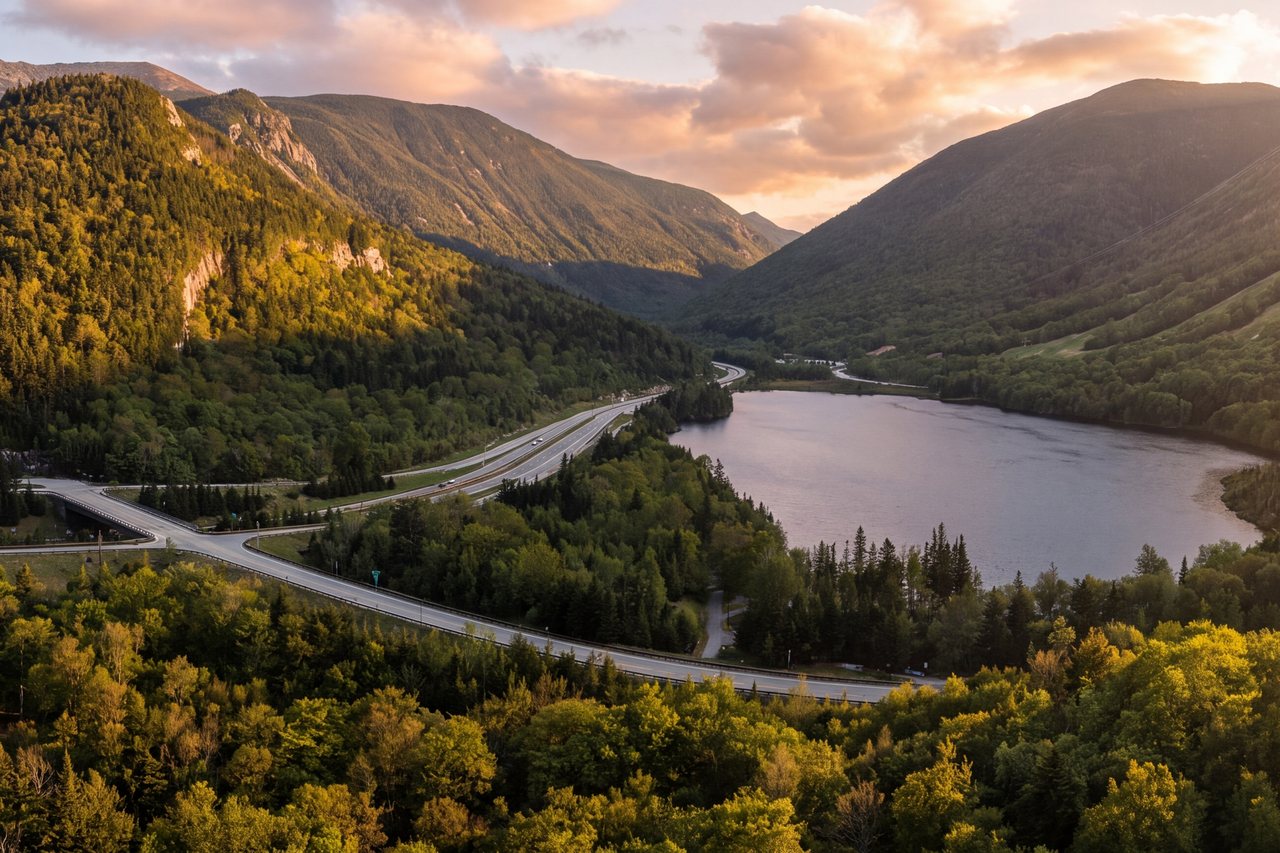
Echo Lake and the Franconia Notch pull-offs
If a steep climb before coffee is not the plan, the valley floor of Franconia Notch has open spots that work for both ends of the day without any real effort. Echo Lake, near the north end of the notch about 17 min up the parkway, gives you an open shoreline and, on a still morning or evening, water that holds a mirror image of the sky and the surrounding ridges. Calm water doubles whatever the light is doing, so a windless dawn there can be quietly spectacular for the small effort of parking and walking to the shore. The parkway itself has pull-offs and small lots along its length where the trees fall back and you can see up and out.
A word of orientation while you are up there, because two of the notch's famous names are not what a first-time visitor pictures. The Old Man of the Mountain, the stone profile that used to be the state symbol, fell from the cliff in May 2003. It is gone. There is a memorial plaza at Profile Lake now, with steel viewfinders that line the old profile back up against the rock, and it is a worthwhile daytime stop, but do not drive up at dusk expecting a face on the mountain. And the Cannon Mountain aerial tramway is closed. It shut down after the fall 2025 season for a full replacement and no reopening date has been announced, so there is no riding it up for a summit view of the sunset at the moment. The Cannon ski area itself still operates in winter; it is only the tram that is out of service.
What does work here is picking a level, open spot with a clear line to the horizon and letting the broad shape of the notch do the framing. This is a state park, so pay attention to any posted hours or gate closures at particular lots, and do not block anything if you are lingering for the light after the day-use crowds have gone. Plenty of the pull-offs stay accessible, but it is worth a glance at the signage rather than counting on a specific one being open at dawn or dusk.
Sunset over the Franconia Range from Sugar Hill
For a wide-open western sky, which is the one thing the deep notch does not give you, the drive to make is up to Sugar Hill, roughly half an hour northwest of Lincoln. This is high, open farm country on a ridge, and the long views run east to the Franconia Range and west toward Vermont's Green Mountains, so it delivers at both ends of the day. Sunset Hill Road is the address people mean when they talk about the view, and it looks across open fields to Mount Lafayette, Cannon, and the whole spine of the range. In the evening the sun goes down over the western hills while the last light lays warm across the Franconia peaks in front of you.
The best-known window here is early summer, when the fields along the road come up in lupines and the mountains stand behind them, but the view itself is good in any season and especially when the low autumn sun rakes across the ridges. Because you are up on open ground rather than down in a valley, you also get the full arc of color in the sky rather than a slice of it between two walls of rock, which makes this the spot to choose on an evening when the clouds look promising and you want room to watch them light up. Our guide to Franconia and Sugar Hill covers what else is worth a stop up there if you want to make an afternoon of it and stay for the light.
It is a real drive compared to the closer options, so treat it as an outing rather than a whim. Leave with enough margin to be parked and out of the car before the color starts, keep to the shoulders and pull-offs rather than blocking driveways or fields, and remember that this is a small residential village, so keep it quiet and low-key. On the right evening the extra 20 min in the car pays off many times over.
Morning and evening on the back deck
If setting an alarm and driving anywhere is not the mood, the back deck of the house does fine work at both ends of the day, and for a fair number of our guests it becomes the whole ritual. We keep the exterior lighting low and warm and the deck faces away from the brightest part of town, so it is a friendlier starting point than a lot of lodgings can offer. Coffee out there at dawn, with the mist still sitting in the low ground and the birds just getting going, is a fine way to meet the morning. The coffee lounge on the main floor has coffee and tea for exactly this, so you can carry a hot cup straight out the door.
The evening version is the same idea in reverse: a glass of something as the light goes long and gold across the yard, the hummingbirds working the last of the day on their own schedule, and the quiet settling in as the town winds down. You will not get a summit panorama from a deck chair, but you also do not have to organize anything, and the low, unhurried light of early morning and late evening is lovely even without a dramatic horizon in front of it. Not every good view requires a hike, and some of the best light of a trip is the light you happen to be sitting in.
This is also where the adults-only, no-screens character of the place quietly helps. The house stays calm, nobody is flooding the deck with a phone flashlight, and with most suites TV-free, nothing pulls you back inside out of habit. It leaves the ends of the day open, which is when the light is best anyway. If you want to sit with a dark sky after the color fades, the deck rolls straight into stargazing once the color is gone and your eyes have had a few minutes to adjust.
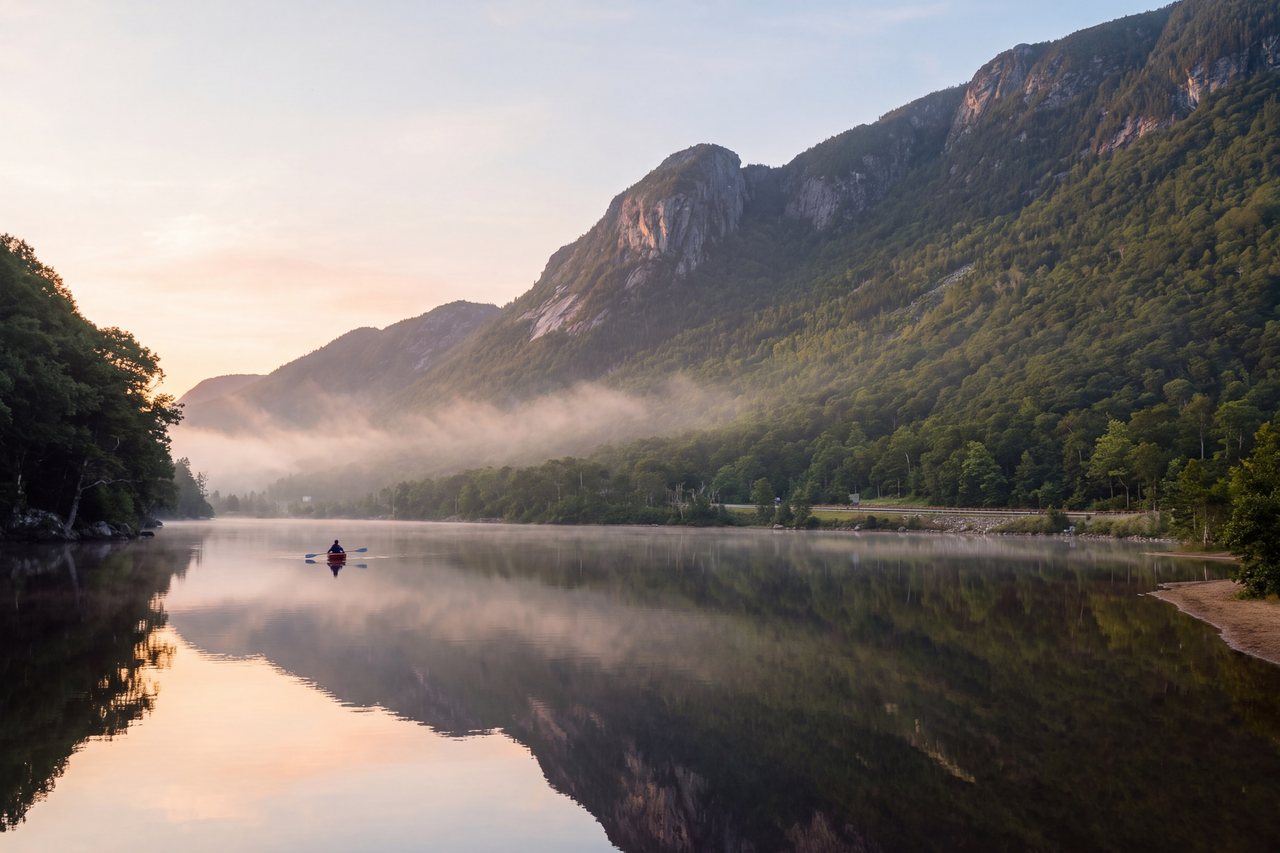
Morning light in the gorges and low places
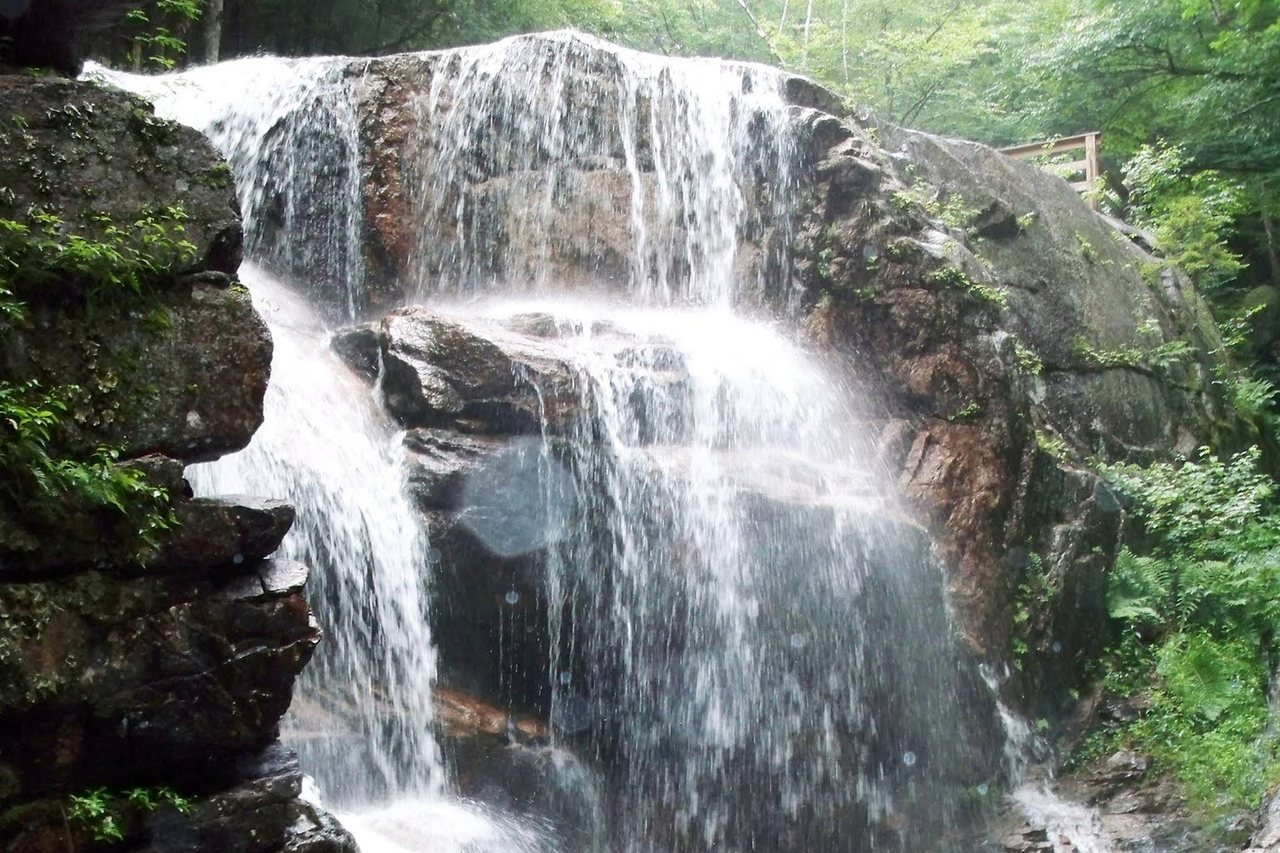
Some of the region's best-known spots are down in the rock and the trees rather than up on a ridge, and for those the light works differently. Flume Gorge, about 12 min from the house, is a roughly two-mile boardwalk loop through an 800-foot granite gorge, and direct sun only reaches down into a slot like that around the middle of the day. That makes an early arrival worthwhile for a different reason than light: you beat both the crowds and the timed-entry pressure. It runs on seasonal, timed-entry tickets, so book your slot ahead and aim for one of the first of the day, when the boardwalk is quiet and the gorge is cool and soft-lit rather than harsh.
The Basin, a glacial pothole scoured out of the granite and reached by a 5 min walk from its parking area off the parkway, is the same sort of low, enclosed spot. It is one of the most popular quick stops in the notch by mid-morning, so the light-and-quiet argument for going early applies here too. Down in these places you are not chasing a horizon; you are after the soft, even light of early morning before the sun is high and contrasty, and the calm of having the boardwalk or the pool to yourself for a few minutes.
Mornings down in the valley have one more thing going for them, which is the fog. On a clear, cool night the low ground collects mist, and in the first hour after sunrise you get that classic mountain scene of fog sitting in the hollows and then lifting off as the sun warms things up. It burns off quickly, usually within an hour or two, so it is a reward for being up and out early rather than something you can plan a leisurely late-morning walk around. Bring a layer, because the low places stay cool and damp well after the ridges have warmed.
Higher views from Loon and the ridgelines
The instinct to get up high for sunrise or sunset is a good one, since elevation buys you a longer horizon and puts you above the valley shadow, but the logistics matter. The easiest way up is the gondola at Loon Mountain, 6 min east of the house, which is the longest scenic gondola skyride in the state and carries you to a summit with a wide view over the White Mountains and a café at the top. For light-chasers, timing is the thing: in summer the resort runs daytime hours and the last ride down leaves roughly half an hour before it closes for the afternoon, well before sunset. So treat Loon's summit as a superb midday or afternoon vantage for a long, high view, not as a place you can ride up to and watch the sun go down.
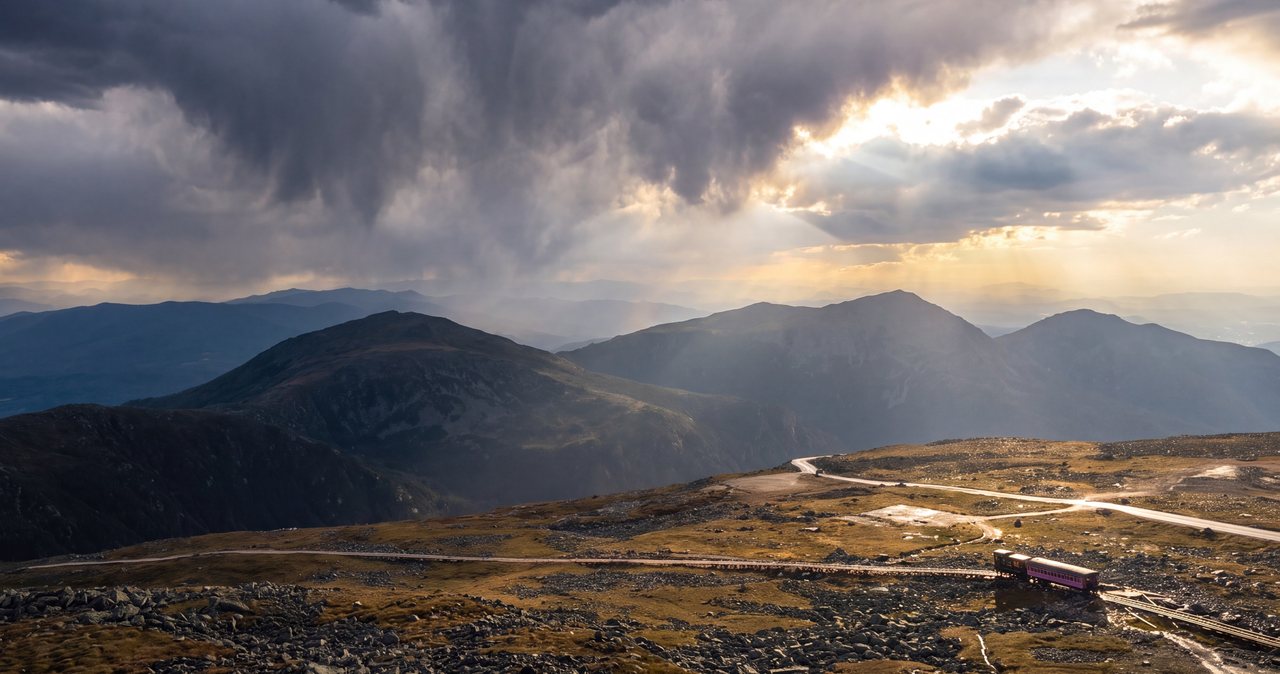
Catching an actual sunrise or sunset from a summit around here means being on foot, in the dark on at least one end, with a headlamp and real preparation. That is a rewarding thing to do and plenty of people do it, but it is an advanced move rather than a casual one, and it is not something to improvise on your first evening. The gentler summits and the harder ones both demand respect: a mountain that is a pleasant afternoon walk in good weather becomes a serious undertaking when you add darkness, cold, and the chance of the notorious White Mountains weather turning on you. The Franconia Ridge Loop, for instance, is an 8.9-mile day with about 3,900 feet of climbing along an exposed above-treeline spine, an all-day effort in good conditions only, not a sunset lark.
If you do want light from up high, the sane version is to earn it in daylight and let the ends of the day come to you at a manageable spot instead. Ride the gondola in the afternoon for the wide view, then come back down to the valley for the actual sunset at Echo Lake or Sugar Hill. And if you are set on being out for first or last light on a trail, prepare for it the way you would prepare for being out after dark, since you will be: warm layers, a real headlamp with spare batteries, downloaded maps, water, and someone who knows your plan. The same after-dark mindset from our night-sky note applies before dawn just as much as after dusk.
Reading the weather and the moon
The single biggest factor in whether an evening delivers is the weather, and the Whites make their own. A forecast that reads clear at six can go milky by eight, and a humid, hazy summer sky mutes color even when there are no clouds at all. The evenings that pay off are usually the ones right after a cold front has come through: the air behind a front is dry and clean, the leftover clouds are breaking up rather than thickening, and broken cloud is what gives a sunset something to light up. A flat, cloudless sky can be pretty in a plain way, but the memorable skies almost always have some structure up there for the color to catch.
Practically, that means checking the sky the day of and the hour of, not the day before, and being willing to move your plans to meet the weather rather than the other way around. If a clear, dry evening lands during your stay, take that one for your sunset even if you had penciled it in for something else, because the next night might be socked in. The guests who see the best light are the ones who hold an evening loosely and go when the sky cooperates. It helps to keep an eye on the mountain forecast rather than the generic town one, since conditions up on the ridges and in the notch differ from what you see out the window in the valley.
The moon belongs in the same conversation, mostly for what comes after the color fades. A bright moon is beautiful and worth its own kind of evening walk, but if you are hoping to slide from sunset into a dark, star-filled sky, the nights around a new moon are the ones to want. If stargazing is going to be part of the trip, it is worth checking the moon phase before you settle on dates, and our stargazing note goes into how to read the moon and let your eyes adjust once the light is gone.
Timing your day around the light
The light is brief and it does not wait, so a little rhythm to the day makes the difference between catching it and just missing it. Look up the sunrise and sunset times for your dates the night before, then work backward: for sunset, aim to be in position a good half hour early, because the golden light can be short and the best color often comes in the 20 min on either side of the official time. For sunrise, be parked and settled 20 min before the listed time, since the sky colors up before the sun clears the ridges. Add margin for the drive, and never cut it so fine that you spend the color hunting for a parking spot.
Build the rest of the day so you actually have it in you to be out at the edges. A punishing all-day hike tends to end any ambition of a dawn start the next morning, while a slower afternoon leaves enough in the tank for a late look and an early one. If the light is a priority for a given day, plan a lighter day around it. Keep a headlamp on you as a matter of course, because both a pre-dawn arrival and a post-sunset descent end in the dark, and the small weight in your pocket is what keeps that from being a problem. Dress a layer warmer than the moment suggests, since standing still in the low light of dawn or dusk is colder than moving in full daylight.
The real advantage of staying central to all of this is how it lets you be spontaneous. When the good spots are 10 or 15 min away, you do not have to commit to a sunset in advance; you can watch the sky in the late afternoon, see it clearing behind a front, and decide on the spot to head up to Artist Bluff or out along the Kancamagus. That flexibility is most of the game. When you are ready to pick your dates, you can check availability and book directly, and if you tell us what you are hoping to catch, we watch the same sky every day and are glad to say where the light has been best lately.
— Launchpoint Lodge, From the lodge