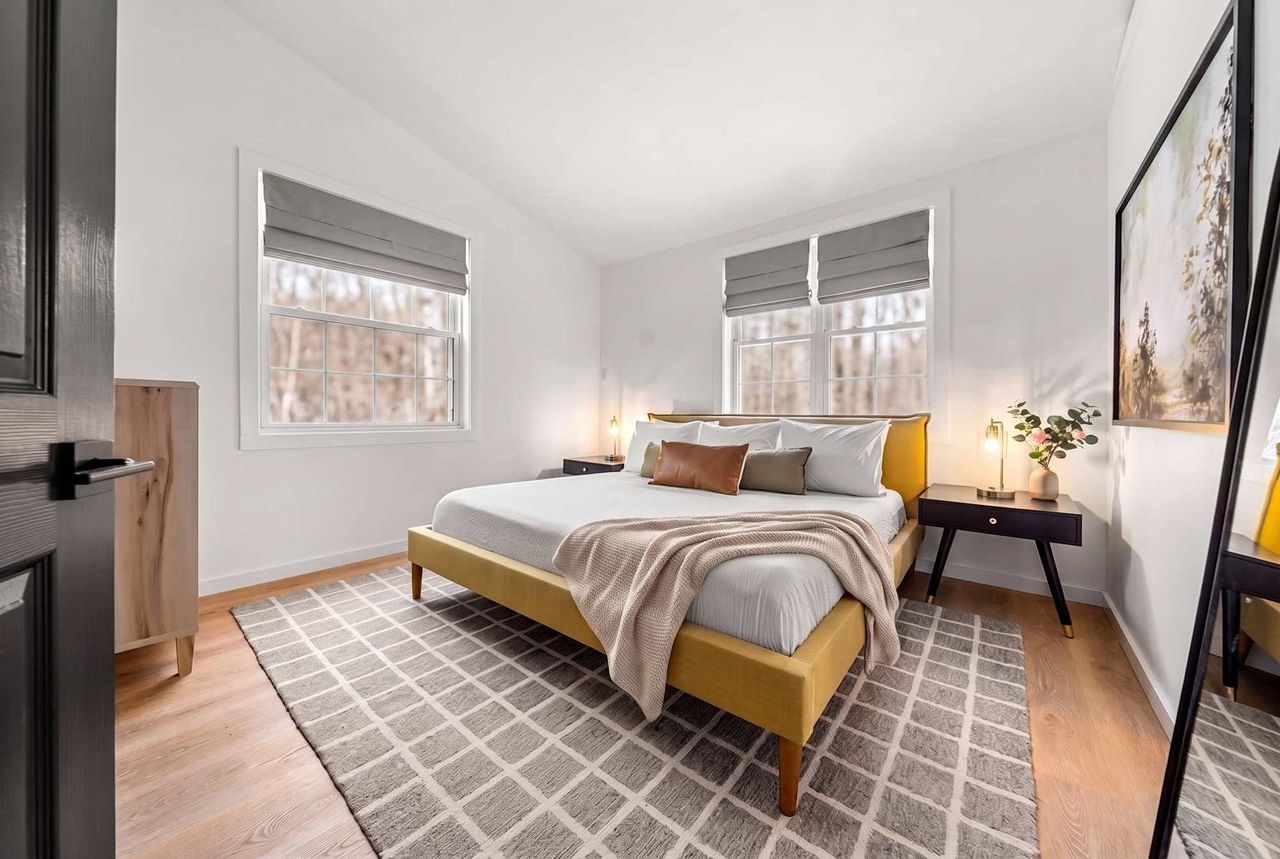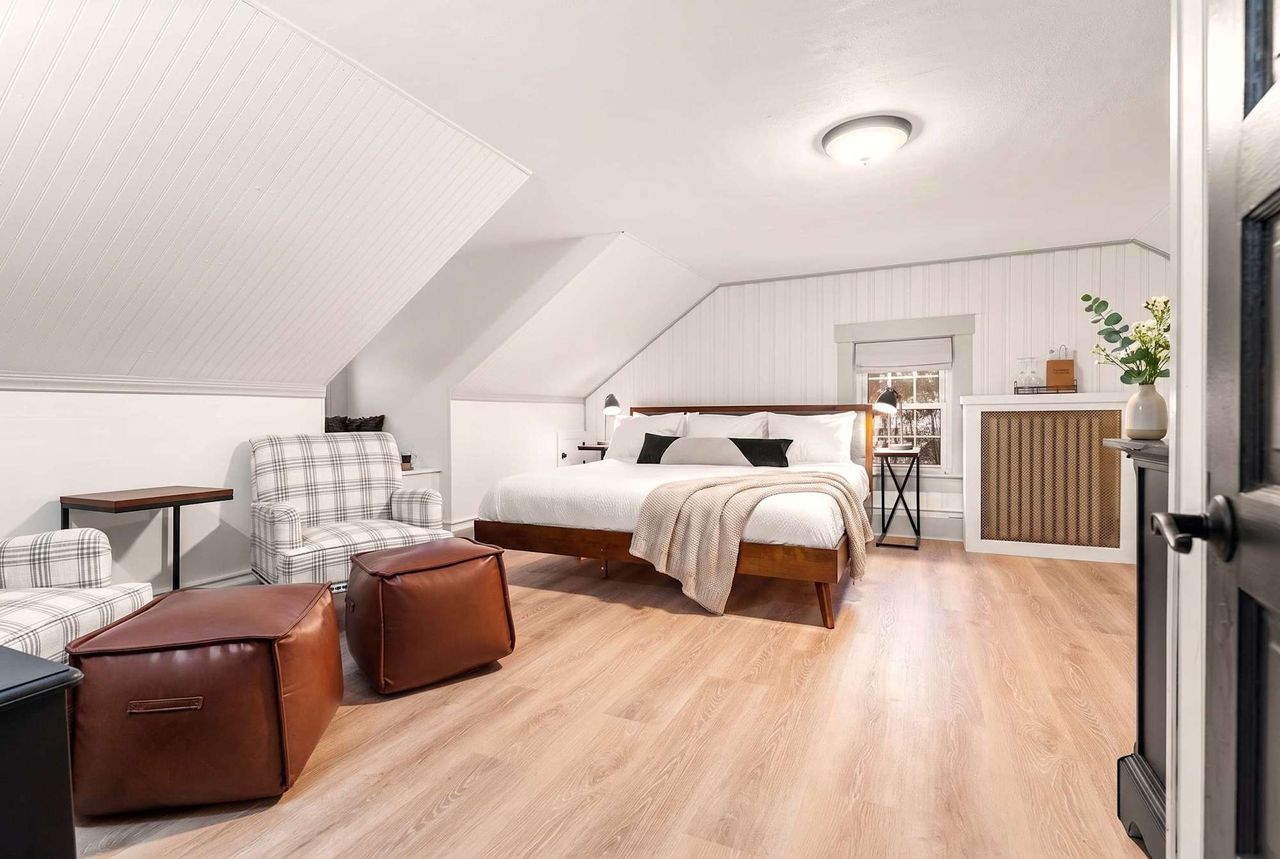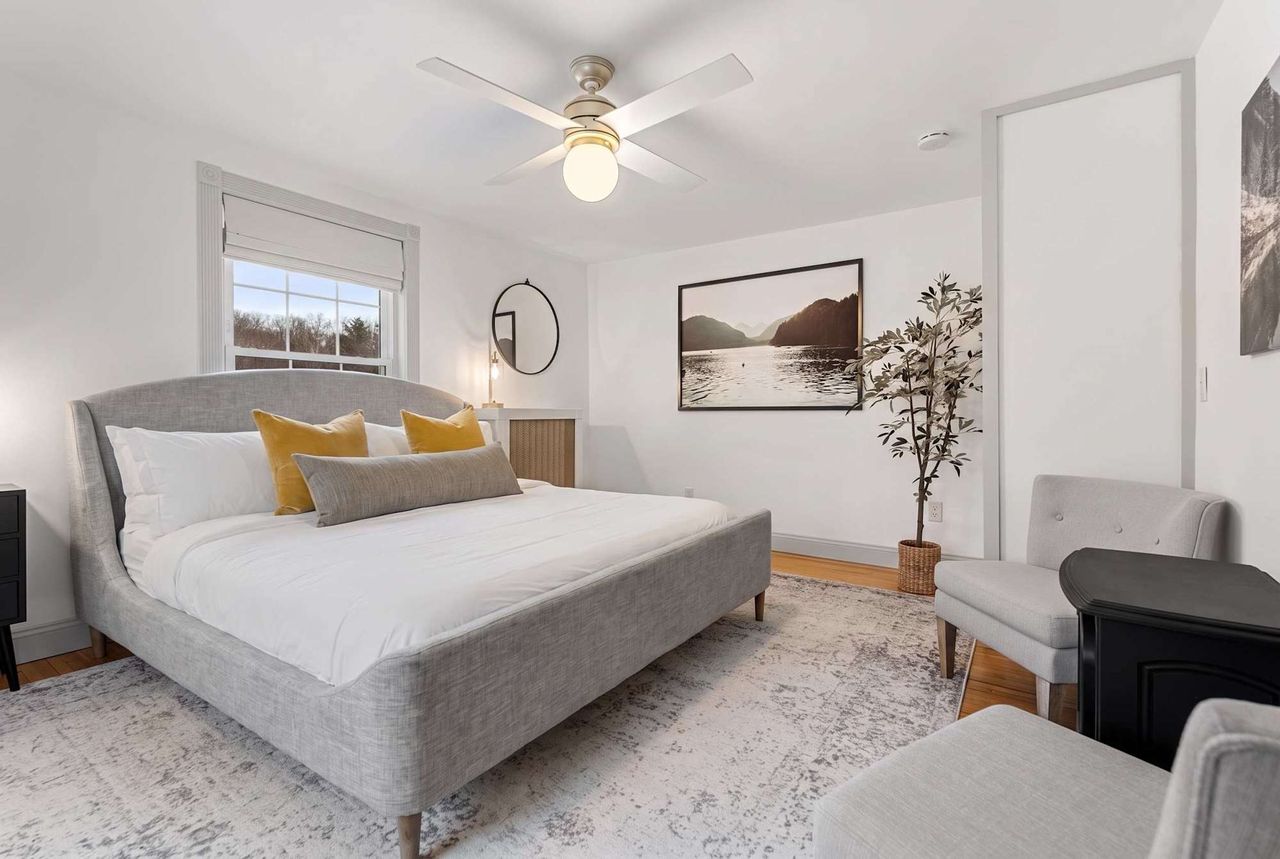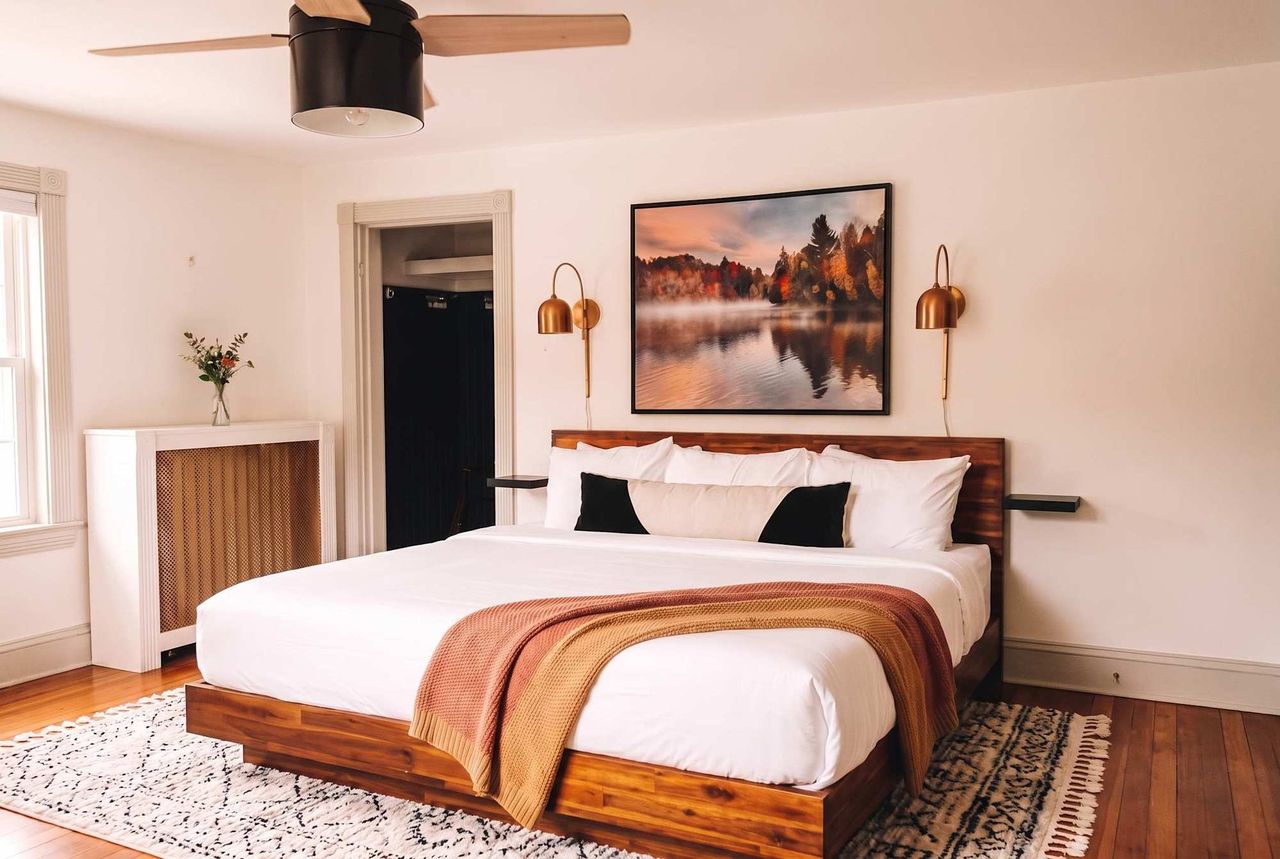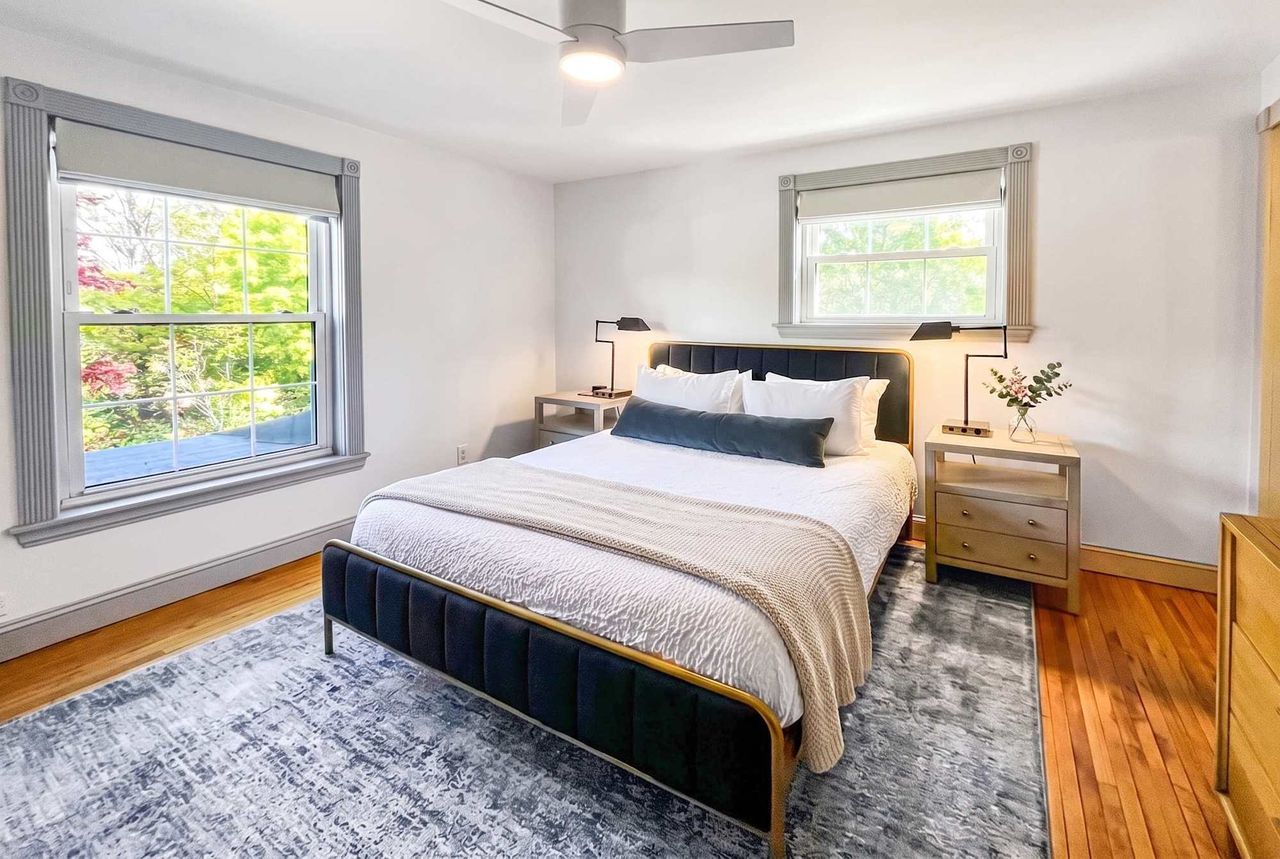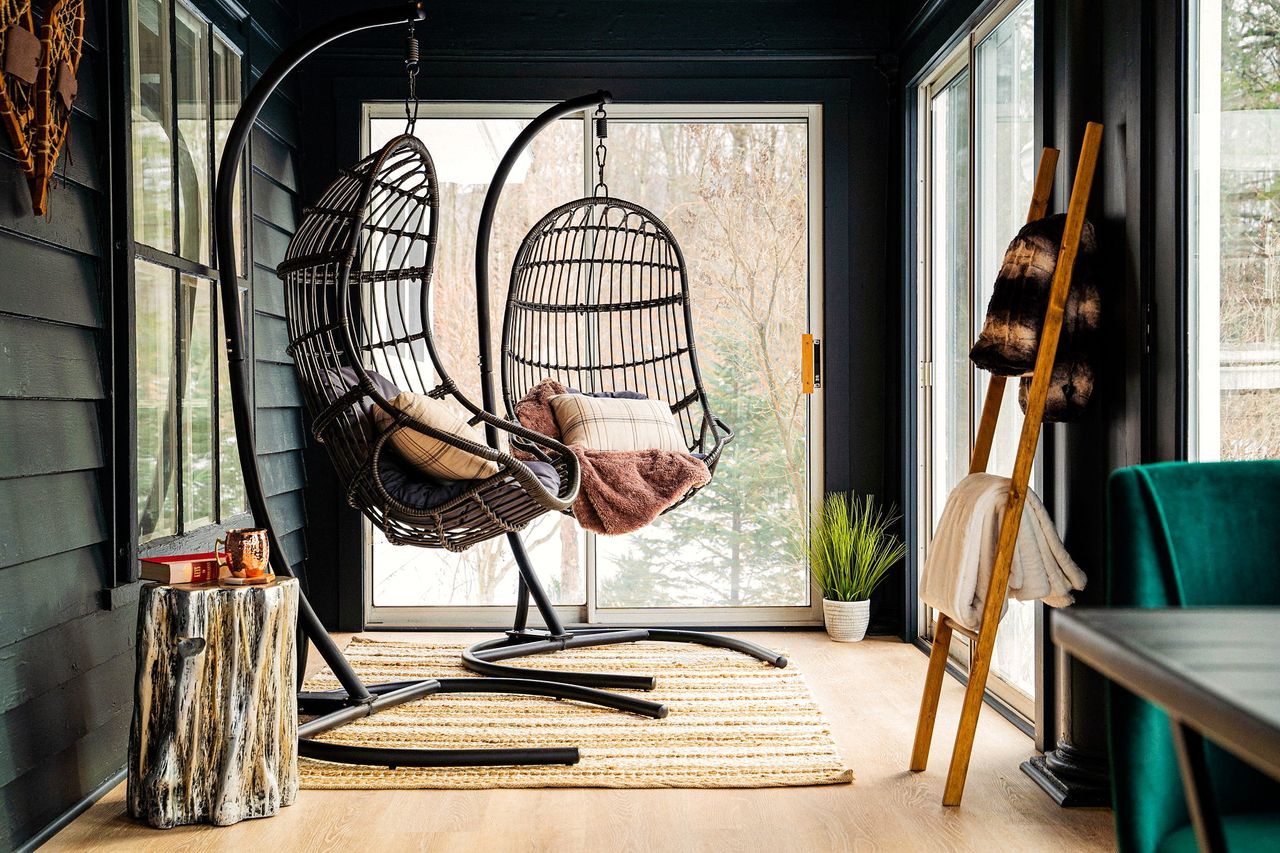
Guests usually notice within the first few minutes of settling in. Five of our six suites are TV-free, and so is the sitting room downstairs. Some people are briefly thrown by it, and once or twice a year someone messages to ask whether the set is hidden in a cabinet somewhere. It isn't. We set the suites up this way on purpose, and by the second evening most guests tell us it turned out to be the part of the stay they liked best. This is the long answer to the question we get asked most.
Why we left the TVs out
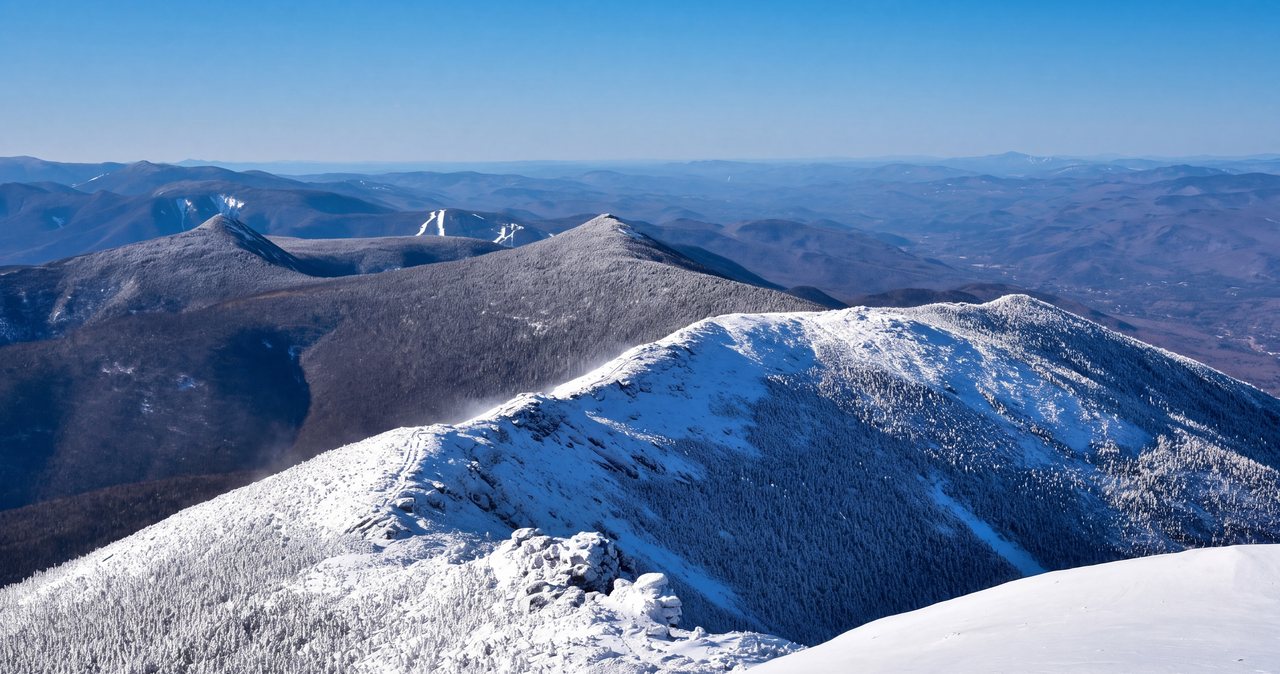
Launchpoint Lodge is a six-suite inn in a restored 1902 colonial in the middle of Lincoln, and it sits inside one of the best stretches of the White Mountains you can base yourself in. Franconia Notch is about 10 min north. Loon Mountain is about 6 min east. The Kancamagus Highway begins at the end of the street. When you drive several hours to be somewhere like this, the thing you are really after is a change of pace, and a screen glowing in the corner of the room is very good at quietly handing that pace back.
We thought about it the way a guest actually spends an evening. You come in from a hike or a drive, you're pleasantly tired, and the first reflex in most hotel rooms is to reach for the remote before you've even taken your boots off. Two hours later the trip has been paused. The mountains are still out there, the town is a short walk away, the sky is doing something worth seeing, and none of it got a look because the default was already running. Leaving the televisions out removes that default. It doesn't force anyone to do anything; it only stops the room from making the choice for you.
We would make the same call again. A boutique inn out here competes with the reason you came in the first place, not with the hotel down the highway on channel count or screen size, and on that scale a television costs more than it adds. The suites are built around rest, quiet, and a good night's sleep, and everything in them points that direction on purpose.
The quiet of an old house
There's a practical reason on top of the philosophical one. This is a 1902 house, and old houses carry sound. Plaster walls and wood floors were not built with a home theater in mind, and the last thing anyone wants at eleven at night, through the wall of a century-old bedroom, is the tinny bass of someone else's action movie. With six suites under one roof, leaving the televisions out is partly a courtesy each guest pays to the room next door.
That quiet is a big part of what people are paying for, even when they don't put it in those words. We hear it in the reviews and in guests' messages: guests talk about how well they slept, how still the house was, how they could hear the wind and not much else. A screen-free house is a quieter house, room to room, and the calm is easier to protect when it was never wired in to begin with. It is also why the adults-only policy and the no-TV choice feel like the same idea coming from two directions.
None of this is about being precious. We're not running a monastery, and there's nothing wrong with a night in front of a good show. The specific pleasure of a small inn in the mountains is a fragile one, and a television is the easiest thing to let trample it without noticing.
What the evening becomes instead
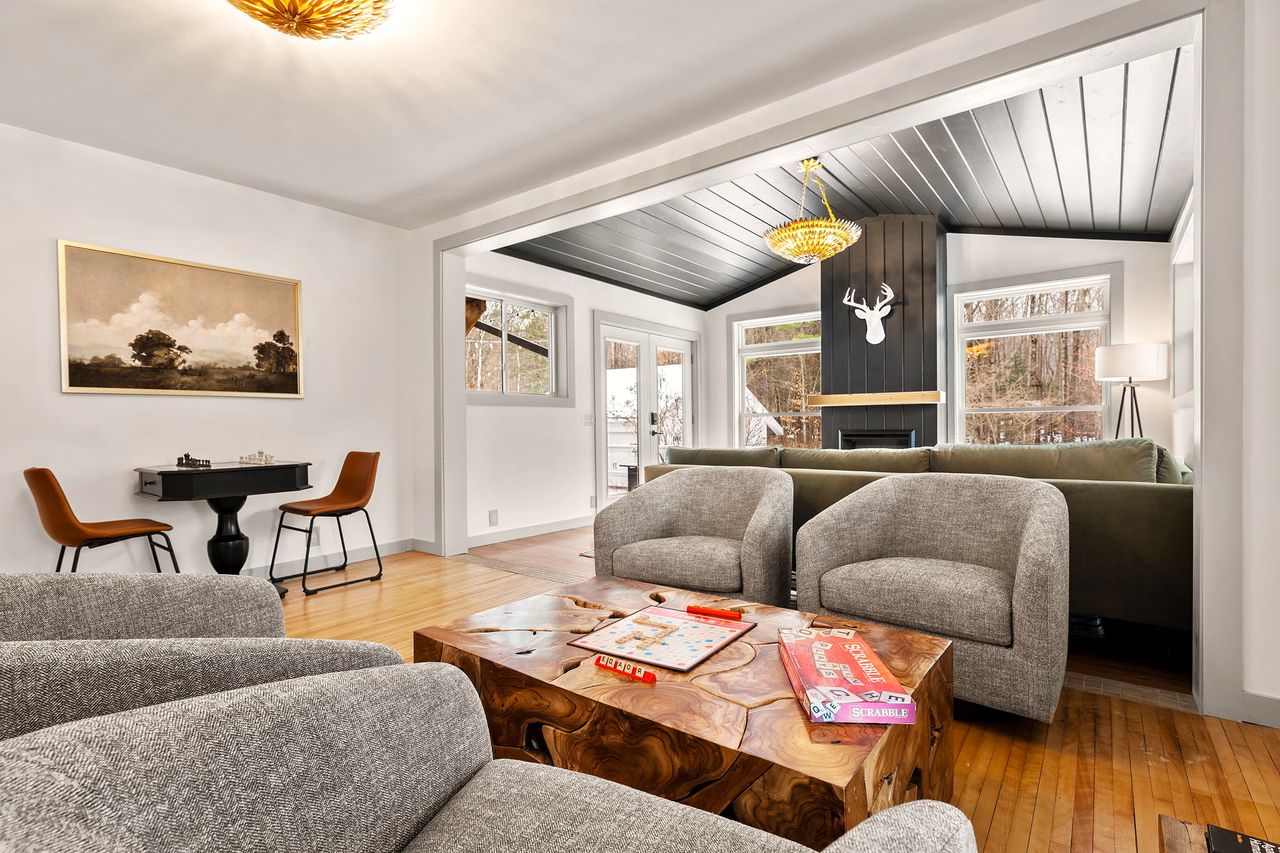
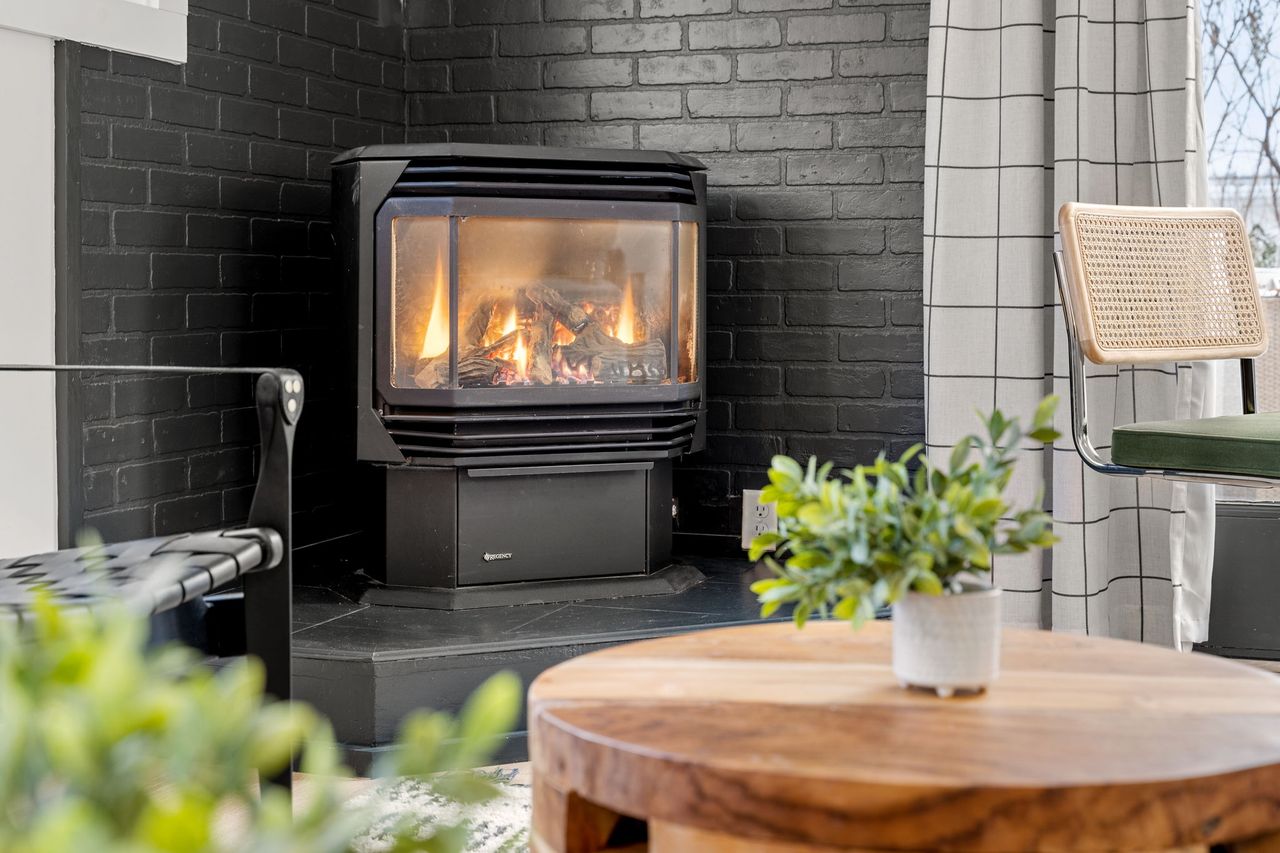
Take the screen out of the room and the evening has to become something, so here is what it tends to become. The sitting room has the fireplace, a shelf of board games, and a shelf of well-worn paperbacks. The sunroom is where afternoons go to disappear with a book and a coffee. The back deck looks out at the trees in the warm months and, after dark, shows more stars than most guests have seen in years. Inside your suite there's a proper reading corner, good light to read by, and a bed we spent real money on.
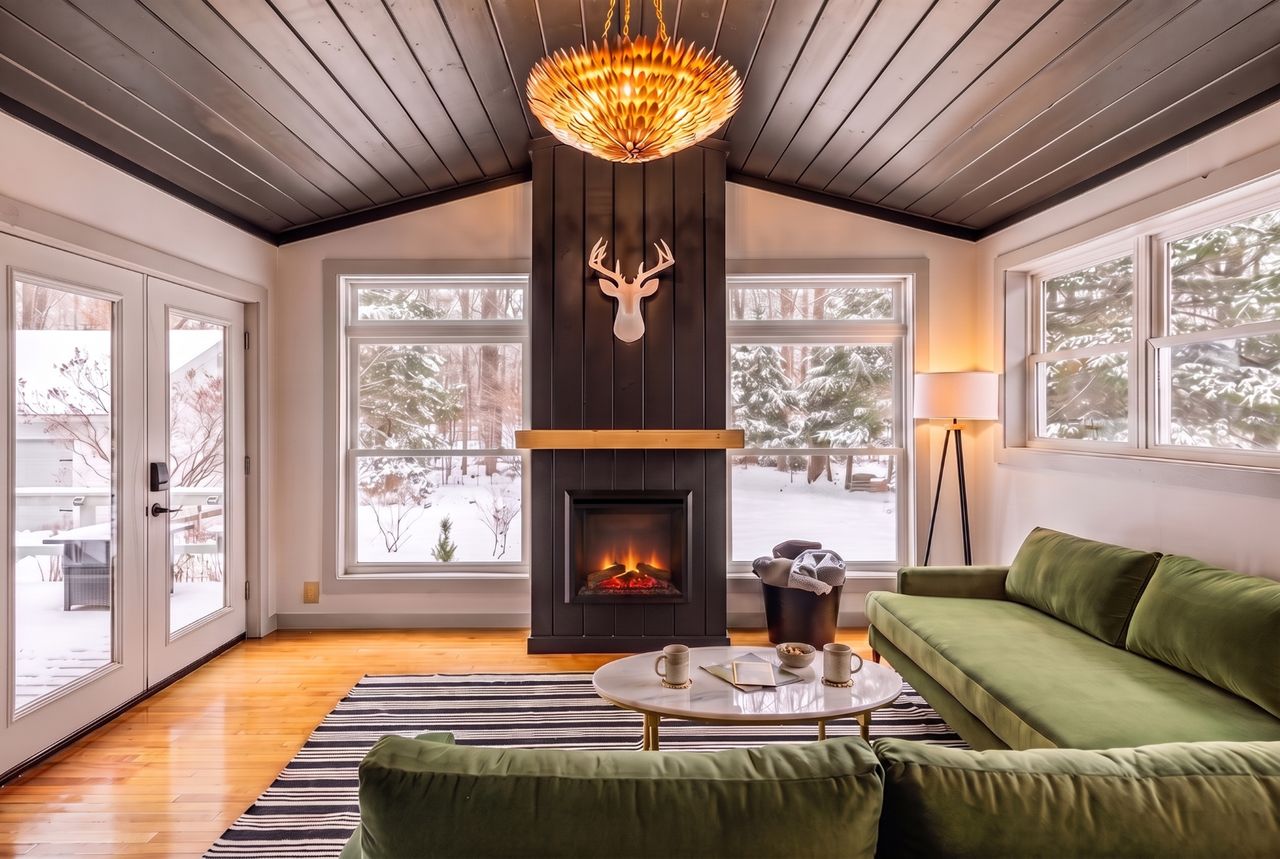
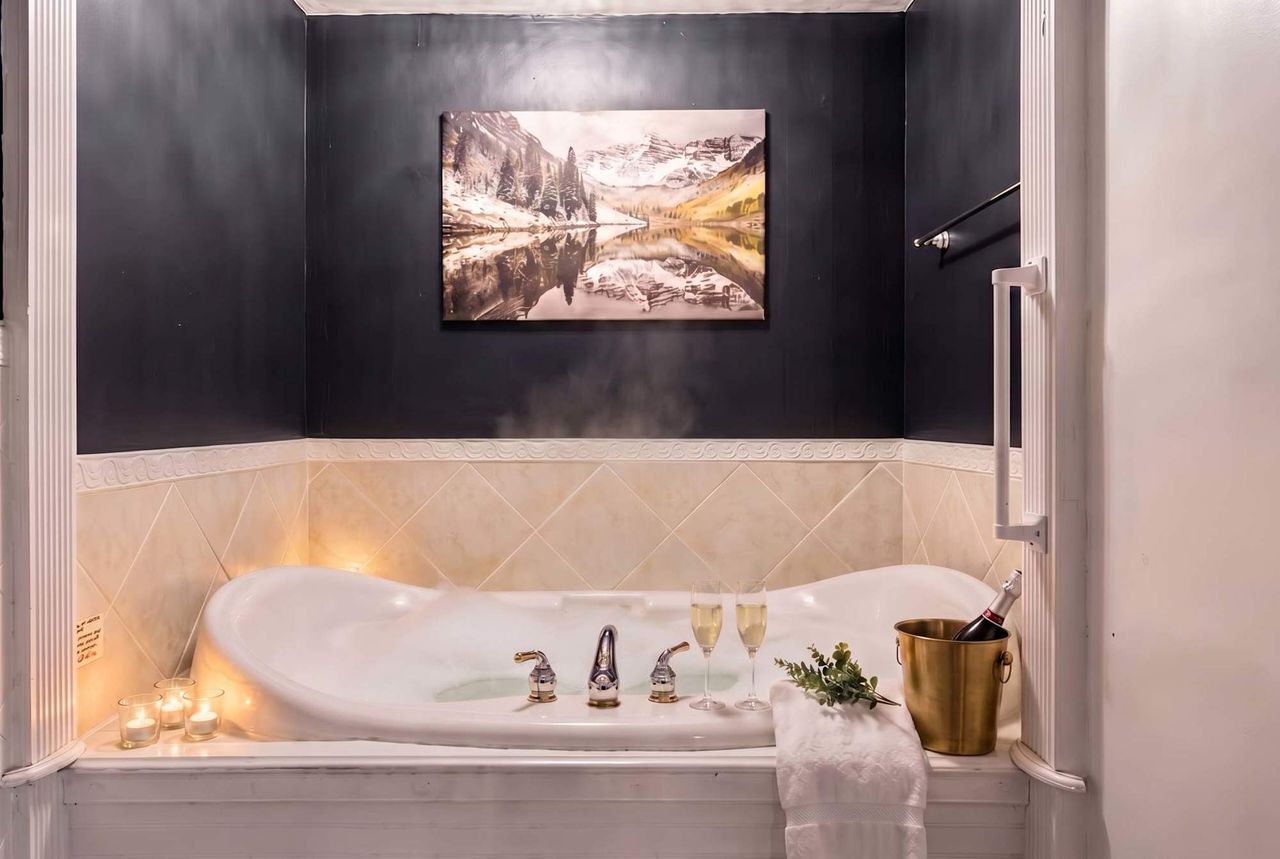
The details change room to room. The Notch suite has two deep leather chairs made for a slow evening and a book. The Basin suite has a two-person jetted tub, which is its own answer to the question of what to do when there's no game on. Artist Bluff and Kinsman each have a Keurig, and the coffee lounge downstairs has coffee and tea for every guest, so a hot cup on the deck while your eyes adjust to the dark is easy to come by. We wrote more about how these evenings actually go in our note on evenings at the lodge without screens, if you want the room-by-room version.
What surprises people is how quickly the rhythm takes over. Couples who arrive a little wary of two TV-free nights are usually the ones who tell us afterward that they talked more than they had in months, or read a whole book, or simply went to bed early and woke up rested. The evening still feels full, of a book or a conversation or an early night, and guests are often surprised by how much is in it.
The sitting room does something a lobby television never could, too: it becomes the place guests actually talk to one another. On a given evening you'll find people comparing notes on which trail was worth the effort, where the leaves had turned, which pull-off on the Kancamagus was quiet at sunset. That's information you can't get from a screen, and it tends to be better than anything online, because it comes from someone who stood there that afternoon. More than one guest has changed the next day's plan on the strength of a tip from the couple in the suite down the hall.
The Wi-Fi is still here
Keeping most of the suites TV-free is not a stand against screens in general, though people sometimes brace for a place that has confiscated all their gadgets like a summer camp. We didn't. The lodge runs on fast Wi-Fi, and it reaches every suite. If you want to watch an episode of something on your tablet or laptop before bed, it works perfectly. We took away the default; the option is still there whenever you want it.
The distinction matters in practice. A phone or a laptop is a thing you choose to pick up and, more to the point, a thing you set back down. A wall-mounted TV is furniture, and furniture stays on. If you want to stream a movie in bed on a rainy night, nobody here thinks less of you for it. Most people find they reach for it far less than they expected once it isn't the thing already staring at them from across the room.
The fast connection earns its keep in a more useful way, too, and it has to do with what happens the moment you leave the property. Cell service in this part of the mountains drops off quickly, so the smart move is to use the lodge Wi-Fi to download what you'll need before you head out for the day. Our note on cell service and what to download walks through exactly which offline maps, trail apps, and playlists to grab so you're not stuck staring at a spinning wheel somewhere with no signal.
Checking weather and trail conditions
There is one kind of screen time we actively push guests toward: the weather and trail conditions. They matter a great deal here, and a quick check shapes the best plan for the day. Mountain weather in the Whites changes fast and doesn't care what the valley forecast said. A morning that looks fine from the deck can be a different world above treeline by noon.
Before any real hike, the forecast to read is the Higher Summits Forecast published by the Mount Washington Observatory. It's written for the exposed high country of the White Mountains rather than for the towns below, and it will tell you about wind, wind chill, and the kind of sudden weather that catches people out on ridgelines. Pair it with current trail conditions, because a route being open and a route being sensible are two different questions in this terrain. Our guide to trail conditions and mountain weather lays out where to look and how to read what you find, and our note on hiking safety in the White Mountains covers the gear and judgment that keep a day out uneventful.
Two habits are worth building for the whole stay. First, read New Hampshire's hikeSafe Hiker Responsibility Code before your first hike; it's a short, plainspoken list of what to carry and how to make the go or no-go call, and following it is also what protects you from being charged for a rescue you might have prevented. Second, in the colder months, check whether the specific overlooks and trailhead lots you're aiming for are actually plowed and open before you drive out, because a scenic pull-off that's cleared in October can be a snowbank in January. Both checks take a minute on the lodge Wi-Fi and save a wasted drive.
Conditions here are specific and current, so it pays to check rather than assume. As one example, the popular Lincoln Woods Trail just east of town is closed from mid-June through November 2026 for trail restoration work, which reshapes how people reach the classic Pemi Loop this year. Trailhead parking in the White Mountain National Forest runs five dollars for a day pass or thirty dollars for an annual pass, and the pass is checked. The Kancamagus Highway, which starts at the end of our street, runs 34 miles to Conway with no gas, no services, and no cell signal the whole way, so it is not a road to improvise on. A few minutes with the right forecast and the current closures, done on the lodge Wi-Fi before you leave, is the screen time worth having in the mountains. It is also why a message to us is welcome any time; we watch the same weather, and we're glad to tell you how a given day is shaping up.
A word on that parking pass, because it trips people up. The White Mountain National Forest charges to park at most of its developed trailhead lots, and the pass covers all of them, so there's no need to buy a fresh one at each stop. You can pick it up online ahead of time, at the ranger stations, or from local vendors around Lincoln, and a federal interagency pass, including the senior pass, is honored in place of it. Buy it before you head out and keep it on the dash; it saves you rooting for cash at a self-serve kiosk with a hike waiting.
Evenings in town and under the sky
When the room is made for unplugging, the evening opens outward, and there's somewhere to point it. Lincoln is a real town, and much of it is an easy walk or a very short drive from the front door. Dinner in town, a pint at Basecamp Brewing (the Lincoln brewpub that spent years as One Love before its 2025 rebrand), or a slower dinner at the Woodstock Inn Station & Brewery over in North Woodstock all make for a natural close to the day. You come back to a quiet house instead of a blaring one, which is a nicer landing than it sounds. Plenty of guests leave the car parked and make an evening of the walk itself: dinner, a drink, maybe an ice cream on the way back, with the Pemigewasset River running alongside the path into town. In a place this walkable, the entertainment is often just being out in it.
The town works for this. Lincoln's shops and restaurants cluster along Main Street, which is the eastern end of the Kancamagus, so most of what you'd want after dinner sits within a few blocks of one another. The Pemigewasset runs right through the middle of it, and there's a riverside path that makes the stroll back feel like part of the evening rather than a commute. None of it takes planning, which is the point; you step out the door and the town is simply there.
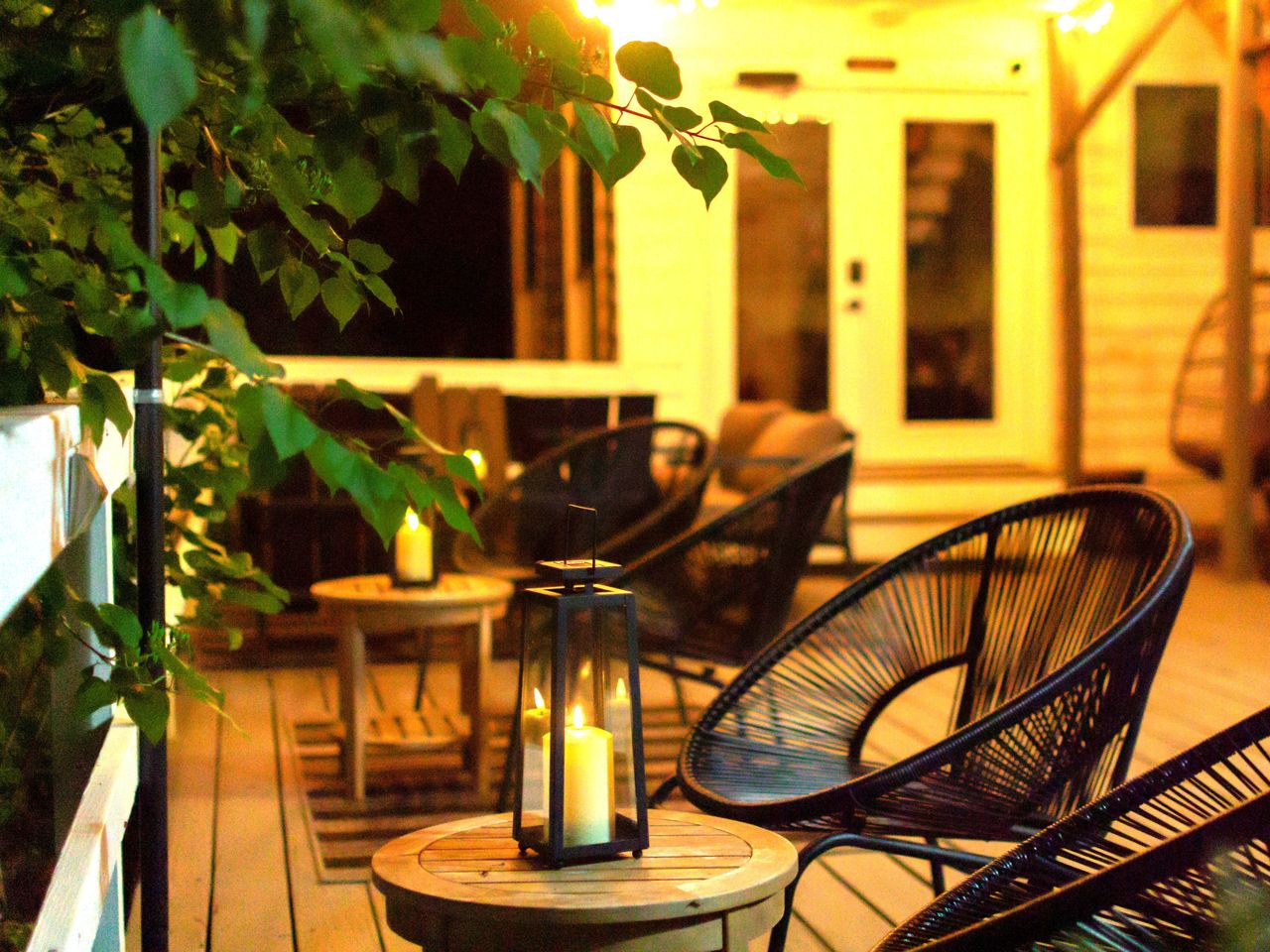
The other direction to look is up. On a clear, moonless night the sky out here is truly dark, and the back deck is the easiest possible place to start: step out, let the door close behind you, and give your eyes 10 or 15 min to adjust. The Milky Way shows itself on a dry August night, the Perseid meteor shower peaks around the middle of that month, and the Geminids come back in mid-December for anyone willing to bundle up. The back deck is made for exactly this. Our full guide to stargazing in the White Mountains covers where to go and when, but the short version is that a screen-free evening and a dark sky are natural partners. A bright screen wrecks your night vision in seconds, so an evening spent away from one leaves your eyes ready for the show overhead.
This is the quiet argument the missing television makes on its own. When nothing indoors is competing for your attention, stepping outside to look up stops being an effort you have to organize and becomes the obvious thing to do. A lot of the moments guests describe most vividly when they get home happened in the dark, on the deck, with a cup of decaf going cold on the rail.
Mornings without the news
The mornings are the other half of it, and for a lot of guests they're the bigger surprise. At home the day often starts with a screen: the news on while the coffee brews, headlines and alerts before your feet are properly on the floor. Here it doesn't, because there's nothing to switch on. The morning starts with the coffee, the light through the window, and whatever the weather is doing over the ridgeline.
Guests tell us they'd forgotten a morning could begin that way. You make a cup in the suite, you take it to the sunroom or the deck, and you plan the day off what you can actually see rather than off a scroll of things to worry about. It's a slower start, and it sets a different tone for everything that follows. People who came up wound tight tend to notice by the second morning that they've stopped reaching for the phone first thing, too, because the house never trained them to do otherwise.
Keyless self check-in from 3 PM, a 10 AM checkout, and a virtual innkeeper a message away mean your days are your own from the start, on the schedule you set. The screen-free morning is a small piece of that same idea: the house gets out of your way and lets the day begin on its own terms.
Why it fits an adults-only house
The no-TV choice doesn't stand on its own. It fits with the fact that this is an adults-only inn, with no guests under twelve, and the two decisions protect the same thing. A calm, grown-up house in the evening, low lights and quiet halls, is exactly the setting where a screen-free room makes sense and a screen would feel out of place. One choice reinforces the other.
People choose this lodge because they want a certain kind of stay: unhurried, quiet, adult in the plain sense of the word. Couples on an anniversary, friends on a long-overdue weekend, someone who just needs two nights where nothing is asked of them. That guest came up for a break from the everyday, and a room that behaves like their living room at home doesn't give them one. We wrote about the thinking behind the age policy in our note on being adults-only and why we mean it, and the same logic runs straight through the decision to skip the televisions.
Put the pieces together and you get a house that is quiet by design at every level: quiet because it's small, quiet because it's adults-only, quiet because most of the suites are made for unplugging. The absence of televisions is one line in that larger sentence, and it's one of the reasons the calm here holds.
Who it's for
We'll be plain about the fit, because it isn't for everyone and pretending otherwise helps no one. If an evening isn't an evening for you without the game on in the background, the Artist Bluff suite is the one to book, since it is the only suite with a Smart TV. For a big screen and a full channel lineup every night, there are good hotels a few minutes away, and we want you to find the stay that suits you best.
But if the idea lands as a relief, you already understand the lodge better than any amenities list could. If two evenings with a book, a fire, a walk into town, and a dark sky sound like the thing you've been missing, then the missing television is most of the reason the place works. The guests who love it came up specifically to unplug, and they're quietly glad the room made it easy instead of leaving it to willpower.
It suits a wider range of people than you might guess. Hikers who want real rest between big days. Couples who want to actually talk. Readers, slow-morning people, anyone worn thin by a year of screens who wants a couple of days on the other side of that. If any of that is you, the missing TV tends to feel like a relief within a night.
Booking a screen-free stay
If a quiet, screen-free couple of nights is what you're after, that's exactly what the house is built to deliver, and the details all point the same way: six suites, an adults-only policy, a fireplace and a sunroom and a deck under a dark sky, fast Wi-Fi for when you want it and TV-free suites for when you don't. You can pick a suite around how you like to spend an evening, whether that's the leather chairs in Notch or the jetted tub in the Basin suite, and plan the rest of the stay from there.
The best rate is always direct, so when you've settled on your dates you can check availability and book straight with us rather than through a third party. Come for the mountains, the trails, the drives, and the town. Then spend the evenings the way the house intends: a fire, a book, a walk, a look at the sky, and not one glowing screen telling you the night is already over. It is the question we hear most, and once you've stayed, it stops being a question at all.
— Launchpoint Lodge, From the lodge