Some afternoons you don't want a plan. You've had a slow breakfast in town, maybe a walk, and now there's a stretch of open time before dinner that isn't quite long enough for a real hike but is far too good to spend sitting still. That's the window we're talking about here. Three hours, give or take. Enough to point the car at the mountains, roll the windows down, and come back with the day feeling bigger than it was.
Guests ask us for this all the time. Not the big-ticket outings, the ones that eat a whole day, but the short scenic drives you can do on a whim from the front door. We keep a mental list of them, and after enough guests asked about the turns, we figured we'd write them down. These are the loops and out-and-backs we take ourselves when we have a free afternoon and want to see something. Real routes, real drive times, and the plain notes about what's open, what's closed, and where the road gives you nothing at all.
How to think about a free afternoon
Lincoln sits right in the middle of the good stuff, which is the whole reason a short drive works so well here. From our door at 191 Pollard Rd, you can be at a mountain overlook in 10 or 15 min and back before the light goes. The trick is matching the drive to the time you have and to the season you're standing in.
A few of these routes are out-and-backs: you drive out to a spot you like, turn around, and come home the same way. Others are true loops that circle back on a different road, which is the nicer feeling when you can get it. But some of the loop options depend on a seasonal road being open, and in the White Mountains that's not a small detail. Roads here close for winter and stay closed well into spring, and a route that's a tidy 90 min loop in October is a dead end with a locked gate in December.
So the pattern we use is simple. Fill the tank before you leave town if the Kancamagus is anywhere in the plan. Download your map before you go, because cell service disappears in the notches and on the Kanc entirely. And keep the drive shorter than the daylight, especially in fall and winter when the sun drops behind the ridgelines earlier than the clock suggests. If you want a whole collection of no-hiking driving days rather than a single afternoon, we keep a longer list on our scenic drives with no hiking page, but everything below stands on its own.
One more thing before the routes. If you're the kind of traveler who likes to see the shape of it first, open our area map and find the lodge. Almost every drive here starts by turning out of Pollard Rd toward Route 112, and it helps to have that picture in your head.
The Kancamagus out-and-back to a favorite overlook
The Kancamagus Highway starts right here in Lincoln, at the eastern edge of town where Route 112 leaves the shops behind and climbs into the national forest. It runs 34 miles to Conway, and it is one of the great drives in New England. But most people think of it as an all-day, drive-the-whole-thing commitment, and on a free afternoon you don't have to treat it that way.
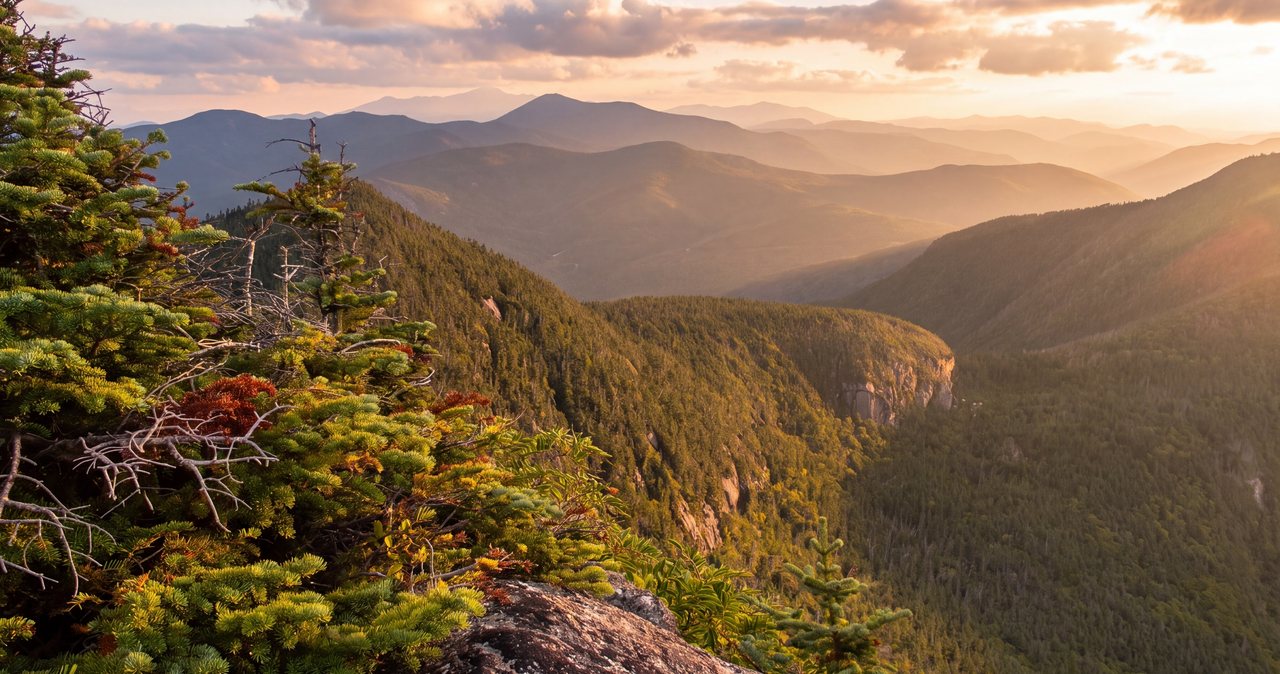
What we do instead is drive out to a favorite overlook and turn around. The height of the road is up near the C.L. Graham Wangan Grounds overlook, roughly 2,855 feet, and the pull-offs on the way up give you long views across the Pemigewasset wilderness. You can be at the good overlooks in half an hour of easy driving, sit for a while, and be home for dinner. Sabbaday Falls, a short and gentle walk off the highway, makes a natural turnaround point if you want to stretch your legs at the far end before heading back.
Here is the part we say twice because it matters: there is no gas, no food, and no services on the entire 34 miles. No towns, no stores, nothing. Fill the tank in Lincoln before you turn onto the Kanc, and don't count on your phone for anything once you're on it, because there is no cell coverage out there. Download your directions first. If you've done this drive before and want the full, unhurried version end to end, we wrote that up separately in the Kancamagus, slowly, and the road itself gets a proper introduction on our Kancamagus Highway page.
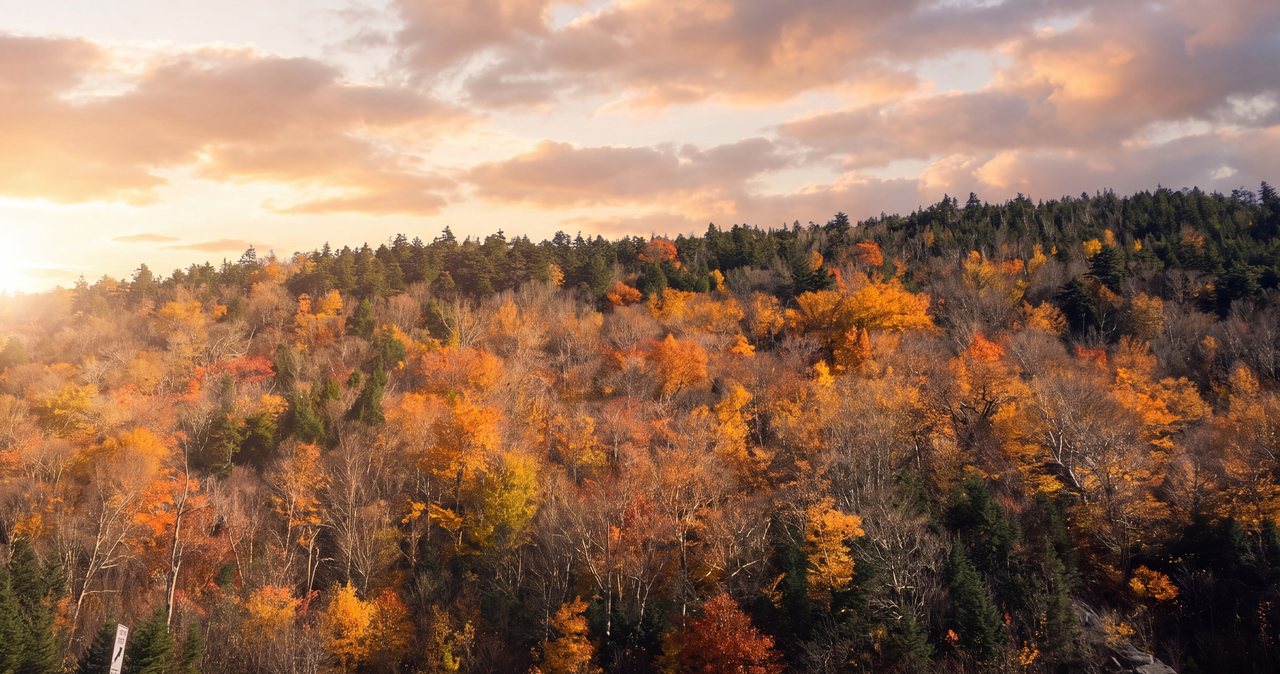
For a free afternoon, though, the out-and-back is the one we'd suggest. You get the best of the western half of the road, the overlooks that make people pull over, and you're never far from home if the weather turns. In fall, this stretch is as good as color gets in the whole region, and it's also the busiest, so an afternoon start after the morning crowds have thinned can be the smarter move.
Bear Notch Road, when the gate is open
Bear Notch Road is the quiet one. It's a Forest Service road, officially Forest Road 26, that climbs off the Kancamagus near Albany and drops down the other side to Bartlett on Route 302. If you drive the Kanc out and come back down Bear Notch, you turn a straight out-and-back into a real loop with a completely different character on the return: fewer cars, a canopy of trees, and a couple of pull-offs with views back toward the Presidential Range.
But you can only do it part of the year. Bear Notch Road closes for winter and stays gated shut until spring, because it isn't plowed or maintained once the snow comes. The closing date is usually somewhere around mid-November, though in some years the gates go down as early as late October, and it typically reopens in mid-May, sometimes not until the very end of the month. The exact dates move with the snow, so treat it as a warm-season route and check the current gate status before you build a loop around it. If the gate's closed, it's closed, and you'll be turning around. In deep winter the closed road becomes a snowmobile trail, which is its own kind of use, but not one you'll be driving.
When it is open, it's one of our favorites for exactly the reason most people miss it: it's a connector, not a destination, so it stays calm even on a busy leaf-peeping weekend. The road is narrow and winding, so take it slow. It's a lovely piece of driving in early October when the maples turn, and it links up naturally with the bigger notch drives to the east. If you have more than an afternoon and want to keep going, Bear Notch drops you toward Bartlett and the roads on into Crawford Notch, which is a full day of driving in its own right rather than a free-afternoon loop.
The Franconia Notch Parkway loop
If the Kanc is our long, wild drive, Franconia Notch is our close, dramatic one. The parkway runs right through the pass, about 10 min from the lodge, and it's a real mountain corridor: Cannon Mountain rising on one side, the Franconia Range on the other, and a string of stops strung along its length. This is the drive we send people on when they have a couple of hours and want scenery without effort.
The nice thing about the notch is that you can make it a loop rather than a there-and-back. Drive up the parkway to the north end, come off at an exit, and drop back down the other direction, or simply run up and back and stop at different pull-offs each way. There's a paved bike path that shadows the road for much of the length, so even from the car you'll see cyclists and walkers moving through the pass, which tells you how gentle the grade is. The whole corridor is protected inside Franconia Notch State Park, and it's worth knowing what the stops are before you go so you can pick the two or three you want.
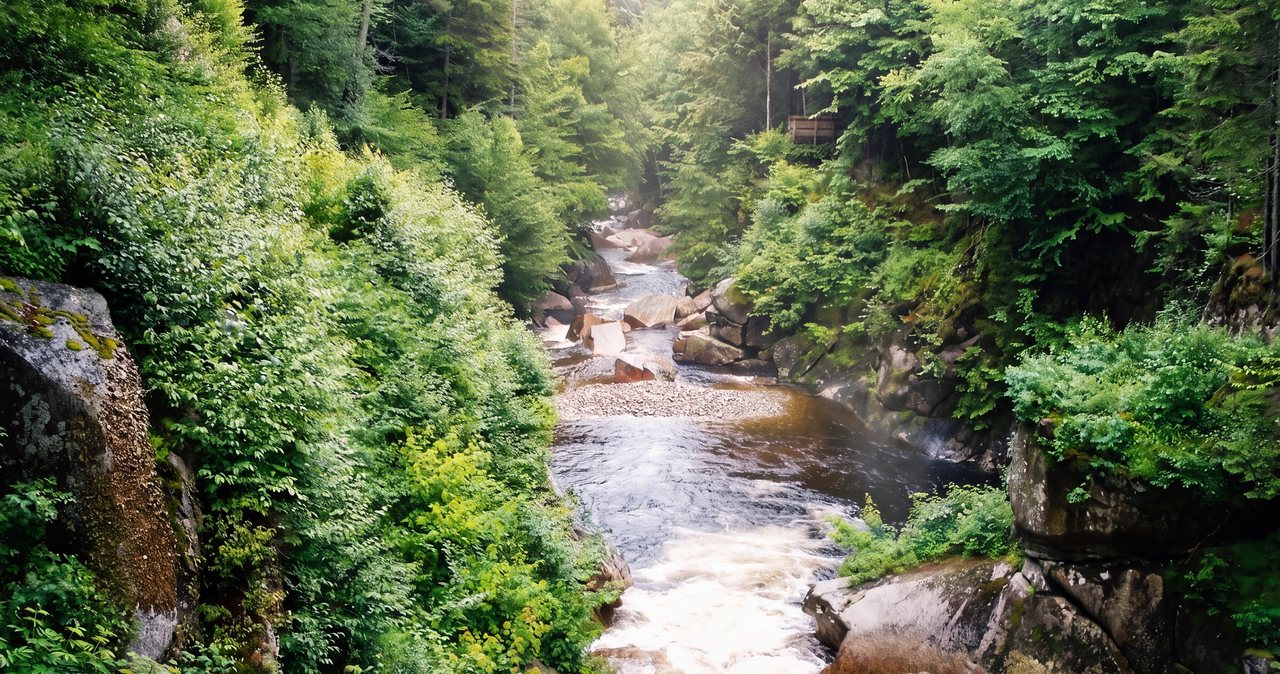
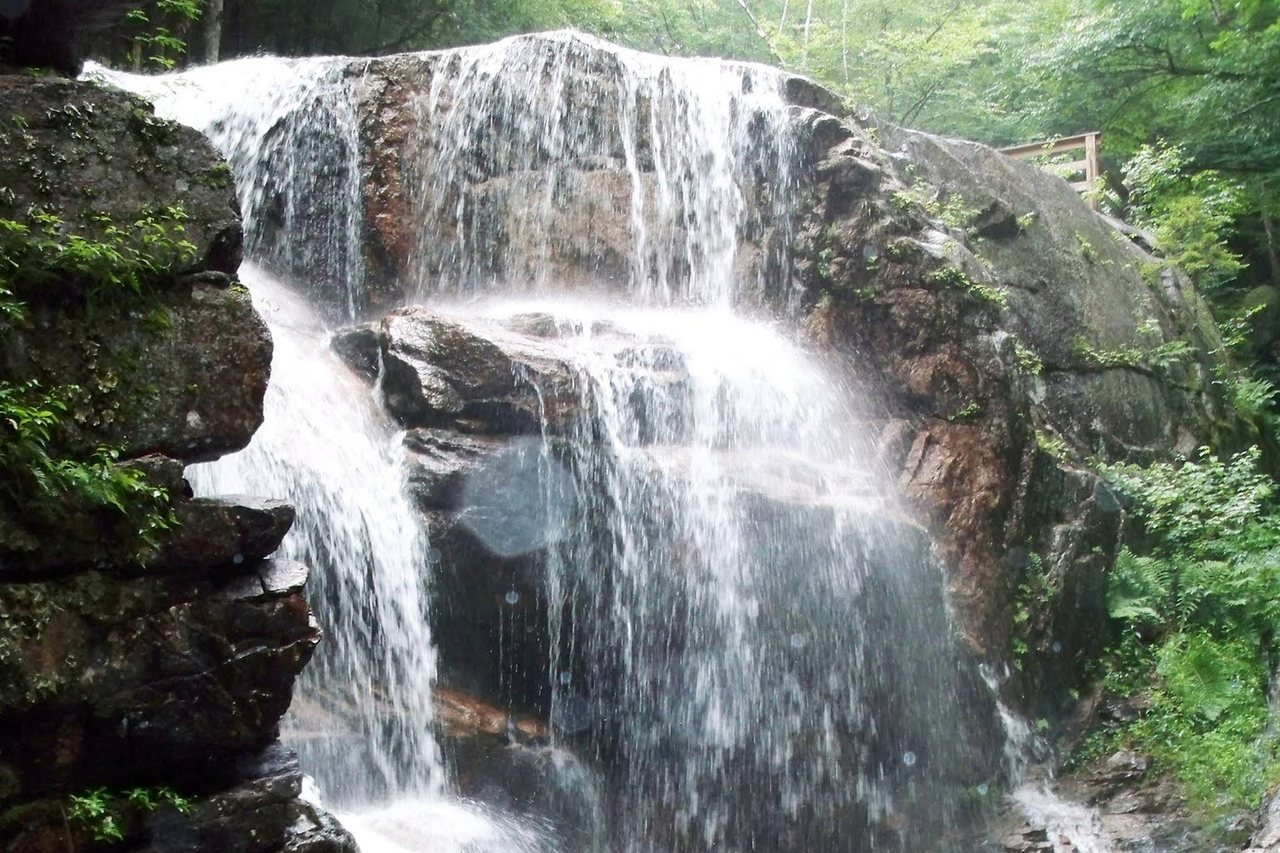
The Basin is the easy one to fold in: a granite pool carved by meltwater over something like 25,000 years, and it's only about a 5 min walk from the parking area off the parkway. It's roughly 14 min from the lodge and makes a clean short stop that doesn't ask much of you. We keep a page on the Basin with the details. Between the Basin, Echo Lake, and the Old Man site, you can fill a relaxed afternoon inside the notch without ever walking more than a few minutes from the car.
A word of caution that's easy to forget in a beautiful place: cell service in the notch is spotty. Don't rely on your phone to navigate you back out. Set your route before you leave, or at least know which exit you want.
Echo Lake and the Old Man site
At the north end of Franconia Notch, Echo Lake sits right against Cannon Mountain, and it's one of the prettiest short stops in the whole pass. There's a small beach, and the water throws back a reflection of the ridge on a still afternoon. You don't need to do anything here. Park, walk down to the shore, look at the mountain in the water, and that's the stop. In summer it's a swimming spot; the rest of the year it's just a very good place to stand for 10 min. Our Echo Lake page has the seasonal notes.
A little south, at the Old Man of the Mountain historic site, we should tell you what you'll see and what you won't. The Old Man was the stone profile on Cannon's cliff face, the one on the state quarter and every old postcard. It fell on May 3, 2003. It is gone. What's there now is a memorial plaza on the shore of Profile Lake with steel viewfinders, the "profilers," that you line up so the silhouette appears against the empty cliff where the face used to be. It's a quiet, well-done spot, and a moving one once you understand what you're looking at. But don't drive up expecting to see the profile still hanging on the mountain, because it isn't there. We explain the whole story on our Old Man of the Mountain page.
One more thing to know: Cannon Mountain's aerial tramway is not running right now. It was retired after its last day in late October 2025, a new tram is in planning, and no reopening date has been announced. The Cannon ski area still operates in winter, but you cannot ride the tram to the summit at the moment, so please don't plan an afternoon around it. If someone tells you to "take the tram up for the view," they're working from an old memory.
Even without the tram, the north end of the notch is a full and satisfying short drive. Echo Lake, the Old Man memorial, and the views up at Cannon's cliffs are all right there off the parkway, and none of them ask more than a short walk from the car.
Route 3 and the town-to-town amble
Not every good drive climbs a mountain. Some of the best free-afternoon driving here is the low, easy kind: Route 3 and the connecting roads that link the small towns strung along the Pemigewasset River. This is the amble. You're not chasing a summit view; you're just moving slowly through the valley, past North Woodstock and toward the little settlements south of us, with the river on one side and the hills standing back.
Route 3 runs roughly parallel to I-93 through this stretch, and that's exactly why it's pleasant: everyone in a hurry is up on the interstate, and the old road is left to the rest of us. Lincoln and North Woodstock are twin towns right off Exit 32 to 33, joined at the hip on Route 112, and the drive between and around them is full of the ordinary good stuff, a general store, a river bend, a covered bridge if you take the right turn.
This is the drive for a gray afternoon, or the tail end of a day when you don't have the energy for a notch but still want to be out. It's also the one where you're most likely to keep some cell signal, since you're near the towns and the interstate rather than deep in a pass. Take a spur off toward the water, follow the river a while, and turn back whenever you feel like it. There's no wrong turnaround on an amble.
If you'd rather have a walkable version of this, the whole point of staying in town is that you can leave the car parked. Lincoln's core, with its restaurants, a brewery, and a bookshop, is a short walk from the lodge, and some of our favorite slow afternoons never involve driving at all. But when the itch to be moving hits, the town-to-town roads scratch it without demanding much.
Sugar Hill for the evening light
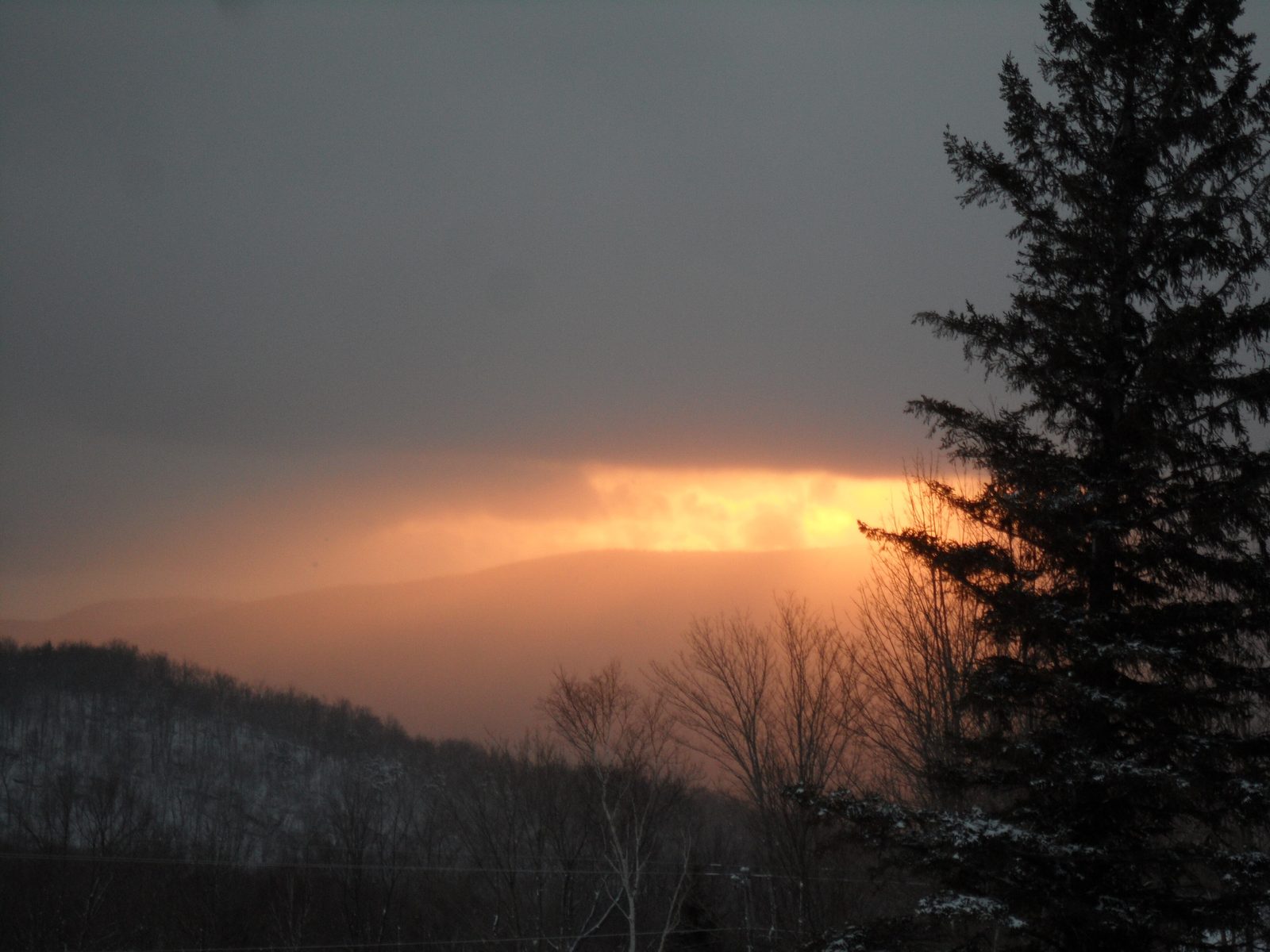
When we want a sunset rather than a summit, we drive to Sugar Hill. It's a small town on the far side of Franconia Notch, up on a ridge, and it's known for one thing above all: the view west and the light at the end of the day. Sunset Hill Road runs along the height of the ridge, and from up there you're looking across toward Cannon Mountain and the Franconia Range, with long views over the surrounding hills. Sunrises and sunsets from that ridge are the reason people make the trip.
Plan on roughly 25 to 35 min to get up there from the lodge, depending on which way you go around the notch, and time your departure so you're on the ridge with an hour of light to spare. There's an old inn up there and a golf course, but you don't need to go anywhere in particular; the road itself is the destination, and there are places to pull off and just watch the color come down over the range.
If you happen to be here in early June, Sugar Hill has a second act. The open fields along Sunset Hill Road and the town's back roads fill with lupines, tall spikes of purple, pink, and blue, and the town runs a Fields of Lupine Festival around then. We can't promise you the exact peak on any given day, since it moves with the season, so if you're chasing the lupines, check the festival dates and ask around town before you drive up. It's a favorite of photographers, and for good reason. But even without the flowers, the evening light on that ridge is worth the drive on its own.
This is a route we love precisely because it doesn't overlap with the big daytime attractions. You go up as the day's crowds are heading to dinner, you get the ridge more or less to yourselves, and you come home in the blue hour. For where the good light lands closer to home, we keep notes in where the light is best around Lincoln.
The dip toward Squam Lake
Point the car south instead of into the mountains and, in about half an hour, the terrain changes entirely. The peaks give way to the Lakes Region, and the drive down toward Squam Lake around Holderness is a completely different kind of afternoon, softer, wider, all water and low hills. It's about 28 miles from Lincoln, roughly a 30- to 40 min drive down I-93 and off toward Holderness, and it's the trip we suggest when guests want a change from granite and evergreen.
Squam is the second-largest lake located entirely within New Hampshire, and it's quieter and less developed than its larger neighbor Winnipesaukee, which is a big part of the appeal. It's also the lake where On Golden Pond was filmed, back in 1981, and the scenery still looks the part: islands, coves, loons on the water, wooded shoreline that hasn't been built up. You can drive the roads around Holderness, find a spot to look out over the water, and feel the whole pace of the day drop a notch.
There's a natural science center in Holderness and boat tours that go out onto the lake in season, if you want to make more of it than a drive. But even as a simple out-and-back, the Squam dip is a good use of a free afternoon, especially on a warm day when the mountains feel a little too close and you want some open sky. Our Squam Lake page has more on what's down there and when the boat tours run.
Worth knowing: this is the longest of the free-afternoon drives, so more of your three hours goes to the road than on the notch loops. If you've only got a short window, save Squam for a day when you can give it a little more room. If you've got the afternoon and want flat water rather than high peaks, it's the one to pick.
Which drive for which afternoon
People like a quick decision, so here's how we sort it when a guest is standing in the front hall with car keys and no plan:
- Two hours, want big mountain scenery: the Franconia Notch parkway run. Up the pass, stop at the Basin and Echo Lake, home before dark.
- Three hours, want the wild road: the Kancamagus out-and-back to an overlook. Fuel up first, download the map, turn around at Sabbaday Falls.
- Warm season, want a real loop: the Kanc out and Bear Notch Road back, but only if the gate's open. Check first.
- Late afternoon, want a sunset: Sugar Hill and Sunset Hill Road. Leave with an hour of light to spare.
- Gray day or low energy: the Route 3 town-to-town amble along the river. Keeps some cell signal, asks nothing of you.
- Want a change from the mountains: the dip south toward Squam Lake. Longest drive, softest landscape.
None of these needs boots, a permit, or an early start. That's the whole point. They're the drives you take when the day has already been good and you just want a little more of it. For the version of this that turns into a full day of driving with proper stops, our Lincoln area guide ties the bigger outings together.
Fall color, and getting the timing right
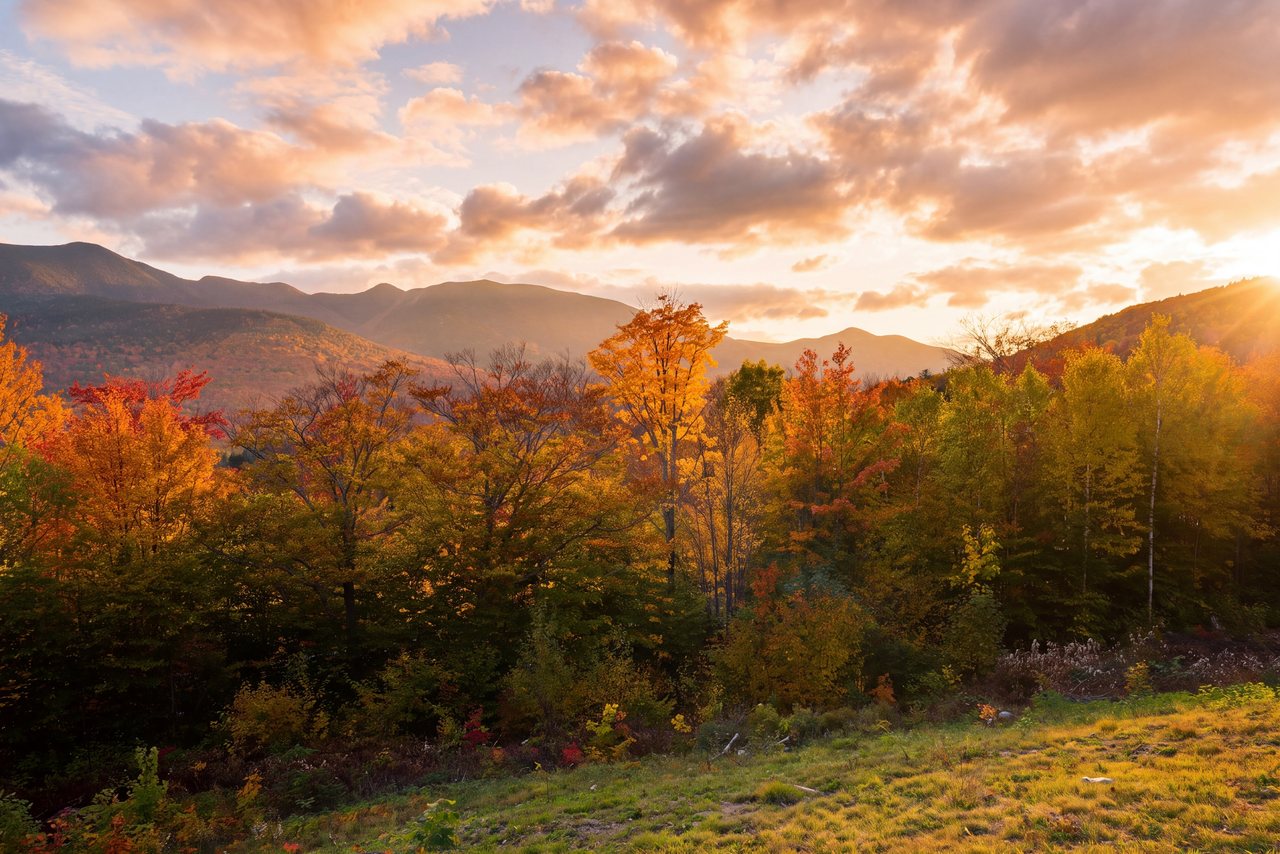
We'd be leaving out the best month if we didn't talk about foliage. From roughly the last week of September through mid-October, these same drives turn into some of the most sought-after leaf-peeping routes in the country, and the Kancamagus in particular gets national attention. The color usually starts high and works its way down: the upper elevations and the notches turn first, then the valley floor around town a week or so later. Because it moves with elevation, you can often chase the peak by choosing which drive you take on a given day, high into the notch early in the season, low along the river later.
Fall brings the crowds along with the color. The Kanc backs up on peak weekends, and the popular pull-offs fill. An afternoon start, after the day-trippers have had their morning, is often calmer than a mid-morning one. Weekdays are calmer still. If you're planning a leaf trip around these drives, we go deeper in our guide to the best fall foliage drives, and it's worth reading before you pick your days.
The other seasons have their own case. Summer gives you the longest light, swimming stops at Echo Lake, and every seasonal road open. Winter shrinks the menu, Bear Notch is gated, the Kanc is plowed but bare and services-free, and the light goes early, but the notch under snow is its own kind of beautiful, and the parkway stays open. Spring is mud season and a little unglamorous, but the rivers run high and the crowds are gone. Match your drive to the month and every one of them is worth the afternoon.
What we tell everyone before they pull out of the driveway
A few practical things, learned the boring way, that make a short drive here better:
- Fuel up in town if the Kanc is in the plan. We've said it three times now because we've had guests learn it the hard way. Thirty-four miles, no gas, no exceptions.
- Download your map and directions before you leave. Cell service is spotty in Franconia Notch and gone entirely on the Kancamagus. Your phone will not save you out there. We wrote a whole piece on cell service and what to download because it comes up so often.
- Watch the light. The sun drops behind the ridgelines earlier than the clock says, especially in the notches. Give yourself margin, particularly in fall and winter.
- Check seasonal road status. Bear Notch Road and some Forest Service spurs are gated in the colder months. A route that loops in October dead-ends in December.
- Slow down for the narrow roads. Bear Notch and the back roads to Sugar Hill are winding and often shared with cyclists and walkers. There's no hurry on a free afternoon anyway.
- Keep the tank and the plan matched to your time. The Squam dip is longer than it looks; the notch loops are shorter. Pick the one that fits the window you have.
Do those six things and the rest takes care of itself. These aren't difficult drives. They just reward a little forethought, and the country out there doesn't hand out second chances to a dead phone battery and an empty tank at the same time.
Coming home
The best part of a free-afternoon drive is the ending, which is a short one. Because Lincoln sits where it does, none of these routes leaves you far from the door. You can be watching the last light off Sunset Hill Road and still be back at the lodge within the hour, which is a convenience you don't get from a base further out. That closeness is the whole reason a three-hour drive works here at all.
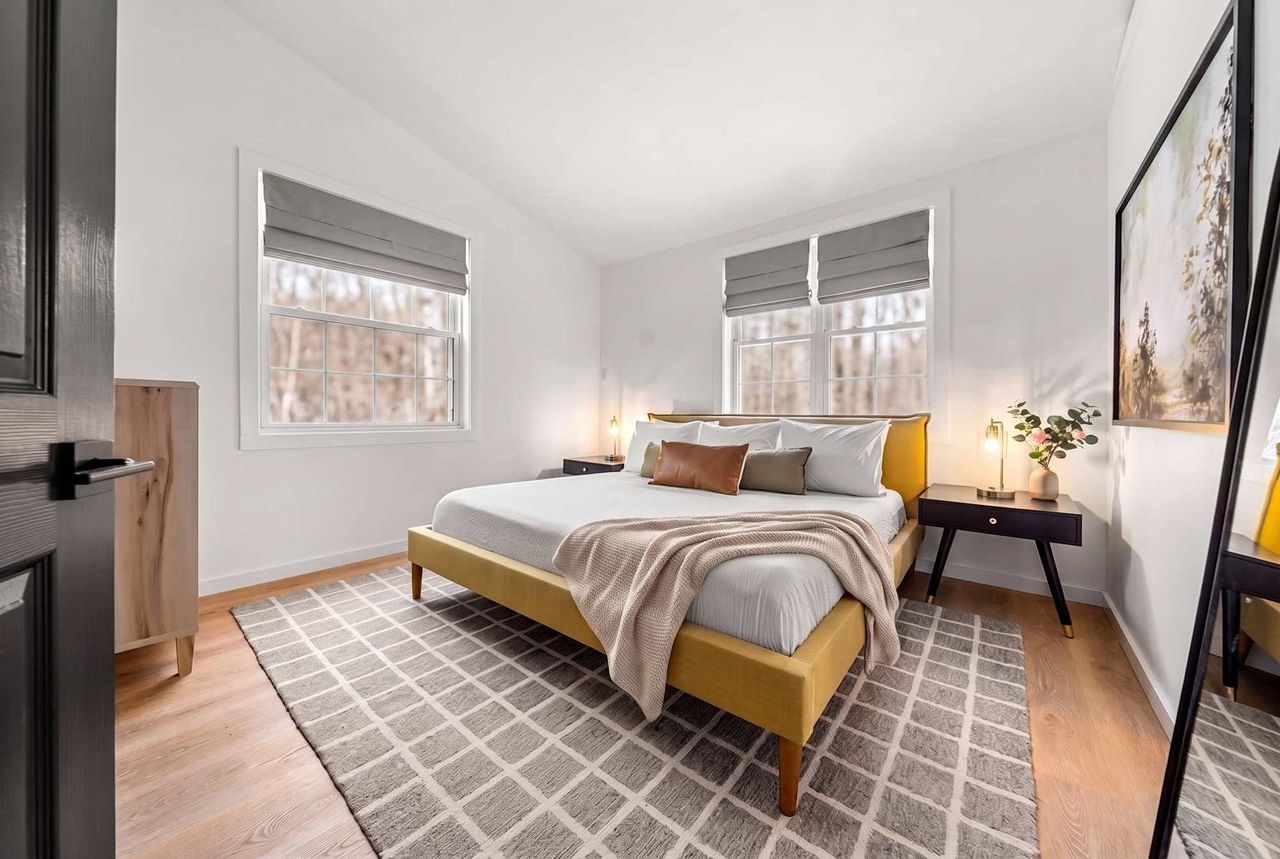
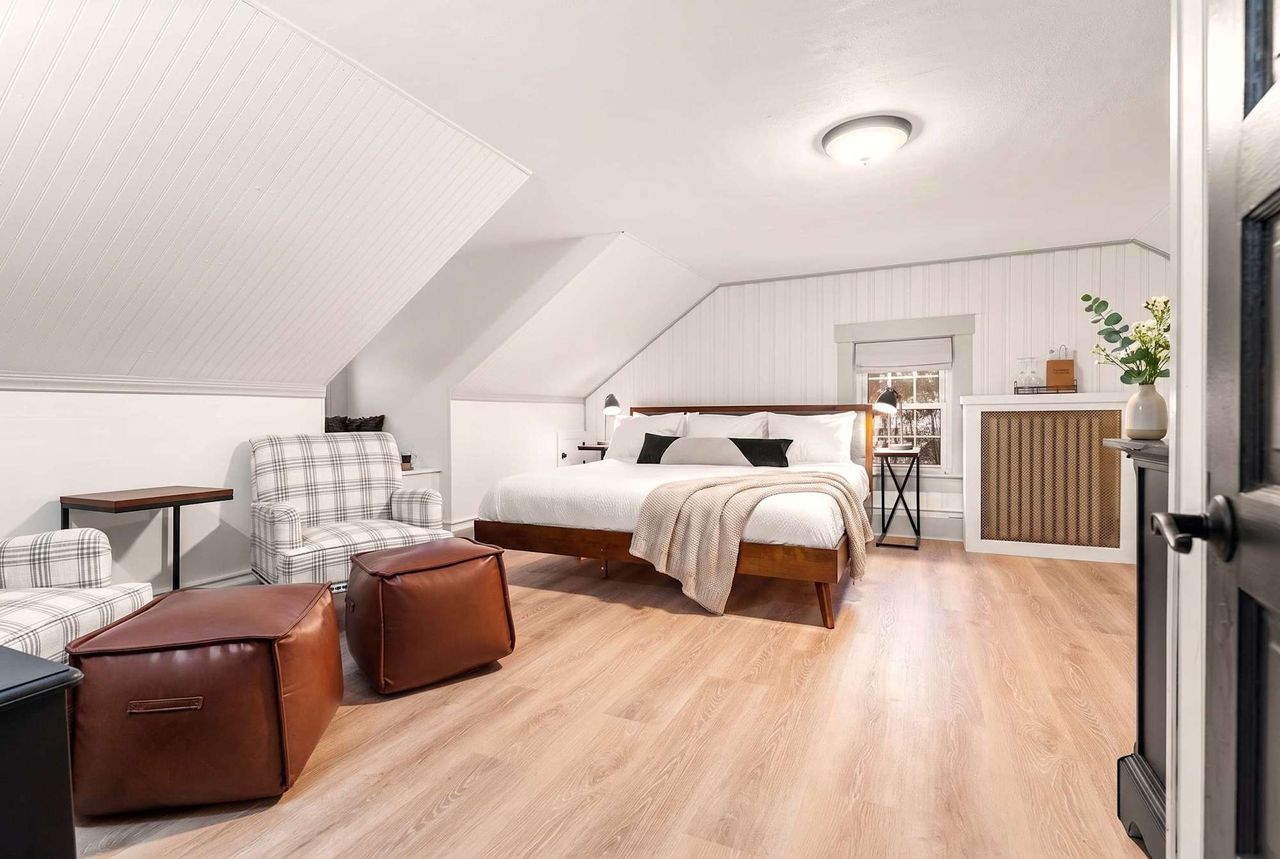
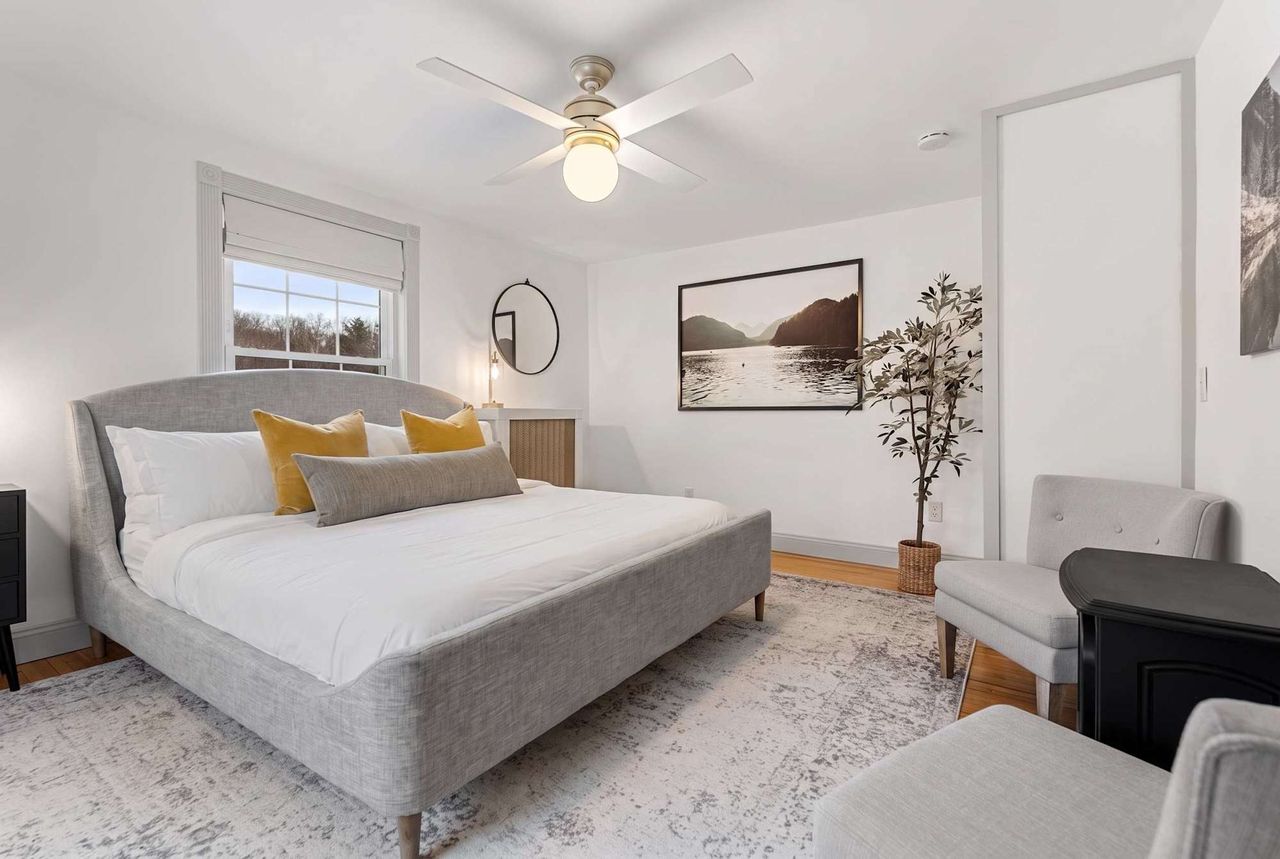
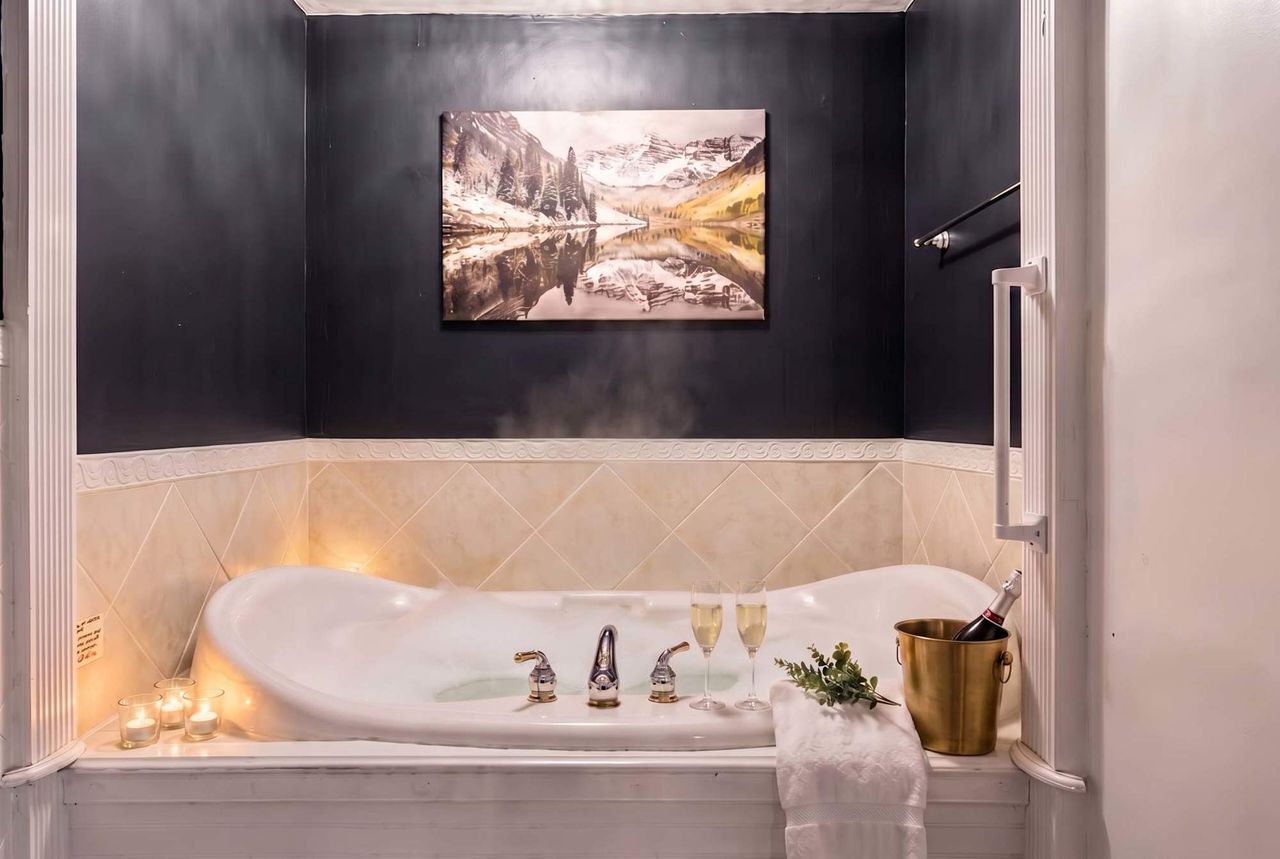
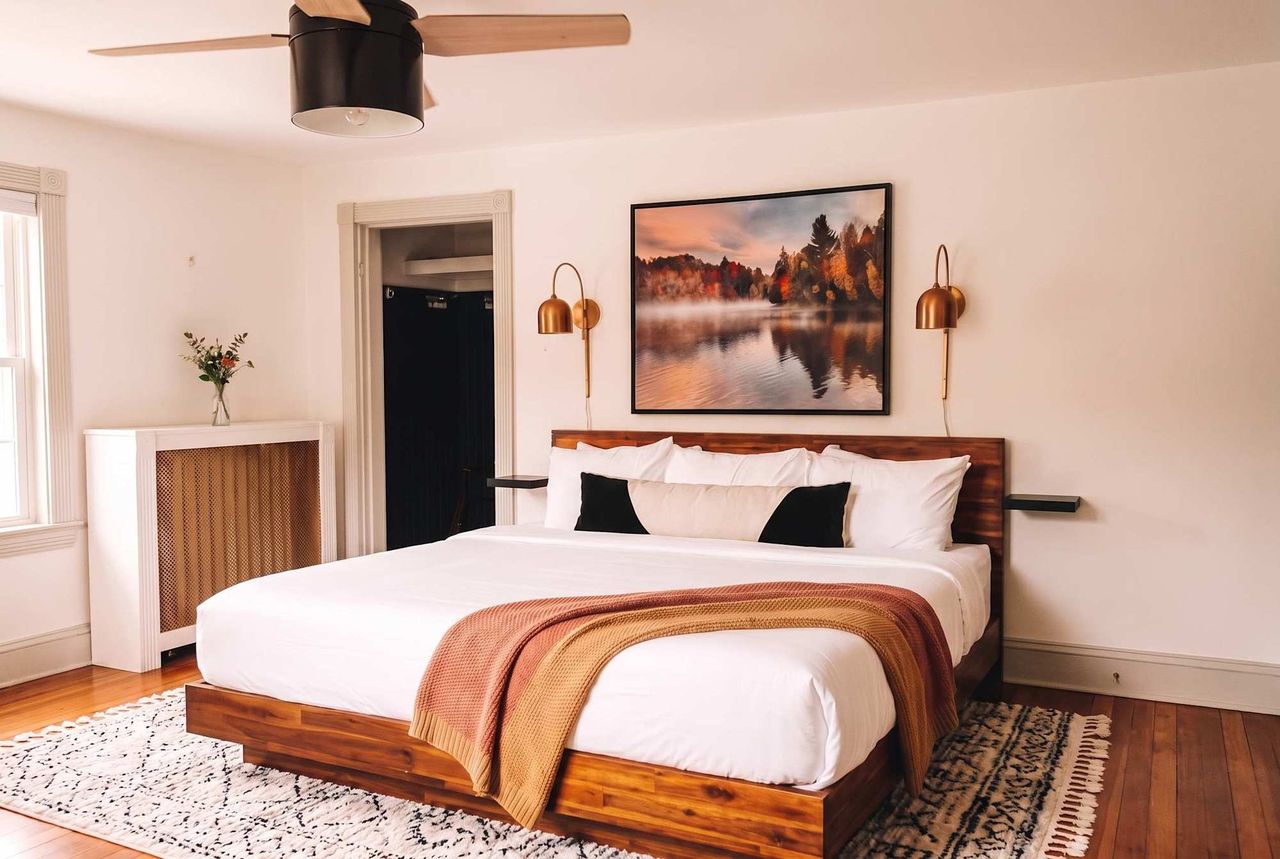
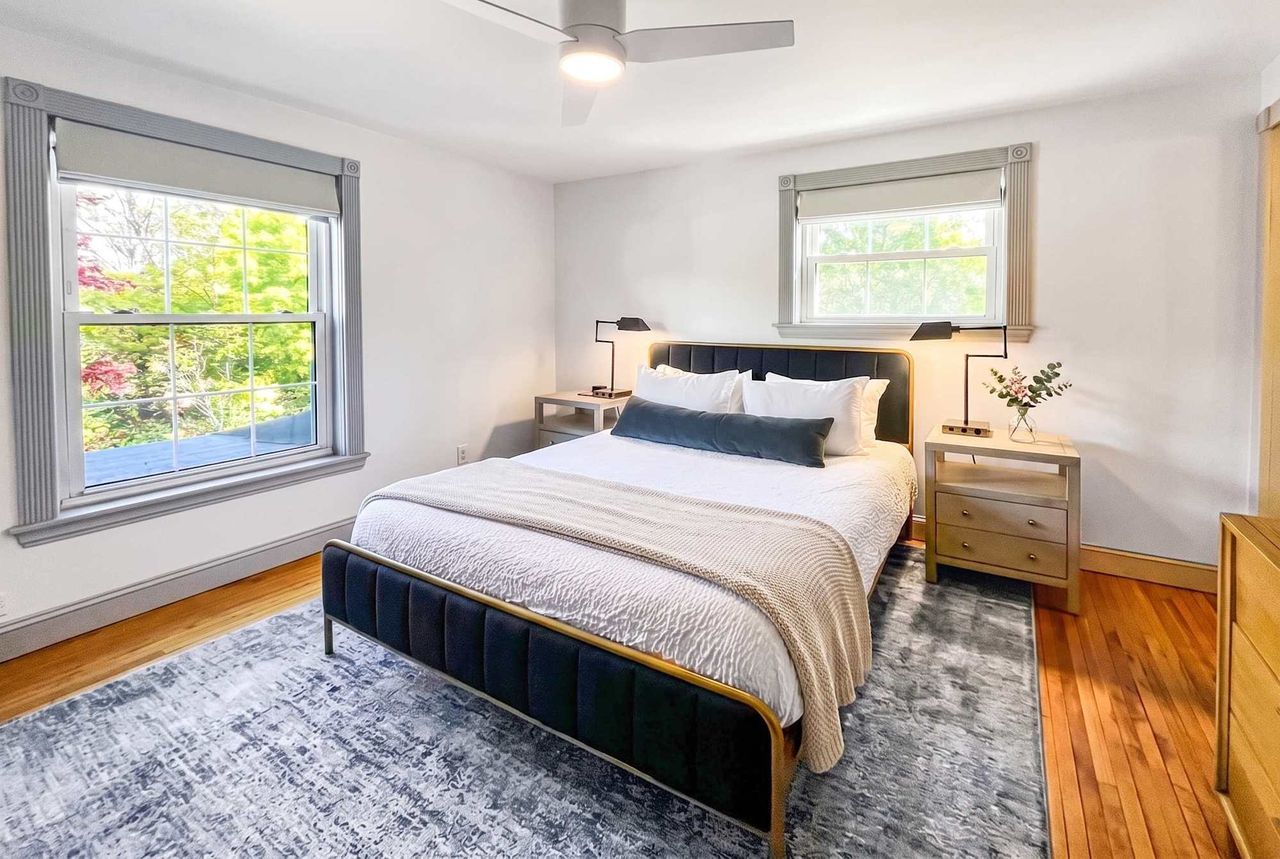
When you get back, there's coffee in the lounge, fast Wi-Fi if you want to look up tomorrow's route, and quiet, mostly TV-free suites that let the day you just had linger a little longer. We run the place for exactly this rhythm: out for a while, back for a while, town a short walk away when you're hungry. If you're still deciding on a suite, our six rooms are all a little different, and you can start a stay on the booking page. The Artist Bluff suite, named for the little climb up in Franconia Notch, is a good one if you like your mornings bright.
Keep this list in the car. On the afternoon you find yourself with a few open hours and no plan, you won't have to think hard. Turn onto Route 112, point the car at the mountains, and go see something. We'll leave the coffee on for when you get back.
— Launchpoint Lodge, From the lodge