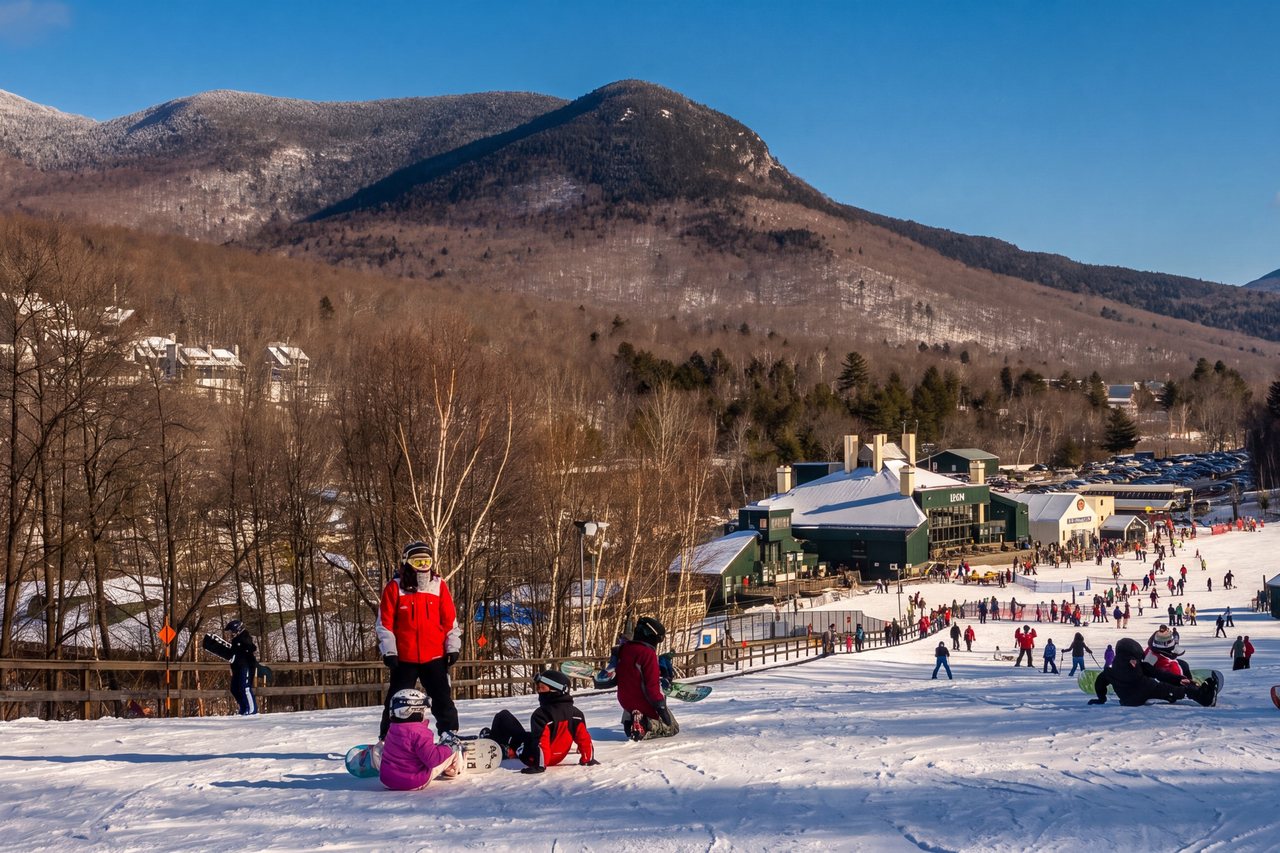
Winter light goes early in the White Mountains. By the middle of December the sun is behind the ridgeline well before 4 in the afternoon, and the last hour of a ski day at Loon happens in a kind of blue half-dark that you do not get at noon. The lifts are still turning, the day-trip crowds are packing their cars, and the trails go quiet in a way that changes the whole feel of the place. We are 6 min from the base, so this is the part of a ski day our guests ask us about most: what it is like to stay out late, when the light gets low and the cold settles in.
We should say up front what an evening on the mountain is here, because the phrase "night skiing" gets used loosely, and we would rather set the expectation than have you show up expecting something Loon does not do. This piece is about the end of the ski day at Loon Mountain: the late-afternoon and twilight runs, the after-dark activity that does run, and how to fold all of it into a warm evening back in town. Read it as our picture of a winter evening a short drive from the lodge.
First, what "night skiing" means at Loon right now
Here is the thing to get clear before you plan anything. Loon does not run lit trails for night skiing. There are no lights strung over the ski runs, and the chairlifts that carry skiers and riders up the mountain shut down in the mid-afternoon, the way most New Hampshire ski areas do. If you have skied out west or at a hill that floods its slopes with light until 9 or 10 at night, that is not what happens here. When people ask us "does Loon have night skiing," the plain answer is no, at least not the lit-trail kind.
What Loon does have, after the sun is down, is lift-served snow tubing under lights on a dedicated hill. We will get to that, because it is fun and it is the real after-dark thing to do on the mountain. But if your heart is set on carving turns under stadium lighting at 8 at night, we would rather you knew now than found out at the base lodge.
It also helps to know that ski-area hours move around. Lift schedules shift with the calendar, with holidays, and with the weather, and operators adjust them season to season. So treat any specific time you read anywhere, including from us, as something to confirm. Before you go, check Loon's current hours on their own site or give them a call. We're always glad to help you look it up, but the schedule that matters is the one Loon publishes for the day you are here.
With that established, the best part of a winter ski day here does not need lights at all. It needs late-afternoon timing, a warm layer, and somewhere close to thaw out afterward. On all three counts, being this close to the base works in your favor. If you are still deciding whether Loon is the right mountain for your trip at all, our guide to skiing near Lincoln lays out the options side by side.
The late-afternoon window, when the mountain empties out
The stretch we love is the last hour or two before the lifts close. Loon draws a big day-trip crowd, a lot of it up from the Boston area for the day, and by 3 in the afternoon those cars start streaming out of the lots. The people who leave early are chasing the drive home. The people who stay get the mountain in a much calmer state, with shorter lift lines, more room on the trail, and a pace that feels like the place exhaled.
Weekends and holidays are when this matters most, because that is when the mountain is busiest at midday. If you have spent the morning in a lift maze, the afternoon is the payoff. The runs that were shoulder-to-shoulder at 11 have space in them by 3:30. You can let a groomer run out under you without threading through traffic. For a lot of skiers, those last laps are the best skiing of the day, and they cost nothing extra. They are simply the hours most people give up.
The snow is what changes. As the afternoon goes on, the groomed surface gets skied off and can firm up as the temperature drops, especially on the steeper pitches and anywhere the sun stopped reaching hours ago. You do not have to head in early because of it. You just pick your terrain to suit the surface. Late in the day we tend to point people toward the wider intermediate cruisers, where a firmer surface is friendly rather than intimidating, and to save the trickier stuff for the softer, brighter part of the day. If you like your snow forgiving, ski the last hour on the mellower trails.
Timing is simple: know when the lifts stop, and plan your last ride up for a little before that. Ski patrol sweeps the mountain at closing, so the final chair is a hard cutoff and worth treating as one. Ride it up with enough daylight to enjoy the way down and you get the quietest, most private run of the day. That last descent, with the base area emptying below you and the light going soft, is the one people remember.
Dusk light and the cold that comes with it
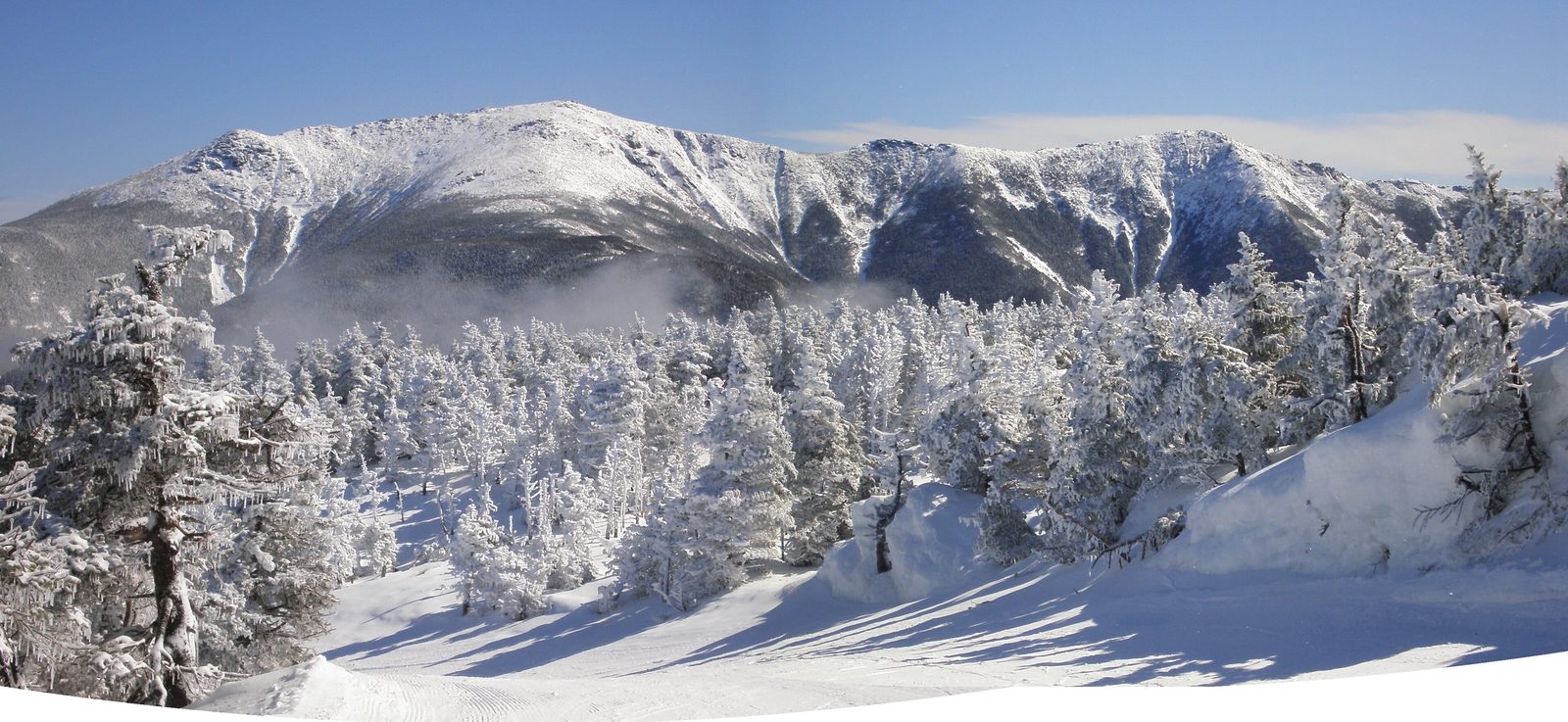
There is a specific quality to late-day skiing in the mountains that is hard to describe until you have stood in it. The sun drops behind the western ridge and the whole valley goes into shadow while the sky overhead is still bright. The snow shifts from white to a pale blue-gray. Sound carries differently, so you hear your own edges and the hum of the lift and not much else. It is beautiful, it is free, and most people miss it because they are already in the car.
The cold comes with that beauty. When the sun goes, the temperature follows fast, often by a noticeable amount in the span of half an hour. Wind on the upper mountain makes it feel colder still. A day that was pleasant at lunch in a light layer can turn sharp by 4, and the chairlift ride, sitting still and exposed and moving through the air, is where you feel it most. None of that is a reason to skip the late runs. It just means dressing for the end of the day rather than the middle, which is a mistake we watch people make all winter.
Fingers and toes go first. Cold hands on a metal chairlift bar, cold feet in ski boots that have been packed in snow all day, those are what send people inside, not their core. If you run cold, this is the time for the warmer gloves, the second pair of socks you did not think you needed, and a chemical hand warmer or two tucked into your mitts and boots. A few hand warmers in your pockets make the lift rides much cozier.
The reward for dressing right is that the cold becomes part of the pleasure instead of the thing that ends your day. There is a real satisfaction in being warm and moving while the air goes properly cold around you, the sky doing its slow color change, and knowing a hot shower is a few minutes away. That last part is not a small thing, which brings us to the reason we can talk about staying out late at all.
6 min to a warm room
The reason an evening on the mountain works so well from here is distance. We are about 6 min from Loon's base by car. That number changes how a cold late-afternoon session feels, because the moment you have had enough, you are not facing an hour on the highway with wet gloves and numb feet. You are a short drive from a hot shower and dry clothes.
Practically, that means you can ski right up to the last chair without hedging. Guests staying an hour or more away tend to quit early to beat traffic and to avoid driving mountain roads in the dark with tired legs. You do not have to make that calculation. Ski until the lifts stop, drive a few minutes on well-traveled roads back into Lincoln, and be out of your boots before you have fully warmed up. It takes the pressure off the whole afternoon.
It also means you can split your day if you want to. Some of our guests ski hard in the morning, come back to the lodge to warm up, eat something, and go back out for the quiet late runs. With the base 6 min away, a mid-afternoon break at the lodge is a real option rather than a whole logistical event. Your suite is right there, with fast Wi-Fi and the coffee lounge downstairs, the electric fireplace is in the sitting room, and the mountain is close enough to return to on a whim.
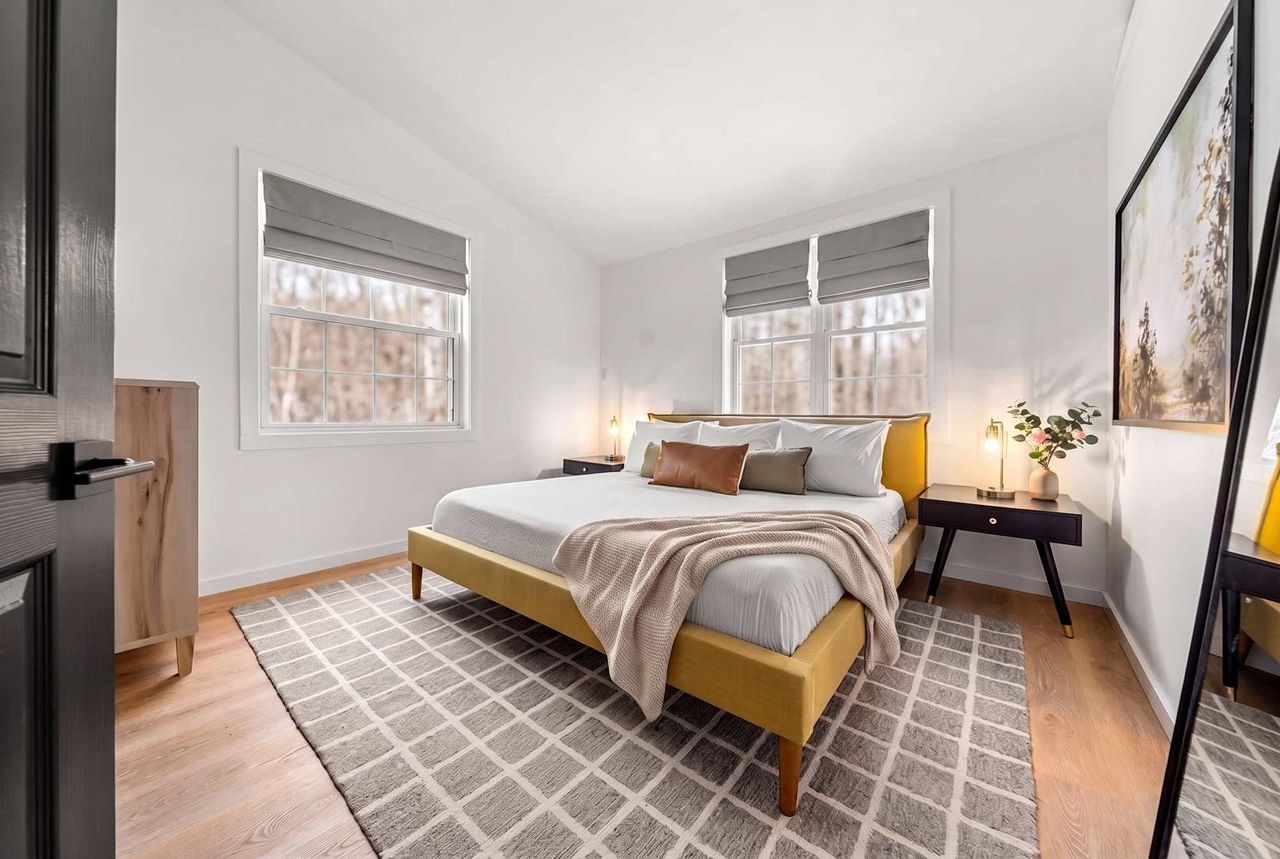
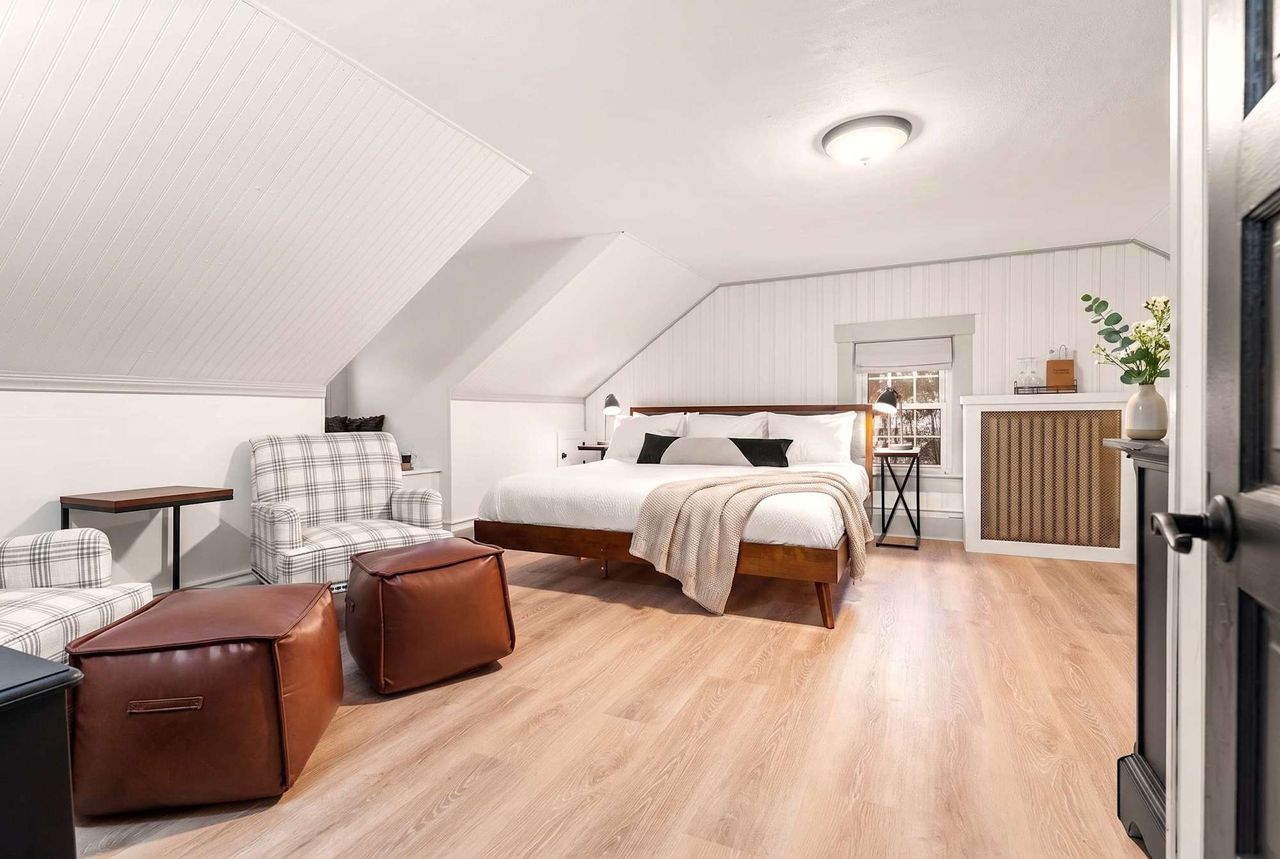
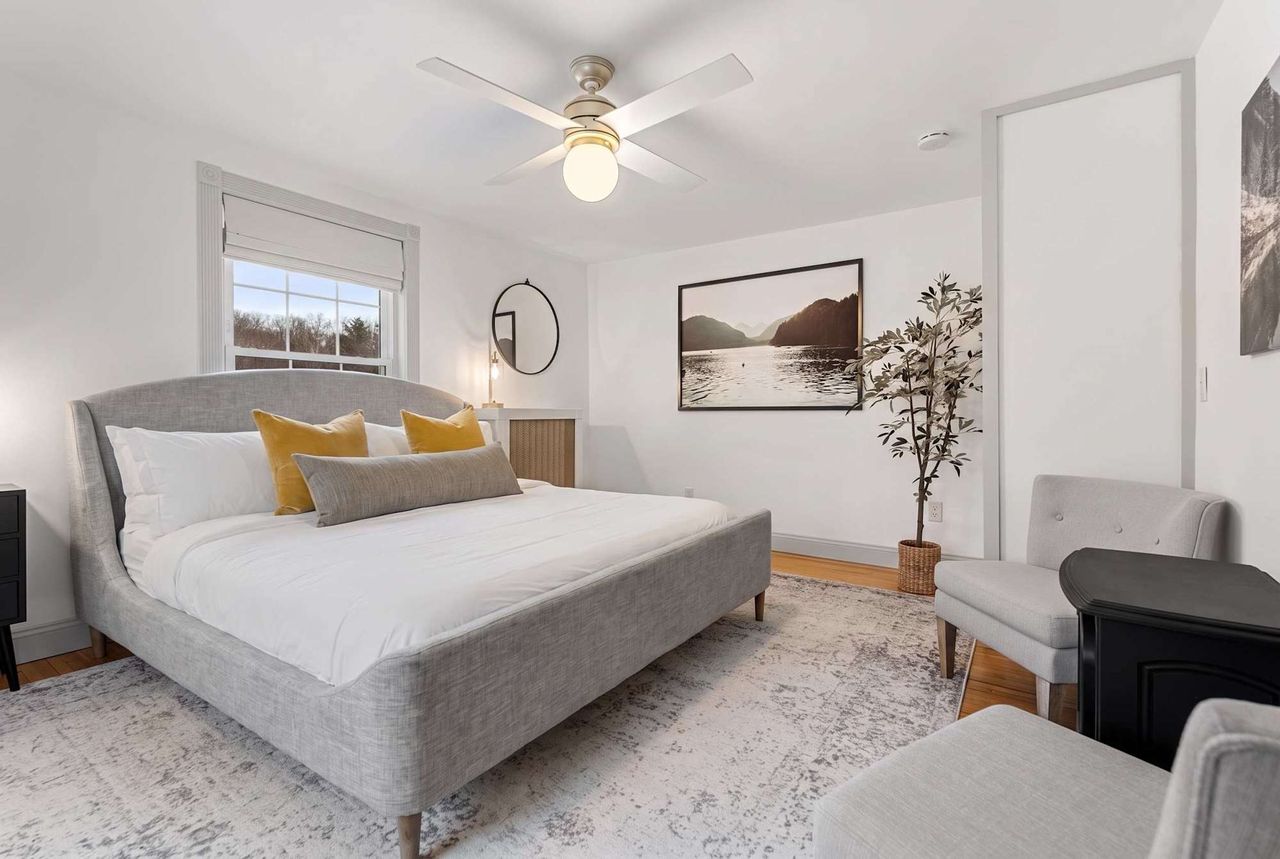
When you do come in for the night, the lodge is built for exactly this kind of thawing out. Six private suites in a restored 1902 colonial, quiet by design, no television in five of them, adults only, and walkable to dinner in town. After a cold afternoon, a warm and quiet room is the thing you want most, and it is the thing we are set up to give you. If you are picking a suite for a ski trip, the ground-floor Basin suite is an easy one for hauling gear in and out, and you can weigh all six on our room comparison.
Dressing for the cold end of the day
Because the late runs are colder than the middle of the day, it is worth a few words on layering specifically for the evening chill. None of this is exotic. It is the standard mountain-cold advice, but the difference between a good late session and a miserable one usually comes down to getting it right.
Start with the base layer. Wool or a synthetic wicking layer against your skin, top and bottom. Not cotton, because cotton holds sweat, and sweat that goes cold when you sit on a lift is the fastest route to a wretched ride down. Over that, an insulating mid-layer you can add or shed, and then your shell to block the wind. The wind is the variable that catches people out; a jacket that felt like plenty at lunch can feel thin on an exposed chair at dusk.
Then the extremities, which is where the evening cold wins or loses:
- Hands. Warmer gloves or mittens for the late runs than you wore at midday. Mittens are warmer than gloves if your hands run cold. Hand warmers help more than people expect.
- Feet. A good pair of ski socks, one pair rather than two crammed in, which just cuts circulation and makes your feet colder. Toe warmers exist for a reason.
- Head and neck. A warm hat or a helmet with a liner, and a neck gaiter or buff you can pull up over your nose and cheeks when the wind bites. Exposed skin is what frostnips first.
- Eyes. Swap dark lenses for a lighter or clear-ish goggle lens if you have one. In flat dusk light, a very dark lens makes it hard to read the snow, and reading the snow is exactly what you want to do when the surface is firmer and the light is low.
Two more small things. Keep something to drink and a snack in a pocket, because you burn through energy in the cold, and a hungry, dehydrated skier feels the chill worse. And bring a dry pair of gloves in the car so you are not driving home in wet ones. For a fuller rundown, our note on what to pack for a White Mountains weekend covers the winter list. Get the evening layers right and the cold stops being the enemy.
Night tubing after dark
Here is the genuine after-dark activity on the mountain, and it is a good one. Loon runs lift-served snow tubing under lights on a dedicated hill, the Little Sister lane on the east side of the base area, served by its own chairlift. You sit in a tube, a lift pulls you and the tube back up so you are not trudging uphill, and you slide down a lit lane in the dark. Day and night both. It is the closest thing to "night skiing" that Loon offers, and it asks nothing of you technically.
That last part is why we send people to it. Tubing does not care whether you have ever skied. There is no gear to rent beyond the tube, no lesson, and no balance required. It is a flat-out fun hour in the cold and the dark, and it works for a group where some people ski and some do not, or for an evening when your legs are done but you are not ready to be inside. The hill is set up for it, with a real vertical drop and a long track, so it is not a tame bunny-slope slide. It moves.
Two notes worth passing on. First, tubing sessions are typically sold in timed blocks and can book up on busy winter weekends and holidays, so if this is the plan, reserve ahead rather than showing up and hoping. Second, and we will keep saying it, confirm the current tubing hours and days directly with Loon before you build your evening around them, because tubing runs on its own schedule, that schedule is weather-dependent, and it changes through the season. We do not want to name a time here that has shifted by the time you read this.
Dress for tubing the way you would dress for the cold late chairlift, because you are outdoors and largely sitting still between runs. Warm, waterproof layers, a hat, good gloves. You will get snow on you; that is part of it. And it is worth remembering the lodge is adults-only, so if you are traveling with young children, tubing is a day-visitor activity for your group rather than something that changes who can stay with us.
Apres and dinner back in Lincoln
The best argument for staying out until the lifts close is what comes after, and it is close. When you have had your fill of the cold, you are a few minutes from town, and Lincoln has a real cluster of places to eat and drink within a short walk of the lodge. You do not have to get back in the car once you are home. You can walk to dinner.
Apres here is unpretentious. This is not a scene of champagne on a sun deck. It is a warm room, a good beer or a hot drink, and food that suits a day in the cold: burgers, wings, pizza, hearty plates that go down easy when you are pleasantly wrecked from skiing. The town core has enough range that a group with different tastes can all find something, and most of it is casual enough that you can show up in your apres layer without a second thought. Our full rundown of where to eat in Lincoln goes place by place.
The timing works out neatly. Lifts close mid-afternoon, you are back and thawed by late afternoon, and that puts you at an early, relaxed dinner rather than a late scramble. Winter kitchens in a mountain town can wind down earlier than you would expect, particularly midweek, so an early dinner is the sensible move. Roll in around 5 or 6 and you will beat any weekend crush and have the evening still ahead of you.
If you would rather not decide anything, this is the sort of evening our whole winter guide is built around: ski late, eat close, keep the night simple. There is a version of a perfect ski evening here that involves no planning at all beyond walking to dinner and walking home.
A beer, a fire, and an early night
Lincoln has a brewery in town, which is a fine place to land after a cold afternoon. A pint of something local by a fire, still in your ski layers, legs finally still, is a good, low-key way to close a day on the mountain, and it is walkable from the lodge along with the rest of the town core. We keep a broader list of options in our guide to the White Mountains breweries if you want to make more of an evening of it or spread it across a couple of nights.
What we notice, though, is that a real ski day tends to end itself. Cold air and a mountain's worth of turns make people tired in the good way, and a lot of our guests find that one drink and an early night beats trying to force a big evening. That is part of why the lodge is set up the way it is. Five of our six suites are TV-free, which sounds like a small detail until you have had a big day outside and discover that a quiet room and an actual book is exactly what you wanted. We wrote about the reasoning in our note on why most of our suites are TV-free, and winter is the season it makes the most sense.
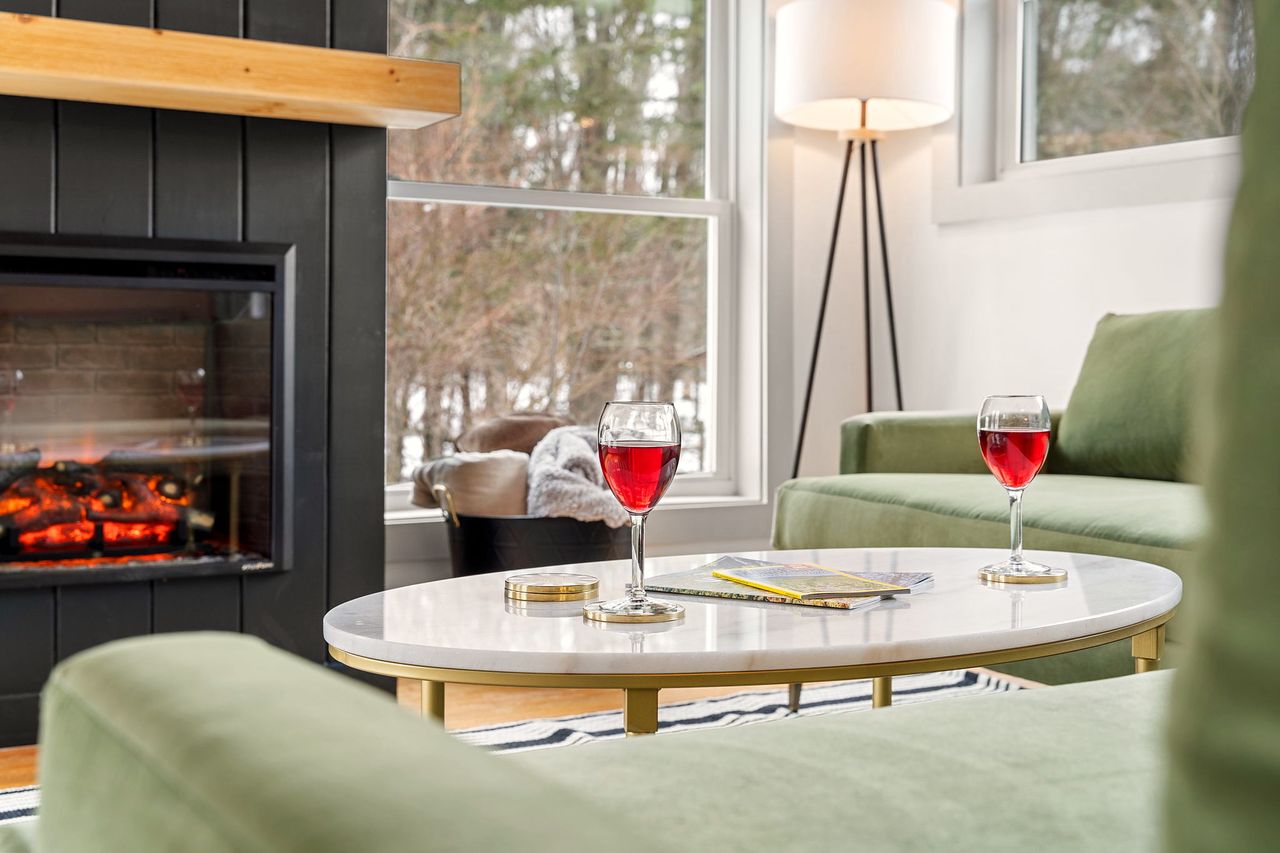
Back at the lodge, the electric fireplace in the sitting room is a good gathering point in the evening, the kind of place where guests who skied different mountains that day compare notes. There is coffee and tea in the coffee lounge if you want a hot drink, fast Wi-Fi if you are checking tomorrow's forecast, and quiet once the evening winds down. For a lot of winter guests, that is the whole evening: ski late, eat close, one beer, warm room, early sleep, and do it again tomorrow. It is a rhythm that suits this season, and it is the one most of our winter regulars settle into by their second night.
Who an evening on the mountain suits
Late-day and twilight skiing is not for everyone, and it is worth being clear about who gets the most out of it. It suits skiers and riders who already have their legs under them, people comfortable enough on a firmer afternoon surface and in lower, flatter light that they are relaxed rather than tense. If you are still finding your feet on skis, the late runs, when the snow is skied off and the light is going, are not the time to push it. Ski your morning, learn in the bright soft hours, and come in before the cold sets in.
It suits couples and small groups who like a quiet pace over a big-scene one. The whole appeal is the calm at the end of the day, so if what you want from a ski trip is a lively bar and a loud crowd, an emptying mid-week mountain at dusk is going to feel like the opposite of that. Our guests tend to be the other kind, people who came to the mountains partly to get away from the crowd, and for them the late window is the best part of the day.
It suits people who value being close. The 6 min drive is what makes staying out late reasonable rather than a gamble, and it is what lets you split your day, warm up midday, and go back out. If you are the type who likes to nip home, dry off, and return, this location rewards you.
And it suits winter travelers who know their own tolerance for cold. Some people enjoy being out as the temperature drops, the sharp air, the empty trail, the color in the sky. Others are uncomfortable the moment their fingers go cold, and there is no shame in it. If you are the second kind, ski the warm middle of the day, come in before the chill, and let the mountain's after-dark chapter be night tubing or a beer by the fire. Both are good evenings. They are just different ones.
When the lift schedule doesn't cooperate
Sometimes the mountain does not give you the evening you planned. The lifts might be on a shorter schedule than you expected, the weather might shut things down, high winds can put the upper lifts on hold, or you simply arrive to find the day already winding down. Because we would rather you not build a whole evening on a schedule you did not confirm, it is worth having a Plan B ready, and here the location does you a second favor, because the good alternatives are all close and warm.
The simplest fallback is to lean into the town-and-fire version of the evening directly. Skip the late runs, come back early, and make the walkable dinner and the brewery the whole plan. A relaxed early dinner in Lincoln and a quiet evening at the lodge is, for a lot of guests, the trip they wanted anyway. There is no failure in swapping a cold afternoon on firm snow for a warm one by the fire.
If the itch is specifically to be outside in the winter dark, night tubing is the answer that does not depend on the ski lifts running. It is its own operation on its own hill, so confirm its hours and go slide in the dark for an hour. And if you want a gentler outdoor evening still, snowshoeing and cross-country options nearby give you a way to be out in the cold and quiet under your own power, with no lift schedule involved.
The point is that an evening here is not fragile. If the marquee plan falls through, you are still in a mountain town with good food a short walk away and a warm, quiet lodge to come home to. We would rather set that expectation than have you feel a lift schedule owes you anything.
Planning it around a winter stay
If a late-day mountain evening is something you want to build a trip around, a few practical points help it go smoothly. First, decide which mountain. Loon is the close one and the easy default from here, but it is not the only game. Cannon is up in Franconia Notch and Waterville Valley is over the next ridge, and they have different characters. Our comparison of Loon, Cannon, and Waterville Valley is the place to sort that out before you buy tickets.
Second, mind the driving. Mountain roads in winter are their own skill, and the short hop to Loon is easy, but any evening driving in the White Mountains rewards a little caution. Snow squalls come up fast, roads glaze after dark, and it is worth knowing before you go. Because you are only minutes from the base, you keep your night driving to a minimum, which is one more quiet argument for staying close.
Third, download what you need before you head out. Cell service is patchy across a lot of this region, and while the Loon base area is fine, you do not want to rely on a live map or a last-second search when you are cold and the light is gone. Get directions and Loon's current hours loaded before you leave the lodge; our piece on cell service and what to download spells out what to grab. And to see how close everything really is, our area map lays out the lodge, the mountain, and town at a glance.
Last, book the room for the season you want. Winter here fills around holidays and peak weekends, and our six suites go quickly when the snow is good. If a ski-and-thaw rhythm is the trip you are picturing, have a look at the rooms and dates early. Message us to talk through which suite suits a ski weekend.
A quick checklist before you go
To pull it all together, here is what we would tell a guest heading out for an evening on the mountain:
- Confirm the hours. Check Loon's current lift and tubing schedule directly, by their site or a phone call, the day you plan to go. Do not assume; schedules move with the season and the weather.
- Know there are no lit ski trails. The after-dark skiing you may have pictured is not what Loon does. The late runs happen before the lifts close in the afternoon; the real after-dark activity is night tubing on the Little Sister hill.
- Plan your last chair. Ride up a little before the lifts stop so you get the quiet closing run instead of the sweep behind you.
- Dress for the end of the day, not the middle. Warmer gloves, good socks, a wind layer, something over your face, and a couple of hand warmers. The chairlift at dusk is the cold part.
- Bring dry gloves for the drive, and a snack and water for the cold.
- Keep the evening close. 6 min home, a hot shower, a short walk to dinner in town. Let the day end itself.
- Have a Plan B. If the lifts are not cooperating, the brewery, an early dinner, night tubing, or a fireside night at the lodge are all a few minutes away.
That is what an evening on the mountain is from our door: the quiet, cold, good-looking end of a ski day, 6 min from a warm room, with dinner a short walk away. It is a low-key, deeply satisfying way to spend a winter evening in the White Mountains, and it is one of the reasons we love this season here. When you are ready to plan it, take a look at our suites and winter dates, and we will have the coffee on and the day's mountain report ready when you arrive.
— Launchpoint Lodge, From the lodge