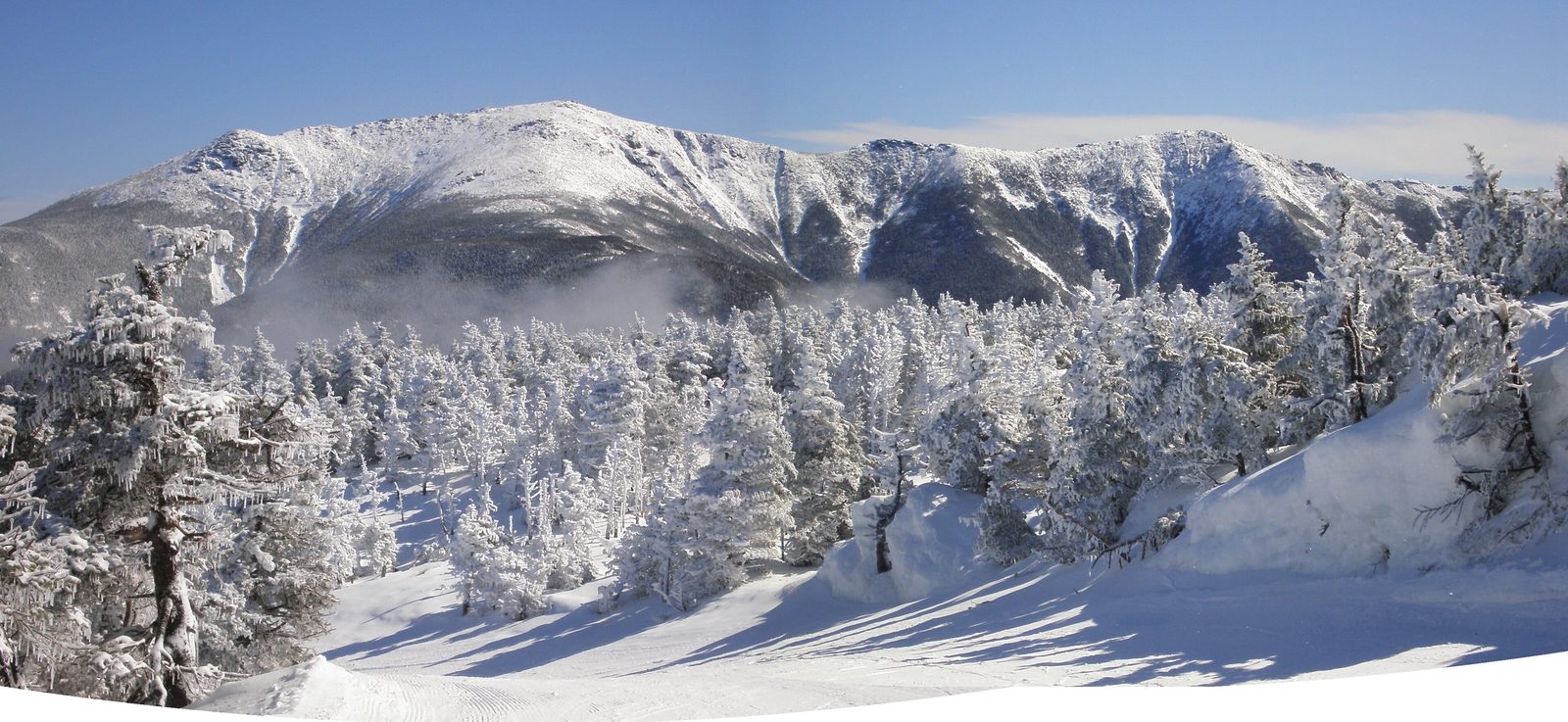
Downhill skiing gets most of the attention around here, and it earns a fair share of it. But plenty of our guests never buy a lift ticket, and the ones who come back in at dusk quiet and pleasantly worn out are usually the ones who spent the day on snowshoes or a pair of cross-country skis. It costs a fraction of a downhill day, it asks far less of your nerve, and on a clear cold morning with fresh snow still on the branches it is the prettiest way we know to spend a winter afternoon. What follows is our own version of where to go: the trails closest to the house, the bigger Nordic centers worth a drive, what to rent, what to wear, and the handful of conditions that decide whether a winter outing is a good memory or a cold slog you cut short. If you want the full catalog of routes, our guide to the area's cross-country and snowshoe trails lays them out; this piece is about putting a real day together from here.
The East Ridge trails at Loon
The closest place to start is Loon Mountain's East Ridge trail network, about 6 min east of the lodge. These are cross-country and snowshoe trails that follow a web of historic logging roads, and they run the range from gentle paths along the snow-covered Pemigewasset River to steeper pitches that climb the shoulder of Black Mountain. That spread is the appeal: a couple with different appetites for effort can start on the same flat riverside track, and the one who wants a climb can peel off for the shoulder while the other keeps to the water. The trails are wide and forgiving, the surface gets periodic grooming, and leashed dogs are welcome as long as you clean up after them. You can check current trail information on the Loon Mountain page, and it is worth a call the morning you go, since grooming and open terrain depend on what has actually fallen.
A few practical notes, because this is a trailhead and not a staffed lodge. You reach it by taking Loon Mountain Road to Black Mountain Road, then Landing Road to Wanigan Road, where the trailhead sits; there are only about four designated parking spots, so arrive early on a good snow weekend or have a backup in mind. There are no rentals at the trailhead and no ticket window, which means you sort out gear before you get there — rent from one of the Nordic centers below or a local outfitter, and we are glad to point you to the nearest one when you check in. Bring what you need for a self-guided outing: there is no warming hut and no attendant, just the trails and the woods.
We still send first-timers here first, for the same reason we like it ourselves. It is close to town, the terrain is easy to read, and you are never far from the car, so if your hands go cold or the whole idea turns out not to be your thing, you are minutes from a hot drink rather than stranded on a mountainside. For two people who want a quiet morning outdoors and a warm room to come back to, an hour or two on the East Ridge trails is about the lowest-stress way to find out whether winter in the Whites is for you.
The difference between snowshoeing and cross-country skiing
People ask us which one they should do, so here is how the two compare. Snowshoeing is walking in bigger shoes. If you can take a walk, you can snowshoe, and the learning curve is about ninety seconds long: you strap the shoes over your boots, widen your stance a little so you do not step on your own frames, and go. Modern snowshoes are light aluminum-and-plastic affairs with a toe crampon that bites on packed snow and small hills. Because you can go anywhere there is snow, snowshoeing suits people who want to wander a quiet trail, stop for photos, and set their own pace. It is the most beginner-proof winter activity we know, and it is also among the warmest, because you are moving your whole body at a walking effort.
Cross-country skiing is a different animal, and a more athletic one. On groomed trails there are two styles. Classic skiing keeps your skis in parallel tracks and works like a gliding walk, which is the version to learn first. Skate skiing looks like ice skating on snow, is faster, and takes real practice and open grooming to do well. Either way, cross-country skiing rewards a little instruction, gives you a proper workout, and covers ground far faster than snowshoes once you have the rhythm. It also needs the right surface. A groomed Nordic trail or a flat path with a few inches of settled snow is ideal; deep untracked powder or icy hardpack is not.
If you are new to both and want a low-pressure first taste, snowshoe. If you want a workout and are willing to spend an hour looking slightly foolish while you find your balance, take a classic cross-country lesson at one of the Nordic centers. Many of our guests end up doing a little of each over a weekend, and renting both is cheap enough that there is no reason to choose in advance.
The paved recreation path through Franconia Notch
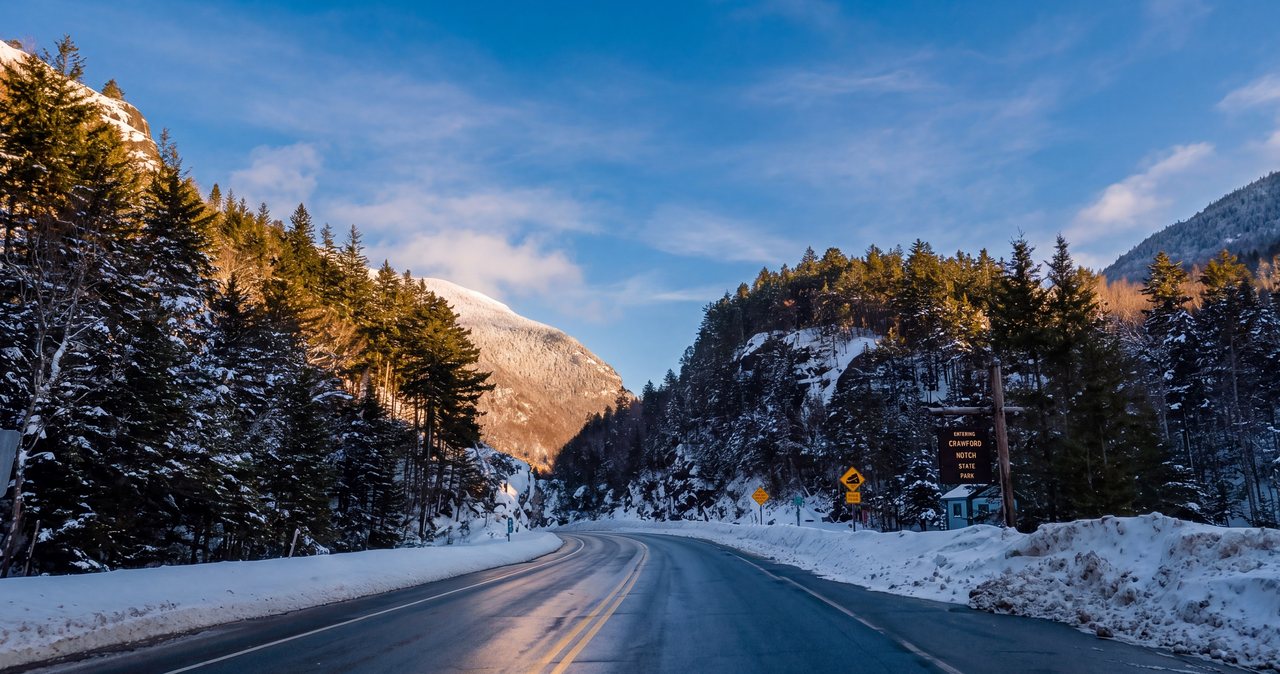
About 10 min north of the lodge, the paved recreation path that runs the length of Franconia Notch State Park becomes one of the best free winter routes in the area once the snow settles. In summer it is a busy bike path; in winter it goes unplowed, packs down under the occasional snowmobile, and turns into a flat, forgiving surface for classic cross-country skiing and snowshoeing. Because it is paved underneath, it only needs a few inches of snow to be skiable, so it often comes into shape earlier in the season than rougher trails. Lafayette Place sits roughly in the middle of the Notch and is the usual reference point for the path; winter plowing of the various lots and pull-offs varies with the storms, so check what is open before you count on a particular access point.
The scenery is the reason to come. The path threads the floor of a deep glacial pass with the Franconia and Kinsman ranges rising on either side, and in winter the whole corridor goes quiet in a way the summer version never does. Snowmobiling is one of the park's winter uses and the path is part of that network, so keep to one side, stay alert on blind curves, and skip the earbuds. You are also in a state park, so check for posted lot closures or gate hours before you rely on a particular access point after a big storm.
Two nearby landmarks are worth knowing about while you are up here, because guests ask. The Basin, a granite pothole scoured out by meltwater, is a short walk off the parkway and makes a pleasant snowshoe stop with no ticket required; in winter you often reach it along the path rather than from the summer lot. And the Cannon Mountain aerial tramway is closed. It was retired after the 2025 season and is being replaced, and no reopening date has been announced. The Cannon ski area itself still runs all winter, so the tram closure is no reason to avoid the neighborhood; you simply cannot ride the cable car to the summit for a view right now.
Trails off the Kancamagus
The Kancamagus Highway begins at the end of our street and climbs east into the national forest, and it is plowed and open for driving all winter. Several of its trailheads turn into ungroomed cross-country ski and snowshoe routes once the snow is down. These are forest trails rather than a Nordic center — no grooming, no signs pointing you to a warm building, no attendant — so they suit confident snowshoers and steadier skiers more than absolute beginners, and they reward good navigation and a companion. If a level, easy outing is what you want, the recreation path in the Notch or one of the Nordic centers below is the better call; the Kanc trailheads are for people comfortable being self-reliant in the woods.
The highway itself deserves respect in winter, and this is the part we make sure guests hear. It is a 34-mile scenic byway with no gas, no food, no services, and no towns for its entire length, and cell signal is essentially gone once you leave the edge of Lincoln. Fill your tank before you go, download your directions and any trail map at the lodge where the Wi-Fi is reliable, and tell someone your plan. Bring a real headlamp or flashlight, water, and more layers than the thermometer in town suggests, because it runs colder up on the road. Winter driving on the Kanc is its own skill, and our note on winter driving in the White Mountains covers the conditions and the habits that keep it uneventful.
You do not need to go far to get the good part. The trailheads closer to the Lincoln end put you into quiet forest quickly, and you can be back at the house within half an hour if the weather turns. Wherever you park along the highway, you will need a White Mountain National Forest recreation pass, which runs five dollars for the day or thirty dollars for an annual pass, displayed by your license plate at the self-serve kiosks. It is a small thing that is easy to forget until you are staring at a fee sign in the cold, so buy it ahead if you can, and check current conditions before you build a plan around any single trail.
The Lincoln Woods Trail closure
In most winters we would send you straight to the Lincoln Woods Trail, and it deserves a mention precisely because so many people arrive expecting to use it. It runs 2.9 miles along the Pemigewasset on an old railroad grade, dead flat and free, crossing a suspension bridge at the start, and it is normally one of the best beginner snowshoe walks anywhere near town because it asks almost nothing of you. This year it is out. The trail is closed for the 2026 season under a joint decision by the U.S. Forest Service and the Appalachian Mountain Club, and we are not routing guests to it while that stands. Our note on the Lincoln Woods Trail closure lays out the situation and what it means for planning, and it is worth a read if that trail was on your list.
The good news is that nothing else here depends on it. The recreation path through the Notch gives you the same flat, easy, free character with better scenery, and it is a straight substitute for a level walk along a river. If your heart was set on Lincoln Woods, that is where we would point you this season. Check the current status before you build a plan around any single trail, because closures and conditions in the national forest change with the year, and a plan built on last winter's information is how people end up at a locked gate.
The bigger Nordic centers
If you want a full Nordic day on proper groomed trails and do not mind a drive, three centers set the standard in this part of the state, and all three rent gear, sell day passes, and groom on a schedule that a good snow year rewards. The closest is the Franconia Village cross-country center at the Franconia Inn, roughly 20-odd min north over the notch. It grooms about 30 kilometers of trail through a mix of open ground with the Kinsman range in view and woodsy track that weaves behind the inn. A trail pass there also gets you onto the snowshoe trails, a lighted skating pond, and a tubing hill, which makes it a good pick for a group with mixed interests.
Bretton Woods, over on Route 302 and the better part of 40 min away, is one of the largest cross-country areas on the East Coast, with more than 100 kilometers of maintained trail spread across open fields, spruce and fir woods, and hardwood stands, plus panoramic looks at Mount Washington and a stretch of dog-friendly trail. It is the place to go when you want to ski for hours and not repeat yourself. Great Glen Trails, up at the base of the Mount Washington Auto Road in Pinkham Notch, is the longest haul of the three at better than an hour from here, with groomed track right off the base lodge and a wider spread of ungroomed terrain beyond it for off-track skiing and snowshoeing, plus snow tubing back at the base.
Call ahead midweek in a thin snow year, because how much of any center is open on a given day comes down to what has actually fallen and been groomed. All three are set up for beginners as well as veterans, with rentals and lessons on site, so you do not need to own a thing to spend a day at any of them. If your legs are new to this, the Franconia center's shorter, closer, more forgiving network is the gentlest place to log your first real cross-country miles.
Renting gear or bringing your own
Our advice for almost everyone is to rent at whichever center or shop you are using rather than hauling equipment up from home. Cross-country skis want to match the day's snow, and the staff at a Nordic center will hand you skis waxed or scaled for the conditions that morning, which matters more than most first-timers expect. Snowshoes are cheap to rent and worth trying on a trail before you spend real money on a pair you might use twice. A rental setup also spares you a roof box and the guessing about whether your gear suits the terrain.
One thing to plan for: the East Ridge trailhead at Loon has no rentals on site, so if that is your morning, pick up gear the day before at one of the Nordic centers or a local outfitter. The three centers above all rent, and you can message us for the closest option that fits your plan. Sorting the gear the afternoon you check in, rather than the morning you want to ski, is the difference between a relaxed start and a rushed one.
If you do own skis and want to bring them, classic touring skis or backcountry skis are the right tools for the recreation path and the ungroomed Kanc trails; skinny racing skis meant for immaculate grooming will fight you on rough forest trail. For snowshoes, get the sizing right for your weight plus a loaded pack, because an undersized shoe sinks and turns an easy walk into a workout. Whatever you rent or bring, good poles help more than beginners think, both for balance on snowshoes and for propulsion on skis. To be clear about what we do and do not offer: we are a small inn, not an outfitter, so we do not keep a stock of skis and snowshoes at the house — what we can do is point you to the nearest rental and tell you what the snow has been doing.
What to wear on a winter trail
The most common mistake we see is overdressing. Cross-country skiing and hard snowshoeing warm you up far more than standing in a lift line or riding a chair, and beginners who bundle up like they are going downhill are peeling layers and sweating within 20 min. Dress in layers you can strip and stuff in a pack: a light base layer against the skin, a thin insulating layer, and a wind shell you can take on and off as your effort changes. Wet from sweat is as cold as wet from snow once you stop moving, so the goal is to run slightly cool while you work.
Gloves usually beat heavy mittens for this, because you want to handle poles and bindings, and your hands stay warmer than they would sitting still on a lift. Bring sunglasses or goggles, since the glare off open snow on a bright trail is real and tiring. Take water, because you will sweat in February whether you notice or not, and a small snack for a longer tour. Warm socks and boots that keep the snow out matter as much as anything up top.
A short packing list we give guests who ask, on top of the layers above:
- A dry set of gloves and socks left in the car, to swap into for the drive back.
- A headlamp or flashlight, because the light goes early and a longer tour can run late.
- Water and a snack, more than you think for anything past an hour.
- Sunglasses or goggles, and sunscreen on a bright day above the snow.
- A charged phone with your directions and any trail map already downloaded, since signal disappears on the Kanc and is patchy in the Notch.
Our packing notes for a White Mountains weekend go through the full layering system that keeps a winter day outside comfortable instead of something you endure. That spare, dry set of gloves and socks in the car is the small thing that most reliably turns the end of a cold outing into a pleasure rather than a shivering slog; it weighs nothing and you will thank yourself.
Conditions and safety before you go
Winter days are short up here, and that is the first thing to plan around. Full dark comes early in December and January, so start earlier than you would in summer and give yourself a wide margin to be off the trail before the light goes. Turning around with plenty of daylight to spare is always the right call; the trail will be there next time. On groomed Nordic trails at a staffed center this matters less, because you are close to a warm building, but on the Kanc or a backcountry route it matters a great deal.
Snow itself runs the show. Grooming and open terrain depend on recent snowfall, and in a lean or thawing week even the big centers may have limited trails open, so a phone call the morning you go beats a wasted drive. Watch the mountain weather too, because it swings fast and it is colder and windier up high and out on exposed sections than it is in town. Carry more warmth than you think you need, tell someone your plan on the less-traveled routes, and remember that cell signal disappears on the Kancamagus and is patchy through the Notch, so nothing that lives only on your phone can be counted on once you are out there.
Know the line between a Nordic center and the backcountry, and stay on the right side of it for your experience. A mapped, groomed, staffed trail network is a low-risk outing you can enjoy on your first day. An ungroomed forest trail off the highway, in deep snow, with no signal, is a bigger commitment that deserves more caution, better navigation, and a companion. There is no shame in choosing the groomed option; most of our guests do, and they have a fine time.
A day built around the snow
Here is the version we hand to guests who ask us to plan it. Spend the morning on Loon's East Ridge trails, a couple of hours finding your rhythm while your legs are fresh and the light is good, either on snowshoes or classic skis you picked up the day before. Come back into Lincoln for a warm lunch; the town brewpub, Basecamp Brewing, is an easy walk-in for a burger and a beer, and there is plenty else in town if the wait is long. In the afternoon, if your legs still have miles in them, head up to the recreation path in the Notch for a flatter, mellower second act with the ranges standing over you.
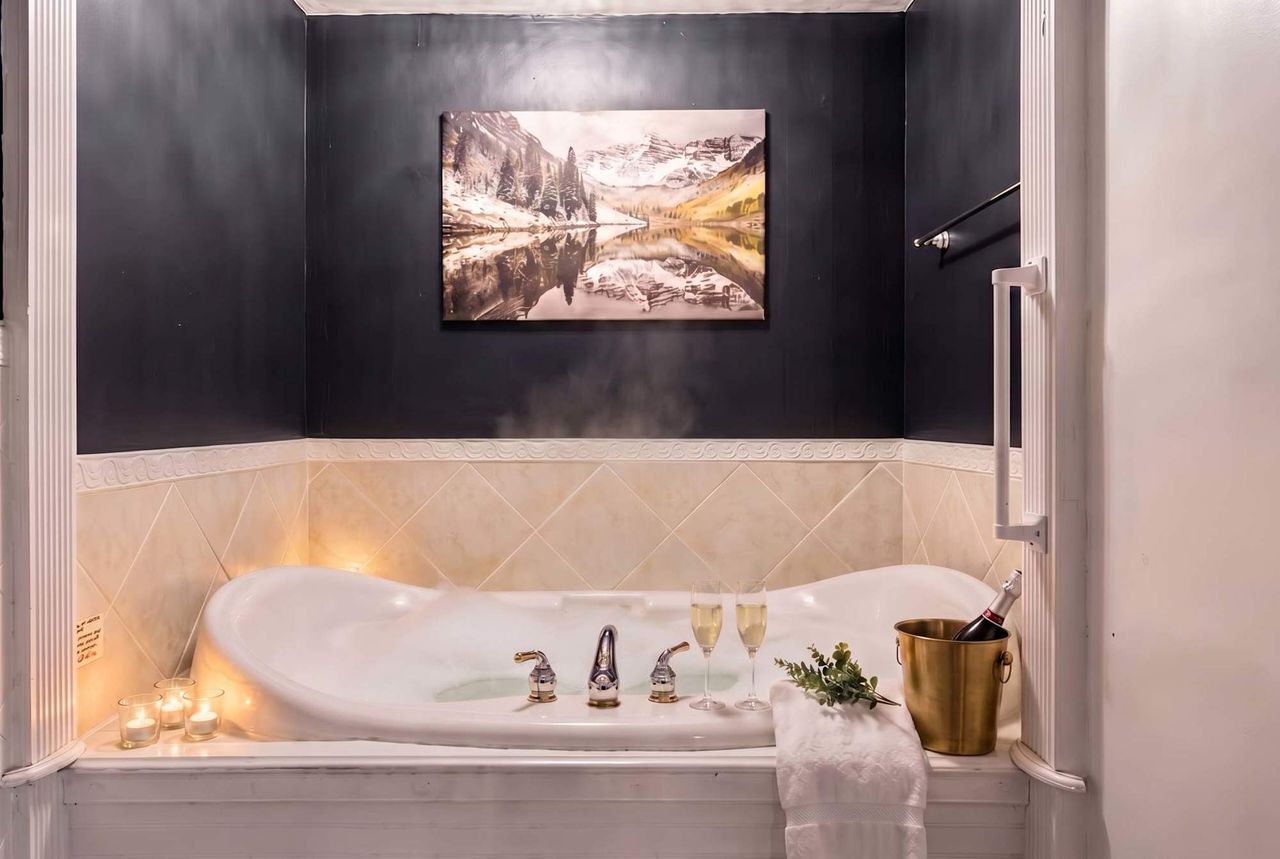
And if the afternoon says otherwise, the better plan is often to stop while you are still enjoying it. A cold day outdoors earns you the fireplace, a hot drink, and a long soak, and the contrast between a cold trail and a warm quiet room is a large part of why a winter weekend here sticks with people. A day like this is a fine reason to come even if the downhill scene was never what drew you, and it is the version we most often recommend to couples who want the mountains without the lift lines.
The whole thing costs a fraction of a downhill ski weekend, and for two people who value quiet over adrenaline it is frequently the better trip. When you are ready to pick dates, remember that the best rate is always direct, so you can check availability and book with us and reach out with any questions about conditions before you come. Give us a clear cold week with fresh snow on the ground and we will happily tell you which trail has been skiing best lately, because we walk and ski the same ones ourselves.
— Launchpoint Lodge, From the lodge