Every winter we get the same note in the inbox, phrased a dozen different ways: we're coming to the mountains, but we don't really ski. Sometimes it's a bad knee. Sometimes it's one skier and one reader in the same couple. Sometimes people just want the snow without the lift lines and the sore legs. We tell all of them the same thing, so we may as well write it down: a winter weekend up here is very good without ever clicking into a binding.
Lincoln sits right at the mouth of the notch country, and in winter the whole area slows down into something calmer than the summer rush. The point of a no-ski weekend isn't to fill every hour. A good one is mostly a walk in fresh snow, a warm room to come back to, a long lunch, an evening lit up with ice, and time by the fireplace when the temperature drops. Here's how we'd shape two nights for someone who wants the White Mountains in winter and would rather leave the skis at home.
Why a no-ski winter weekend works here
The mistake people make is assuming the mountains in winter are only for skiers. They aren't. The valley towns keep running all season, the scenery is at its best under snow, and half the things worth doing up here have nothing to do with a chairlift.
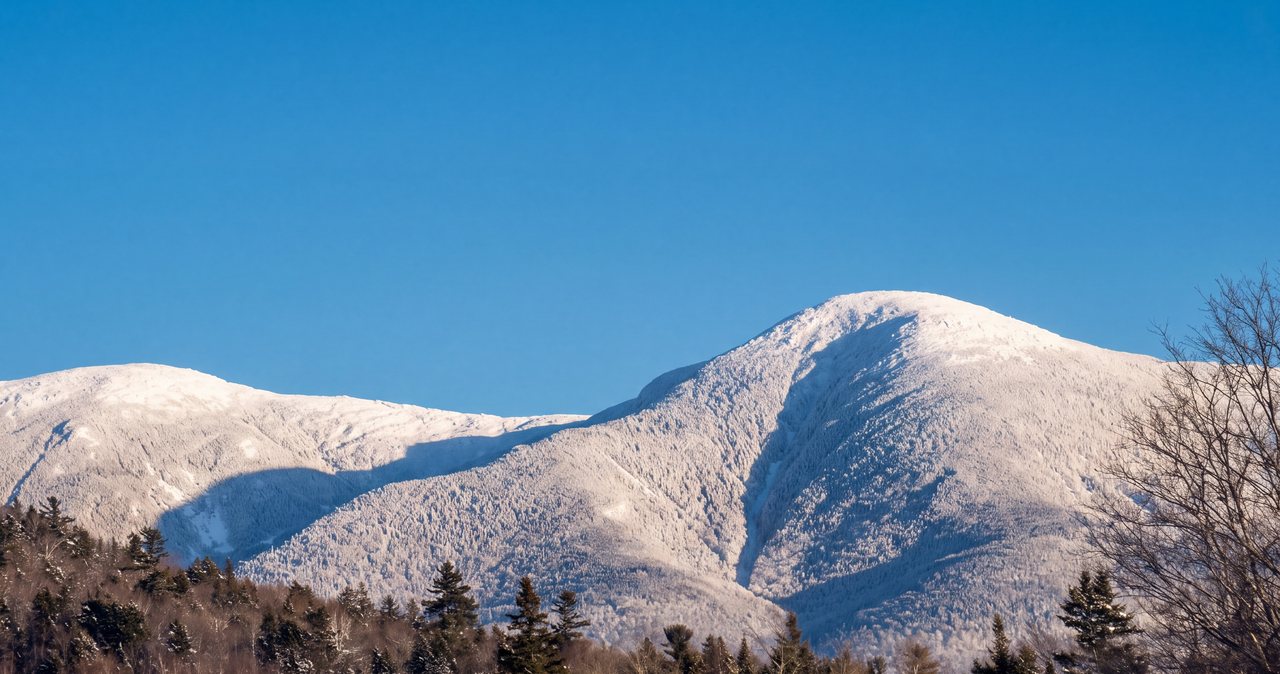
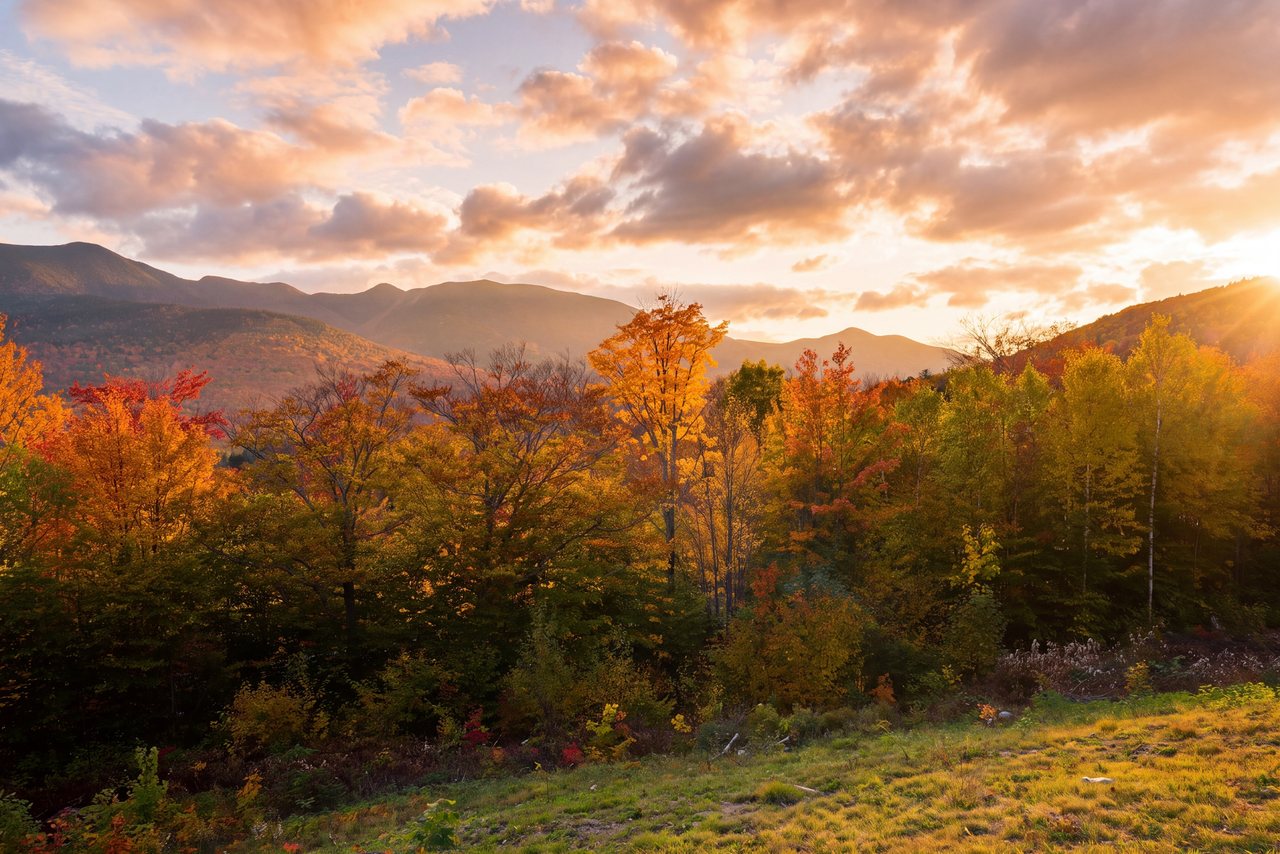
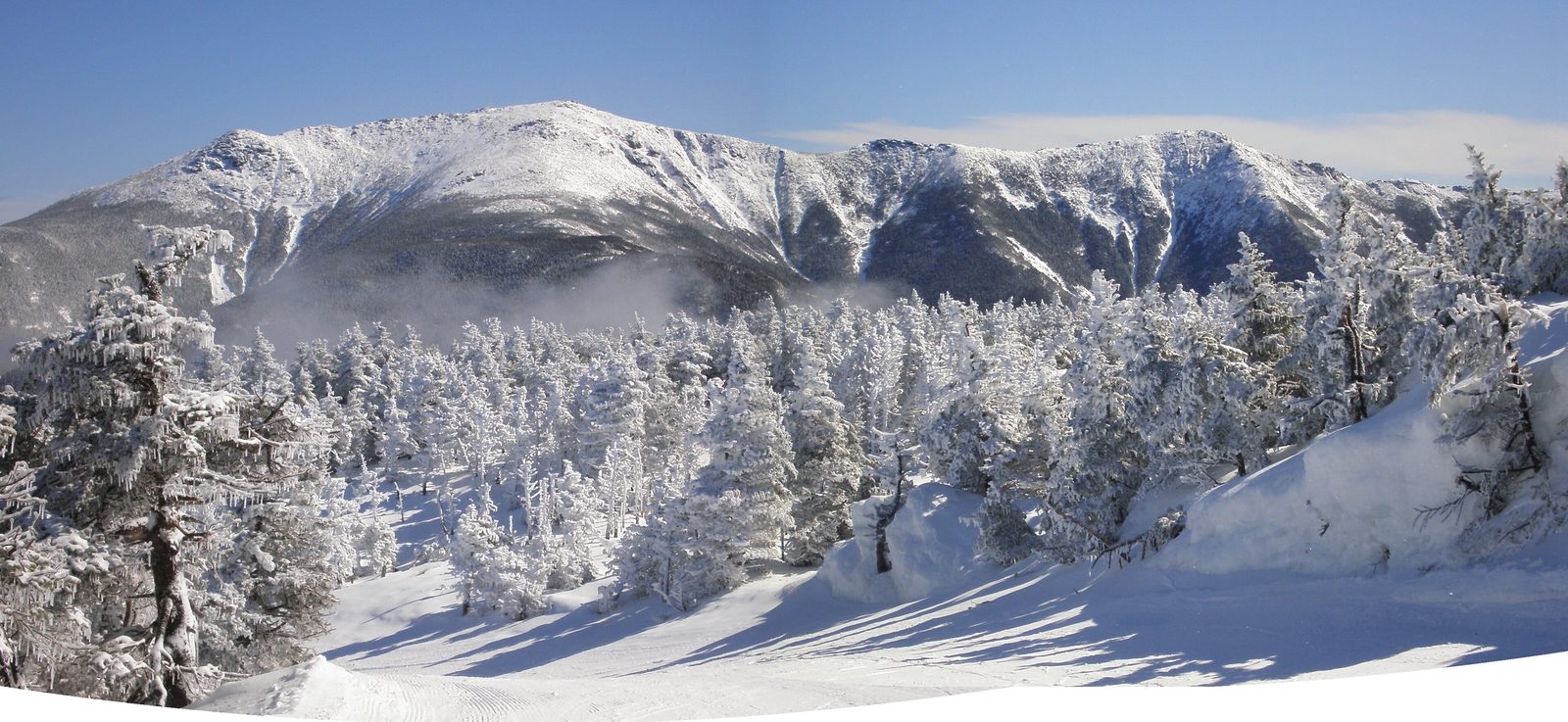
Lincoln and its twin town North Woodstock straddle Route 112 near Exit 32 off I-93, which means you have restaurants, a brewery, coffee, and a small-town core all within a short walk or a 2 min drive. Franconia Notch State Park is about 10 min north. Loon Mountain is 6 min away and runs a scenic gondola you can ride without owning a lift ticket. And the winter light, low and long across snow-loaded spruce, is the reason a lot of our repeat guests come in January rather than July.
A no-ski weekend also plays to the strength of a small inn. You're not driving 45 min back to a hotel strip after dinner. We're a restored 1902 colonial with six suites, walkable to town, and the whole shape of the day can be gentle: out for a few hours, back to warm up, out again after dark. If you want a fuller picture of the season before you plan, our White Mountains in winter guide lays out the months, the weather, and what's open when.
Friday: getting here and settling in
Most of our winter guests drive up on a Friday afternoon. From Boston it's about 130 miles, roughly 2 to 2.25 hours on I-93 north to Exit 32, and in good conditions it's an easy run. In winter you build in more time. Snow squalls come through the notch fast, the interstate can go from bare to snow-covered in a few miles, and the last stretch north of Plymouth climbs into real mountain weather. Leave earlier than you think you need to, and don't plan to arrive right at dark in a storm if you can help it.
We keep check-in simple. It's keyless self check-in from 3pm, so you don't have to make a front-desk appointment or race anyone's clock. If Friday traffic or weather slows you down, your suite is still there with the code waiting. We'll have sent everything you need before you leave home, and if you want to know exactly how that works, we wrote it up in how self check-in works.
Parking is free and right here, which matters more in winter than people expect. You're not hunting for a spot in a snowbank or paying a garage. Pull in, grab your bags, get inside, and start the coffee while your hands warm up. Every suite has one. Most suites are TV-free on purpose, and the Wi-Fi is fast fiber if you want to check the weather or a trail report.
Winter driving in this part of New Hampshire deserves its own respect, and we're not going to soft-pedal it. If you're not used to snow roads, read our winter driving notes for the White Mountains before you come. It covers tires, what "wintry mix" really means on I-93, and why you slow down on the bridges first.
What to pack for a White Mountains winter weekend
You don't need mountaineering gear to have a good no-ski weekend, but you do need to take the cold seriously. Temperatures in the valley can sit in the teens and twenties, and the wind in the notch makes it feel colder. The people who are miserable up here are almost always the ones who packed for a city winter and not a mountain one.
Bring real winter boots with grip, not fashion boots. Add a pair of slip-on traction cleats (the little chain-and-spike kind that stretch over your soles); they're cheap, they pack flat, and they turn an icy boardwalk or a packed-snow trail from sketchy into easy. Layer with a base layer, a warm mid-layer, and a windproof shell. Hat, gloves, and a neck gaiter do more than a heavier coat alone. Hand warmers are worth it for an evening outdoors at the Ice Castles.
Two things people forget: sunglasses, because snow glare is real and bright, and a headlamp or good flashlight, because it gets dark early and parking areas aren't always lit. If you plan to snowshoe, you can rent snowshoes locally rather than hauling your own. And keep a blanket, a snow brush, and some water in the car. We keep a fuller list of what to pack for a mountain weekend that works year-round, but the winter short version is simple: warmth, traction, and a way to see in the dark.
One more: bring layers you can shed. The rhythm of a winter day here is cold outside, warm inside, cold again. You'll be peeling off a shell the second you walk into a brewery and pulling it back on 20 min later. Easy on, easy off beats one big parka every time.
The Ice Castles after dark
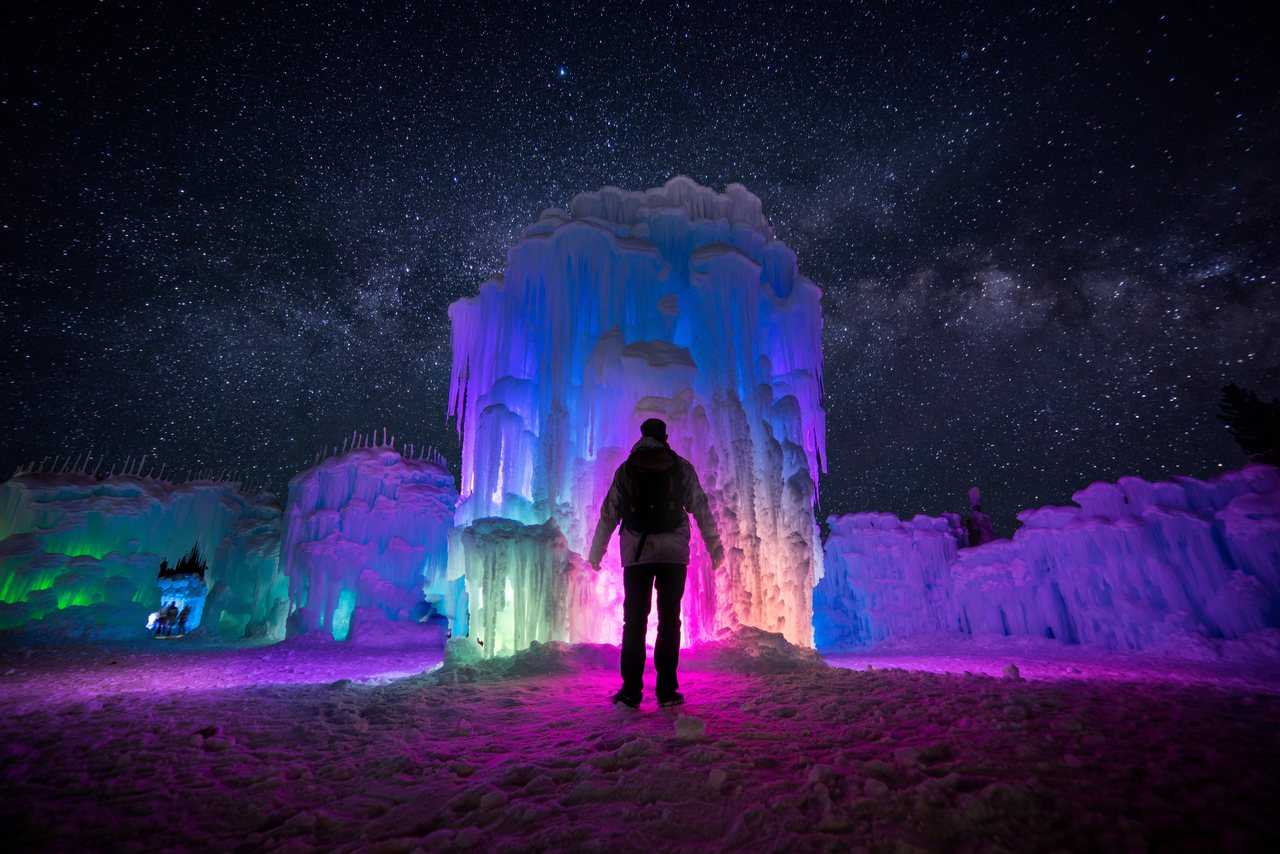
If there's one winter-only thing we point no-ski guests toward, it's the Ice Castles in North Woodstock, about 5 min from us. It's roughly an acre of ice towers, tunnels, slides, and archways that a crew builds by hand and grows all season, lit from within after dark so the whole thing glows. Recent seasons have added a light walk, a sleigh-ride trail, and an ice bar, which suits an adults-only weekend nicely.
Here's the part to get right, because it trips people up. The Ice Castles are winter-only and weather-dependent, they don't open until deep into December (a recent season opened the day after Christmas), and they sell timed-entry tickets that go fast on weekends. You book a specific arrival window online ahead of time. They can also close on short notice if a warm spell softens the ice or a storm rolls in. So the rule is: buy tickets in advance for the evening you want, and check their site the day of to confirm they're open before you drive over. Don't treat it as a walk-up.
Go after dark. The color is the whole point, and it only really works once the lights are on and the sky is black behind the towers. Dress warmer than you think, because you'll be standing and walking slowly on ice for an hour or so with no way to warm up in the middle. Traction cleats help here too. It's a good first-timer's outing, and it's the kind of thing that's better seen in person than in a photo.
Because it's so close, this is an easy anchor for a Friday or Saturday evening: dinner in town, then a short drive to the ice, then back to the fireplace. If it's sold out or closed for weather, don't force it; the rest of this weekend stands on its own.
A flat walk or a first-time snowshoe
The single best no-ski activity up here is walking in the snow, and you can pitch it at any effort level. On the easy end, a groomed flat path or a plowed loop gets you the cold air, the quiet, and the big white views without any real climbing. On the slightly-more end, snowshoes open up trails that would be a slog on foot, and they're easy to learn: if you can walk, you can snowshoe within about 5 min.
You don't need to be fit or experienced to enjoy this. Rent a pair of snowshoes in town, pick a gentle, well-traveled trail, and go slowly. Flat, forested routes near the valley floor are forgiving, and turning around whenever you like is always an option. We keep a running list of easy winter walks and where to rent gear in our snowshoeing and cross-country skiing notes for Lincoln, which also maps out groomed options if you'd rather glide than trudge.
A few cautions. Winter shortens the day, so start walks with plenty of daylight to spare and carry a headlamp anyway. Trails that are simple in summer can be icy, drifted, or hard to follow under snow, so pick well-used routes and don't wander off them. And leave the high, exposed alpine hikes for another trip. The famous ridge walks above treeline are a different, serious sport in winter with real avalanche and wind-chill risk, and they are not a casual no-ski afternoon. Keep it low, keep it flat, keep it fun.
If you want a target that feels like an accomplishment without any exposure, a gentle out-and-back to a frozen pond or a well-marked forest loop is perfect. You get the payoff of a destination, the snow underfoot, and a warm room waiting when you're done.
The gondola without the skis
Here's the trick a lot of non-skiers miss: you can ride a ski-area gondola up the mountain and back without ever putting on skis. At Loon Mountain, 6 min from the lodge, they sell a scenic gondola ticket for riders only. It's an enclosed four-person cabin that carries you up toward Loon Peak, so you're warm and dry the whole way while the skiers slide by underneath you.
At the top there's a summit café to sit and warm up in, and an observation tower that opens up long views across the national forest and out over the Pemigewasset Wilderness on a clear day. On a bright cold morning after a snowfall, the ride up through frosted trees is the kind of thing you remember from a winter trip. Loon runs other winter activities and the occasional special event for non-skiers too, so it's worth a look at their current calendar before you come.
Practical notes: gondola operations depend on weather and wind, so a very windy or icy day can put it on hold, and it's smart to check that it's running before you drive over. Dress for the summit, not the parking lot; it's colder and windier up top than at the base. And if one of you does ski and the other doesn't, this is the classic split: the skier takes a few runs while the non-skier rides up for the view and a coffee, and you meet back at the base.
A snowy scenic drive, conditions permitting
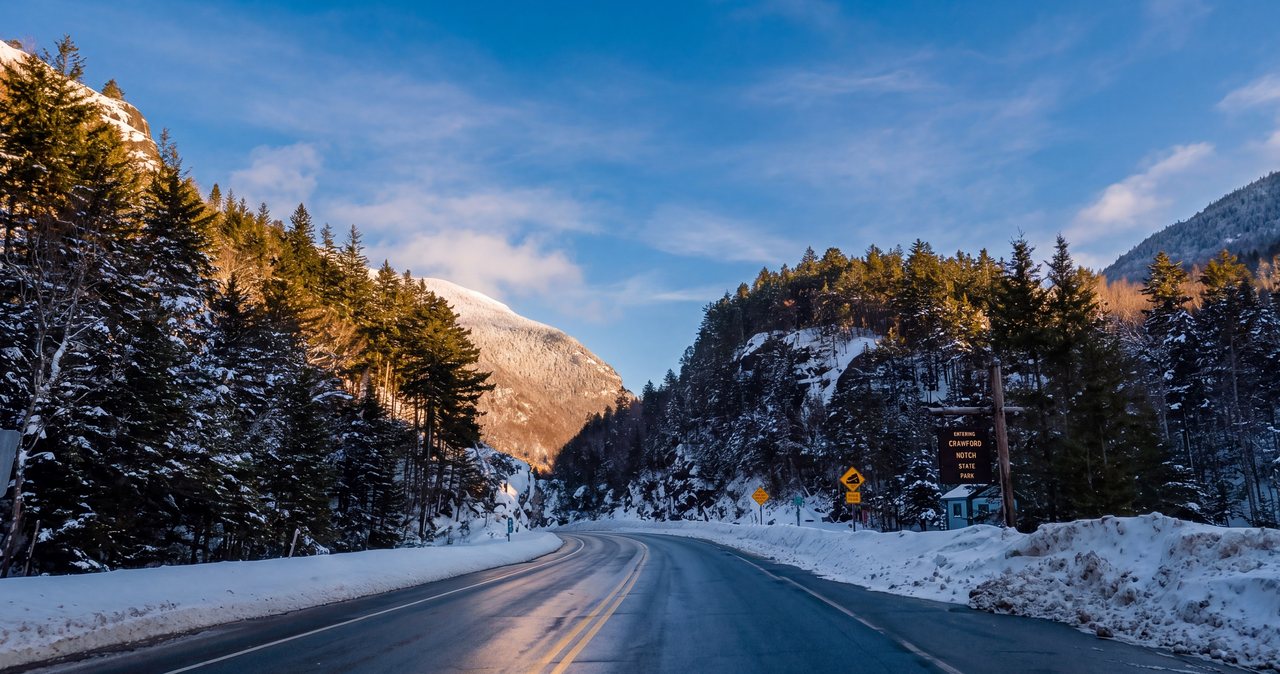
One of the best no-effort winter experiences here is simply driving through the snow country, and the headline road is the Kancamagus Highway, "the Kanc," which starts right at the edge of Lincoln. It's a 34-mile National Scenic Byway over the mountains to Conway, and under snow it's beautiful.
Now the part to get right, because there's a lot of bad information out there. The main through-road of the Kancamagus Highway is kept plowed and open year-round for regular traffic, except when a storm forces a temporary closure. What is not maintained in winter are the scenic pull-offs, the trailhead parking lots, and the side roads (Bear Notch Road, for one, closes to cars for the season and becomes a snowmobile trail). So you can make the drive from Lincoln to Conway on a clear winter day, but you often can't pull into the overlooks or the waterfall lots the way you would in summer, because they aren't plowed. Check current conditions before you go, and if a storm is moving through, don't attempt it.
The other thing the Kanc is famous for, in every season, is having no services at all. No gas, no food, no towns for the whole 34 miles. In winter that matters more: fill the tank in Lincoln first, and don't set out on a low battery or empty stomach. Cell service on the Kanc is essentially nonexistent, so download your map and directions before you leave town. We keep a whole note on that in cell service and what to download, worth reading before any drive back here in winter.
If the Kanc is closed or the weather's ugly, you have gentler options. The parkway up through Franconia Notch is a plowed, interstate-standard road, so a drive north to look at the frozen notch and turn around is easy and safe in most conditions. A whole day of scenery with no hiking at all is a perfectly good winter plan on its own.
Franconia Notch in winter, and two things to get straight
Franconia Notch State Park, about 10 min north, is the dramatic mountain pass everyone pictures when they think of this area: sheer cliffs, a frozen Echo Lake, and Cannon Mountain rising on the west side. In winter it's stark and gorgeous, and you can experience most of it from the warmth of the car with a few short stops where the lots are cleared.
Two things we make sure guests know before they go, because the old guidebooks and half the internet are out of date. First, the Cannon Mountain aerial tramway is closed. It shut down in late October 2025 for a full replacement, and no reopening date has been announced. The Cannon ski area still runs in winter for skiers, but you cannot ride the tram right now, so don't plan your day around it. Our page on the Cannon Mountain tramway is kept current with the status.
Second, the Old Man of the Mountain, the famous rock profile that used to be the symbol of the whole state, is gone. The granite profile collapsed off the cliff in May 2003. What's there now is a memorial plaza at the edge of Profile Lake with steel "profiler" viewfinders that line up the missing profile against the cliff when you stand in the right spot. It's a lovely, slightly melancholy stop, and worth understanding so you're not scanning the mountainside for a face that isn't there. We tell the story on the Old Man of the Mountain page.
Winter caution for the notch: cell service is spotty to nonexistent in here, the wind funnels hard through the gap, and snow can reduce visibility fast. Download directions first, keep the tank topped up, and treat any short walk from a plowed lot with the same respect as the rest of the season. It's an easy, high-reward stop when the weather's cooperating and a place to skip when it isn't.
A long lunch, a brewery, and a bookshop
The best thing about basing a no-ski weekend in Lincoln is that the town gives you a whole day's worth of indoor pleasures within a short walk of the lodge. This is where a cold or stormy afternoon stops being a problem and starts being the plan.
Lincoln and North Woodstock have a cluster of restaurants, a brewery, coffee, and a bookshop close together, so you can build a lazy town day out of it. Start slow with coffee, wander the bookshop, have a long lunch somewhere warm, and end the afternoon over a beer. If beer is the point, there's a long-running brewpub over in North Woodstock set in an old railroad building, along with a newer spot or two closer to Lincoln. Hours shift in the off-season, so it's always worth a quick check before you walk over.
A town day pairs beautifully with the outdoor half of the weekend. Do a snowy morning walk or a gondola ride, come back and warm up, then spend the coldest part of the afternoon indoors with a book and a beer before heading out to the Ice Castles after dark. On a genuine storm day, you can skip the driving entirely and just live in town, which is the whole reason we like being walkable.
This is also the half of the trip where the weather can't really ruin your plans. A snow day that would wreck a hiking weekend just moves everything indoors, and the town is built for it: warm rooms, hot food, and something to read a few minutes from the door.
A spa afternoon and slow hours
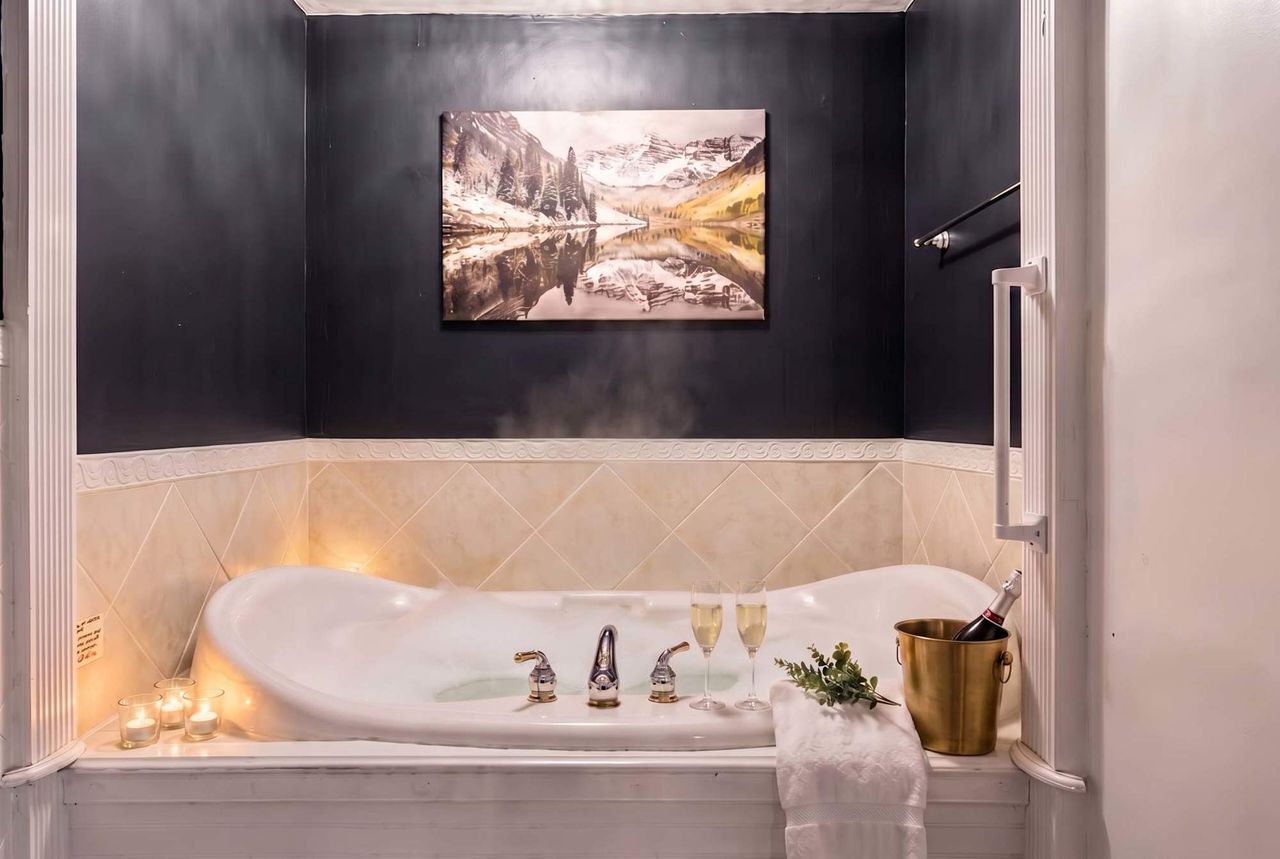
Part of a no-ski weekend is permission to do less. Some of our favorite guest stories are the ones where the big accomplishment of the day was a long soak, a massage, a nap, and a good dinner. In the cold months especially, an afternoon built around warmth and quiet is not a wasted afternoon.
The area has a few spa and wellness options, and a slow day around one of them is a very good use of a winter Saturday. Book any treatment ahead, particularly on a weekend, because the good slots fill. Our wine, spa, and slow days guide for Lincoln is the place to start if you want to point the whole weekend toward relaxation rather than activity.
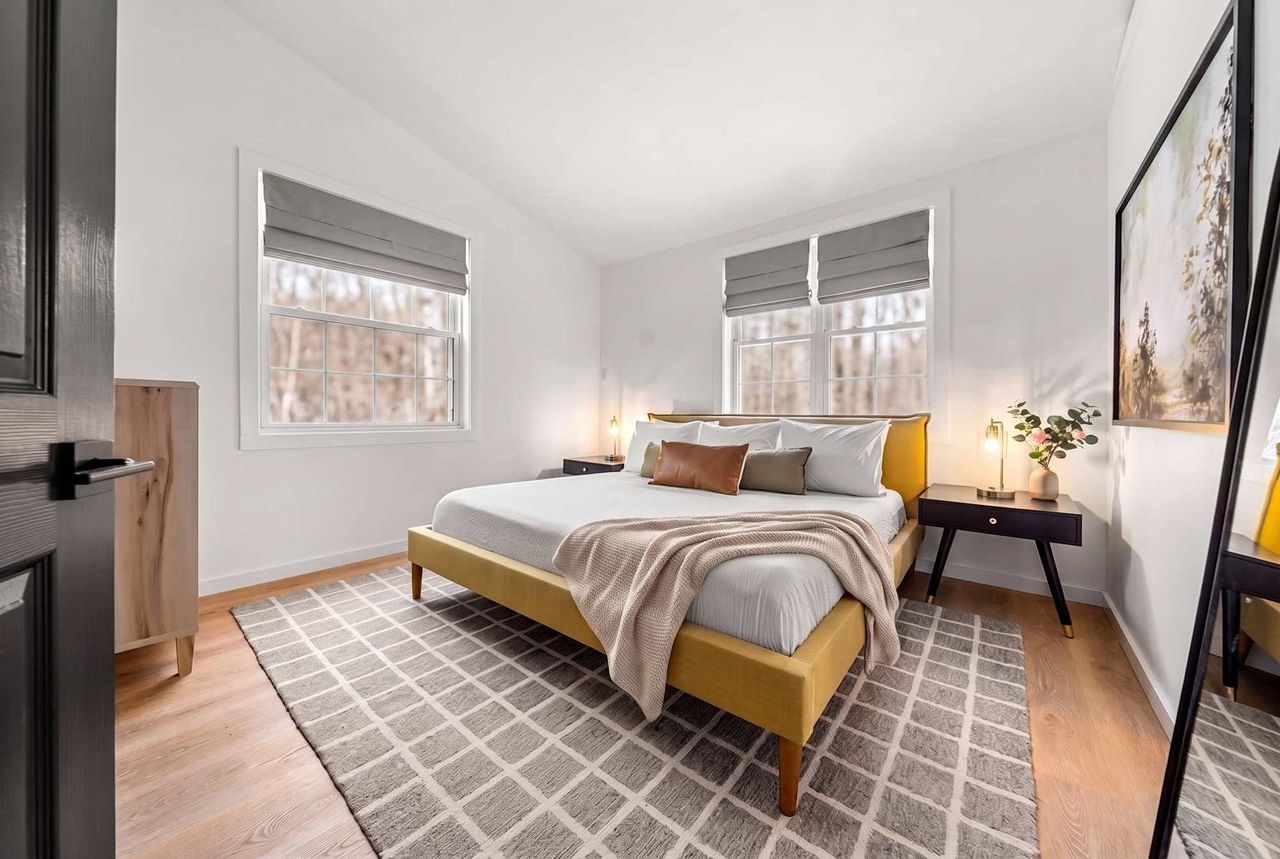
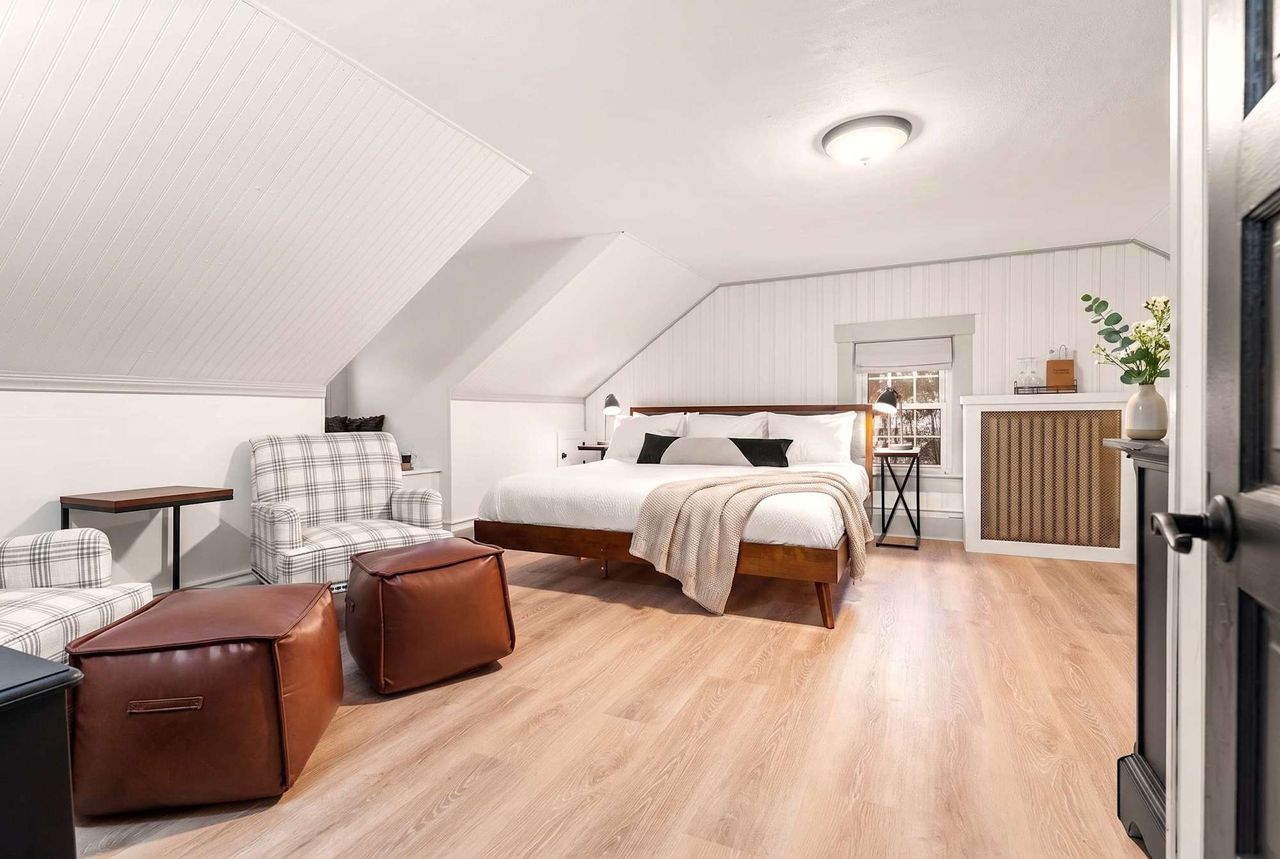
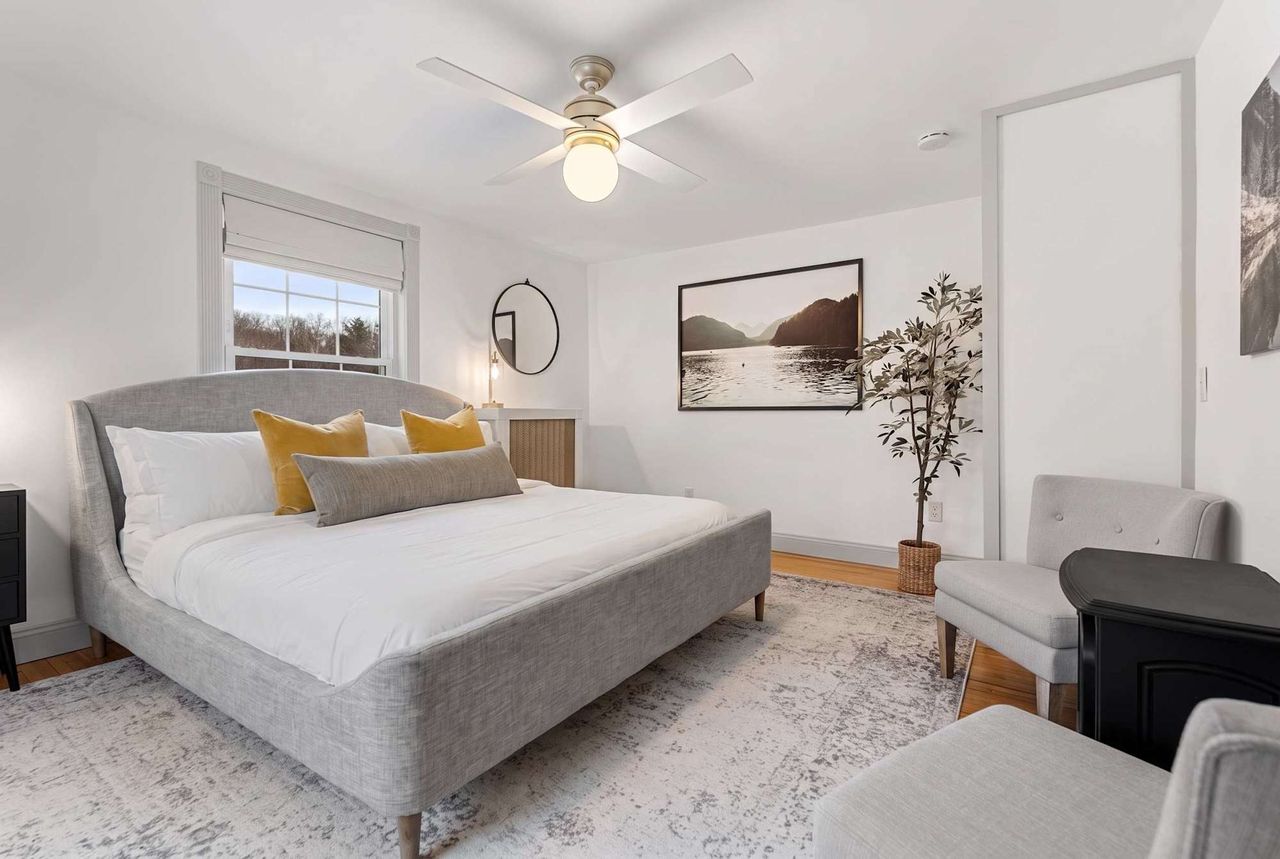
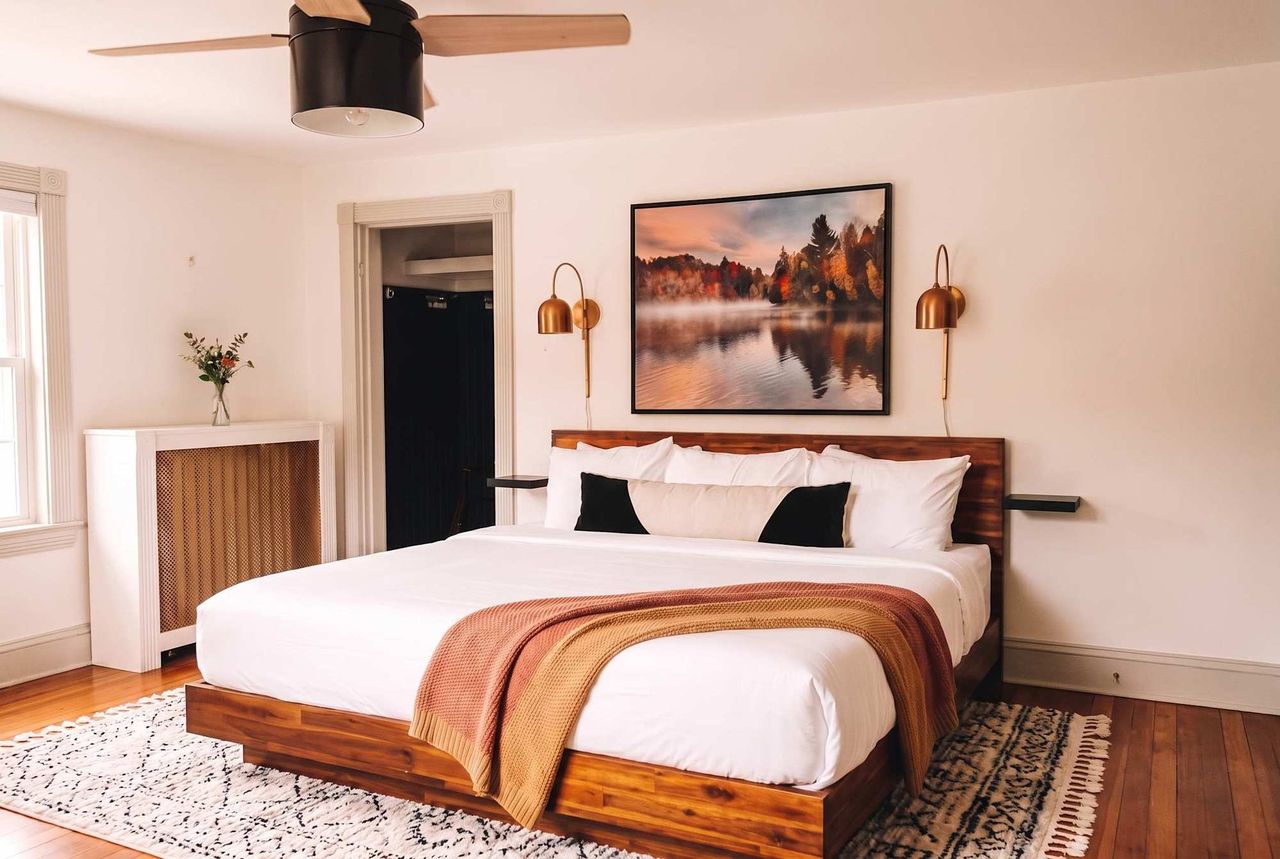
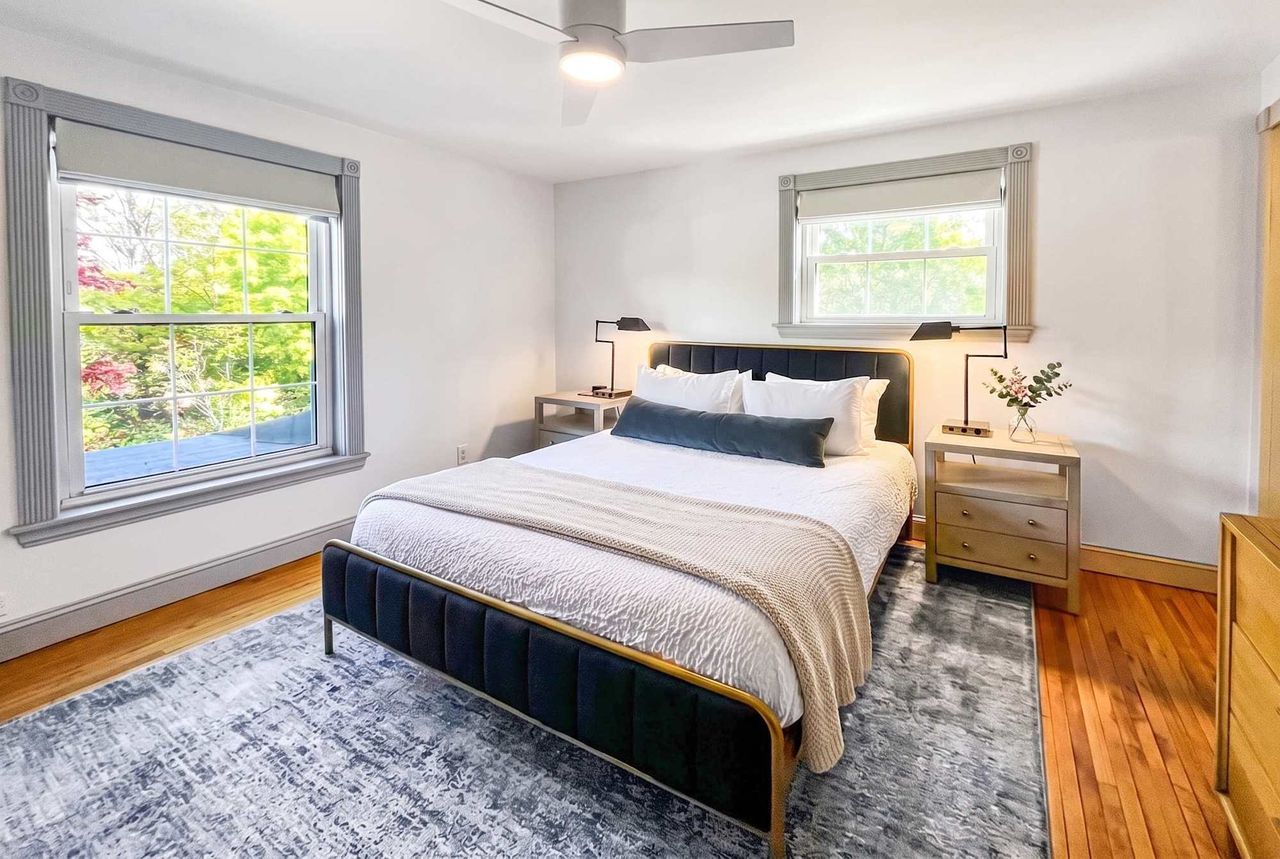
Back at the lodge, the suites themselves are built for slow hours. Five of the six suites are TV-free, so you wind down instead of half-watching something; the point is a good book, a long conversation, an early night. The coffee lounge on the main floor handles the morning, the fiber Wi-Fi is there if you need it and easy to ignore if you don't, and the whole place stays quiet because it's an adults-only, pet-free house. We set it up that way on purpose, and most guests tell us the quiet is the part they didn't know they needed.
This is also the weekend where the difference between suites is worth a minute of thought. Some of ours suit a couple who wants to burrow in for two nights and barely leave. You can see the whole lineup and pick the one that fits on the rooms page. Whichever you choose, the winter version of the experience is the same: a warm room to come back to when your face is cold.
The fireside evening back at the lodge
The best hour of a winter day up here is often the last one, back inside with the cold shut out. After the Ice Castles or a drive through the notch, coming home to a warm suite in a quiet 1902 house is the whole reward, and it's the part guests tell us they remember.
Our suggested rhythm for a winter evening is unhurried. Get in from the cold, start the coffee or pour something you brought, and let your hands and feet come back to life. Have dinner in town while you're already out, or grab provisions earlier in the day and keep the evening in. Then settle in early. In a room made for unplugging, the evenings here tend to run toward reading, talking, and sleeping, which is what most people are short on when they arrive.
A practical winter tip for the evening: plan your outside time around the cold snap, not against it. The coldest, clearest nights are also the best for stepping outside for a few minutes to look up. On a clear, moonless winter night away from town lights, the sky here is dark and full of stars, and it only takes 5 min bundled up on the porch to see it. Then back inside to the warm.
Mornings are gentle too. Check-out isn't until 10am, so there's no scramble; make a coffee, look at the snow, and ease into the day. If you're leaving on the last morning, give the car a few minutes to warm and clear before you load up, and check the road conditions north or south before you point the wheels home.
A loose two-night plan
You don't have to schedule a no-ski weekend tightly, and we'd argue you shouldn't. But if it helps to see it laid out, here's a relaxed two-night shape that leaves plenty of room to do less. Swap freely depending on the weather, and don't be afraid to cut something to sit by the fireplace instead.
- Friday: Drive up with extra time for winter roads, self check-in from 3pm, unpack and warm up. Walk into town for dinner, then drive 5 min to the Ice Castles for a timed evening slot (booked in advance, confirmed open that day). Back to the lodge to thaw out.
- Saturday morning: Slow coffee from the coffee lounge, then out for the active half of the day: a scenic gondola ride at Loon, or an easy snowshoe or flat groomed walk. Keep it low and forgiving.
- Saturday afternoon: Back to town to warm up. A long lunch, the bookshop, a brewery, or a spa treatment booked ahead. On a storm day, skip the driving entirely and make this the whole day.
- Saturday evening: Dinner in Lincoln or North Woodstock, an early night in a quiet suite, maybe 5 cold min outside to look at the stars.
- Sunday: A scenic drive if conditions allow (the Kanc if it's clear and open, or a run north through Franconia Notch if it isn't), then an unhurried check-out by 10am and the drive home.
Nothing here needs to be done in order; the only rule is to leave margin for weather. The lodge map shows where everything sits relative to us, so you can judge drive times for yourself and reshape the day when a storm changes your mind.
Before you go: booking, weather, and closures checklist
A winter weekend up here rewards a little planning, mostly because the two things most likely to change your plan, weather and seasonal closures, are both knowable in advance if you check the right things. Run through this before you leave home.
- Book the timed things early. The Ice Castles sell timed-entry tickets that go fast on weekends, and they're winter-only and weather-dependent. Buy ahead for the evening you want, and confirm they're open the day of.
- Know what's closed. The Cannon aerial tramway was retired in October 2025 and no reopening date has been announced; don't plan around riding it. The Old Man profile is gone, replaced by a memorial plaza. Kanc pull-offs and side roads aren't plowed even though the through-road usually is.
- Check the roads and the forecast the morning of any drive. Storms can close the Kanc temporarily and slow I-93. If a system is moving through, reshape the day around town instead of the car.
- Download maps and directions before you leave town. Cell service is spotty in Franconia Notch and effectively gone on the Kancamagus.
- Pack for a mountain winter, not a city one. Real boots, traction cleats, layers, hat and gloves, sunglasses, a headlamp, and a warm car kit.
- Fill the tank in Lincoln before any scenic drive, and give yourself daylight for anything outdoors.
That's the whole weekend: not a lot of moving parts, a few things worth booking ahead, and a warm room in the middle of it all. Come up, leave the skis at home, and when you're ready to hold your dates you can check availability and book a suite directly with us.
— Launchpoint Lodge, From the lodge