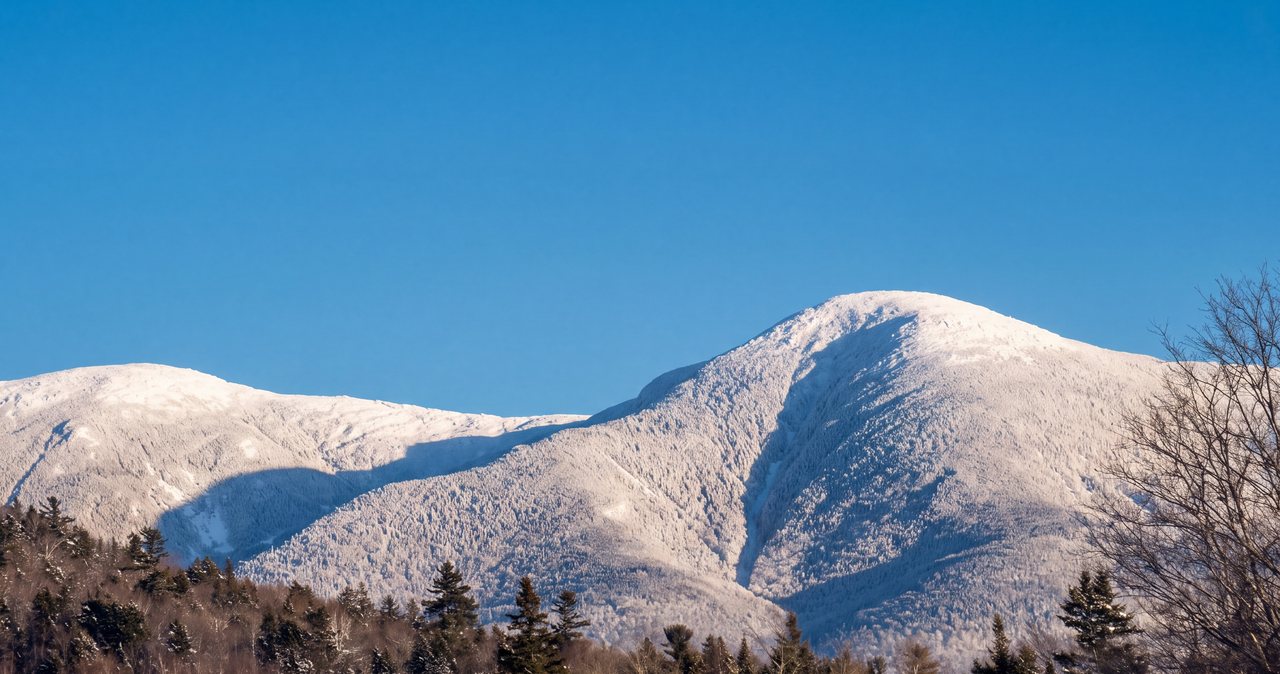
There's a morning in November when we come downstairs, start the first pot of coffee, look out toward the ridgeline, and the tops of the mountains have gone white overnight while the town is still brown and bare. That's the moment the season turns here — earlier than the calendar says, and higher up the slope than the town, where a line gets drawn overnight between the summer below it and the winter above.
People ask us all the time when the first snow comes to Lincoln. It comes in pieces, and it reaches the high country long before it reaches us down in the valley. This is a post about that in-between stretch, the weeks after the leaves drop and before the lifts are really spinning, when the town is quiet, the light goes long and gold, and a couple can have a lot of the White Mountains almost to themselves.
When the first snow arrives
Start with what happens, because it's more interesting than a single date. Snow in the White Mountains isn't one event. It's a gradient that climbs down the mountains over about six or eight weeks. The summits — Mount Washington, the top of Cannon, the high ridges of Franconia — can pick up their first accumulating snow in September or early October, sometimes while the maples down in Lincoln are still green. It's not unusual to look up from town on a bright fall day and see a dusting of white above 4,000 feet while you're standing in a t-shirt.
Down in the valley where the lodge sits, around 800 feet, it takes longer. A first flurry that doesn't stick often comes in late October or November. A first real, cover-the-ground snow tends to land sometime in November, though it varies a lot year to year — some years the valley floor stays brown into December, other years there's white on the ground by early November. We don't promise anyone snow on a given weekend, because the mountains don't work that way. What we can say is that the higher you drive, the more likely you are to find it.
That vertical gap is the whole personality of early winter here. You can start a morning in town on wet pavement and bare ground, drive 15 min up into Franconia Notch, and find the trees flocked and the parking lots dusted. The elevation does the work. If you want to see snow in November and there's none in town, you drive up, not out.
The other thing worth saying is that the first snow in the valley usually doesn't last. It comes, it melts, the ground goes brown again, another storm comes through. It's a back-and-forth for weeks before winter finally sets in and stays. That's normal. Nobody should book a mid-November weekend expecting a snow globe. Book it because the shoulder into winter is a lovely, underrated time to be here, and treat any snow as a bonus.
The town in the quiet weeks
Lincoln has two loud seasons — fall foliage, which fills the Kancamagus with cars through Columbus Day, and deep winter, when the ski crowds come. Between them there's a lull, roughly the first three weeks of November, when the foliage traffic has cleared out and the ski season hasn't ramped up. If you like a place calm, this is the window.
The town core is still walkable and still open. From the lodge you can walk into Lincoln's center for dinner, a beer at the brewery, a browse in the bookshop. Some of the seasonal, summer-facing businesses wind down after Columbus Day, so it pays to check hours before you count on a specific spot, but the restaurants and the brewery that anchor the town run year-round. Message us and we will point you to whatever's serving the night you're here. If you want the fuller picture of the twin towns after the summer rush, our November notes go deeper on what this specific month feels like.
What you trade in bustle you get back in space. Trails you'd share with a crowd in October, you might have to yourself. The overlooks aren't packed. Tables open up. The whole place slows down. For a couple who wanted the mountains but didn't want to fight for a parking spot, these weeks are a small secret.
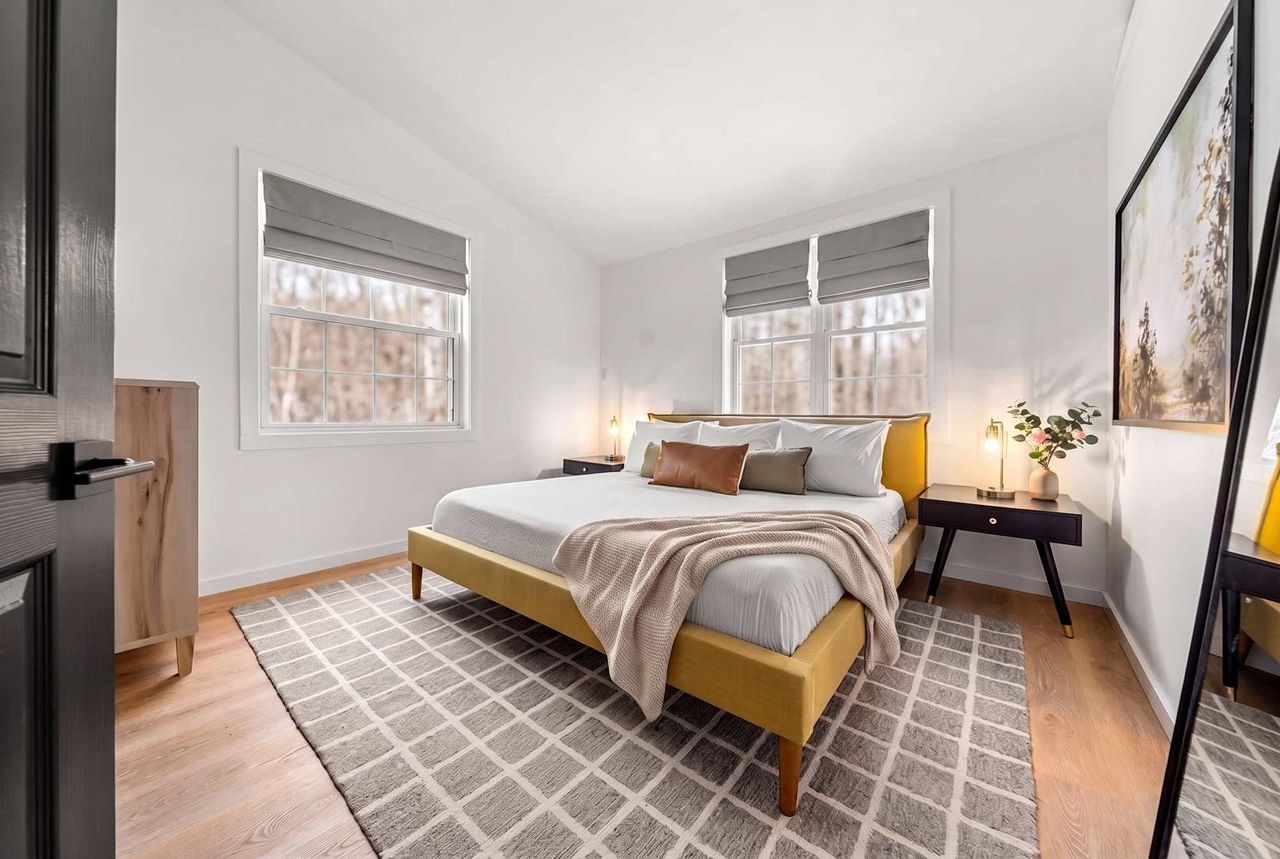
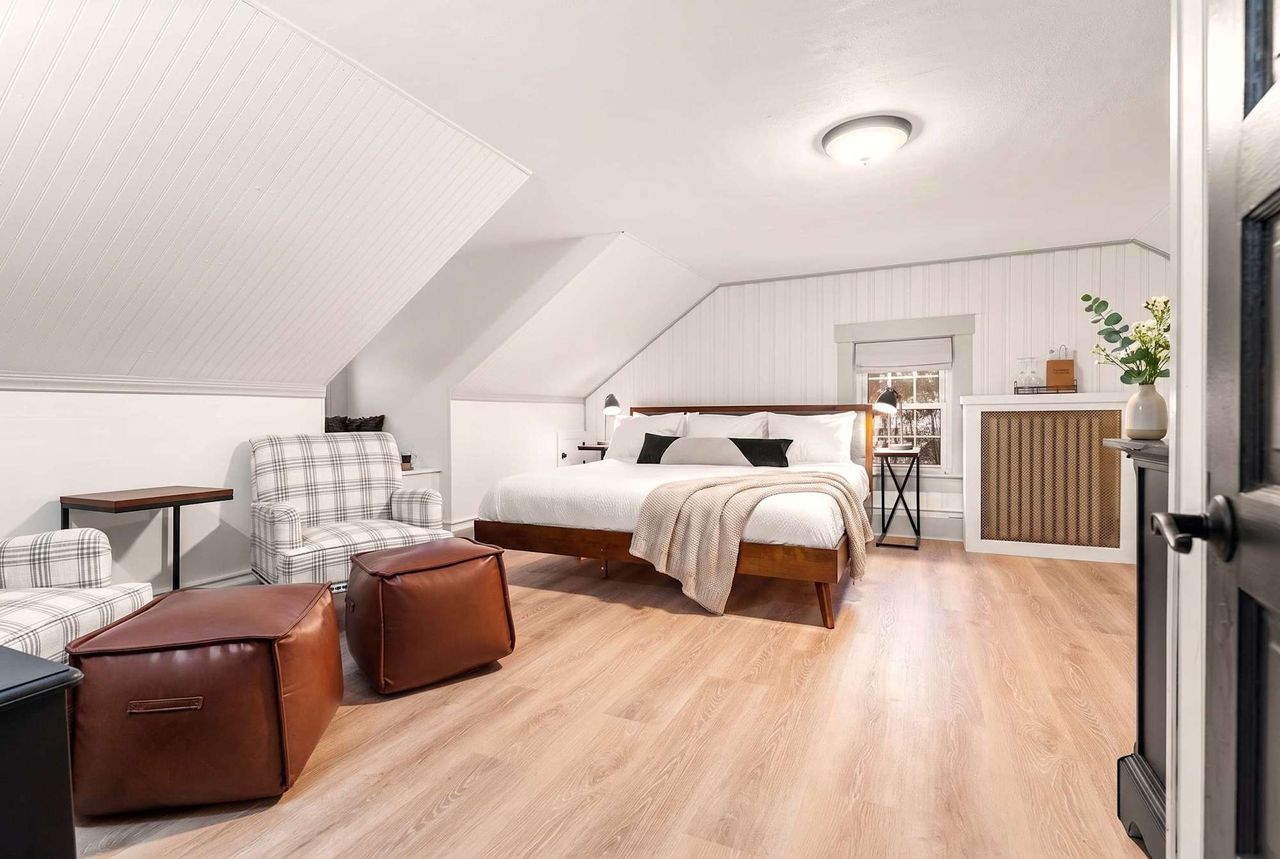
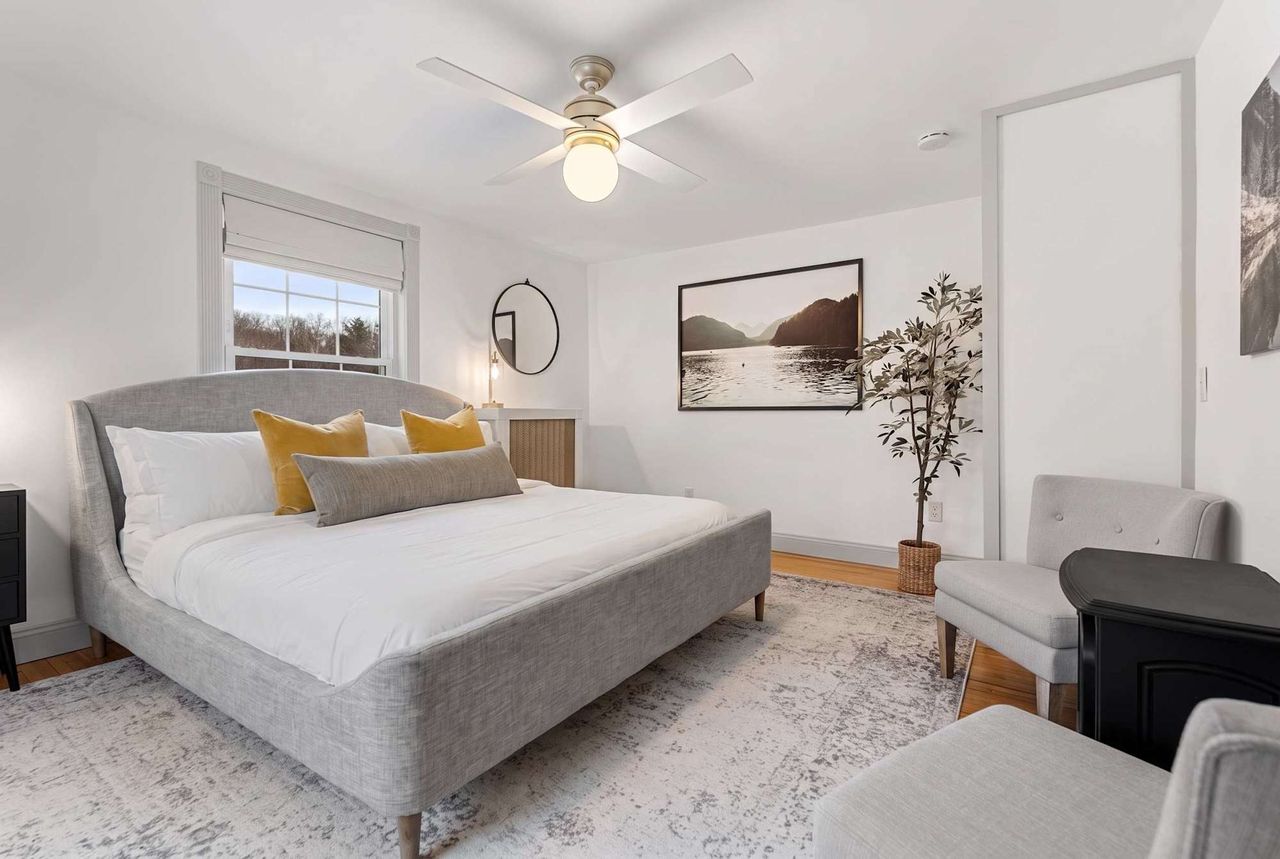
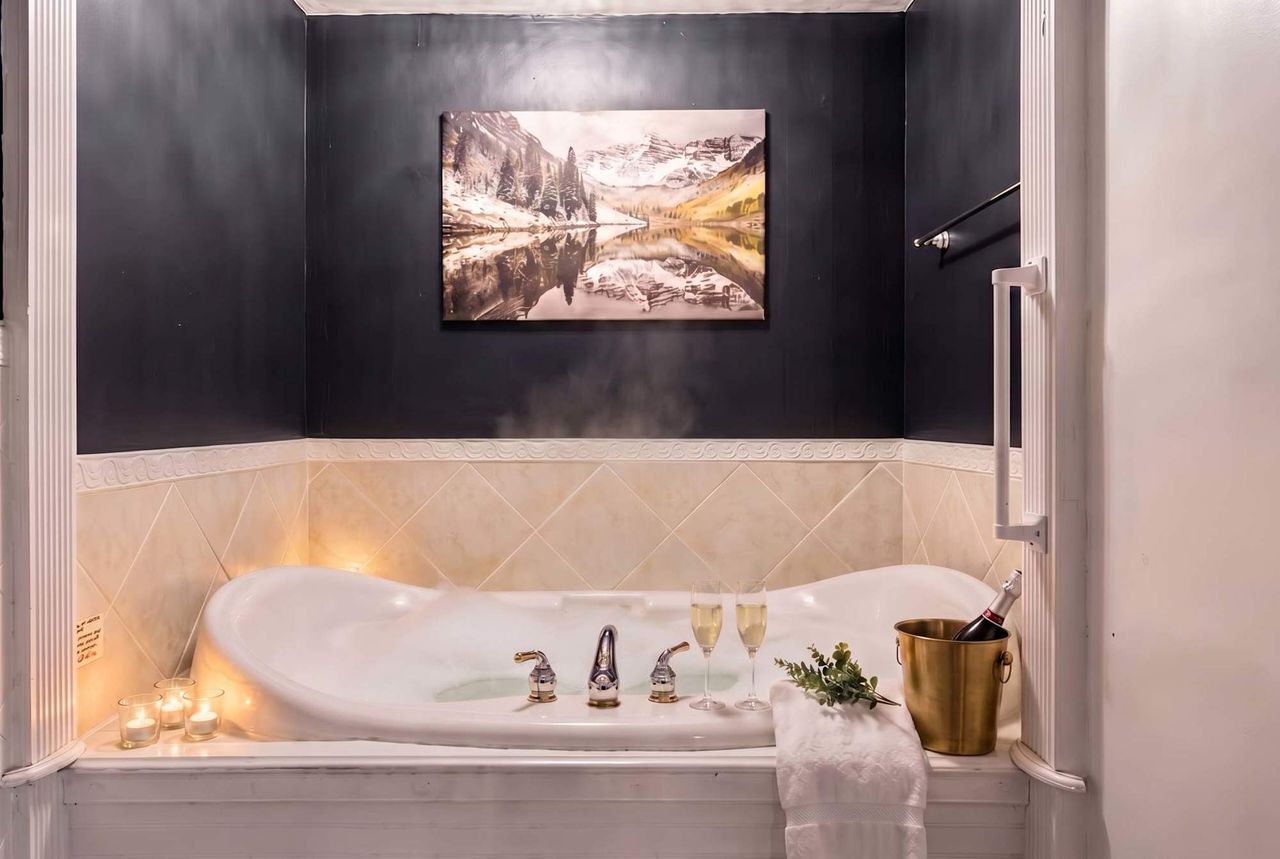
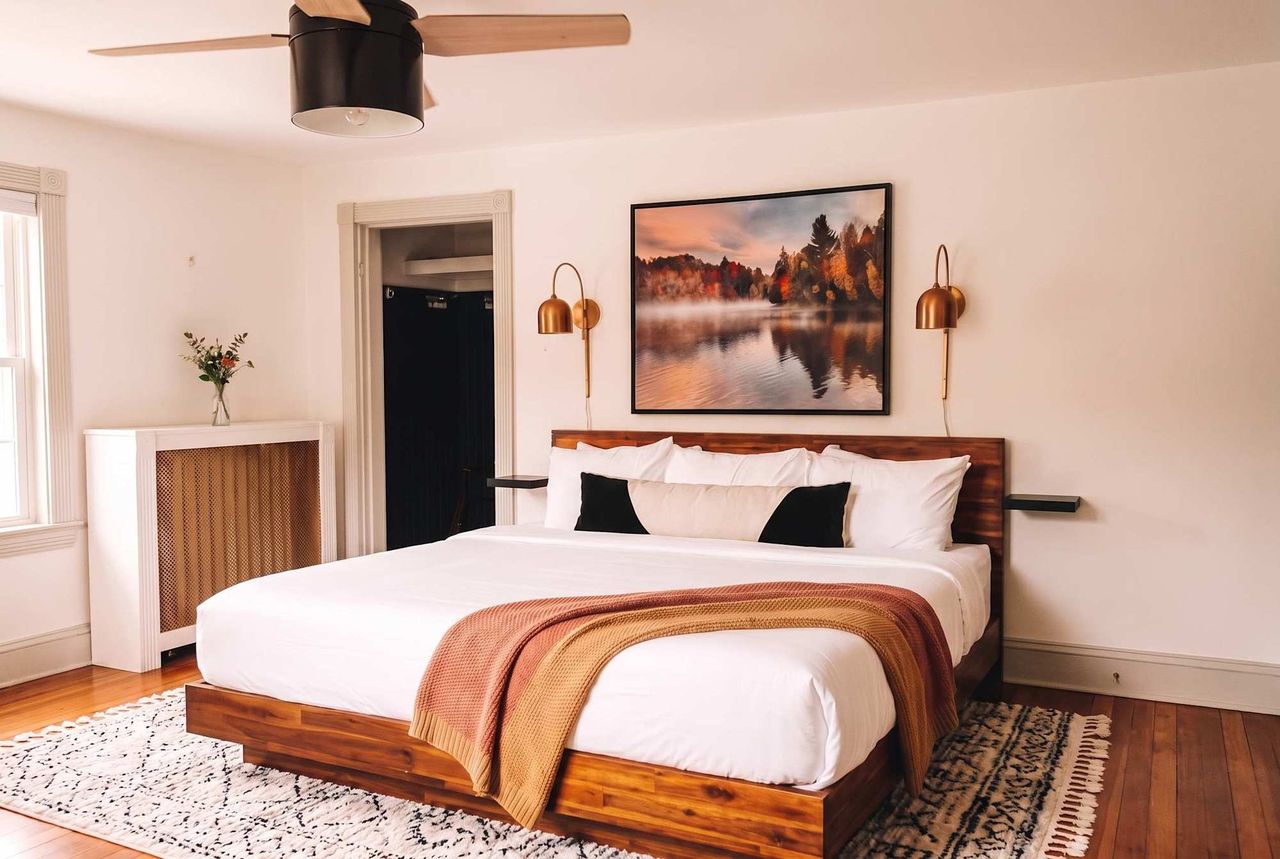
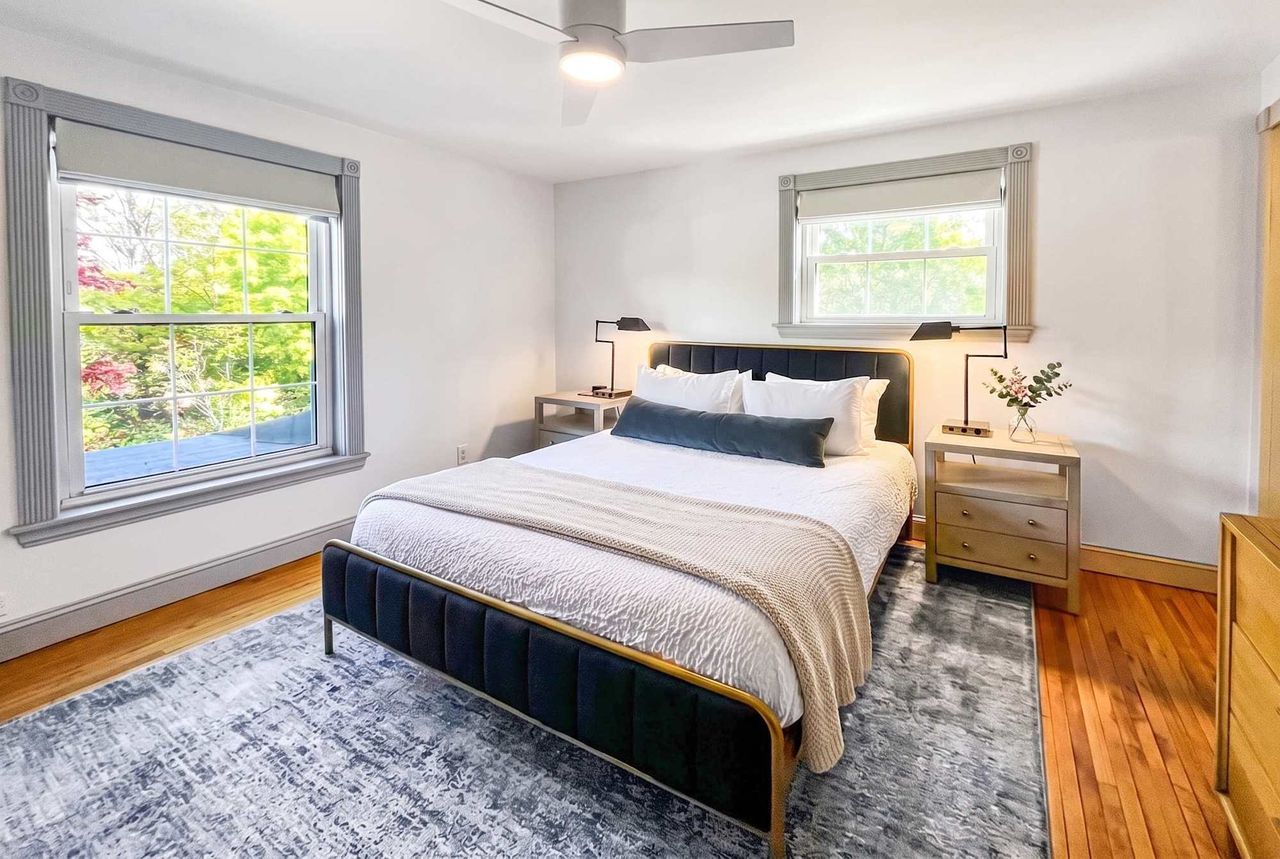
Back at the lodge, this is the season the building really earns its keep. It's a restored 1902 colonial, and old houses feel right in early winter — warm rooms, the smell of coffee, and a quiet you can feel, because five of our six suites are TV-free by design. If you've never understood why we made that choice, we wrote about it; it lands hardest in a season like this, when the point is to slow down. There's coffee in the lounge, fast fiber if you need to check the forecast, and enough comfort in every suite to make a gray afternoon indoors feel like the plan rather than the fallback.
What's open, what's closed, what's spinning up
This is the most practical thing to understand about visiting in November and early December. You're between seasons, and the map of what's running looks different than it does in July or in January. Some things have closed for the year, some haven't opened yet, and a few are just starting to turn over. Knowing which is which will save you a wasted drive.
Here's the general shape of it for late fall into early winter, though every operator sets its own dates and weather moves them around, so confirm before you go:
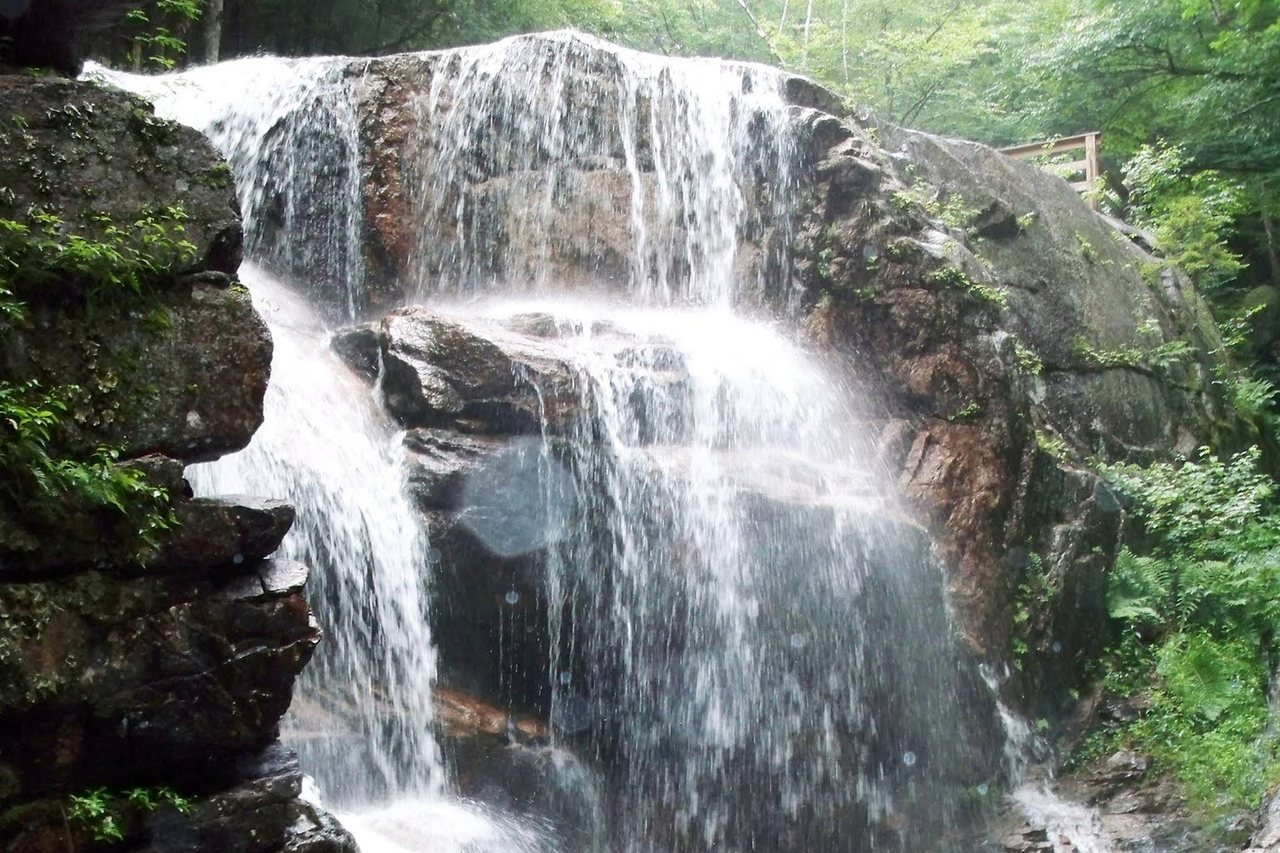
- The Flume Gorge — the 800-foot granite gorge with the boardwalk through it — runs roughly May through late October and then closes for the winter. If you're here in November, the boardwalk is done for the season, and it's timed-entry when it does run, so you book a window ahead. Come back in the warmer months for it; we have a page on the Flume Gorge with what to expect.
- Summer attractions like Whale's Tale Waterpark, the Granite State Railway's regular runs, Clark's Bears, and Lost River Gorge are seasonal and generally wind down in fall. A few pivot to holiday events later in the season, but most are closed in the shoulder weeks.
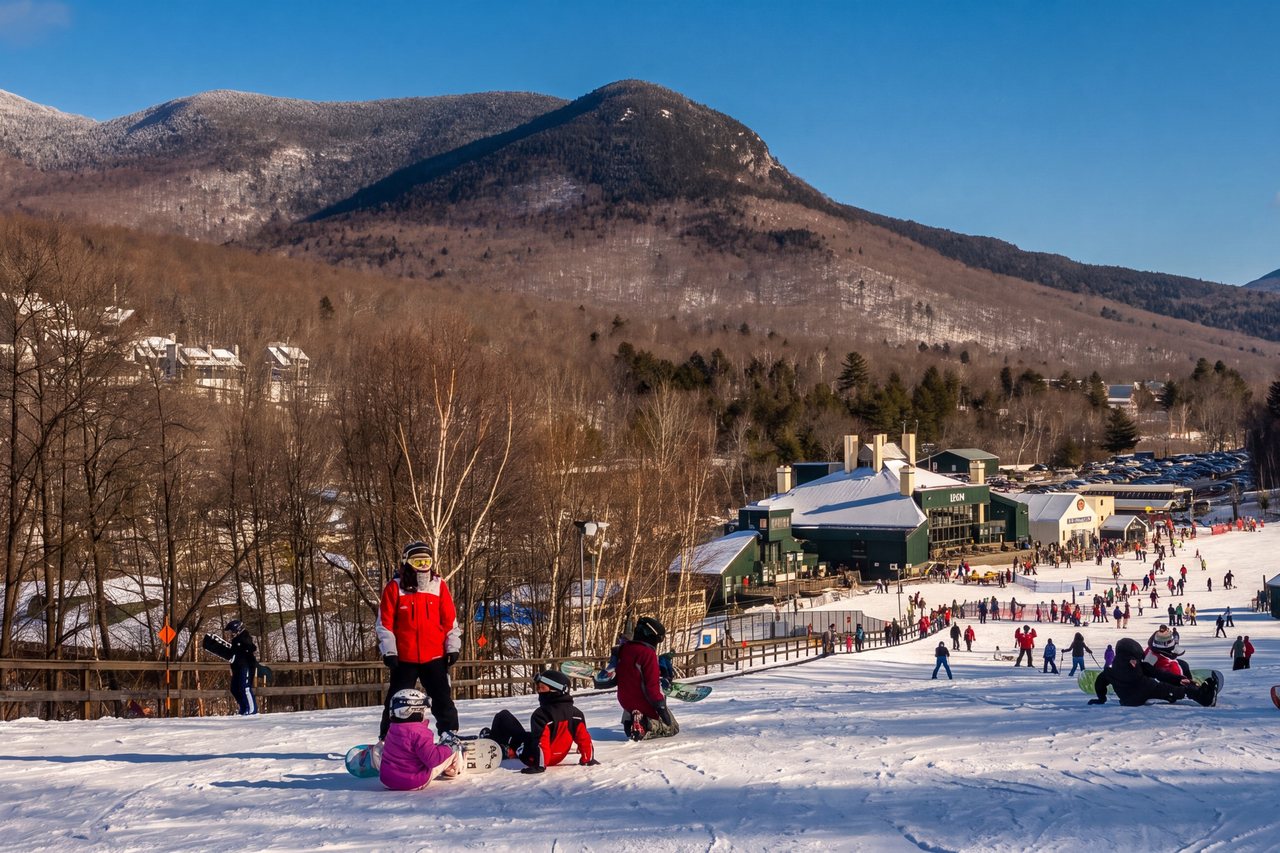
- The ski areas are the ones spinning up. Loon Mountain, 6 min from the lodge, typically targets a mid-to-late November opening depending on cold and snowmaking, and this past season it opened on November 21. Early season means limited terrain — a handful of trails top-to-bottom rather than the whole mountain — but the lifts are turning and the season has begun. Our page on Loon Mountain and our skiing guide cover the details.
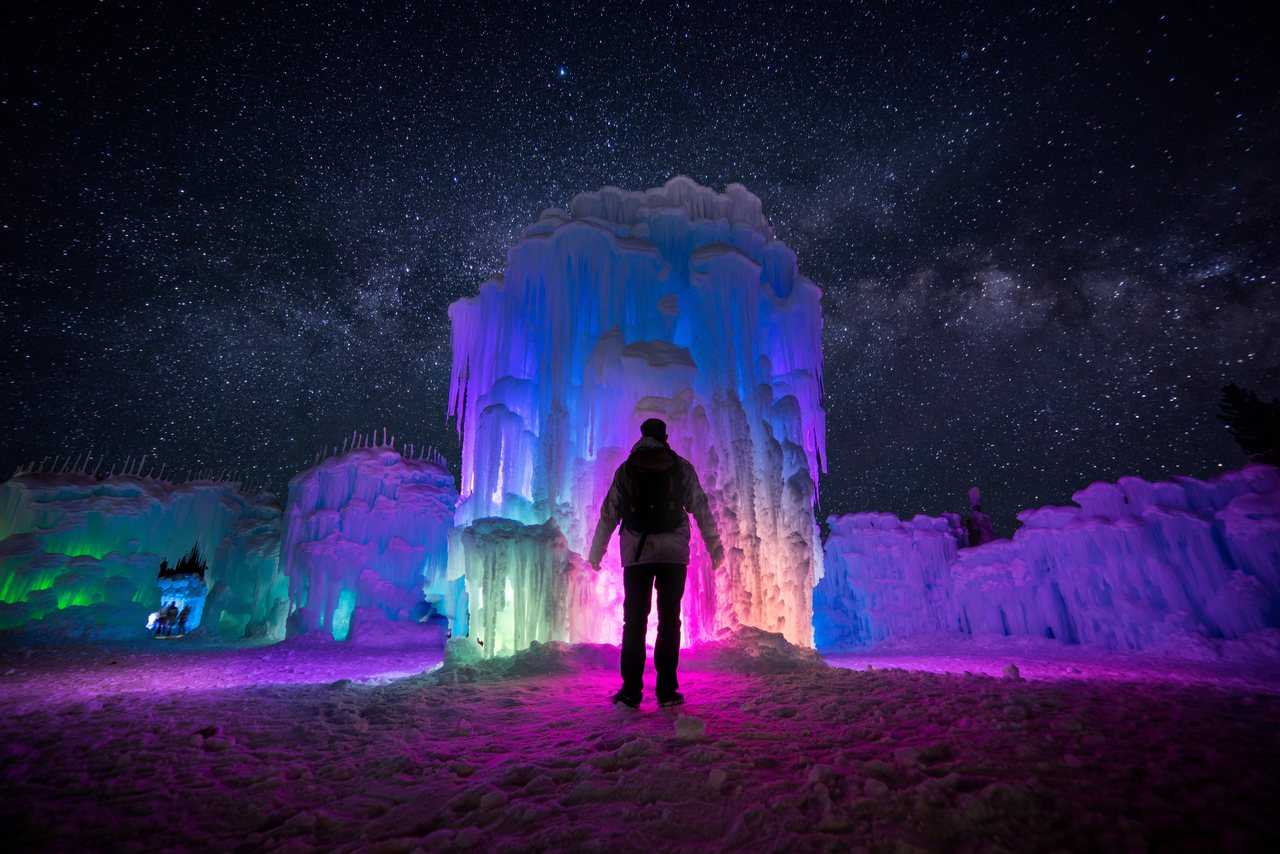
- The Ice Castles in North Woodstock are winter-only and weather-dependent, built from scratch each year once it's cold enough. They usually don't open until deep December or January — last season's opening on December 27 was called the earliest ever for the New Hampshire location — so in November they don't exist yet. Don't plan a November trip around them.
- The Kancamagus Highway stays open as a through-road in early winter, but its facilities are seasonal and it gets no winter maintenance the way an interstate does. More on that below.
The takeaway is that early winter is a mix. You lose the summer boardwalks and the waterpark; you gain the first turns of ski season and a town without crowds. If you come knowing that, you'll plan around it easily. If you come expecting everything open at once, some doors will be locked.
The notch changes character
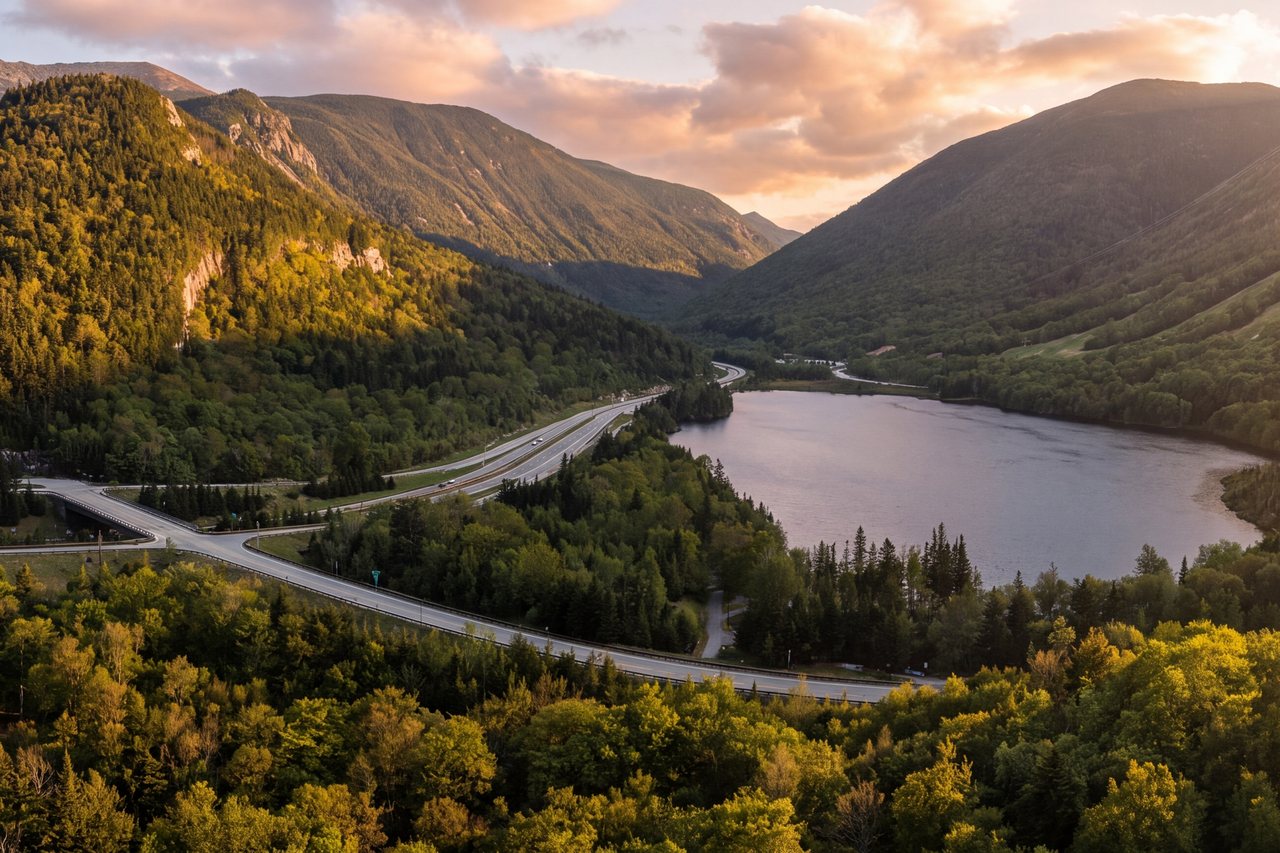
Franconia Notch is 10 min north of the lodge, and it's a different place in early winter than the one the leaf-peepers saw in October. The through-road, the Franconia Notch Parkway, stays open and plowed as a main artery, so you can drive the pass. But the crowds are gone, the light is lower, and the whole corridor gets that stripped-down, waiting-for-winter look.
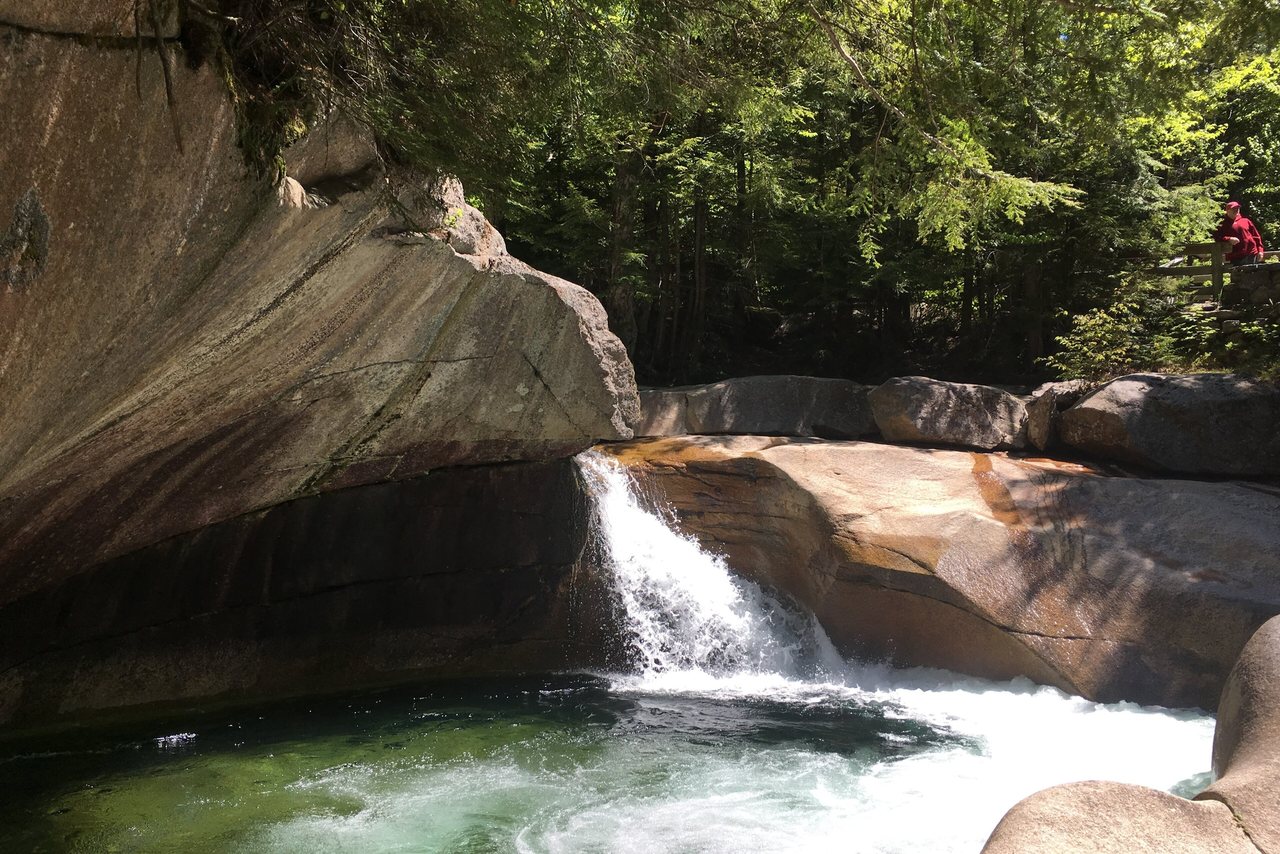
A few plain notes about what you'll find up there this time of year. Echo Lake, the little lake under Cannon, is calm and empty; the summer beach operation is done. The Basin, that granite pool worn out over roughly 25,000 years, is still a short walk off the parkway and still worth it — cold, clear, fewer people around it than any other season. It's one of the easiest stops in the notch, about a 5 min walk, and in the shoulder weeks you might have it alone.
Two things people expect to find in the notch that aren't there the way they imagine. First, the Old Man of the Mountain, the famous rock profile, fell off the cliff on May 3, 2003. It's gone. What's there now is a memorial plaza at the edge of Profile Lake with steel "profiler" viewfinders you line up to see where the face used to be against the cliff. It's a moving little stop, but come knowing the profile itself is no longer on the mountain.
Second, the Cannon Mountain aerial tramway. This one matters because guests still ask. The tram made its final runs in late October 2025, and no reopening date has been announced. You cannot ride it right now, in any season, and won't be able to for a few years. The Cannon ski area itself still operates in winter — the lifts run, you can ski — but the tramway that carried sightseers to the summit is out of service. If someone told you to ride the Cannon tram, they're working from old information.
Driving as the first storms roll in
This is the part we're most careful about, because the roads are where the season's in-between nature can catch people out. Early winter driving in the mountains is its own skill, and the first storm of the year is often the trickiest one, because nobody — including local drivers — has their winter reflexes back yet.
The short version is that the White Mountains get real winter weather, and it can arrive fast and change with elevation. A drive that starts on wet pavement in town can turn to packed snow as you climb into the notch. Storms come in off the higher summits, and the temperature drops several degrees for every thousand feet you gain. If you're driving up to see snow, you're also driving into worse conditions than the ones you left. We wrote a full piece on winter driving in the White Mountains, and if you're coming any time from November on, please read it before you point the car uphill. It covers tires, timing, what to keep in the trunk, and how the local roads behave.
A couple of specifics for the shoulder season. If you're driving up from Boston, it's about 130 miles and a little over two hours, I-93 north to Exit 32 — an easy trip in clear weather, a slower and more careful one if a front is moving through, so build in time and check the forecast before you leave.
The most useful road tip we give anyone in this season is about the Kancamagus. The Kancamagus Highway — "the Kanc" — starts right at the edge of Lincoln and runs 34 miles east to Conway as a National Scenic Byway, and along that whole stretch there is no gas, no food, no services, and no towns. None. Fill your tank in Lincoln before you start. In early winter that empty, high, unserviced road is beautiful and also unforgiving; it climbs to around 2,855 feet near the height of land at the C.L. Graham Wangan overlook, it gets weather before the valley does, and help is far away. It's a spectacular drive when conditions are good. It is not the place to be caught out in the first snow with a quarter tank. If you want to do it, do it slowly and prepared.
Cell service and downloading before you go
Tied to the driving, and just as important, the cell service up here is spotty and in places gone. Franconia Notch has dead zones. The Kancamagus has essentially no service for its whole 34-mile length. Your phone's map will spin and fail exactly when you most want it.
So the rule for early winter, when weather can change your plans mid-drive, is to download everything before you leave the lodge. Download the offline map for wherever you're headed, screenshot the directions, and tell someone your rough plan and return time. We have fiber Wi-Fi in every suite for exactly this — get set up in your room before you drive out, not after you've lost signal. Our note on cell service and what to download walks through what to grab. It takes 2 min over your morning coffee, and it's the single most common thing guests tell us they wish they'd done.
The upside of the dead zones, once you've planned around them, is real. There's a particular quiet to a road where the phone simply doesn't work. You look out the window instead of down at a screen. For a couple, an afternoon off the grid — not by willpower, just by geography — is part of what makes this place restorative.
The light in early winter
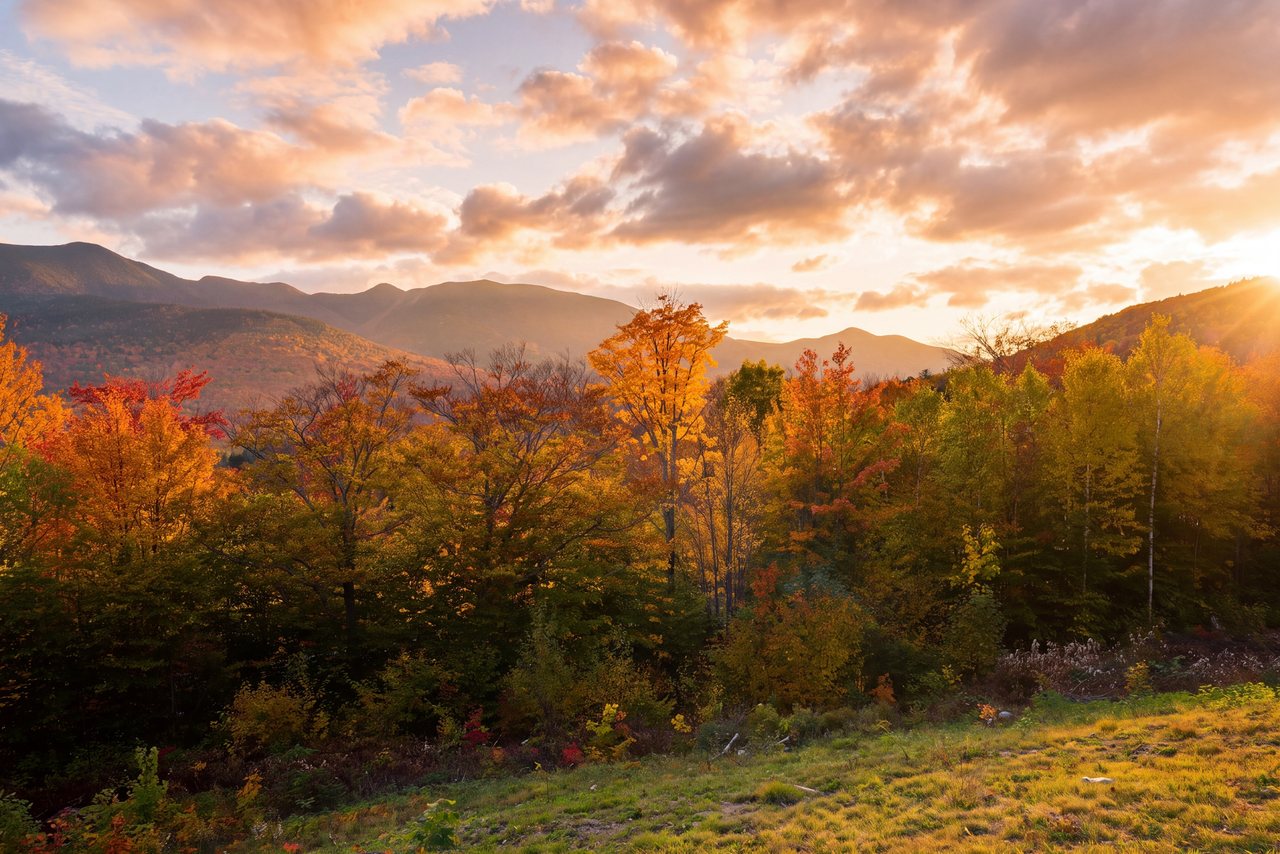
This is the part we notice most this time of year, and it is worth planning a day around. The light in early winter is the best light the valley gets. The sun sits low all day. By mid-afternoon it's already raking across the slopes at an angle, catching the bare birches, turning the last hour before sunset long and amber. The leaves are down, so you can see through the woods to the shape of the land — the ridgelines, the rock, the bones of the mountains — in a way you can't in the green months.
The days are short, and that turns out to be part of the appeal. Sunset in late November comes in the late afternoon, so golden hour arrives while you still have energy for it. You can be out on a short walk or an overlook at 3:30 with the whole thing lit up, back at the lodge with plenty of evening left. If you care about photographs, or just about being outside when the world looks its best, the compressed daylight concentrates all the good light into a window you can catch. Most of the best spots around Lincoln are at their finest in exactly these weeks.
There's a stillness to it, too. The tour buses are gone, the summer bustle is over, and on a cold clear evening the valley goes very still. If the sky clears after a front passes, the stargazing up here is excellent — dark skies, crisp air, no summer haze. Bundle up, step outside after dinner, and look up.
Cozy indoor-leaning days
Not every day in the shoulder season is a bluebird day. Some are gray, some are raw, some throw a wet mix that isn't quite snow. Those days are not a problem here; they're kind of the point. Early winter gives you permission to have a slow indoor day without feeling like you're wasting the mountains.
At the lodge that looks like a slow morning, a second coffee, a book from the bookshop in town, an afternoon that doesn't have a schedule. The suites are built for it — quiet, warm, and designed for unplugging. Being adults-only and mostly TV-free matters most on a day like this. Nobody's rushing. Just the two of you and a slow day.
When you do want to go out on a low-energy day, the town has you covered. A long lunch, the brewery, the bookshop, a coffee. The local coffee shops and provisioning stops, and the two breweries in the twin towns, are built for exactly this kind of unhurried afternoon. And if the weather really closes in, Lincoln and North Woodstock keep a handful of indoor and low-effort options open through the shoulder.
An indoor-leaning day in November isn't a compromise. In summer you might feel guilty about it. In early winter, curling up warm while it's gray and blowing outside is the correct and intended use of the season.
Short outings that work before full winter
You don't have to choose between full ski season and doing nothing. The shoulder weeks are good for shorter, lower-commitment outings — the kind where you're back by dark with cold cheeks and a good appetite. A few that suit the season, with the caveats spelled out:
- The Basin and easy notch stops. Short walks off the parkway that don't require winter gear beyond warm layers and decent footwear. Good on a day when the roads are clear. The Basin is the easiest of them.
- Lonesome Lake, conditions permitting. The Lonesome Lake trail, about 12 min from the lodge, is a gentle-ish climb to a mountain pond with an AMC hut and Franconia Range views. In early winter the trail can be anything from bare to icy to snow-covered depending on the day and the elevation — traction devices like microspikes are often the difference between doable and miserable once things freeze. Ask us about current conditions before you go.
- Artist Bluff. The Artist Bluff loop at the north end of the notch is a short climb to a big view over Echo Lake and the notch. It's one of the best view-per-effort hikes around, but the final scrambly bits get slick with ice, so it's a fair-weather-and-good-footing outing once the cold sets in.
- The Kanc overlooks, if the road's clear. You don't have to hike anything to enjoy the Kancamagus. Driving to a couple of overlooks and back is a legitimate outing — just re-read the fuel and service warnings above.
What we'd steer you away from in the shoulder season is the big exposed alpine stuff. The Franconia Ridge Loop — around 8.9 miles with roughly 3,900 feet of gain, much of it above treeline — is a serious hike in summer and a winter mountaineering day once early-winter weather hits the ridge. The summits get snow, ice, and wind long before the valley does, and conditions up there can be full winter while it's merely chilly in town. If you're an experienced winter hiker with the gear and the training, you already know how to read the higher-summits forecast from the Mount Washington Observatory and make your own call. If you're not, this is not the season to learn on Franconia Ridge. There's no shame in saving the big ridges for a settled summer day and enjoying the lower outings now.
Why the shoulder into winter is underrated for a couple
We'll say the quiet part, because it's why we love recommending this season. The stretch from mid-November into early December is one of the best times to come here as a couple, and almost nobody thinks to book it.
Consider what you get. The foliage crowds are gone, so the roads and overlooks are yours. The ski crowds haven't arrived, so the town is calm and unhurried. The light is at its best. The nights are long and made for a slow dinner and an early return to a warm room. And because it's between the two busy seasons, the whole valley feels like it's operating at a human pace instead of a tourist one.
It suits the lodge, too. Six suites, adults-only, made for unplugging, walkable to town — that's a setup built for slowing down, and it's never more itself than in a quiet season. You can have a restful weekend without the pressure to "do" the mountains at full tilt. Sleep in. Walk to breakfast. Take a short drive up to where the snow is. Come back and read. That's the whole itinerary, and it's a good one. A midweek stay in the shoulder is about as peaceful as this place ever gets.
The one thing we ask of shoulder-season guests is to come with the right expectations. This isn't the postcard-perfect deep-winter scene with everything blanketed and every lift running. It's an in-between season, in-between, with bare ground some days and white the next, some attractions closed and others just waking up. If that flexibility sounds like a downgrade, wait for full winter. If it sounds like breathing room, this is your season.
Looking ahead to full winter
Early winter is the on-ramp, and it's worth knowing what it leads to, because a lot of guests come once in the shoulder and immediately book a return for deep winter. Once the cold settles in and the snow stays — usually sometime in December — the whole valley shifts into its winter self.
Loon fills out its terrain as snowmaking and natural snow build the base, and the closest lift to the lodge is really turning; 6 min door to gondola is hard to beat. Cannon's ski area runs, with the tram out but the skiing continuing. The cross-country trails and snowshoe routes come into their own — a quieter, gentler way to be out in the snow that doesn't require a lift ticket, and one of our favorite things to send couples off to do. The Ice Castles eventually open in North Woodstock once it's cold enough to build them. And the town settles into its cozy winter rhythm, with the holidays bringing lights to the twin towns and a full slate of weekends at the mountain.
If you're weighing when to come back, our White Mountains in winter guide lays out the full-season picture, and our winter in Lincoln itinerary shows how a deep-winter weekend flows. And whenever you're ready to plan the drive itself, the lodge map shows how everything sits relative to us — it's useful for seeing how close the notch and the ski areas are.
The first snow in Lincoln isn't a single day you can circle on a calendar. It's a slow turn, mountain-top down to valley floor, over weeks. If you come during it, come for the quiet and the light and the space, keep an eye on the roads and the forecast, download your maps before you drive out, and take any snow as the gift it is. When you're ready, have a look at the suites or go straight to booking — the shoulder into winter is a season we'd send anyone into, and it's one most people never think to ask for.
— Launchpoint Lodge, From the lodge