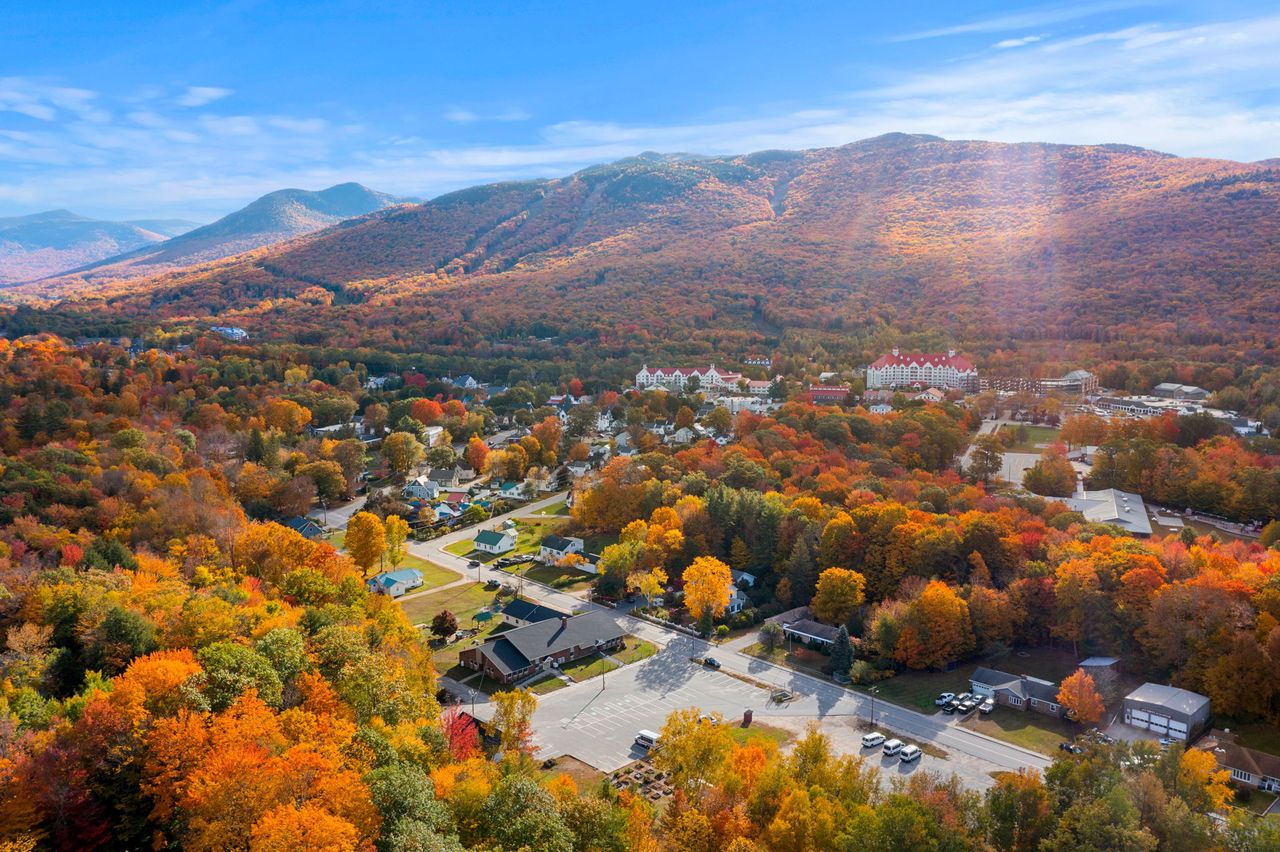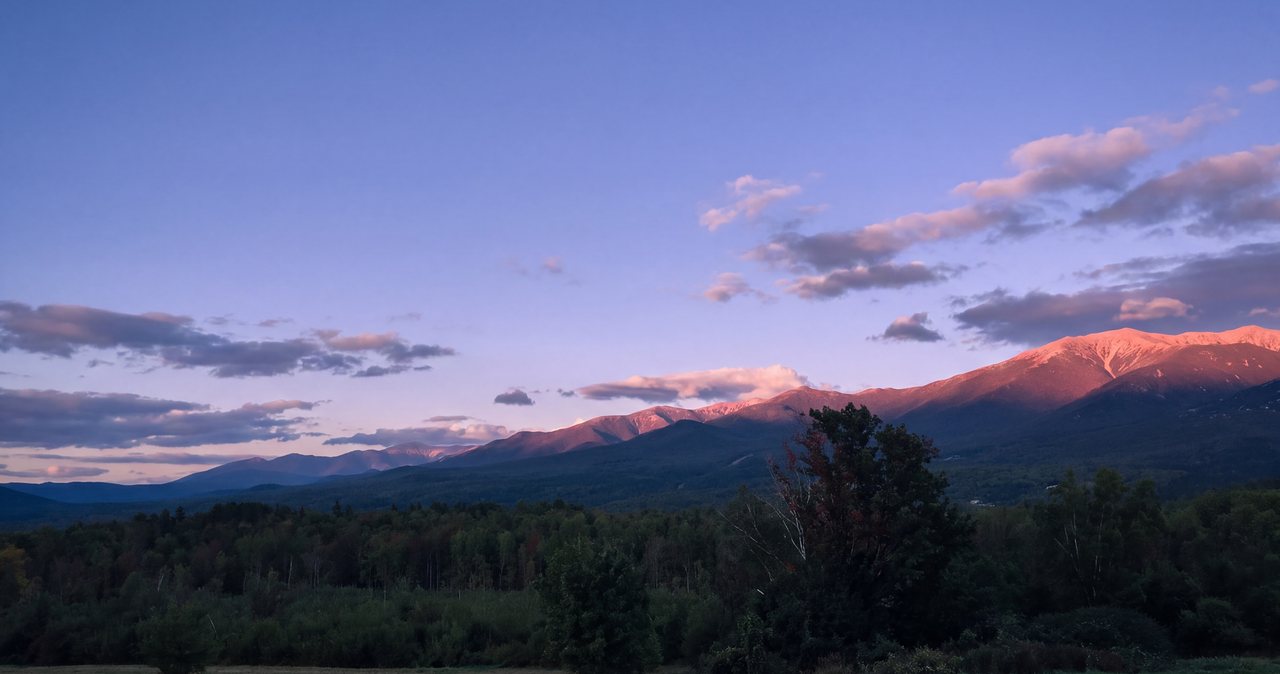
Drive north through Franconia Notch, past Cannon and Echo Lake, and the mountains fall back into a wide, gentle valley of farms and white villages that most visitors see only from the interstate. Franconia is the village at the bottom, on the Gale River at the foot of Cannon Mountain, where an iron furnace from 1805 stands beside the road and where Robert Frost bought a farm in 1915 and wrote some of the poems everyone knows. Sugar Hill is the hilltop town above it, the youngest town in New Hampshire, where the same family has served pancakes since 1938, a cheese shop has aged cheddar since 1955, and the fields turn purple with lupines every June.
The two towns are 20 to 30 min from the lodge and they are the region's quiet side: a poetry trail instead of a summit, a pancake wait instead of a parking-lot scramble, a ski museum where the local hero's Olympic medals sit in a case, and a view of the whole Franconia Range from a hilltop meadow with nobody on it. Our guests who have hiked hard for two days come here on the third.
This guide covers the Frost Place and what is open there, Polly's and how to beat the line, Harman's and the Sugar Hill village, the lupine season and its festival, the iron furnace and the ski museum in Franconia, the Bette Davis story that ties Sugar Hill to a waterfall in our hike guides, and the loop from the lodge that strings it all together with Littleton and Bethlehem.
The Frost Place: Robert Frost's farm on the ridge
In 1915, back from England with a reputation and no money, Robert Frost bought a small farmhouse on Ridge Road in Franconia with a view across the valley to the Franconia Range, and his family lived there full-time until 1920 and returned for nineteen summers afterward. He wrote or finished some of his best-known work here, and the house at 158 Ridge Road is now the Frost Place, a museum and a nonprofit center for poetry that hosts a resident poet each summer and readings on the barn lawn. The museum's rooms hold first editions, his writing chair and the porch he sat on to look at the mountains.
The museum is open seasonally, roughly Memorial Day through Columbus Day with days and hours that change by month, and charges a modest admission. The grounds are open always, free: the quarter-mile poetry trail loops through the woods and meadow behind the house with Frost's poems mounted on plaques along the way, and the view from the front porch, Lafayette and the ridge across the valley, is the one he wrote about. Go in the late afternoon when the light is on the range, read Stopping by Woods on the trail, and understand why he stayed.
Polly's Pancake Parlor, since 1938
At 672 Route 117 on the hill above Franconia, Polly's Pancake Parlor has been run by the same family since 1938, when Polly and Wilfred Dexter began serving pancakes, waffles and French toast in a converted carriage shed to sell the farm's maple products. The idea worked. Polly's grinds its own grains for the batters, offers pancakes in a half-dozen flours with the farm's maple syrup and maple spread, serves the rest of a country breakfast and lunch, and looks out over its meadow at the Kinsman Range and Cannon. It has been written up in every national magazine that covers breakfast and it has the weekend lines to prove it.
The line is the thing to plan around. On a summer or foliage weekend the wait at mid-morning can run an hour or more; a weekday, or the first seating after opening, or a late lunch, cuts it to nothing. The dining room takes names and you wait outside with the view. Hours are seasonal and the parlor closes some weekdays in the off-season; check before you drive up the hill.
Sugar Hill: Harman's, the meetinghouse and the youngest town in the state
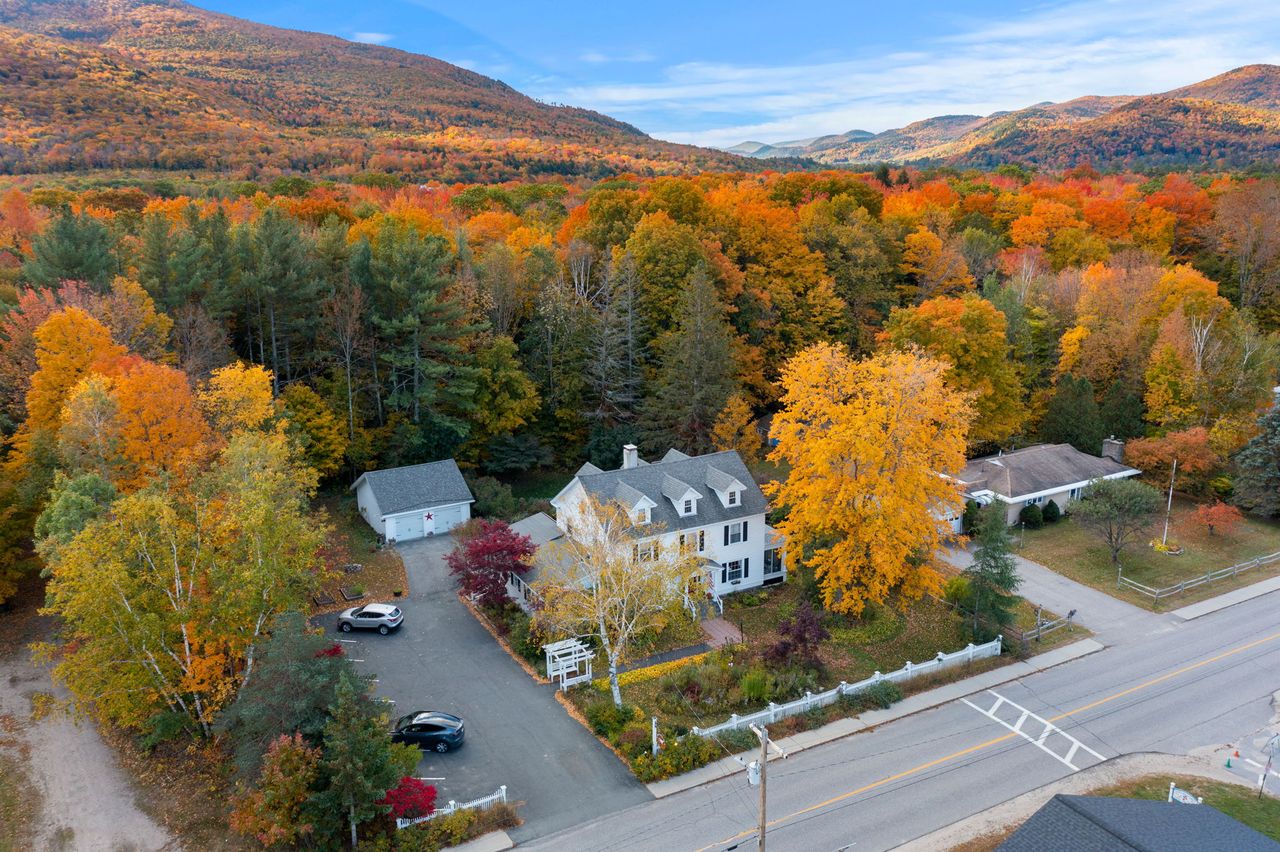
Sugar Hill became a town only in 1962, when it separated from Lisbon, which makes it the newest town in New Hampshire despite looking like the oldest. Its village center along Route 117 is a meetinghouse, a historical museum open in summer, a handful of white houses and Harman's Cheese and Country Store at 1400 Route 117, which John and Kate Harman started as a mail-order business in 1955 and which still sells its aged cheddar by the wheel and the wedge, along with maple syrup, jams and the sort of country-store goods that go home in the car. It is open seven days a week from May through October and Monday to Saturday the rest of the year.
The Sugar Hill Sampler, the barn museum and shop that stood for decades on Sunset Hill Road, has closed permanently; do not drive up looking for it. What remains on that hill is the view, one of the great panoramas of the White Mountains from the Franconia Range around to the Presidentials, and the meadows that made Sugar Hill famous for one week a year.
Lupine season, and the festival
In June the fields and roadsides of Sugar Hill and Franconia fill with lupines, tall spikes of purple, blue, pink and white that bloom for two or three weeks from roughly the first week of June into the third, depending on the spring. They grow thickest along Route 117 and the side roads on the hill, with the mountains behind them, and they draw photographers from across New England at dawn. The flowers are wild in the sense that nobody plants the roadside ones, and they are on private land in most places: photograph from the road, do not walk into the fields, and do not pick.
The Sugar Hill Lupine Festival is a one-day country fair at the Sugar Hill Meetinghouse, 1448 Route 117, held by the Willing Workers Society on a Saturday in early-to-mid June from nine to two, with crafts, food and music; the date is set each spring, and the wider Lupine Celebration in the area runs events through the month. Our seasonal guides note it; the flowers themselves need no ticket.
Franconia village: the iron furnace and the Gale River
Franconia village sits where Routes 18, 116 and 117 meet at the foot of Cannon, with the Gale River running through it. Beside Route 18 on the river stands the Franconia Iron Furnace, a stone blast furnace built in 1805 by the New Hampshire Iron Factory Company on the site of an earlier forge, which smelted local ore into iron until 1864 and is the last intact furnace of its kind in the state. It is a roadside stop of 10 min with an interpretive panel, and it explains why a village exists here at all: iron came before tourists. The village has a general store, a couple of restaurants and the Dow Field recreation ground, and it is the quietest base in the notch country; the Frost Place is 3 min up the hill from the center.
The New England Ski Museum at Cannon
At the base of the Cannon Mountain aerial tramway at Exit 34B, the New England Ski Museum tells the story of skiing in the region from the first Dartmouth outing club trips through the arrival of the lifts, with Cannon's own 1938 tramway, the first passenger aerial tramway in North America, as the centerpiece, and the Olympic medals of Franconia's own Bode Miller in a case near the door. It is open daily from ten to five from Memorial Day through the end of Cannon's ski season in early April, and admission is free. The tramway itself is closed for a multi-year replacement, so the museum is the reason to stop at the base in summer; Echo Lake and Artist Bluff are beside it.
Bette Davis on Sugar Hill
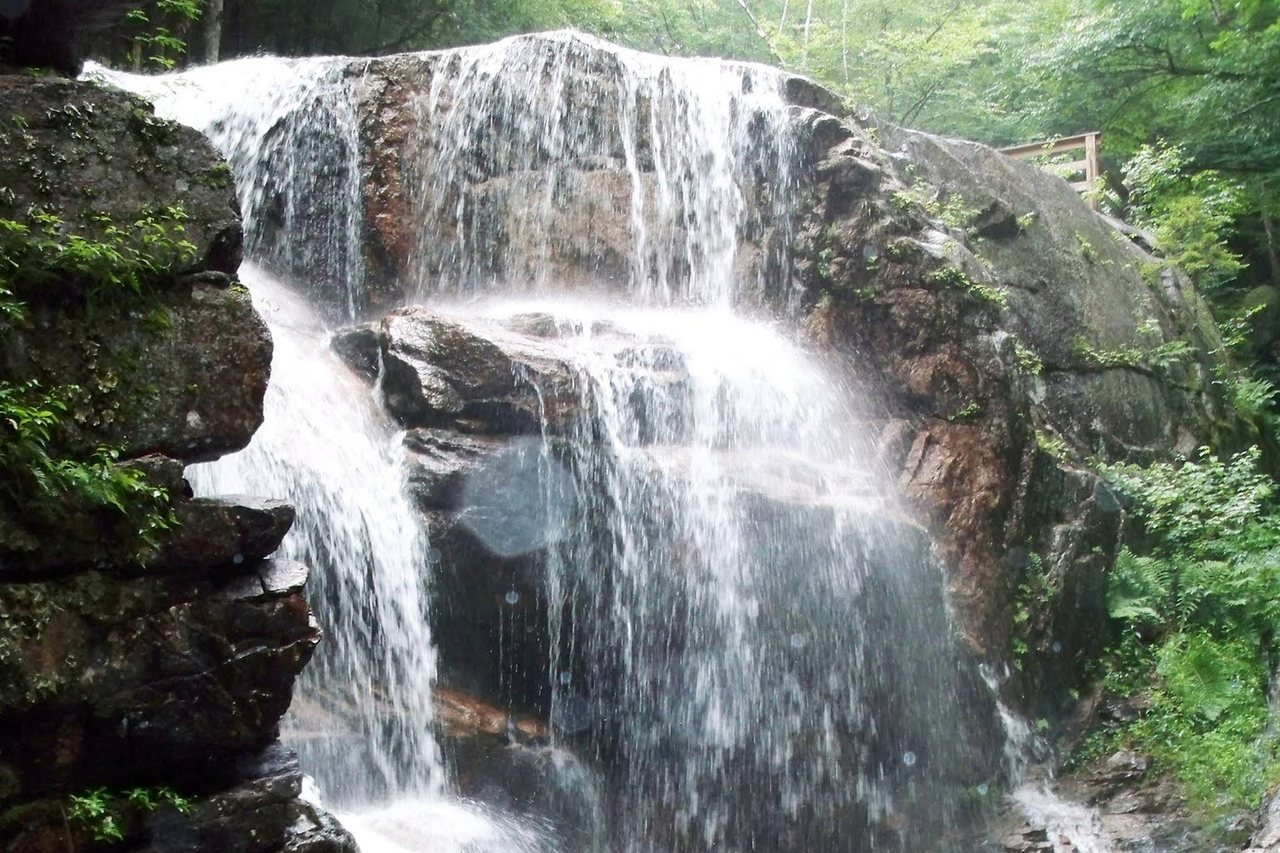
Sugar Hill was a resort before it was a town, and its grandest inn, Peckett's-on-Sugar-Hill, is where in 1939 the actress Bette Davis, a guest, kept straying from the hiking party so that the assistant manager, Arthur Farnsworth, would be sent to find her. They married in 1940 and he died in 1943, and the plaque she set in Coppermine Brook near Bridal Veil Falls, to the keeper of stray ladies, is told in our Bridal Veil Falls guide. Peckett's is also credited with the first resort ski school in America, in 1929; the inn is long gone, but the ski history it started is in the museum at Cannon and the trails it started on are Cannon's.
The loop from the lodge
The short version, half a day: I-93 north through the notch to Exit 34B for the Ski Museum and Echo Lake, on to Exit 38 into Franconia village and the iron furnace, up Ridge Road to the Frost Place, over the hill on Route 117 to Polly's for a late breakfast and Harman's for the car, and back down Route 117 and 18 or 116 to the interstate. About twenty-five miles of driving and the best view in the region from the Sugar Hill meadows.
The long version, a full day: add Littleton for its Main Street and Bethlehem for the Rocks and the Colonial Theatre, both covered in their own guides, and come home through the notch at dusk. Route 116 south from Franconia through Easton passes the Coppermine Road pull-off for Bridal Veil Falls, which turns the day into a hike as well.
Where to stay
From 191 Pollard Road take I-93 North through the Franconia Notch Parkway; Exit 34B is the Ski Museum and Echo Lake, Exit 38 is Franconia village, and Route 117 climbs from the village to Sugar Hill. 20 min to the furnace, thirty to Polly's. The back way home, Route 116 south through Easton to Route 112 in Woodstock, passes the Bridal Veil Falls trailhead and the Kinsman Range and takes about the same time.
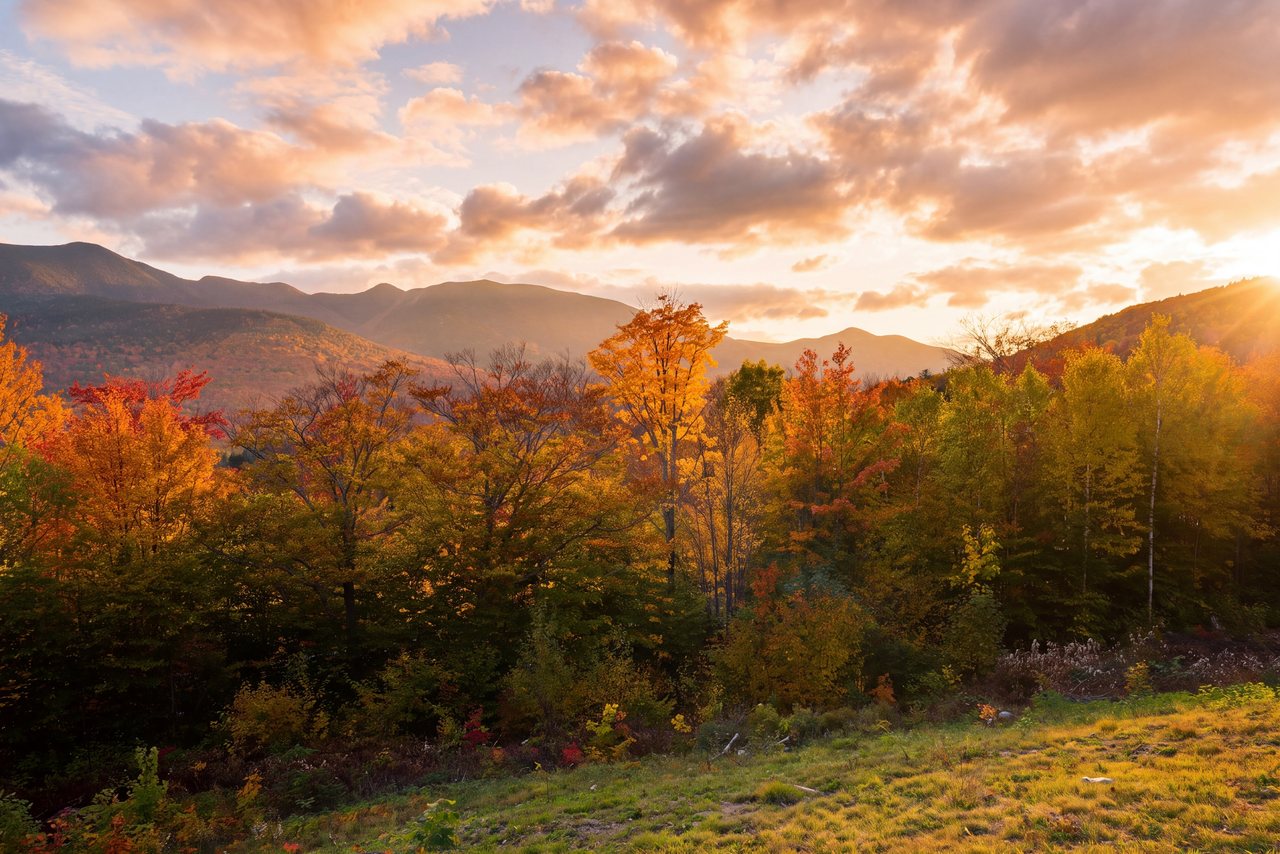
Our guests go up for a late breakfast at Polly's on a weekday, the Frost Place in the afternoon light, and Harman's for the drive home. In June we send everyone up the hill at dawn for the lupines, and in foliage season the Sugar Hill meadows are our answer to the Kancamagus traffic: the same colors, the whole range, and no one in the road.
Useful links
- The Frost Place: hours and admission
The seasonal museum hours; the poetry trail and porch are always open. - Polly's Pancake Parlor
Seasonal hours and the menu at 672 Route 117. - Harman's Cheese & Country Store
Hours and the aged cheddar, since 1955. - Town of Sugar Hill: the Lupine Festival
This year's date for the one-day festival at the Meetinghouse. - Town of Franconia: the Iron Furnace
The history of the 1805 furnace on the Gale River. - New England Ski Museum, Franconia Notch branch
Hours and exhibits at the Cannon tramway base; admission free. - Our Bridal Veil Falls guide
The waterfall hike off Route 116 with the Bette Davis plaque. - Our Littleton and Bethlehem guides
The other two towns of a northern day.
Sources & official info: frostplace.org · harmanscheese.com · franconianh.gov · newenglandskimuseum.org
— Launchpoint Lodge, From the lodge