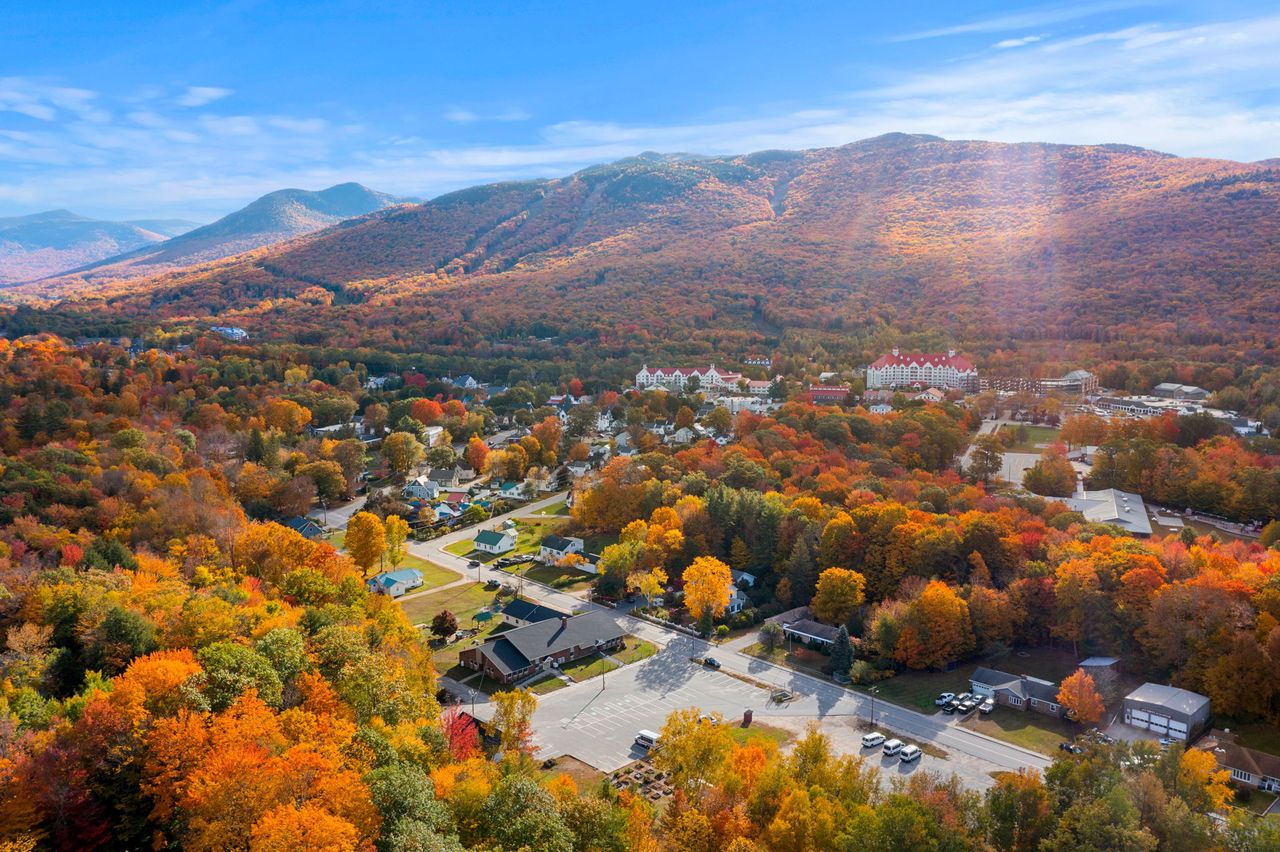
Lincoln, New Hampshire is the small town in the middle of the White Mountains that most people end up basing a trip around without quite planning to. It sits right where Interstate 93 meets the Kancamagus Highway, which means the biggest attractions in the region — Franconia Notch State Park, the Flume Gorge, Loon Mountain, the Basin, and the Kancamagus itself — are all within about 15 min of the town center. That is the whole reason Lincoln matters: it is the most central place to sleep in this part of the mountains.
This is the long version of the answer we give our guests. We run Launchpoint Lodge, a six-suite inn a few streets off Main Street, so we are not a tourism board and we are not trying to sell you the whole state. We just want to help you plan a good few days here, including when the popular spots get busy, which ones are worth your time, and the small logistics you usually only learn on arrival. If you read one page before your trip, make it this one.
It is organized so you can skim it: where Lincoln is and how to get here, why it makes the best basecamp, the four attractions everyone comes for, hiking from easy to alpine, the seasons, where to eat, the practical logistics, and where to stay. There is a long FAQ at the end for the specific questions.
Where is Lincoln, New Hampshire?
Lincoln is in Grafton County, in the White Mountains of north-central New Hampshire, on the Pemigewasset River. It shares a valley with its smaller twin, North Woodstock, and the two are usually spoken of together as 'Lincoln-Woodstock.' The town is built along Route 112 — the eastern end of which is the Kancamagus Highway — at Exit 32 of Interstate 93.
The geography is the point. Lincoln sits at the southern mouth of Franconia Notch, the mountain pass that carries I-93 between the Franconia Range on one side and Cannon Mountain on the other. Drive north for a few minutes and you are in Franconia Notch State Park. Drive east on Route 112 and you are on the Kancamagus, one of the most scenic roads in the eastern United States. Everything the region is famous for is arranged around this one town.
How to get to Lincoln, NH
Almost everyone arrives by car, and almost everyone arrives on Interstate 93. Coming from the south — Boston, Manchester, Concord, the whole I-93 corridor — you simply drive north until you reach Exit 32 for Lincoln and the Kancamagus Highway. The final approach runs through Franconia Notch as a two-lane parkway, which is the prettiest stretch of interstate you will drive in New England.
From Boston, plan on about two to two and a quarter hours in normal traffic; it is roughly 130 miles, nearly all of it on I-93. From Manchester it is about an hour. The nearest airport with meaningful service is Manchester-Boston Regional Airport (MHT), about an hour south and far less stressful than flying into Boston Logan (BOS), which is around two hours away with city traffic. Portland, Maine (PWM) is another option at about two hours to the east.
You need a car here. There is no train, no meaningful public transit between the attractions, and the trailheads and overlooks are spread across miles of mountain road. If you are flying in, rent a car at the airport. A seasonal shuttle (the free local trolley in summer and fall, and resort shuttles in ski season) can move you around town and to Loon, but it will not get you to a trailhead in Franconia Notch at seven in the morning, which is when you want to be there.
Why Lincoln is the best basecamp in the White Mountains
There are prettier villages in the White Mountains and quieter ones, but none of them put you closer to more of the big attractions than Lincoln does. From the middle of town, Loon Mountain is about 6 min east, the Flume Gorge is about 12 min north, the Basin about 14 min, and the trailheads in Franconia Notch — Lafayette Place, the Old Bridle Path, Lonesome Lake — are about 12 min up the parkway. The Kancamagus Highway literally starts at the edge of town.
That proximity translates into the one thing that improves a White Mountains trip: early starts without early driving. The parking lots at the famous trailheads and overlooks fill by mid-morning in summer and fill by sunrise on a peak foliage Saturday. If you are staying an hour away, you are either leaving in the dark or arriving to a full lot. If you are staying in Lincoln, you roll out at first light, get the parking spot, and are back in town for a real breakfast while the day-trippers are still crawling up the interstate. The math of where you sleep is the difference between a good day and a frustrating one.
The four attractions everyone comes for
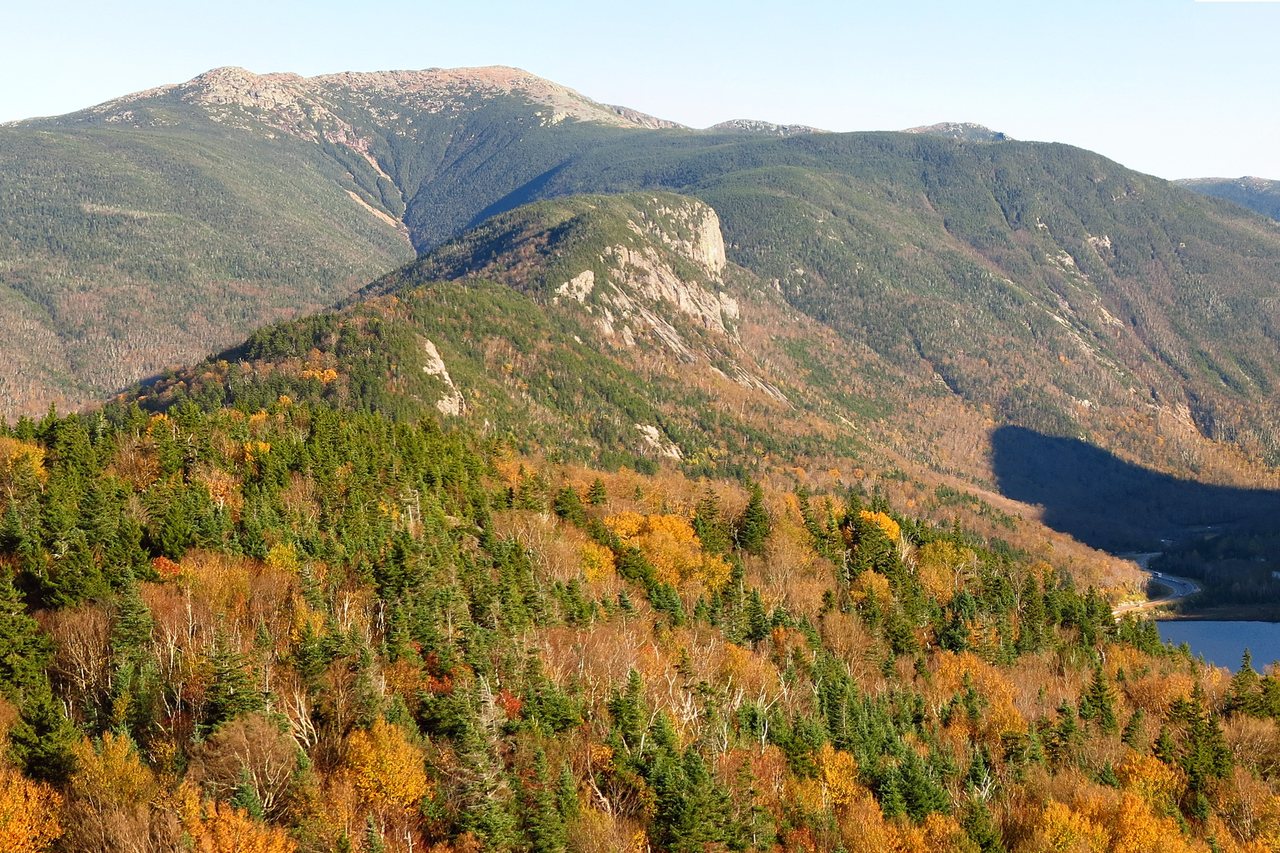
Franconia Notch State Park is the headline. It is an eight-mile mountain pass full of named natural features — Echo Lake, Artist Bluff, the Basin, the Flume Gorge, Profile Lake (where the Old Man of the Mountain used to look out before the rock face collapsed in 2003), and the trailheads for the alpine Franconia Ridge. Much of it is free and can be seen from short walks; the Flume Gorge is the one ticketed attraction inside the park.
The Kancamagus Highway — Route 112, known as 'the Kanc' — is the 34-mile scenic drive east from Lincoln to Conway. It climbs over the shoulder of the mountains with no gas, no food, and no cell service for its length, and it is spectacular, especially in foliage season. Along it are the Sabbaday Falls walk, several swimming holes on the Swift River, and trailheads for the Kancamagus's own peaks. Give it a slow half-day.
Loon Mountain Resort is the town's own mountain, about 6 min east. In winter it is the nearest place to ski or ride. In the warm months its gondola carries sightseers to the summit for a boardwalk, a lookout tower, and the glacial caves below the top — a low-effort way to stand on a mountaintop. There is a zip line and an adventure park at the base, which skew toward families.
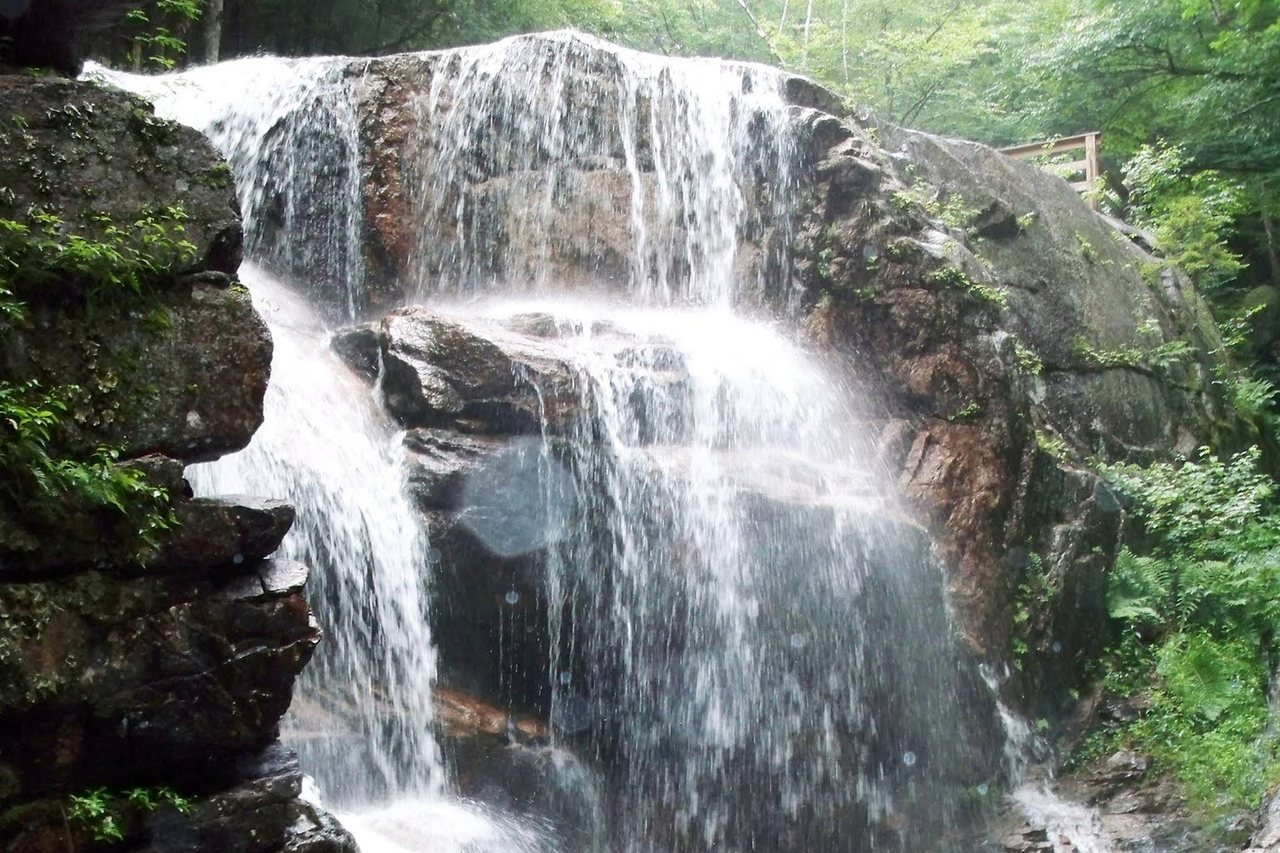
The Flume Gorge is an 800-foot natural granite gorge inside Franconia Notch State Park, with a boardwalk running through it beside a cascading brook. It is a roughly two-mile loop, ticketed and timed, and it is worth it — but buy timed tickets ahead in summer and fall, because it sells out. It is generally open from spring through foliage season and closed in winter.
Hiking around Lincoln, from a stroll to the alpine ridge
Lincoln is one of the great hiking bases in the eastern United States, with trails for every level within 20 min of town. At the easy end is the Artist Bluff loop above Echo Lake — under a mile and a half, a short scramble, and one of the best views-per-effort walks in the state, especially at sunset. Lonesome Lake, from Lafayette Place, is a family-favorite climb to a mountain pond with an AMC hut and a postcard view of the ridge across the water. Mount Pemigewasset, the 'Indian Head,' is a satisfying moderate summit ending on open ledges.
At the serious end is the Franconia Ridge Loop, one of the most celebrated day hikes in America: up the Falling Waters Trail past a staircase of cascades, out onto the exposed alpine ridge over Little Haystack, Mount Lincoln, and Mount Lafayette at 5,249 feet, and down past Greenleaf Hut on the Old Bridle Path. It is roughly nine miles with almost 4,000 feet of climbing, it spends over a mile above treeline where the weather can change fast, and it is best saved for experienced hikers. We have written a full, careful guide to it, and to the region's waterfalls and summits, on the hiking guides section of this site.
For waterfalls, the flat walk along the old railroad grade of the Lincoln Woods Trail to Franconia Falls is the most accessible (the trail is closed from June 15 into November 2026 between the Kancamagus and the Osseo Trail junction, so check before you go), and Sabbaday Falls off the Kancamagus is a short boardwalk to a beautiful flume. The Basin Cascades, just off the parkway, string a series of falls up a granite streambed above the famous Basin pothole.
When to visit: the seasons in Lincoln
Summer, roughly late June through August, is warm days and cool nights, with the whole menu open: hiking, swimming holes, the Flume, the gondola, and long evenings. It is busy, especially on weekends, but the mountains absorb crowds better than the parking lots do — start early and you will have space. This is the most reliable weather window.
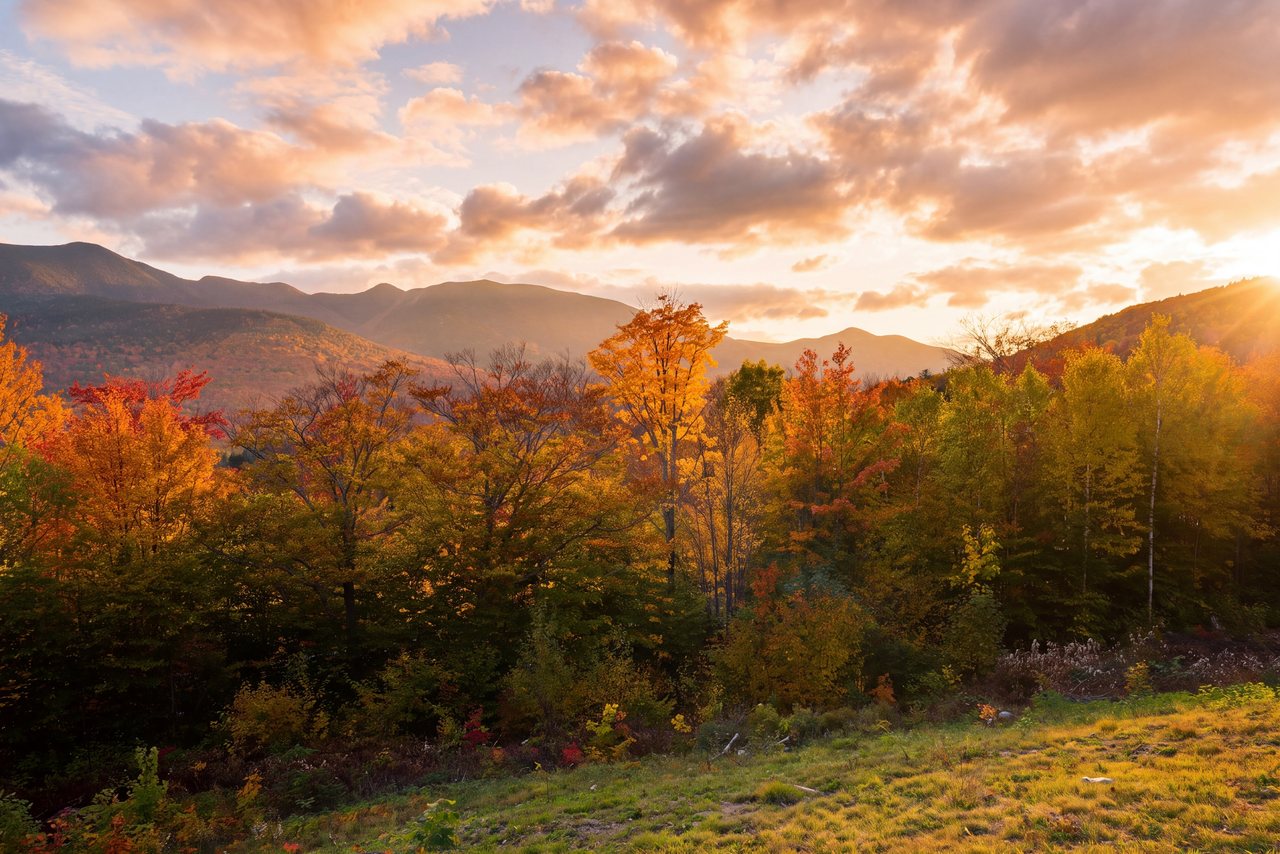
Fall is the reason many people come, and for good reason. Foliage in the Lincoln area generally peaks in the first to second week of October, though it varies year to year and by elevation — the high ridges turn first. A peak-foliage weekend is the busiest the region gets all year; the Kancamagus becomes a slow parade by mid-morning. Staying in town so you can be out at dawn is worth more in October than any other month.
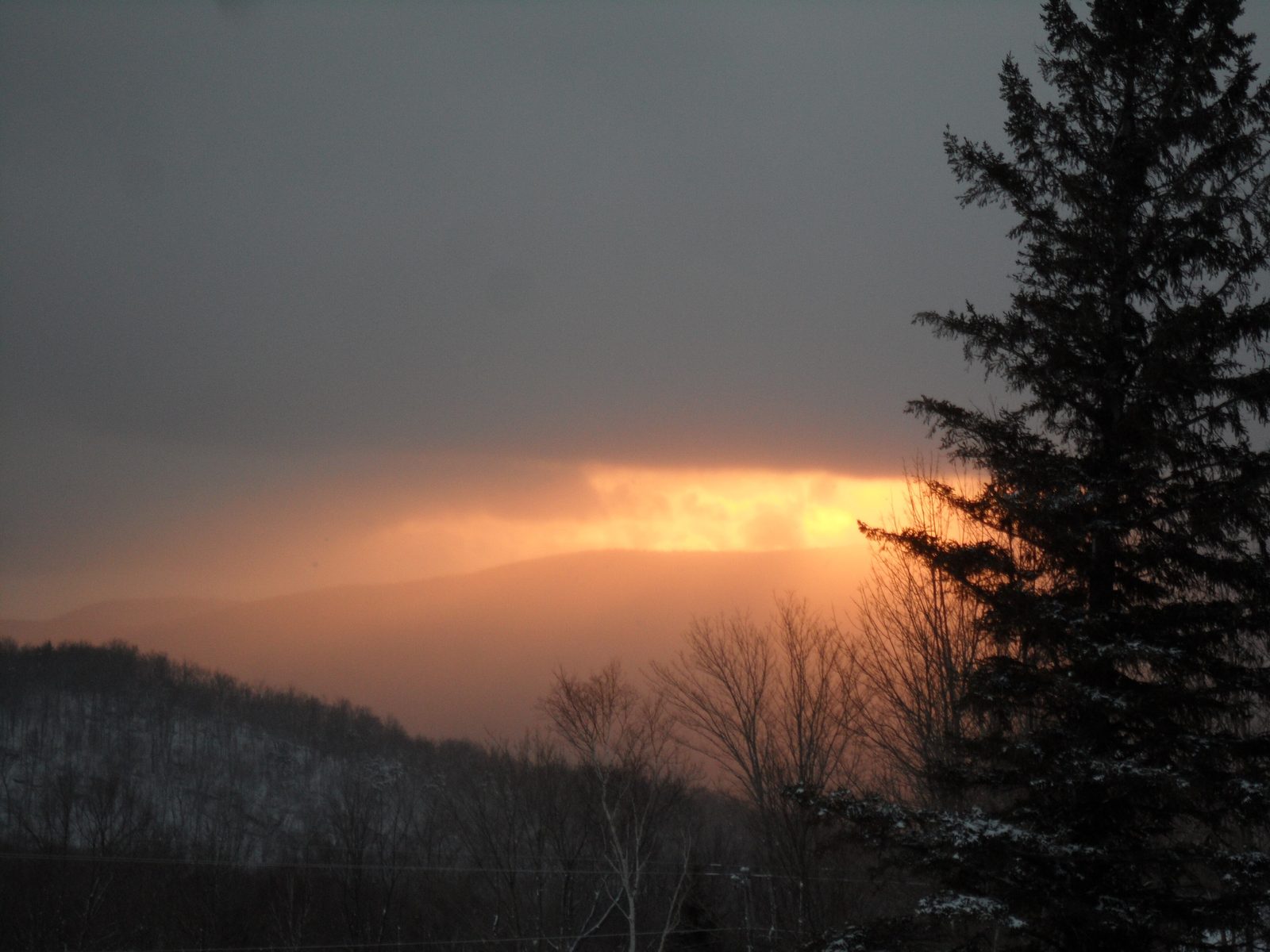
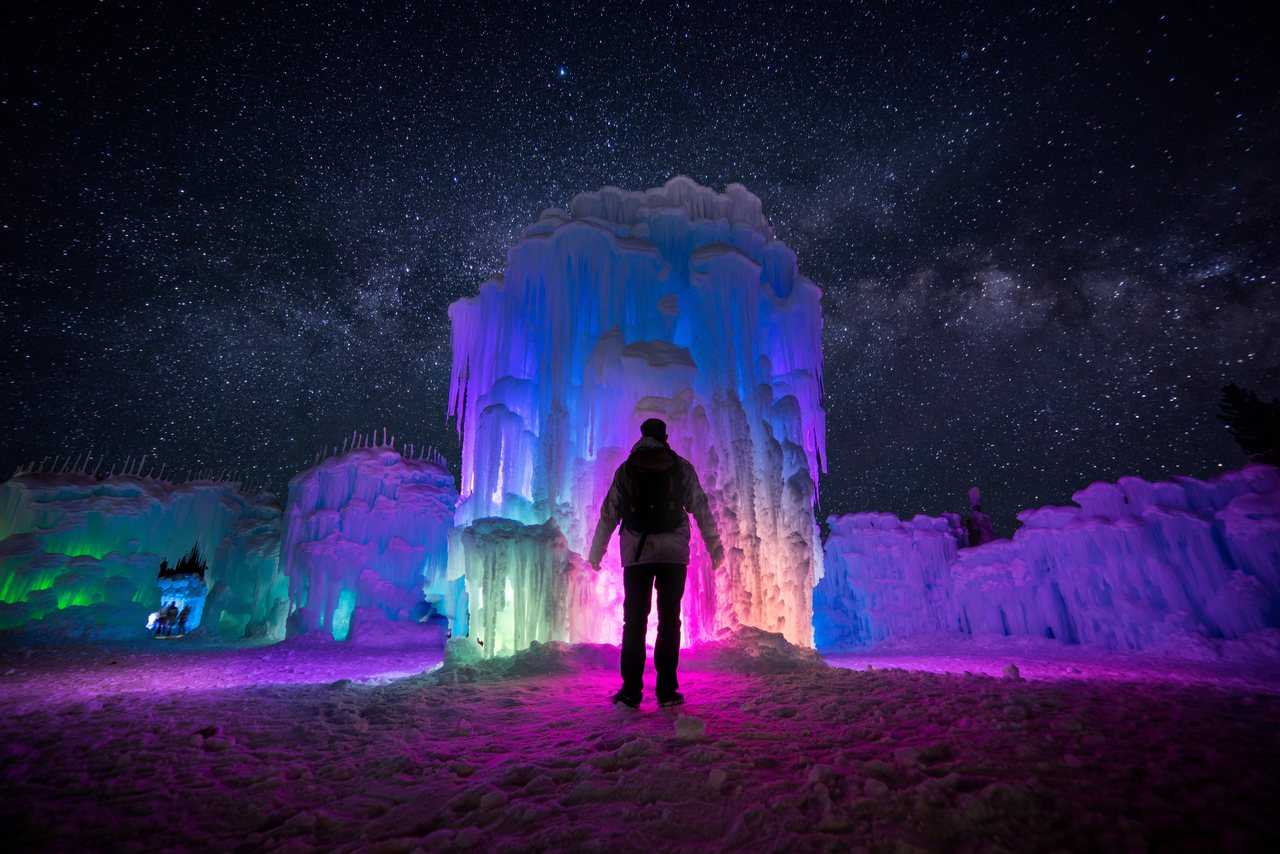
Winter turns Lincoln into a ski town. Loon is the local hill; Cannon Mountain in Franconia Notch and Waterville Valley are both close. The seasonal Ice Castles, when the winter is cold enough to build them, set up in North Woodstock. The Kancamagus stays plowed as a through-road, but many of its overlook pullouts are not cleared, the Flume does not run in winter, and the Cannon tramway has been retired. Bring real footwear; the sidewalks and trails are ice.
Spring, sometimes called mud season locally, is the quiet shoulder. Low-elevation trails turn to mud and high trails hold snow and ice into May, but the waterfalls run at full snowmelt volume and the towns are calm. The Flume typically reopens in early to mid-May. It is the least crowded time to have the place to yourself, if you plan around the conditions.
Where to eat and drink in Lincoln and North Woodstock
For its size, Lincoln-Woodstock eats well, and it leans casual and hearty — this is a mountain town, not a fine-dining destination. The two anchors are breweries with full kitchens: the Woodstock Inn Station & Brewery in North Woodstock, in an old railroad station, and One Love Brewery in Lincoln. Both are reliable for a post-hike burger and a pint, and both get busy on weekend evenings, so go early or expect a wait.
Beyond the breweries you will find the usual, well-run mountain-town spread: pizza and pub food, a couple of good breakfast spots that fuel the trailhead crowd, coffee, ice cream, and a scattering of sit-down restaurants. Because hours shift with the season and places open and close, we keep a current list of where we send guests in the digital guidebook every booking receives, rather than printing a list here that goes stale. If you want a recommendation, ask us.
Getting around and the practical logistics
You will drive everywhere, so a few logistics are worth knowing. Many US Forest Service trailheads in the White Mountain National Forest — including popular ones like Lincoln Woods and Sabbaday Falls — require a recreation pass, typically five dollars a day, paid at a self-service kiosk, or covered by an America the Beautiful federal pass. The state park lots in Franconia Notch, and the free pullouts like the Basin, work differently. Carry a few dollars in cash for the kiosks.
Cell service is spotty to nonexistent on the Kancamagus and in parts of the Notch, so download your maps and directions before you leave town. There is a full grocery store in Lincoln for provisioning. Gas up in town before driving the Kancamagus — there is none for its 34 miles. Electric-vehicle charging exists in town but is limited, so plan charging deliberately. In an old mountain town, plan to be a little self-sufficient; that is part of the appeal.
Who Lincoln is for — families, couples, and everyone in between
Lincoln is, on the surface, a family town. Along Route 112 you will find Clark's Bears (the old Clark's Trading Post), the Granite State Railway, the Whale's Tale Waterpark, and zip-line and adventure operations — a whole strip of kid-focused attractions that fill the town with families in July. If you are traveling with children, that is a feature.
But the same town is one of the best couples' and outdoors destinations in the Northeast, and the two coexist easily because they use different parts of it. The families are at the waterpark; the couples are on Artist Bluff at sunset. If you are here for the quiet version — the hiking, the drives, the long dinners, the early nights — you will find it a few streets off the main strip. That is the version we are built for.
Where to stay in Lincoln: hotels, rentals, and inns
Lincoln has three broad kinds of lodging. There are the chain and resort hotels near the interstate and at Loon, which are convenient and predictable and feel like chain and resort hotels. There are vacation rentals and condos, which give you space and a kitchen but no one to ask and, often, a location farther from the center. And there are the small inns and bed-and-breakfasts, which trade the amenities of a big hotel for character, a real location, and actual people who know the area.
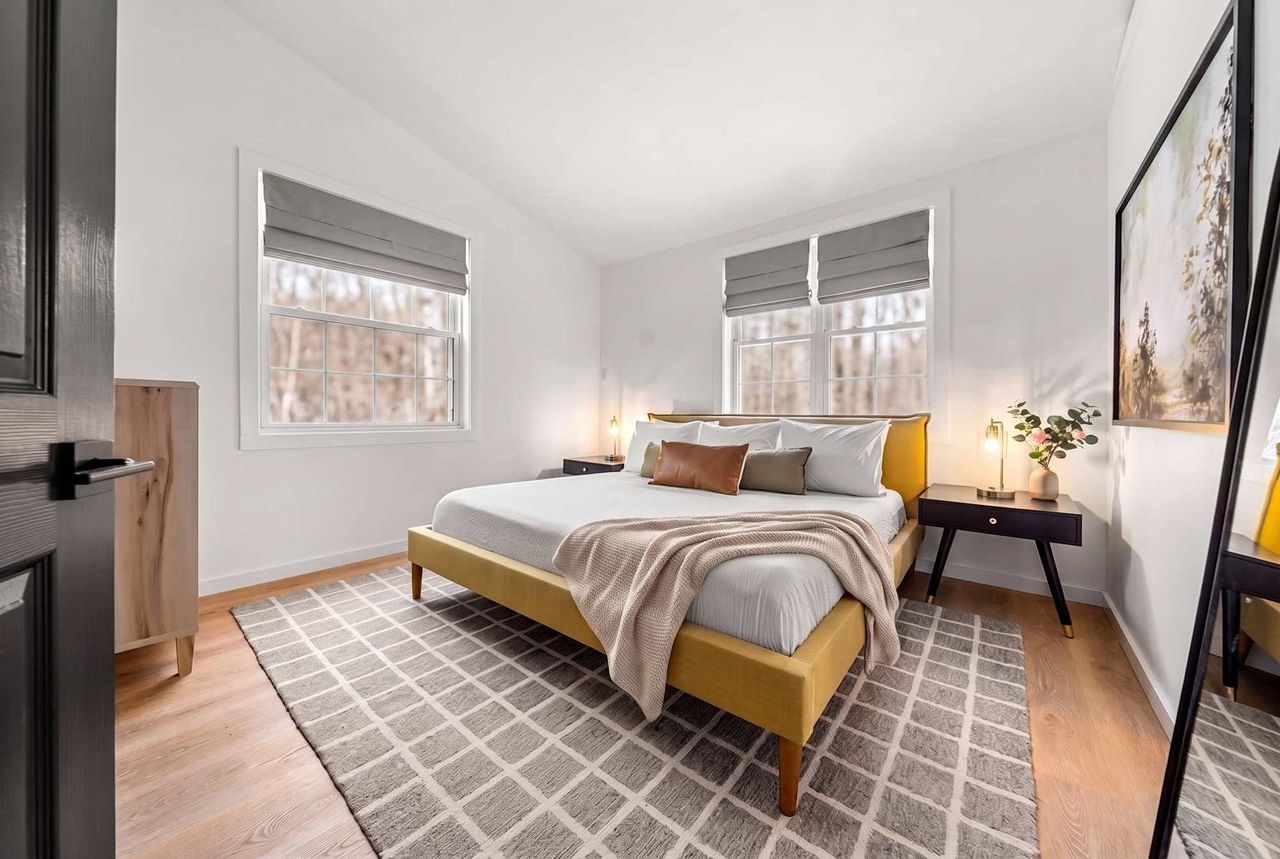
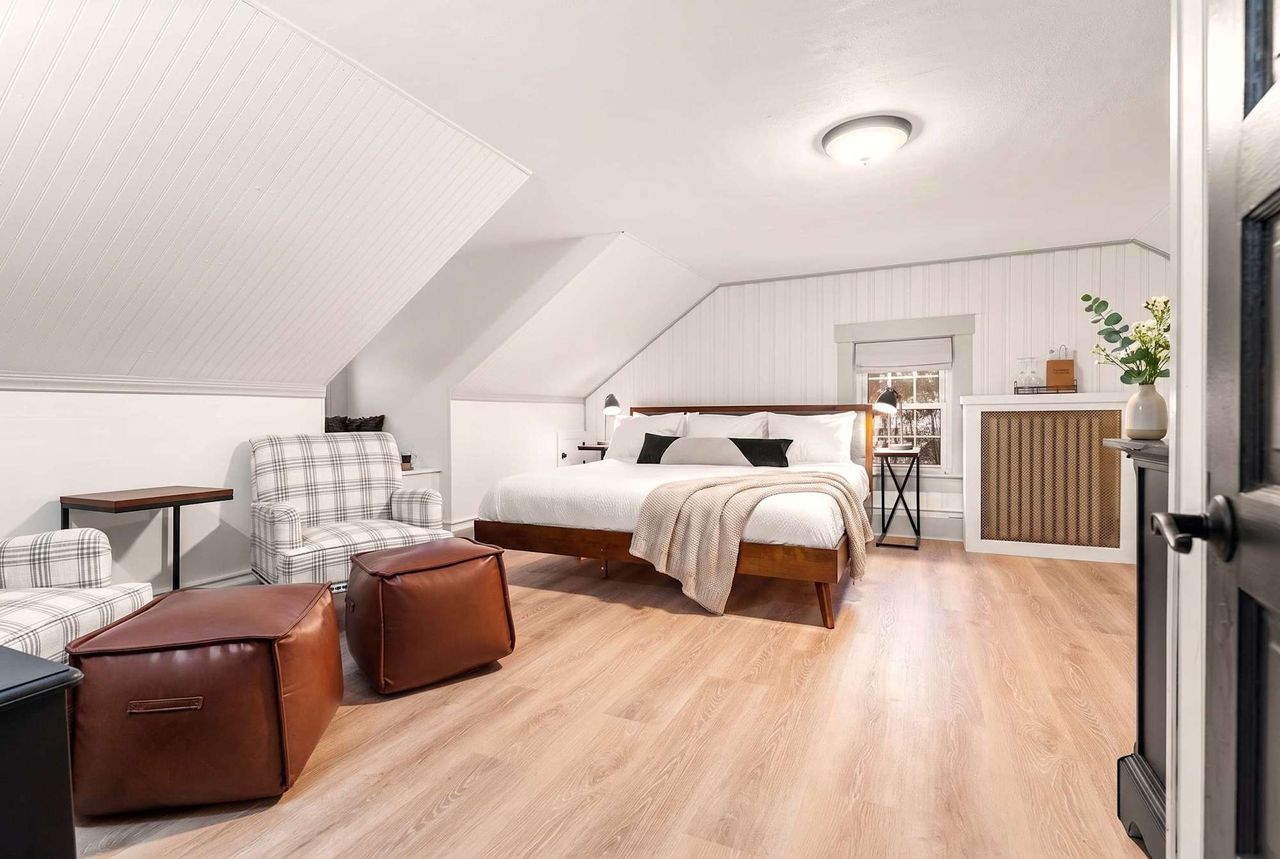
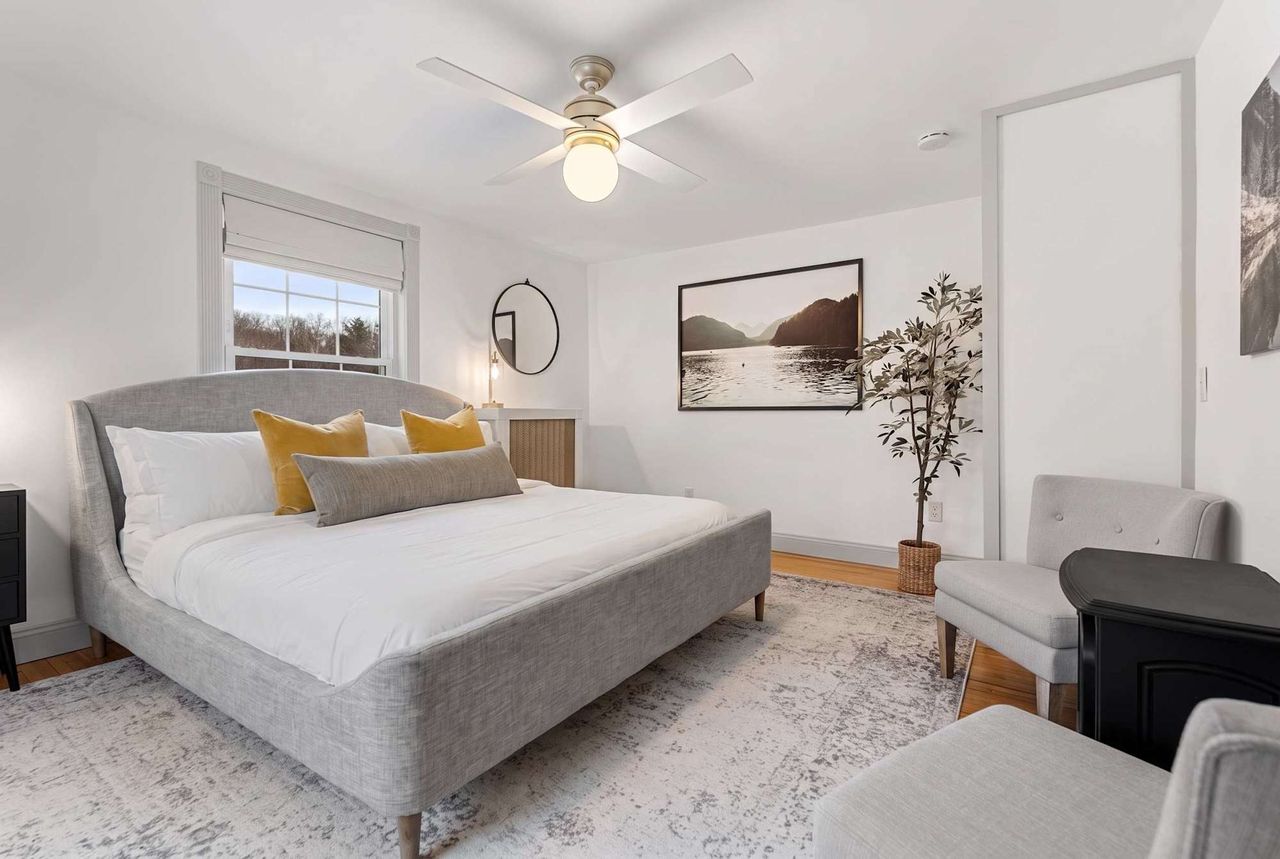
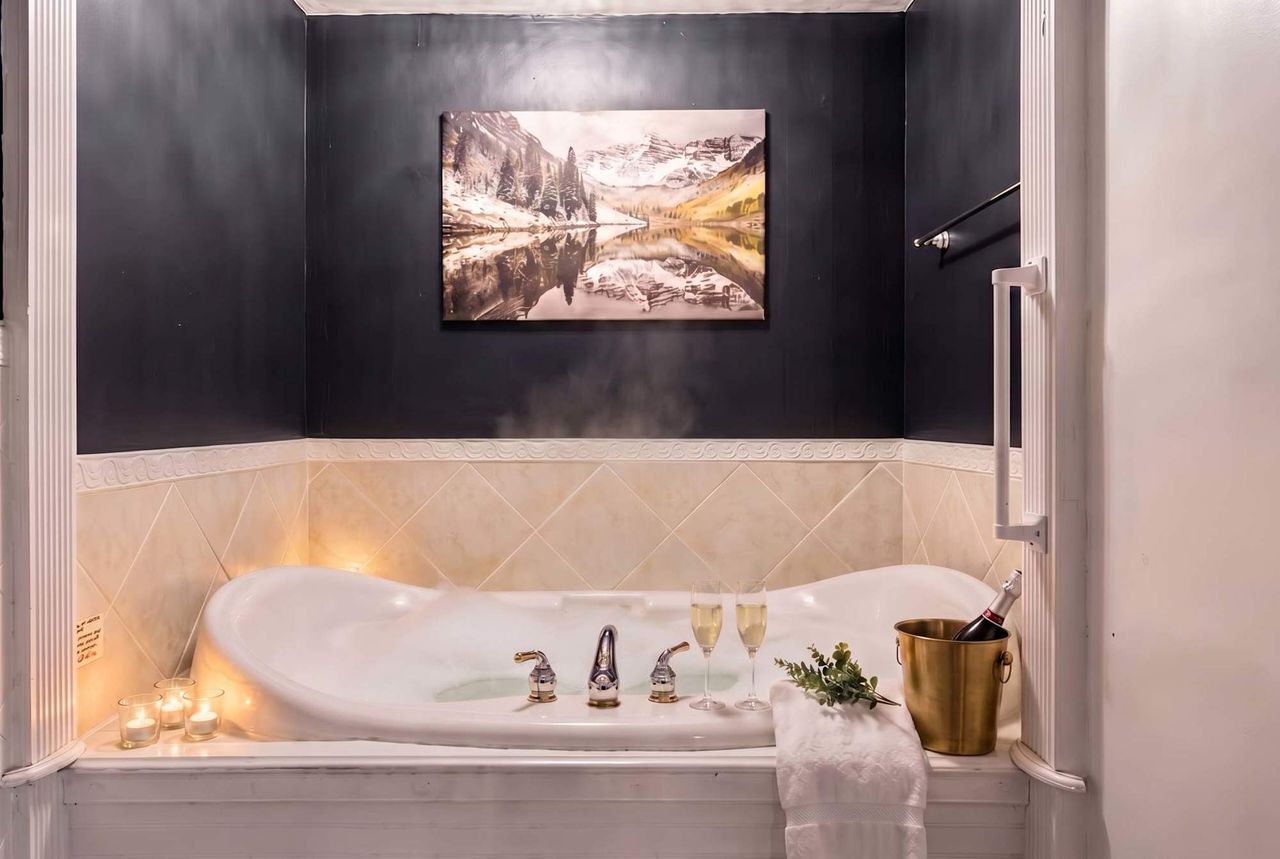
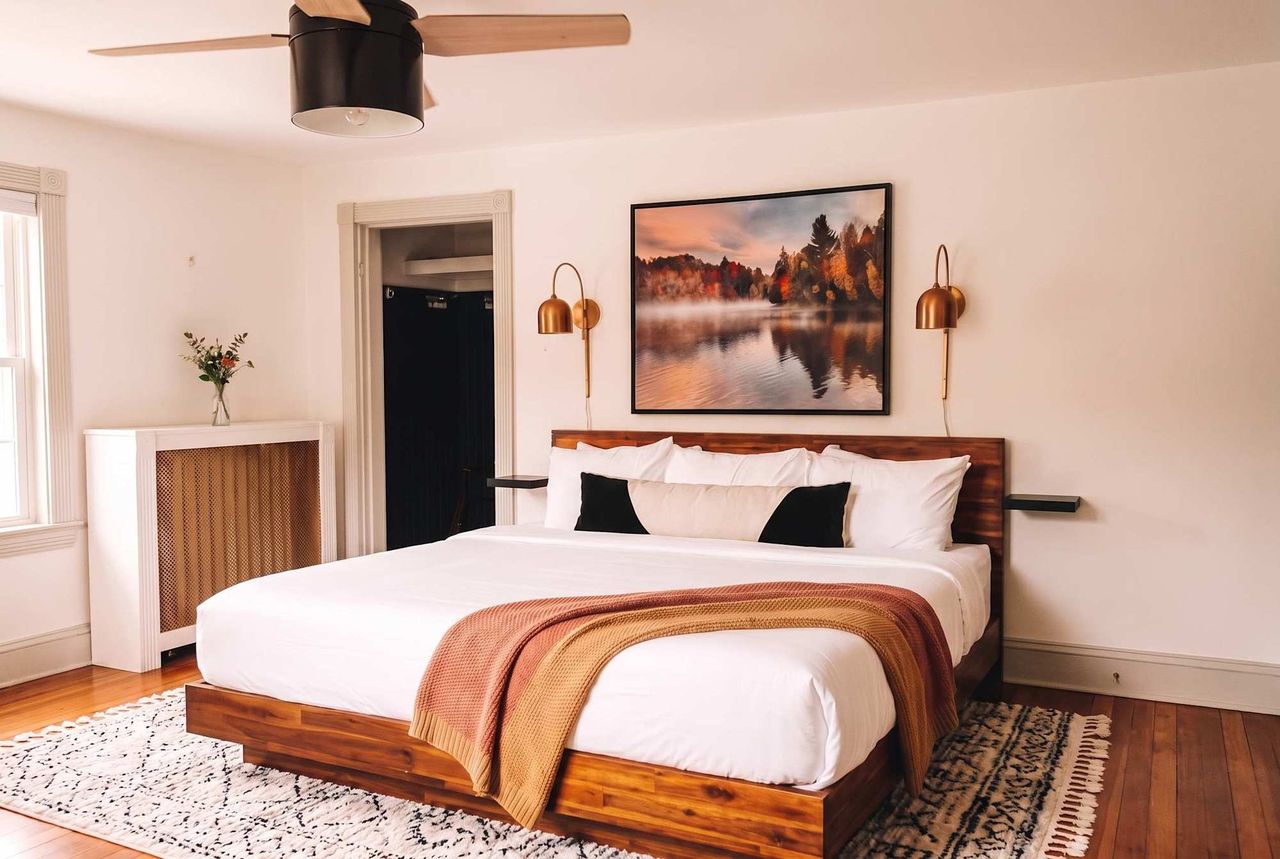
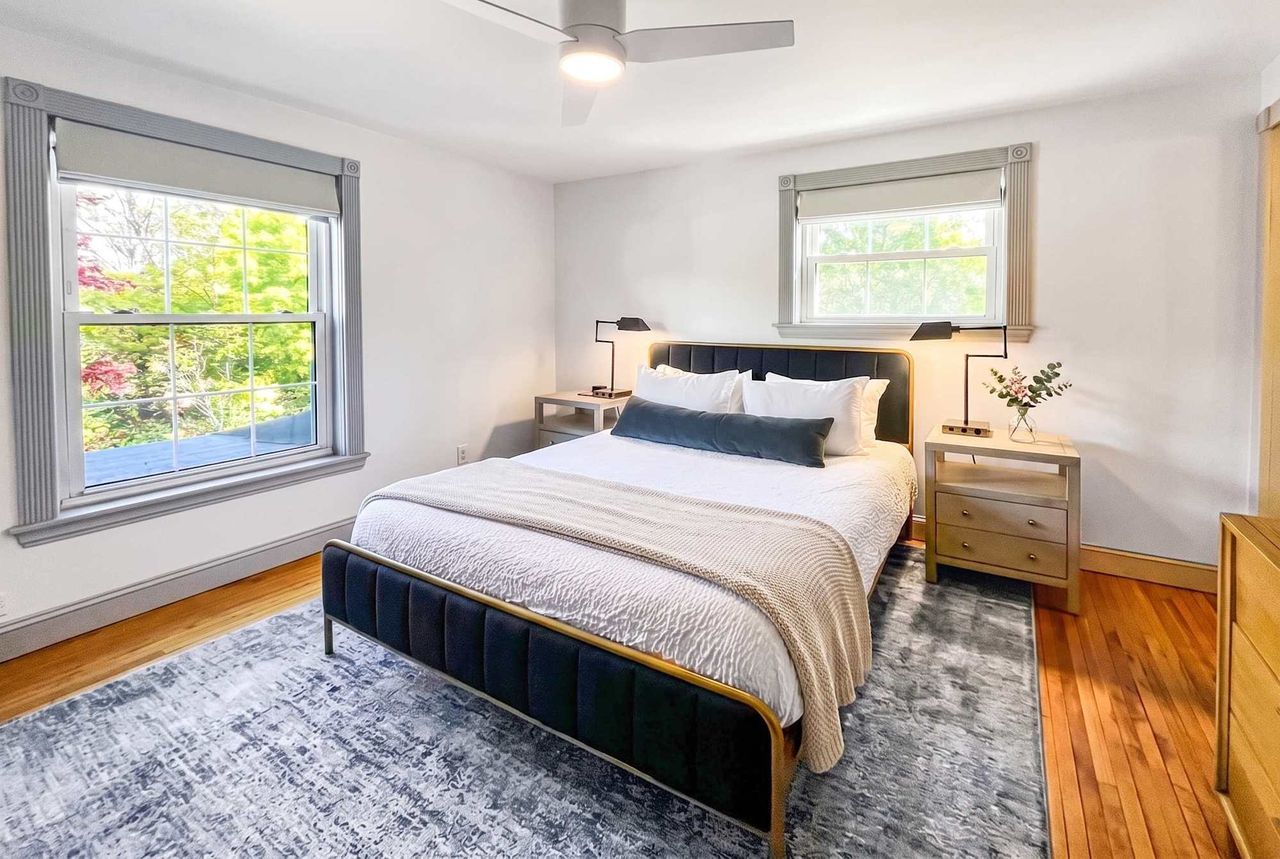
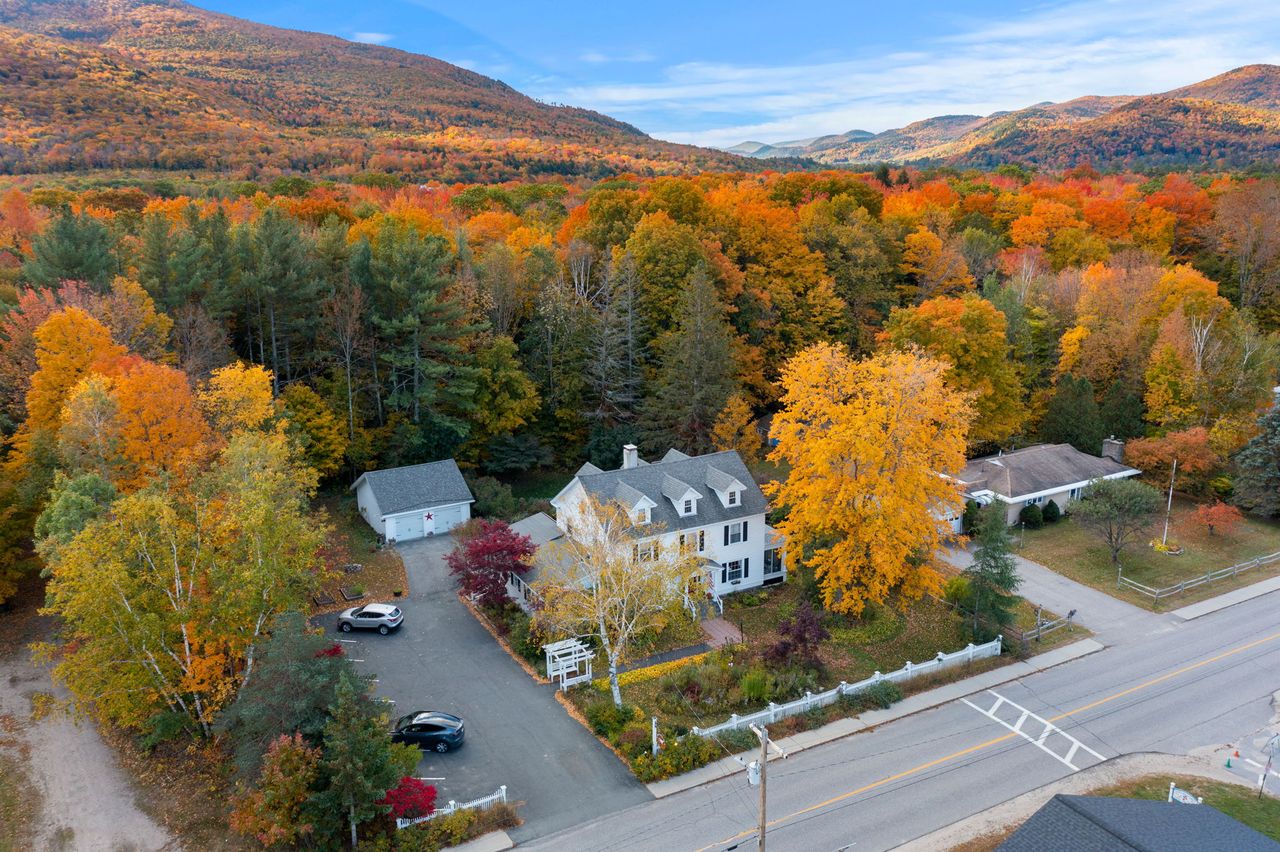
Launchpoint Lodge is the third kind, run deliberately. It is a six-suite, adults-only inn in a restored 1902 colonial a few streets off Main Street — central enough to walk to dinner, quiet enough to sleep. Each of the six suites is its own room with its own character, from a two-bedroom that takes the whole third floor to a queen with a two-person spa tub for tired legs. Settling in is simple: your door code arrives the day before arrival, once your check-in form and payment are complete, you let yourself in whenever you get here, and your virtual innkeeper, a real person, answers your messages. Five of the six suites are TV-free, on purpose, and the house is adults-only, welcoming guests twelve and over, also on purpose. It is the calm version of a Lincoln trip, and an easy drive from everything above.
A perfect two-night weekend, in brief
If you have a Friday-to-Sunday, here is the shape of a good one. Arrive Friday afternoon, let yourself in, and walk into town for an early dinner at one of the breweries before the day-trippers thin out. Saturday, be at a Franconia Notch trailhead by seven — Lonesome Lake if you want a moderate morning, the full Franconia Ridge if you are fit and the forecast is clear — then come back to town for lunch and take the afternoon slow with the Flume or the Basin. Sunday, drive the Kancamagus early, stop at Sabbaday Falls, and be heading home before the inbound traffic builds.
That is one weekend of many. We keep a set of ready-made itineraries on this site — a weekend, a full week, foliage and winter versions, hikers' and no-hike plans — all built around the same idea that staying central lets you skip the driving. Steal from whichever fits your trip.
Where to stay
We wrote this guide because it is, more or less, the conversation we have with guests before a trip — where to go, when to go, and how to skip the crowds. Launchpoint Lodge is a six-suite adults-only inn in the middle of Lincoln, which means every place named on this page is a short drive from the door, and the early starts that make a White Mountains trip work are easy to pull off.
If you want the quiet, central version of a Lincoln visit — self check-in, mostly TV-free suites, and real people a message away — that is exactly what the lodge is for.
Sources & official info: nhstateparks.org · visitnh.gov · fs.usda.gov · westernwhitemtns.com
— Launchpoint Lodge, From the lodge