Winter is our quietest season, and for the right kind of guest it is the best one. The foliage crowds have gone home, the town has settled into its slower rhythm, and the two mountains most people come north to ski sit within a short drive of the front door. You can be clicked into your bindings 20 min after coffee, back at the house while the afternoon light is still good, and out again for dinner on foot. The skiing is the reason to come. The way the day ends is the reason a lot of guests book the same weekend again the following year.
This is our version of a ski weekend: where to go, how to choose between the two mountains, and what makes coming back to a warm, quiet suite the part guests remember most about the trip.
Why winter is the quiet season in Lincoln
Lincoln fills up twice a year. Once in late September and early October, when the leaves turn and the town swells with foliage traffic, and again in the deep summer. Winter is different. The base areas are busy on a Saturday, but the town itself stays calm, and the house stays quiet. For an adults-only inn with six suites, that quiet is most of what we sell in the cold months.
The practical side of winter here works in your favor too. Parking is free and right outside the door, so you are not circling a garage with skis on the roof or paying by the hour. Check-in is keyless, a code on your phone, with a virtual innkeeper a message away, which means you come and go entirely on your own clock. If the snow is good and you want first tracks, nobody is stopping you from leaving at seven. If you want to sleep in and ski the afternoon, that works just as well. A ski day rarely runs to a tidy schedule, and the self check-in setup is built for exactly that kind of loose, weather-driven timing.
The house sits in the middle of Lincoln, so dinner, a drink, and a few shops are within reach without getting back in a cold car. That matters more in January than it does in July. After a day standing on a windy summit, the shortest possible distance between your boots and a warm room is a real luxury, and it is one of the reasons we point winter guests here rather than to a slope-side condo 20 min up a mountain road.
Skiing Loon Mountain
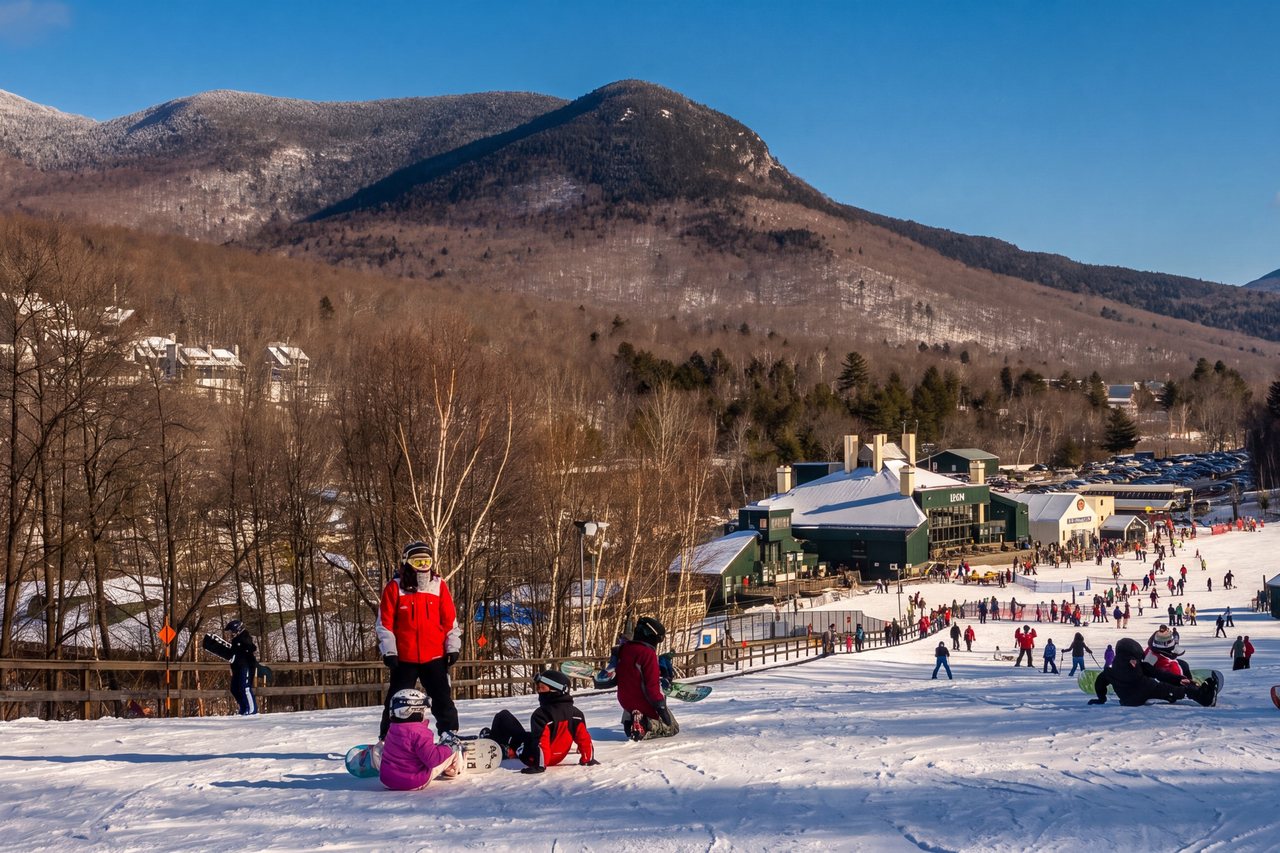
Loon is 6 min east of the door and the easy default. It is the mountain we send most guests to, especially anyone easing back into skiing after a few seasons off or traveling with a mixed-ability group. The terrain spreads across three connected summits, North Peak, Loon Peak, and South Peak, and adds up to a little over 400 acres with a vertical drop of about 2,190 feet. That is a big mountain by New England standards, with room to spend a full day without repeating yourself. The gondola alone climbs about 1,738 vertical feet, which gives you a sense of the scale before you have taken a single run.
The layout is friendly. The trail breakdown runs roughly a fifth beginner, half intermediate, and a bit under a third expert, which is why it works so well for groups who do not all ski the same way. Strong skiers can find pitch off the top while everyone else laps the long, groomed intermediate runs, and the whole party can still meet for lunch at the base. There is real beginner terrain up high too, reached by lift rather than stranded at the bottom, so a newer skier gets the summit view and the long, gentle descent instead of a bunny slope by the parking lot.
Getting around is quick. Loon runs more than a dozen lifts, including the high-speed Kancamagus 8 chair and the White Mountain Express Gondola, which carries you and your skis up to Loon Peak in enclosed comfort on a cold morning. The gondola is also the reason Loon is worth a mention even if nobody in your party skis. It runs for sightseeing, so a non-skier can ride to the summit for the view and a warm lodge at the top while the rest of the group takes laps. Snowmaking covers nearly the entire mountain, which is the quiet workhorse fact of a New Hampshire ski trip: it means Loon holds a skiable base through the thaws and dry spells that would strip a mountain relying on natural snow alone.
For the full rundown of terrain, lifts, and lessons, the resort's own pages are the place to check conditions the morning you go, and our guide to Loon Mountain covers how it fits into a stay here. Buy your lift tickets ahead online when you can, especially for a holiday weekend, because walk-up prices and same-day availability are never the better deal.
Skiing Cannon Mountain
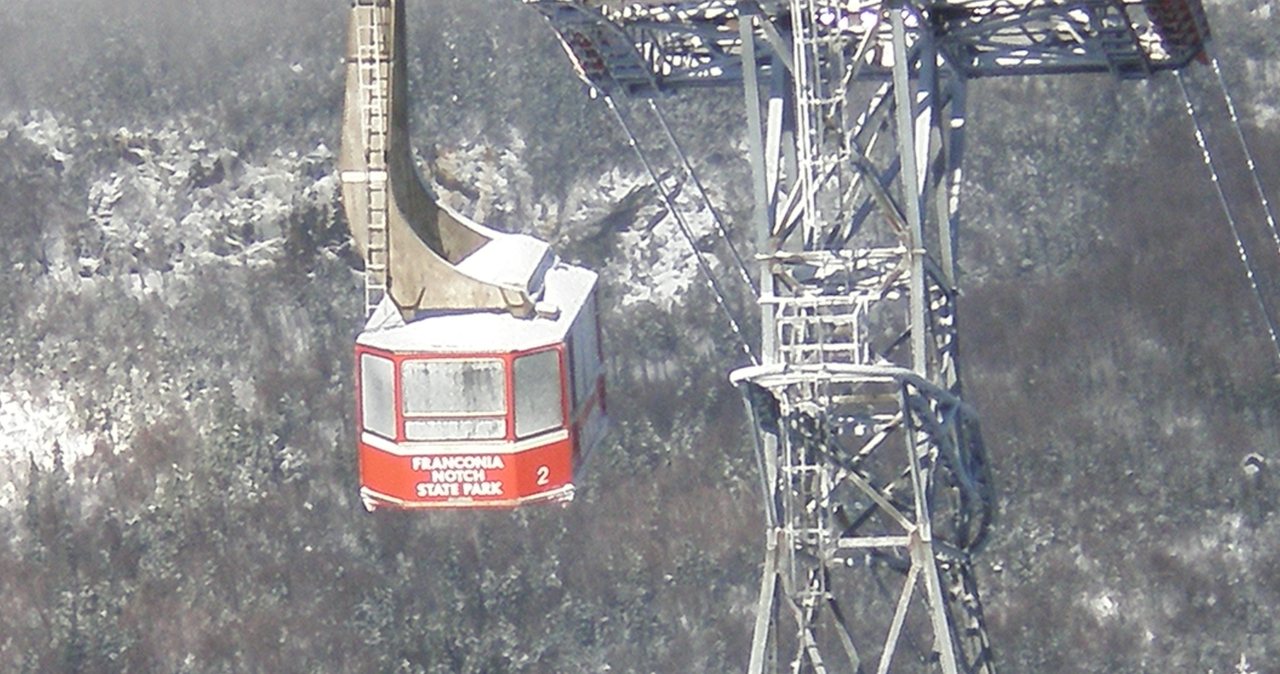
Cannon is the other character entirely, about 16 min north of the lodge, up in the deep part of Franconia Notch. It is a state-owned mountain inside Franconia Notch State Park, older and plainer than a modern destination resort, and locals are loyal to it for good reasons. It has the most vertical drop of any ski area in New Hampshire, about 2,330 feet, and it averages something on the order of 160 inches of natural snow a year, which is a lot for this part of the country. Its summit sits at about 4,080 feet, the highest of any ski area in the state.
The skiing has teeth. Cannon holds close to a hundred trails and glades, and the terrain runs steeper and more exposed than Loon, with real fall-line pitch and less of the manicured, predictable grooming. The longest run stretches about 2.3 miles from top to bottom, and the mountain holds close to 25 miles of trails in all. The adjacent Mittersill terrain skis more natural and old-fashioned, closer to backcountry in feel, and is part of why experienced skiers make the drive. Weather is the wild card. Cannon sits in a wind funnel, it runs colder than Loon, and the upper lifts can go on wind hold when a storm is blowing through. That is the price of the terrain, and on the right day it is a bargain.
One thing to know before you plan around it. Cannon's famous aerial tramway, the enclosed cabin that carried 70 passengers to the summit, ran its last day at the end of the 2025 fall season, on October 26, 2025; a new tram is in planning, and no reopening date has been announced. No reopening date has been announced, so the tram is not an option on any trip you take this winter. What matters for a skier is that the mountain itself is fully open. The Peabody Express and the rest of the chairlifts run as they always have, so you ski Cannon normally, you simply reach the top by chair instead of tram. If you want the current status and the background on the replacement, our note on the Cannon Mountain tramway lays it out. Do not drive up expecting a scenic tram ride to the summit right now, and do not let the tram news make you think the ski area has closed. It has not.
Because Cannon is up in the Notch, dress for it. The parking areas and base sit out in the open, the wind comes straight down the pass, and it can be ten or fifteen degrees colder up there than it is in town. Bring more layers than you think you need, and keep a warm change in the car for the drive home.
How to choose between Loon and Cannon
The two mountains are close enough that you can ski both across a weekend, and plenty of guests do exactly that, one each day. But if you are picking for a single day, the choice usually comes down to the group and the weather.
Loon is the pick for mixed groups, newer skiers, kids in your party who are old enough to stay here, and days when visibility is poor. The grooming is reliable, the mountain is easy to navigate, and the gondola and base lodge make a low-effort day for anyone not skiing hard. On a warmer afternoon when the snow softens, Loon's grooming and snowmaking hold up better than a natural-snow mountain would. It is the sensible, low-friction default, and there is no shame in defaulting to it.
Cannon is the pick for confident skiers chasing a real challenge, and especially for a cold, clear day after a fresh snowfall, when the steeper terrain and the natural snow come into their own. If a strong pair in your group wants a serious morning and does not mind the cold and the occasional wind hold, send them up the Notch. If the forecast is warm, gray, or windy, lean back toward Loon.
There is a third mountain in the conversation too. Waterville Valley sits a bit farther south and rounds out the picture, particularly for families and intermediates. It is smaller and gentler than either Loon or Cannon, a family mountain of a little over 260 acres reached off Exit 28 and a valley road south of town. If you want the full side-by-side on terrain, character, and who each one suits, our comparison of Loon, Cannon, and Waterville goes deeper than we can here, and it is the piece to read before you buy tickets for a group with different tastes.
Cross-country skiing, snowshoeing, and tubing
Not every day of a ski weekend has to be spent on a chairlift, and some of the quietest hours here happen off the alpine trails entirely. If your legs are tired, the lift lines are long, or someone in your group does not downhill ski, there is a full second menu of winter to work through.
Loon's Adventure Center, across from the main parking lot at the base of the mountain, is the hub for most of it. There is a cross-country network of more than 20 kilometers of groomed trail on the East Ridge, following old logging roads along the snow-covered Pemigewasset River, with everything from flat, gentle track to longer, more demanding loops. The easy trails run level along the river; the longer ones climb the shoulder of Black Mountain for anyone who wants to work. It is a good, protected place to learn Nordic skiing or to spend a mellow morning without the exposure of an alpine summit. The same center rents snowshoes, guides base-area and summit snowshoe tours, and runs an ice skating rink and an indoor climbing wall, so a non-skiing day still has plenty in it.
One point worth being clear about, because guests ask: Loon does not run night skiing on its alpine trails. What it does offer after dark is lift-served snow tubing on the Little Sister trail, day and into the evening, which is good, uncomplicated fun and asks nothing of you technically. If you were hoping to ski under the lights, that is not on the menu at Loon, but an evening of tubing is, and it is the kind of low-stakes fun that a mixed group can all do together.
Beyond the resort, snowshoeing opens up a lot of quiet forest that is hard to reach any other way in winter, and it needs almost no skill, just warm layers and a willingness to break trail. The flat sections of the Franconia Notch recreation path see some ungroomed ski and snowshoe use when they are snow-covered, though they are not a maintained track and conditions vary. For the trail-by-trail detail on where to go for Nordic skiing and snowshoeing near town, our cross-country and snowshoeing guide is the practical reference. One logistical note that catches people off guard: if you park at a White Mountain National Forest trailhead, you need a recreation pass, currently five dollars for a day or thirty dollars for the year, and it is easiest to sort out before you go rather than at a snowy kiosk.
Getting here and driving in winter
Most of our winter guests drive up from the south, and the trip is straightforward. From Boston it is roughly 130 miles and somewhere between two hours and two and a quarter in normal conditions, straight up Interstate 93 to Exit 32, with a single toll along the way at Hooksett that runs about two dollars. Manchester's airport is the closest one if you are flying, and it puts you a good deal closer than Boston does.
Winter changes the math. A storm can add an hour or more, the last stretch of I-93 climbs into the mountains where the weather is always a step worse than it was at the toll, and the drive is far more pleasant on proper snow tires than on all-seasons. Give yourself more time than the map suggests, check the forecast before you leave, and if a big system is coming through, consider shifting your arrival by a few hours rather than driving into the teeth of it. Clear the snow off your whole car, roof included, before you head down the far side of a pass. Our fuller notes on winter driving in the White Mountains cover the specifics, including what to keep in the car.
A word on the Kancamagus Highway, since it starts at the end of our street and looks like a shortcut on a map. It is a 34-mile scenic byway with no gas, no services, and no cell signal for its entire length, and it is not a road to treat casually in winter. It is kept open when conditions allow, but it climbs high and gets weather that closes it or turns it treacherous. It is a summer and foliage drive first and foremost, not a winter commuting route, so plan to reach the ski areas on the main roads.
Once you are here, the driving gets easy. Loon is 6 min one way, Cannon about sixteen the other, the town is a few minutes in between, and you park for free right outside the house every night. You are not shuttling gear or feeding a meter for the length of your stay.
Coming home warm
The return matters as much to us as the skiing, and it is the part a lot of places get wrong. The Launchpoint version of a ski day is built around it. Come back mid-afternoon while the light is still good rather than skiing the lifts down to the last chair, and give yourself an hour or two to enjoy being warm and still.
The logistics are made for it. You park free right outside, so there is no long haul from a distant lot with an armful of gear and no carrying skis up a public stairwell. Each suite has a spot by the door for wet boots and layers, so the snow stays where it belongs. Because check-in is keyless, you simply let yourself in, ski socks and all, straight from the car.
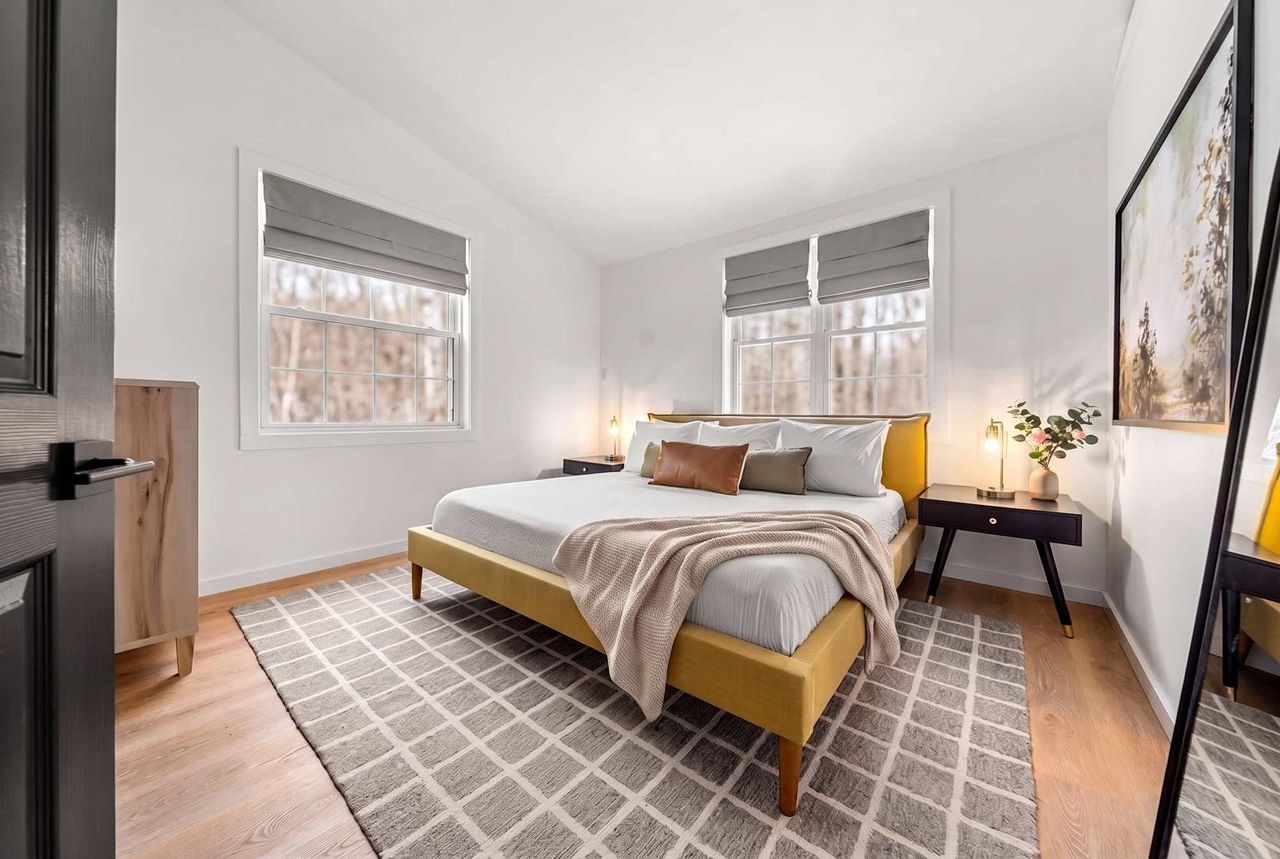
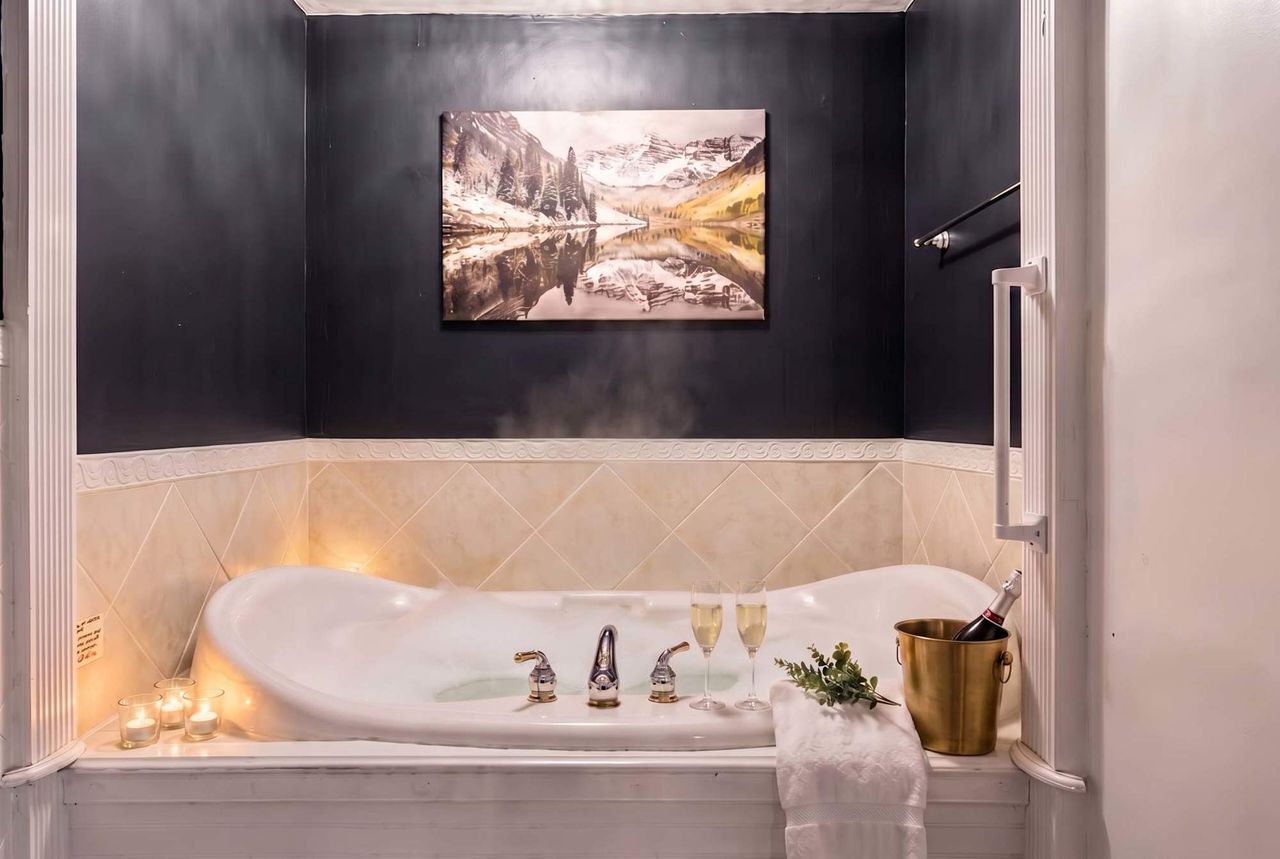
Then the warm-up. The Basin suite has a two-person jetted tub, which is about the most direct answer there is to a cold day on an exposed mountain, and it is the room we steer guests toward when a soak after a cold day out is the priority. You can read the details and see it on the Basin suite page. The coffee lounge has coffee and tea for the thawing-out hour, and five of the six suites are TV-free by design, so the evening stays quiet and unhurried. After a day of cold wind and moving fast, a silent, warm room is the reward the whole day points toward.
When you are ready for dinner, the town is right there. Basecamp Brewing, the Lincoln brewery that spent years as One Love before it rebranded, brews on site and serves a full menu at the Mills Marketplace, and it is an easy stop after a ski day. A few minutes south in North Woodstock, the Woodstock Inn Station & Brewery occupies an old train station and runs a casual, dependable kitchen alongside its own beer. Between the two you have a solid après plan without a long drive. For more options and how to think about where to eat on a given night, our note on dinner in Lincoln and North Woodstock is the local's shortlist. Whatever you choose, the walk or short drive home ends at a warm, quiet suite, which is the note the whole day has been building toward.
Where to stay and how to book
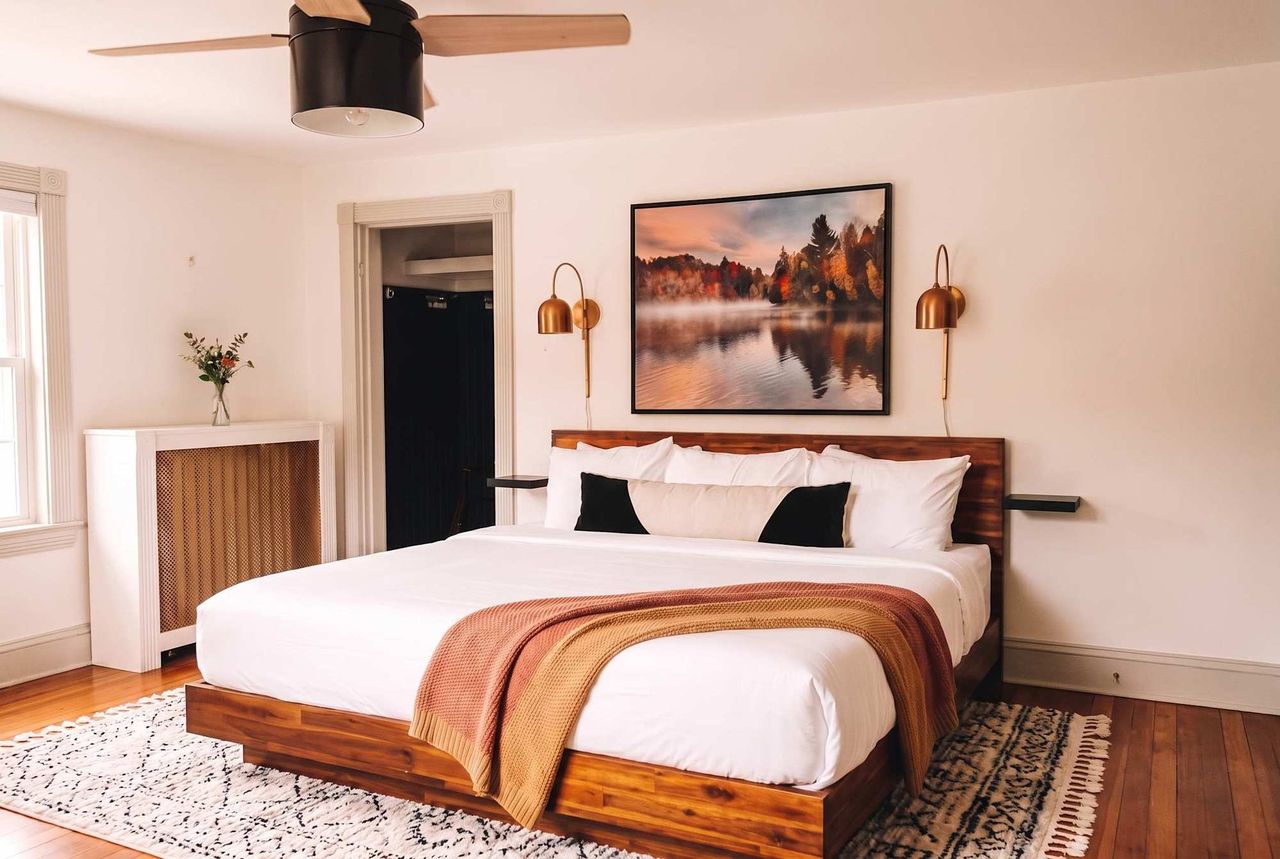
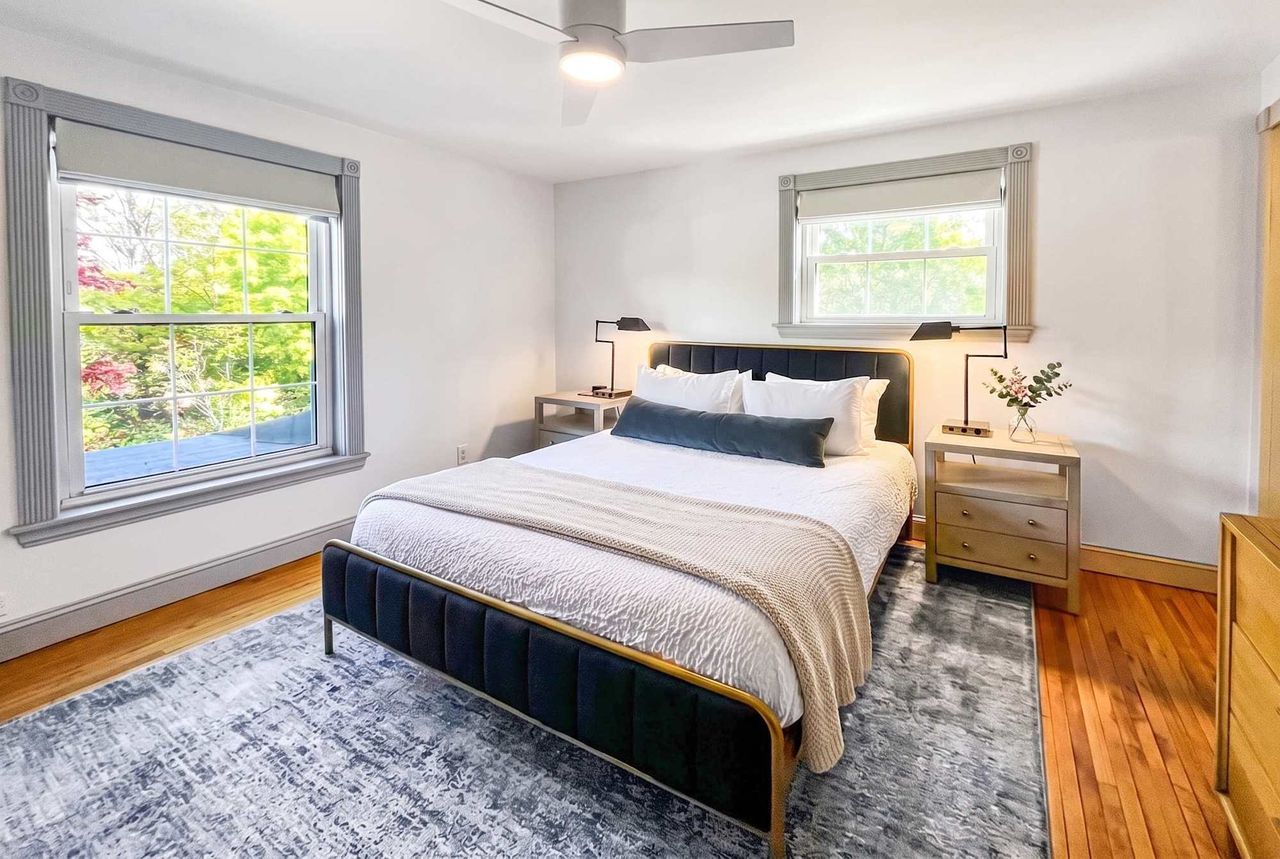
The house is a restored 1902 colonial in the middle of Lincoln with six suites, and it is adults-only, with no guests under twelve. That is a deliberate choice, and in winter it means the property stays calm after a long day out, with no early-morning noise and no crowd in the common spaces. Check-in is at three in the afternoon and checkout is at ten, both handled by a simple keyless code, so your arrival and departure fit around the ski day rather than the other way around.
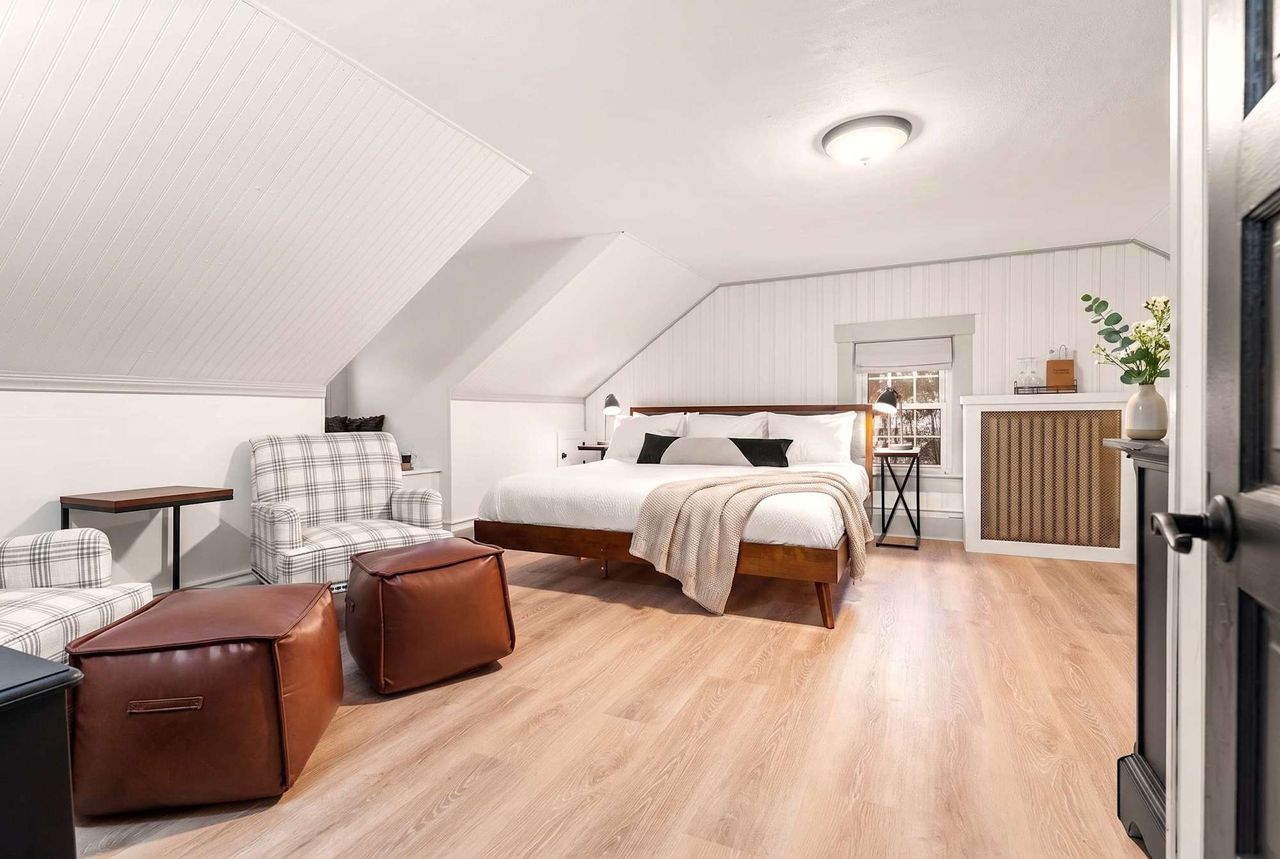
For a ski weekend, our advice is to book a couple of nights and hold your plans loosely once you are here, letting the snow and the forecast decide which mountain you ski on which day. If a soak after the mountain is what you are after, ask about the Basin suite specifically. If you would rather a quiet reading corner, the Notch suite has a pair of leather lounge chairs for exactly that. Whichever room fits, the best rate is always the one you book direct, so skip the third-party sites and reserve with us.
When you have a weekend in mind, you can check dates and book directly, and if you are not sure which suite suits your trip or you want a read on how the snow has been, reach out and ask. We ski these mountains ourselves, and we are happy to tell you where it has been best lately. Two mountains sit 6 and 16 min from the door, and a quiet, warm suite waits at the end of each ski day. That combination is what brings our winter guests back.
— Launchpoint Lodge, From the lodge