Most of what gets written about the White Mountains in summer is really about the middle of the day. The Flume at 11am with a line at the ticket window, the Kancamagus bumper to bumper by early afternoon, the trailhead lots full by 9. All of that is real, and all of it is worth doing. But if you ask any of us who run this house what the best hours of a summer day are, none of us would say noon. We'd say the evening — the stretch from about 5 o'clock until the light finally goes, when the tour buses have pulled out of the Flume lot, the day-trippers are an hour down I-93, and Lincoln settles back into being a small mountain town again.
This is a northern place, close to the 44th parallel, and in late June and early July the sun doesn't set until close to 8:30, with real usable light hanging on well past 9. That's a long, slow, forgiving evening — enough time for a swim and a sunset and dinner and a beer without rushing any one of them. Below is how we spend it, and how we tell guests to spend it: the swims, the overlooks, the town, the deck, the stars. Real places, plain notes about the cold water and the fading cell signal, and no pretending the sky does anything it doesn't.
Why the evening is the best shift
The crowds here run on a daytrip clock. Most of the people you share the Flume boardwalk or a Franconia Notch pullout with in July have driven up from Massachusetts or southern New Hampshire for the day, and by 4 or 5 in the afternoon they're thinking about the drive home and dinner reservations two hours south. Watch the traffic on Route 112 and I-93 around then — it thins out fast. What's left behind is the version of this place the people who live here get to keep.
The temperature helps too. A White Mountains summer day that hit the low 80s in town will start shedding heat the moment the sun drops behind the ridgeline, and up here the drop is quick. By 8 o'clock you often want a light layer. That cooling is the whole reason the evening feels different from the day — the air gets clean and still, the river holes stop feeling like a dare and start feeling like a reward, and the bugs, if you time it right, are less of a problem on a breezy overlook than they are in the damp woods at dusk.
There's a practical booking angle here that we won't pretend isn't self-interested: the guests who get the most out of Lincoln are usually the ones staying the night, because the good hours are the ones a daytripper has to give up to beat the traffic. If you're weighing a day trip against a stay, the evening is the argument for the stay. Our six suites exist for exactly this — so the best part of the day is yours instead of something you watch disappear in the rearview mirror. If you want the fuller seasonal picture first, our guide to the White Mountains in summer lays out the whole season, day and night.
The long light of a northern summer evening
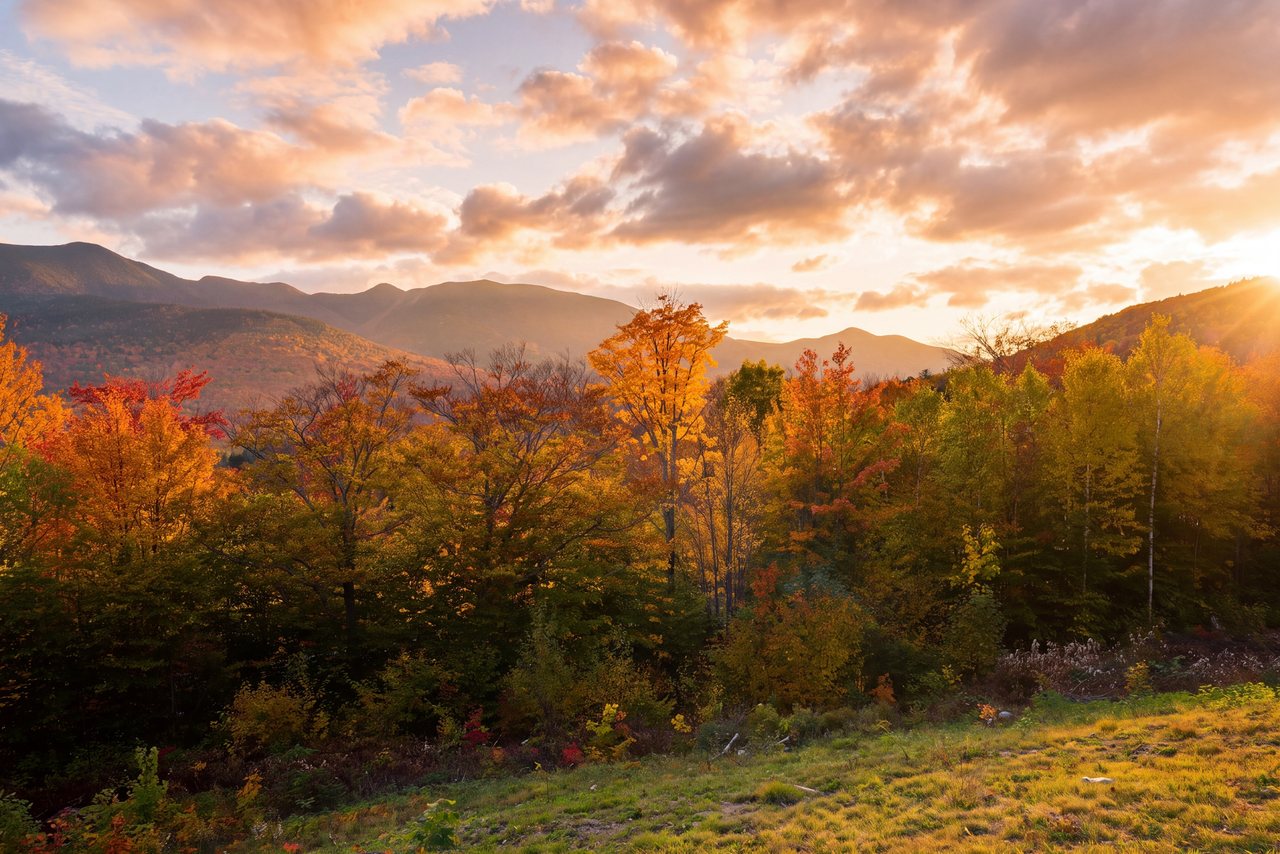
It's worth understanding the light before you plan around it, because it behaves differently up here than it does in a city. In the deep valleys — Franconia Notch, the bottom of Flume Gorge, the shaded stretches of the Kancamagus — the sun disappears behind the ridge long before the official sunset time. You can be standing in cool blue shadow at 7pm while the summits above you are still lit gold. That difference is something you can use. If you want warm light, get up high or get out to something west-facing. If you want cool, calm, deep-shade quiet, drop into the notch.
The golden hour here is generous. In midsummer you get a good 45 min to an hour of that low, warm light before the sun sets, and then a long civil twilight after — often 30 to 40 min where you can still read a trail sign and pick your footing on a boardwalk without a headlamp. That afterglow is the part people forget to budget for. Plenty of the best moments of a summer evening here happen after the sun is technically down, when the whole western sky goes soft and the peaks turn to silhouettes.
The flip side of a long evening is that it makes people careless about time. A summit or a ridge that's a pleasure at 6pm is a different proposition at 8:45 with the light going and the temperature dropping. Our rule of thumb, and the one we give guests: the higher and more exposed the spot, the earlier you should be there and the earlier you should turn around. Save the deep-woods and above-treeline places for daytime, and keep the evening for the short, safe, close-to-the-car ones. We keep a running note on where the good light lands and when in our journal piece on where the light is best around Lincoln.
A late swim, and the cold water
The single best thing about a hot White Mountains afternoon is that it ends in cold water, and the late-day swim is a small local ritual. The rivers and pools up here are fed by mountain snowmelt and shaded runs, so even in July the water stays cold — bracing on the way in, wonderful once you're used to it, and a real thing to respect rather than a marketing adjective. Late afternoon, after the sun has had all day to take the edge off, is the warmest and friendliest the water gets.
The Pemigewasset River runs right through Lincoln and North Woodstock, and there are calm pools and gravel bars along it that locals use to cool off. Further out, the swimming holes off the Kancamagus and around Franconia Notch are the classics — clear pools below small falls, granite ledges to sit on, water you can see straight to the bottom of. We keep a proper rundown of the ones we send people to in our swimming holes near Lincoln guide, with directions and plain notes, because half of these spots aren't signed and the other half get described online far more gently than they deserve.
Here is the part we won't soften. None of these places have lifeguards. The water is cold enough that a sudden full-body plunge can knock the wind out of you — cold-water gasp is real, and it's why you wade in rather than dive. Currents around and below waterfalls are stronger and more complicated than they look from a rock, and the granite that makes these pools beautiful is slick as glass when it's wet, especially the moss-green stretches. People get hurt at these spots most years, and it's almost always from jumping into water of unknown depth or slipping on wet rock, not from the swimming itself.
So: know the depth before you get in, never jump into anything you haven't checked, keep well clear of the base of any falls where the current pulls down and back, wear something on your feet, and don't do any of it alone as the light fades. Late-day swimming is a pleasure precisely because you're relaxed and unhurried — just don't let relaxed tip into careless. Get out while there's still plenty of light to dry off and pick your way back to the car over the rocks.
An easy sunset overlook
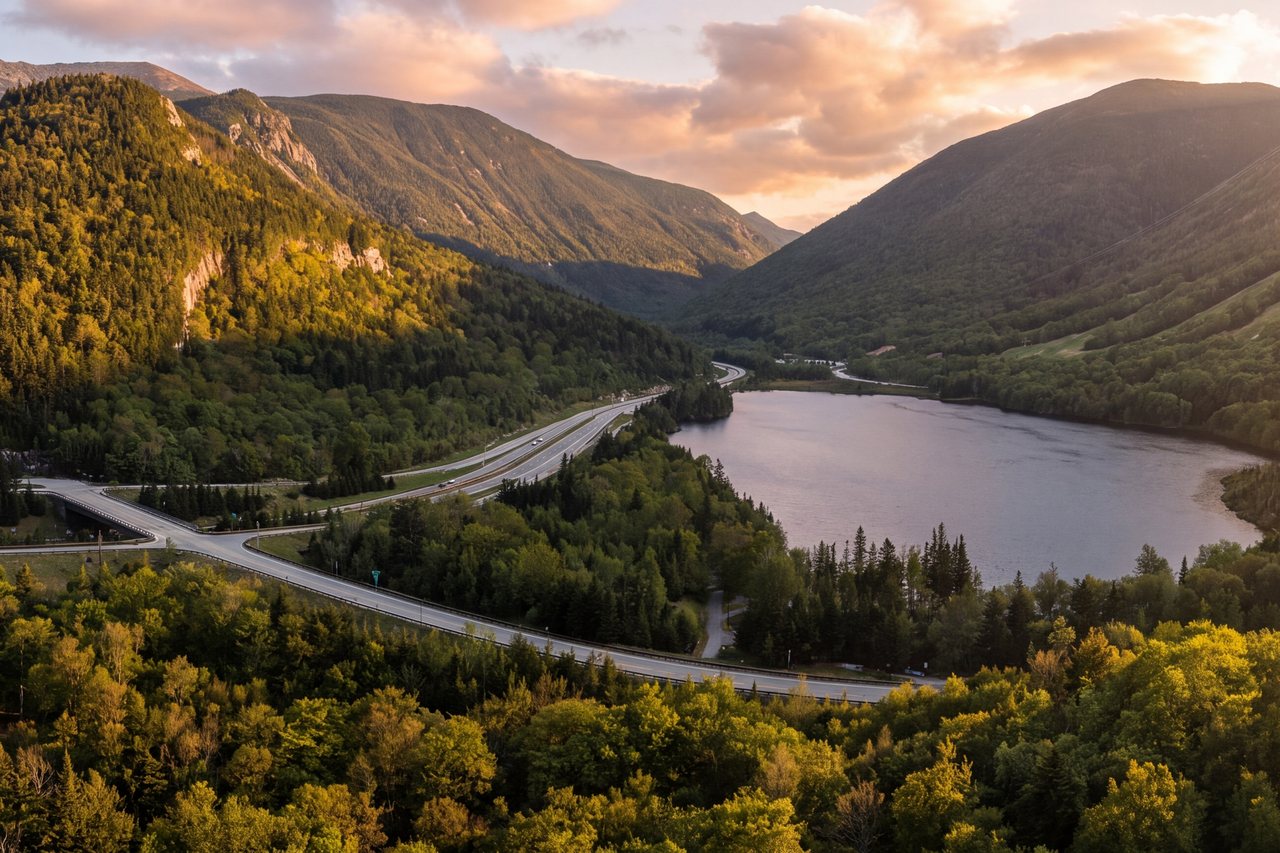
You don't need a big hike to get a real sunset here, and in the evening you specifically don't want one. The best-known short climb near town is Artist Bluff, at the north end of Franconia Notch by the Peabody Slopes. It's a modest loop — a steady but short climb to a rocky perch that looks back down the notch over Echo Lake and the Cannon ski slopes, roughly 15 to 20 min drive from the lodge. The view faces in a direction that catches evening light on the far wall of the notch, and it's popular for exactly that reason, so you won't have it to yourself. Bring a headlamp if you're staying for the actual sunset, because you'll be coming down in the dark, and the last pitch is rocky enough that you want to see your feet.
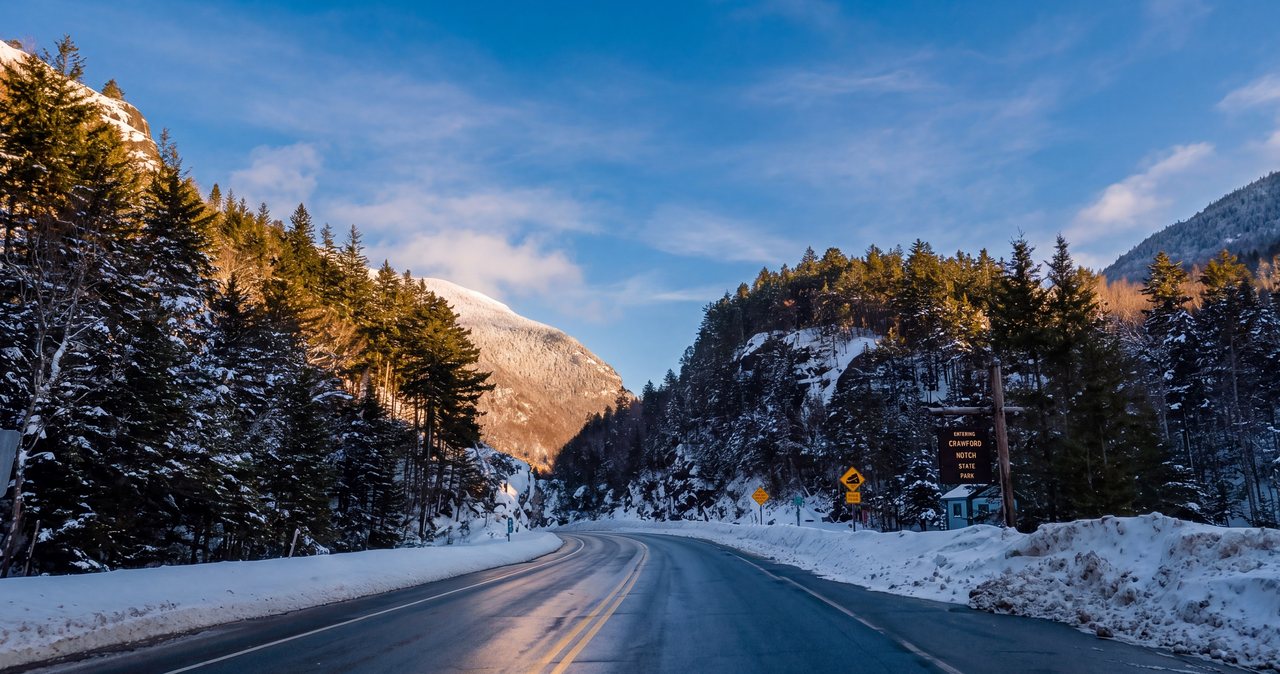
If a climb isn't what you're after, the Kancamagus Highway hands you west-facing overlooks you can drive right up to. The pullouts near the height of land — the C.L. Graham Wangan Grounds overlook sits up around 2,855 feet — look out over ridge after ridge going soft and blue as the sun drops. This is a case where the easiest option is one of the best: you park, you walk 20 steps to a stone wall, and you watch. The Kanc has no gas, no food, and no cell service along its 34 miles, so even for a short evening drive, fill the tank in Lincoln first and know where you're turning around before you go.
A few plain notes on evening overlooks that we repeat to guests all summer. Bring more clothing than the afternoon suggests, because an exposed ledge at dusk is 10 or 15 degrees colder than the parking lot felt. Get to your spot with margin — being early and waiting is lovely, being late and rushing up a rocky trail in fading light is not. And decide before you go whether you're staying for full sunset or turning around while it's still bright, because those are two different trips with two different packing lists.
The gondola and the summit at golden hour
Loon Mountain is about 6 min from the lodge, the closest ski area to town, and in summer its gondola runs as a scenic skyride up to Loon Peak, where there are short summit walks, glacial caves to poke around in, and a long view back over the Pemigewasset valley. It's the easiest way to stand on a real summit here without earning it on foot, which makes it a good option for an evening if the timing lines up.
The schedule is what to plan around. Summer operating hours shift with the season and the resort's calendar, and the last skyride down typically leaves about 30 min before the resort closes — which in summer is usually well before actual sunset, not at it. So this is a late-afternoon and early-evening play, not a sunset-from-the-summit one. If you want the top of Loon in golden light, go check the current day's hours before you plan your afternoon around it, and get up there with time to enjoy the summit before you have to catch the last car down. The glacial caves are also weather dependent — wet rock closes them — so they're a bonus on a dry evening, not a promise. Riding up, wandering the peak for an hour, and riding down into the early evening is a lovely, low-effort way to spend the front half of a summer evening.
One thing we make a point of correcting, because guests ask about it constantly: you cannot currently ride the tram at Cannon Mountain, over in Franconia Notch. Cannon's aerial tramway ran its last trips in late October 2025; a new tram is in planning, and no reopening date has been announced. The Cannon ski area still runs in winter, but the tram itself is out of service for the foreseeable future. For a summit ride this summer, Loon's gondola is your option, not Cannon's tram.
A slow roll on the bike path
If you'd rather move than sit, the paved recreation path through Franconia Notch is one of the great easy evenings up here. It runs the length of the notch, mostly separated from the parkway, past the Basin and Lafayette Place and along the valley floor with the ridges rising on both sides. In the evening the day-use lots empty out, the light comes in low and warm between the peaks, and a stretch of the path that felt busy at midday goes quiet. You can walk it or ride it, out and back, as far as you feel like going, and turn around whenever the light tells you to.
We wrote up the details — where to get on, how far the flat sections run, where the grades are — in our journal note on the Franconia Notch bike path. The short version for an evening outing: pick an access point, ride or walk out for 30 or 40 min, and time your turnaround so you're back at the car with light to spare. The valley floor loses the sun before the summits do, so it cools and darkens earlier than the open overlooks — a good thing if you want it cool, something to plan around if you don't want to finish in the dark.
Bikes are easy to rent in town if you didn't bring your own, and the path is gentle enough that it's a pleasure rather than a workout — the kind of thing you do after dinner, not instead of it. Because it's a state park corridor, keep an eye on posted seasonal hours for the day-use areas and lots, and don't count on cell service in the depths of the notch; the signal is spotty to nonexistent once you're down in there.
Dinner in town, unhurried
One of the quiet pleasures of staying in Lincoln is that dinner is a walk, not a drive. The town core — restaurants, a brewery, a bookshop, ice cream — is walkable from the lodge, which means you can have a drink with dinner and stroll home under the streetlights instead of getting back in the car. After a day of driving the notches and the Kanc, that alone changes the shape of an evening.
Lincoln and its twin town North Woodstock, just across the way near I-93, together carry more dinner options than a town this size has any right to — pub food, pizza, a couple of sit-down spots, the kind of range that covers a tired-and-hungry night and a we-feel-like-a-real-dinner night equally. We keep an up-to-date rundown in our where to eat in Lincoln guide rather than naming specific hours here, because summer hours and days off shift and we'd rather you check current times than trust a number we wrote months ago. In peak summer it's worth calling ahead or getting your name in early, especially on a Friday or Saturday, because the good spots fill.
Our standing advice: eat a little later than the daytrippers do. If you can push dinner to 7:30 or 8, you'll often walk into a calmer room, and you'll have spent the golden hour outside where it belongs instead of sitting inside during the best light of the day. Do the swim or the overlook first, then dinner, then a slow walk back — that's the order that makes a summer evening feel long.
A brewery, a drink, and ice cream
There's a brewery within walking distance of the lodge, and on a warm evening a cold beer on a patio after a day in the mountains is a hard thing to improve on. We won't put specific taplists or hours in writing because those change, but the walkability is the point — you can have that second beer without it becoming a driving decision. If beer's your thing, our White Mountains breweries guide covers the wider scene across the region, for the nights you feel like making a small outing of it.
For the not-drinking, not-a-big-dinner version of an evening, there's ice cream in town, and on a hot July night the line at the ice cream window is its own little scene — the whole town seems to end up there. A cone and a slow walk is a perfectly complete evening after a big day, and it's the kind of small ordinary pleasure that a mountain vacation is made of, underneath all the summits and waterfalls.
A quiet word for our own guests: there's fast fiber Wi-Fi throughout the house, and if the evening you want is a nightcap you brought yourself out on the deck rather than a bar, that works too. Because this is an adults-only house, the evenings here run calm by design — no early bedtimes to work around, no one else's schedule but your own.
Back on the deck as it cools
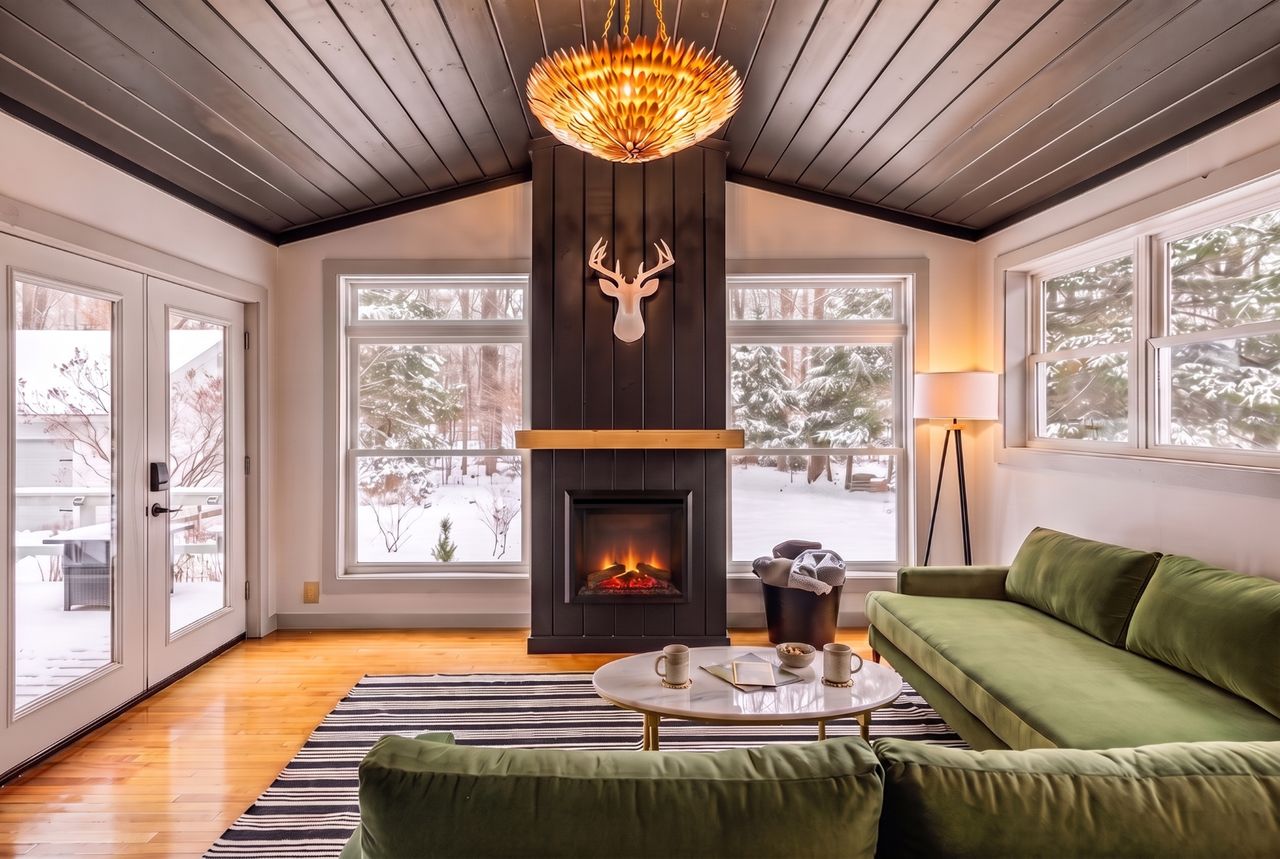
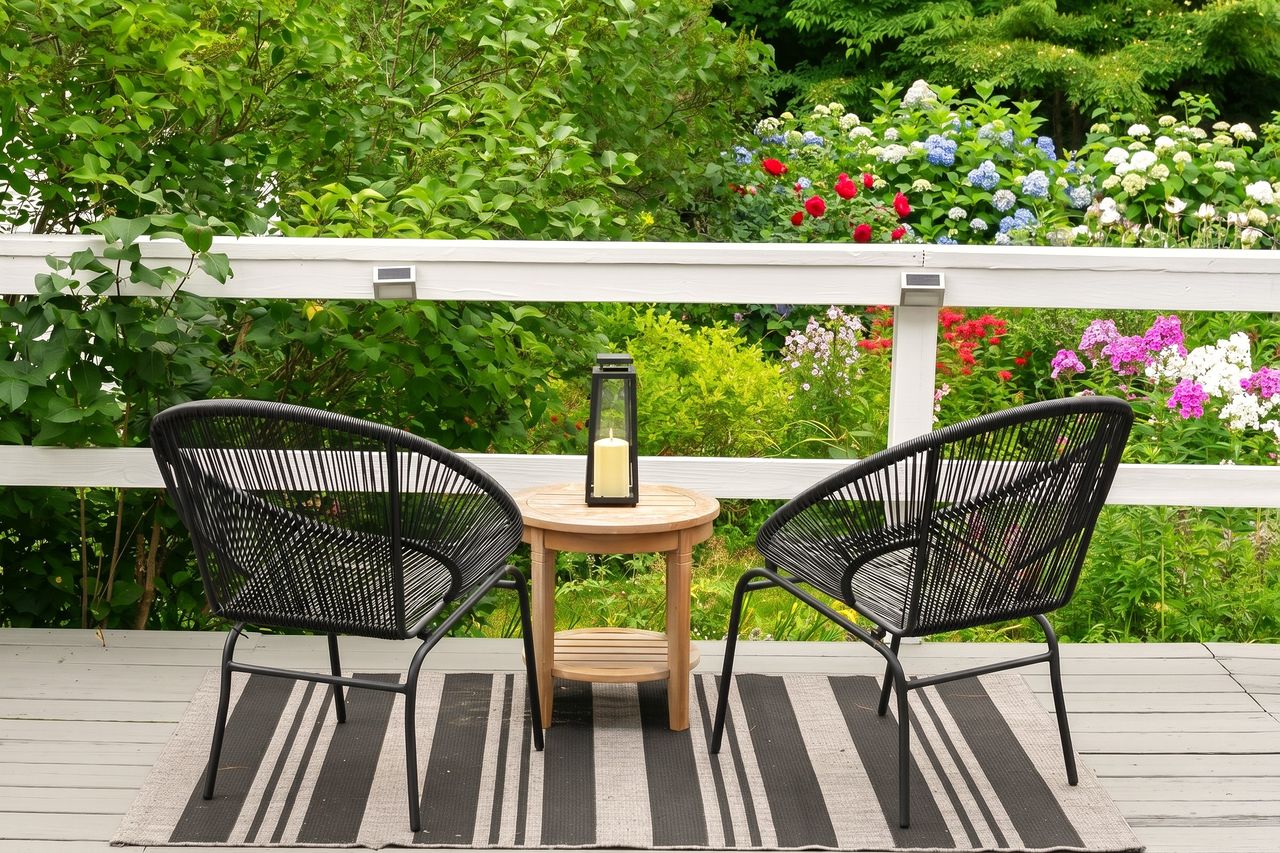
Not every summer evening needs a plan, and some of the best ones don't have one. After the swim and the dinner, the move a lot of our guests make is the simplest: back to the house, out to the deck, and nothing much at all as the air cools and the town goes quiet. This is a restored 1902 colonial with six suites and space to spread out, and on a warm night the outdoor spots are where people end up. You brought a book from the bookshop in town; there's a cold drink; the temperature is dropping into that perfect range where you want a light layer but not a jacket. That's the evening.
The cooling is the thing. Because we're up in the mountains, the heat of the day leaves after sunset — a July night here often settles into the 50s, sometimes cooler, which is why the deck stays comfortable long after a lowland porch would still be sticky. It's the reason people sit out here well past dark instead of retreating to air conditioning. Bring a sweater down from the room and you can stay out a long time.
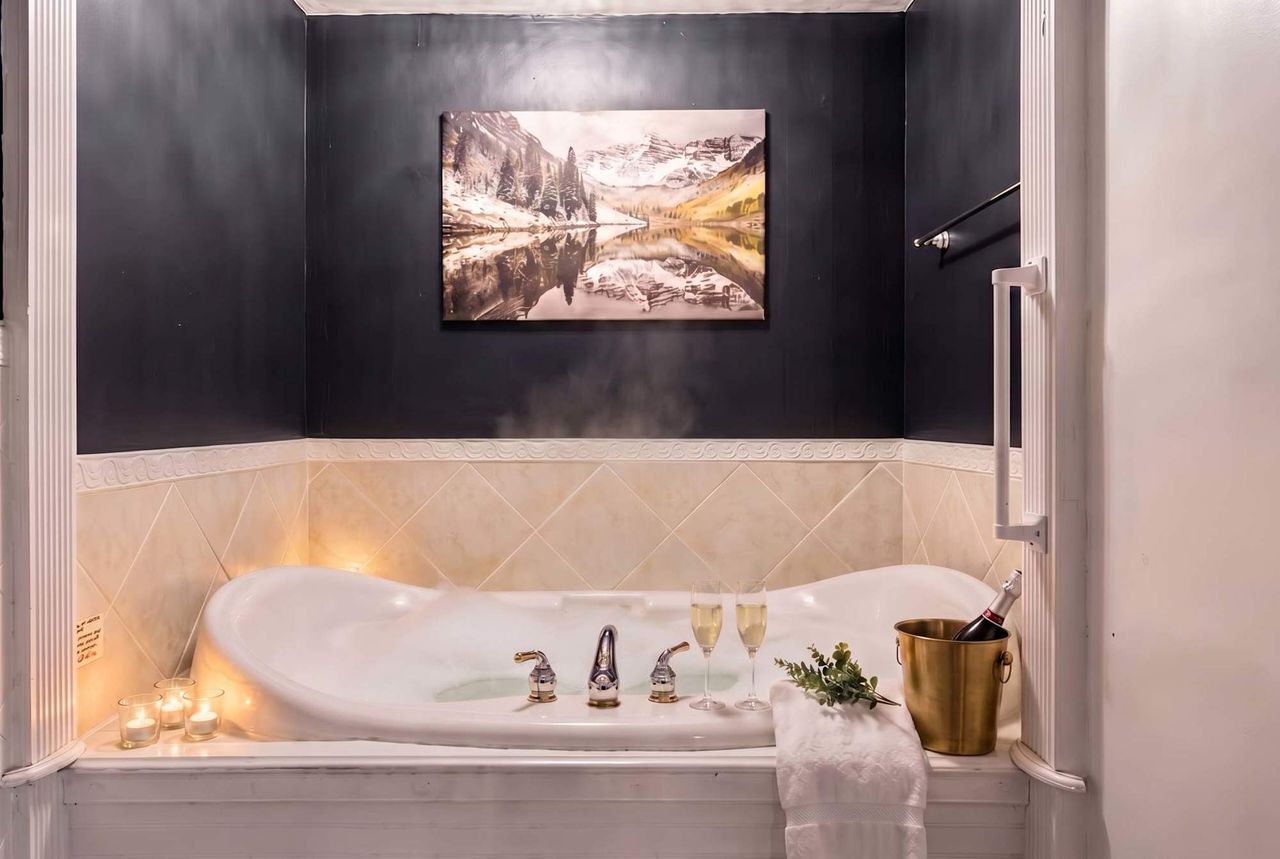
Five of our six suites are TV-free, and that's on purpose — it's one of the things we get asked about most and one we'd change last. We wrote out the whole reasoning in our note on why most of our suites are TV-free, but the short version is that a summer evening on the deck is a better use of the hours than a screen, and taking the screen out of the room makes that choice for you. Most guests tell us afterward they didn't miss it. If you want to know the full shape of the house and what's in each suite before you book, our amenities page lays it all out.
When the stars come out
Once the town lights settle and the sky goes fully dark, the other thing a northern mountain evening gives you is stars — a lot more of them than most guests are used to. Lincoln is a small town ringed by national forest, so while it's not a certified dark-sky preserve, it's dark enough that on a clear, moonless night you'll see the Milky Way as a real band across the sky rather than a rumor. The best nights are the clear ones after a cold front has scrubbed the humidity out of the air, and the darkest ones are the nights around the new moon, when the moon isn't up washing everything out.
You don't have to go far. The deck works on a clear night once your eyes adjust — give it a full 20 min in the dark, off your phone, and the sky fills in. For more sky, get away from any light: a Kancamagus pullout after dark, or an open spot along the parkway, will show you more, though the same rules from the evening overlooks apply doubled at night — cold, no cell service, and you need to be able to find your way back. Our stargazing in the White Mountains guide has the practical version: when to go, where the open sky is, and how to keep your night vision.
Two limits to keep in mind. The first is trees — this is thick forest, and a lot of otherwise-dark spots have a low horizon behind a wall of pines, so you want an opening, a clearing, or an overlook rather than a random stretch of road. The second is clouds and haze, which are common enough on summer nights that you should treat a great starry sky as a bonus rather than a promise. Check the forecast, and if you get a clear, dry, moonless night on your stay, drop whatever else you had planned and go look up. Those nights are the ones people remember.
How a small adults-only house feels on a warm night
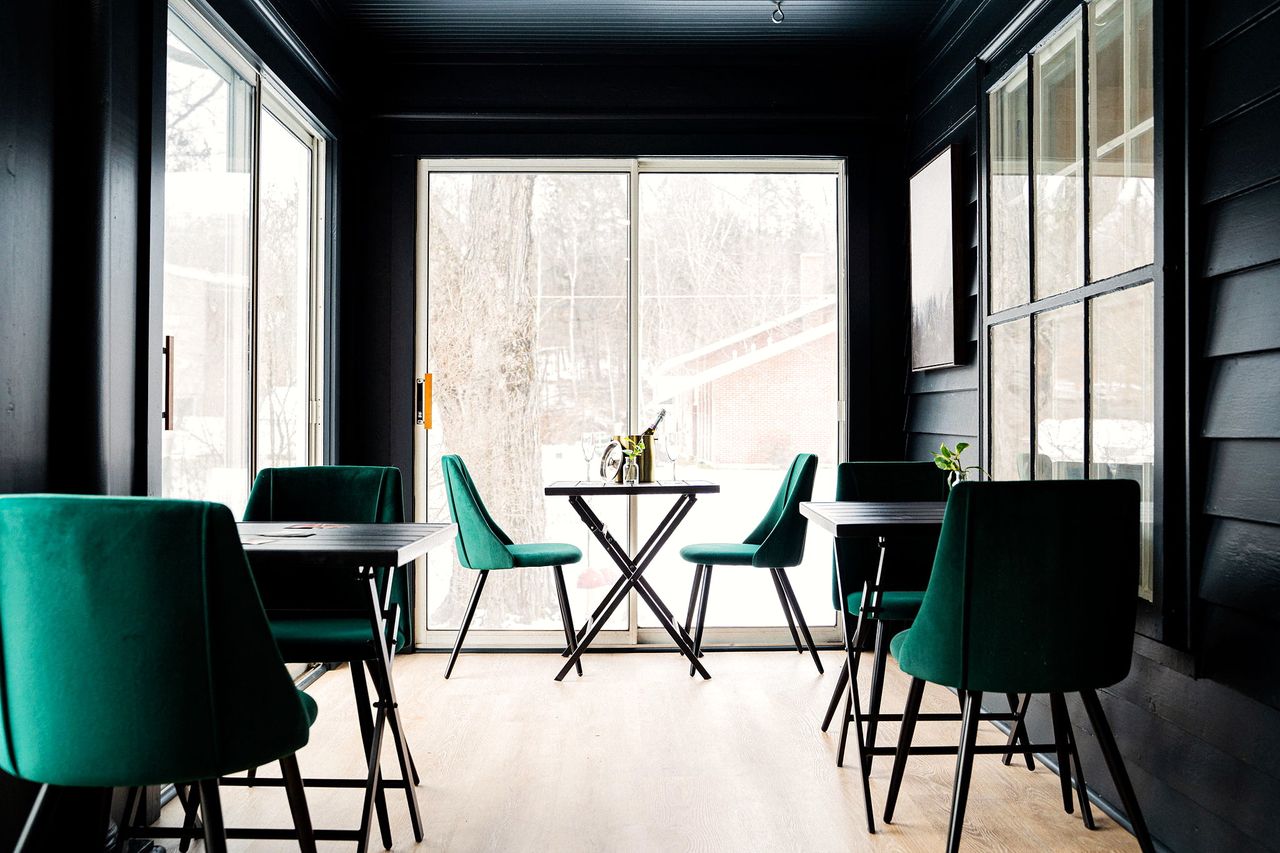
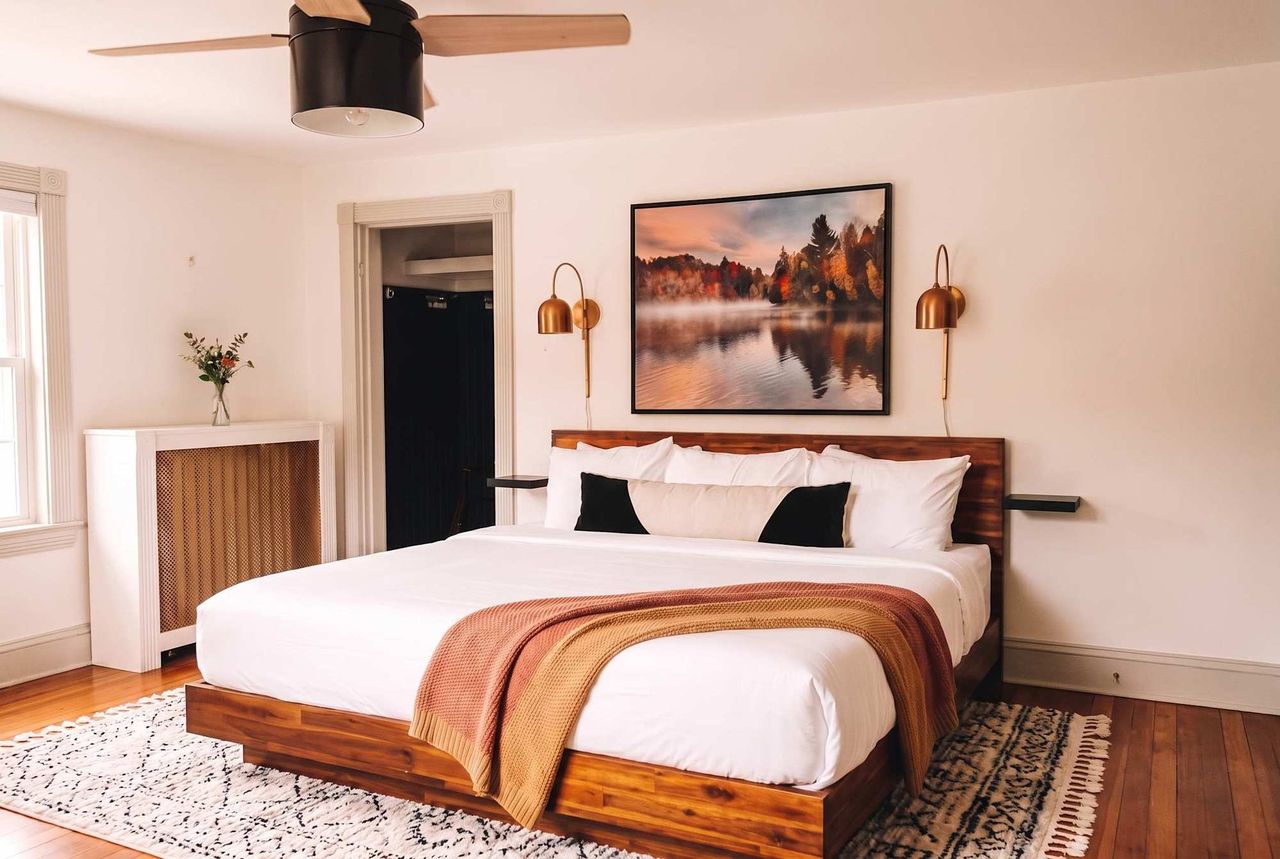
There's a particular quality to a small house on a summer night that a big hotel can't reproduce, and it's most of why people book a place like this. Six suites is few enough that the house never feels crowded and never feels loud. On a warm evening, with the doors and windows open and people drifting in from dinner or a swim, it's calm without being empty — the easy sound of a small place at rest. An adults-only, pet-free house with five TV-free suites is part of what makes it that way; the evenings here don't have to accommodate anyone's bedtime.
Self check-in matters more in the evening than at any other time. Because the lodge is keyless and you let yourself in, the evening is entirely yours, however late it runs and wherever it takes you. You can be out on an overlook until the last light, walk home from dinner at 10, and come and go from the house on your own clock all night. That's the whole design — the house runs on your evening, not the other way around.
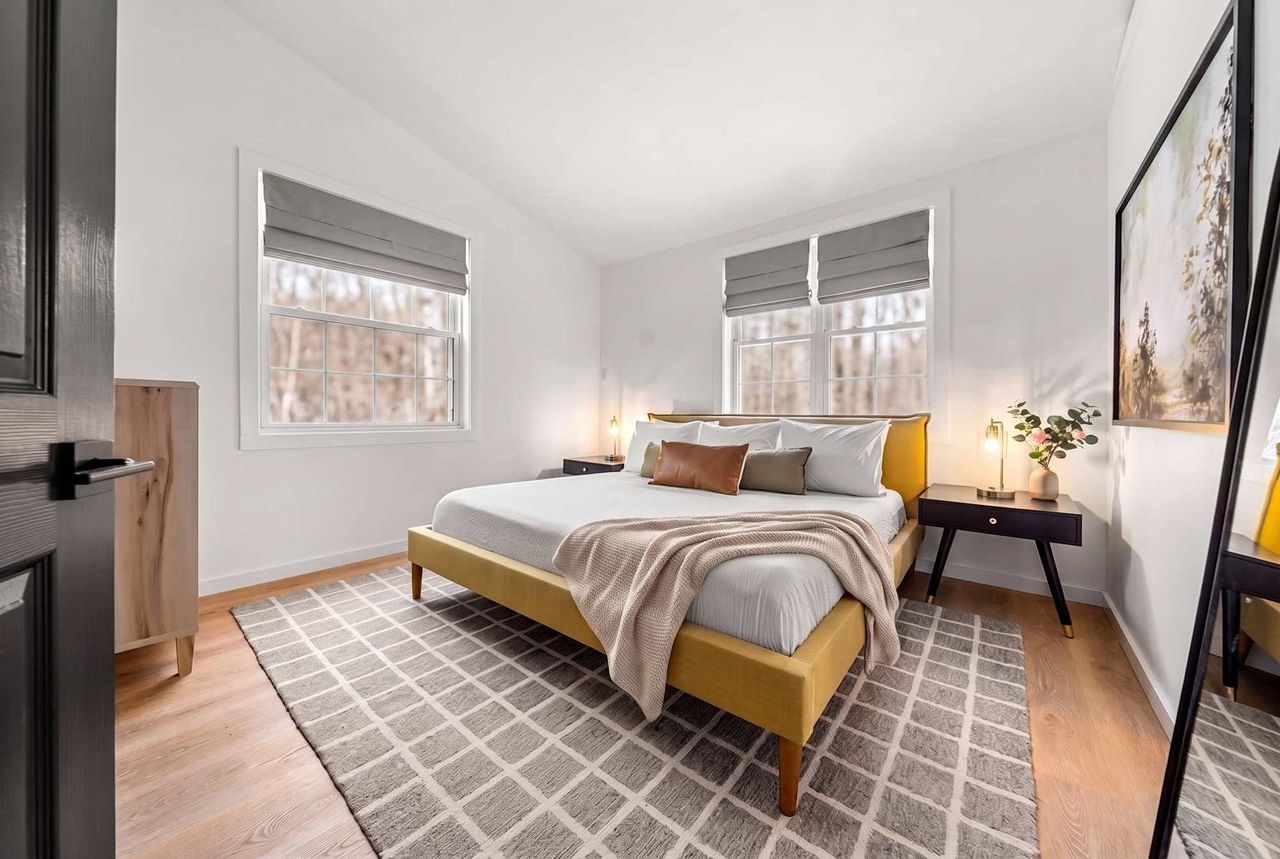
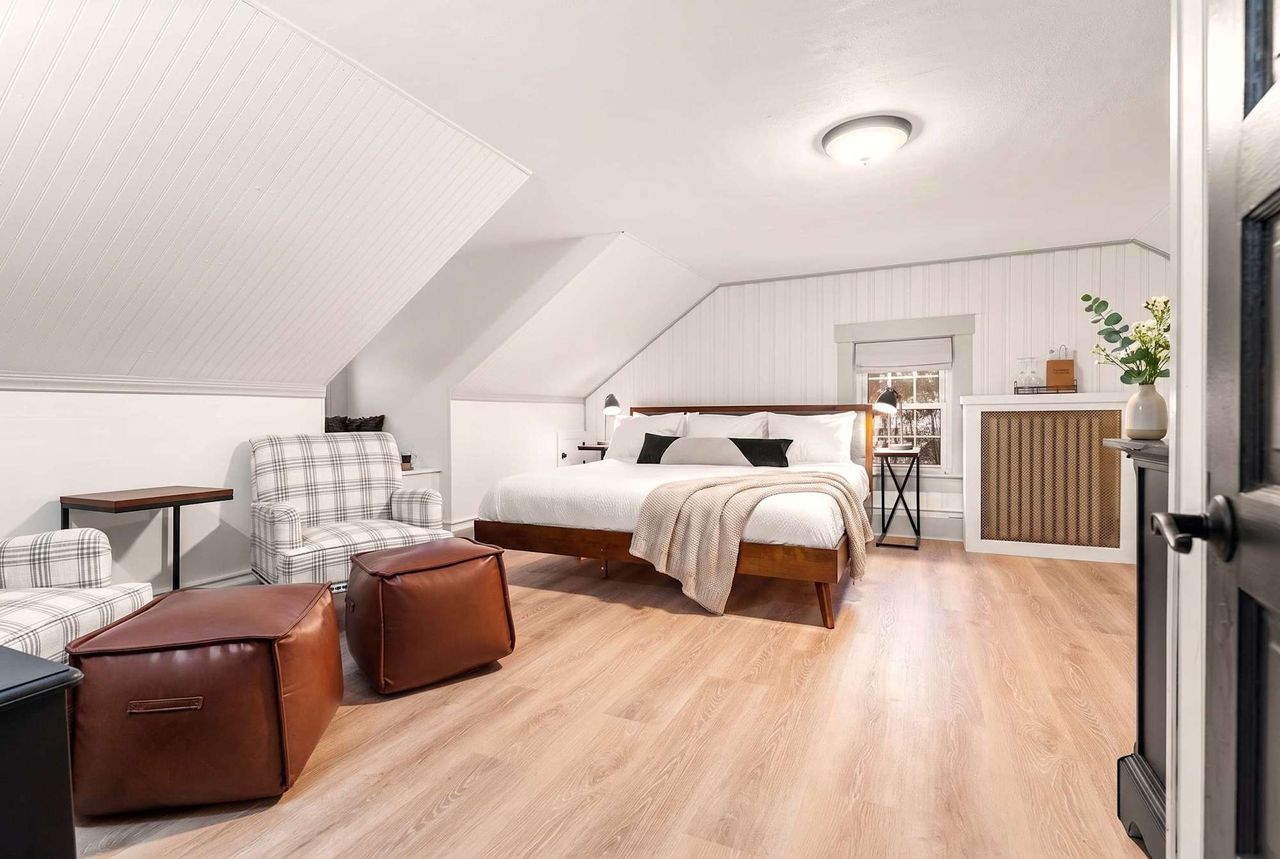
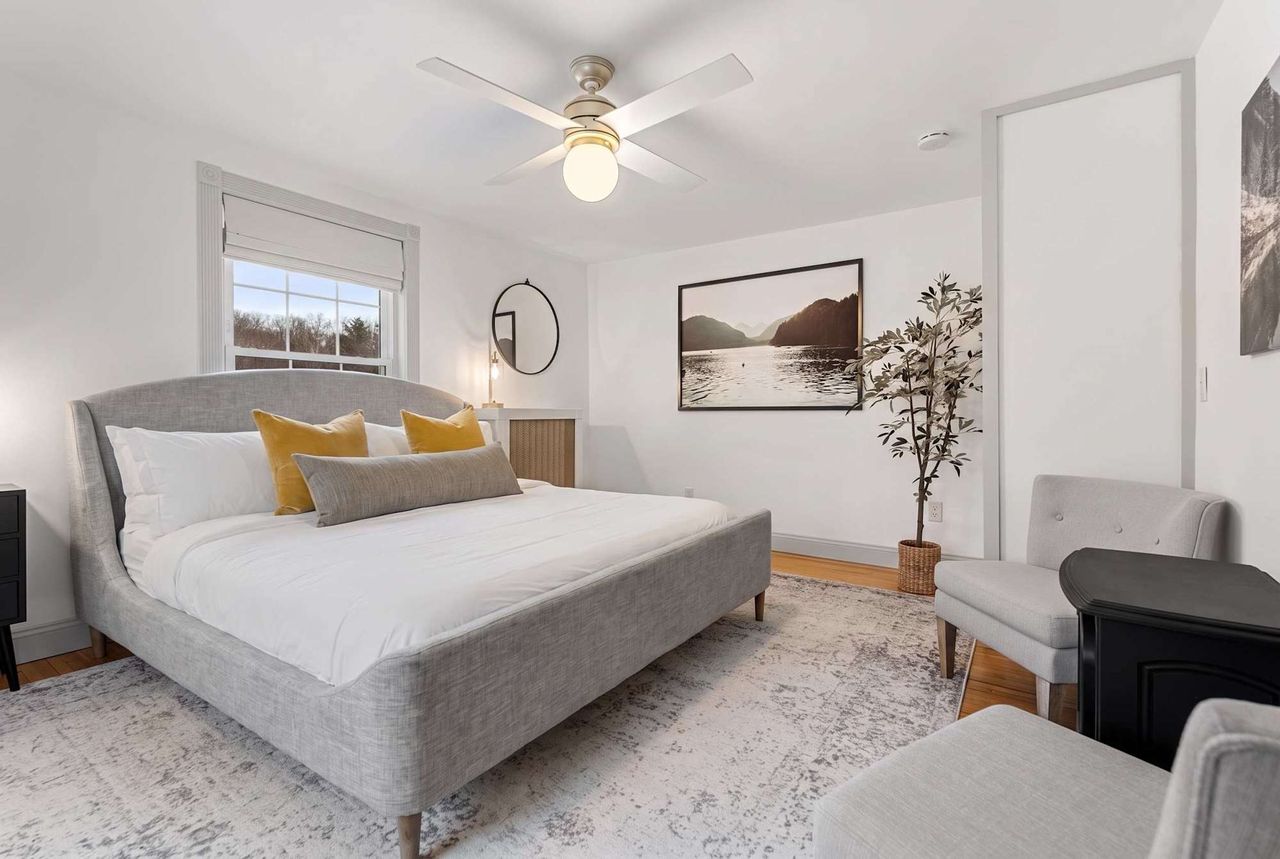
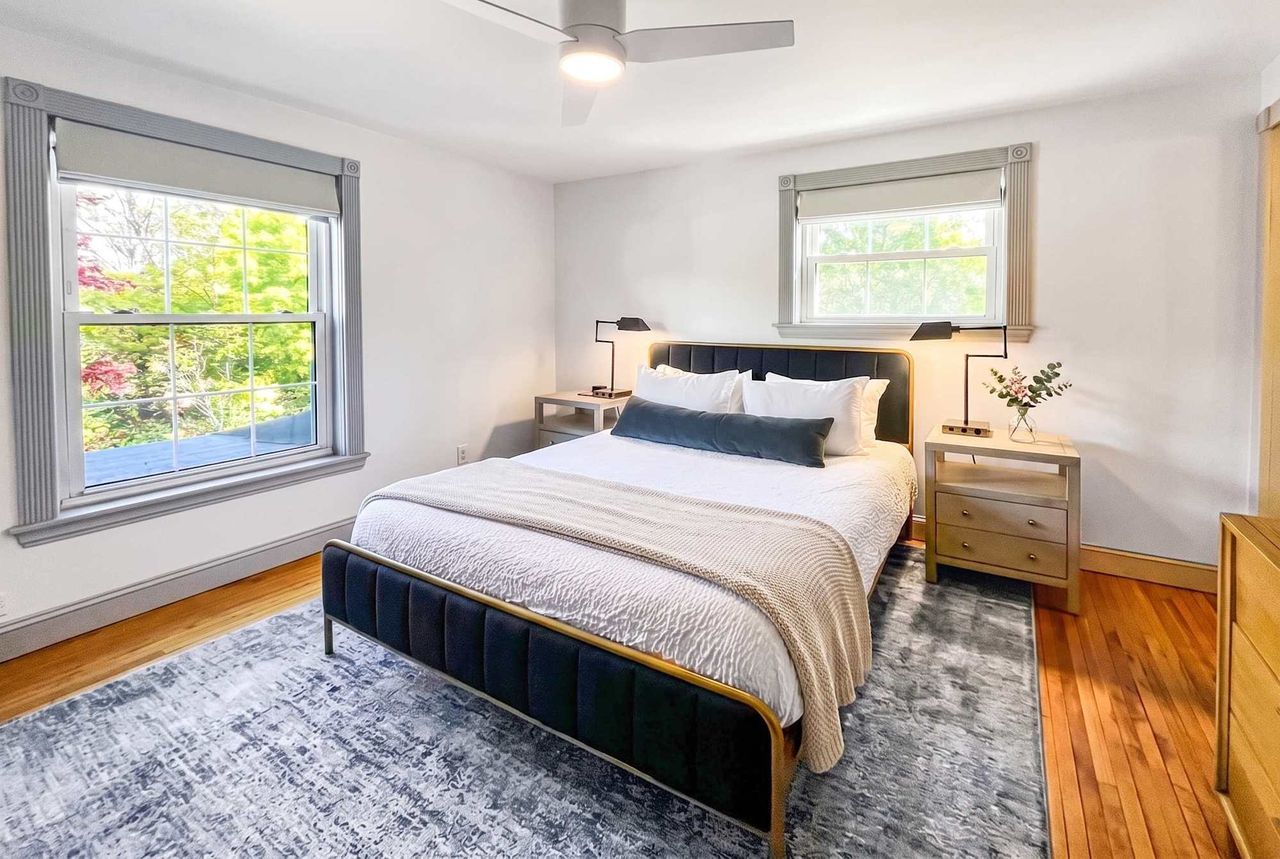
The suites carry names off the local map — Artist Bluff, Kinsman, Hancock, Basin, Notch, Pemi — after the places you'll have spent the day in. There's a small pleasure in coming back from the Basin in Franconia Notch to a room called Basin, or off Artist Bluff to the suite that shares its name. When you're ready to pick one, the whole set is on the rooms pages, and you can hold your dates on the booking page whenever the evening you've been reading about starts to sound like yours.
A simple evening, put in order
Pulled together, the evening we've been describing has a natural order, and it's worth laying out so you can steal it. Here's the shape of a good warm-weather evening in Lincoln, roughly in the order the light wants you to do it:
- Late afternoon (about 4 to 5): the swim, while the water's had all day to warm and there's plenty of light to dry off and get back over the rocks safely.
- Early evening (about 5:30 to 7): the low-effort high point — a gondola ride up Loon if the hours line up, an easy climb up Artist Bluff, a stroll on the Franconia Notch bike path, or a drive to a west-facing Kanc overlook.
- Golden hour to sunset (about 7:30 to 8:30 in midsummer): be somewhere with a view for the actual sunset, or walking back into town for dinner as the light goes warm.
- Evening (8:30 on): an unhurried dinner in town, a beer on a patio or a cone from the ice cream window, and the walk home under the streetlights.
- Full dark: the deck as it cools, a light layer, and — if the night's clear and the moon's down — the stars.
None of it is hard, none of it costs much, and all of it is better after the day-trippers have gone. If you want to widen any single piece of this into a full day, our hikes and area guides go deeper on each, and the lodge map shows how close all of it sits to the house — most of an evening's worth of it is inside a 20 min drive. That proximity is the quiet argument for staying the night instead of driving it: the good hours up here are the ones a daytripper has to give away, and a summer evening in Lincoln is a poor thing to trade for a head start on I-93. Stay, and it's yours until the last star.
— Launchpoint Lodge, From the lodge