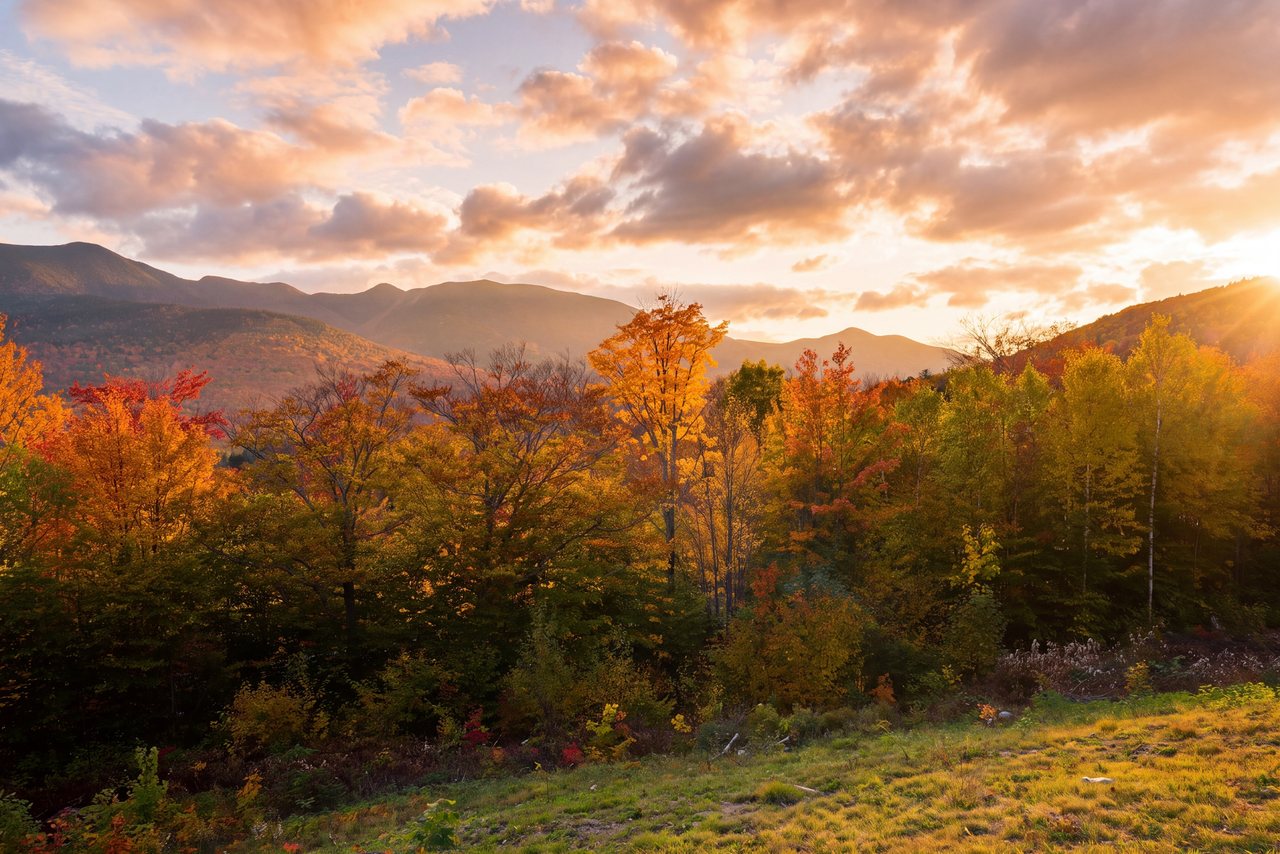
Every fall we watch the same thing happen from the porch here at 191 Pollard Rd, and every fall it still surprises us a little. The color doesn't arrive all at once, and it doesn't arrive where you expect. It sneaks down from the tops of the mountains, works its way through the notches, and reaches the valley floor and the maples along our street about the time everyone assumes it should have started. If you've read our week-by-week foliage tracker or the longer White Mountains foliage guide, this is the companion to those: a diary of what the turning looks like from town, from the Kanc, from Franconia Notch, week by week, in a normal year.
We say "a normal year" because there isn't really one. Peak in the White Mountains lands somewhere between late September and mid-October, and the exact week shifts by up to two weeks depending on elevation and how the summer weather played out. A hot, dry August pushes things; a cool, wet one holds them back. So take the dates below as a rhythm, not a promise. What doesn't change is the order things happen in, and that's the part worth knowing if you want to catch the good stuff and skip the worst of the traffic.
How the color moves
The single most useful thing to understand about foliage up here is that it runs downhill. Cold comes first to the high, exposed places, so the color starts on the summits and the ridgelines and the northern high country, then bleeds down the slopes and finally into the valleys. The tops of Cannon and Lafayette and the Franconia Ridge can be turning while the maples on Main Street in Lincoln are still flat green.
That's why elevation is your friend when you're chasing color early and your enemy when you've waited too long. In the last week of September, the height of land on the Kancamagus Highway can be near peak while the river valleys at either end are barely started. Two weeks later the pass is bare, sometimes even dusted with snow, and the valleys are finally on fire. The same drive gives you a completely different show depending on which week you take it.
Aspect matters too. South-facing slopes and the edges of ponds and wetlands tend to turn first, because the red maples in the low wet ground are among the earliest to go and the sugar maples come along behind them. The birches and beeches hold their yellows and golds later, which is why the tail end of the season leans gold rather than red. If you want the deep reds, come earlier; if you love a hillside of amber and copper, the back half of the run is yours.
We keep a rough map in our heads of who turns when, and the best tool is really the drive itself. From the lodge you can gain 2,000 feet of elevation in 20 min, which means on any given October morning you can go find whatever week of color you missed or haven't reached yet just by climbing. We put together a map of the whole area so you can see how close these elevations stack up against each other.
Late September: the first signal from up high
The first real sign usually shows up in the third or fourth week of September, and it shows up as a wash, not a blaze. You'll be driving north on I-93 toward the lodge and notice the ridgelines have gone a slightly tired green, then a few individual trees on the upper slopes flick to orange like someone testing a switch. Down in Lincoln everything is still green. Up on the Franconia Ridge and around the higher trailheads, it's already begun.
This is the week for people who like to work for it. If you hike, the payoff early in the season is up top, where the color is. A climb like the Lonesome Lake trail puts you at a mountain pond with an AMC hut and the Franconia Range across the water, and in late September that basin can be turning while the parking lot is green. It's a gentle grade by White Mountain standards, which is why we send a lot of first-time guests up it. Lonesome Lake is about a 12 min drive from the front door.
The higher, exposed hikes are a different animal, and late September is exactly when the mountains start reminding people of that. The Franconia Ridge Loop is roughly 8.9 miles with about 3,900 feet of gain, strenuous, and it runs a long way above treeline. The color up there can be spectacular in the last week of the month, but the weather can be January while the valley is still shirtsleeves. Check the higher-summits forecast from the Mount Washington Observatory before you commit, and turn around if the ridge is socked in. We'd rather you saw it another day than got caught in the wind up there.
Down in town, late September is the calm before things get busy. The brewery and the restaurants in Lincoln's core, all walkable from the lodge, aren't slammed yet. If you want a foliage trip with elbow room, this shoulder week is underrated. You trade a little peak-color intensity for a lot of breathing space.
The first week of October: the notch lights up
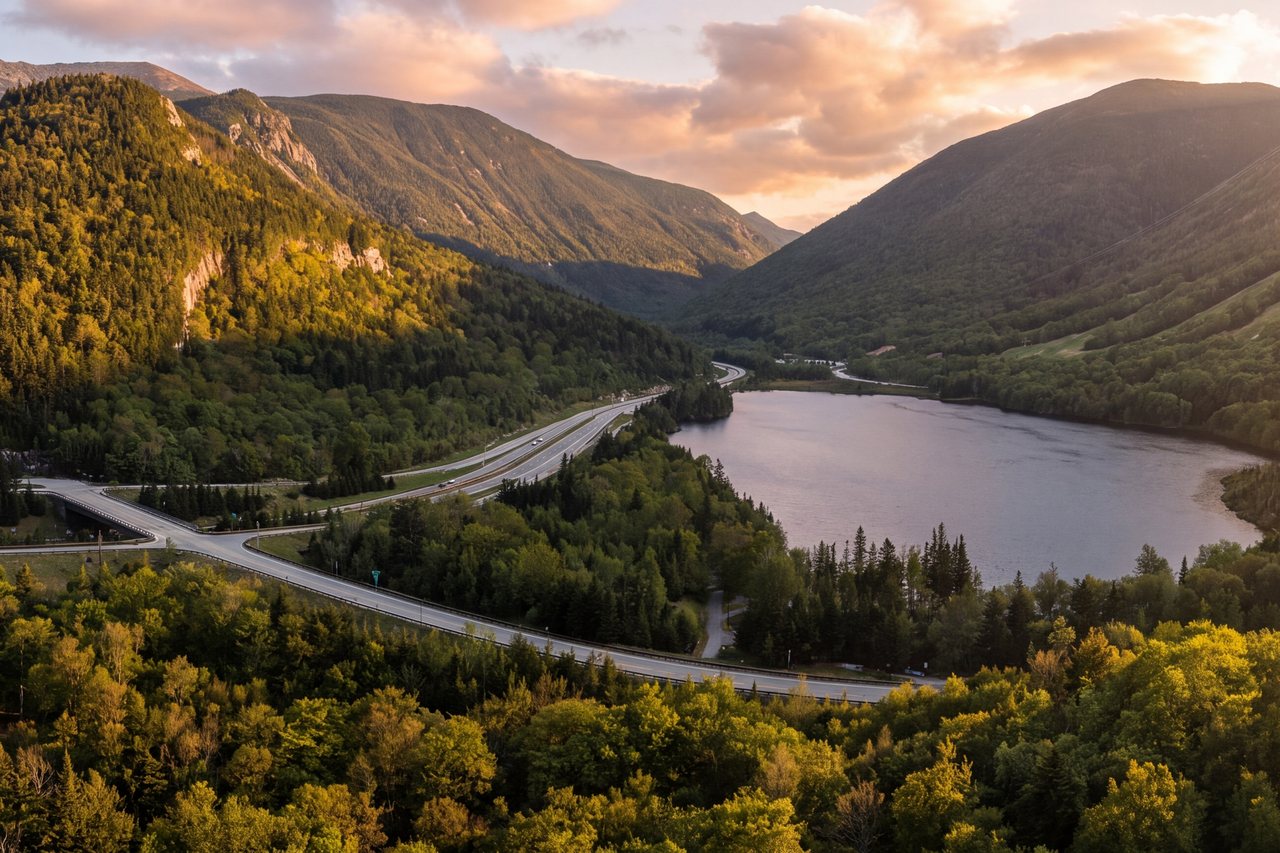
By the first week of October, the show moves into Franconia Notch, and this is when the drive through the pass on I-93 becomes something you slow down for. The Notch is a corridor with steep walls on both sides, so you get color stacked vertically: green at the road, orange on the mid-slopes, and the high stuff going bronze against the sky. Echo Lake at the north end holds a reflection of Cannon on a still morning that is worth setting an alarm for.
A word about the Notch, because we get asked constantly. The Cannon aerial tramway is not running. The state retired the 45-year-old tram after the 2025 leaf season, with the final rides on October 26, 2025, and a new tram is in planning, with no reopening date announced. The ski area still operates in winter, but you cannot ride the tram up for a foliage view right now, no matter what an older blog post tells you. If you want a summit view this fall, you hike for it.
The other thing people come looking for is the Old Man of the Mountain. The rock profile fell on May 3, 2003. It's gone. What's there now is a memorial plaza on the shore of Profile Lake with steel "profiler" viewfinders you line up to see where the face used to sit against the cliff. It's a quietly moving stop, especially with the fall color behind it, but come knowing it's a memorial, not the face itself.
The best way through the Notch in early October isn't the interstate at all. It's the paved bike path that runs the length of the pass. On a bike, or on foot for a stretch of it, you're down among the trees instead of flying past them at 55, and you can stop at the Basin without fighting for a parking spot. The Basin is a granite pool worn smooth over roughly 25,000 years, a 5 min walk off the parkway, and in early October the water runs through a frame of color. It's about 14 min from the lodge.
The Flume in foliage season
The Flume Gorge is one of the few big-ticket stops that's better in the fall, and it's about a 12 min drive from us. It's an 800-foot granite gorge with a boardwalk built right through it and a covered bridge at the start, a loop of roughly two miles. In October the hardwoods over the gorge turn while the walls stay cool and damp and mossy, and the contrast is the whole point.
Two practical things. First, the Flume runs on timed-entry tickets, and you reserve a specific arrival window on a specific date. In peak foliage weeks those windows sell out, so book ahead rather than showing up and hoping. Second, the season has an end. The visitor center and the full loop run from roughly early May into late October, with the gorge trail shifting to shorter hours as October goes on and closing for the winter after that. Check the current schedule before you plan your day around it, because the exact closing date moves year to year.
If you're pairing the Flume with the rest of the Notch, go early. The first entry windows of the morning are the quietest, the light in the gorge is soft, and you'll be out before the midday crowds arrive. Then you've got the whole afternoon for the bike path or the Basin or a slow lunch back in town.
One more thing worth saying: cell service in the Notch is spotty and it disappears entirely on the Kanc. Download your directions and any tickets or maps before you leave the lodge, or you'll be squinting at a spinning wheel at the trailhead. We keep a note on what to download before you go because it trips up so many guests.
Peak week: the Kancamagus at its best
Somewhere around the second week of October, in a normal year, the valleys catch up and everything lines up at once. This is the week the Kancamagus Highway earns its reputation. The Kanc is a 34-mile National Scenic Byway that starts right at the edge of Lincoln and runs to Conway with no gas, no food, no services and no towns the entire way. Fill your tank in Lincoln first. We mean that literally, not as a figure of speech.
Because the road climbs to a height of land around 2,855 feet and drops back down at either end, peak color lives on the Kanc for a stretch of weeks rather than a single day. Early in the run the upper pass is best; later, the river valleys near Conway hold on after the top has gone bare. During peak week, though, the whole thing is close to on, and the overlooks fill up fast. The C.L. Graham Wangan overlook near the height of land is the famous one, with the long view over the ridges, and it's mobbed by mid-morning on a fall weekend.
The waterfalls are the antidote to the overlook crowds. Sabbaday Falls is a short, easy walk to a set of falls dropping through a narrow flume, and it's beautiful with leaves on the water. Rocky Gorge and Lower Falls are both quick stops along the eastern half of the road where the Swift River runs over granite. People blow past these chasing the big overlook and miss the best parts. Give yourself half a day for the Kanc, not an hour.
Our advice for peak week is to drive the Kanc early or drive it late. Sunrise light on the ridges from the western overlooks is worth the early alarm, and by 9:30 the road is a slow parade. Late afternoon, when the day-trippers have turned around, the light goes golden and the overlooks empty out. The middle of the day in the middle of October is the one time we tell guests to be somewhere else.
Dodging the crowds: midweek, mornings, quieter roads
Foliage season is the busiest few weeks the White Mountains see all year, and there's no pretending otherwise. But the crowds are predictable, which means they're beatable. The two levers that matter most are the day of the week and the hour of the day. A Tuesday in peak color feels like a different region than the Saturday two days later. If your schedule has any give at all, come midweek.
Mornings are the other lever. The overlooks, the Flume, the popular trailheads: all of them are calm at 7:30 and chaotic at 11. Being an adults-only lodge with keyless self check-in means our guests tend to be early risers on foliage weekends, out the door with a coffee in hand before the tour buses roll. You get the best light and the empty pullouts, and you're back for a late breakfast in town while everyone else is still circling for parking.
The third lever is the quieter roads. Bear Notch Road connects Bartlett to the Kanc with a handful of scenic overlooks and a fraction of the traffic; the town gates it for the winter once the snow arrives, sometimes as early as late October, so it's mostly a fall option. Sugar Hill, west of Franconia, gives you open pasture views back toward the Franconia Range that the forested drives can't, and it's quiet compared to the Notch. And the Franconia Notch bike path takes you through the pass under your own power with no parking fight at all.
If you want to skip the crowds entirely and still see the color, the answer is to go up. The famous drives are packed because they're accessible from a car. A gentle hike puts you above the people almost immediately. Even a short climb like Artist Bluff at the north end of the Notch gives you a 15 min walk to a rock perch with a view straight down Echo Lake and the pass, and it's one of the best color views in the region for the effort.
Where the leaf-peeping is good
People ask us for a list, so here's ours. These are the spots we send guests to, sorted roughly by how much effort they take.
- The Kancamagus overlooks — the C.L. Graham Wangan near the height of land for the long ridge view, plus the smaller western pullouts for sunrise. Go early.
- Bear Notch Road — the quiet alternative off the eastern Kanc, a few overlooks, far fewer people. Seasonal; the town gates it for winter once the snow arrives, sometimes by late October.
- Sugar Hill — open meadow views back at the Franconia Range, west of Franconia. Best in soft morning or evening light.
- The Franconia Notch bike path — color from inside the trees instead of the car, no parking battle, past the Basin and Echo Lake.
- Artist Bluff — a short scramble to a big view over Echo Lake and the Notch; a lot of payoff for a 15 min walk.
- Echo Lake — the lake at the north end of the Notch, still water and a mountain reflection on a calm morning.
- Lonesome Lake — a gentle hike to a pond ringed in color with the range beyond it.
- Sabbaday Falls and Rocky Gorge — easy waterfall walks off the Kanc where leaves ride the current.
What you'll notice is that the best of this list isn't the single most photographed pullout. It's the walkable, quieter alternatives a few minutes off the famous route. That's true of foliage everywhere up here: the picture everyone takes is from the crowded overlook, but the better morning is usually just off it.
If you only have one day and don't want to hike, string the best pullouts together in a loop and let the drive be the day. If you've got a long weekend, spread it across a few days so you're never rushing one stop to make the next.
The light, if you care about photographs
Foliage photographs well or badly almost entirely because of the light, and the middle of the day is the worst of it. Flat overhead sun at noon washes the color out and turns a hillside of red maple into a muddy brown in the photo even though it looks brilliant to your eye. The color you remember is the color you saw in the first and last two hours of the day.
Early morning is our favorite for two reasons. The light is low and warm, which makes the reds and oranges glow instead of glare, and the wind is usually down, which matters more than people think. Still air means the ponds hold a mirror. Echo Lake, Lonesome Lake up top: all of them double the color when the surface is glass, and the surface is only glass early. By late morning a breeze comes up and the reflection breaks apart.
Overcast days are quietly the best for the deep color, especially in the waterfalls and gorges. A bright blue-sky day is what everyone wants, but flat gray light saturates the leaves and softens the harsh shadows, so the Flume, Sabbaday, and Rocky Gorge all shoot beautifully under clouds. Don't cancel your gorge morning because it's not sunny. Save the sunny mornings for the overlooks and the ridge views, and save the gray ones for the water.
The short version we give guests: overlooks and lakes at sunrise, gorges and falls under cloud, and get off the road by mid-morning on the famous drives no matter what.
Fog, frost, and the mornings that make the trip
The mornings we remember most from foliage season aren't the postcard blue-sky ones. They're the ones with fog in the valley. When a clear cold night follows a warm day, the river valleys fill with mist overnight, and if you're up on any bit of elevation at dawn you look down on a sea of cloud with colored ridgelines poking through it. It burns off within an hour or two, so it's a sunrise-or-nothing thing, but it's the single most beautiful thing this valley does all year.
The first frosts come to the high country in late September and reach the valley through October. Frost doesn't cause the color, but a run of cool nights and sunny days is what makes a given year's color vivid rather than dull, so a crisp forecast is good news for leaf-peepers. It also means the early mornings are cold. A hillside can be 30 degrees at 7 a.m. and 65 by afternoon, so the layers you shed by lunch are the layers you were grateful for at dawn.
We tell guests to pack for two seasons in one day this time of year, and we mean it. A warm layer and a shell go in the car even on a bright forecast, because the summits and the Notch run colder and windier than town, and the whole appeal of an early start is being out before it warms up.
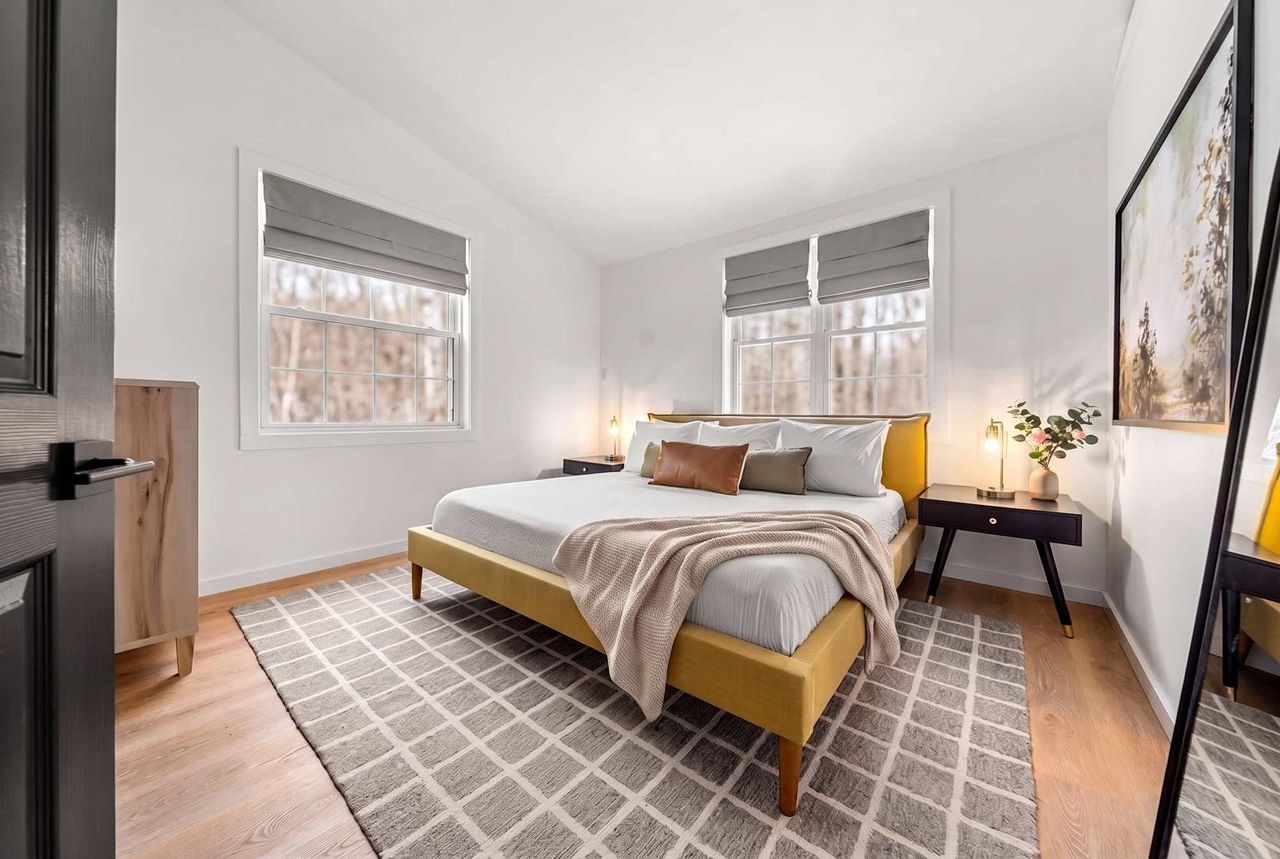
There's a particular pleasure to coming back from a cold, foggy sunrise to a warm suite and a coffee. Your suite, your pace, nowhere to be; that's the whole idea of the place. You watched the valley wake up, and now you get the slow morning you earned.
The quiet after peak
Here's the part the guidebooks skip. The week or two after peak, once the crowds have gone home convinced they missed it, is one of our favorite stretches of the whole year. The high country has dropped its leaves and the ridges have gone bare and a little wintry, but the valley floor and the maples along our street are often still holding gold, and the towns exhale.
Late October color leans amber and copper rather than red, because the last trees standing are the beeches and the birches and the oaks. It's a warmer, quieter palette, and it photographs beautifully in the low autumn sun. The overlooks that were bumper-to-bumper two weekends earlier are empty. You can have Bear Notch, or the western Kanc pullouts, or Sugar Hill nearly to yourself, right up until the seasonal roads close for winter.
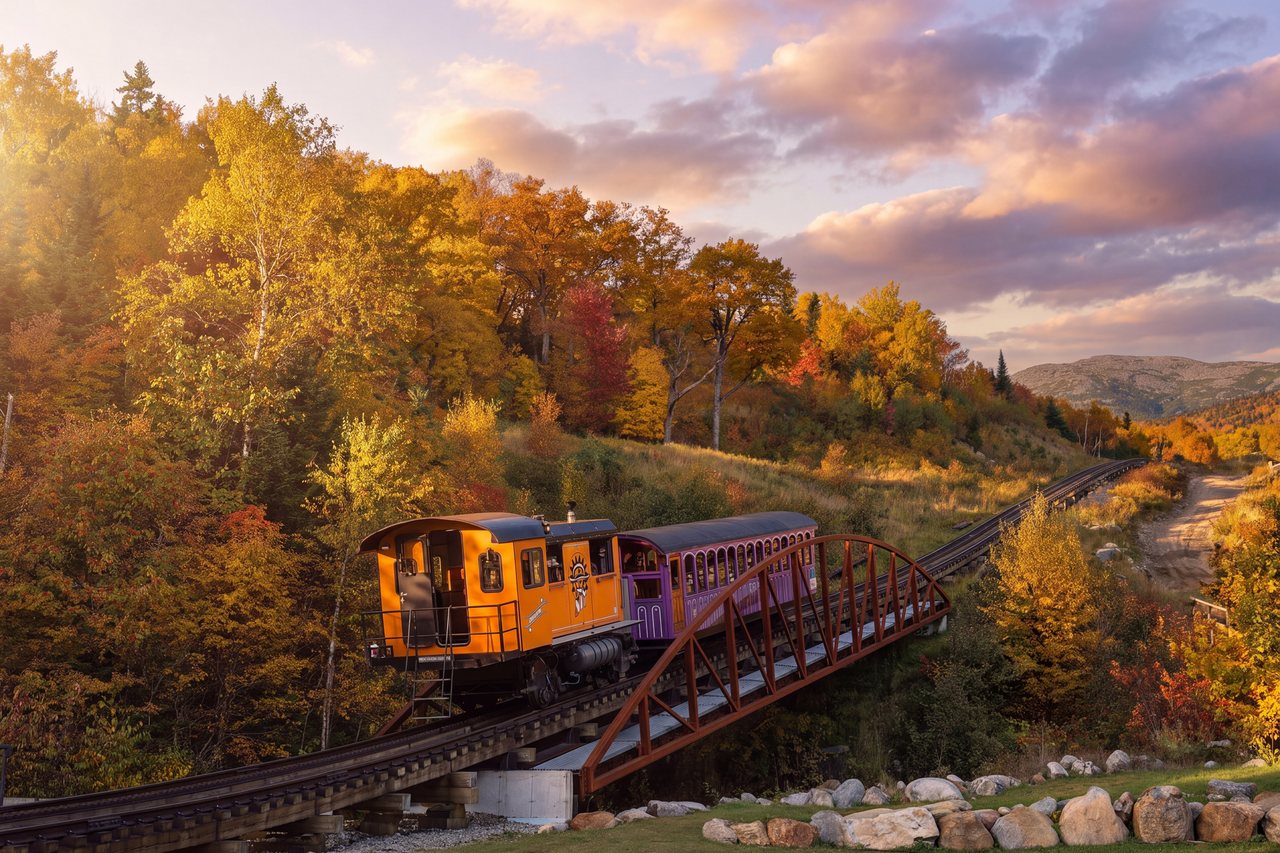
The Flume and the tourist railroads wind down toward the end of October, so if a specific attraction is on your list for a late-season trip, check its closing date first rather than assuming it's open. But the drives, the walks, and the light don't close. They just get quiet. If your idea of a good fall weekend is fewer people and softer color, aim for the week after everyone else leaves, when the season tips over into bare-branch stillness and the first snow starts talking about the mountains.
Making a base of it from the lodge
The reason we can chase all of this is that we're sitting in the middle of it. From 191 Pollard Rd it's about 6 min to Loon, 12 min to the Flume, 14 min to the Basin, 10 min to Franconia Notch, and no distance at all to the start of the Kanc. That means you're never committing your whole day to one place. You can catch a foggy sunrise up high, come back for a slow coffee, and be out again for an afternoon drive without ever feeling like you're covering ground.
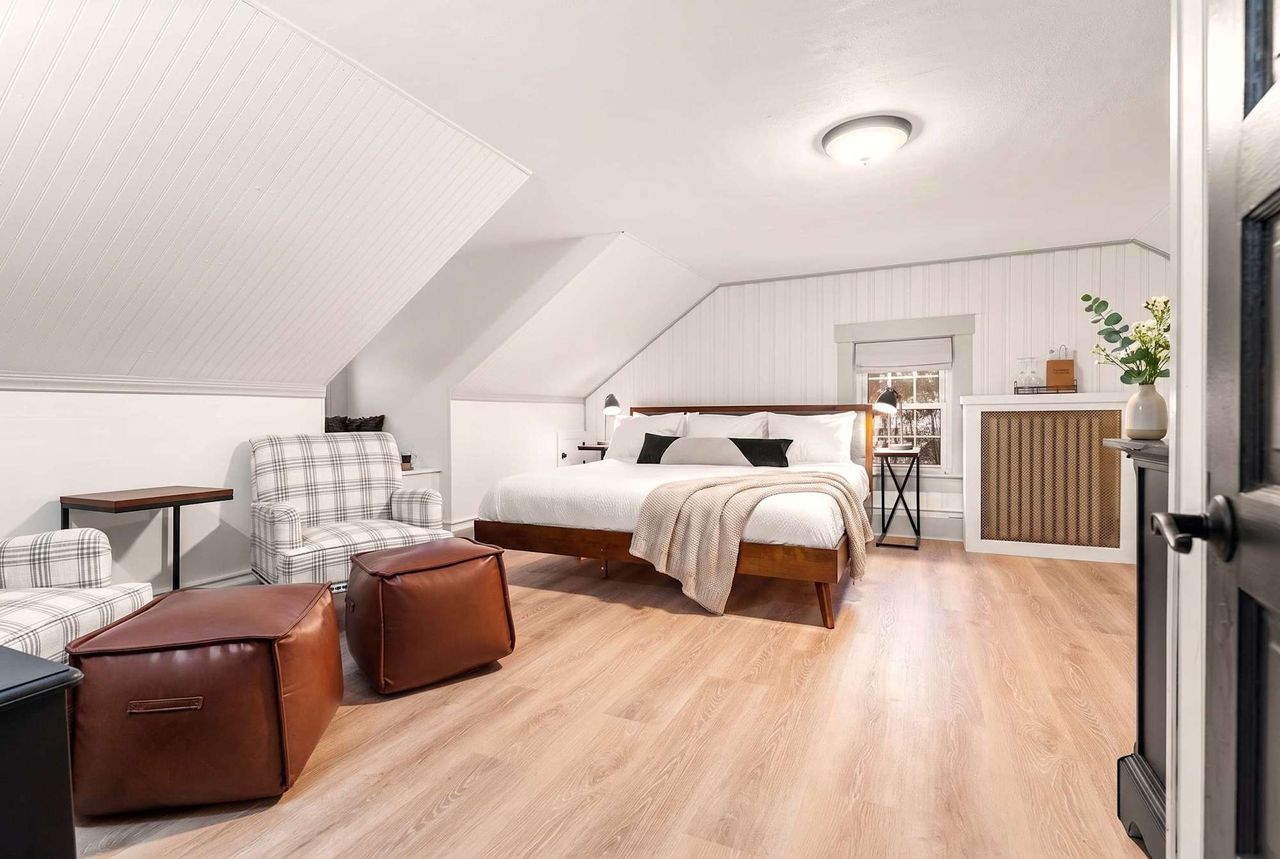
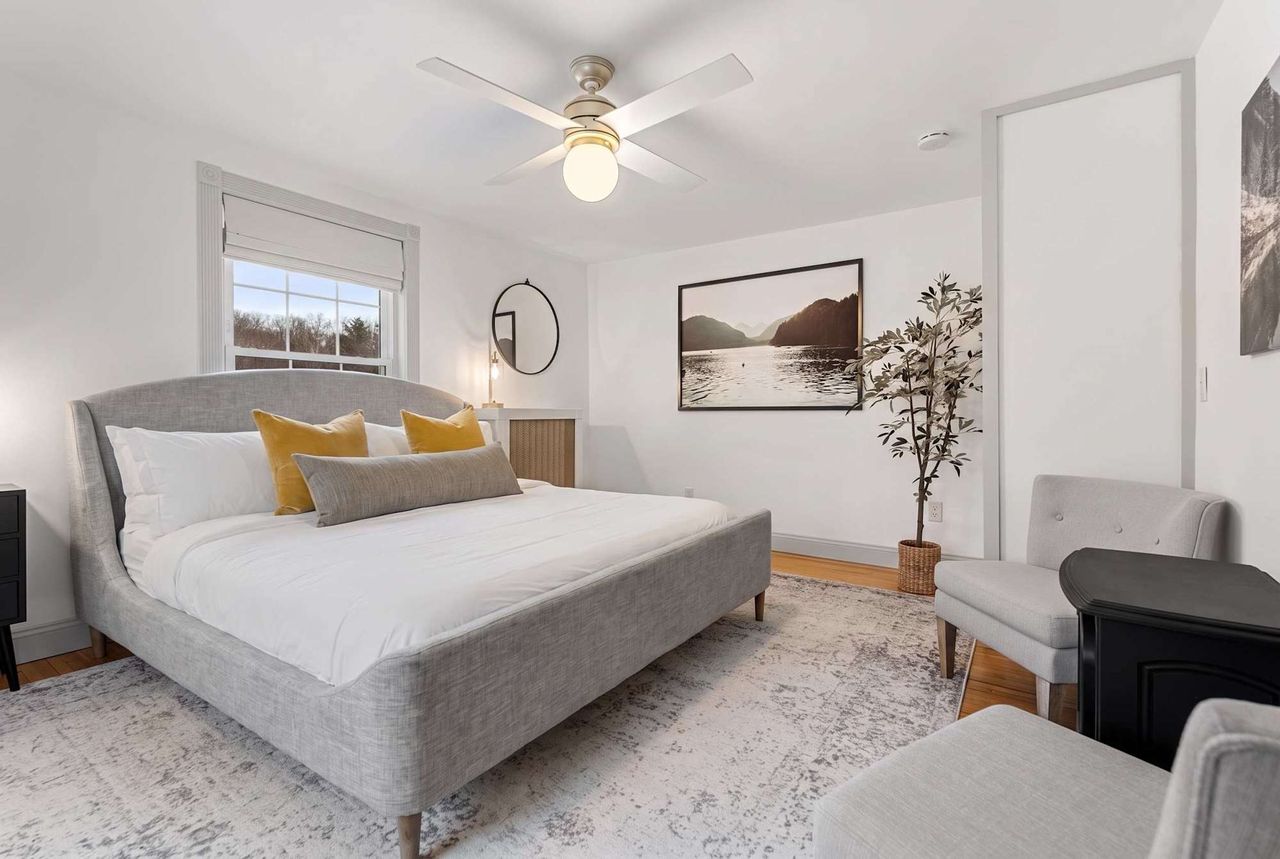
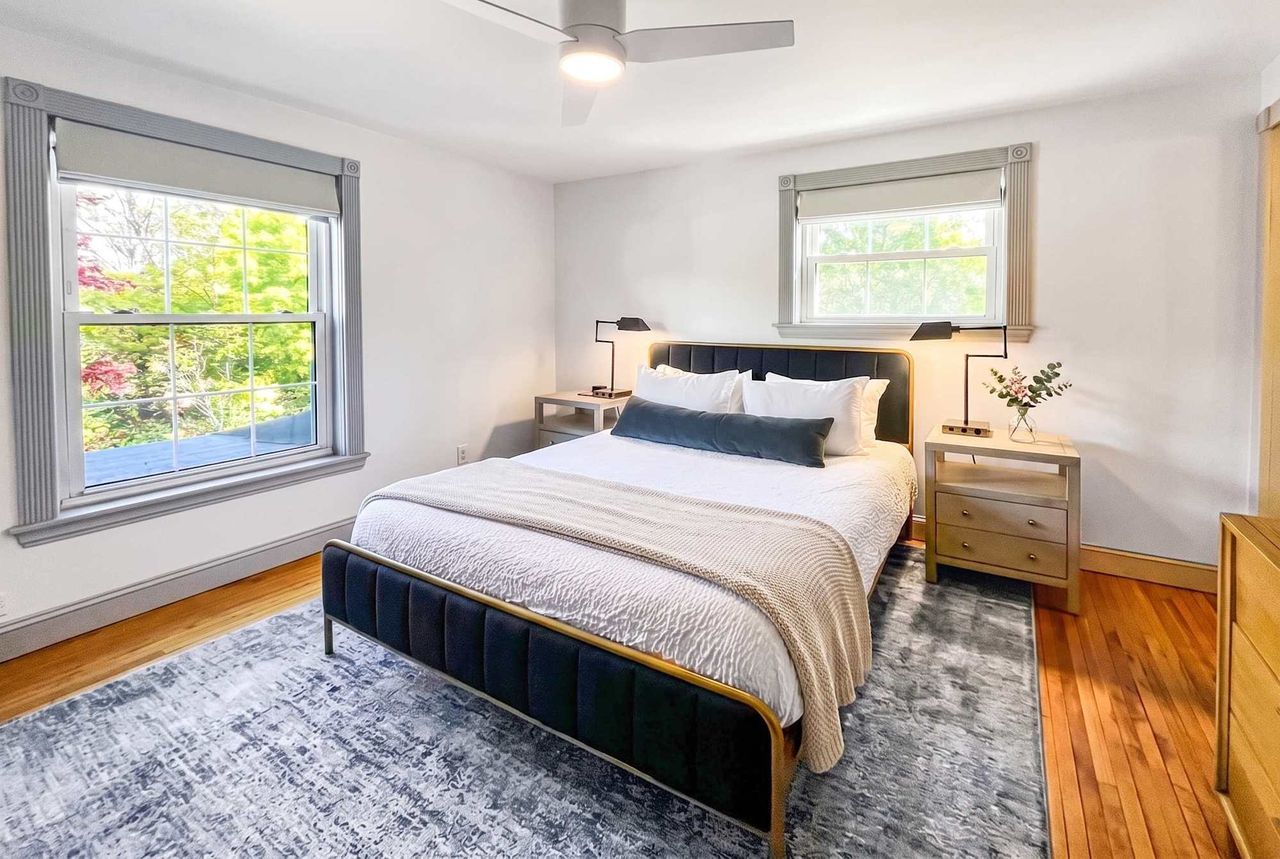
Being adults-only and quiet is part of why it works as a foliage base. Early starts are easy when the lodge is calm and check-in is keyless, so you come and go on your own schedule. Fast fiber Wi-Fi means you can pull the higher-summits forecast and download your maps before you lose signal in the Notch. And the coffee lounge on the main floor means the pre-dawn departure doesn't have to wait on anyone. Have a look at the six suites to find the one that fits; the Artist Bluff suite shares its name with our favorite quick foliage view, which we've never been able to resist pointing out.
Foliage weekends are the busiest of our year, and peak weeks book up early, so if you're aiming for a specific October window it's worth sorting your dates well ahead. When you're ready, you can check availability and reserve directly. If you're coming up from the city, the drive from Boston is about 130 miles and roughly two to two and a quarter hours on I-93 north to Exit 32.
However the color runs the year you come, the pattern holds: start high, come down as the weeks pass, go early, and give the famous roads a wide berth in the middle of the day. Do that and you'll see the turning the way we see it from the porch, which is the whole reason we keep writing it down.
— Launchpoint Lodge, From the lodge