Not everyone who comes to stay with us wants to climb a mountain, and we've never thought they should have to. Plenty of our guests arrive with a knee that complains on downhills, or a stroller-age memory of hiking they'd rather not repeat, or simply a preference for seeing the White Mountains from a comfortable seat with the heat on. The good news we share with guests is that this is one of the easiest corners of New England to experience without lacing up boots. The biggest scenery here — the notches, the granite, the long ridgelines — is arranged along roads, up lifts, and behind boardwalk railings, close enough to a parking spot that you can be standing in front of it a few minutes after you turn off the engine.
This is our guide to doing exactly that. We'll walk through the scenic drives, the ways up the big peaks that don't involve a trail, the gorges and waterfalls you can reach on flat ground or a short boardwalk, the lakes with easy shorelines, and the trains that turn sightseeing into an afternoon out. We'll also be straight with you about what has stairs, what's closed right now, and where the real limits are, because nothing sours a day faster than driving out to something that turns out to be a mile of steps or shut for the season.
What "no hike" really means around here
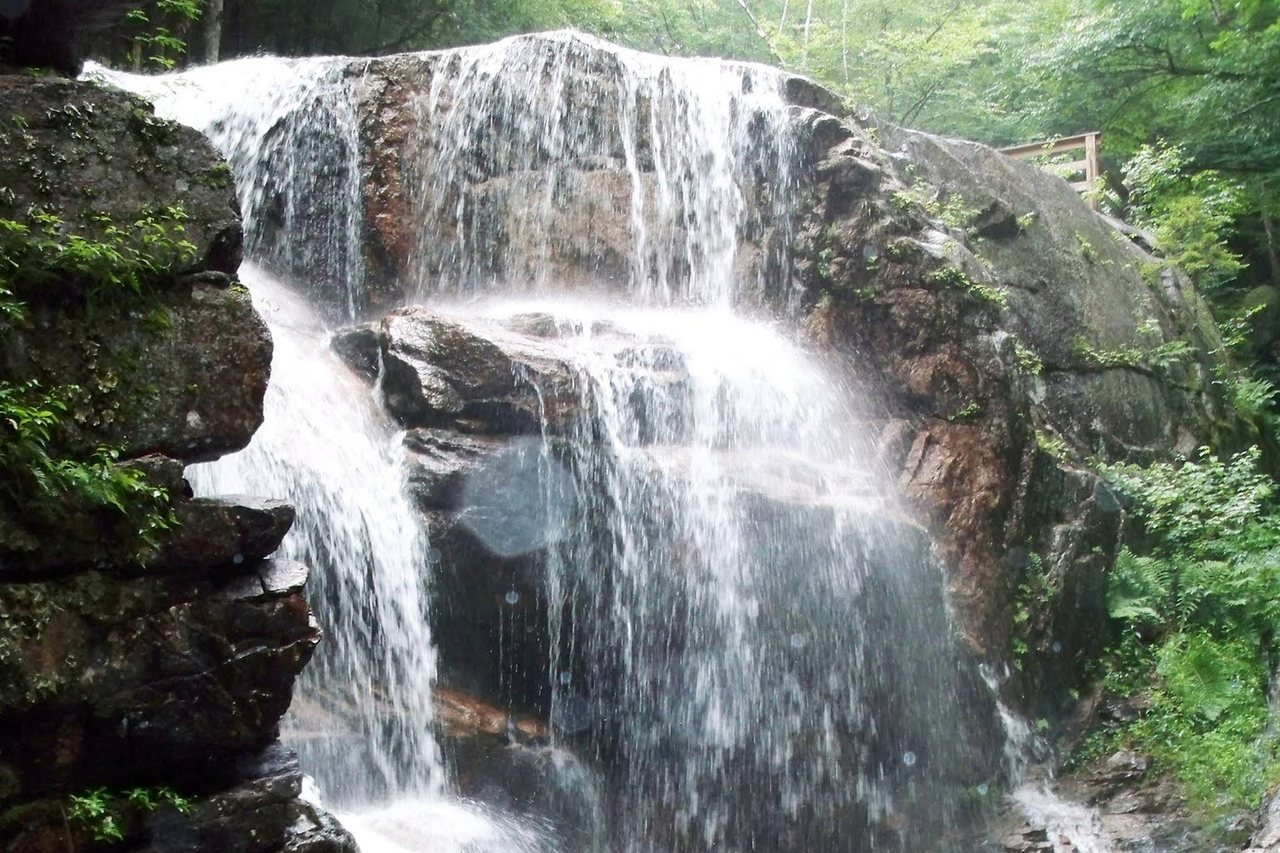
Lincoln sits at a lucky spot. We're at the western mouth of the Kancamagus Highway and about 10 min south of Franconia Notch, which means two of the most scenic driving corridors in the Northeast both begin within a short drive of the lodge. From your suite you can reach a mountaintop cafe by gondola, a granite gorge with a boardwalk running through it, a cog railway that climbs the tallest peak in the Northeast, and a half-dozen waterfalls that ask for a 5 min stroll at most.
When we say "no hike," we mean it in the practical sense: activities where the walking is short, mostly flat or gently graded, and on a made surface — pavement, packed gravel, boardwalk, or a train car. Some of these still involve a few steps or a slope, and we'll flag those clearly so you can decide what fits your day. If someone in your group uses a wheelchair or can't manage stairs at all, a few of these will work well and a few won't, and we'd rather tell you which is which up front than have you find out at the trailhead.
One theme runs through everything below, and it's worth saying once clearly: check current hours, seasons, and prices before you go. Many of these attractions are seasonal, weather-dependent, or run on timed tickets, and schedules shift year to year. When in doubt, a quick call to the operator saves a wasted trip, and we're always happy to help you plan a route by message.
The two great scenic drives
If you do only one no-hike thing while you're here, make it a drive. The two anchors are the Kancamagus Highway and the Franconia Notch Parkway, and between them you could fill two easy days without walking more than a few hundred yards at any stop.
The Kancamagus — everyone here just says "the Kanc" — starts right at the edge of Lincoln and runs 34 miles east to Conway. It's a National Scenic Byway, and it earns the title: it climbs to a height of land around 2,855 feet at the C.L. Graham Wangan overlook, with pull-offs the whole way where you can park and look out over the Pemigewasset valley and the Swift River. The important, unglamorous fact to know is that there is no gas, no food, and no services along the entire 34 miles, and no towns either. Fill your tank in Lincoln before you go. It's a beautiful road precisely because nothing has been built on it, but that also means if you're running low on fuel or patience there's nowhere to stop until the far end.
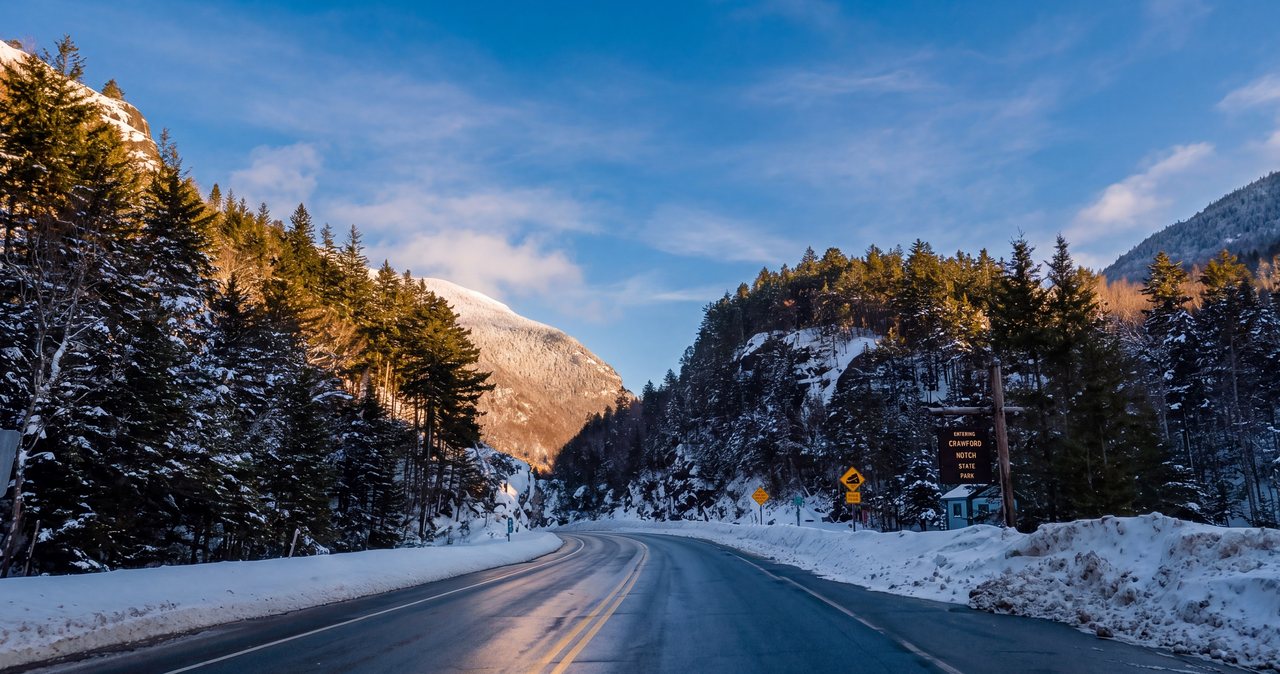
The Franconia Notch Parkway is the other one, about 16 min north via I-93, which narrows to a parkway as it threads the notch between Cannon Mountain and the Franconia Range. This is the drive that passes Echo Lake, the Old Man memorial site, the Basin, and the entrance to the Flume Gorge, so it doubles as a string of easy stops. The whole notch is a state park, and the road itself is the attraction — you're driving through a glacial pass with cliffs rising on both sides. For a fuller plan that stitches these together with timings and stop order, our no-hiking scenic drives itinerary lays out a route you can follow without improvising.
For both drives, plan on spotty cell service in Franconia Notch and almost none on the Kancamagus. Download your maps and any directions before you leave town so you're not relying on a signal that isn't there. We keep a short note on what to download before you lose signal because this catches first-time visitors more than anything else.
Riding up Loon Mountain on the gondola
The closest way to get up high without hiking is Loon Mountain, about 6 min from the lodge. In summer and fall the resort runs its scenic gondola skyride — an enclosed cabin that carries you 1.3 miles up toward the summit of Loon Peak, a ride of roughly 10 to 15 min each way. It's a round-trip ticket, so you ride up, spend as long as you like at the top, and ride back down when you're ready.
The summit is set up for people who arrived by lift rather than by trail. There's a cafe at the top serving food and drinks with a view out over the White Mountain peaks, an observation tower you can climb for a wider panorama, and a set of glacial caves — narrow passages between huge tumbled boulders — that you can poke around in if you're feeling spry. None of that is required; plenty of people ride up, sit on the deck with a coffee, take in the ridgelines, and ride back down. The gondola itself does all the elevation work.
A couple of things to know. The skyride is a warm-season attraction — it typically runs from late spring through the fall foliage season, then the mountain switches over to winter skiing and the lift's role changes. If you're visiting in the shoulder seasons, check that the scenic skyride is running on your dates, since the calendar shifts a little each year. And while the gondola cabin and the summit deck are easy, the glacial caves involve scrambling and tight squeezes, so treat those as optional and skip them if that's not your thing. The view from the top is the same whether or not you go caving.
The Mount Washington Cog Railway
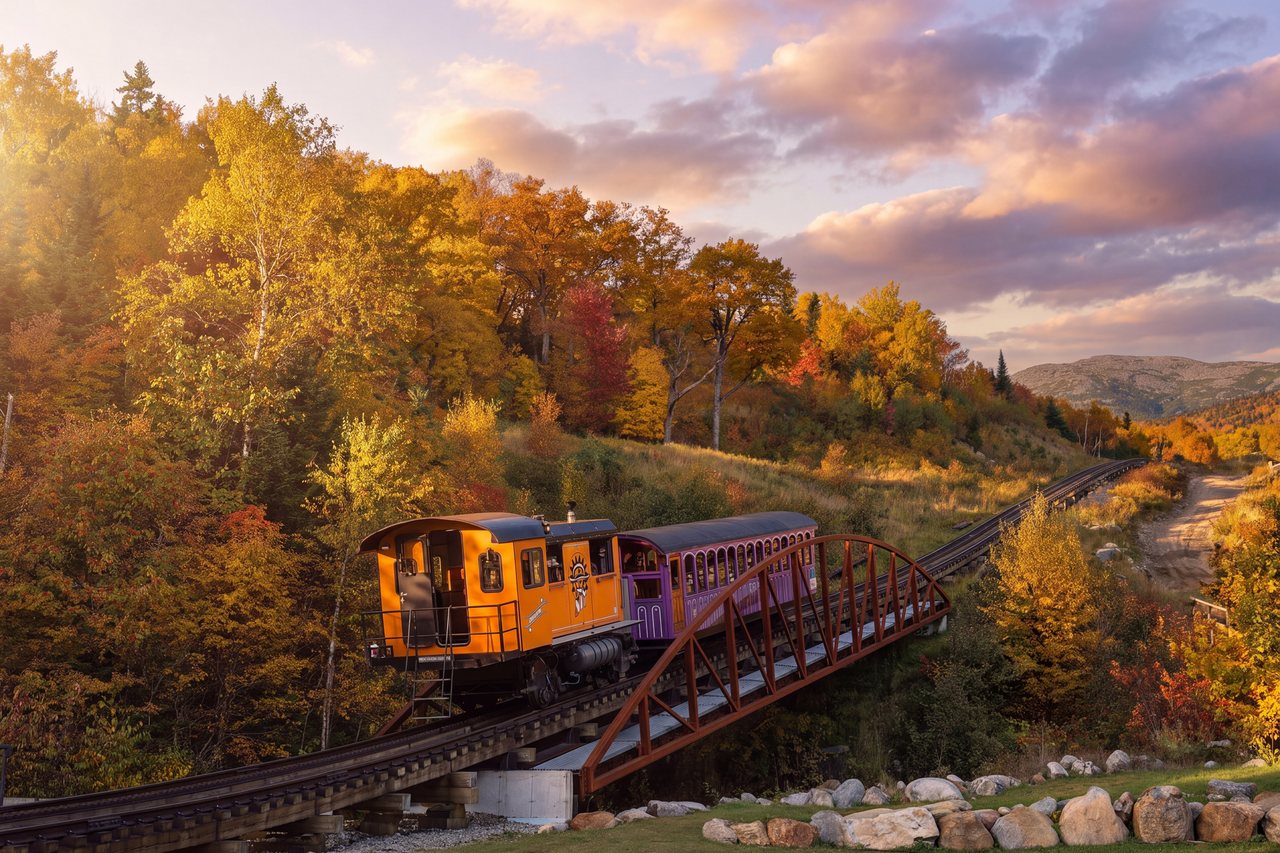
For the single most dramatic no-hike ascent in the region, it's the Mount Washington Cog Railway over in Bretton Woods. It's a bit of a drive from Lincoln — figure on the better part of an hour and a half each way, so this is a full-day outing rather than a quick trip — but it's the kind of thing people remember. The Cog is a rack-and-pinion railway that has been climbing the west side of Mount Washington since the 1860s, grinding up grades that no ordinary train could manage, all the way to the 6,288-foot summit, the highest point in the Northeast.
You sit in a heated, enclosed coach and let the train do the climbing. Depending on the day and the schedule, the train is pushed by either a modern biodiesel locomotive or one of the vintage coal-fired steam engines, and the steam trips have their own devoted following. The round trip, with time at the top, runs a few hours. At the summit there's a visitor center and the state park facilities, and on a clear day the view stretches across the Presidential Range.
Now the caveats. Mount Washington makes its own weather, and it is famously extreme — the summit can be socked in cloud, cold, and blowing hard even when Lincoln is sunny and warm. A summit day that looked promising from the valley can end in a whiteout with no view at all. That's the gamble, and it's worth knowing before you buy a ticket. The season matters too: the Cog generally starts running to the summit in early May, weather permitting, and around late October it stops going all the way to the top and turns back partway up once the summit facilities close for winter. Steam trains typically run on a set schedule during the summer months rather than every day. Check the operator's current calendar and, ideally, the summit forecast before you commit to the drive. Dress far warmer than the valley temperature suggests — a summer morning at the base can be alpine at the top.
The Mount Washington Auto Road
There's a second way up Mount Washington that skips the trail entirely: the Auto Road, which climbs the east side of the mountain to the same summit. You have two choices here. You can drive it yourself in your own vehicle, or you can leave the driving to a guide and ride up in one of the operator's vans while someone else handles the switchbacks and tells you the history on the way.
The guided van tours are the easy pick if the idea of a narrow mountain road with big drop-offs makes your palms sweat. The drivers know the road cold, they know where the best pull-offs are, and they narrate the ascent and descent, which turns it into a tour rather than a white-knuckle drive. The standard summer guided tours generally run from around Memorial Day weekend through the end of the season, weather permitting, during daytime hours, and the operator also offers a handful of special sunrise and sunset drives on select dates each summer if you want the light at its best.
If you'd rather drive yourself, you can, and many people do — the road is graded and maintained, and you go at your own pace. Be realistic with yourself about your comfort with heights and steep grades before you choose this; the descent asks you to ride your brakes and stay patient. Either way, this is another full-day trip from Lincoln given the drive over, and it's subject to the same summit weather caveats as the Cog. When the mountain is in the clouds, both the road and the railway can be running while the view at the top is nothing but gray. Check conditions before you go.
A word about Cannon's tramway
People often ask us about riding the aerial tramway at Cannon Mountain in Franconia Notch, because for decades it was the classic no-hike way to the top of a big peak here — an enclosed cable car that carried you to the 4,080-foot summit for a short, easy walk to a viewing platform. We have to be straightforward with you: the Cannon tram is not running right now.
The tramway made its final runs in late October 2025 and closed for a full replacement of the aging system, a multi-year project. No reopening date has been announced. So if you've read an older guidebook or a blog post that sends you to Cannon to ride the tram, please know that's out of date, and we'd hate for you to drive up expecting a ride that isn't there. The Cannon ski area still operates in winter — the lifts run for skiers and riders during the ski season — but the sightseeing tram itself is closed to the general public for the duration of the rebuild.
The upshot: for a lift or train to a summit right now, your working options are the Loon gondola, the Cog, and the Auto Road, not the Cannon tram. No reopening date has been announced, so for now there's no riding it.
The Flume Gorge and its staircases
The Flume Gorge is one of the most-loved sights in the area, about 12 min from the lodge inside Franconia Notch State Park. It's an 800-foot-long natural granite gorge, and a wooden boardwalk runs right through it, carrying you between mossy rock walls with a stream rushing alongside and a covered bridge on the loop. It's something to see, and because so much of it is boardwalk, people often assume it's a flat, easy stroll. It mostly is, but not entirely, and that's worth saying before you go.
The full loop is about 2 miles. The surface is mostly packed gravel path and wooden boardwalk, which sounds gentle, and much of it is. But the gorge section itself climbs, and it does so on dozens of steps — you walk up a series of boardwalk staircases beside the flume with the water rushing next to you. Because of those stairs and the uneven terrain, the full loop is not wheelchair accessible and not stroller-friendly. If steps are a hard no for your group, the Flume in full is not the right pick, and we'd rather you know that now than turn back partway. The state park can advise on the more accessible portions near the visitor center and the lower path, so if someone wants to see part of it without the staircases, it's worth calling ahead to ask what's manageable.
Two more practical things. The Flume runs on timed-entry tickets — you reserve a specific arrival window on a specific date, and you need to check in during that window, so buy ahead rather than counting on walking up. And it's seasonal, open roughly from May into October depending on conditions; it closes for the winter. Sturdy shoes help, since the boardwalk can be damp and slick with spray. For a group with mixed abilities, one nice approach is to have the walkers do the full loop while others enjoy the visitor center area and the covered bridge, then meet back up.
Roadside waterfalls you barely have to walk to
This is where the White Mountains are especially generous to non-hikers: several of the best waterfalls are a 2-to-5 min walk from a parking lot, on flat or gently sloped paths. You can string a few together in an afternoon.
- The Basin — about 14 min from the lodge, right off the Franconia Notch Parkway. It's a smooth granite pothole, a pool carved by meltwater over roughly 25,000 years, and it's about a 5 min walk from the parking area on a mostly level path. This is one of the easiest big-payoff stops in the notch.
- Sabbaday Falls — a short way in on the Kancamagus, reached by a gentle, mostly graded path with a boardwalk and viewing platforms at the falls. It's one of the more accessible waterfalls on the Kanc, a tiered cascade dropping through a narrow flume of rock. The walk in is short and easy by mountain standards.
- Rocky Gorge — farther along the Kancamagus, a dramatic chute where the Swift River funnels through granite, with a footbridge over it and a picnic area. The viewing is close to the parking, and there's a small pond loop nearby if you want a little more.
- Lower Falls — also on the Kanc, a broad set of ledges and pools along the Swift River, right beside the road, popular in summer as a spot to sit by the water. You can take it in from close to the pull-off.
Because these are all right on the two scenic drives, the natural move is to fold them into your driving day rather than treating them as separate trips. Do the Kanc and pick up Sabbaday, Rocky Gorge, and Lower Falls along the way; do the Franconia Notch Parkway and pick up the Basin. Just remember the no-services rule on the Kancamagus — pack water and a snack, because there's nowhere to buy either once you're on it.
Echo Lake and easy shorelines
If you want water without a climb, Echo Lake in Franconia Notch is the easy answer. It sits right at the foot of Cannon Mountain, and there's a beach area, parking close by, and a flat shoreline where you can sit and look across the water at the surrounding peaks. In summer it's a swimming beach; in the quieter seasons it's simply a calm, pretty place to stand at the edge of the mountains without effort. The reflection of the cliffs on a still morning is the whole reward, and you don't have to walk far to get it.
The lake sits near the Old Man memorial site, which is worth a word of its own. The Old Man of the Mountain — the famous rock profile that looked like a face on the cliff and became New Hampshire's state emblem — is gone. The formation collapsed on May 3, 2003. What's there now is a memorial plaza at the base of the notch, with steel viewfinders called "profilers" that you line up with the empty cliff to see where the face used to be. It's a moving, low-effort stop, but we mention it because people still arrive expecting to see the profile itself on the rock, and it isn't there anymore. The memorial is the thing to see now, and it's a short, flat walk from parking.
Back near town, the Pemigewasset River and the walking paths around Lincoln give you flat, easy strolls along the water whenever you just want to stretch your legs between bigger outings. And if you're up for a very gentle roll, the paved recreation path runs through the notch and is popular with cyclists and easy walkers alike — a rare chance to be in the heart of the mountains on smooth, level pavement.
The dinner train and the scenic railroad
Trains here aren't only for climbing mountains. Two more run along the valley floor, and both are pure no-effort sightseeing — you sit, you watch the scenery roll by, and someone else does everything.
The Cafe Lafayette Dinner Train runs out of North Woodstock, just next door, and it's exactly what it sounds like: a multi-course dinner served in restored vintage rail cars while the train rolls along the Pemigewasset River. It's a low-key evening out — dressy-casual, unhurried, and popular for anniversaries and quiet celebrations, which suits an adults-only stay well. Seasons and reservation policies apply, so book ahead and check the current schedule, but as a special evening that asks nothing of you physically, it's hard to beat.
The Granite State Railway runs right out of Lincoln and offers shorter, scenic daytime excursions along the river — an easy, relaxed ride of about an hour or so, good for an afternoon when you want to see the valley without a big commitment. It's a gentle option and a nice one for a rainy or low-energy day. Both railroads are seasonal and their calendars shift, so confirm operating days before you plan around them.
Between the Cog, the Auto Road vans, the Loon gondola, the dinner train, and the Granite State Railway, you could build a whole visit around things you ride rather than things you climb, and never feel like you missed the mountains.
The best overlooks you can drive to
Some of the finest views in the Whites don't require any walking at all — you park, you step out, you look. Here are the ones we point people toward:
- C.L. Graham Wangan Overlook, near the height of land on the Kancamagus at roughly 2,855 feet, is the big one — a broad pull-off with a long view over the mountains, especially good in fall foliage season.
- The Hancock Overlook and the several other named pull-offs along the Kanc give you changing vantage points as the road climbs and descends; you can hop from one to the next without any real walking.
- Echo Lake and the Old Man viewing plaza in Franconia Notch, covered above, both deliver mountain-and-water views a few steps from the car.
- The Loon summit deck, reached by the gondola rather than on foot, gives you a wide panorama with a coffee in hand.
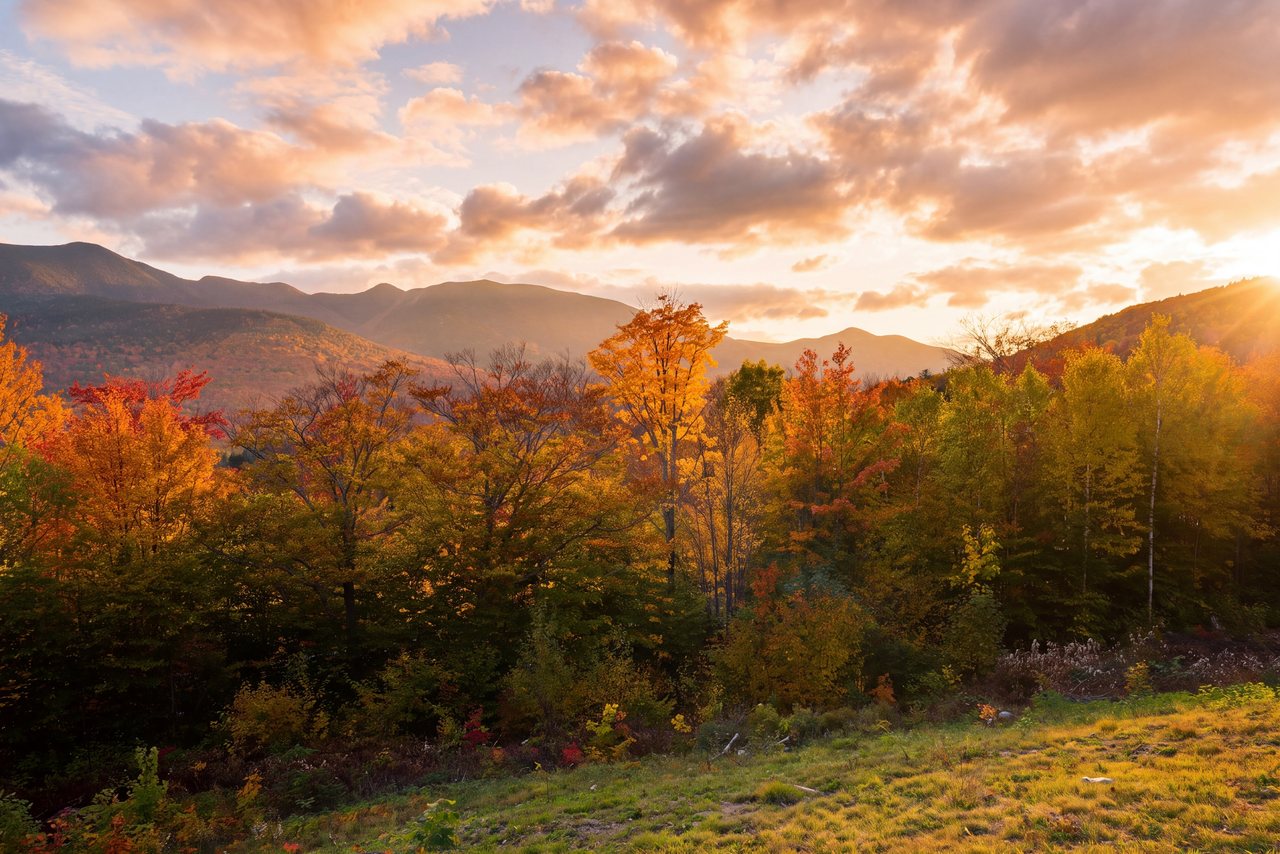
In foliage season these overlooks are the whole show. The color moves down the mountains over a few weeks, and because you can chase it by car from one pull-off to the next, leaf-peeping is one of the most no-hike-friendly things you can do here. Early October is usually the peak in this area, though it varies year to year with the weather. Go early in the day if you can — the popular overlooks fill up, and the low morning light on the ridgelines is the best of the day.
Doing it comfortably from the lodge
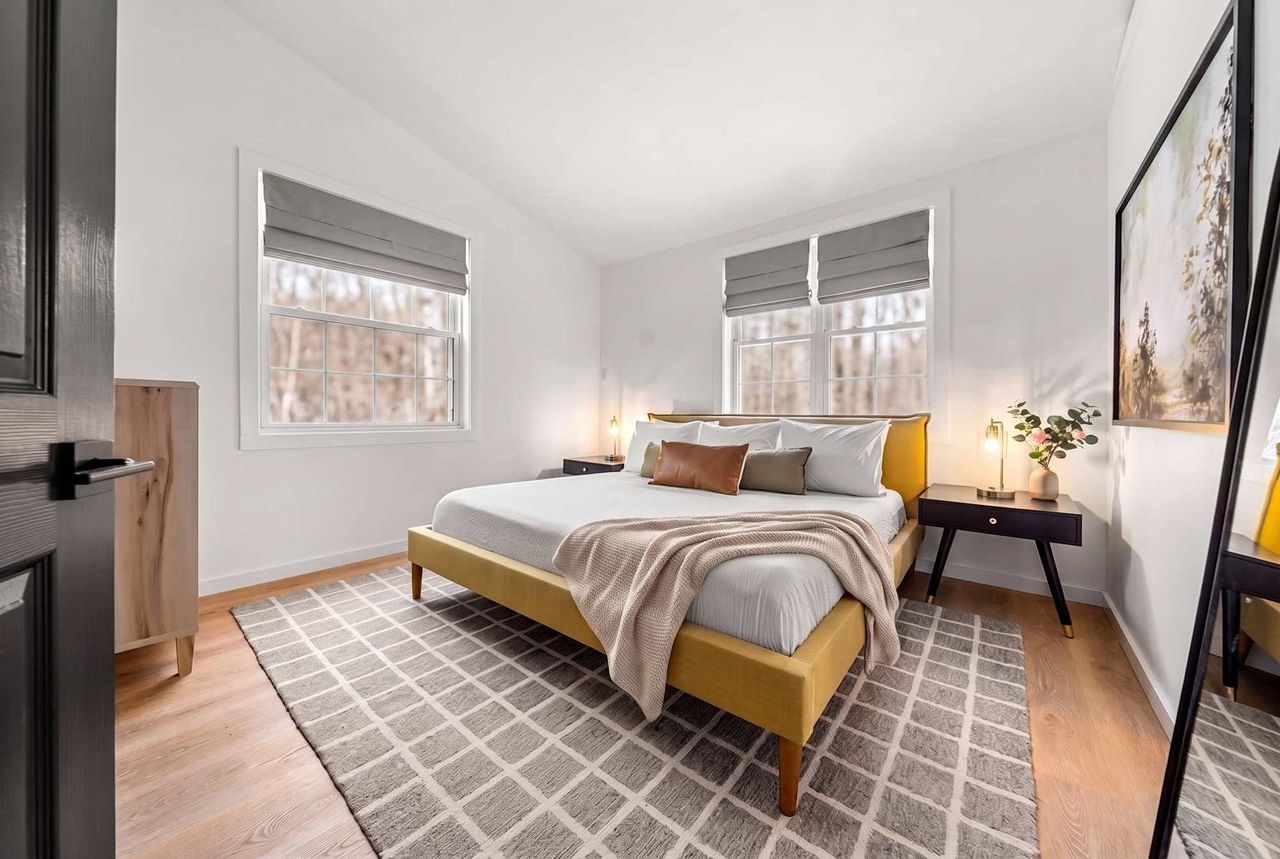
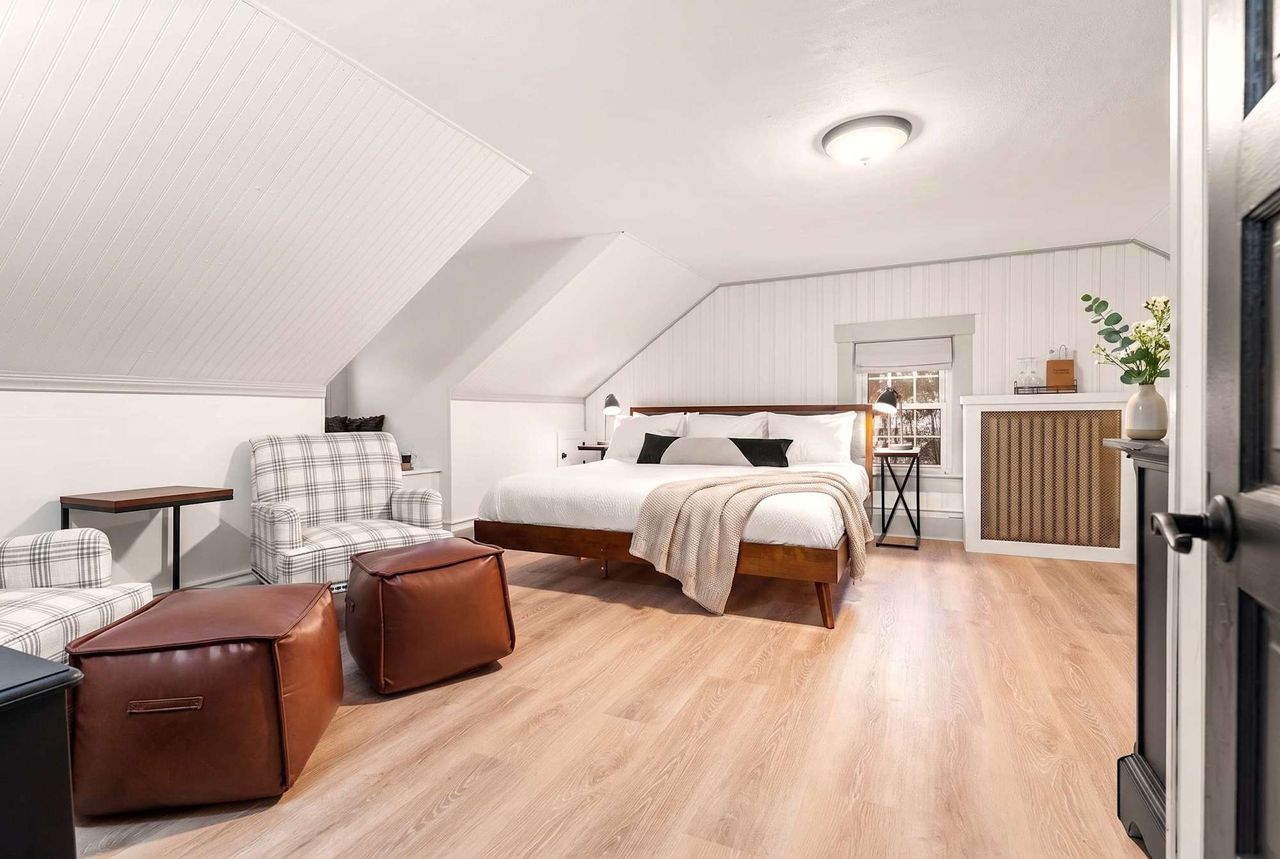
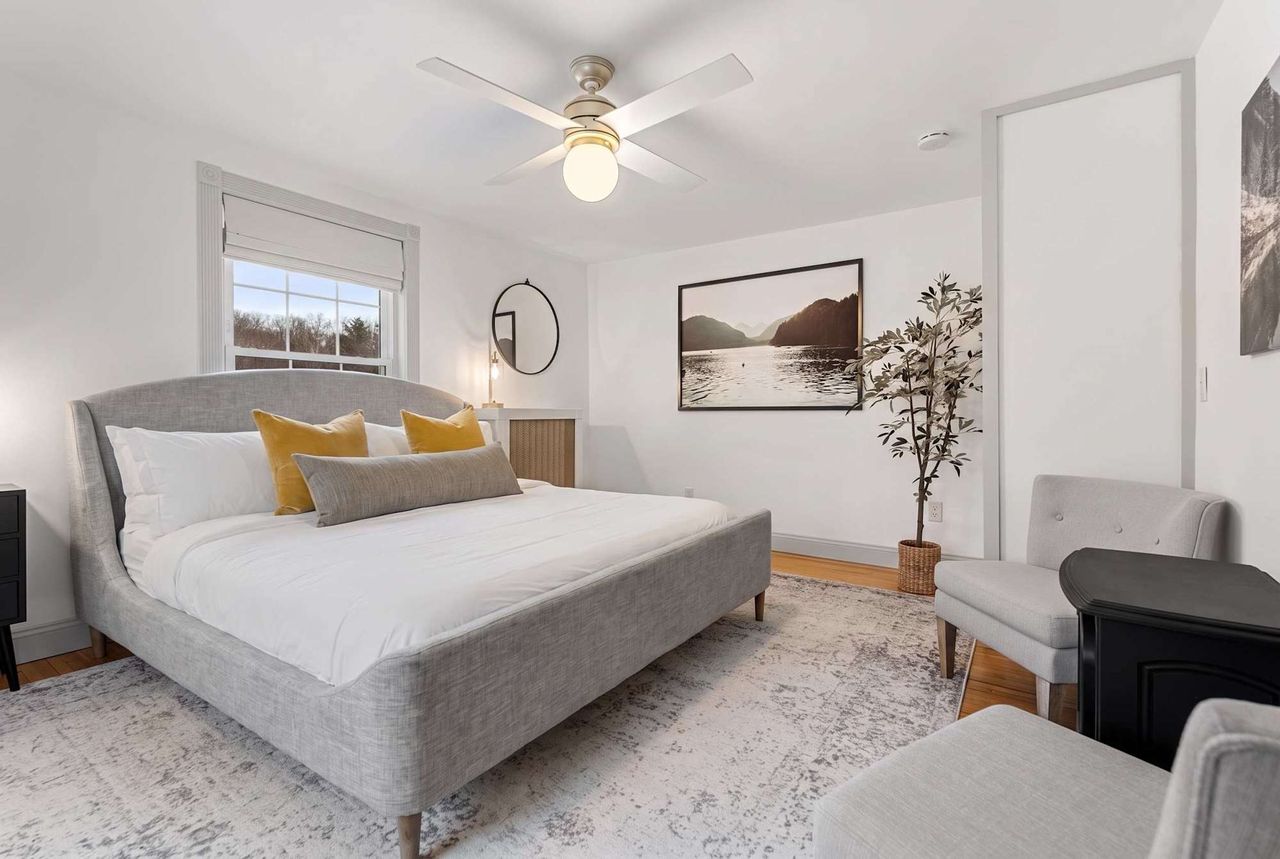
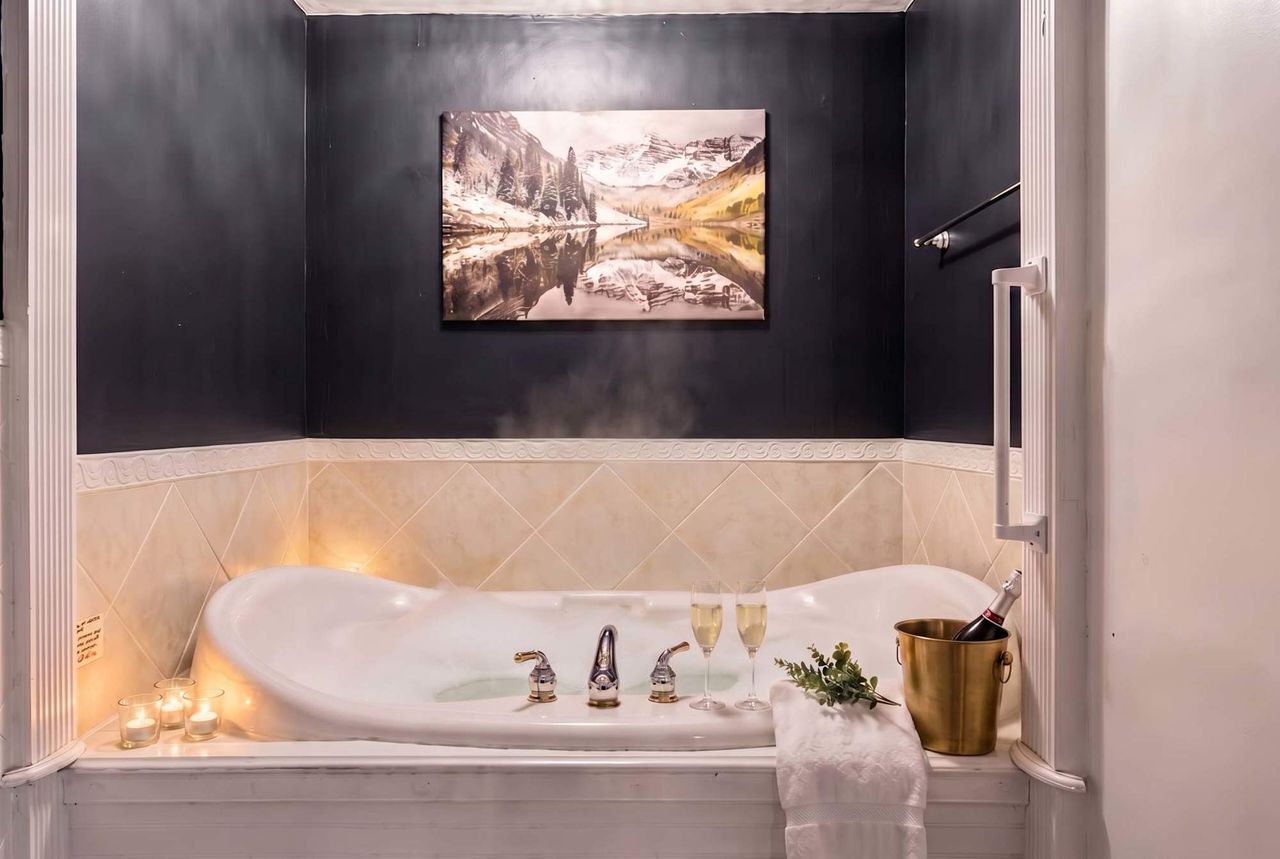
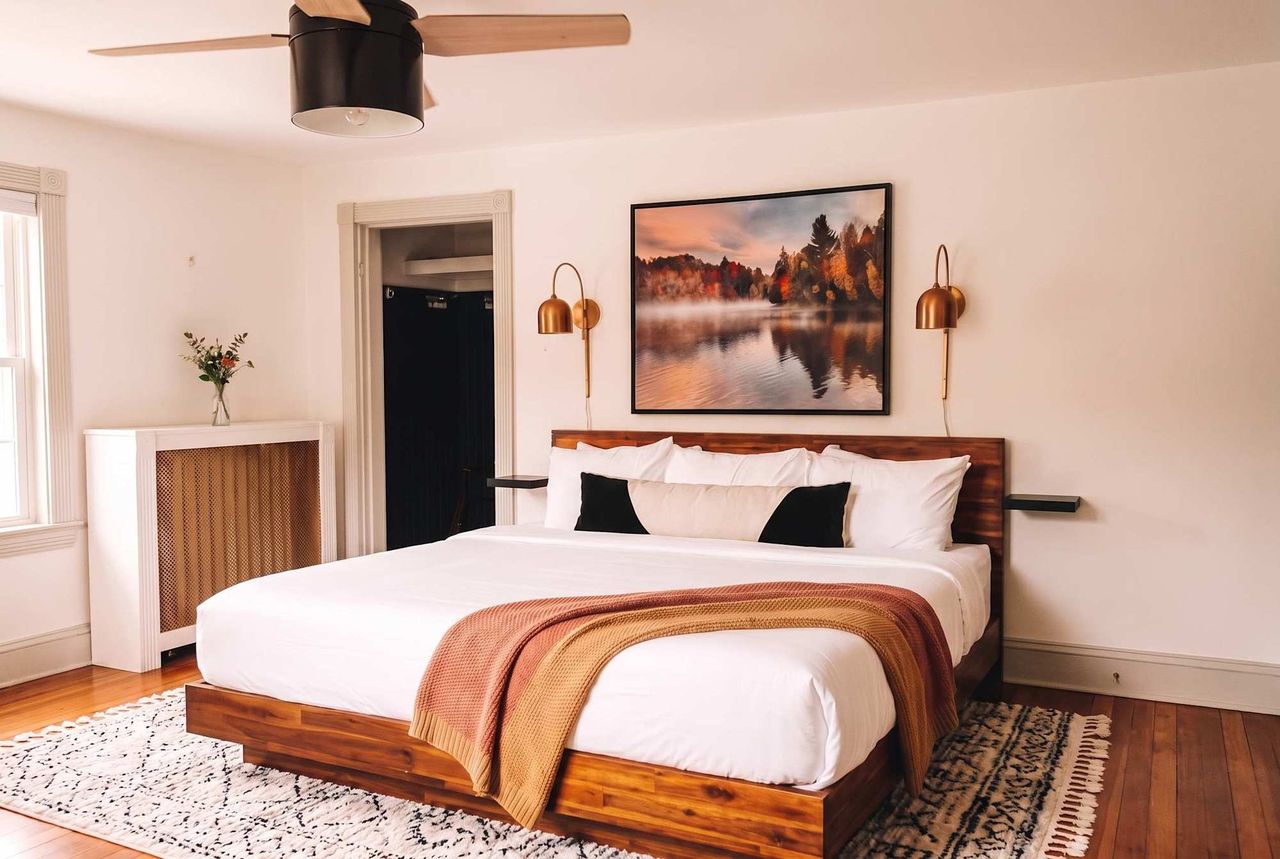
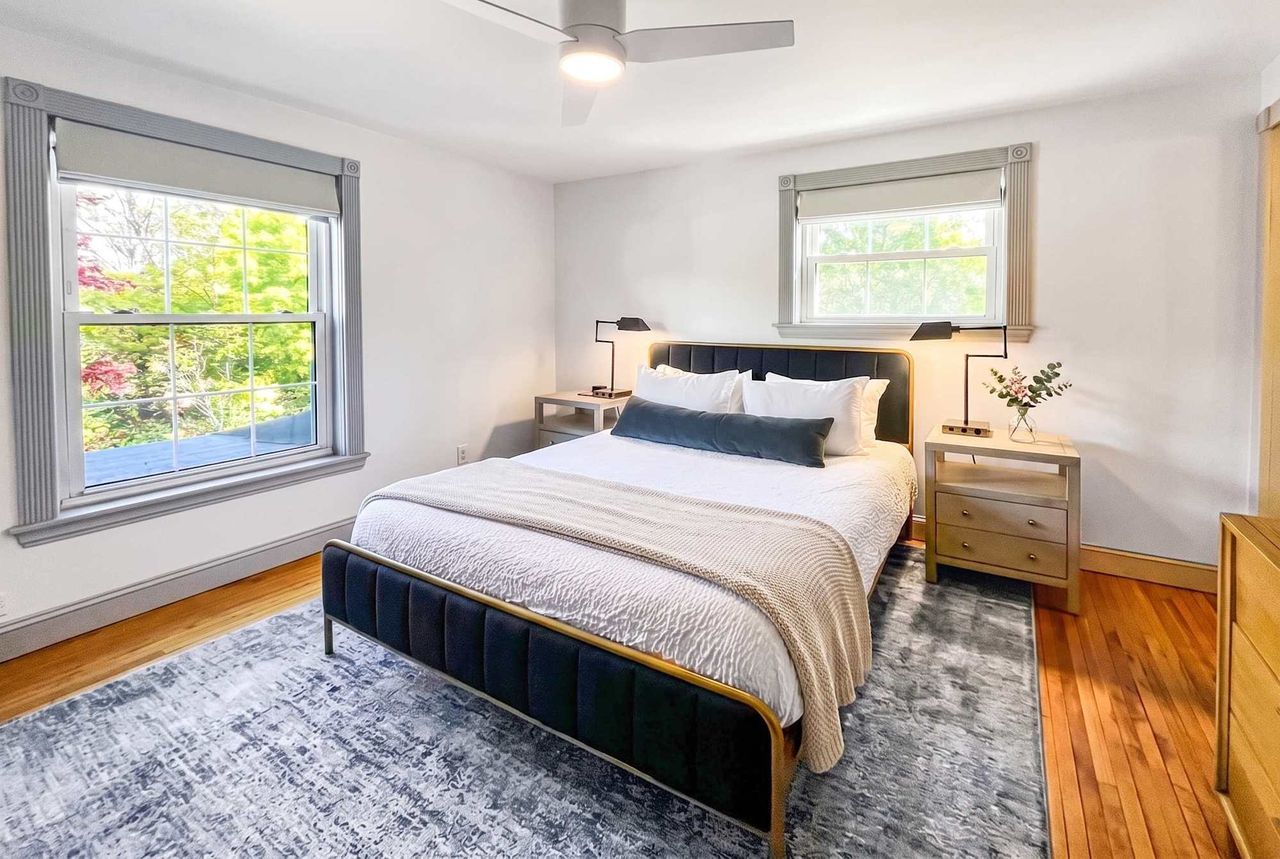
A few practical notes to make all of this easy. We're a small, adults-only inn — six suites in a restored 1902 colonial at 191 Pollard Rd, walkable to Lincoln's town core with its restaurants, brewery, bookshop, and coffee. That location is the quiet advantage for a no-hike trip: you can do a big scenic drive or a railway outing, then be back for dinner in town on foot, without a long haul at the end of the day. Check-in is keyless and self-service from 3pm, so you can arrive on your own schedule after a day out, and every suite has fast Wi-Fi for planning the next day's route, with coffee waiting in the lounge.
If mobility is a real consideration for your group, get in touch before you book and we'll talk through which rooms and which outings suit you best. You can see the individual suites and choose one on the rooms pages when you're ready to book, and our area map shows where everything in this guide sits relative to the lodge, with the drive times, so you can gauge what makes a comfortable day.
A last word on planning. Almost everything here is seasonal or weather-dependent, and several attractions run on timed tickets or limited schedules, so the single most useful habit is to confirm current hours and status the day before you go. Weather in the mountains changes fast, summit days can cloud over, and a plan that stays flexible is a happier plan. We're glad to help you sort it out when you arrive — a lot of the best no-hike days here come from a quick message about what's open, what the sky is doing, and what you're in the mood for.
You don't need to earn these mountains with your legs. Between the drives, the lifts, the trains, and the short boardwalks, the biggest and best of the White Mountains is set up to come to you. Come see how much of it you can take in from a comfortable seat.
— Launchpoint Lodge, From the lodge