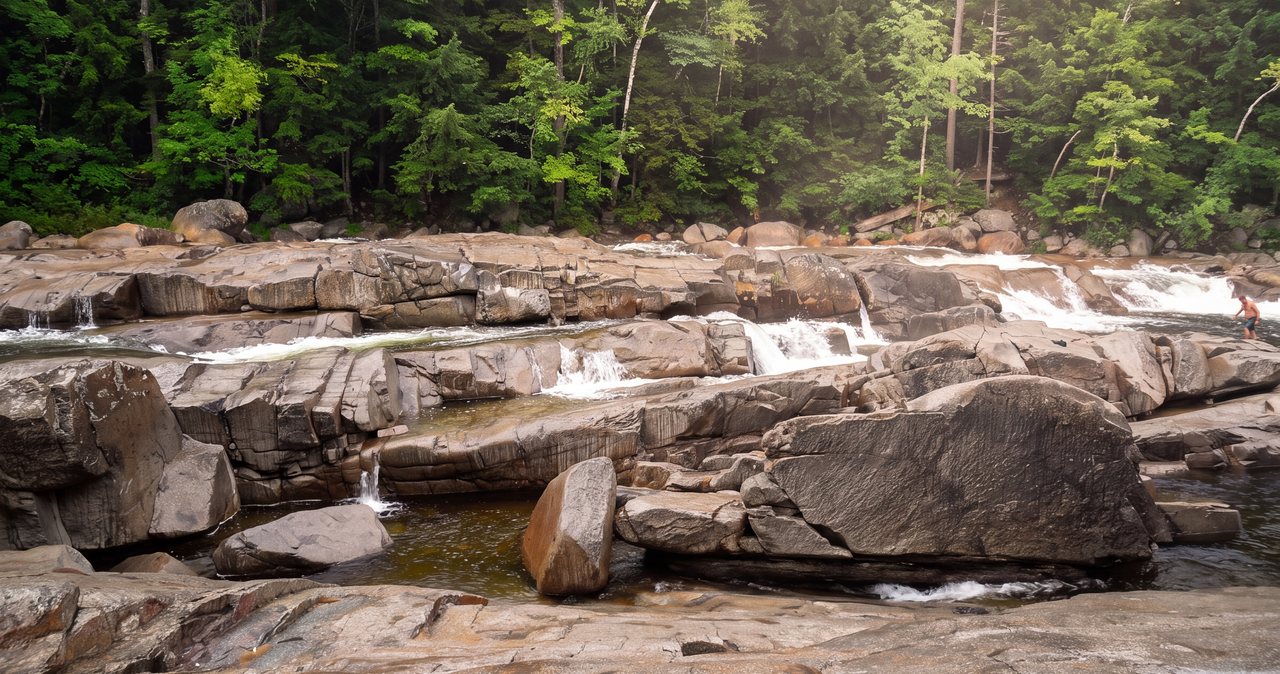
Lower Falls is the stop people picture when they picture the Kancamagus in summer: a broad sheet of white water sliding down polished granite ledges into a wide, green pool, with dozens of people sunbathing on the warm rock and easing into the current. It is the one place on the whole highway where the U.S. Forest Service invites you to swim. That single fact is why it is so beloved, and why it deserves a proper guide rather than a pretty photo and a shrug. The same river that looks like a postcard on a low-water August afternoon becomes a flushing granite chute after two days of rain, and the smooth rock that makes it perfect for sunbathing is exactly what makes it lethal when it is wet and fast.
This is a roadside recreation site, not a hike. From the day-use parking lot it is a short, mostly level walk of a few hundred feet down to the ledges — no summit, no trail signs, no real elevation to speak of. We include it with our hikes because it is one of the water stops guests ask about most, and because it calls for the same good sense as any river in these mountains: read the water, respect the cold, and be happy to turn it into a picnic instead. The falls will still be there on the next low-water day.
We wrote this to be more useful than the one-paragraph blurbs you will find elsewhere. Below you get the real parking situation, exactly how the $5 White Mountain National Forest pass works at the self-serve box, where swimming is allowed here versus where it is banned and enforced two miles up the road at Rocky Gorge, and a plainspoken breakdown of when the Swift River is safe to get into and when it absolutely is not.
What Lower Falls is (the picture)
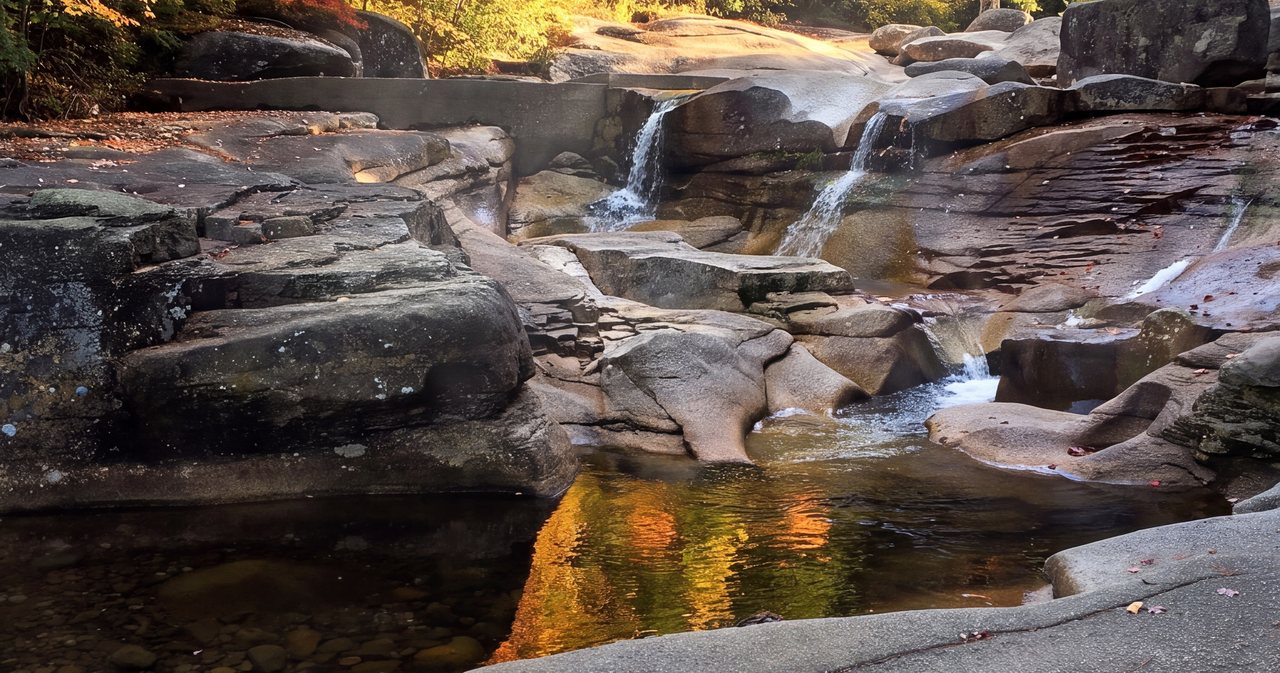
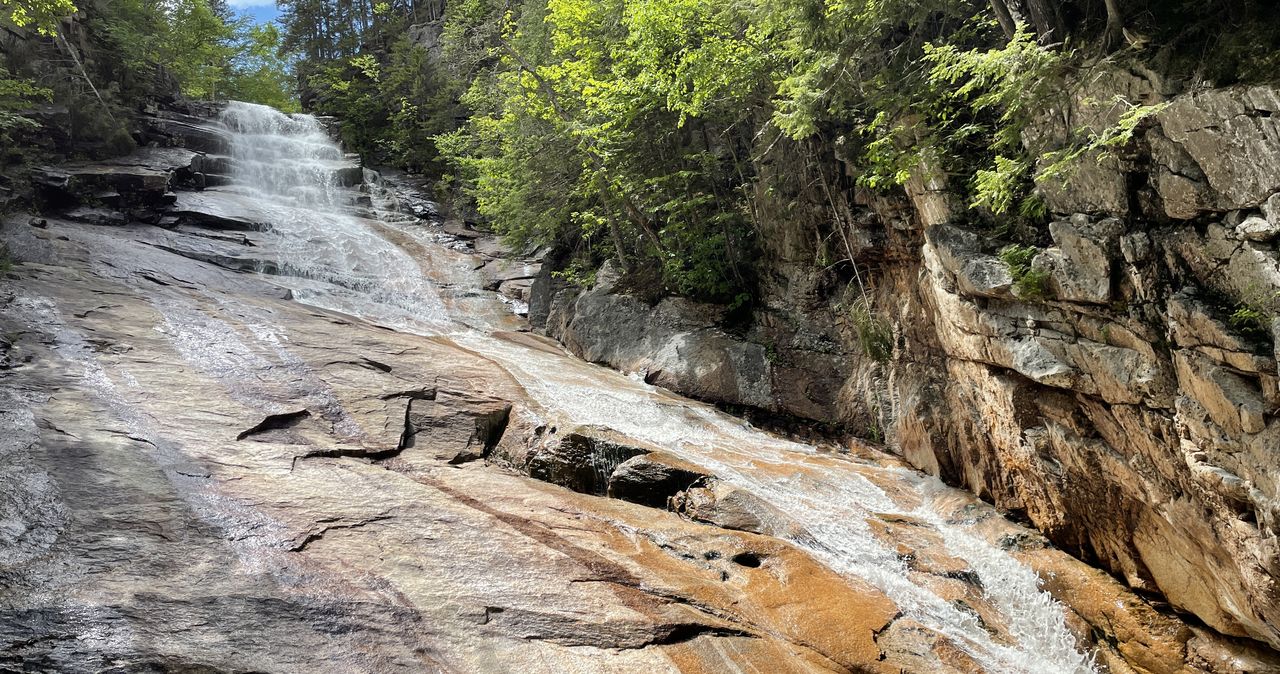
Lower Falls Recreation Site is a developed Forest Service day-use area on the Swift River, along Route 112 — the Kancamagus Highway — in Albany, New Hampshire, at roughly 950 feet of elevation. It is not a tall, dramatic plunge like the ones on postcards from bigger parks. What you get is a wide, relatively low-angle staircase of smooth granite: the whole river spreads out across open bedrock and slides down a series of ledges and short cascades into a large pool below, with more shallow runs and flat sunning rock all around. The Forest Service describes it simply as a spot where the Swift River drops over smooth granite into a large pool, and that plainness is the point — it is approachable, open, and sunny, which is exactly why it draws crowds.
Because the rock is open and low-angle rather than a sheer cliff, height is not the concern here. What deserves respect is the water itself — its speed, its volume, and its temperature — along with granite that turns glass-slick wherever it is wet. On a calm day none of that reads as threatening, and that is the trap. The features that make Lower Falls so inviting in low water (broad open ledges, an easy walk-in, a big pool) are the same ones that make high water a different story (fast sheeting current, nowhere to grab, a lip you can be pushed over).
It is the most popular stop on the Kancamagus, and it earns that. On a hot July weekend you will find families picnicking under the trees at the edge of the lot, teenagers sunning on the rock, and a steady rotation of people wading into the calm pool below the main ledges. It has a genuine local-swimming-hole feel while still being a maintained, signed, fee-collected Forest Service site with restrooms and a big parking lot. That combination — wild-feeling water, developed conveniences — is rare on the Kanc, and it is why we send guests here specifically rather than to the unmanaged pull-offs.
One more note: this is a place to look at moving water and, in the right conditions, to wade and swim in the calm pool. It is not a cliff-jumping venue, it is not a whitewater play spot, and it is not a place to test yourself against current. Treat it as a beautiful, sanctioned swimming hole with real teeth, and it rewards you. Treat it as a water park and it will hurt you.
Where it is, and the practical drive from the lodge
Here is where we correct a common assumption. Lower Falls is not in the middle of the Kancamagus, and it is not a quick 15 min run from Lincoln. It sits near the eastern, Conway end of the highway — roughly six miles west of Conway, and about two miles east of the Rocky Gorge Scenic Area. From the lodge at the western mouth of the Kanc in Lincoln, that means you drive nearly the full length of the byway to reach it.
Plan on about 40 min of driving, give or take, depending on traffic, foliage-season crawl, and how many overlooks you stop at along the way. The Kancamagus itself is roughly 34 miles of two-lane mountain road with modest speed limits, no gas stations, no services, and plenty of reasons to slow down. In peak fall it can take much longer simply because the road clogs with leaf-peepers. We tell guests to treat the drive as part of the outing, not a chore to rush — you will pass Sabbaday Falls, the height-of-land overlooks, and Rocky Gorge on the way, and any of them is worth a stop.
Because Lower Falls is so far east, it pairs naturally with a Conway-direction day: hit Lower Falls to swim, stop at Rocky Gorge two miles back toward Lincoln to see the gorge you are explicitly not allowed to swim in, and continue into Conway or North Conway for food and shops if you want a fuller loop. Coming back to the lodge is the same drive in reverse, so budget roughly 40 min home as well and do not count on cell service to fill the time.
The site is on the south side of the highway; the parking area and the falls are right there together, so there is no hidden trailhead to find. GPS will get you to it, but do not rely on your phone once you are on the Kanc — download directions before you leave the lodge, because signal drops out for long stretches through the notch.
Parking, the fee, and how the $5 WMNF pass works
Lower Falls has a large day-use lot with room for roughly 80 vehicles, plus restrooms and a picnic area. That sounds like plenty, and on a weekday or a cool day it is. On a hot summer weekend it is not — the lot fills, cars start circling, and people park badly or give up and move on. If a hot Saturday is your only option, arrive early (before 10 a.m. is the safe play) or late in the afternoon, and have Rocky Gorge or Sabbaday Falls in your back pocket as a fallback.
You need a White Mountain National Forest Recreation Pass to park here. This is the single most misunderstood thing about the Kancamagus: the road is free to drive, but the moment you park at a Forest Service site like Lower Falls, you owe the fee. It is $5 per vehicle for the day, and that day pass is honored at every WMNF day-use fee site for that same day — so one $5 pass covers you at Lower Falls, Sabbaday Falls, Rocky Gorge, and Lincoln Woods on the same day. That is a good deal if you are hopping between stops.
If you did not buy ahead, there is a self-serve fee station in the parking lot: take an envelope, fill it in, tear off the stub to display on your dashboard, and drop the payment in the iron box. Bring cash or a checkbook — the self-serve boxes are old-fashioned, and you do not want to be the person discovering the machine does not take a card. You can also buy passes in advance online through Recreation.gov, at the Forest Service ranger stations in Lincoln or Conway, and at some local vendors in town, which we are happy to point you to before you head out.
If you are here for several days and plan to hit multiple trailheads and water stops, do the math on an annual pass. The WMNF annual pass runs about $30 (a household version with two windshield stickers is a little more), and the federal America the Beautiful pass is about $80 and covers not just the White Mountain National Forest but national parks and federal recreation sites across the whole country for a year. For a week of White Mountains hiking and swimming, one of those two passes usually beats paying $5 a day, and the America the Beautiful pass is the obvious buy if you have any other national-park travel planned in the next twelve months.
One local rule that surprises people: alcohol is banned at Lower Falls by ordinance of the Town of Albany. This is not a casual guideline — leave the cooler beers at the lodge. It is a family swimming area with slick rock and fast water, and the town takes the no-alcohol rule seriously.
The ledges, the pools, and where people swim
The layout is simple once you are standing on it. The river comes in from upstream, spreads across open granite, and steps down over the main ledges into the big pool. Above the ledges the water is faster and shallower, running across the flat rock. Below the main drop is the deeper, calmer pool where most swimming happens, and downstream of that the river breaks into smaller runs and rock again. The flat, dry granite around the edges is the sunbathing real estate everyone stakes out.
The safe swimming, when conditions allow it at all, is in the calm pool below the main falls — not in the moving water above them. In low, warm, late-summer conditions that lower pool can be a lovely wade-and-float: cold at first, then bearable, with enough depth to swim a few strokes. People ease in from the rock at the pool's edge, stay in the slack water, and get out the same way. That is the version of Lower Falls that makes the reputation.
The upper ledges are where people get in trouble. The current above the drop is stronger than it looks because it is spread thin over slick rock — you do not feel it grab until you are already sliding, and then there is nothing to hold. Every serious incident here follows the same pattern: someone wading or scrambling on the upper rock loses their footing and gets flushed over the ledges into the churn below. Stay off the wet upper rock and well back from the lip. If you want to be in the water, be in the calm pool, not up top.
There is no marked, roped swimming zone and no lifeguard — this is not a public pool. You are reading the water and making your own call. That freedom is part of the appeal and part of the risk. Use it the way a cautious local would: get in slowly where the water is slack and deep, keep clear of anything moving, and never let the beauty of the place talk you into the fast water.
Is it safe to swim? How to read the Swift River
This is the whole ballgame, so we will be blunt. Lower Falls is safe to swim only when the Swift River is low and calm. When the river is high or fast — after rain, during spring snowmelt, or any time the water is loud and pushing — it is not a swimming hole, it is a hazard, and the Forest Service says exactly that: during high water, use extreme caution around the falls and the river. Our advice is simple — if the water is high or rushing, enjoy the view from dry ground and save the swim for a calmer day.
You do not need to be a hydrologist to read it. Look and listen. Low and safe-ish looks like: clear or lightly tea-colored water, exposed dry flat rock all around, a pool surface that is mostly calm, and a quiet enough scene that you can hear people talking over the falls. High and fast looks like: brown or churning water, the flat sunning ledges partly or fully submerged, a loud roar you have to raise your voice over, foam and debris moving downstream, and a visible push to the current even in the pool. If it looks angry, it is. Do not get in.
Timing matters because the Swift River is flashy — it rises fast after rain and drops over a day or two. The rule of thumb we give guests: give it a couple of dry days after any significant rain before you count on the pool being calm, and never judge safety by the weather at the lodge alone. It can be sunny in Lincoln while runoff from a storm in the higher terrain is still surging through the notch. When in doubt, walk down, look at the actual water, and be willing to turn the swim into a picnic.
In spring and early summer the river often runs both high and very cold from snowmelt well into June, even on a warm day. Late July and August are the reliable swimming window, when flows are typically down and the water has finally warmed enough to be pleasant rather than shocking. If your only day is a cold, high-water day, treat Lower Falls as a scenic stop and a leg-dip at most, not a swim.
Cold-water shock
The Swift River is fed by snowmelt and mountain runoff, and it runs cold — often startlingly cold — even in the middle of a hot summer. That temperature is not just uncomfortable; it is a real physiological hazard called cold-water shock, and it is the quiet reason mountain rivers hurt strong swimmers who would never drown in a warm lake.
When you plunge suddenly into cold water, your body can respond with an involuntary gasp and a burst of rapid, uncontrollable breathing. If your face is underwater during that gasp, you inhale water. Even if it is not, the rapid breathing and the cold can set off panic and drain your coordination and strength within a couple of minutes — well before hypothermia is a factor. A confident swimmer can go from fine to in-trouble faster than anyone expects, purely from the cold.
The defense is simple and it costs nothing: never jump or dive into the Swift River, and never cannonball off the rock. Wade in slowly from the shallow edge of the calm pool, let your breathing settle before you commit to deeper water, and give your body a minute to adjust. If you feel that gasp reflex, stop, stand where you can, and let it pass. Get out and warm up on the rock the moment you feel your coordination going — do not tough it out.
This is doubly true early in the season. In June, the high snowmelt flow and near-freezing water make it a month to resist a hot-day urge to jump right in. The warmer, lower water of late summer is far more forgiving, but even then, ease in — the river is colder than it looks.
Lower Falls vs. Rocky Gorge: where you can swim and where you cannot
Two miles back toward Lincoln from Lower Falls is Rocky Gorge, and it is the most important contrast on this whole page. Both are Swift River sites on the Kancamagus. At Lower Falls, swimming is permitted in the right conditions. At Rocky Gorge, swimming, jumping, and wading in the gorge are prohibited and strictly enforced — a rule that grew out of a history of serious accidents there.
The history is grim and specific. Rocky Gorge is a narrow, deep granite slot where the entire river funnels through a tight chute, creating powerful, invisible currents and hydraulics beneath the surface. In July 1942, a woman named Dorothy Sparks was trapped underwater at the gorge for over three hours before she was recovered — a near-drowning that helped drive the swimming prohibition. There have been other serious accidents there since. Submerged rocks and powerful current make the gorge unsafe even for strong swimmers, and the Forest Service enforces the no-swimming rule.
So do not confuse the two. When guests ask us where they can swim on the Kanc, the answer is Lower Falls, in low calm water — not Rocky Gorge, ever. Rocky Gorge is a spectacular place to walk to the footbridge, look down into the chute, and continue on the short easy loop to Falls Pond. It is a look-don't-touch stop. Lower Falls is the swim stop. Keep the two straight and you can enjoy both.
If you want to do both in one outing — and it is a great combination — swim at Lower Falls when the water is low and calm, then drive the two miles west to Rocky Gorge to see the gorge from the bridge and stretch your legs on the pond loop. Just carry the mental line with you: at Rocky Gorge you look, you do not get in.
Crowds, timing, and the hot-weekend reality
Lower Falls is the single most popular stop on the Kancamagus, and on a hot summer weekend it feels like it. The lot fills, the rock gets crowded with towels and coolers, and the calm pool can be busy with swimmers. None of that makes it a bad place — it is a friendly, social scene — but if your idea of a river day is solitude, a July Saturday at midday is not it.
The fix is timing. Early morning is quiet and the parking is easy, though the water and air are cooler; late afternoon thins out as day-trippers head back for dinner. Midweek is dramatically calmer than weekends all season. And shoulder-season days — a warm stretch in June or September when the crowds thin but the water may be too cold or too high to swim — can be lovely for a picnic and a look even if you never get in.
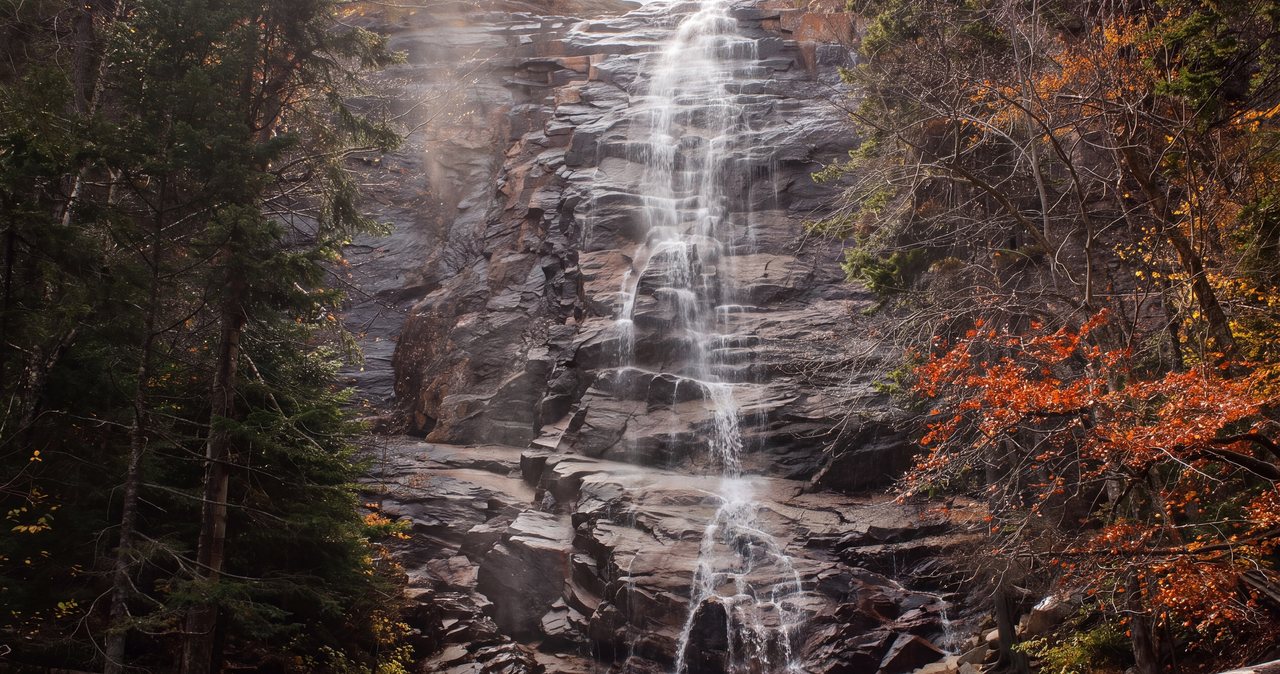
Fall foliage flips the calculus entirely. Early-to-mid October turns the Kancamagus into one of the most famous leaf-peeping drives in the country, and traffic on the whole highway can slow to a crawl. Lower Falls in peak foliage is gorgeous to photograph — colored trees over white water on gray granite — but nobody is swimming; the water is cold and often high, and the appeal is purely visual. Come for the view, expect company, and expect the drive to take longer than 40 min each way.
If you arrive and the lot is a zoo, do not force it. Rocky Gorge (two miles east toward Conway) and Sabbaday Falls (further west, back toward the lodge) both make excellent, less-mobbed alternatives, and your $5 day pass covers all of them. A flexible plan beats a frustrating one.
Restrooms, picnicking, grills, and what to bring
For a river stop, Lower Falls is well equipped. There are restrooms near the parking area and a picnic area with tables and charcoal grills, so it works as a genuine afternoon destination, not just a quick pull-off. Recent improvements to the site have also made access easier for visitors with disabilities, with better pathways near the parking and viewing areas.
Those restrooms are seasonal, which matters. The site is not maintained for winter use, so restroom service, fee collection, and general upkeep run roughly spring through fall. In the off-season there are no facilities and no maintenance — plan accordingly and do not count on a bathroom in November.
Bring what a maintained-but-wild site does not provide. There is no shade on the open granite and no drinking water on tap, so pack more water than you think you need, sun protection, and a hat. Bring water shoes or grippy sandals — the smooth, wet rock is treacherous barefoot, and the pool bottom is stony. A towel and a sit pad make the hot rock comfortable, and a small first-aid kit is smart for scraped shins and stubbed toes, which are the everyday injuries here.
Because there are charcoal grills, this is a legitimate cookout spot — but remember the alcohol ban, pack out everything you pack in (the site stays clean because people carry their trash out), and never leave a warm grill or food unattended around the picnic tables. Keep the coolers and towels off the wet rock near the water, where they slide.
Sun, heat, and the granite itself
Lower Falls is wide open to the sky. The whole appeal on a hot day — acres of warm, dry granite to lie on — is also its main comfort hazard: there is essentially no shade out on the rock. The sun reflects off the water and the pale stone, and people burn badly here without noticing, because the cool river masks how much sun they are taking. Sunscreen, a hat, and a shirt for the worst of the afternoon are not optional if you are staying more than an hour.
The rock also gets hot. Bare granite in full August sun can be too hot to sit on comfortably and hot enough to burn a dog's paws — bring a pad to sit on and be mindful of where a leashed dog is standing. The flip side is that same warm rock is the best drying and warming surface after a cold dip, which is exactly how you should use it: swim briefly in the cold pool, then bake back to comfortable on the stone.
Footing on the granite deserves its own mention because it is the most common way people get hurt here. Dry rock is grippy and fine. Wet rock — anywhere spray reaches, anywhere algae grows, the whole margin of the pool and the ledges — is slick as ice. Walk, never run, on anything damp; test each step; and assume the polished rock near the water will slide out from under you. Most injuries at Lower Falls are slips on wet granite, not drownings, and they are entirely avoidable.
Keep an eye on your group's core temperature in both directions: overheating on the rock, then a cold plunge, then chilling in wet clothes in a breeze. Dry off and layer up before you get cold, and drink water steadily — it is easy to get dehydrated lying in the sun next to a river all afternoon.
Winter and the shoulder seasons
Come cold weather, Lower Falls changes character completely. The site is not maintained for winter use — no fee is collected, restrooms close, and the parking area is not plowed or tended the way it is in season. The highway itself is a plowed, year-round through-road, but the recreation site is effectively dormant, and pulling in off a snowy Kancamagus is at your own risk.
In winter the falls can be beautiful in a stark way — ice-glazed granite, dark water moving under a rim of snow — and the thing to watch shifts from the water to the ice. Snow-covered rock hides the same slick granite underneath, ledges near open water are treacherous, and thin or undercut ice near moving water is never trustworthy. This is a look-from-solid-ground stop in winter, not a place to scramble around on the rock.
The shoulder seasons are the underrated windows. Late spring can be dramatic — high, cold, roaring water that is spectacular to watch and absolutely not for swimming. Early fall can be perfect for a picnic and a leg-dip before the foliage crowds arrive and before the water goes fully cold. In both cases, judge the swim by the actual water on the day, not the calendar: a warm dry September afternoon after a low-water stretch can still offer a decent dip, while a cold wet one is strictly for looking.
Dogs, families, and accessibility
Dogs are welcome at Lower Falls, and it is a popular spot to bring them, but leash them and mind two things: the hot granite that can burn paws in full sun, and the moving water. A dog that will happily chase a stick into a calm lake can be swept off its feet in river current just like a person, and the fast water above the ledges is no place for a dog any more than a child. Keep them in the calm shallows or on the rock, and carry water for them — there is none on site.
This is a truly family-friendly place in the right conditions, and that is the appeal for a lot of visitors: warm rock, a wadeable pool, picnic tables, restrooms. But family-friendly does not mean hands-off. Children and non-swimmers need constant, arm's-length supervision here — the drop-offs in the pool are uneven, the current above the falls is a real trap, and the water is cold enough to sap a small body fast. Life jackets for young or weak swimmers are a smart call even in the calm pool.
On accessibility, the site has seen improvements aimed at making the parking and viewing areas usable for people with disabilities, and it is one of the more approachable water stops on the Kanc simply because the walk from the lot to the rock is short and mostly level. That said, the granite itself is uneven natural rock, and getting down to and onto the ledges is not a smooth, paved experience — the improvements help you get close and take in the view; the rock scrambling near the water remains rock scrambling.
As an adults-only lodge, we are not sending kids from here — but plenty of our guests day-trip the Kanc with visiting family, so treat the family framing above as the straight truth: yes, families love Lower Falls, and yes, it still demands real supervision because it is real moving water.
Photography, foliage, and quieter alternatives
If you are here for pictures rather than a swim, Lower Falls delivers in every season and shoots best when it is busiest with color rather than people. Early morning gives you soft light, calm crowds, and long reflections in the pool; overcast days flatter moving water by cutting the harsh highlights on the white cascades. Peak foliage in early-to-mid October frames the falls in orange and red, and it is one of the classic Kancamagus shots — just expect a crowd and a parking hunt on any nice fall day.
For a quieter water experience, lean on the neighbors your day pass already covers. Sabbaday Falls, further west and closer to the lodge, is a short, easy walk to a striking three-step flume in a cool gorge — no swimming, but a beautiful, shaded, low-effort payoff. Rocky Gorge, two miles east, gives you the dramatic slot canyon from a footbridge plus the gentle Falls Pond loop, again with no swimming. Between the three you can build a full, varied Kancamagus water day and only pay once.
If swimming is the whole goal and Lower Falls is packed or the water is wrong, ask us at the lodge before you leave — conditions change week to week, and we would rather point you to whatever is low and calm that day than have you force a swim in bad water at a crowded lot. The safest swim is the one you chose because the river was right, not because you had already driven 40 min and did not want to waste the trip.
Safety & conditions
- High or fast water is the killer here. After rain or during spring snowmelt the Swift River turns the friendly ledges into a flushing granite chute. If the water is loud, brown or churning, pushing hard, or covering the flat sunning rock, do not get in — period. The Forest Service explicitly warns to use extreme caution around the falls in high water.
- The current above the falls is the trap. Almost every serious incident here starts with someone wading or scrambling on the upper rock, losing footing, and getting swept over the ledges. Stay well back from the lip and never wade the moving water above the drop — if you are in the water, be in the calm pool below, not up top.
- Cold-water shock is real even on a hot day. The snowmelt-fed river is cold enough to trigger an involuntary gasp and rapid breathing that can make a strong swimmer inhale water or panic within minutes. Never jump or dive in; wade in slowly from the shallows, let your breathing settle, and get out the moment your coordination starts to go.
- Wet granite is slick as ice. The polished ledges are grippy when dry and treacherous anywhere spray, algae, or the pool margin makes them wet. Wear grippy footwear, walk — never run — on damp rock, and assume every wet surface near the water will slide. Most injuries here are slips, not drownings, and they are avoidable.
- There are no lifeguards and cell service is unreliable in the notch. You are your own lifeguard, and fast water is very hard to swim out of. Do not count on being able to call for help; make conservative choices instead.
- Swim ONLY in low, calm, warm water and only in the deep, slack pool below the falls — not in the chutes and not above the ledges. Two miles away at Rocky Gorge, swimming, jumping, and wading are prohibited and strictly enforced because of powerful hidden currents and submerged rocks. Do not confuse the two sites.
- Do not jump or dive off the rock. Water depth changes with flow, submerged rocks and logs move, and there is no reliably safe jumping spot at Lower Falls.
- Supervise children, weak swimmers, and dogs every second. The pool has uneven drop-offs, the water is cold, and the current above the falls can sweep away a small body or a dog as easily as an adult. Life jackets for young swimmers are wise even in calm water.
- When in doubt, turn the swim into a picnic. If the flow looks stronger than you expected, the safe call is to dip your feet or just look. The falls will be there on the next low-water day — no swim is worth forcing in bad water.
Where to stay for it
Lower Falls is a near-full-length run of the Kancamagus from our door — roughly 40 min east toward Conway, not the quick hop some guides imply. We point guests toward it as a half-day: pack a picnic (no alcohol — it is banned at the site), bring water shoes and sun protection, and make a loop of it by stopping at Sabbaday Falls on the way out and Rocky Gorge on the way back. Your single $5 White Mountain National Forest day pass covers all three, so it is one of the best-value outings on the highway.
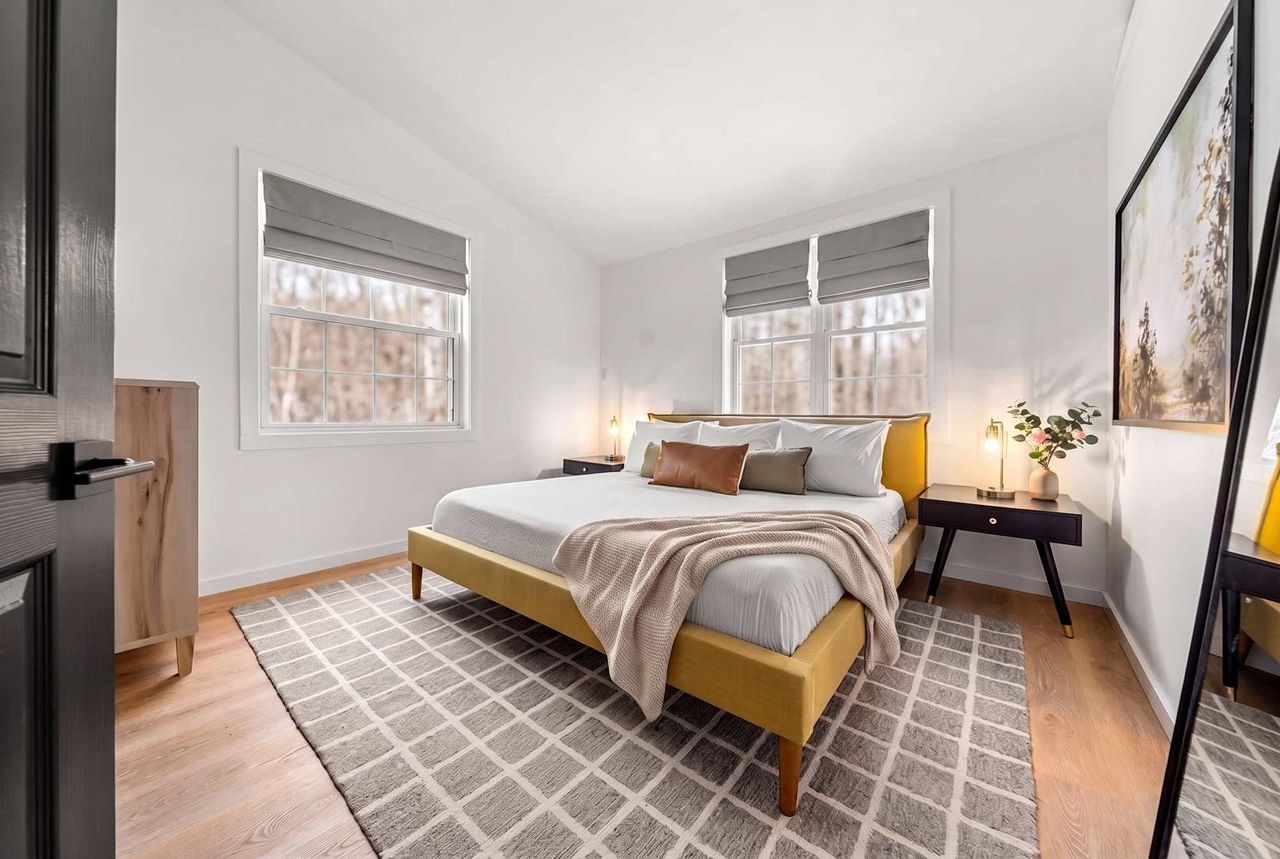
Before you leave, check recent rain and river conditions. On a low, warm late-summer week it is a swim; after a storm or early in the season make it a look-don't-swim stop instead. Come back to the lodge, warm up, and if you booked the Basin suite, its two-person jetted tub is a fine way to take the river chill out of your legs.
Sources & official info: fs.usda.gov · fs.usda.gov · recreation.gov · visitwhitemountains.com
— Launchpoint Lodge, From the lodge