Diana's Baths is the waterfall you take people to when they say they want to see a waterfall but don't want to earn it. It sits on Lucy Brook in the southeastern corner of Bartlett, just outside North Conway, and reaching it is barely a hike at all: roughly six-tenths of a mile of nearly flat, wide gravel path, much of it built to an accessible standard, ending at a broad granite staircase where the brook drops about 75 feet over a series of ledges, chutes and smooth-scooped potholes. It is one of the most-visited spots in the entire White Mountain National Forest, and on a warm summer Saturday it can feel like it.
That popularity is the whole story of a good visit here. The falls are lovely and the walk is easy, so the real skill is timing, parking, and reading the water. Get there early or late and you might have a pothole to yourself; roll in at noon in July and you'll circle a full lot behind a line of cars. And because the walking is so gentle, it's easy to forget that this is still a mountain stream over polished granite. People slip here. In spring melt and after heavy rain, the same tidy cascades turn into fast, cold, pushy water that has no interest in your plans.
This guide is written to be more useful than the sign at the trailhead. We'll walk you through the parking crunch and the fee, where the accessible path ends and the open rock begins, when wading is a delight and when to stay out, how the falls change through the seasons, and exactly how to fold it into a day out from the lodge. It's about a 40 to 45 min drive from our door in Lincoln, essentially the full length of the Kancamagus Highway, which is a large part of why we love sending guests this way.
What Diana's Baths is
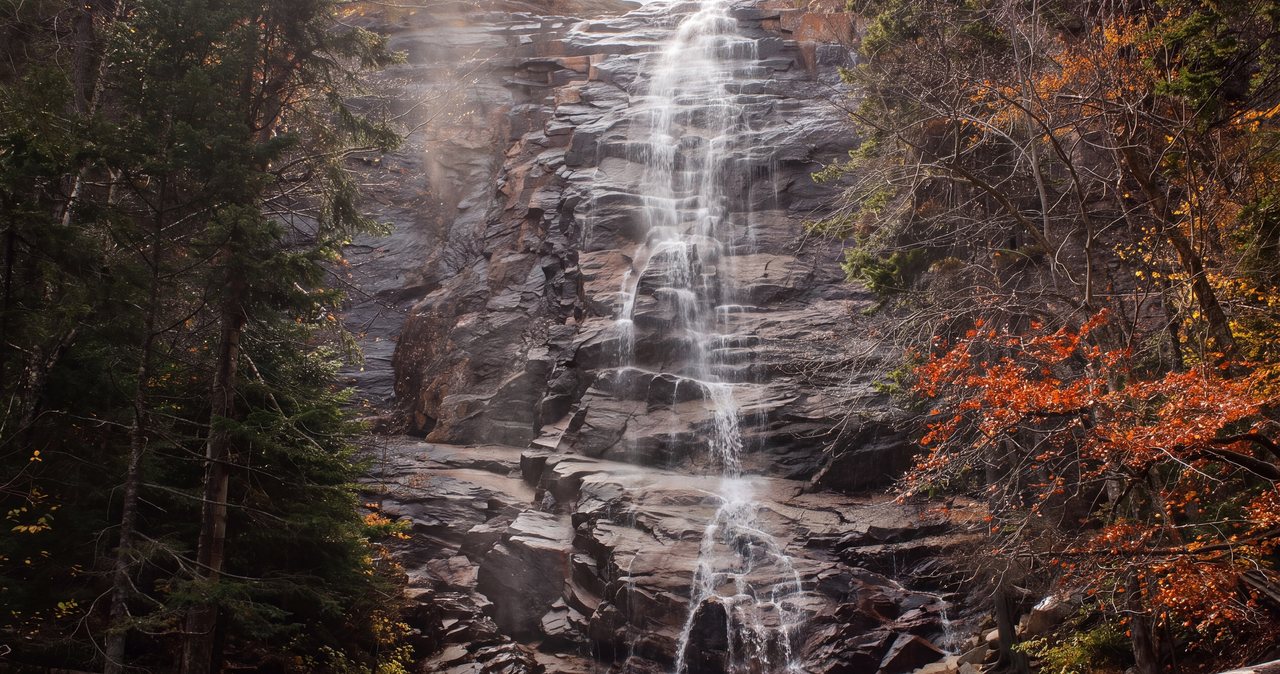
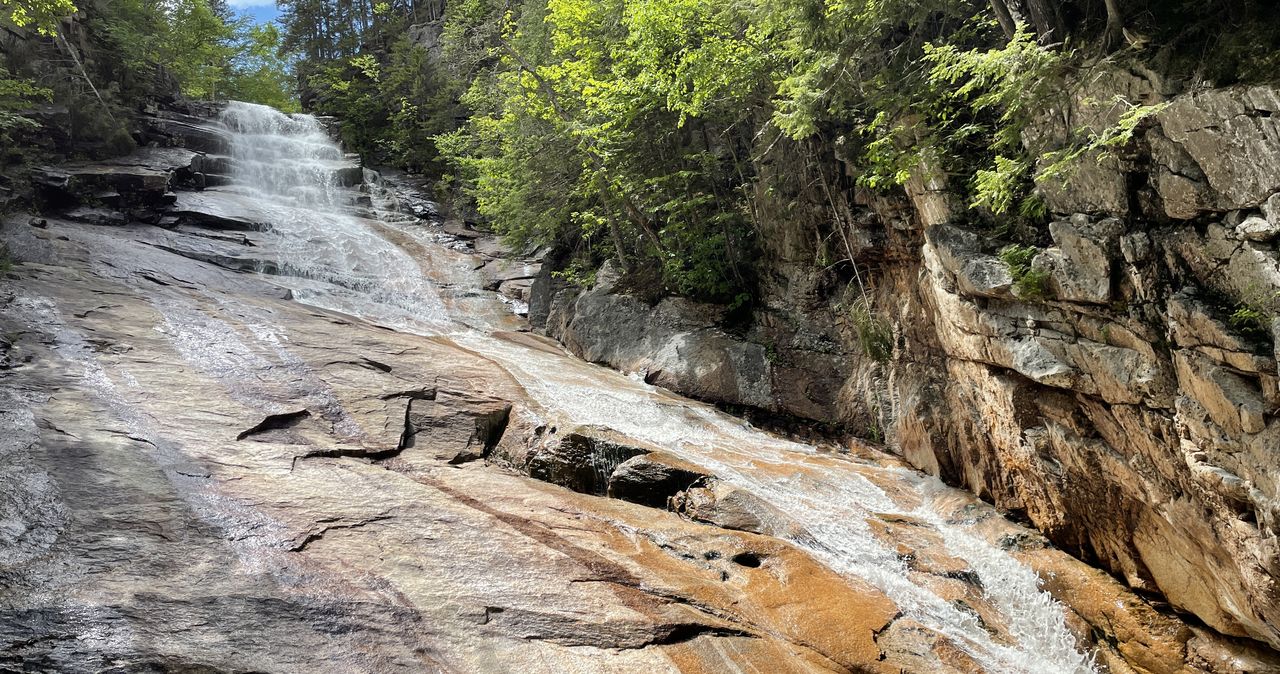
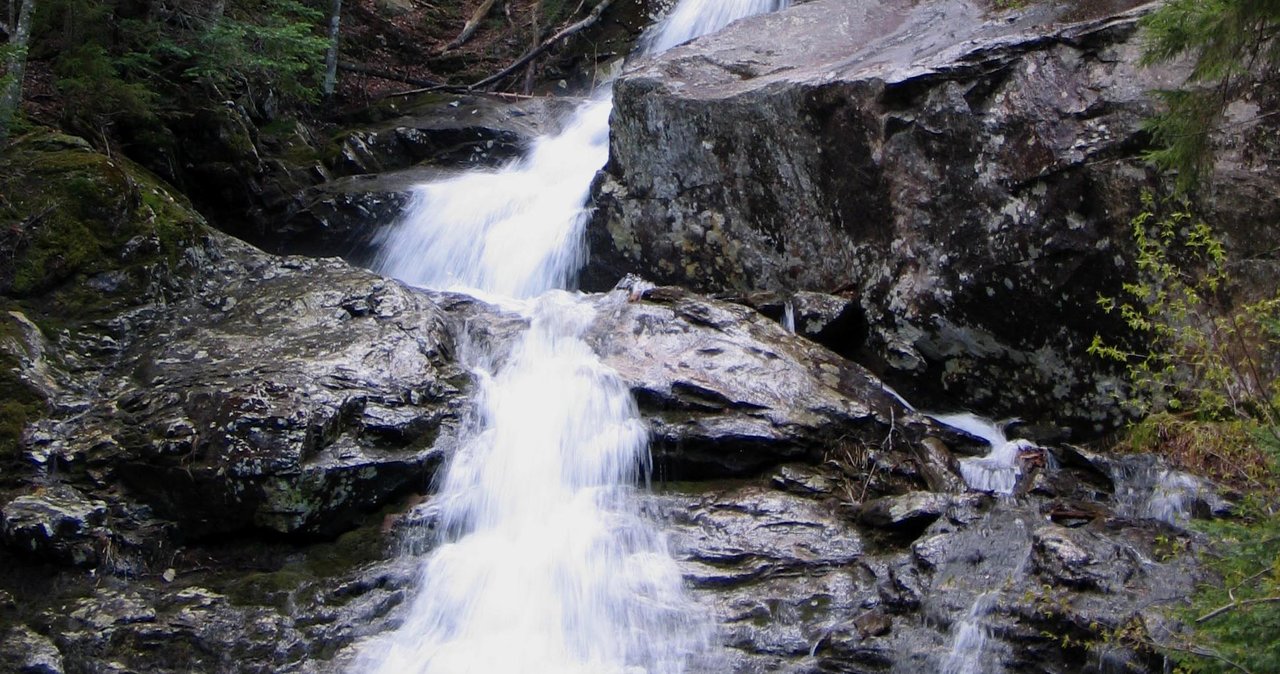
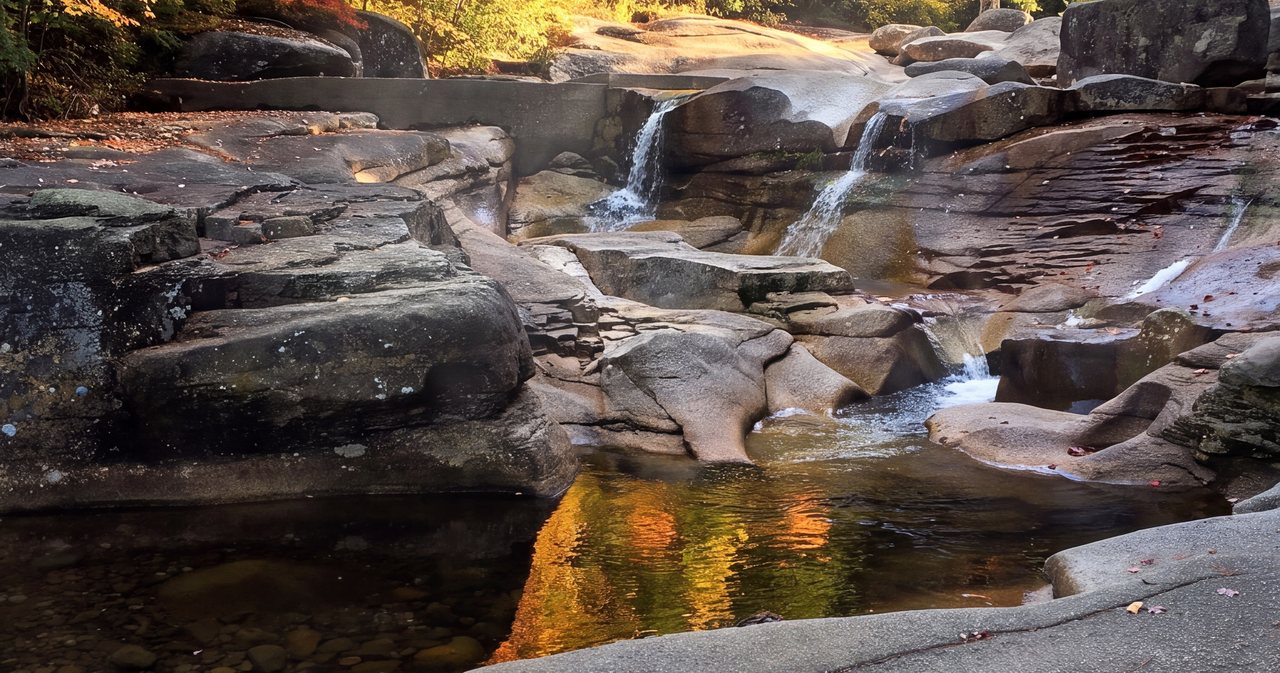
Diana's Baths is not a single dramatic plunge. It's a staircase, a run of cascades, slides, small drops and swirled potholes where Lucy Brook tumbles down a broad apron of granite before flattening out toward the Saco River valley. The total drop is roughly 75 feet, but it's spread over a good stretch of ledge, so you experience it as a series of stepped falls and glassy pools rather than one big curtain of water. That geology is exactly what makes the place so photogenic and so kid-magnetic: the rock is scooped into shallow basins and chutes that hold clear, ankle-to-knee-deep water in summer.
The brook is fed from the flanks of Big Attitash Mountain above, so how the falls look depends almost entirely on how much snow is melting and how recently it rained. In late spring the whole apron can run white and loud; by August it can be a gentle trickle sliding over warm rock with plenty of dry granite to sit on. Neither is 'better' - they're just different visits. Come in May for the power and the roar; come in July or August for the wading.
The name is a small piece of White Mountains lore. Locals once called this spot the 'Home of the Water Fairies,' and a visitor from Boston reportedly renamed it Diana's Baths, after the Roman goddess of the hunt and the moon, sometime before 1859. The pools do have a fairy-tale quality when the light comes through the trees and catches the water sitting in the granite bowls - it's not hard to see how the old name stuck around in spirit even after the new one won.
One thing to set expectations: this is a beautiful, gentle, popular place - not a wilderness experience. There's a paved-feeling gravel highway of a trail, benches, interpretive signs, a big parking lot and often a lot of other people. If you want solitude with your falling water, that exists in the White Mountains, but it's not here at midday in summer. Here, you trade solitude for ease of access, and that's a fair trade for a lot of visitors.
The walk in: what to expect underfoot
From the parking lot, the route follows the northern end of the Moat Mountain Trail. The first stretch - roughly the first half-mile - is a wide, smooth, improved gravel and crushed-stone path, built to an accessible standard and about six feet across. It's the kind of surface a road bike could almost handle: firm, mostly level, with only the gentlest grade. Benches and interpretive signs line the way. Strollers, wheelchairs and unsteady walkers do fine on this section, and that's a big part of why families and multi-generational groups love it.
As you get close to the falls, the manicured path gives way to natural terrain - rock, roots, and worn spots where thousands of feet have polished the ground. The last approach and, crucially, the rock alongside the cascades themselves are not accessible or flat. This is where the trip changes character from 'stroll' to 'watch your footing.' If someone in your group can't manage uneven rock, they can still enjoy the lower viewing area and the sound and sight of the water without scrambling up onto the wet ledges.
Round trip, you're looking at about 1.2 miles, with well under 100 feet of elevation change. Most people spend far more time at the falls than walking to them. Budget an easy half hour of walking total, then as long as you like clambering, wading, photographing and sitting on warm rock. A relaxed visit is an hour and a half to two and a half hours; a quick look is under an hour if the lot cooperates.
A note on the crowds and the trail: because it's so easy, expect company the whole way, and expect the area right at the base of the falls to be busiest. If you want the classic view with fewer people in it, keep going a little past the main gathering spot and work up along the ledges (carefully, and only if the rock is dry) to the quieter upper pools.

Getting there from the lodge and finding the trailhead
The trailhead is on West Side Road, at roughly 3872 West Side Road, on the North Conway/Bartlett line - about a half mile north of the turnoff to Cathedral Ledge. From Lincoln, the natural route is also the scenic one: head east out of town on the Kancamagus Highway (NH Route 112) and drive its full length over the pass to Conway, then pick up West Side Road heading north toward North Conway. The trailhead lot is on the west (left) side of the road.
Realistically this is about a 40 to 45 min drive of roughly 37 miles, and the Kancamagus is most of it. The Kanc is a slow, gorgeous, no-services mountain road with a modest speed limit, one real pass, and zero gas stations, so don't treat it like a highway - and on a peak foliage Saturday in early October, when the Kanc becomes a rolling parade, budget an hour or more each way. Fill the tank before you leave Lincoln, because you won't pass a pump until Conway.
If the Kancamagus is closed for weather (it does close in serious winter storms) or you simply want a change of scenery, the alternate is the long way around on the interstate and Route 302 through Crawford Notch and Bartlett to West Side Road from the north. It's a bigger loop and takes longer, but it's a beautiful drive in its own right and useful to know in a pinch.
Set your map to the West Side Road address rather than just 'Diana's Baths,' and don't rely on cell service on the Kanc - download the directions before you go. Once you're on West Side Road the lot is well signed; the challenge is rarely finding it and almost always getting a space in it.
Parking, the crunch, and the fee - the real crux of the visit
Here's the plain truth that determines whether your visit is relaxed or stressful: the parking lot is large, but on summer and fall weekends it fills early and stays full, and there is no legal alternative. Roadside parking along West Side Road is strictly prohibited and enforced - shoulders are narrow and it's a genuine safety hazard - so if the lot is full, your choice is to wait for a space to open or come back later. In peak season a line of cars can start forming by around 8 a.m.
The single best move is to arrive early. Before 9 a.m. on a summer weekday you'll usually walk right in; before 8:30 even on a weekend gives you a real shot. The second-best window is late afternoon, roughly after 4 p.m., when the morning crowd clears out - and the low-angle light on the water is arguably nicer anyway. Midday, roughly 10 a.m. to 3 p.m. on any warm weekend, is the worst time to show up cold and hope for a spot. Weekdays are dramatically calmer than weekends across the board.
The fee is a $5 per-vehicle day-use fee, paid at a self-serve kiosk in the lot; the machine takes cards. That $5 is a White Mountain National Forest recreation fee, and it's reasonable for what's maintained here - the accessible path, the vault toilets, the trash service, the upkeep on a heavily used site. Walking or biking in on foot is free; the fee is for parking a vehicle. Keep your receipt on the dash.
If you're spending several days exploring the White Mountains, the math changes fast. An annual White Mountain National Forest pass, or the federal America the Beautiful interagency annual pass (around $80), is honored at Forest Service fee sites like this one - and it also covers the WMNF trailheads you'll hit on the Kancamagus, such as Sabbaday Falls and Lincoln Woods. If you plan to visit three or more fee sites, the annual pass usually pays for itself and saves you fumbling for $5 at each kiosk.
When to go: spring power, summer wading, fall color, winter ice
Diana's Baths is a four-season destination, but it's a completely different place in each one. In late spring - roughly late April into early June - snowmelt off Big Attitash sends the fullest, loudest, most dramatic water down the ledges. This is when the falls photograph like a proper waterfall and the whole apron runs white. It's also when the water is at its highest and fastest. Great for looking, bad for wading, and no time to be scrambling on the wet ledges.
Summer - roughly July into September - is wading season. The flow drops, the granite warms up, and the pools shrink to clear, calm, shallow basins that are a joy on a hot day. This is the postcard version people picture: kids splashing in ankle-deep water, adults sitting on sun-warmed rock. It's also the busiest season and the parking crunch is at its worst, so pair summer with an early or late arrival.
Early-to-mid fall brings the foliage, and the mixed hardwoods around Lucy Brook put on a show. Combined with the drive over the Kancamagus - one of the most famous foliage roads in the country - a Diana's Baths trip in the first two weeks of October is spectacular. It's also the single busiest window of the year on the Kanc and in this lot, so treat foliage weekends like a sporting event: arrive early, be patient, have a backup plan.
Winter turns the falls into sculpted ice and the trail into a quiet, snow-packed walk - beautiful and far less crowded. But the accessible surface is gone, the footing is icy, and you'll want traction devices (microspikes) and warm layers. The Kancamagus can close in storms, and the lot and facilities may not be maintained the way they are in summer. Winter here rewards the prepared and punishes the casual; go in with the right gear or not at all.
Wading in the pools: when it's a delight, and when it isn't
Let's be clear and real, because this is the question every family asks. Diana's Baths is not a designated, lifeguarded swimming area - it's a series of shallow pools and cascades on a mountain brook. In low, calm summer water, wading in the ankle-to-knee-deep basins is one of the great simple pleasures of a North Conway summer, and it's a normal, reasonable thing to do. The pools are shallow, the current is gentle when the flow is low, and the granite bottoms are relatively smooth. This is the version of Diana's Baths that lives on postcards for good reason.
The same spot is a different place when the water is up. In spring melt and for a day or two after heavy rain, the flow surges, the current gets pushy, the water is shockingly cold, and the smooth rock that's so pleasant in August becomes a slide. High, fast water over slick granite is how people get hurt at cascades all over these mountains. The rule is simple: if the water is high, loud and fast, admire it and stay out. If it's low, clear and calm, wading is fine.
Real cold-water caution applies even in summer: mountain-brook water is far colder than a pool, and jumping or plunging into deeper pockets can trigger a cold-water gasp reflex. This is not the place for diving, jumping off ledges, or 'sending it' into a pothole - depths are irregular, there are submerged rocks, and the pools were carved by exactly the kind of force you don't want to test. Keep it to wading and sitting; skip the jumps entirely.
Keep a hand on small children the whole time. The transition from a calm pool to a slick cascade lip can be a single step, and a toddler who slips on wet granite into moving water is in trouble fast. Water shoes with real grip beat bare feet or flip-flops - the wet rock is slippery, and there are hidden edges. If you brought the dog, the same logic applies: keep it leashed and out of the faster chutes.
Slick rock and the hazards people underestimate
The defining hazard at Diana's Baths is deceptively simple: wet, polished granite is extremely slippery, and it doesn't always look wet. Rock near a cascade carries a thin film of moisture and, in shaded spots, algae, and it can be like walking on glass. The most common injuries here aren't dramatic falls off cliffs - they're slips on the ledges beside the water that end in a hard landing, a sprained ankle, a cracked wrist, or a bump on the head. Every step on the rock near the falls deserves your attention, especially with a camera or a child in hand.
High and fast water is the hazard that turns a slip into an emergency. After spring snowmelt or heavy summer thunderstorms, Lucy Brook can rise and speed up quickly, and cold, moving water over smooth rock will sweep a person off their feet and downstream before they can react. Flash conditions are real in these mountains: a clear morning can turn into a downpour by afternoon, and the brook responds. If the water looks stronger than you expected, that's your signal to keep well back from the edge.
Cold-water shock is underrated because the setting looks so benign. Even in July, this is snowmelt-and-spring-fed mountain water, and it's cold enough to steal your breath and weaken your muscles fast. Don't fully submerge, don't linger in the deeper pockets, and never let a confident swimmer talk themselves into a jump - cold shock has drowned strong swimmers in water that looked harmless.
Two more that catch people out: footwear and weather. Flip-flops and smooth-soled sneakers are a bad idea on this rock - wear something with grip. And the White Mountains change weather fast; a warm trailhead can become a chilly, rainy scramble in an hour, so throw a light layer and a rain shell in the bag even for a short outing. Finally, use turnaround judgment: if the rock is running with water, if a storm is building, or if a pool looks stronger than it did last time, the falls will still be here next visit. Nothing on this walk is worth a broken bone.
Bringing the dog
Diana's Baths is dog-friendly, and it's a popular outing for people traveling with their four-legged companions. The rule is straightforward: dogs must be leashed at all times, and you're expected to pack out everything your dog leaves behind. Bring bags, and carry the waste out - there's trash service at the trailhead, but don't leave bags along the path. A short, flat, shaded walk to water makes this an easy win for most dogs.
That said, the water hazards apply to dogs too. In low summer flow the shallow pools are a fine spot for a leashed dog to cool off; in high or fast water, keep them well away from the chutes, because a dog swept into a cascade is as much an emergency as a person. The slick rock is also slick for paws. Keep the leash short around the ledges and don't let an excited dog pull you off balance on wet granite.
On busy days, the sheer density of people and other dogs can be a lot for a reactive or nervous animal. If your dog doesn't love crowds, this isn't the visit for them at midday on a summer weekend - go early, go late, or pick a quieter trail. A leashed, well-hydrated, shade-loving dog on a calm morning, though, will have a great time here.
Accessibility, strollers, and who this walk suits
This is one of the more accessible waterfall walks in the White Mountains, which is a big part of its appeal. The first stretch from the lot - roughly the first half-mile - is an improved gravel and crushed-stone surface, built to an accessible standard, about six feet wide and close to level. Manual and powered wheelchairs, all-terrain strollers, and walkers generally do well on this section, and there are benches to rest on and interpretive signs to read along the way.
Be clear-eyed about where the accessible path ends, though. The improved surface gets you to the falls area, but the ledges, the rock beside the cascades, and the upper pools are natural, uneven, root-and-rock terrain - not accessible, and slippery when wet. So the plain picture is: a wheelchair user or someone with a stroller can absolutely reach the lower viewing area and enjoy the sound and the sight of the falls, but the up-close-on-the-rock experience requires steady footing and the willingness to scramble.
For families this makes Diana's Baths close to ideal, with the standard caveats. Little kids can toddle the flat path; grandparents can come along; and everyone can gather at the water. The lodge is adults-only, but plenty of our guests have grown kids and grandkids they visit the area with, and this is the spot we point them to first. Just plan around the water hazards - hold small hands on the rock, keep everyone out of high water - and it's a gentle outing.
Facilities help too: there are vault toilets at the trailhead, trash receptacles, and the aforementioned benches and signs. There's no snack bar or water fountain, so bring your own water and a snack, especially for the drive over the Kancamagus where there's nothing to buy.
A little history along the brook
Diana's Baths has more of a human past than it looks. Back in 1863, a man named George Lucy bought a few acres here and set up a sawmill on the brook - which is why it's Lucy Brook to this day. As tourism to the White Mountains grew in the late 1800s, the Lucy family added a boarding house, and by the mid-20th century the operation had shifted from sawing lumber to generating power, with a concrete dam and turbines built into the falls.
If you look carefully around the falls you can still spot traces of that industrial life - old foundations and bits of the former mill worked into the landscape. It's a nice reminder that these 'wild' spots in the Whites were often working places within living memory. Refreshments and a gift shop once operated here, too, back when reaching the falls meant a very different kind of day trip.
The land eventually passed to the federal government in the 1960s and became part of the White Mountain National Forest, which is why you pay a small Forest Service fee to park today rather than a private toll. Managing a place this popular has been an ongoing project: a formal Forest Service assessment in the mid-2000s led to the toilets, trash service and trail improvements that keep the site in good shape for its many visitors. So the tidy accessible path and the clean-ish granite you enjoy are the result of decades of deliberate care, not an accident.
Making a day of it: the Kancamagus, North Conway, and nearby stops
The beauty of a Diana's Baths trip from the lodge is that the drive is the other half of the outing. You'll cover the entire Kancamagus Highway to get there, one of the most celebrated scenic drives in the East, with overlooks, the Kancamagus Pass, and several worthwhile stops right on the road. Break up the drive at Sabbaday Falls - an easy, short walk to a three-step flume that's a perfect warm-up - and, on the way back, consider Rocky Gorge or Lower Falls along the Swift River.
Guests always ask about swimming on the Swift River, so one note: at Rocky Gorge, swimming is prohibited and enforced, which makes it a look-don't-swim stop. If your crew wants to get in the water on the drive home, the wide, shallow spots at Lower Falls are the place people gather on hot days - always mindful of the flow. Diana's Baths itself, in low summer water, is your gentle wading option.
At the North Conway end, you're a few minutes from Cathedral Ledge (the turn is right near the trailhead) - a short drive to the top for a big valley view, and a magnet for rock climbers below. North Conway village itself has the outlet shops, restaurants and ice cream that make an easy pairing after the falls. A classic loop is: leave the lodge early, do Diana's Baths before the crowds, drive up Cathedral Ledge for the view, grab lunch in North Conway, and drift back over the Kancamagus in the afternoon, stopping at the overlooks and Sabbaday Falls.
If you'd rather stay closer to home, we're 6 min from Loon and a short drive from Franconia Notch, the Flume Gorge, the Basin and Lonesome Lake - so Diana's Baths is best thought of as the 'east end' adventure, worth the drive on a day you want the full Kancamagus experience rather than a quick local outing.
The plain verdict: how to have the best visit
Diana's Baths earns its popularity. It's a short, gentle, mostly accessible walk to a beautiful staircase of waterfalls, it works for almost anyone, and it packages neatly with the best scenic drive in the region. If a guest asks us for 'a waterfall, but easy,' this is very often the answer - with one big asterisk on timing and one on the water.
The timing asterisk: your entire experience hinges on the parking lot. Arrive before 9 a.m. or after 4 p.m., avoid summer and foliage weekends at midday if you can, and never park on the road. Do that and it's a delight; ignore it and you'll spend your morning idling in a full lot.
The water asterisk: respect the flow. Come in spring for the roar and keep back from the edge; come in summer for the wading and keep it shallow and calm. Wet granite is slippery, cold mountain water is stronger and colder than it looks, and no photo or jump is worth a trip to the ER in Conway. Wear shoes with grip, watch your kids on the rock, and use turnaround judgment if the water's up.
Do those two things and Diana's Baths is exactly what it promises: an easy, gorgeous, only-in-the-Whites afternoon that you'll be glad you drove the length of the Kancamagus to reach.
Safety & conditions
- Wet granite is extremely slippery and doesn't always look wet - the most common injuries here are slips on the ledges beside the water, not falls from height. Move deliberately on the rock, and wear shoes with real grip (not flip-flops or smooth-soled sneakers).
- Never wade or cross when the water is high, fast or loud. In spring snowmelt and for a day or two after heavy rain, Lucy Brook surges and cold, moving water over smooth rock can sweep an adult off their feet. If it looks stronger than you expected, stay well back from the edge.
- This is cold mountain water even in July - fed by spring runoff. Cold-water shock can steal your breath and weaken strong swimmers fast, so don't fully submerge, don't linger in deeper pockets, and never jump or dive into the pools (irregular depths and submerged rock).
- There is no lifeguard and no designated swimming area. Wading is only reasonable in low, calm, shallow summer water - and children should be held or kept within arm's reach the entire time, because a calm pool and a slick cascade lip can be one step apart.
- Watch the weather and use turnaround judgment. White Mountain weather changes fast; a clear morning can bring an afternoon downpour that raises the brook. If a storm is building or the water's up, admire the falls from a distance - nothing here is worth a broken bone.
- Keep dogs leashed and out of the faster chutes. A dog swept into a cascade is as much an emergency as a person, and the wet rock is slick for paws too.
- In winter the accessible surface is gone and the trail and rock are icy - carry traction devices (microspikes) and layers, and know the Kancamagus can close in storms. Facilities may not be maintained off-season.
- Do not park on West Side Road if the lot is full - shoulders are narrow, it's a real hazard, and it's enforced. Have a backup plan (come back later, or head to another stop) rather than risking an unsafe roadside spot.
- Come prepared even for a short walk: bring your own water (none on site), a snack, a light rain layer, and sun protection. There's no cell service on much of the Kancamagus, so tell someone your plan and download directions before you leave.
Where to stay for it
Diana's Baths is our go-to recommendation for guests who want a waterfall without a workout - and it doubles as the reason to drive the entire Kancamagus Highway, which starts right at our end of Lincoln. It's about a 40 to 45 min run east over the Kanc to the West Side Road trailhead near North Conway, and the drive itself, with its overlooks and pass, is half the pleasure. Message us and we'll happily map it for you, point out where to stop along the way, and give you the current read on how early the lot has been filling.
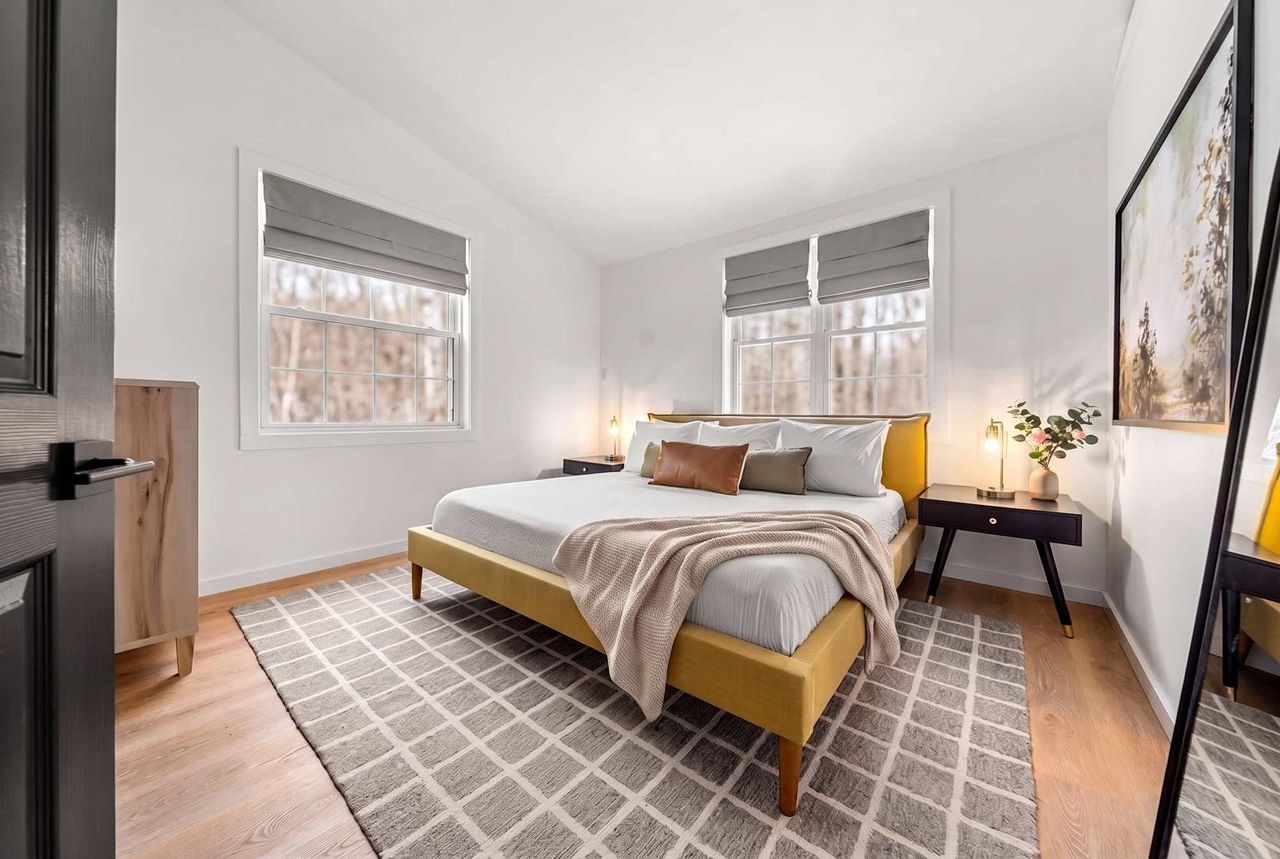
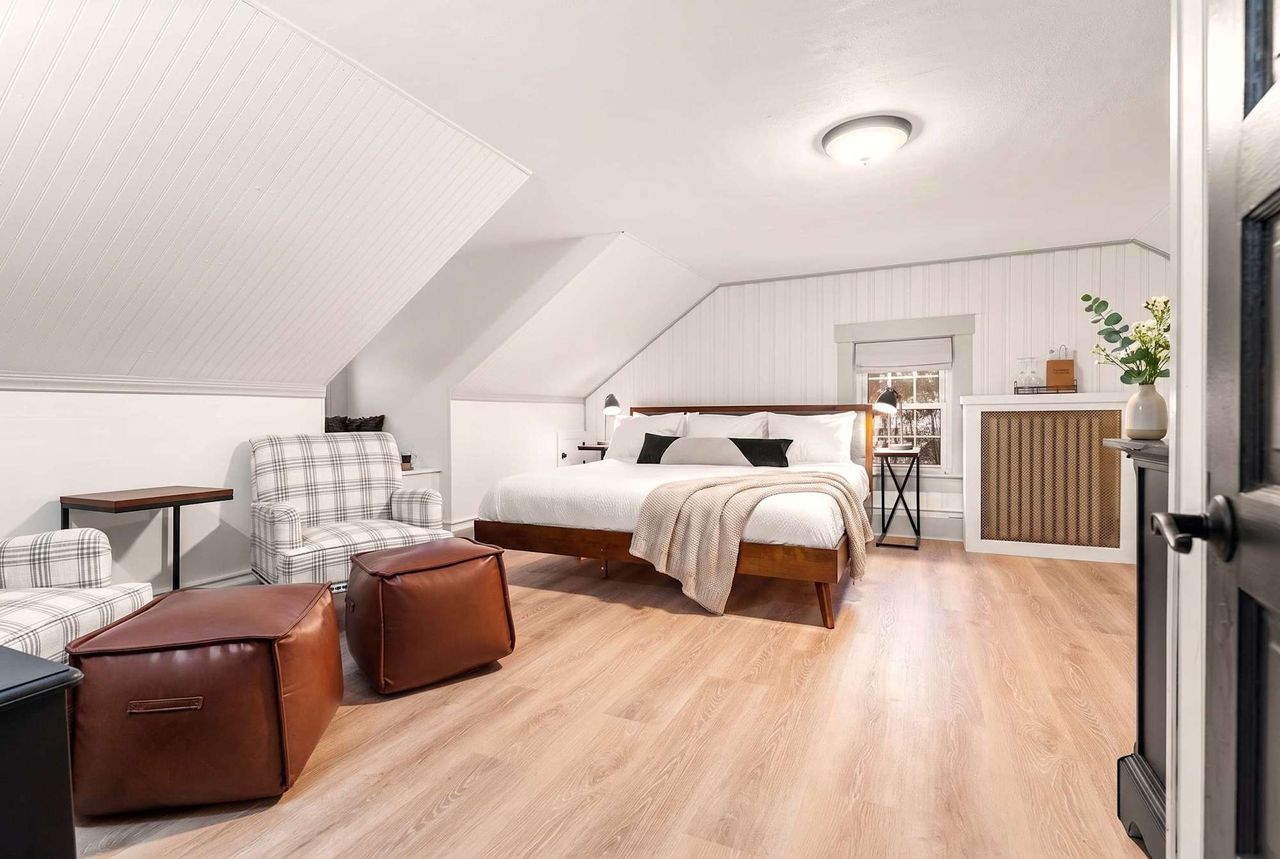
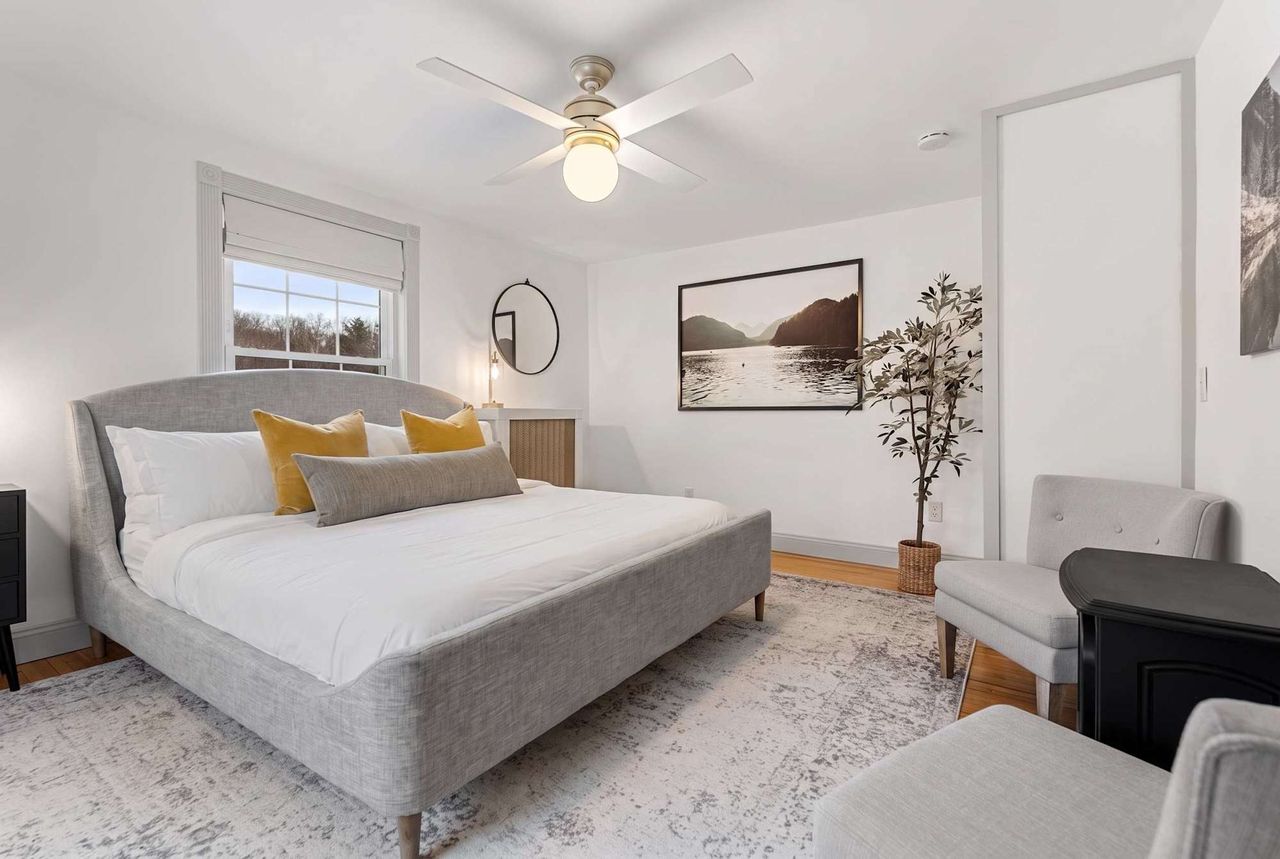
Because the lodge is adults-only and quiet by design, a lot of our guests use it as a calm base and take day trips like this one when they want the scenery. Pack water shoes for this one: leave after your morning coffee, be at the falls before the crowds, wander North Conway, and drift back over the Kancamagus in the afternoon light. Ask us and we'll help you time it so the parking and the water both cooperate.
Sources & official info: fs.usda.gov · visitmwv.com · trailfinder.info · northconwaynh.com · alltrails.com
— Launchpoint Lodge, From the lodge