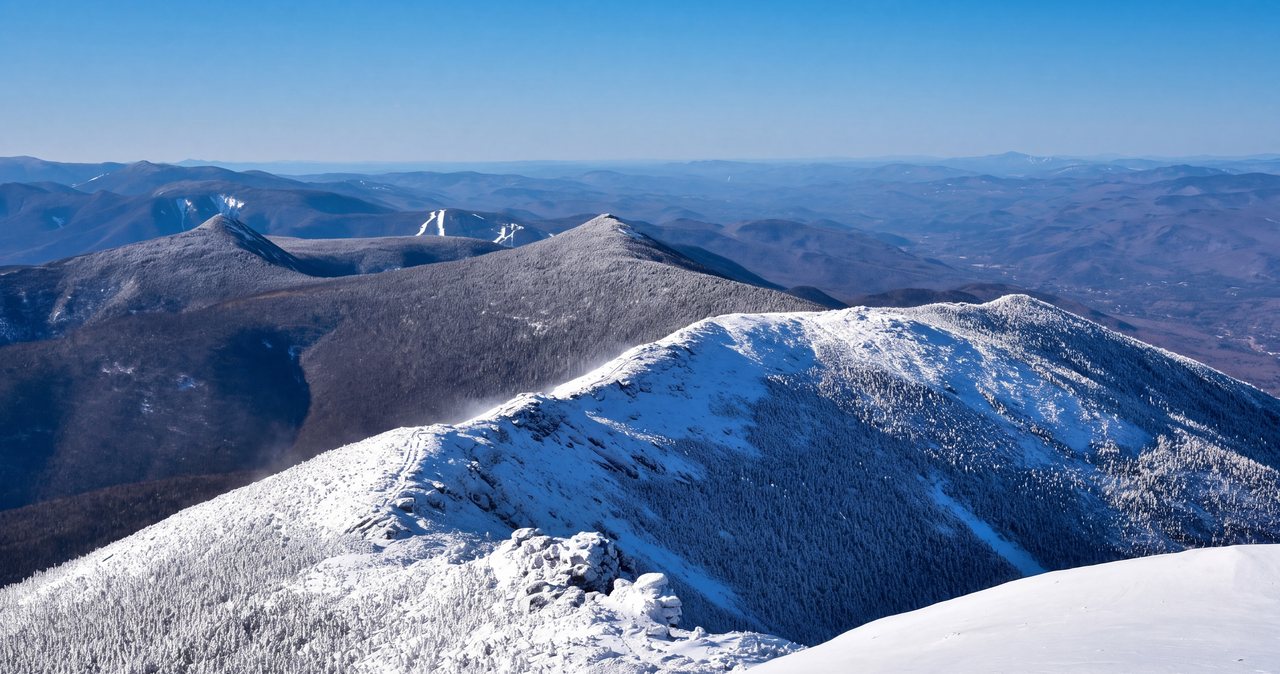
It is a serious mountain day: 8.9 miles, close to 3,900 feet of climbing, and about a mile and a half of open ridge above treeline with no shelter from weather. Most parties take six to nine hours. Fit hikers who start early and check the summit forecast do it and call it the best day of their year — and it is not a beginner's first hike, and it hurts people every season who treat it like one.
Both halves of that sentence are true, which is why this page exists. Here is how to know which half applies to you, and how to move yourself from the second group into the first.
The numbers in context
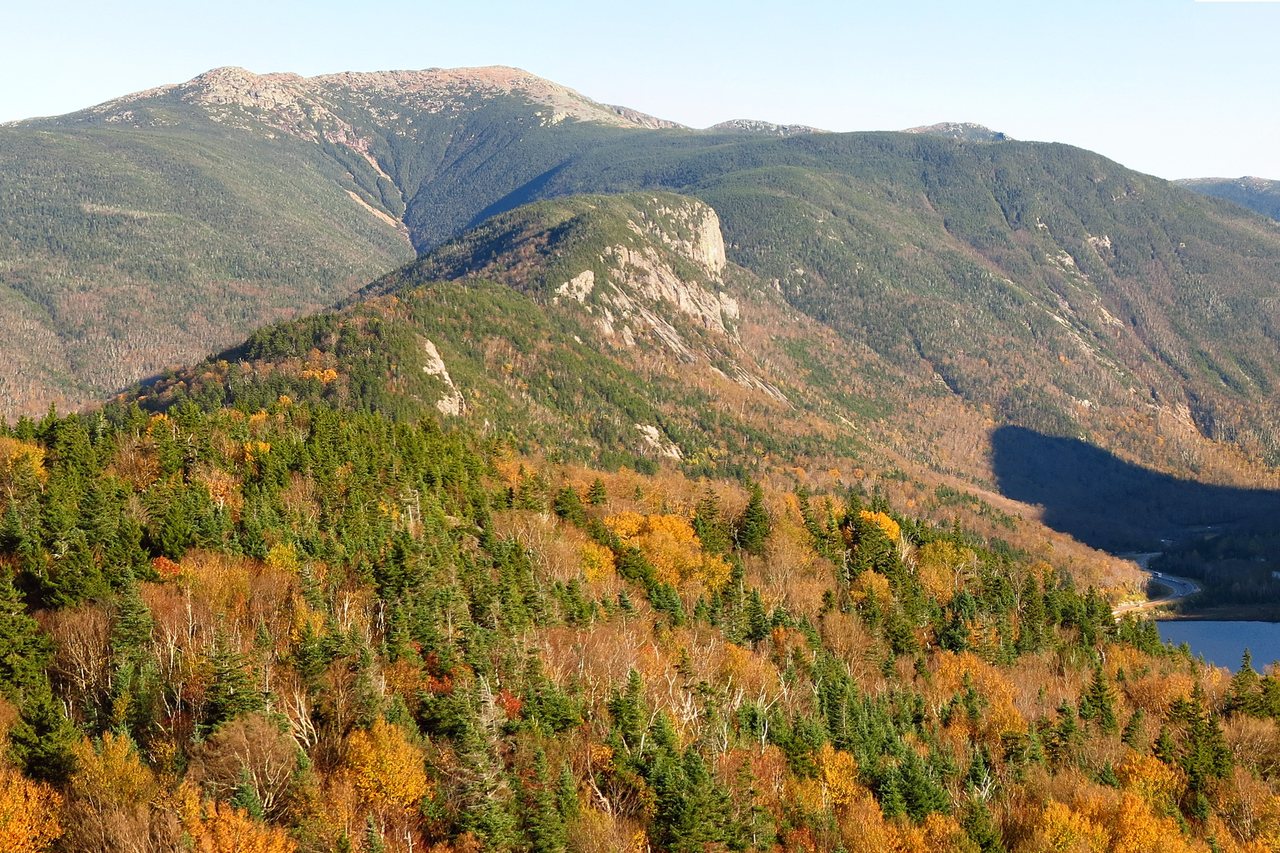
On paper: 8.9 miles and about 3,900 feet of gain, up the Falling Waters Trail, across the ridge over Little Haystack, Mount Lincoln and Mount Lafayette, and down the Old Bridle Path past Greenleaf Hut. For a regular hiker that is a big but standard White Mountains day. For someone whose recent hiking is flat rail-trails, it is roughly triple their usual output, with the hardest terrain arriving when they are most tired.
The stats also hide the real signature: the exposure. The ridge mile and a half is the reason to come and the reason to respect it — above treeline there is no shade, no windbreak, and no quick way down that does not first involve walking the ridge to one of its ends.
What makes it hard
Three things. The sustained steepness — Falling Waters climbs hard beside its cascades and does not really relent. The weather math — the ridge is a different climate from the trailhead, and a pleasant valley forecast can coexist with 50-mph fog on Lafayette. And the descent — 3,900 feet down the Old Bridle Path punishes knees and attention spans in hour seven, which is when most of the loop's twisted ankles happen.
None of these is exotic. All of them are cumulative, and the loop serves them in sequence to whoever shows up.

Who should do it — and the ladder up to it
If you comfortably hike six-plus mountain miles with real elevation, start early, and are willing to turn around in bad weather, this loop is achievable and worth every step. If that sentence is aspirational rather than descriptive, the Whites offer a perfect training ladder within minutes of Lincoln: Artist Bluff for a taste, Mount Willard for a summit view at walk effort, Mount Pemigewasset for a real small summit, Lonesome Lake for sustained climbing, Welch-Dickey for ledge walking and exposure practice — then the ridge.
Each rung is a beautiful day in its own right, and our hiking guides cover every one of them. Climbing the ladder is not a consolation prize; it is how locals learned these mountains.
The weather rule
Before this hike, read the Mount Washington Observatory's higher-summits forecast — not the town forecast — and believe it. The ridge shares the Presidentials' weather at four-fifths the altitude, and wind, cloud and cold on the ridge are routine on days the valley calls fine. If the higher-summits forecast shows sustained winds much past 40 mph, thunderstorm risk, or cloud sitting on the ridgeline, pick another day or another hike.
The decision point on the route is the top of Falling Waters at Little Haystack, where you surface above treeline: if the ridge ahead is in cloud or the wind is staggering you there, the fastest way off the mountain is back down Falling Waters, right where you stand. Once you are strung out along the ridge, pressing forward is usually the quicker exit — which is exactly why the go/no-go call belongs at Little Haystack, not halfway to Lincoln.
Logistics that make or break the day
Parking at Lafayette Place fills before dawn on summer and foliage weekends — before dawn — and roadside parking on the parkway is illegal. A weekend hiker shuttle runs seasonally with stops serving the trailhead lots; midweek, an early alarm is the whole strategy. Greenleaf Hut sells snacks and water in season on your descent, which is a morale fact worth knowing at mile seven.
Carry two to three liters of water, real layers including wind protection in any month, and a headlamp regardless of your plan. New Hampshire's hikeSafe card is smart protection against rescue costs, since the state can bill negligent hikers, but the bigger point is simpler: the ridge in good weather, with time to spare, is one of the best days in American hiking, and everything above is how you get it.
From the lodge
Trailhead-proximity is the real advantage here: Lafayette Place is 12 min from our door, which converts directly into the pre-dawn parking spot and the early ridge that make this hike safe and quiet. Self check-in also means a night-before arrival at any hour, so the alarm is the only hard part.
Sources & official info: hikesafe.com · mountwashington.org · outdoors.org · fs.usda.gov
— Launchpoint Lodge, From the lodge