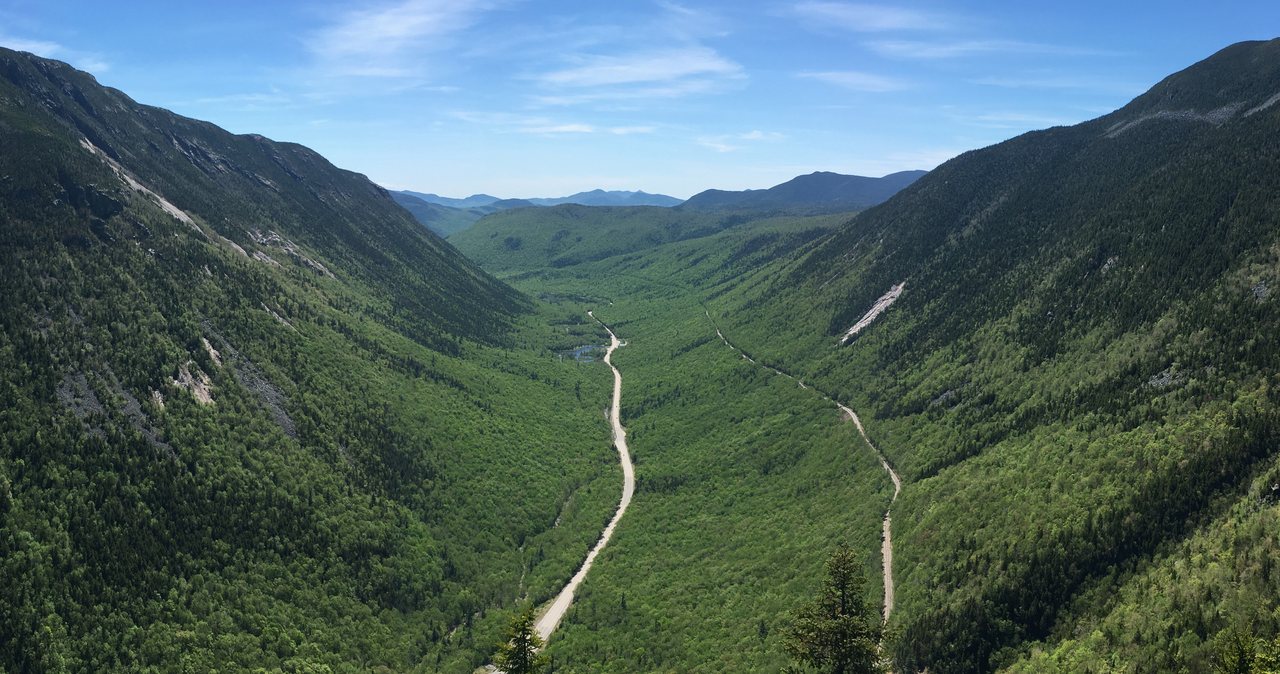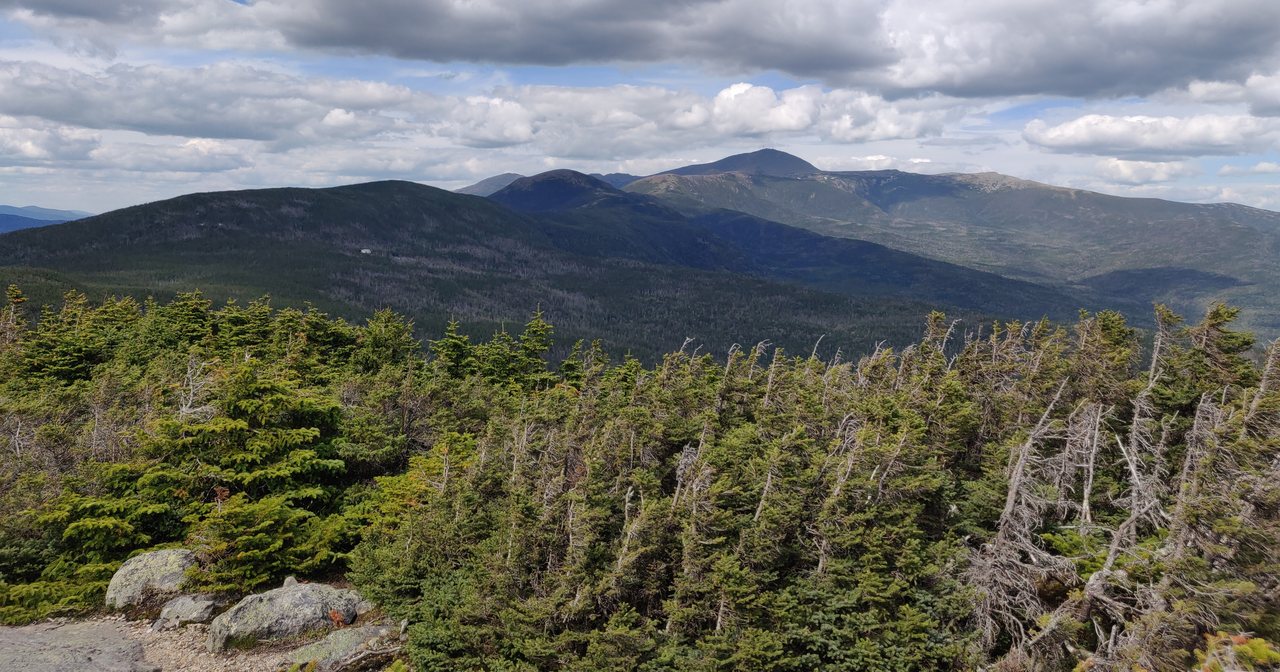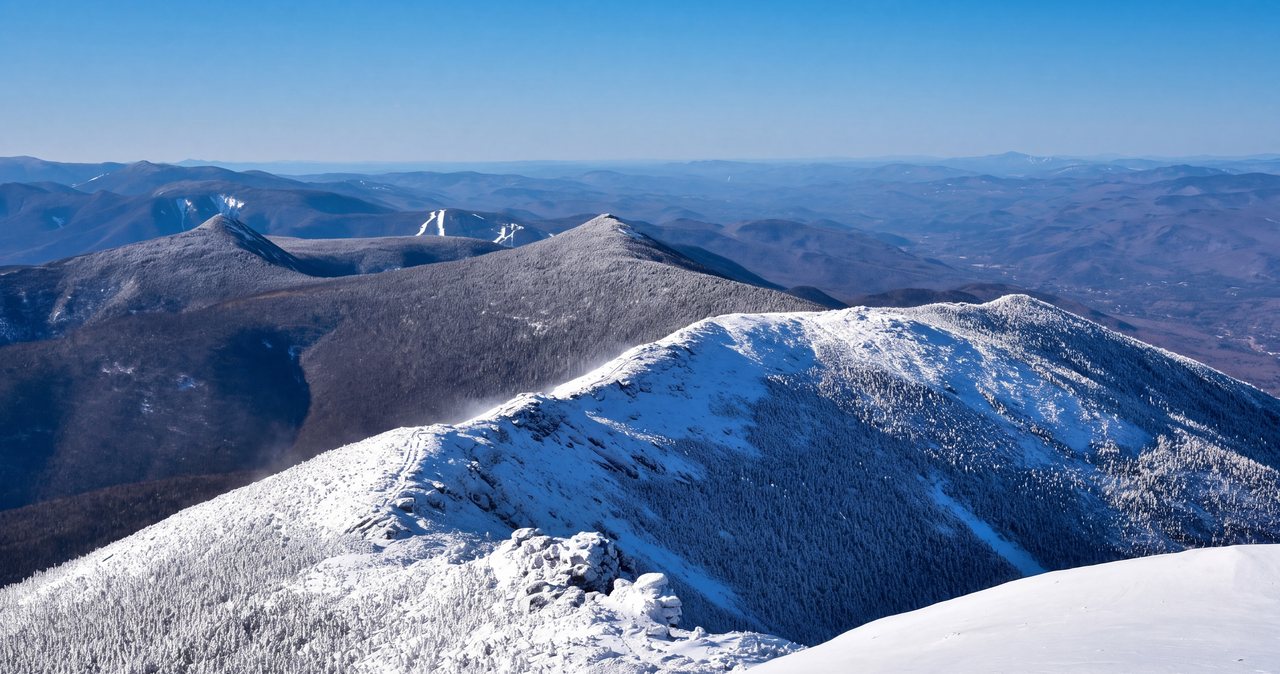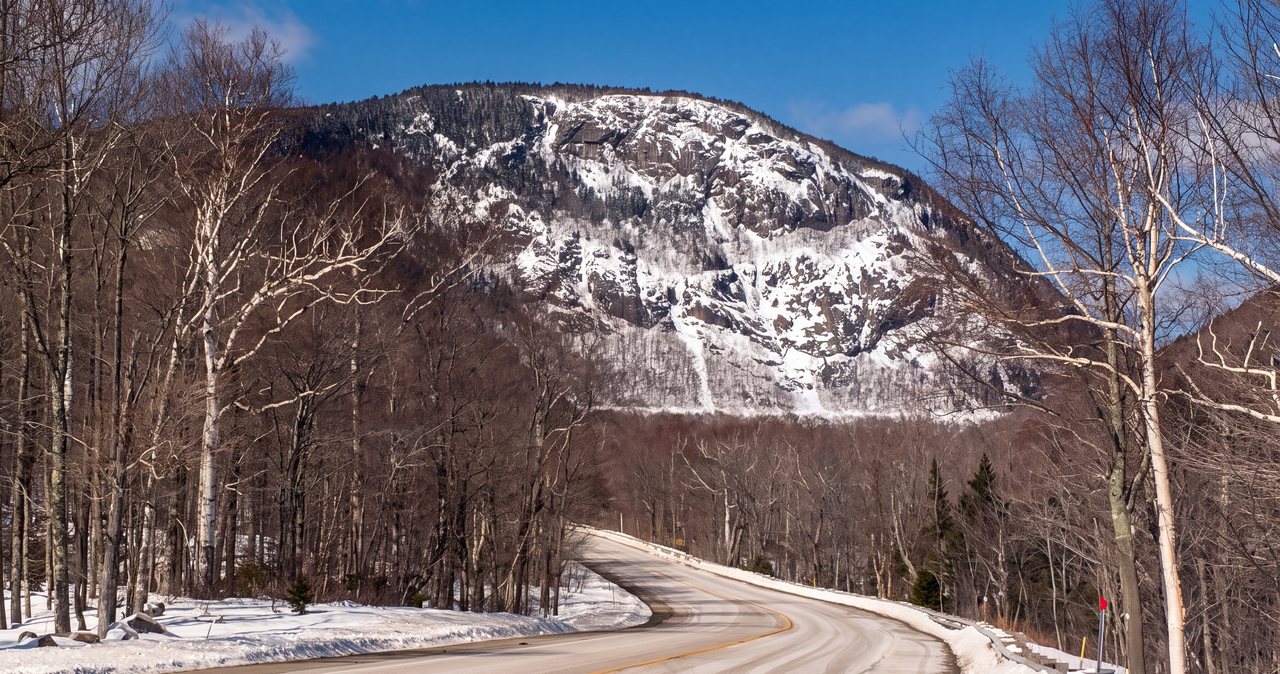
Mount Willard gives you the single best view for the least effort in the White Mountains, and that is not a sales line - it is the plain truth about the place. From a set of broad, flat ledges at 2,865 feet you look straight down the throat of Crawford Notch, a deep U-shaped glacial trench with the cliffs of Mount Webster on one wall and the long slope of Mount Willey on the other, Route 302 and the railroad threading the valley floor far below. You earn it with about a mile and a half of steady, moderate walking - roughly 3.1 to 3.2 miles round trip and something like 900 feet of climbing - on a wide, even old carriage road that was built so hotel guests could ride to this exact view a century and a half ago. There is no scrambling, no above-treeline traverse, no navigation puzzle. For the money, nothing else in these mountains comes close.
That is why Willard is one of the most-hiked trails in the whole White Mountain National Forest, and why the small lot at the Crawford Depot fills before mid-morning on any clear weekend, and completely overflows on peak foliage days in early October. It is a legitimate first hike, a genuine family trail, and a favorite of people who only have a couple of hours and want a real reward at the end of them. It is also, for all its friendliness, a mountain that ends at a sheer, unfenced cliff - the one real hazard on the route, and the reason we tell every guest the same thing before they go: the view is worth the walk, and it is not worth standing on the edge of a wet rock for a photo.
This guide is the current 2026 version of Mount Willard. The numbers and how they feel underfoot; the old carriage road and the little pool along it; the Crawford Depot trailhead and what to know about parking; the history of the notch laid out below you, including the 1826 landslide that made this valley famous; what changes in winter and why microspikes are a must; how to read the weather even on a short mountain; and the simple safety habits that keep an easy hike easy. The trailhead is about 40 min from our door, up two of the prettiest road miles in the state.
The numbers
Start with the stats, because they are the whole reason this hike punches so far above its weight. The standard route is the Mount Willard Trail, out and back from the Crawford Depot at the top of Crawford Notch. Round trip it runs about 3.1 to 3.2 miles - the long-standing figure in the AMC White Mountain Guide is 1.6 miles one way, so call it a little over three miles there and back. The elevation gain is roughly 900 feet. The trailhead sits around 1,900 feet at the height of the notch, and the summit ledges are 2,865 feet, so you are climbing a shade under a thousand feet net, spread out evenly over that mile and a half.
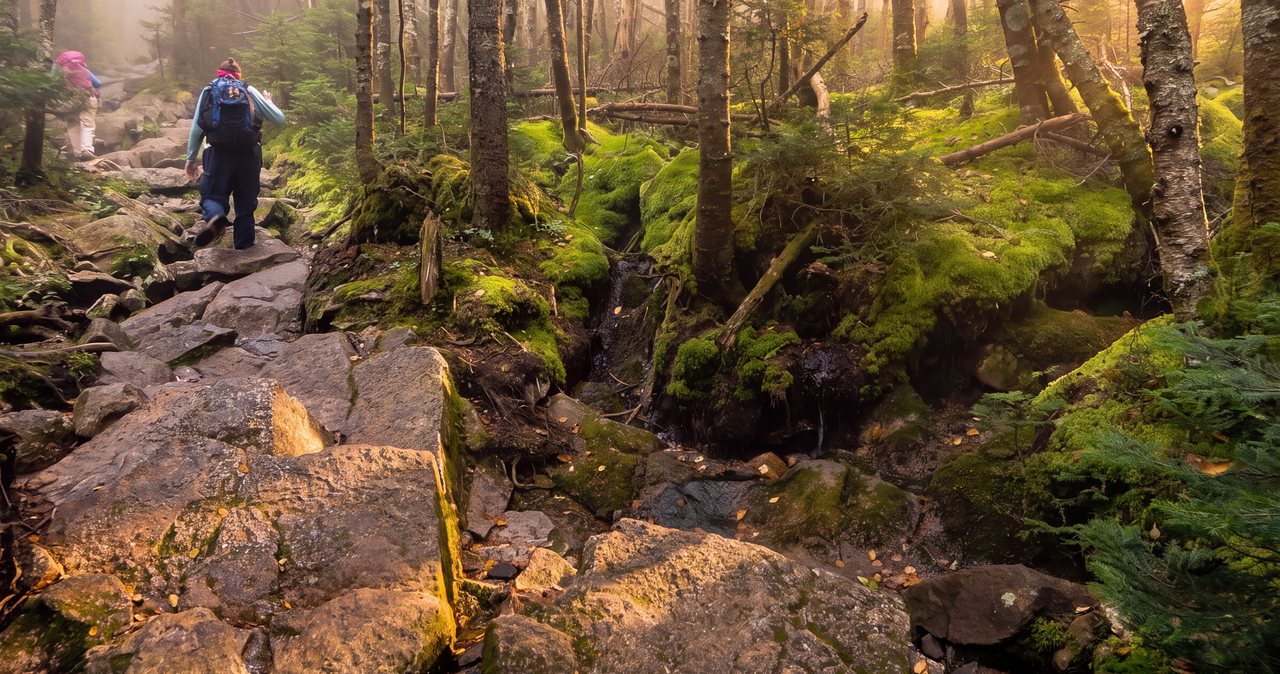
What those numbers translate to on the ground is a steady, forgiving grade with no single hard section. Because the trail follows an old carriage road, it climbs at the gentle, consistent angle a horse and buggy could manage, rather than the steep, straight-up-the-fall-line pitch of a typical White Mountains footpath. There is no scrambling, nothing you need your hands for, and no exposed ridge to cross. The footing is normal for these mountains - packed dirt and gravel low down, more rock and root and some eroded, rubbly tread higher up - but the line itself is wide, obvious, and impossible to lose. This is about as straightforward as a real mountain hike gets.
On time, most people are on the ledges in 45 min to an hour of walking, and back at the car well inside two and a half hours round trip including a good long sit at the top. A strong hiker moving steadily can be up in half an hour; a family with young kids, or anyone taking it slow, might take an hour and a quarter each way, and that is completely fine - this is not a mountain you need to rush. It makes an easy half-day, a perfect morning before the afternoon fills up with something else, and one of the best options in the region when the forecast only gives you a short clear window and you want a real summit view inside it.
One note on the numbers so you go in with the right frame: this is a short hike, and it is an easy one by White Mountain standards, but easy here is not the same as trivial. You are still gaining nine hundred feet, still walking on rock and root, and still ending at the lip of a cliff. People who treat Willard as a walk in the park - sneakers, no water, no layer, kids running loose at the top - are the ones who roll an ankle on the descent or get a scare on the ledges. Take it as the friendly, high-reward mountain it is, and give it the small amount of respect any summit in these hills deserves.
The best view for the effort in the White Mountains
Let me describe what you are walking up for, because managing expectations is usually about talking a view down, and here it is the opposite - Willard delivers. The trail stays in the woods almost the entire way, gives you very little sense of where you are, and then simply ends: the trees stop, the ground goes flat, and you are standing on a wide apron of open ledge with the whole of Crawford Notch dropping away in front of you. It is one of the great reveals in the White Mountains precisely because you do not see it coming. There is no slow build of partial views; you round the last bend and the notch is just there, all at once, a thousand feet below and stretching for miles.
What you are looking at is the classic U-shaped glacial notch in cross-section, seen straight down its axis. On your left, the east wall, are the broken cliffs and slabs of Mount Webster, with the thin white threads of Silver Cascade and Flume Cascade coming down them after rain. On your right, the west wall, is the long forested rise of Mount Willey. Down the center, on the flat valley floor, run US Route 302 and the railroad line, tiny from up here, threading south between the walls toward Bartlett and the Saco River valley beyond. On a clear day you can see well down the notch to distant peaks of the Sandwich Range, with Chocorua sometimes visible far to the south.
The light matters. The ledges face roughly south down the notch, so the view is good through most of the day, but the walls and cascades show best when the sun is on them - late morning through afternoon lights up the Webster cliffs on the east side beautifully. Sunrise draws a small dedicated crowd who hike up in the dark to watch the notch fill with light, and in late September and early October the foliage running up both walls is as good as fall color gets in New England, which is exactly why the trail is mobbed then. On a gray, socked-in day, though, you will climb to the ledges and see a wall of cloud and nothing else - the whole point of this hike is the view, so it is worth saving for a clear one.
This is the practical case for Willard over a dozen harder mountains: you can climb a 4,000-footer twice this height and end at a wooded summit with a gap in the trees, or you can walk a fraction of the distance to Willard and get a full, open, cliff-top panorama down one of the most dramatic valleys in the East. It is not the biggest view in the Whites - the high summits see farther - but pound for pound of effort, there is nothing better, and there is a reason this short trail is on nearly every list of the best views in the White Mountains.
The trail: an old carriage road to a cliff
The route begins behind the Crawford Depot, the little Victorian train station on Route 302 at the very top of the notch. From the parking area you walk to the depot, and the trail starts by crossing the railroad tracks - these are active, used by the Conway Scenic Railroad's seasonal Notch Train, so look both ways and do not dawdle on the rails. On the far side you are on the Avalon Trail for the first stretch. In about a tenth of a mile, at a signed junction, the Mount Willard Trail branches left; the Avalon Trail continues straight on toward Mount Avalon and Mount Field, so make sure you take the left fork for Willard. It is well signed and obvious, but it is the one junction on the hike worth paying attention to.
From there the Mount Willard Trail settles into its character: a wide, steady, moderate climb up the bed of an old carriage road. Back in the era of the grand hotels, when the Crawford House and the other notch inns brought summer guests up by rail, a road was cut so those guests could ride carriages and horses to the top of Willard for the view - the same view you are walking to now. That heritage is why the trail feels the way it does. The grade is even and buggy-gentle, the corridor is broad, and the whole thing has the graded, engineered feel of a road rather than the rough scratch of a typical hiking path. It is one of the more pleasant miles of uphill in the region.
About a third of the way up, the trail passes Centennial Pool, a small pool and little cascade on the brook beside the path - a modest, pretty spot, not a major waterfall, but a nice marker and a good place to pause. Above it the trail keeps climbing at the same steady rate, the footing turning a bit rockier and more eroded in places as you gain the upper slope, with some sections of exposed rock and root and a few wet, seepy spots that stay muddy after rain. Nothing about it is difficult, but decent footwear pays off here, and the same rocks that are no trouble on the way up get slick and ankle-turning on tired legs coming down.
The top comes as a surprise, which is part of the fun. The trail runs flat through spruce for the last short stretch and then simply opens onto the ledges - a broad, mostly level shelf of rock with the notch dropping away beyond it. There is no true summit cairn to hunt for and no higher point to bag; the ledges are the destination. Total, it is about 1.6 miles and roughly 900 feet from the depot to this spot, and the transition from enclosed woods to wide-open cliff-top in the space of a few steps is exactly why so many people rate this the best short hike in the White Mountains.
The unfenced cliff at the top - the one real hazard
Here is the single most important thing to understand about Mount Willard, and it is the one an easy rating tends to bury: the summit ledges end at a sheer, unfenced cliff with a long drop, and there is nothing between you and the edge. The rock runs out flat and inviting, and then it just stops. The edge has no railing, wall, or painted line - it is a natural mountain cliff rather than a developed overlook, and it happens to be easy to walk to. That combination, an easy family trail leading to a genuine precipice, is precisely what makes it worth a blunt paragraph of its own.
The practical rules are simple and they matter. Keep well back from the edge - farther than feels necessary, because the drop-off is abrupt and the exact lip is not always obvious where slabs and low growth break up the rock. Do not back up toward the edge to fit more of the view into a photo; that is the classic way people get into trouble at overlooks like this one. Keep an eye on anyone in your group who wanders toward the brink, and step carefully on the smooth rock near the edge, since rain, morning dew, or a passing cloud can make it slick. There is plenty of open ledge set safely back from the drop with a full view - you lose nothing by sitting there.
This is where the real note about families comes in. Willard is a wonderful hike for kids and one of the most popular first summits in the state, and the trail itself is about as safe as they come. The cliff is the exception. If you are hiking with children, the top is a hold-hands, stay-close, no-running zone - the ledges are wide and it is easy to keep well back from the edge, but it takes active attention, not a casual eye. The same goes for anyone unsteady on their feet, and for busy days when the ledges are crowded and people are moving around near the drop.
None of this should scare you off - thousands of people, including small children, enjoy these ledges safely every year, and the hazard is entirely manageable with a little awareness. It just is not a hazard you can ignore because the hike was easy. Treat the cliff as the real thing it is, keep your distance, watch your group, and be extra deliberate when the rock is wet or icy, and the top of Willard is simply one of the best places to sit in the White Mountains.
The Crawford Depot trailhead, and the parking reality
The hike starts at the Crawford Depot, a restored Queen Anne style Victorian railroad station that sits right on US Route 302 at the height of Crawford Notch, directly across the road from the AMC Highland Center and beside little Saco Lake. It is a pretty trailhead and an easy one to find - if you are at the depot and the Highland Center, you are in the right place. The depot is still an active station: the Conway Scenic Railroad runs its seasonal Notch Train up from North Conway and stops here, so you may see the train, and you will cross its live tracks at the very start of the walk.
Now the real part about parking, because it is the thing most likely to trip up your day. The lot at the depot is small, and Mount Willard is one of the most popular short hikes in the White Mountains, so on any clear weekend it fills early - mid-morning is often too late - and on peak foliage days in late September and early October it overflows completely, with cars lining the area and people circling for spots. The fix is simple: come early. A start before about 9 a.m. on a fair-weather weekend usually means an easy park and a quieter summit; roll in at 11 on Columbus Day weekend and you may not find a legal spot at all. There is additional parking associated with the Highland Center across the road, but respect the AMC's signage about who may use it.
On fees, the simplest guide is the sign at the lot, so give it a quick read rather than assuming this trailhead is free or paid. Crawford Notch is a patchwork of New Hampshire state park land and White Mountain National Forest, and parking rules in the immediate depot area can differ from a standard Forest Service pull-off and can change season to season. The safe move is to carry a White Mountain National Forest recreation pass so you are covered either way - it runs about $5 for a day of purchase, $30 for an annual pass, $40 for an annual household pass, or the federal America the Beautiful pass at $80 covers it if you already have one. If in any doubt, check current parking and fee details with the WMNF or the AMC Highland Center before you go.
The trailhead is your last real services stop, and there are not many. The Highland Center has restrooms and a front desk during its operating hours and can be a useful place to ask about current conditions, but do not count on anything being open early or off-season. There is no water on the trail you should rely on, and cell coverage in the notch is spotty. Treat the car as base: fill your bottles, sort your layers, note your start time, and download your map before you cross the tracks and walk in.
Crawford Notch below you: the Willey House and 1826
Part of what makes the view from Willard more than just pretty is that you are looking down at one of the most storied valleys in New England, and the biggest story in it happened almost directly below you. Somewhere down on that valley floor, in the shadow of the west wall, stood the Willey House. In 1825 Samuel Willey Jr. moved his family into a house in the notch to run it as an inn for travelers on the notch road. A year later, in August 1826, after a summer of drought, an enormous rainstorm hit the mountains and sent the Saco River into flood and the saturated slopes into motion.
On the night of the storm a landslide came down the mountainside above the house. As the story has been told ever since, the family and their hired men fled the house for a shelter they had prepared and were caught in the open by the slide - nine people lost in all, the Willeys and their hired hands. The cruel twist, the detail that turned a tragedy into a legend, is that the house itself was spared: the slide is said to have split around a ledge just above the building and passed by on either side, leaving the home standing and empty while the people who ran from it did not survive. The mountain forming the west wall of the notch, the one on your right from the ledges, was named Mount Willey in their memory.
That disaster, grim as it is, is a large part of why Crawford Notch became a destination at all. The story spread through newspapers and was retold by writers of the day, and it helped draw the first waves of curious travelers into the notch, which in turn built the road, the grand hotels, and eventually the railroad you can see below you. The Willey House site later became a tourist stop in its own right. When you sit on Willard's ledges and look down the valley, you are looking at the birthplace of White Mountain tourism, and at the actual ground where its founding tragedy played out. The Willey House Historic Site is part of Crawford Notch State Park today; the state park's own history resources tell the family's story in full.
The other history is right at your feet and across the road. The AMC Highland Center, the big lodge by the depot where you parked, stands on the site of the Crawford House, one of the great 19th-century notch hotels that burned in 1972. Those hotels are the reason the carriage road you walked up Willard exists - it was cut so their guests could ride to this view. And the little Victorian depot itself is a relic of the railroad era that the Willey story helped set in motion. It is a lot of history to have laid out below one easy hike, and knowing it makes the sit on the ledges richer.
A real family hike, and what that means for our adult guests
It is worth being clear and real about who this trail is for, because Mount Willard has a real reputation as a family and beginner hike and it earns it. The distance is short, the grade is gentle and even, there is no scrambling and no exposed ridge, the route is impossible to lose, and the payoff at the top is one of the best in the mountains. It is regularly described as child friendly and is on nearly every list of good first hikes and good hikes with kids in the White Mountains. If you are new to hiking, getting back into it, or building confidence before bigger days, this is an ideal choice - a genuine mountain summit with a genuine view, at a fraction of the usual cost in effort and risk.
For our guests specifically, that friendliness translates a little differently, and this is the place to say it: the lodge is adults-only, so we are not sending families with children back to our door. What Willard's easy, high-reward character means for adults is simple - it is the perfect hike for a mixed-ability group, for a rest day between harder climbs, for a morning when you want a real summit without a big commitment, or for anyone who wants the single best notch view in the region without a punishing day to get it. The traits that make it a great kids' hike make it a great low-stress adult hike too.
The one thing that applies to everyone is the summit cliff: the ledges end at an unfenced drop, so give the edge plenty of room, especially on crowded days or wet rock. That is the whole of the risk on this route, and it is easily managed. Beyond it, Willard is as forgiving as a White Mountains summit gets.
On dogs, since people always ask: leashed dogs are allowed on the Mount Willard Trail, as they are on most White Mountain National Forest trails, and this short, graded climb is a reasonable dog hike - just carry water for the dog since the trail is essentially dry, and keep the dog firmly leashed and well back from the open cliff at the top, where an off-leash dog is a bad idea. The one note for our guests is the same as always: the lodge is adults-only and pet-free, so hiking with a dog means arranging for it somewhere other than here.
Winter: microspikes and a snow-loaded edge
Mount Willard is a hugely popular winter hike, and for good reason - it is short, the grade is moderate, the trailhead at the depot sits right on Route 302 which is plowed and open all year, and the reward is a snow-lined Crawford Notch that is arguably even more striking in winter than in summer. Because so many people do it, the trail is almost always packed out and easy to follow, and it makes a fine introduction to winter hiking. But do not let easy and popular fool you into treating it as a summer walk with a jacket. Winter changes this mountain in two specific ways that matter.
First, traction. That steady, buggy-gentle carriage-road grade that is so pleasant in summer turns into a firm, often icy ramp once it is packed down by traffic and glazed by melt-freeze cycles. Microspikes are essentially required from the time the trail firms up in late fall until it thaws in spring - not a nice-to-have, a need. Without them the packed incline is a slip hazard both ways, and most falls happen on the descent, going down that continuous grade on tired legs. Carry microspikes, put them on before you need them, and on a fresh deep snow before the trail is broken out, snowshoes earn their place. In shoulder season - roughly Columbus Day onward - throw the spikes in the pack even if the lot looks bare, because the upper trail can be iced well before winter looks like it has arrived.
Second, and this one deserves the most attention: the summit cliff calls for even more care under snow. Snow and ice build up over the edge of the ledges and can form a cornice, an overhanging lip of snow that extends out past the actual rock with nothing but air underneath. From on top it can look like solid ground continues to the view, when in fact you would be standing on unsupported snow above a long drop. The winter rule is simple: stay away from the corniced edge, keep much farther back than you would on bare rock, and watch your footing, since the whole ledge area can be a sheet of wind-scoured ice. People have been badly hurt at snowy cliff-top viewpoints in the Whites doing exactly this.
Add the ordinary winter factors - short daylight, so start early and carry a headlamp; real cold and wind on the open ledges, so bring more warmth than the walk up seems to need and put a layer on before you sit; and the fact that a mild valley can be a raw, blowing summit. Willard is one of the safer winter objectives in the region and a great first winter hike, but it is a winter hike, with winter gear and winter judgment, not a summer stroll in the snow.
Weather, the higher-summits forecast, and the sky
Willard is low and short by White Mountain standards - 2,865 feet, mostly in the trees - so it does not carry the life-threatening alpine exposure of the high peaks, and you should not go in braced for a Presidential-range epic. But it is still a mountain in the White Mountains, the top is a exposed cliff, and the weather here can turn a good day sour, so a couple of habits are worth keeping even on an easy hike. The first is simply to check before you go: look at a valley forecast for the Crawford Notch, Bretton Woods, or Twin Mountain area, and glance at the Mount Washington Observatory Higher Summits Forecast at mountwashington.org. That forecast is written for the big peaks and Willard is far tamer, but it is the best read on what the high country and the weather moving through the notch are going to do, and it costs nothing.
The reason it matters here is that Willard is a view hike and nothing else. If the notch is socked in with cloud, you will do the whole pleasant walk and arrive at the ledges to see a gray wall and no notch at all. There is no consolation summit view to fall back on - the ledges are the entire point. So more than on most mountains, it pays to save Willard for a clear or clearing day and to be willing to swap it for something else, or just wait, when the forecast is murk. Morning is often clearest before afternoon clouds and haze build, which is another argument for an early start on top of the parking one.
The open ledge also changes the weather picture in two ways. It catches wind - a calm walk up through sheltered woods can end on a breezy, chilly cliff top, so carry a wind layer even on a warm day and expect the summit to be cooler than the trailhead. And it is exposed to lightning. In summer, thunderstorms build fast over these mountains on warm afternoons, and a bare rock ledge with a big drop is a poor place to be when one arrives. The discipline is the usual one: be up and back early on any day with storms in the forecast, watch the sky to the west while you are on top, and treat the first distant rumble as your cue to get off the open ledge and down into the trees, not as a reason to grab one more photo.
None of this is meant to make an easy mountain sound fearsome. It is just the plain truth that a short hike does not exempt you from the sky. Check the forecast, go on a clear day for the view you came for, carry a layer for the breezy top, and keep half an eye on the weather, and Willard will give you exactly the day you wanted.
Water, Centennial Pool, and what to carry
Plan Willard as a carry-your-own-water hike. The trail follows a small brook for part of the way and passes Centennial Pool, the little pool and cascade about a third of the way up, but there is no water at the ledges and nothing on the route you should plan to drink from without treating it. For a hike this short that is no burden - just bring what you need from the car. A liter per person is plenty for most people on a cool day, a bit more in summer heat or if you are slow, and there is no need to over-pack for a walk of this length. Fill up at the trailhead or, better, back in town where the water is easy.
If you do dip from the brook or the pool - on a hot day, or for a dog - treat it as you would any backcountry water in the Whites, by filter, purifier, or boiling. But the real advice is not to plan around it at all; it is a short enough hike that carrying your full supply is trivial and removes the question. The brook and Centennial Pool are worth a pause for their own sake more than as a water source.
For the rest of the kit, keep it simple and appropriate to a real mountain: footwear with some grip and support for the rocky, rooty upper trail and the slippery descent, rather than smooth-soled sneakers; a wind or rain layer for the exposed, breezy ledges even on a fair forecast; sun protection, since the top is open with no shade; and something to sit on if you want to linger, because the ledges reward a long stop. In cold or shoulder-season conditions, add microspikes to that list without exception. A small pack with water, a layer, a snack, a map, and traction in season covers this mountain comfortably.
The one conditions signal worth reading on the way up is the brook. In normal flow the crossings and Centennial Pool are a non-event, a pretty trickle beside the path. After heavy rain or during spring snowmelt the brook runs higher and the rocks around it get slick, and if you find it full and pushy, take it as a fair hint that the upper trail will be wet and greasy and the descent slower and more careful than usual. It is a small thing on a small mountain, but reading the water is a good habit everywhere in these hills.
Crowds, foliage, and the best light
Be realistic about company: Mount Willard is one of the busiest short trails in the White Mountains, and on a nice day you will not have it to yourself. That is the trade for a hike this good and this easy - it is no secret, and the ledges can hold a genial crowd on a clear weekend afternoon. If solitude is what you are after, this is not the mountain for it at peak times. If you do not mind sharing a great view with other happy people, it is a fine social summit, and there is usually plenty of ledge to find your own patch of rock set back from the edge.
The crowd peaks hard in fall. From roughly the last week of September into the first week or two of October, Crawford Notch turns as good a color as anywhere in New England, and Willard's cliff-top view straight down the flaming notch is one of the most sought-after foliage vantages in the state. On those peak foliage weekends the small depot lot overflows well before mid-morning and the ledges are packed. It is worth it, but only if you plan for it: arrive early, be patient about parking, and expect company. A foliage weekday is far calmer than a foliage Saturday.
The way to beat the crowds any time of year is the same: go early. A start soon after sunrise, or at least before about 9 a.m., usually means easy parking, a quiet walk up, and a summit you might briefly have to yourself before the day builds. Early is also generally the clearest part of the day for the view, before afternoon haze and clouds move in, so the early start pays off twice. Sunrise itself has a small devoted following here - people headlamp up the easy trail in the dark to watch first light pour into the notch - and on a clear, still dawn it is one of the best cheap thrills in the mountains.
For light, remember the ledges look roughly south down the notch, so you are not staring into a rising or setting sun and the view holds up through most of the day. The east wall - Webster's cliffs and the cascades - lights up best from late morning through the afternoon, while early and late in the day the whole notch takes on softer, longer light. There is no bad time for this view on a clear day; there are only busier and quieter ones, and earlier is almost always the better call.
hikeSafe and turnaround judgment
Two New Hampshire specifics belong in your pocket on any hike in these mountains, and Willard is no exception even though it is one of the gentlest trips in the region. First, this state can bill hikers for their own rescues. Under RSA 206:26-bb, a hiker whom New Hampshire Fish and Game judges to have acted negligently can be charged the cost of the search-and-rescue operation. The voluntary hikeSafe card removes that liability short of true recklessness and helps fund the rescue teams directly. It is $25 for an individual or $35 for a family for 2026, sold through New Hampshire Fish and Game, valid the calendar year, the same price for residents and visitors. It is a sensible thing to carry for any hike here, this easy one included, and you can read about it at hikesafe.com.
Second, do not let your phone be your whole safety plan. Cell coverage in Crawford Notch and on the mountain is spotty, so anything that depends on a signal - a live map, a weather check, a call for help - may simply not work when you need it. Download your map before you leave the driveway, carry the ten essentials scaled to the day even on a short hike, and tell someone your plan: which trail, and when you expect to be back. We ask our hiking guests to leave a route and an out-time with someone at home, and we mean it on the easy days as much as the hard ones - a short, popular trail is exactly where people get casual, and casual is where small problems become bigger ones.
Turnaround judgment on Willard is simpler than on the big peaks, but it still applies, and it comes down to two things. If the weather is wrong - the notch socked in, a storm building, the ledges an ice rink - there is no summit view to salvage and no shame in turning around or not starting; the mountain runs on the same schedule every year and the view will be there on the next clear day. And if you or anyone in your group is not comfortable near the top - tired, unsteady, spooked by the crowd near the cliff - the right move is to enjoy the ledges well back from the edge, or head down, rather than push toward the drop. Turning around, or just keeping your distance, is free.
That is really the whole safety story of this mountain, and it is a short one because Willard is a friendly hike. Respect the cliff, carry traction in the cold season, check the sky, tell someone your plan, and give yourself full permission to keep your distance or turn back. Do those simple things and Mount Willard is what it has been for a century and a half: the easiest big view in the White Mountains, and one of the best.
Safety & conditions
- The unfenced summit cliff is the one real hazard on this hike. The ledges run flat and then drop sheer with no railing, and the exact edge is not always obvious. Keep well back, do not back up toward the drop for photos, actively watch children and anyone unsteady, and be extra careful when the rock is wet from rain, dew, or cloud - there is plenty of open ledge set safely back with a full view.
- In winter the cliff edge needs even more room. Snow and ice build over the edge into a cornice that overhangs the drop with nothing but air underneath, and it can look like solid ground continues to the view. Do not approach the corniced edge, keep much farther back than on bare rock, and expect the whole ledge to be wind-scoured ice.
- Carry microspikes in the cold season - they are essentially required, not optional. The steady carriage-road grade that is pleasant in summer becomes a firm, icy ramp once packed down, and most falls happen on the descent on tired legs. Put traction on before you need it, from about Columbus Day until spring; snowshoes earn their place after fresh deep snow.
- The hike starts by crossing active railroad tracks behind the Crawford Depot. The Conway Scenic Railroad's seasonal Notch Train runs on this line, so look both ways, cross promptly, and do not linger or pose on the rails.
- It is a view hike and nothing else, so let the weather decide the day. Check a valley forecast for the Crawford Notch or Bretton Woods area and the Mount Washington Observatory Higher Summits Forecast at mountwashington.org. If the notch is socked in there is no summit view to salvage - save Willard for a clear or clearing day. Morning is usually clearest.
- The open ledge catches wind and is exposed to lightning. Carry a wind layer even on a warm day, since the breezy top runs cooler than the trailhead. In summer, thunderstorms build fast on warm afternoons - be up and down early, watch the sky to the west, and get off the open rock at the first distant rumble.
- Do not underestimate the descent. Easy still means rocks and roots, and the same footing that is no trouble going up gets slick and ankle-turning coming down on tired legs. Wear real footwear with grip and support, use poles if your knees like them, and slow down on the way down rather than hurrying because it is a short mountain.
- Carry the New Hampshire hikeSafe card ($25 individual, $35 family for 2026 from NH Fish and Game). The state can bill negligent hikers for rescue costs under RSA 206:26-bb, and the card removes that liability short of recklessness while funding the rescue teams. Cell coverage in the notch is spotty, so download your map, carry the essentials even on a short hike, and leave your route and out-time with someone - a short, popular trail is exactly where people get casual.
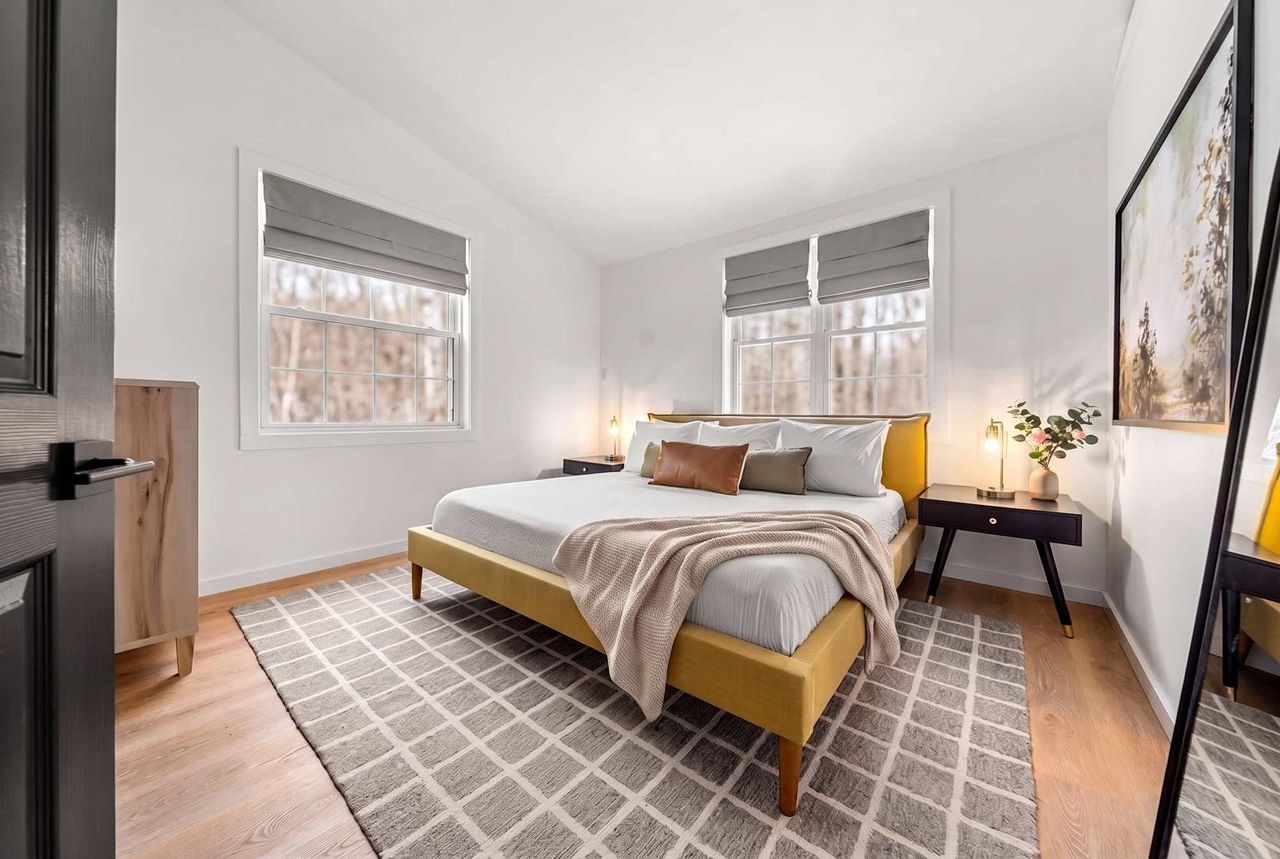
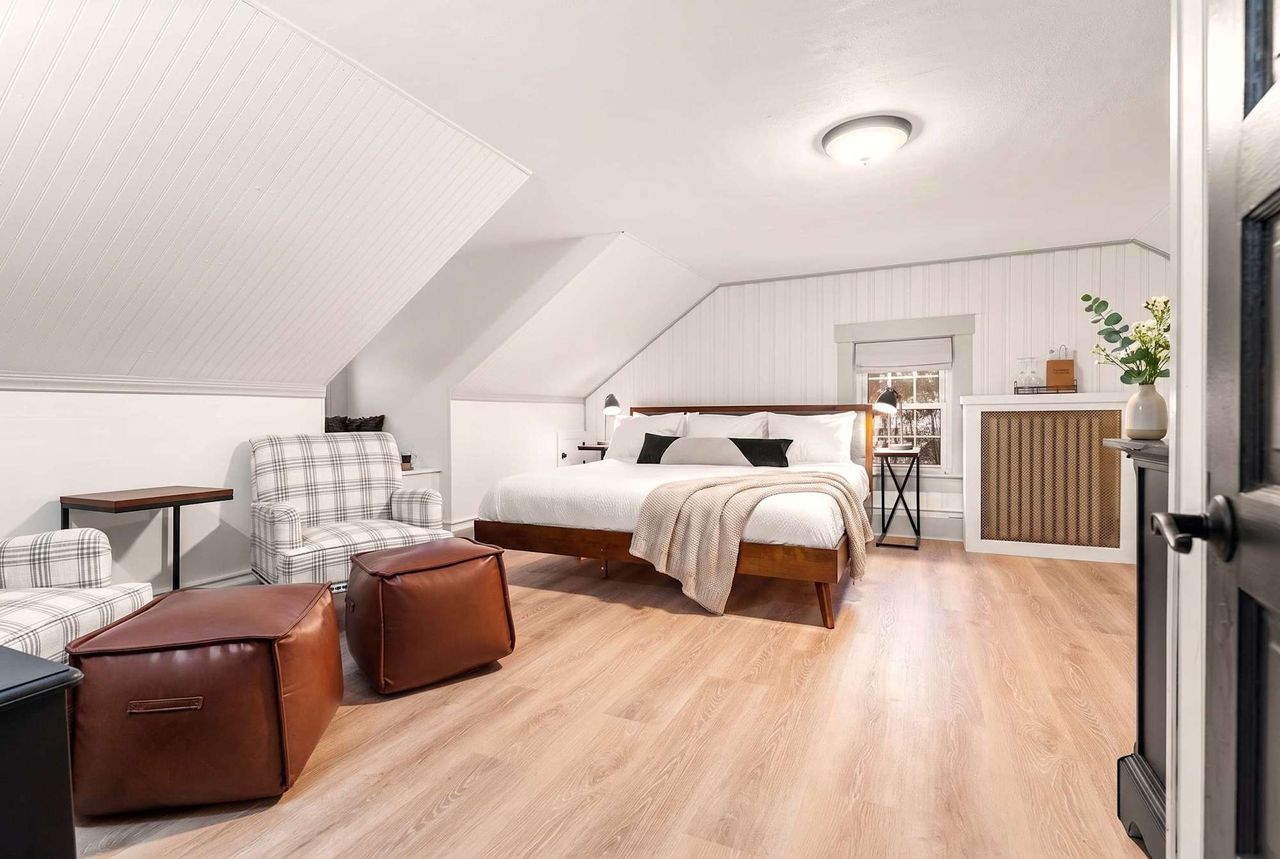
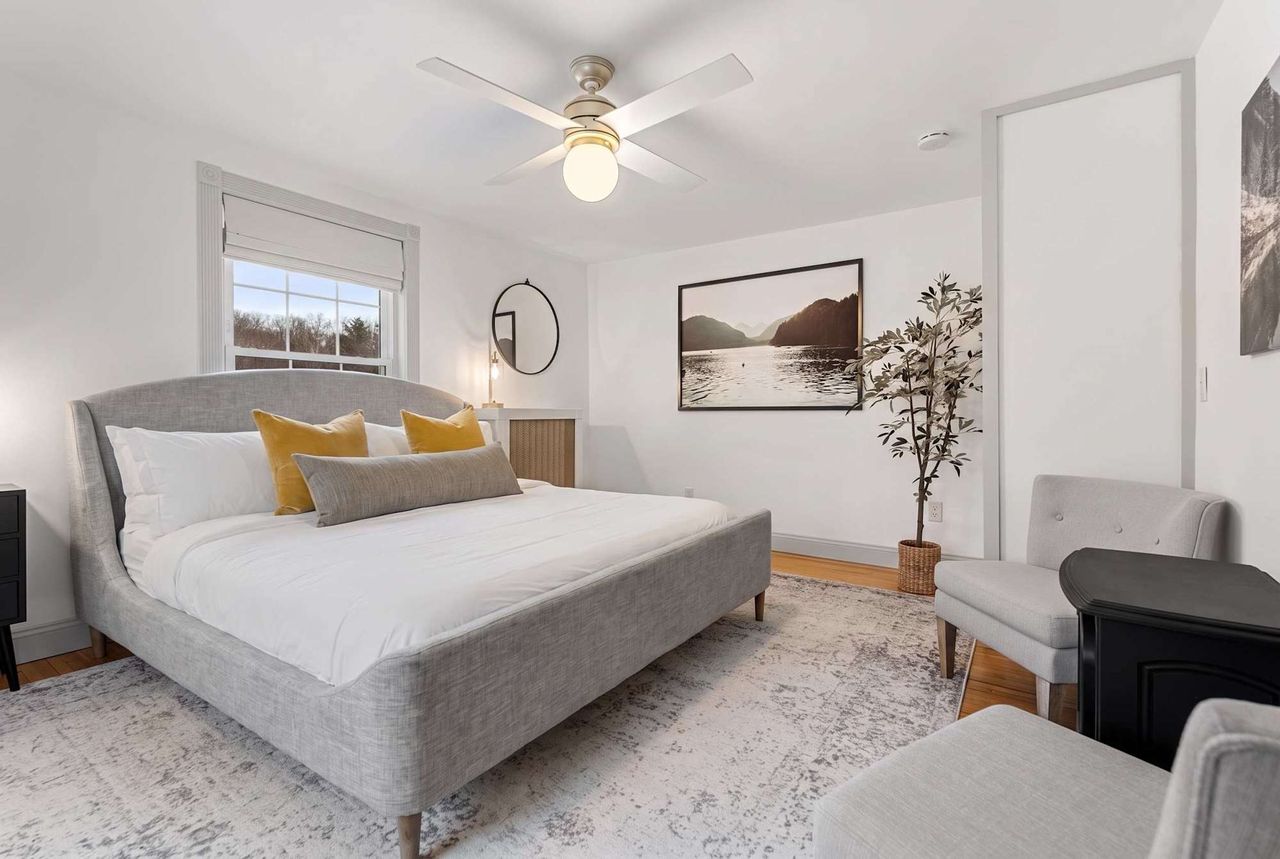
Where to stay for it
The drive is one of the prettier short runs from our door. From 191 Pollard Road you get on I-93 North and take it up through the Franconia Notch Parkway - a scenic stretch in its own right - to Exit 35, then follow US Route 3 north about ten miles to the village of Twin Mountain. There you turn right, east, onto US Route 302 and follow it through Bretton Woods, past the big Mount Washington Hotel, and up to the top of Crawford Notch, where the Crawford Depot and the AMC Highland Center sit right by the road beside little Saco Lake. It is about 30 miles and, with no traffic, roughly 40 to 45 min. The depot and the Highland Center are unmistakable landmarks; the trailhead parking is the small lot at the depot, and on any clear or foliage day the single most important tip is to arrive early, because it fills fast.
Provision before you leave Lincoln, because options thin out as you head toward the notch. The stores and gas stations in Lincoln and North Woodstock - the Price Chopper plaza on Paper Mill Drive is the easy one-stop - are your best bet for sandwiches, water, and a full tank. Along the way, Twin Mountain has a small store and gas at the Route 3 and Route 302 junction, and Bretton Woods has resort services, but there is nothing at the trailhead itself beyond the seasonal depot and the Highland Center's front desk during its hours. Fill your water bottles before you go, since there is no reliable water on the trail, download your map while you still have a signal, and leave your route and your expected out-time with someone at home, especially on an early start for the sunrise.
Sources & official info: nhstateparks.org · outdoors.org · fs.usda.gov
— Launchpoint Lodge, From the lodge