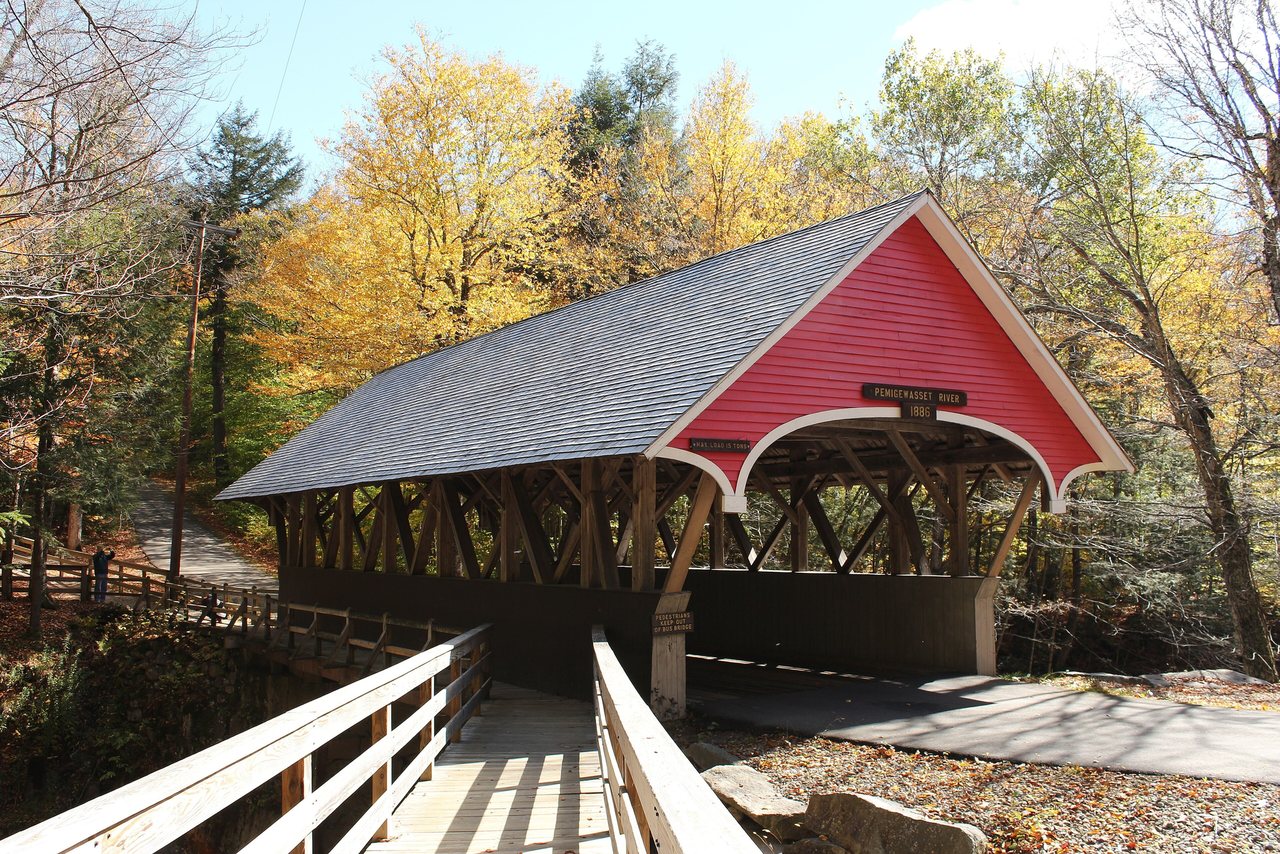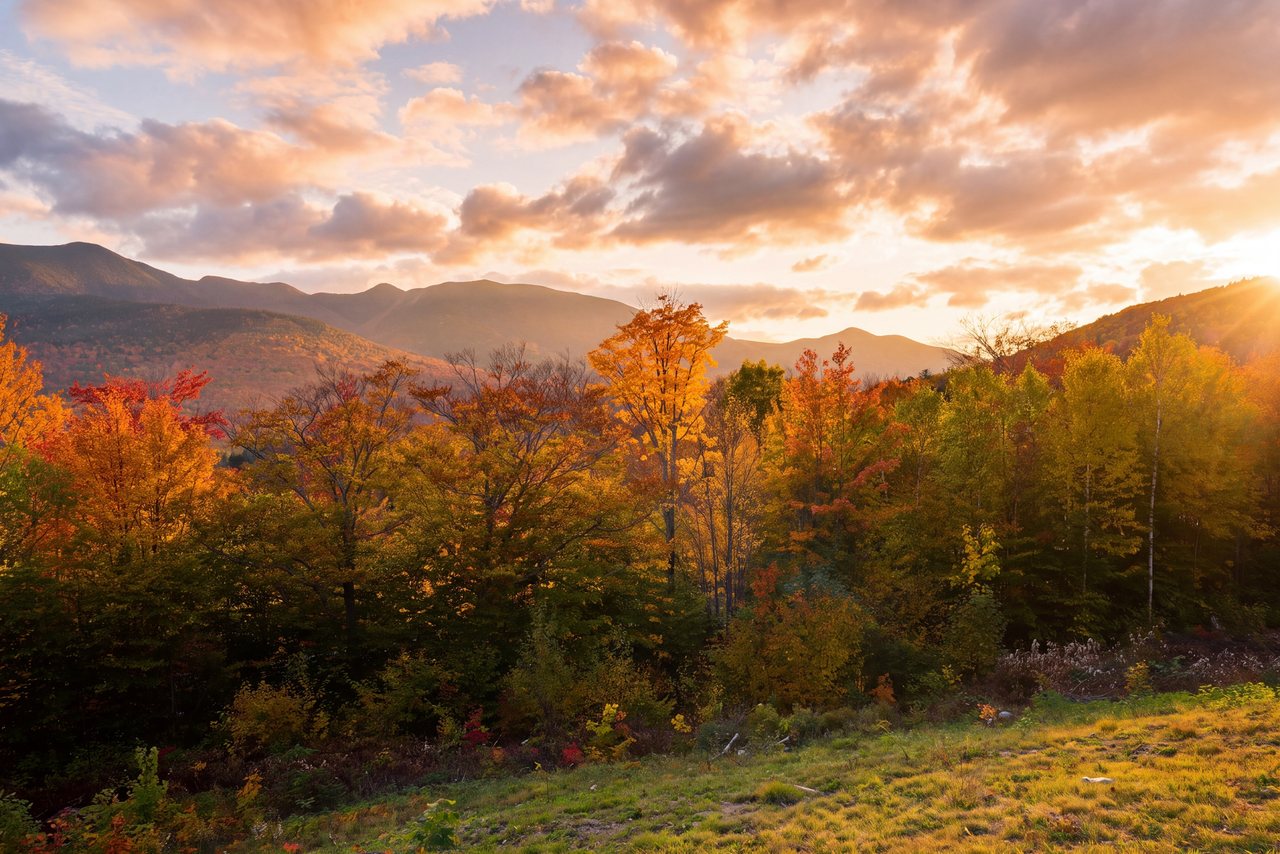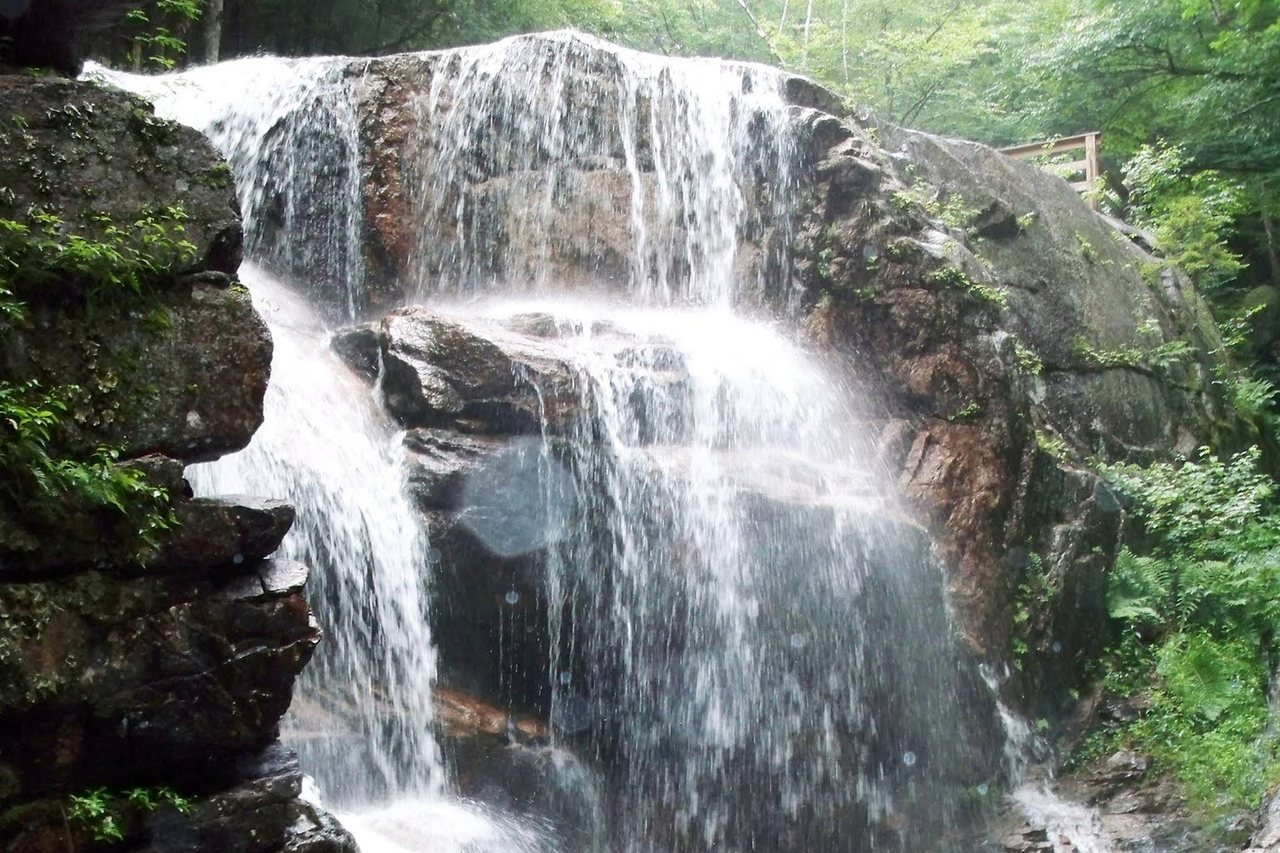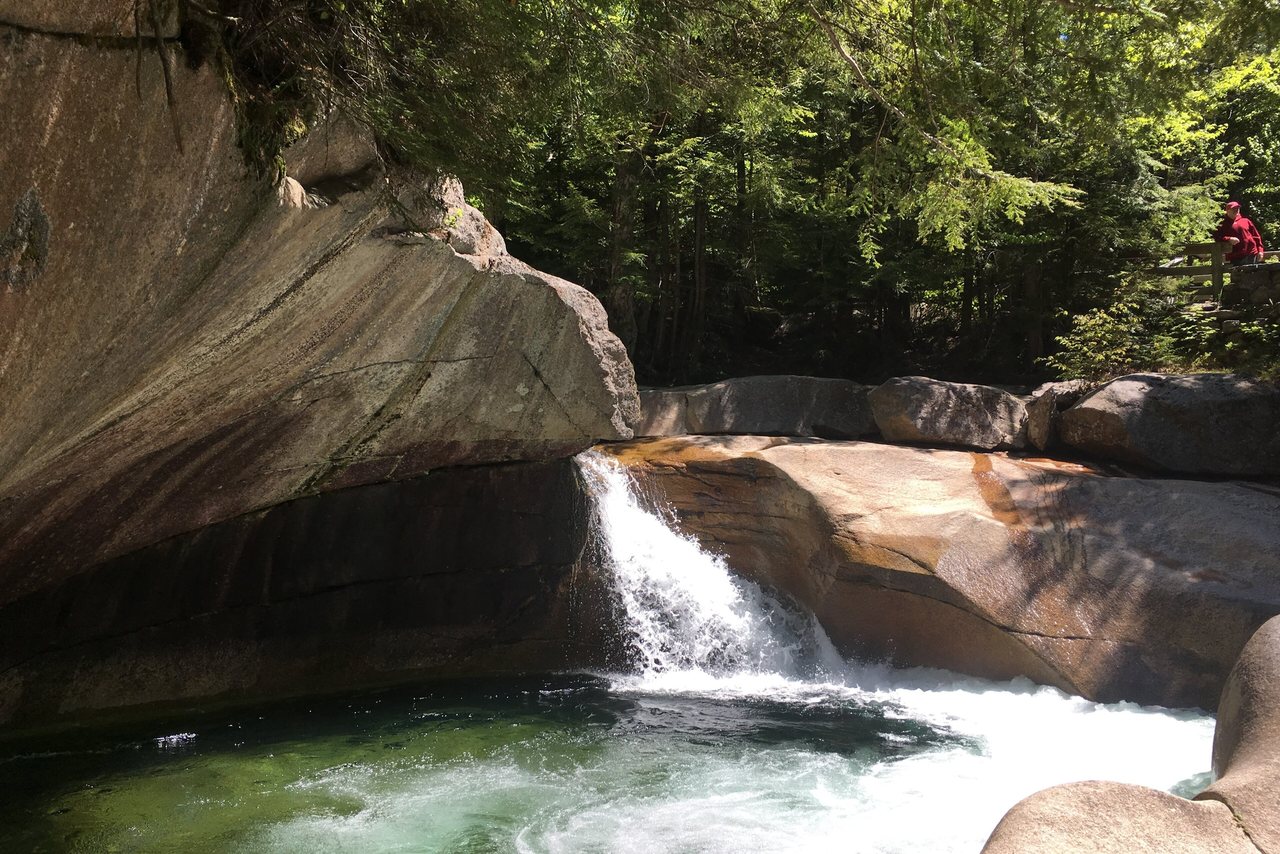
The single most confusing thing about the White Mountains is that "the park" is not one place, and the passes people buy at one gate do not work at the next. Visitors show up with an $80 America the Beautiful pass on the dashboard, drive to the Flume Gorge, and get told it costs extra. Others buy a Flume ticket and assume it covers parking at a Kancamagus trailhead — it does not. None of this is a scam. It is just that federal land and state land sit side by side up here, run by two different agencies with two different fee systems, and nobody hands you a map of how they relate.
This guide is that map. We are going to walk through the five things you will hear named over and over — the White Mountain National Forest (the big federal one), Franconia Notch State Park (the crown), Echo Lake State Park, Crawford Notch State Park, and the Kancamagus Highway — explain what each one is, sort out the two separate pass systems, and finish with a dead-simple "if you only have one day, do this" framework. We are not going to re-describe every waterfall; we have individual deep-dive guides for those and we will point you to them as we go.
A note on who we are: Launchpoint Lodge sits in Lincoln, at Exit 32 off I-93, right where the Kancamagus Highway begins and a short drive south of the mouth of Franconia Notch. Most of what follows is within half an hour of our front door, which is the whole reason people use us as a base. We are an adults-only, six-suite inn, so if you are traveling with young kids the parks themselves are wonderfully family-friendly — you will just want to base somewhere that takes children. We will flag that where it matters and otherwise get out of the way.
The mental model: one forest, several parks inside it
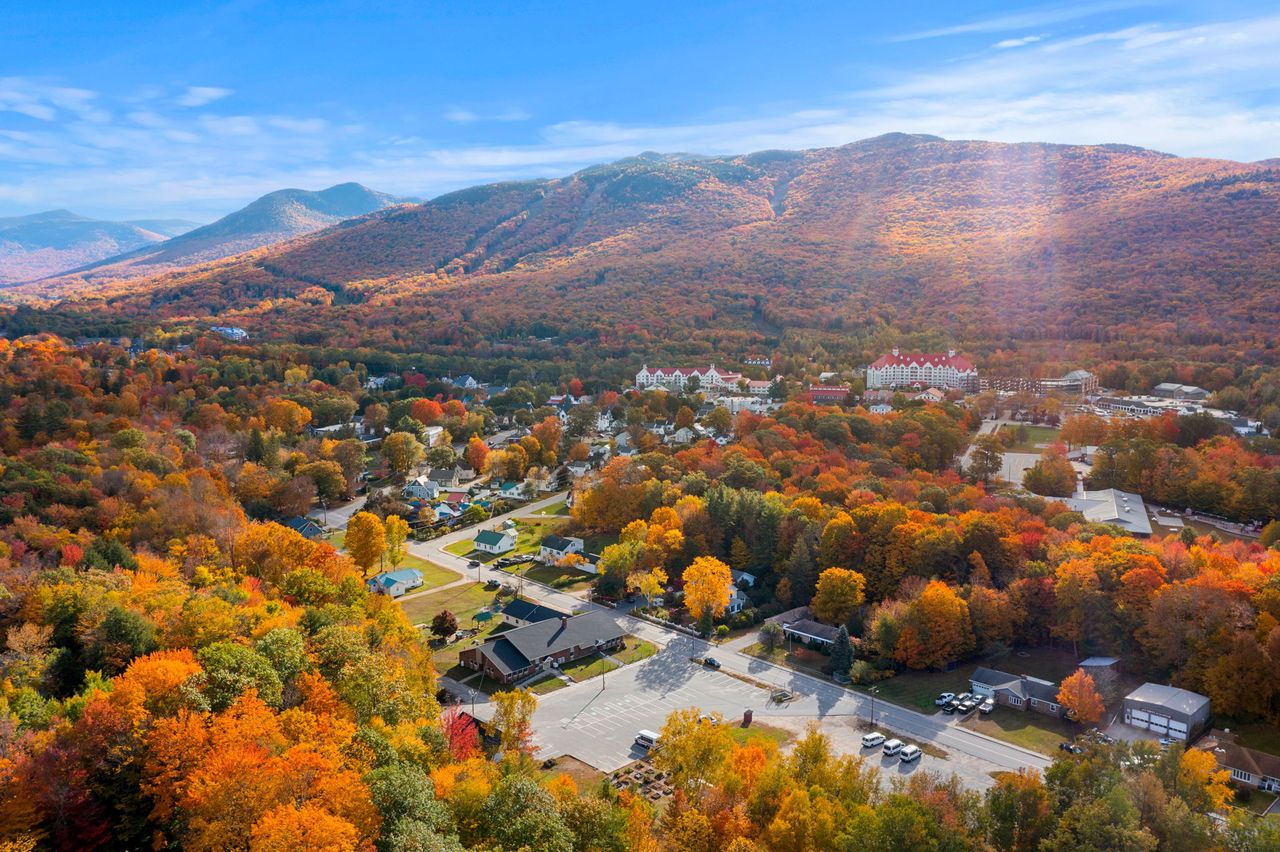
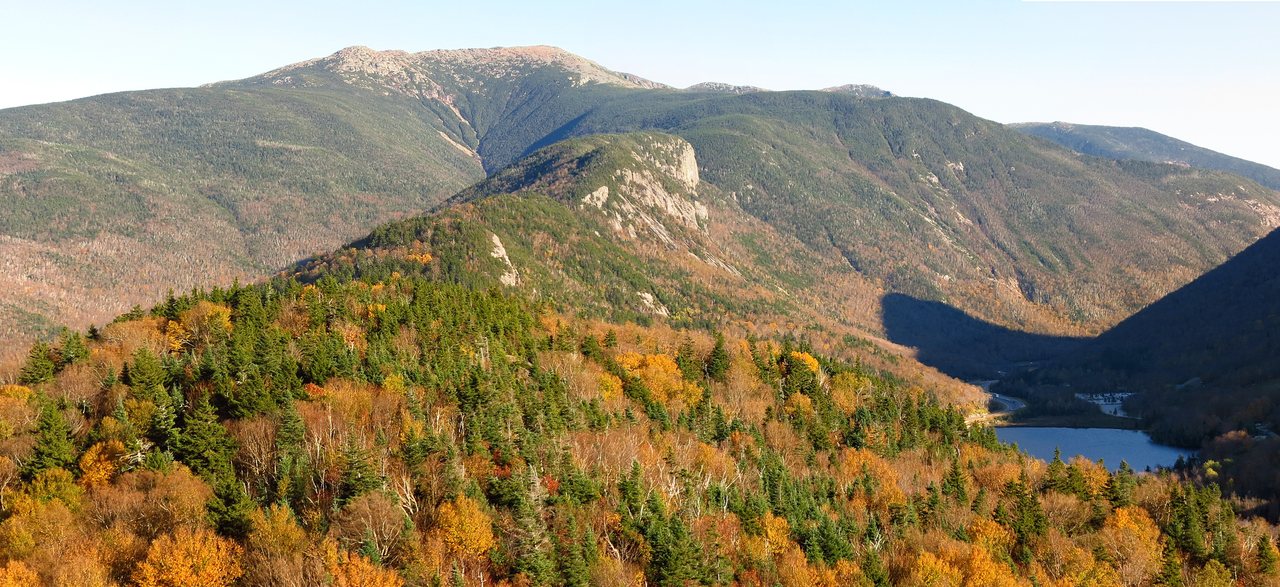
Picture the White Mountains as a single enormous federal property — the White Mountain National Forest, about 800,000 acres straddling New Hampshire and a slice of Maine — with a handful of smaller, more developed state parks tucked inside or right up against it. The forest is the umbrella. The state parks are the marquee attractions with gates, ticket windows, visitor centers, and staff. Almost everything you have read about is one or the other.
The federal forest is where the raw scenery lives: the trailheads, the roadside cascades, the swimming holes, the Kancamagus Highway itself. It is managed by the U.S. Forest Service (fs.usda.gov), and its fee is a modest parking pass, not an entrance gate. You can drive right through most of it for free; you only pay to park at developed trailheads and picnic sites.
The state parks — Franconia Notch, Echo Lake, and Crawford Notch chief among them — are run by New Hampshire State Parks (nhstateparks.org). These are where you find the paid, ticketed experiences: the Flume Gorge boardwalk, the swimming beaches, the historic sites. They charge per person or per attraction, and a federal pass buys you nothing at their windows.
That is the whole confusion in one sentence: the Forest Service charges you to park, the state charges you to get in. Hold onto that and the rest of this guide clicks into place. The Kancamagus Highway, for its part, is not a park at all — it is a scenic road that runs through the federal forest and strings together a lot of those Forest Service sites, which is exactly why people mistake it for one.
If it helps, think of it like this: the National Forest is the countryside, the state parks are the attractions built into it, and the Kancamagus is the famous road you take to see a good chunk of both.
The White Mountain National Forest — the big federal one
This is the backdrop for your entire trip whether you notice it or not. When you hike to a waterfall, park at a trailhead, or pull over at an overlook on the Kancamagus, you are almost certainly standing on White Mountain National Forest land. It is not fenced, gated, or ticketed. Most of it is simply open country you can walk into.
The only place you meet a fee is parking. At developed Forest Service recreation sites — think Lincoln Woods, Sabbaday Falls, Lower Falls, Rocky Gorge, and many trailhead lots — you need a recreation pass displayed in your windshield. In 2026 the pass runs roughly $5 per vehicle per day, about $30 for an annual pass, or around $40 for a household annual pass covering two vehicles. Amounts change, so confirm the current figures on recreation.gov before you rely on them.
You can buy the pass three ways: online at recreation.gov (it arrives as a printable PDF, handy to do before you leave home), in person at a ranger station or many local shops, or at the lot itself using a self-service envelope where you tuck cash into a slot and put the stub on your dash. That envelope option is the one to remember on a Sunday when nothing else is open.
Here is the part that saves people money: many of the best pull-offs are free. Roadside scenic overlooks on the Kancamagus generally do not charge, and some of the most photographed spots — the Basin up in Franconia Notch, for instance — are free because they sit on state land, not fee-charging federal lots. You only need the pass at the specific developed sites that post a fee sign. If your whole day is overlooks and one free stop, you may not need to pay at all.
One more thing worth knowing: the forest is wild in places. There is no cell coverage on long stretches, no gas once you leave town, and weather at elevation is its own animal. The land being free to enter does not make it forgiving. Come prepared.
The one pass that works everywhere federal: America the Beautiful
If you are the kind of traveler who visits federal land more than a couple of times a year — national parks, national forests, wildlife refuges — the America the Beautiful interagency annual pass is the one to buy. It costs $80 a year, covers everyone in your vehicle, and is honored at federal fee sites nationwide, the White Mountain National Forest included. Show it in the windshield and you skip the $5 parking pass here entirely.
Do the math squarely, though. If you are here for a long weekend and will park at, say, three fee sites, the $5-a-day pass is the cheaper answer by a mile. The $80 pass only earns its keep if you are already planning other federal-land trips this year, or if you are staying long enough to rack up parking days. For most guests on a Lincoln getaway, the humble WMNF day pass is the right call.
There are also free and discounted versions of the America the Beautiful pass worth knowing about: it is free for current U.S. military members and their dependents, free for fourth-graders and their families through the Every Kid Outdoors program, free (with a small processing fee) for U.S. citizens with a permanent disability via the Access Pass, and heavily discounted for seniors 62 and up ($20 annual or $80 lifetime). If you qualify for one of those, get it — it is the same pass, and it covers your WMNF parking too.
This is the part that clears up the confusion at the top of this guide: neither the $80 pass nor the $5 pass gets you into the Flume Gorge, the state swimming beaches, or any New Hampshire state park attraction. Those are a separate state system with a separate ticket. A federal pass is a parking pass.
Franconia Notch State Park — the crown
If you see nothing else, see this. Franconia Notch is the tight mountain pass just north of Lincoln where the interstate itself narrows to a two-lane parkway and squeezes between Cannon Mountain on one side and the Franconia Range on the other. It is a New Hampshire state park, and it is the densest concentration of famous sights in the region — several of them within a few minutes of each other along one eight-mile stretch of I-93.
Under this one park's umbrella you get the Flume Gorge (the ticketed boardwalk through a granite chasm), the Basin (a free, wheelchair-friendly glacial pothole right off the bike path), Echo Lake beach at the foot of Cannon, the Old Man of the Mountain memorial site, the Lafayette Place trailheads for Lonesome Lake and the Franconia Ridge, and the paved Franconia Notch Recreation Path that runs the length of the notch for walkers and cyclists. We have separate deep-dive guides for the notch, the Flume, the Basin, and Lonesome Lake — this section is just the lay of the land.
The Old Man of the Mountain, the granite profile that was the state emblem, collapsed in May 2003. What stands today is the Old Man of the Mountain Profiler Plaza on Profile Lake, where a set of steel viewing rods lets you line up the mountain and "rebuild" the face from the right spot. It is free, quietly moving, and takes 15 min. Do not drive here expecting the actual profile — it is gone.
About Cannon Mountain: the famous aerial tramway is retired. Its final public run was October 26, 2025, and it is now closed for a multi-year replacement — it is not operating in 2026, and you should not plan a trip around riding it. If a lift-served summit view is what you are after, the right answer is Loon Mountain's gondola a few minutes from our door in Lincoln; see our Loon guide. Cannon's ski area and the New England Ski Museum at the base remain open in their seasons.
Practical notes: the Flume Gorge Visitor Center is the park's main hub, with restrooms, a café, and a gift shop, and it is the one place with reliable facilities. Dogs are allowed on leash but restricted to designated dog-walk areas near the Flume and tramway lots — not on the beach, not on the Flume boardwalk. And because I-93 runs right through the park, getting from one stop to the next is a 2-to-5 min drive.
The Flume Gorge, specifically — because the ticketing trips people up
The Flume deserves its own note because it is the one place where guests most often get caught out. It is a paid, timed-entry attraction inside Franconia Notch State Park, and in 2026 it runs a reservation system: you book a specific arrival window online, in advance, at nhstateparks.org. In peak foliage and midsummer it sells out. Walking up and hoping for same-day entry is a coin flip you will often lose.
The season is roughly mid-May through late October — for 2026, about May 8 to October 25 — with hours generally 9 a.m. to 5 p.m. and stretched a little later at the height of summer. Those dates are weather-dependent every year. Crucially, the Flume closes for winter: the crews physically remove the wooden boardwalks that carry you through the gorge, so from late fall through spring there is no walking the chasm. If your trip is December through April, cross the Flume boardwalk off your list and enjoy the notch's free winter scenery instead.
On price, 2026 tickets run about $18 for adults (13 and up) booked online, or $21 at the window; children 6 to 12 are roughly $16 online and $19 at the window; and little ones under 6 are free. Booking online saves a few dollars a head and, more importantly, locks in your entry time. Confirm current pricing when you reserve.
The walk itself is a two-mile loop with a fair number of stairs and some steep, wet boardwalk sections. It is spectacular and it is not accessible for wheelchairs or difficult for many strollers — if mobility is a concern in your group, the Basin down the road delivers a lot of the same granite-and-water drama on a short, flat, paved path for free. See our full Flume Gorge guide for the blow-by-blow.
Echo Lake State Park — the other Echo Lake (do not mix them up)
This is where naming trips visitors up, so let us be precise. There are two Echo Lakes in the White Mountains. One is the swimming beach inside Franconia Notch State Park, at the foot of Cannon Mountain, 17 min from us. The other is Echo Lake State Park, a completely separate park over on the east side of the mountains in North Conway, roughly 45 to 55 min away. Same name, different place, different park. GPS will happily send you to the wrong one.
The North Conway Echo Lake State Park is a day-use park built around a small, calm lake with a swimming beach, backed by two dramatic granite cliffs: Cathedral Ledge and White Horse Ledge. In 2026 it charges a state day-use fee of about $4 per person, with young children free, and it typically opens weekends from Memorial Day, then daily from late June through Labor Day, roughly 9 a.m. to 6 p.m. with the gate closing around 8. Off-season the gate is shut and there is no staff.
The headline feature is Cathedral Ledge. You can drive an auto road nearly to the top of the 700-foot cliff for one of the easiest big-view payoffs in the region — a few steps from the parking area to a railed overlook above the Saco valley. It is also one of the Northeast's premier rock-climbing crags, with a couple hundred established routes, so expect to see climbers on the face below you.
Realistically, Echo Lake State Park is a secondary priority for a Lincoln-based trip — it is on the far side of the mountains, closer to guests staying in North Conway. But if you are already spending a day at the eastern end of the Kancamagus, or you want a calm-water swim with a cliff view rather than a river swim, it pairs naturally with that side of the range.
Crawford Notch State Park — the eastern notch
Franconia Notch gets the crowds; Crawford Notch, the next great pass to the east, gets the people who want a bigger, wilder, less-manicured version of the same idea. It sits along Route 302 between Bretton Woods and Bartlett, about 45 min to an hour from Lincoln depending on your route, and it is a New Hampshire state park draped across a dramatic mountain valley.
The signature attraction is Arethusa Falls — at close to 200 feet, the tallest single-drop waterfall in New Hampshire — reached by a trail of about 1.4 miles each way off Route 302. Nearby Ripley Falls is a shorter walk to another impressive cascade, and Silver and Flume Cascades tumble right beside the road for a no-hike look. Add the easy, view-packed climb up Mount Willard and the cliffs of Frankenstein, and Crawford Notch is arguably the best waterfall-and-vista park in the range for people willing to walk a little.
The developed hub is the Willey House Historic Site, built around the story of a family lost in an 1826 landslide. Today it is a seasonal stop with a country store, a snack bar, ice cream and fudge, a small museum, a picnic area, a little reservoir, and gentle family-friendly walking paths — a good midday breather. The store keeps seasonal hours, generally around 9 a.m. to 5 p.m.; the park office is 603-374-2272 if you want to confirm before driving over.
Like the National Forest, the park land and roadside pull-offs are free; some trailhead lots along the corridor are Forest Service fee sites, so keep a WMNF pass handy if you are hiking. If your trip has three or more days in it, Crawford Notch is the strongest "day two or three" beyond Franconia — a change of scenery, taller waterfalls, and a fraction of the Flume's crowds.
The Kancamagus Highway
The Kancamagus is the through-line of any White Mountains trip, and it is worth being clear about what it is: a 34.5-mile stretch of New Hampshire Route 112 running east from Lincoln (it starts essentially at our doorstep, off Exit 32) to Conway, cutting straight through the heart of the National Forest. It is one of the country's designated scenic byways, not a park with a gate. There is no fee to drive it.
What makes it feel park-like is that it strings together a run of the forest's best roadside stops. Heading east you pass free scenic overlooks — the Hancock, Pemi, Sugar Hill, and C.L. Graham Wangan overlooks among them — plus Forest Service fee sites like Sabbaday Falls, Lower Falls, Rocky Gorge, and the Lincoln Woods trailhead. The overlooks are free; the developed sites want that $5 WMNF parking pass. We have individual guides to the Kancamagus, Sabbaday Falls, and Rocky Gorge that go stop by stop.
Two safety points that matter on this road. First, swimming is prohibited and enforced at Rocky Gorge because the churning water there has caused serious accidents — walk the footbridge, admire the gorge, and keep out of the water. The sanctioned place to cool off on the Kancamagus is Lower Falls, and even there only when the Swift River is low and calm; the same water that looks inviting in August is lethal in spring melt. Second, the road has no gas, no food, and no reliable cell service along its length. Fill the tank and pack water before you turn onto it.
The Kancamagus is plowed and open all winter as a through-road, but many of the overlook and trailhead lots are not cleared, so winter driving it is more about the drive than the stops. In fall it is one of the most famous foliage drives in America and traffic reflects that — go early. For a full day-by-day plan, our itineraries pages build whole trips around this road.
The two fee systems, side by side
Let us make the fee confusion impossible to fall into. There are two separate systems up here, run by two separate agencies, and neither one honors the other's pass. Getting this straight will save you both money and an awkward conversation at a ticket window.
System one is federal, run by the U.S. Forest Service. It is a parking pass. It costs about $5 per vehicle per day (or $30-$40 for the year), or you can use the $80 America the Beautiful pass if you have one. It covers parking at developed Forest Service sites: Sabbaday Falls, Lower Falls, Rocky Gorge, Lincoln Woods, and many trailhead lots. It does not get you into any state attraction.
System two is state, run by New Hampshire State Parks. It is a per-person or per-attraction charge. That is the Flume Gorge ticket (about $18 for adults in 2026), the day-use fee at Echo Lake State Park's beach (about $4 per person), and the day-use fee at Franconia Notch's Echo Lake beach. Your $5 Forest Service pass and your $80 America the Beautiful pass are worth nothing at these gates, and vice versa.
The clean rule of thumb: if you are paying to park, that is the federal pass. If you are paying to walk in or swim, that is the state fee. A typical Lincoln-based trip touches both — you might buy a $5 WMNF pass for a Kancamagus hiking day and separately book a Flume ticket for a Franconia day. Budget for the two independently.
And a lot of the marquee stops cost nothing at all. The Basin, the Old Man memorial plaza, the Kancamagus overlooks, and every mile of open forest are free. You can build a great day up here without paying either agency a cent — you just cannot mix and match the passes on the days you do pay.
Restrooms, visitor centers, and where to stop
Facilities are sparser than most first-timers expect, so plan your stops around them rather than assuming. The most reliable hub in the western mountains is the Flume Gorge Visitor Center in Franconia Notch — flush restrooms, a café, a gift shop, and staff who can answer questions. It is open through the Flume's season, roughly mid-May to late October, and it is the natural place to begin a Franconia day.
On the Kancamagus, the Lincoln Woods trailhead near the western end has a ranger presence and restrooms (the trail itself is closed from June 15 into November 2026 between the Kancamagus and the Osseo Trail junction, so check before you go); the Saco Ranger Station at the Conway (eastern) end is the other staffed spot with facilities and maps. In between, the developed fee sites like Sabbaday Falls and Rocky Gorge have vault toilets — functional, not fancy — while the free overlooks generally have none. If you or your travel companions need a real restroom, time your stops for the staffed ends of the road.
Over in Crawford Notch, the Willey House Historic Site is the facilities stop — restrooms, a snack bar, and a store, seasonally. The Highland Center at Crawford Depot, run by the Appalachian Mountain Club at the top of the notch, is another reliable indoor stop with restrooms and trip advice.
The practical takeaway: this is not a place where a clean restroom appears every few miles. Use the visitor centers and staffed trailheads when you pass them, carry hand sanitizer, and understand that off-season, most of these facilities are locked and the water is shut off. Back at the lodge, of course, you have everything you need — but plan the day itself around these known points.
Accessibility — what is doable without a hard hike
The White Mountains have a reputation for demanding hiking, but a real share of the best scenery is reachable on flat, short, paved paths — you just have to know which stops those are. If mobility, a wheelchair, or a stroller is part of your planning, here is the practical rundown.
The Basin in Franconia Notch is the standout: a short paved path off the parking area leads to a powerful glacial pothole and cascade, and it is one of the few accessible marquee sights, at no cost. The Franconia Notch Recreation Path, the paved bike-and-walk trail running the length of the notch, is largely flat and accessible for long stretches and offers water and mountain views without any climbing. Cathedral Ledge at Echo Lake State Park is another low-effort payoff — you drive nearly to the summit and it is a short, mostly level walk to a railed cliff-top overlook.
By contrast, the Flume Gorge is not accessible: the boardwalk involves many stairs and steep, wet sections, and it is a genuine two-mile walk. Most waterfall trails off the Kancamagus and in Crawford Notch involve uneven footing, roots, and grades. Sabbaday Falls is one of the gentler ones — a wide, relatively short gravel path — but even it has steps near the falls themselves.
Our best advice for a low-impact day: pair the Basin, the Old Man Profiler Plaza (short, mostly flat paths to the viewing rods), and a drive through Franconia Notch with a stop or two at the free Kancamagus overlooks, which you can enjoy from at or near the car. That itinerary delivers the region's signature landscapes with very little walking. If you want specifics for your situation, message us — we route this kind of day for guests regularly.
Dogs, leashes, and where they are and are not welcome
Good news for dog owners, with a few real exceptions. The White Mountain National Forest is broadly dog-friendly: dogs are welcome on the vast majority of trails and Forest Service land, expected to be under control and, in developed areas, on a leash. Most of the classic Kancamagus waterfall walks and forest trails are fine for a well-behaved leashed dog.
The state parks are stricter, and it varies by site, so check before you go. In Franconia Notch, dogs are permitted on leash but confined to designated dog-walk areas near the Flume and tramway parking lots — they are not allowed on the Flume Gorge boardwalk, not on the Echo Lake swimming beach, and not in the campground. State swimming beaches in general, including Echo Lake State Park in North Conway, do not allow dogs on the beach during the season. Assume no dogs at any developed state swimming area unless a sign says otherwise.
A few universal courtesies that are also rules up here: pack out waste, keep the leash on in trailhead lots and around other people, and remember that wildlife, steep drop-offs, and cold fast water are all real hazards for dogs as much as people. Rocky Gorge, with its enforced no-swimming rule, is no place to let a dog near the water.
One practical note about basing with us: Launchpoint Lodge is a pet-free property, so while the trails around us are wonderful for dogs, this particular lodge is not the place to bring one. If you are traveling with a dog, the parks will welcome you — you will just want dog-friendly lodging. We are happy to point you toward options in Lincoln and North Woodstock.
If you only have one day, a weekend, or longer — how to prioritize
Here is the plan we share with guests, in order of return on your time. If you take nothing else from this guide, take this.
One day: do Franconia Notch State Park and nothing else. It is the crown, it is 15 min north of us, and it packs the Basin (free), the Old Man Profiler Plaza (free), and the Flume Gorge (ticketed — book online in advance) into one eight-mile stretch of parkway, with the whole drive through the notch as a bonus. Add the Lonesome Lake hike from Lafayette Place if you want a summit-pond payoff and have the legs. That single day is the most scenery per hour anywhere in the range.
A weekend: keep Franconia for day one, then give day two to the Kancamagus Highway. Buy the $5 WMNF parking pass, drive east from our door, and stop at Sabbaday Falls, the free overlooks, and Rocky Gorge (look, do not swim). It is a completely different flavor from the notch — a slow scenic road rather than a dense cluster of sights — and it shows you the federal-forest side of the mountains. If foliage is peaking, flip the order and drive the Kancamagus first thing in the morning to beat the traffic.
Three days or more: add the eastern mountains. Crawford Notch State Park delivers the region's tallest waterfall (Arethusa) and a quieter, grander valley, and it pairs naturally with Echo Lake State Park and Cathedral Ledge over in North Conway if you want a calm-water swim and an easy cliff view. This is also where you slot in a bigger hike, a Loon gondola ride for a lift-served summit, or a rainy-day town day in North Conway.
The trap to avoid: trying to do all of it in a day. These places are 30 to 60 min apart on mountain roads, and rushing turns a great trip into a driving marathon. Pick the tier that matches your time and do it well. Our full itineraries pages lay out several of these day by day.
Seasons — what is open when, and what quietly closes
The mountains run on a calendar that catches visitors off guard, so here is the real year. Late spring through mid-fall is prime time and when everything is open. The Flume Gorge runs roughly mid-May to late October (about May 8 to October 25 in 2026); the state swimming beaches at Echo Lake and in Franconia Notch open around Memorial Day and run through Labor Day; and the Forest Service sites are fully staffed and stocked.
Fall is the marquee season. Foliage near Lincoln typically peaks around the second week of October, and the Kancamagus Highway becomes one of the most famous — and most crowded — leaf-peeping drives in the country. Book everything early, drive early in the day, and expect the Flume to sell out its reservation windows. It is worth every bit of the planning; there is nothing else like it.
Winter changes the map. The Flume Gorge closes and its boardwalks are physically removed — there is no walking the chasm from late fall until spring. State-park gates close and their facilities lock up. The Kancamagus stays open as a plowed through-road, but its overlook and trailhead lots often are not cleared, so it becomes a drive-through rather than a stop-and-explore. What is open in winter is the snow country: skiing at Loon and Cannon, and the free, quiet beauty of the notch under snow. The Cannon aerial tramway, to be clear, is not part of that picture — it is retired and closed for a multi-year rebuild, so for a lift-served view in winter, that is Loon's gondola.
Then there is mud season — roughly April into early May — the awkward gap when winter recreation has ended but the Flume, the beaches, and many trails have not yet opened or dried out. High trails can be dangerously icy and soft, and the Forest Service asks hikers to stay off them to prevent erosion. It is a lovely quiet time to be up here for the lodge, the towns, and the low-elevation walks, just not for the big-ticket park attractions. When in doubt about a specific date, check nhstateparks.org and fs.usda.gov, or simply ask us — we watch these openings every year.
Safety & conditions
- Rocky Gorge: swimming is prohibited and enforced after past accidents — enjoy it from the footbridge and stay out of the water. The sanctioned Kancamagus swim spot is Lower Falls, and only when the Swift River is low and calm.
- The Kancamagus Highway has no gas, no food, and no reliable cell service for its full 34.5 miles — fill the tank and carry water before you turn onto it.
- The Cannon Mountain aerial tramway is retired and closed (final run Oct 26, 2025); do not plan to ride it. Use Loon's gondola for a lift-served summit.
- Mud season (roughly April–early May): high trails are icy, soft, and erosion-prone — the Forest Service asks hikers to stay off them, and many park attractions are not yet open.
- Off-season, most visitor centers and restrooms are locked and water is shut off; plan facilities around the Flume Visitor Center, Lincoln Woods, the Saco Ranger Station, and the Willey House when they are staffed.
- Mountain weather changes fast and is colder and windier at elevation than in town — carry layers, water, and a paper map, and do not rely on your phone.
Where to stay
The reason guests use Launchpoint Lodge as a parks base is geography. We sit in Lincoln at Exit 32 off I-93, which is the exact spot where the Kancamagus Highway begins — so a Kancamagus day starts the moment you pull out of our driveway. Franconia Notch State Park, with the Flume, the Basin, the Old Man plaza, and the Lonesome Lake trailhead, is a 10-to-15 min drive north up the same interstate. Crawford Notch and the eastern mountains are 45 min to an hour out, and Loon Mountain's gondola is 6 min away for a lift-served summit view now that Cannon's tram is closed. You can build a completely different day out of these lands every morning and be back for a quiet evening.
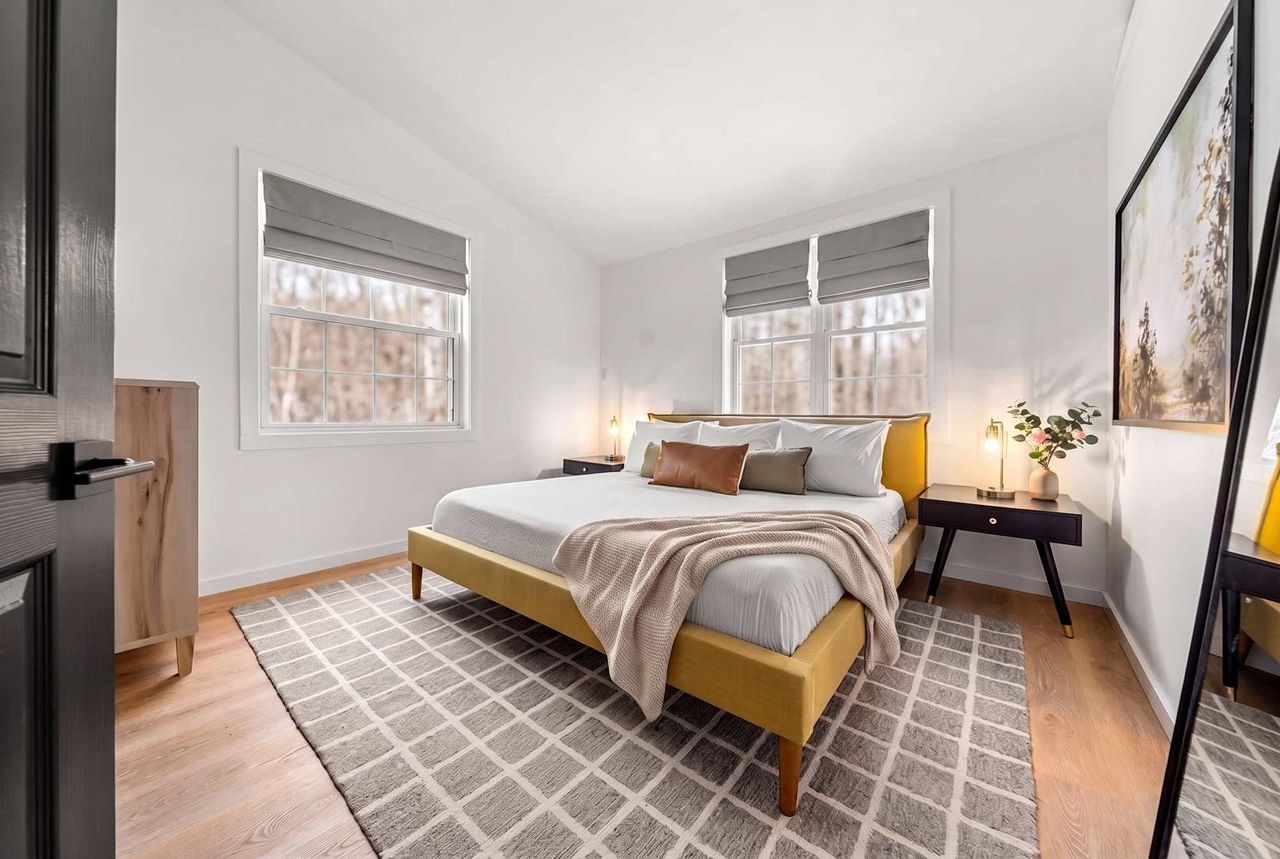
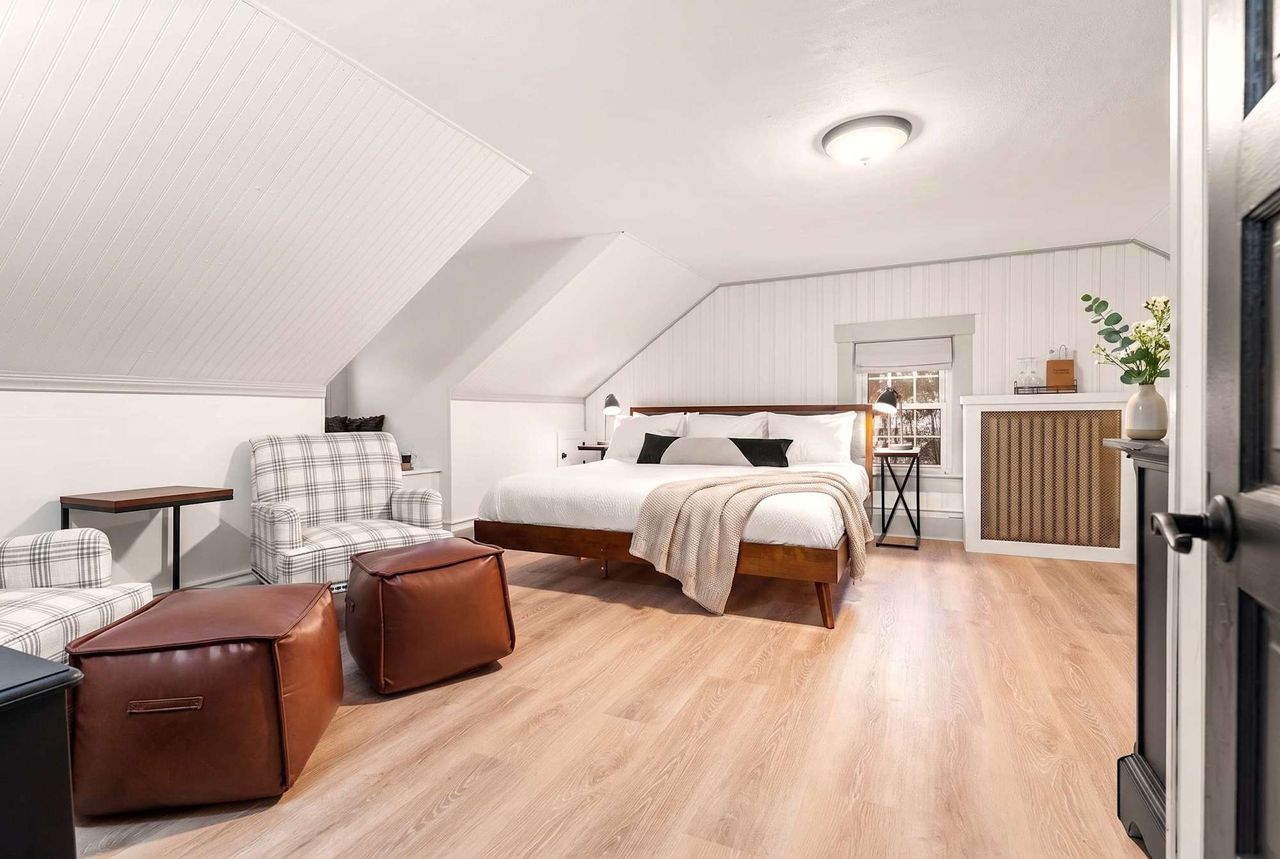
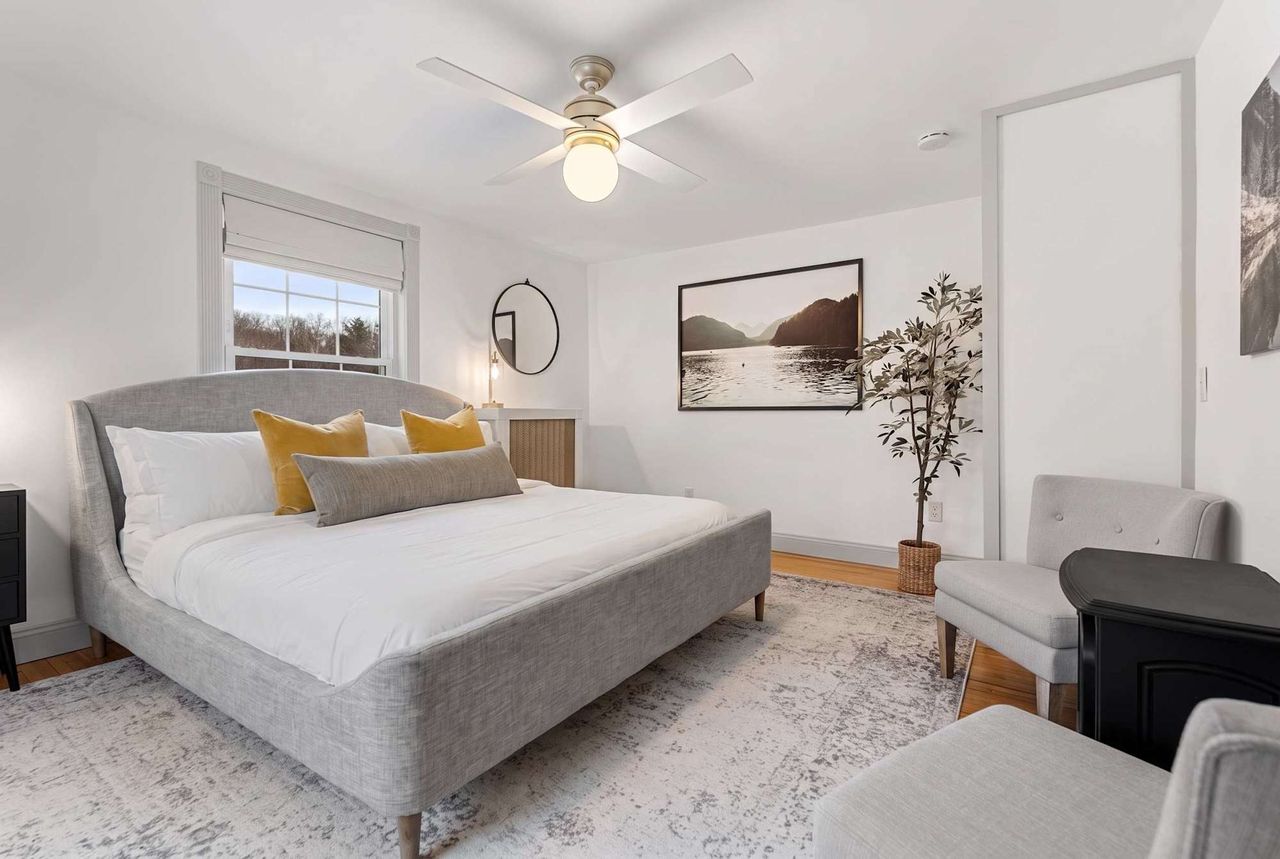
Message us for the practical stuff, so you never have to figure it out cold: which fee applies where, whether the Flume has reservation windows left, what is open in the season you have come for, and how to route a low-walking day if that suits your group. We are an adults-only, six-suite house with keyless self check-in and no crowds to fight in the morning — which is the whole point when the goal is to be first onto the Kancamagus before the foliage traffic builds. For which suite fits your trip and current availability, see the live booking calendar or just ask us.
Sources & official info: recreation.gov · recreation.gov · nhstateparks.org · nhstateparks.org · nhstateparks.org · nhstateparks.org
— Launchpoint Lodge, From the lodge