From the Fairfield County shoreline — Stamford, Greenwich, Norwalk, Westport — the White Mountains are about 280 miles and roughly five hours. That is a real drive, and we would rather say so up front than pretend the mountains are closer than they are. It is close to the trip a New Yorker makes, and it rewards the same handling: leave the corridor before it wakes up, plan for three nights, and let the last hour into Franconia Notch pay back the first four.
There are two ways to make the trip. Up I-95 or the Merritt Parkway to New Haven, then straight north on I-91 through the Connecticut River valley, finishing on I-89 and I-93 or over Kinsman Notch on Route 112. Or I-84 through Hartford onto the Massachusetts Turnpike, around Boston, and up I-93 — the line most navigation apps pick, and the one that turns into a parking lot on any busy Friday. This guide is the I-91 line, and most of it is about timing.
Five hours each way makes this a three-night trip. Two nights works, but you will spend a large share of the weekend behind the wheel, and the range deserves better than that. The good part is that the drive ends at a keyless door, so it does not matter much whether you roll into Lincoln at three in the afternoon or close to midnight.
The route to New Haven and north on I-91
From Stamford, Greenwich, Norwalk or Westport, take I-95 North — or the Merritt Parkway, which is prettier and no slower off-peak — to New Haven and pick up I-91 North. From there it is the river-valley line the whole way: Hartford, Springfield, Brattleboro, White River Junction. It is flat, straight interstate for most of the trip, with the scenery improving steadily once you cross into Vermont.
There are two ways to finish. The first is all interstate: at White River Junction take I-89 South into New Hampshire to Concord, then I-93 North about an hour to Exit 32 for Lincoln. This is the weather-and-after-dark choice, and the one we point winter guests toward. The second is the back door: stay on I-91 to the Wells River exit, cross the Connecticut River into Woodsville, then Route 112 East over Kinsman Notch into North Woodstock and Lincoln.
That back way is New Hampshire Route 112 west of Lincoln. It leaves North Woodstock, climbs over Kinsman Notch past the Lost River Gorge and Beaver Brook, and drops to Woodsville on the Connecticut River, where it meets I-91 across the bridge in Vermont. It is a real state highway, open year-round and plowed, but it is a mountain road: two lanes, no services in the notch, and a pass that can be white while the valleys are only wet. In daylight and dry weather it is one of the prettiest arrivals in the Whites. On a winter night, stay on the interstates and come in from the south.
Why we avoid the Boston approach
The other line your phone may suggest sends you west to east on I-84 through Hartford, onto the Massachusetts Turnpike, and around Boston to pick up I-93 North. On a quiet day the clock time is close to the I-91 route. On a Friday afternoon it is not close at all, because it stacks two hard bottlenecks on top of each other: the Hartford interchanges, then the Boston ring — I-95/128 or I-93 through the city — where an hour can disappear before you ever reach New Hampshire.
The I-91 valley line keeps you away from all of that. It lands you in Lincoln at about the same clock time on a bad-traffic day and a good deal calmer, and it skips the one toll on the Boston-side approach. If your map insists on routing you through Boston, override it at New Haven and stay on I-91.
Timing the five hours
The corridor is the enemy. Two pinches decide the drive: I-95 and the Merritt through Fairfield County at the start, and Hartford on I-91 an hour later. Both are heavy on a Friday afternoon, and hitting them in sequence is how a five-hour trip becomes seven.
Three windows work. A very early Friday start — out the door by six, in Lincoln for a late lunch — clears both pinches before they fill. A Friday-after-dinner departure arrives near midnight and runs against light traffic the whole way, which keyless self check-in makes painless. And a Saturday-morning start before seven is the calm option if Friday is not possible.
Sunday home is the easy direction. Leave Lincoln early or after an early dinner and you run ahead of the returning traffic on both I-91 and the Fairfield County corridor. Save the leisurely start for the drive up, not the drive back.
Tolls and where to fuel up
The I-95 and I-91 line north through Connecticut and Massachusetts has no tolls, and both New Hampshire finishes — I-89/I-93 or Route 112 — avoid the Hooksett plaza. The only toll in play is on the Boston-side approach up I-93, one plaza at Hooksett of about two dollars, which is one more reason we keep you on the valley route.
Fill the tank before the mountains, not after. The Kancamagus Highway starts at the end of our street and runs 34 miles east to Conway with no gas, no services, and no cell signal for its length, topping out around 2,855 feet at the height of land. Top off in Lincoln or North Woodstock before you drive it, and the same goes for the Route 112 arrival over Kinsman Notch, where there is nothing open in the notch itself.
Stops worth making
Northampton, Massachusetts, or Brattleboro, Vermont, are the two natural lunch stops, both right off I-91 a little past the halfway mark, both with walkable downtowns where you can stretch and eat something that is not gas-station food. The Vermont welcome center makes a good leg-stretch, and if you take the interstate finish, the New Hampshire welcome centers on I-93 do the same.
On the Route 112 back-door finish, the Lost River Gorge and Boulder Caves and the Beaver Brook Cascades sit right at the roadside as your entrance to the Whites. Lost River is a seasonal paid attraction, open roughly May through October, so it is a daylight-and-warm-weather stop rather than a winter one.
Dinner in Lincoln is a 5 min walk from the lodge, and after five hours in the car you have earned it. Basecamp Brewing is in Lincoln, and the Woodstock Inn Station & Brewery is a few minutes down the road in North Woodstock — both easy first-night options that do not require getting back in the car.
Driving in foliage season and winter
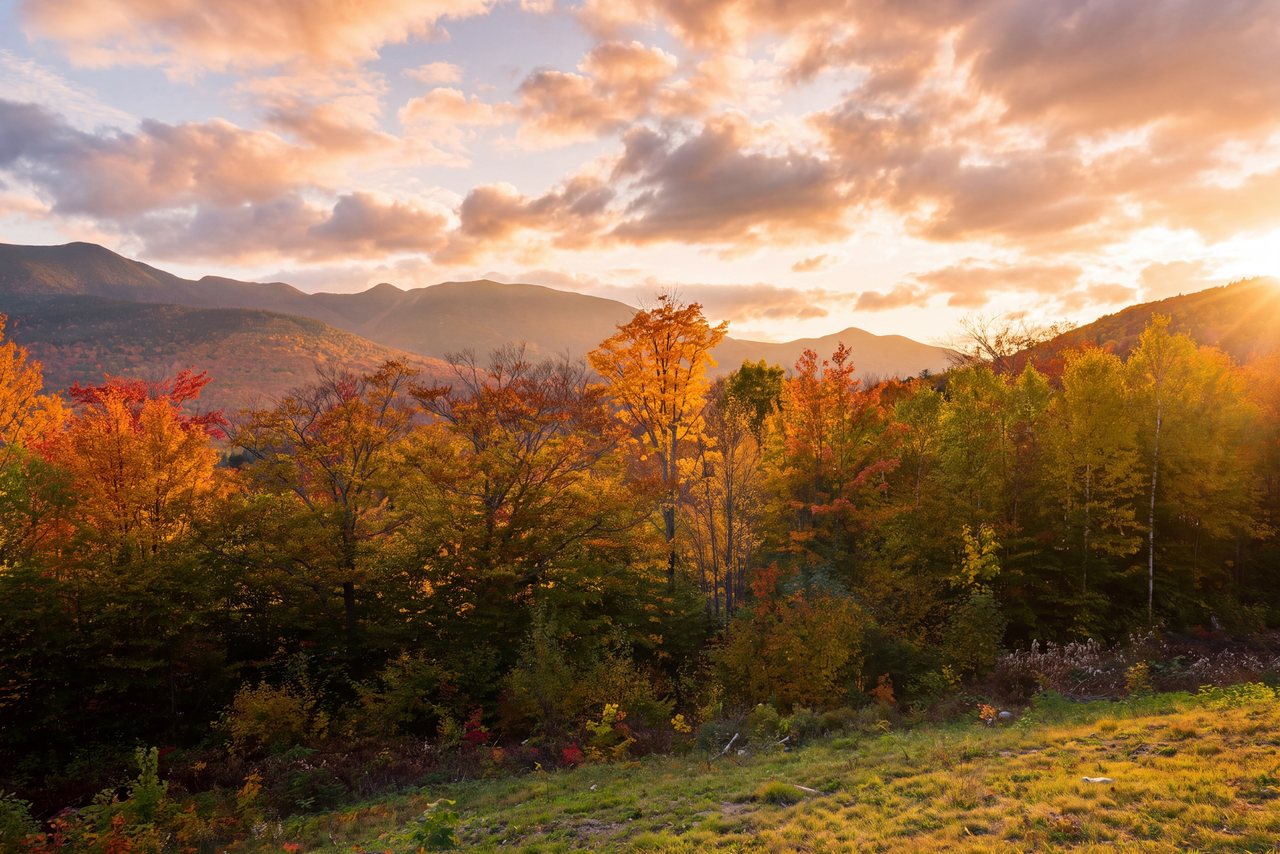
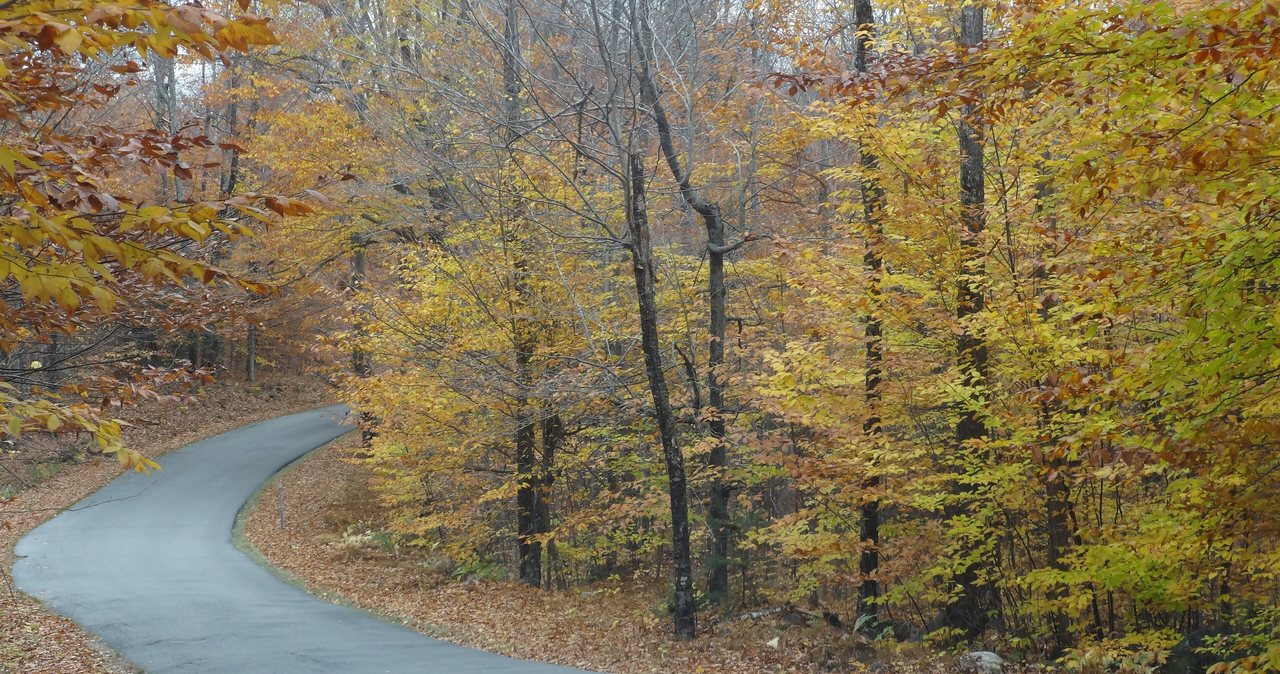
Late September through mid-October is the most beautiful stretch to make this drive and the busiest. Franconia Notch and the Kancamagus fill up, and I-93 into the notch can crawl on a peak foliage weekend. Start early in the day, give the drive extra time, and do not plan to arrive and sightsee in the same afternoon during that window.
In winter, take the interstate finish. I-89 and I-93 are the maintained, well-lit choice after dark or in weather, and they are what we steer guests toward from December through March. Route 112 over Kinsman Notch is plowed, but it is a two-lane mountain pass that can be icy while the valley below is merely wet, and it is no place to learn a rental car in the dark. Carry the basics you would for any northern winter drive.
The quietest and easiest driving is in the shoulder seasons — the weeks before Memorial Day and after Columbus Day, when the roads are calm and the notch is empty. It is our favorite time to arrive, and the drive up is at its gentlest.
What's close when you arrive
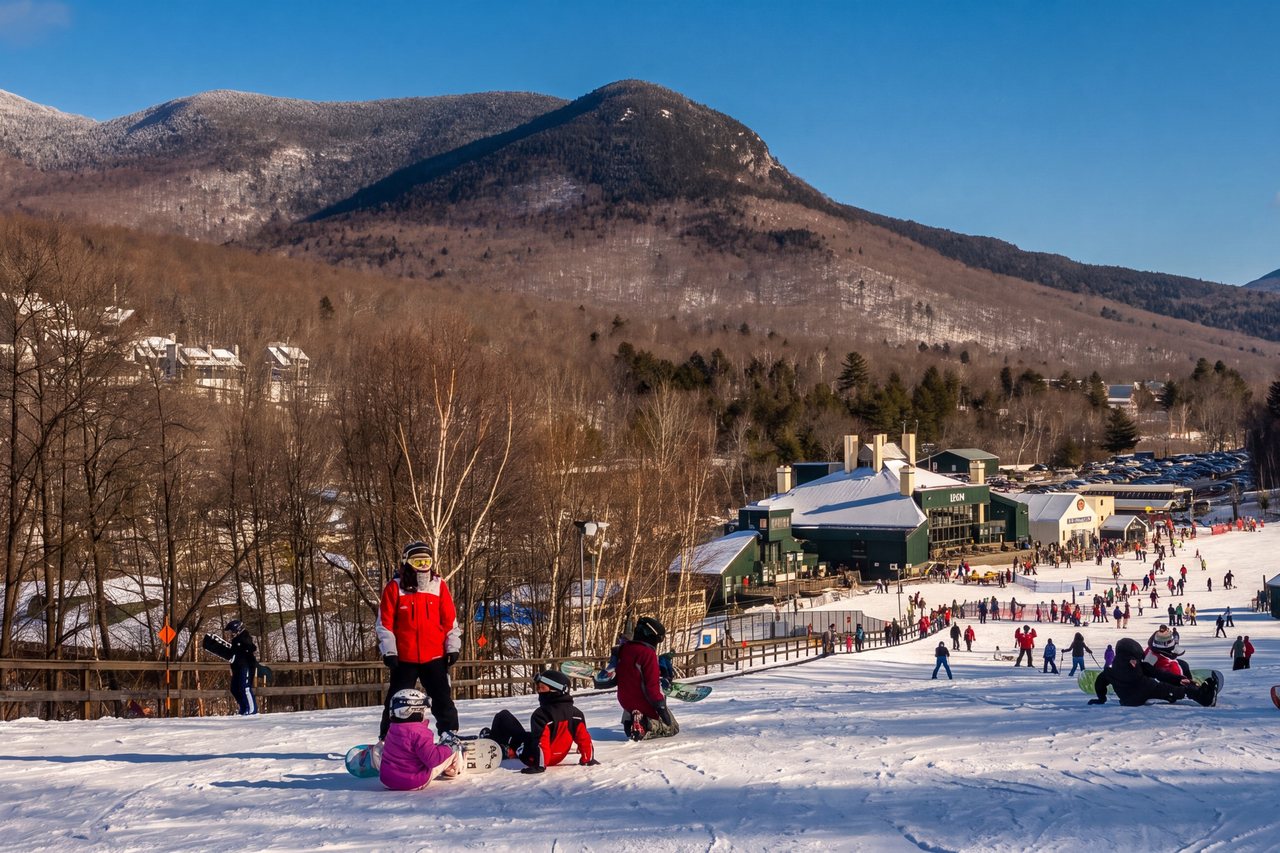
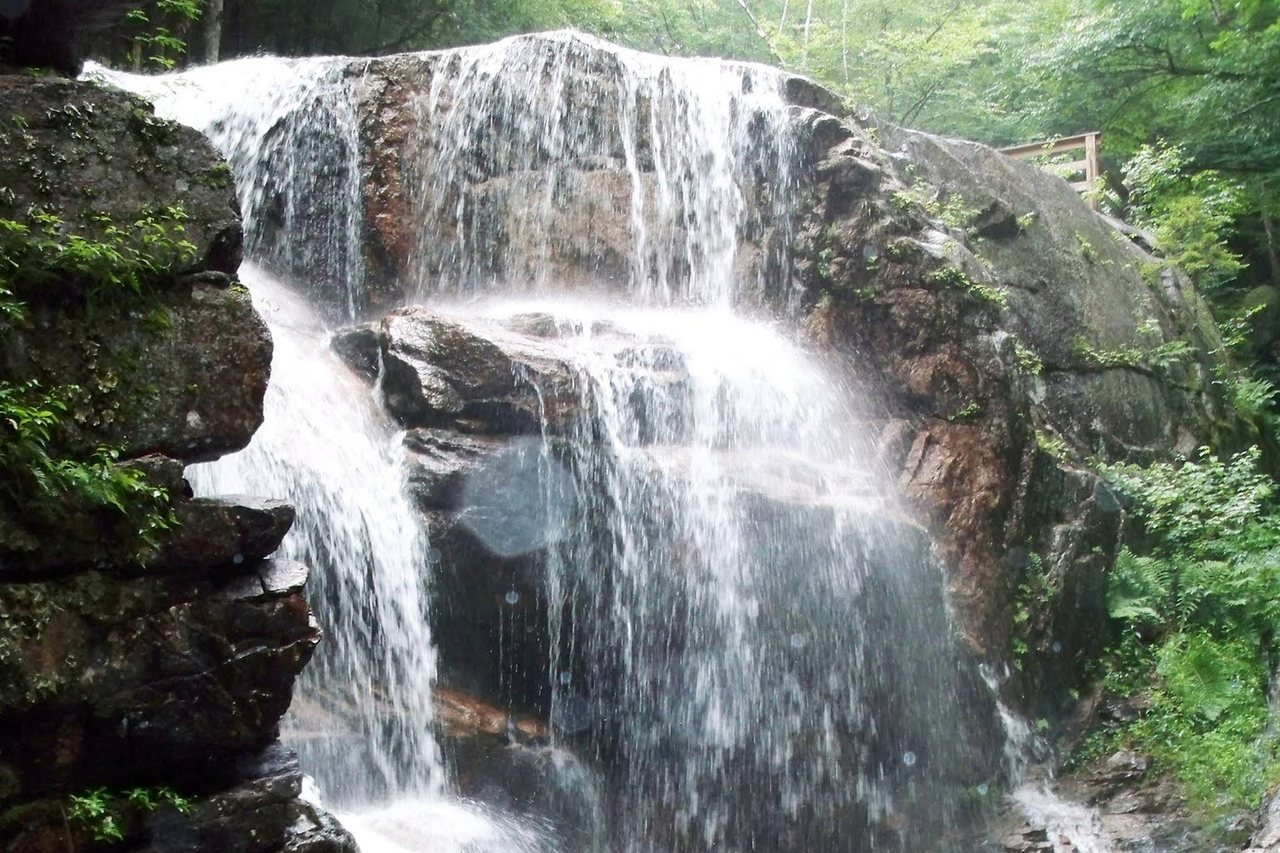
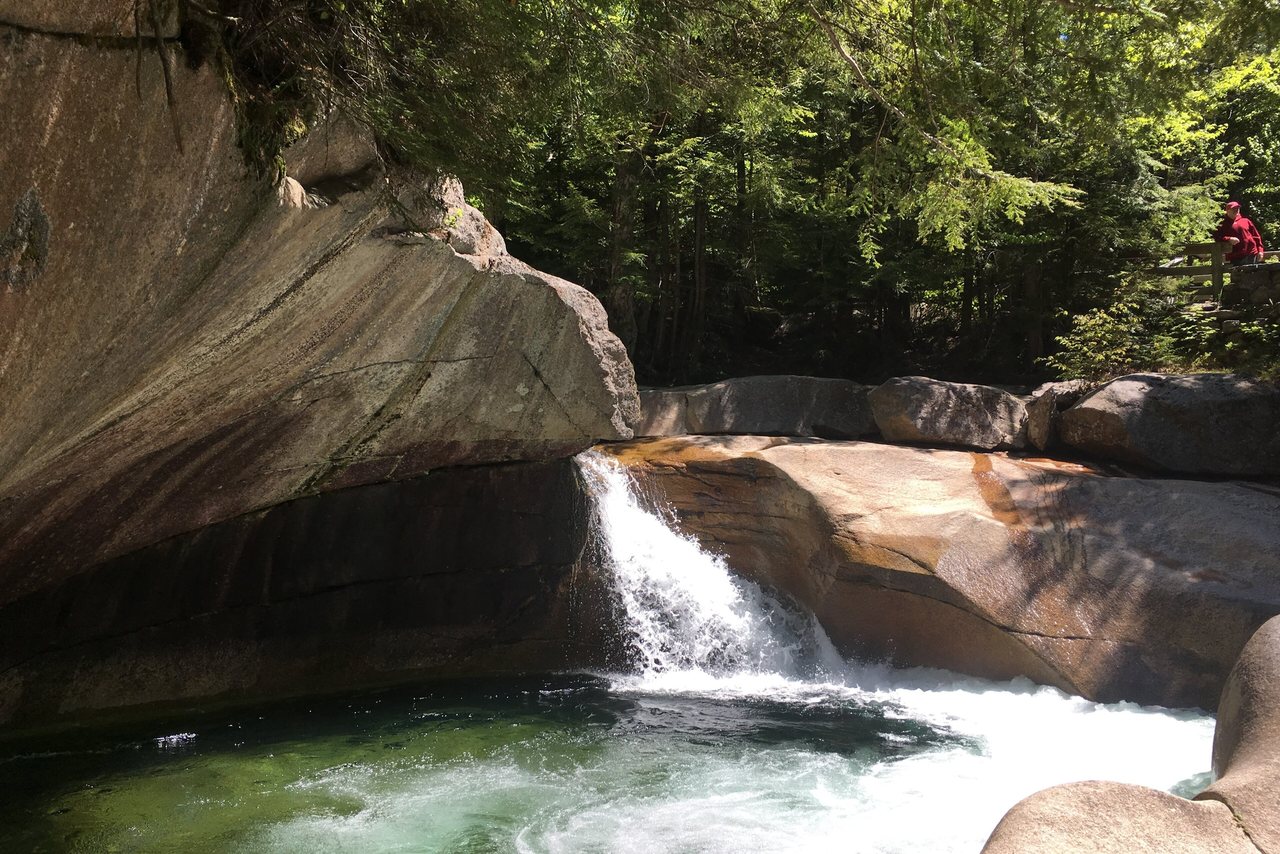
The lodge sits in the middle of Lincoln, and what is within a short drive is the reason the miles are worth it. Loon Mountain is 6 min east. Flume Gorge is 12 min — a two-mile boardwalk loop through an 800-foot granite gorge, with timed entry in season. Franconia Notch State Park is 10 min north, with the deep-notch overlooks about 16 min. The Basin, a glacial pothole, is a 5 min walk from its parking lot and needs no ticket. And the Kancamagus Highway begins at the end of the street.
For trailhead parking in the White Mountain National Forest, you will need a recreation pass — five dollars a day or thirty for the year. Franconia Notch State Park and Flume Gorge charge separately, on their own tickets.
A few things to plan around this year. The Cannon Mountain aerial tramway is closed and no reopening date has been announced; the ski area itself still operates, so this affects the summer ride up, not winter skiing. The Lincoln Woods Trail is closed June through November of 2026, so route around it if you had it on your list. And the Old Man of the Mountain has been gone since 2003 — the profiler plaza at Profile Lake still marks where his face was, and it is worth the short stop.
Why the drive is worth it
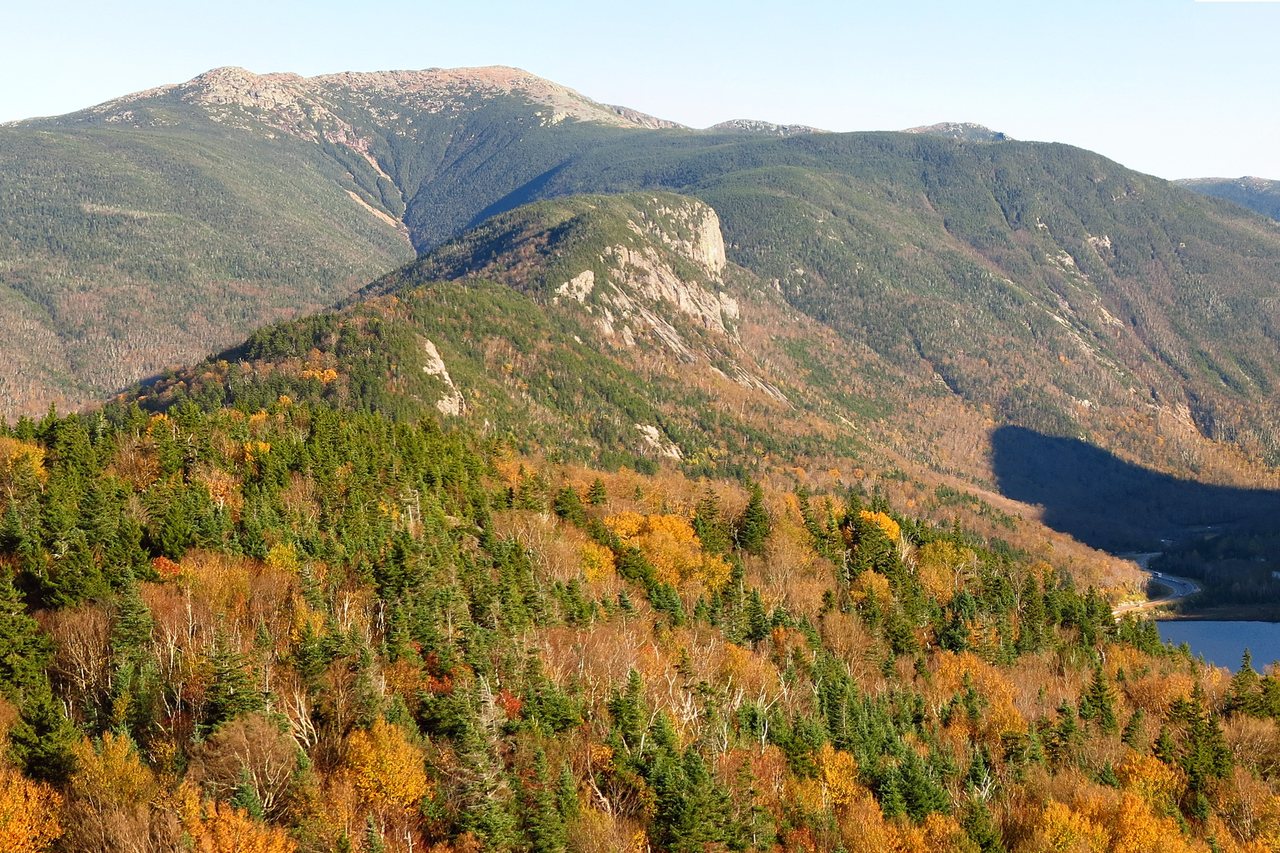
The White Mountains hold the highest peaks in the Northeast and the largest stretch of above-treeline alpine terrain in the region, with a scenic highway that starts in the town where you are sleeping. That is what makes the five hours pay off, and it is why the drive is worth planning around rather than trading for somewhere closer and smaller.
A first visit is best spent on the notch classics and one real hike: Flume Gorge, the Basin, and the short steep climb up Artist Bluff above Echo Lake, about 40 min round trip for a big view. A repeat visit is for the summits. The Franconia Ridge Loop is 8.9 miles with roughly 3,900 feet of gain, a serious, exposed, all-day effort to attempt only in good weather — and the one people come back for.
Three nights makes a proper trip out of it. The drive is the price of admission, and for a range like this one it is a fair one.
Where to stay when you arrive
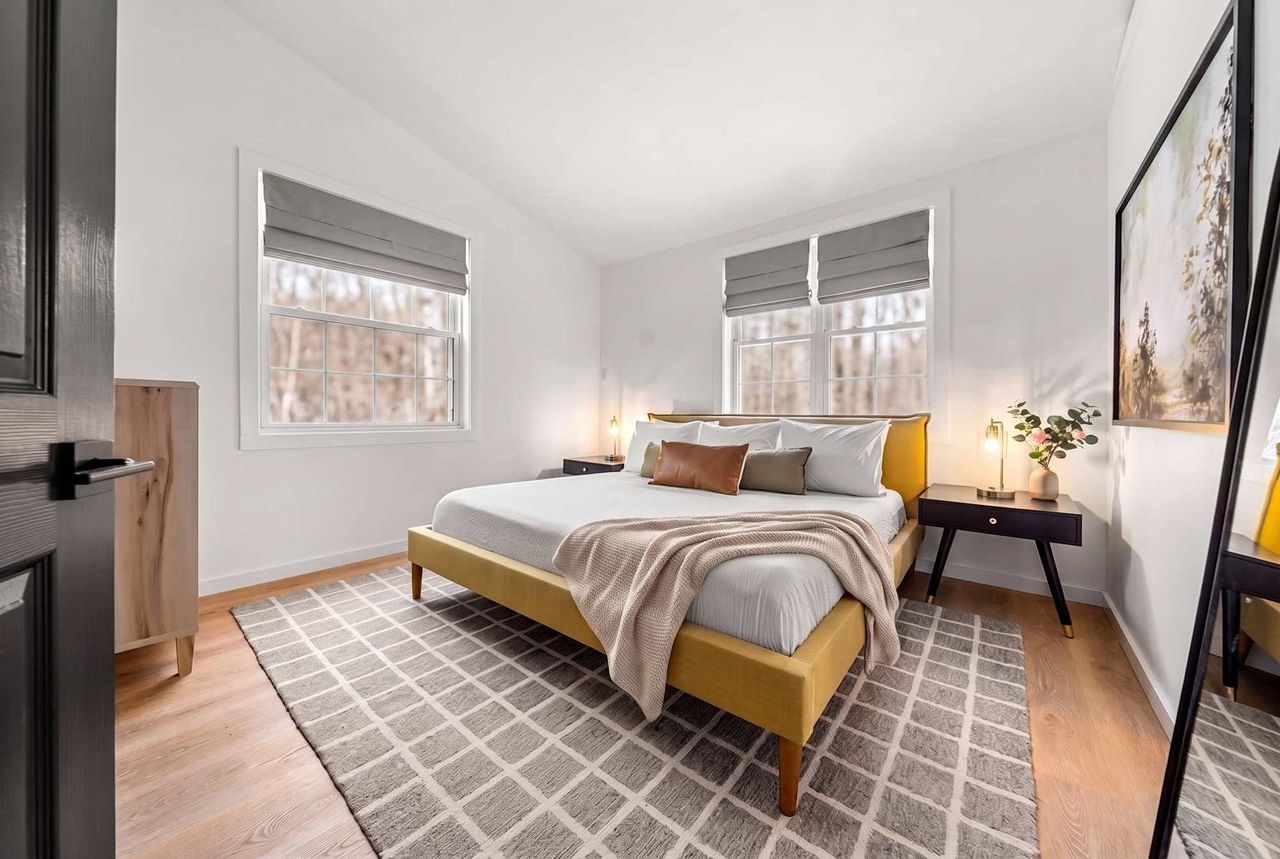
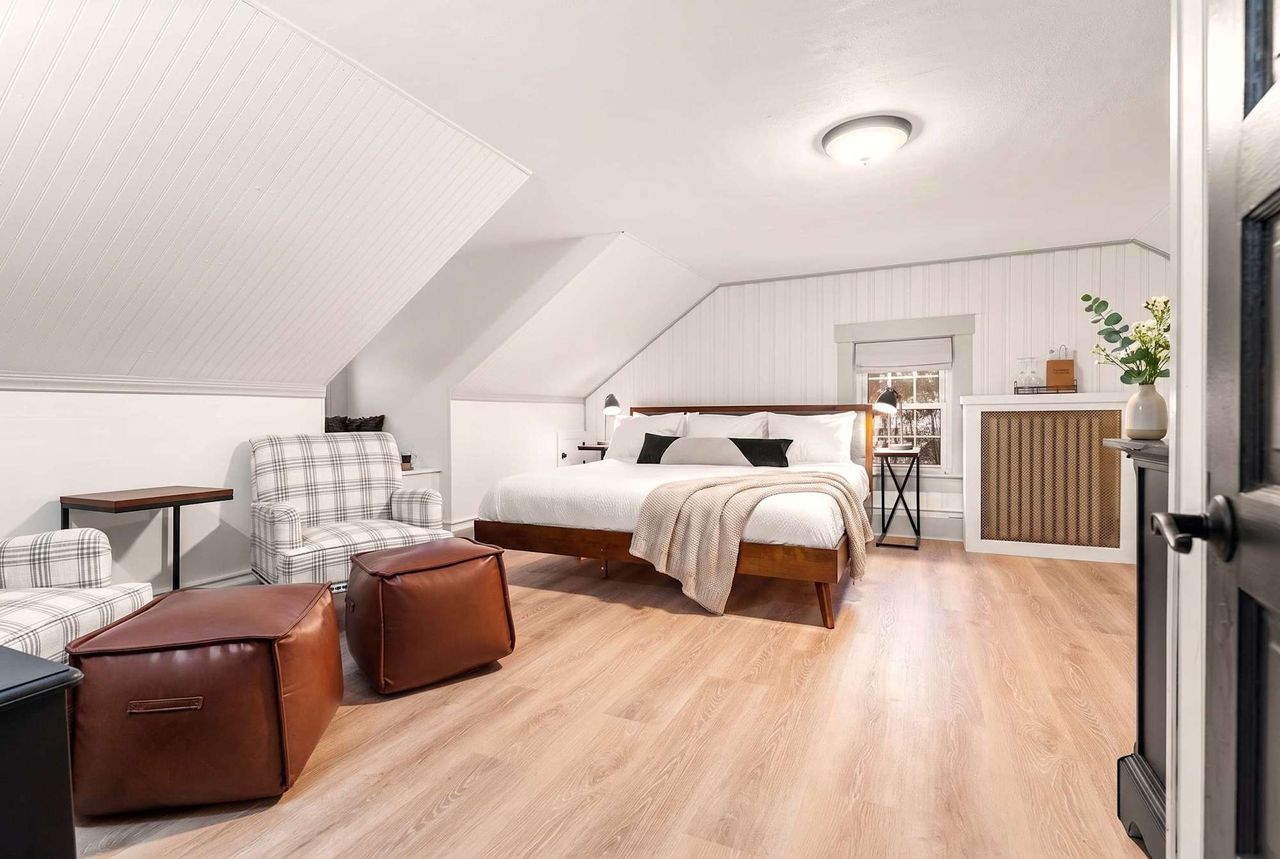
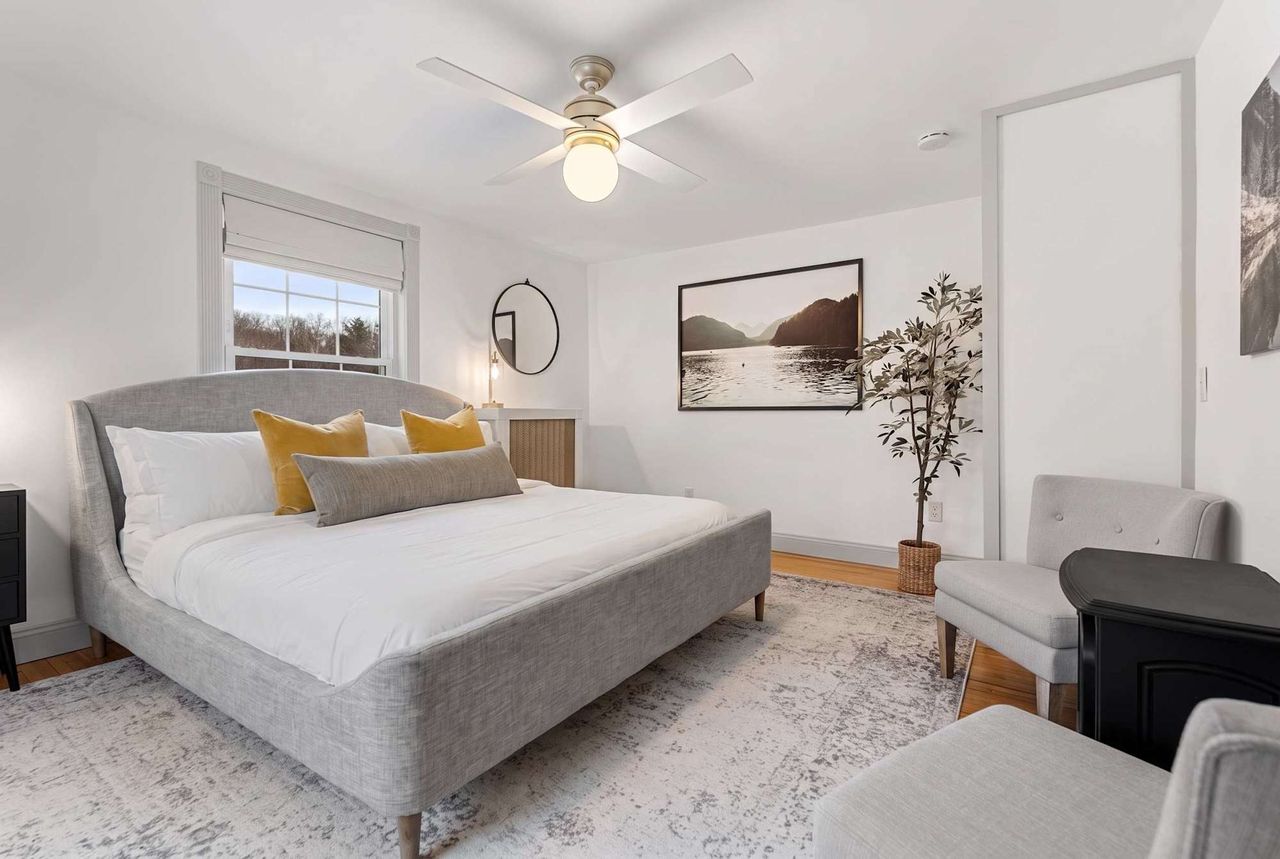
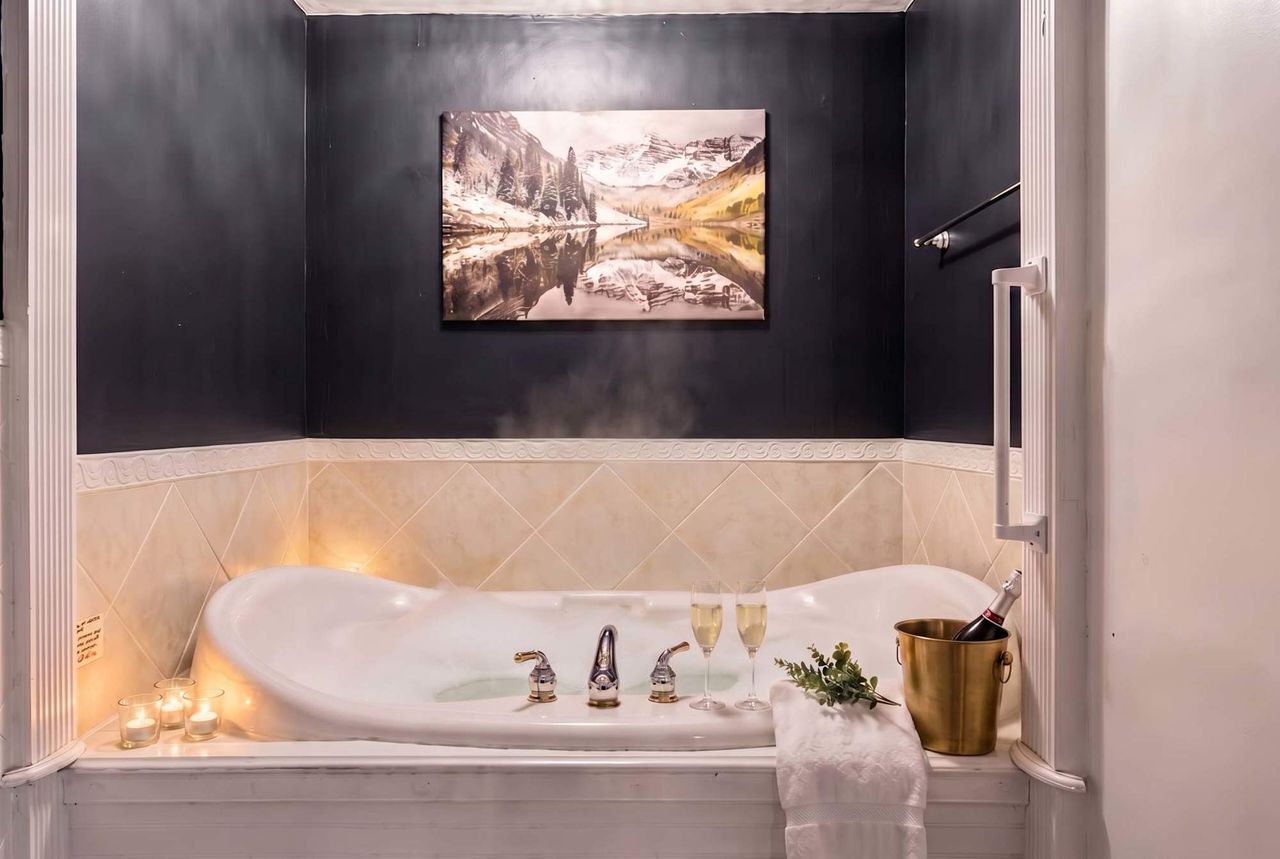
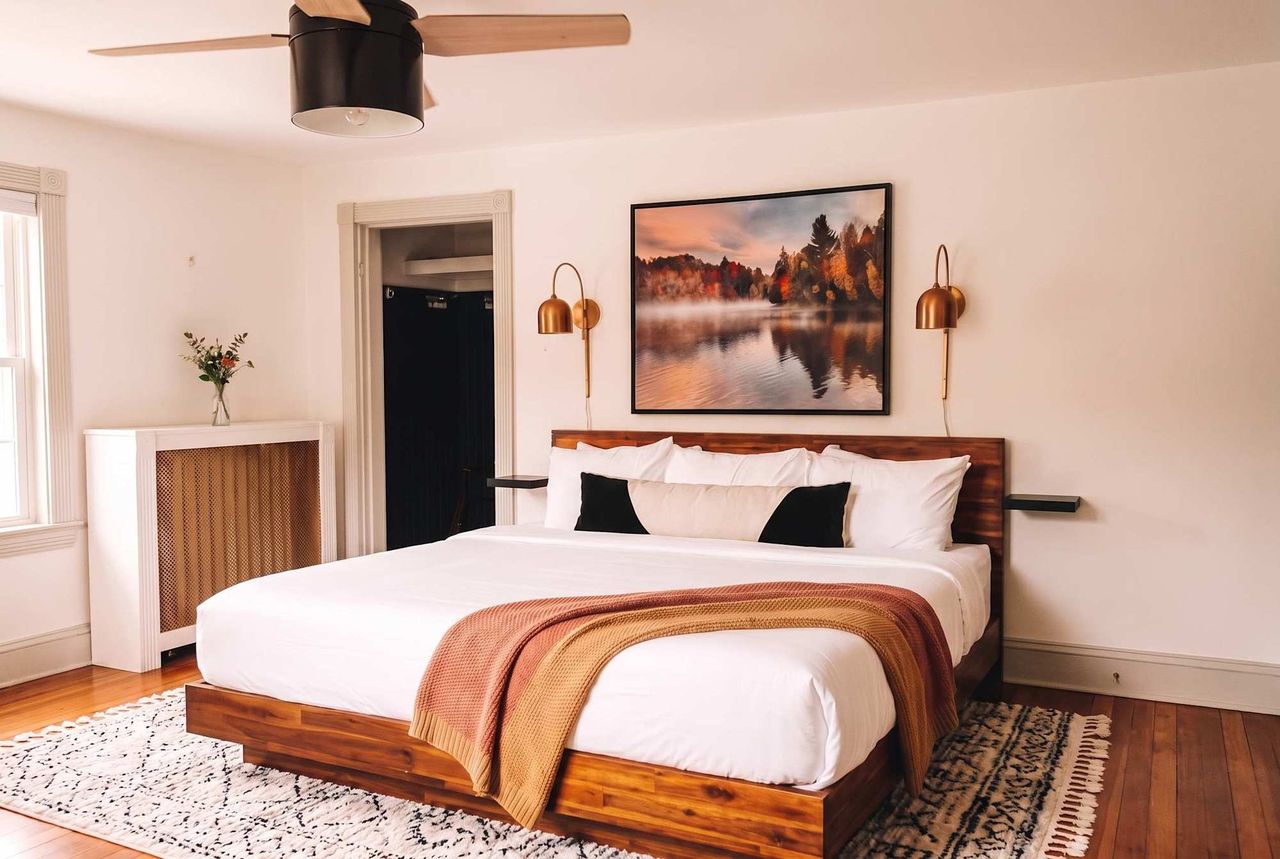
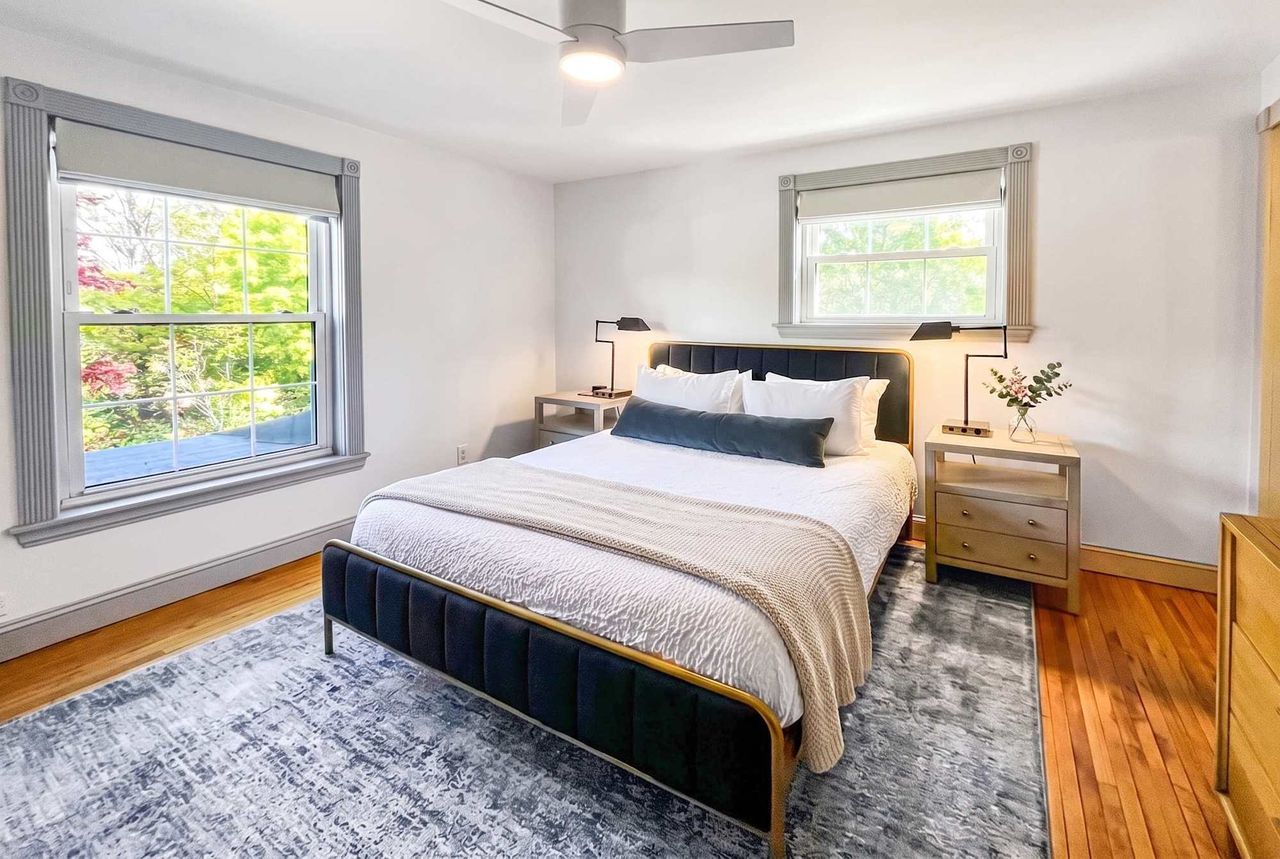
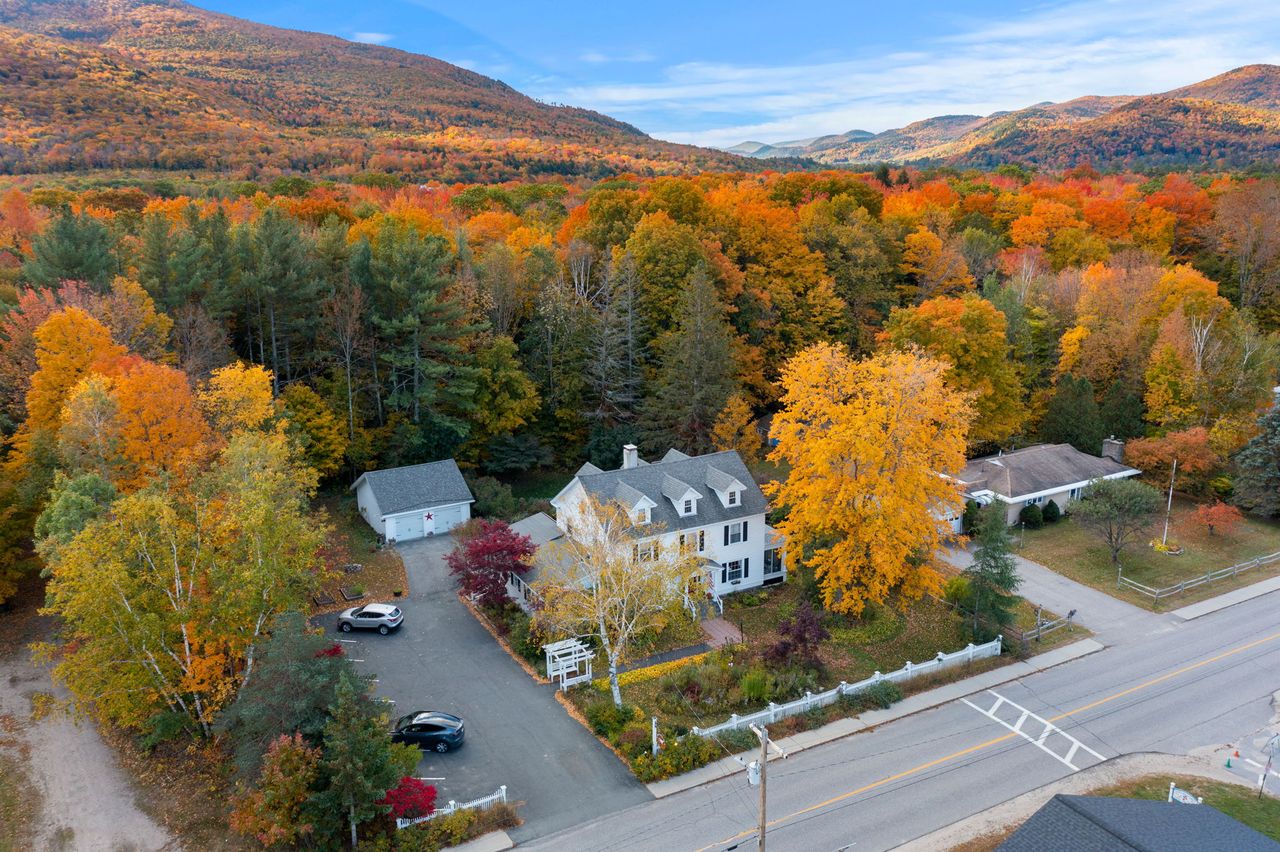
Launchpoint Lodge is a six-suite adults-only inn — no guests under 12 — 5 min past Exit 32, in the middle of Lincoln, in a restored 1902 colonial. Keyless self check-in means the drive can end whenever it ends: your door code arrives the day before arrival, once your check-in form and payment are complete, and the house lets you in the same way at three in the afternoon or eleven at night.
Your door code arrives the day before arrival, once your check-in form and payment are complete, so you let yourself in on your own time, just what you want after a five-hour drive and a late start. Check-in is from 3 PM, checkout is 10 AM, and the best rate is always the one you book direct.
Sources & official info: dot.nh.gov · fs.usda.gov
— Launchpoint Lodge, From the lodge